2027 Choosing an Online BS in Business Administration Around A Hospital Staffing Schedule
Audited and Verified:
Our Editorial and Data Verification Process
Research.com uses government datasets, official education statistics and primary institutional information to support its career and degree guides. Our review process checks factual accuracy, occupational definitions, source dates and the requirements associated with the credentials discussed.
How This Article Was Fact-Checked
Our editorial team verifies salary estimates, employment projections, education requirements and program information against original data providers and official organizations. Salary figures are checked against the relevant occupational definitions and reporting periods. Information about licensure, accreditation and required in-person training is reviewed separately.
Fact-checked and verified on:

Co-Founder and Chief Data Scientist
A hospital rota can change faster than a college timetable. If you work nights, weekends, or rotating shifts, an online BS in Business Administration is feasible only if its deadlines, exams, and required meetings fit the schedule you actually work.
This guide is for hospital employees considering a move into operations, HR, purchasing, or another business function. It explains how to test a program's flexibility, estimate the time and cost of finishing, and judge whether the degree supports your next role or whether a narrower qualification would serve you better.
Key Things You Should Know
- Prioritize asynchronous courses with documented policies for live meetings, proctored exams, group work, and missed deadlines; "online" does not necessarily mean self-paced.
- Ask for an official transfer-credit evaluation and a term-by-term degree plan before relying on an advertised completion time or tuition estimate.
- The U.S. median annual wage for human resources specialists was $75,940 in May 2025 across industries, not a starting salary promised to business graduates.
What is an online BS in Business Administration for hospital employees?
An online BS in Business Administration is an undergraduate degree covering how organizations manage money, people, operations, and decisions.
Its courses are delivered primarily online, but the exact mix of recorded lessons, live sessions, exams, and applied work varies by school. It is a general business degree, not a clinical qualification or a healthcare-management credential unless the institution explicitly awards that credential.
For a hospital employee, the appeal is the chance to connect business concepts to familiar work: staffing workflows, supply requests, patient-access processes, or departmental budgets.
A clinical or support-services background can provide useful context, but it does not automatically satisfy business-course or internship requirements. If your aim is internal advancement while keeping your current position, compare business administration study alongside full-time employment against your hospital's actual shift and promotion policies.
How can you fit online business classes around rotating hospital shifts?
Choose the program around your least predictable shift cycle, not your easiest week. An asynchronous course may let you watch lessons later while still requiring a discussion post on a fixed day, an exam within a short window, or a group presentation at a set time. Request sample syllabi for required courses, including the capstone, before enrolling.
The delivery labels below describe obligations worth checking. They are not guarantees that every course at a school follows the same format.
| Course format | Possible fixed obligation | Fit for rotating shifts |
| Asynchronous, weekly deadlines | Assignments due on specified days | Often workable with advance planning, but not self-paced |
| Live online classes | Attendance at scheduled meetings | Riskier when shifts rotate or overtime is mandatory |
| Accelerated terms | More concentrated work and shorter deadlines | May reduce elapsed time without reducing coursework |
| Work-based project or internship | Faculty approval and possibly site-supervisor availability | Depends on whether your job and schedule meet the school's rules |
Before committing, build a calendar that includes shifts, commute, sleep after nights, family obligations, and study blocks. Then ask the program these questions:
- Are live attendance, camera use, or proctored exams required in any course needed to graduate?
- How far in advance are exam windows and group-meeting times announced, and what happens if a shift changes?
- Can you take one course at a time, and are required courses offered often enough to maintain progress?
- What are the rules for a reduced course load, temporary leave, and returning after a leave?
Compressed terms can be useful when the coursework fits between predictable shift blocks; they can be punishing during a stretch of nights or mandatory overtime. Compare online business degrees with compressed terms by their weekly obligations, not just their advertised finish dates.
How do you choose an accredited online business administration program?
First, confirm that the institution holds recognized institutional accreditation and that the online BS is the degree you intend to earn. Institutional accreditation and business-school accreditation are different: AACSB, ACBSP, or IACBE recognition may apply to a particular school or set of programs, so check the accreditor's stated scope rather than assuming it covers every online degree.
For a hospital worker, the strongest comparison is a written answer to the same questions from each school:
- Which required courses have live sessions?
- Are exams remotely proctored? Are there campus visits?
- How often are upper-level courses offered?
- Who advises part-time students outside standard business hours?
- What happens if an approved leave interrupts a course sequence?
Ask for the current catalog and policies that apply to your intended enrollment term.
Application costs are worth checking, but they should not outweigh scheduling fit or degree requirements. Schools with options to reduce upfront college application expenses still need the same scrutiny of accreditation, support, and total completion cost.
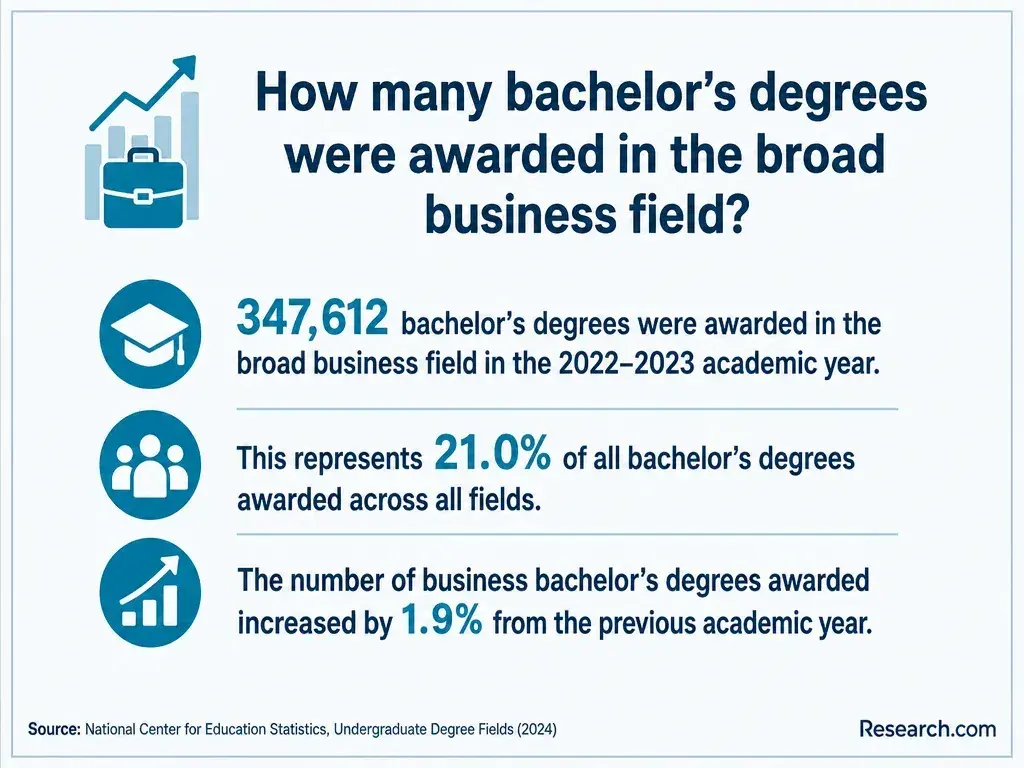
Programs commonly include accounting, economics, finance, marketing, management, operations, statistics, and business communication, alongside general education and electives.
The exact requirements matter more than the degree label. A BS may place greater emphasis on quantitative work at one school, but a BS and a BBA are not interchangeable descriptions of a fixed national curriculum.
For hospital operations, look for assignments involving process mapping, cost analysis, spreadsheets, project planning, or workforce coordination. An HR interest calls for closer attention to staffing and employment-related coursework.
Purchasing may make operations and supply chain courses more relevant. Check whether a healthcare focus is an official concentration, an elective group, or simply a topic you can choose for a project.
If your goal is specifically supply chain work rather than broad departmental administration, compare the required courses and remaining credits with shorter supply chain degrees and career value. A specialized path may fit better, but only an official credit evaluation can establish which option would take less time for you.
Requirements depend on whether you are applying as a first-time student, a transfer student, or a returning undergraduate. Schools may request secondary-school or college transcripts and may set separate standards for entry to the business major. Prior healthcare employment can strengthen the context of an application without replacing academic requirements.
If you have completed college courses, request an official evaluation that shows where each accepted credit applies: general education, business core, electives, or another requirement. A course can transfer without shortening the path to graduation. Ask about math or statistics prerequisites, upper-level credit requirements, and whether a needed accounting course must be taken in sequence.
Hospital employees aiming for HR can also compare how programs apply prior college coursework toward an HR bachelor's. Admission, transfer-credit acceptance, and satisfaction of major requirements are separate decisions made by the receiving institution.
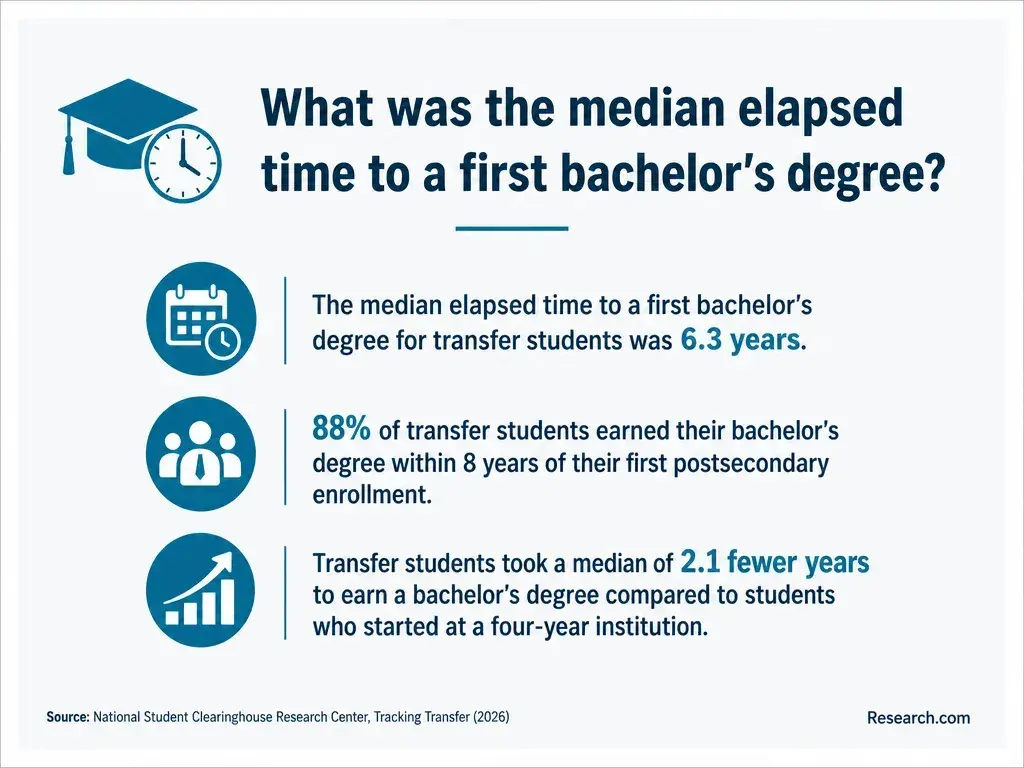
Your finish date depends on credits that apply to the degree, the number of courses you can sustain alongside shifts, prerequisite order, and how often required classes run. A shorter calendar format does not necessarily mean fewer study hours. Part-time enrollment may protect sleep and work income while extending the period over which you pay fees.
For a useful cost comparison, ask each school for an estimate based on your official degree audit, not its published tuition rate alone. Include remaining tuition, mandatory and online-service fees, books, software, proctoring, any travel, and interest if you borrow.
Ask your hospital whether tuition assistance is paid upfront or reimbursed later, which roles and courses qualify, and whether grade, employment, or repayment conditions apply. Financial-aid eligibility and satisfactory academic progress also warrant confirmation with the aid office.
Comparisons of business administration degree costs after FAFSA-based assistance can help identify schools to investigate. They cannot establish your net price without a current aid offer, applicable transfer evaluation, and employer-benefit decision.
Start with the work you already do and the next position's actual duties. A patient-access employee might pursue scheduling or revenue-cycle coordination; someone who handles inventory may be closer to purchasing or supply operations.
An employee who helps onboard colleagues may have relevant experience for an HR support role. The degree can add business knowledge, but employers will also assess systems skills, judgment, and demonstrated responsibility.
Project coordination is another possible bridge for staff who document workflows, track tasks, and communicate across departments. If that is your target, compare the business core with use of prior college credits in a project management bachelor's.
The more direct route depends on the job description and your remaining courses. Moving into a department manager position generally requires evidence of leadership and operational results, not just graduation. Clinical management roles may also call for clinical credentials or experience.
There is no single salary for a BS in Business Administration graduate working in a hospital. Pay depends on the occupation, location, employer, and experience; national occupation-wide figures are not hospital-specific offers or expected starting wages. These U.S. Bureau of Labor Statistics medians illustrate why the target role matters.
| Occupation | U.S. median annual wage, May 2025 | Interpretation for hospital employees |
| Human resources specialist | $75,940 | Relevant to HR work, but not a forecast for an employee entering HR |
| Administrative services manager | $114,130 | Reflects an occupation with managerial responsibility, not an immediate post-graduation role |
For a financial decision, compare the pay range of specific openings at your hospital with the degree's remaining cost and the experience those openings require. A lower-cost program may reduce financial risk, but evaluate cost-effective paths to a business degree against scheduling fit and credits applied, not tuition alone.
Many hospital business-support positions do not require a professional license, but requirements vary by job and employer. A business degree does not confer a clinical license, CPA license, HR certification, or project-management credential. Check the qualifications in postings for your intended role and, for regulated work, the relevant licensing authority's rules.
Voluntary credentials can be useful when they match a role's tasks and you meet the issuing organization's eligibility rules. If you are considering a full project-management degree instead of business administration to pursue such work, project management undergraduate scholarship comparisons may inform the education-cost side of that choice. Neither a scholarship nor a related course establishes certification eligibility; verify that separately.
How does an online business degree compare with an on-campus program?
Online delivery can remove a commute and make recorded coursework easier to fit around shifts. Campus study may offer face-to-face access to classmates, faculty, and local recruiting, but scheduled travel can conflict with nights, weekends, or overtime. Neither format is inherently easier: both can include fixed deadlines, team assignments, presentations, and substantial independent work.
Compare the versions of the same degree first: curriculum, required visits, faculty access, course availability, total costs, and support for working students. If you are also weighing a specialized project-management program, separate that academic choice from the delivery-format choice.
Project management college costs after financial aid are only one part of the comparison. The better fit is the program you can complete around your rota that also prepares you for the responsibilities you want next.
Other Things You Should Know About Business Administration Programs
Do not assume so. Check your employer's device and network policies, especially for personal school accounts, downloads, or exam-proctoring software. A personal device and reliable connection may be necessary.
Not without appropriate authorization and safeguards. Use public, fictional, or school-provided data unless your employer and instructor approve a compliant project. Removing names alone may not make patient information safe to share.
Not automatically. If you hold a clinical license, ask its licensing board or approved continuing-education provider which activities count toward renewal.
Contact the instructor and adviser promptly, then check the course's withdrawal and leave deadlines before stopping work. An employer schedule change does not automatically excuse missed assessments or cancel tuition charges.
- Understanding College Costs | studentaid.gov https://studentaid.gov/resources/prepare-for-college/students/choosing-schools/consider-costs
- Program Integrity Questions and Answers - Credit Hour http://www.ed.gov/laws-and-policy/higher-education-laws-and-policy/program-integrity-information-questions-and-12
- Academic Years, Academic Calendars, Payment Periods, and Disbursements | 2025-2026 Federal Student Aid Handbook https://fsapartners.ed.gov/knowledge-center/fsa-handbook/2025-2026/vol3/ch1-academic-years-academic-calendars-payment-periods-and-disbursements
- Reduced Course Load - Study in the States - Homeland Security https://studyinthestates.dhs.gov/sevis-help-hub/student-records/manage-program-dates-registration-and-course-load/reduced-course
- 4.1.18 Credit Earned through Transfer, Examination, and Prior Learning | Illinois State https://policy.illinoisstate.edu/academic/4-1-18/
- Faculty and Staff Tuition Assistance - Human Resources at Ohio State https://hr.osu.edu/benefits/tuition-assistance/faculty-staff/
- Online Bachelor of Science in Health Management | wichita.edu https://www.wichita.edu/academics/oal/online_programs/health_management.php
- BS in Business Administration | Online Bachelor's Degree | Capella University https://www.capella.edu/online-business-degrees/bs-business-program/bachelors-business-administration/
- Business Administration Online Degree (BBA) | University of Kansas https://online.ku.edu/undergraduate-programs/online-bachelors-business-administration-bba
- Credit for Prior Learning | North Park University https://www.northpark.edu/academics/school-of-professional-studies/credit-for-prior-learning/