2027 BS in Business Administration and Construction Management: Comparing Degree Plans After an AAS
Audited and Verified:
Our Editorial and Data Verification Process
Research.com uses government datasets, official education statistics and primary institutional information to support its career and degree guides. Our review process checks factual accuracy, occupational definitions, source dates and the requirements associated with the credentials discussed.
How This Article Was Fact-Checked
Our editorial team verifies salary estimates, employment projections, education requirements and program information against original data providers and official organizations. Salary figures are checked against the relevant occupational definitions and reporting periods. Information about licensure, accreditation and required in-person training is reviewed separately.
Fact-checked and verified on:

Co-Founder and Chief Data Scientist
An AAS can give you valuable construction or technical skills without providing a straightforward route to a bachelor's degree. If you are weighing a BS in Business Administration against a BS in Construction Management, the deciding issue is not just which degree sounds more relevant. It is which school will apply your credits to required courses - and which remaining courses will prepare you for the work you want.
This comparison helps AAS graduates evaluate degree plans, completion time, cost, and career direction before committing to a program.
Key Things You Should Know
- Choose construction management for a construction-focused path; choose business administration for broader operations, finance, or organizational roles. Compare the actual degree plans, not just the titles.
- An AAS may transfer as credit without satisfying general education, major, or residency requirements. Request a written, program-specific degree audit before estimating time or cost.
- The U.S. median annual wage for project management specialists was $102,320 in May 2025, with 7% projected employment growth from 2025 to 2035; those occupation-wide figures are not starting salaries for graduates of either degree.
What is the difference between a BS in Business Administration and Construction Management after an AAS?
A BS in Business Administration develops knowledge that applies across organizations: accounting, finance, operations, marketing, management, and business decision-making. A BS in Construction Management concentrates on planning and delivering construction projects, including estimating, scheduling, contracts, safety, and coordination among owners, designers, contractors, and trades.
For an AAS graduate, the distinction is most useful when tied to a target role. A construction AAS plus construction management coursework can build on field knowledge for project-support or site-facing work. A business administration degree may fit better if you want to move into purchasing, business operations, client services, or administration across industries. Neither degree substitutes for the experience normally needed to manage major projects or departments.
Some schools offer construction-related business electives or concentrations, but an elective cluster is not the same as a construction management degree. As a starting point for comparing general business curricula, you can compare leading American online business degree schools; then check each institution's exact award title and required courses.
Which bachelor's degree pathway offers the best transfer options after an AAS?
Neither pathway consistently transfers more AAS credit. A construction or building-trades AAS may align closely with a construction management major, while a business administration completion program may accept more technical coursework as electives. Either result can still leave substantial general education or upper-division requirements.
The following comparison shows why the number of credits accepted is less important than where they apply. Only the receiving institution can determine your equivalencies.
| Credit category | Business administration plan | Construction management plan |
| General education | Writing, mathematics, and other requirements may remain after a technical AAS. | The same gap may remain, even when construction courses transfer well. |
| Major requirements | AAS accounting, computing, or management courses may qualify if content and level match. | Estimating, drafting, materials, or construction courses may qualify if approved as equivalents. |
| Electives | Technical credits may count here without replacing business-core courses. | Business or trade credits may count here without replacing required construction courses. |
| Upper-division and residency rules | Both plans may require advanced courses and a minimum amount of study at the degree-granting school. |
Ask the transfer office for a course-by-course evaluation and an adviser for a degree audit showing accepted credits, credits applied to each requirement, and courses still needed. Provide AAS transcripts, course descriptions, and syllabi - particularly for estimating, accounting, mathematics, and project courses. If your goal is project coordination beyond construction, credit mapping for online project management programs offers another comparison, but its transfer estimates also require school approval.

What courses are included in business administration and construction management degree plans?
Business administration plans commonly include financial and managerial accounting, economics, statistics or quantitative reasoning, finance, marketing, operations, organizational behavior, and strategy. Construction management plans commonly cover estimating, scheduling, construction methods and materials, contracts, safety, cost control, and project administration. Requirements vary, and either program may include an internship or capstone.
Look past course names. An AAS graduate who already knows site procedures may gain more from advanced cost control and contract administration than from repeating introductory technical content. Someone seeking a company-wide operations role may need accounting, finance, and data analysis more urgently. Check prerequisites as well: an advanced estimating course may depend on earlier construction coursework, while business finance may follow accounting.
Procurement and materials coordination sit between the two fields. If those are your primary interests, compare accelerated supply chain bachelor's degrees alongside both plans, then assess whether their specialized courses justify any additional credits you would need.
Online business administration programs may make it easier to keep a job while studying, but online does not necessarily mean self-paced. Courses can require live meetings, group presentations, proctored exams, or fixed weekly deadlines. Online construction management programs may also require access to scheduling or estimating software, approved work experiences, or occasional in-person activities.
Campus programs can offer more direct access to labs, faculty, and local construction employers; their fixed meeting times and travel demands may be harder to combine with site work. Compare the delivery of remaining required courses, not the program's overall online label. Ask whether upper-division classes run every term, whether internships can fit an existing job, and whether any campus visits are mandatory. Working-adult business administration program comparisons can help frame scheduling questions, but confirm each school's current course policies directly.
Schools typically review official college transcripts and may set GPA, mathematics, writing, or other prerequisite requirements. Admission to the university does not always mean admission to the business or construction management major. Some programs allow missing prerequisites after entry; others require them first.
Before applying, ask admissions whether your AAS meets transfer-entry criteria and ask the department whether specific major prerequisites must be completed. Submit syllabi when course equivalence is uncertain, and distinguish an admission decision from a final credit award. For a closer look at common business-entry questions, see what to check before applying for a business administration degree.
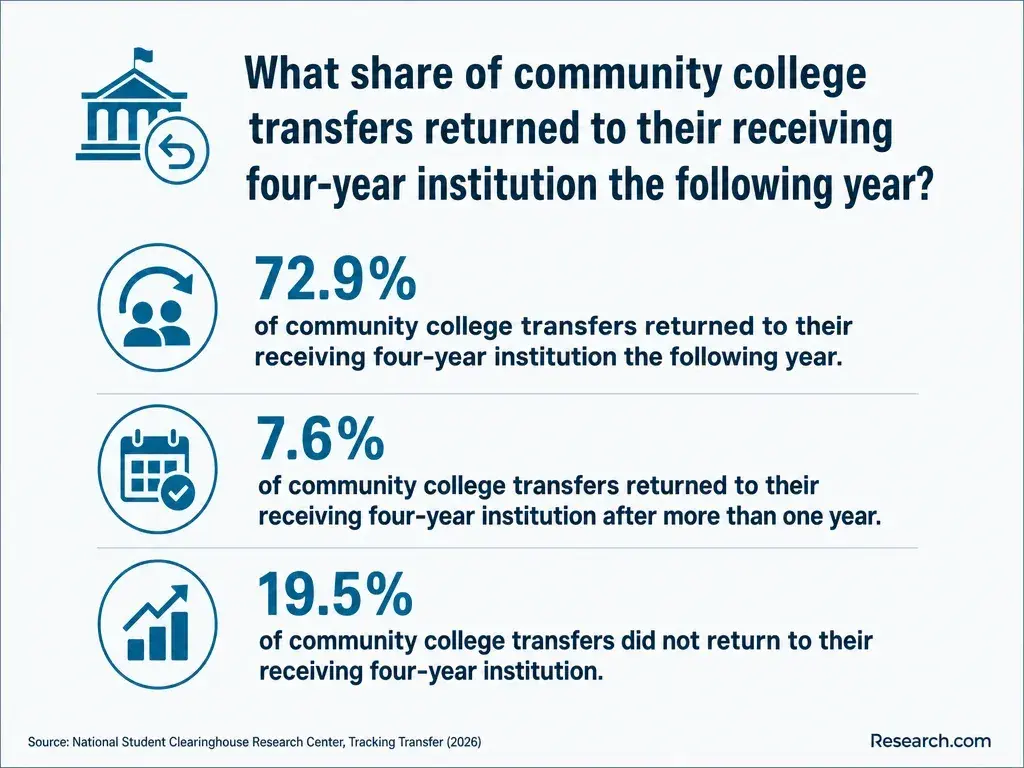
There is no dependable completion time based on the AAS credential alone. The remaining credits, prerequisite sequence, course frequency, enrollment pace, and residency requirement determine the calendar. A school may accept many AAS credits yet place most in electives, leaving a long sequence of major courses.
Request a term-by-term plan for each degree, including courses offered only in certain terms and any internship or capstone approval deadline. Compare plans using a schedule you can sustain while working - not only the fastest advertised pace. Business degree programs designed for faster progress may be worth evaluating, but acceleration helps only if your applicable credits and required-course availability support it.
The useful comparison is the cost to finish after your AAS, not the published price of a full bachelor's degree. Calculate remaining required credits at each school's applicable tuition rate, then add mandatory fees, books, software, travel, and any costs associated with an internship or campus requirement. More accepted credits do not necessarily mean a lower bill if they do not replace required courses.
Ask each financial-aid office how your transfer evaluation and planned enrollment pace affect aid eligibility. If an employer offers tuition assistance, confirm covered programs, reimbursement timing, grade rules, and any obligation to repay benefits. Compare borrowing and time away from work as well as tuition. Business administration tuition, time commitment, and career value provides a broader comparison, but your audited remaining courses are the basis for a personal estimate.
A construction management graduate with relevant field experience might pursue project coordinator, assistant project manager, estimating, scheduling, or construction operations roles. A business administration graduate might pursue operations coordination, purchasing, administrative operations, sales operations, or project support - including at a construction company. Actual duties and hiring requirements vary by employer.
Your AAS can be an advantage if it documents familiarity with plans, site workflows, materials, or trades. Pair that experience with evidence of the work you want next: an approved estimating sample for estimating roles, for example, or spreadsheet-based budget and process work for operations roles. Do not share employer drawings, bids, or client information without permission.
If supervising people across industries is your longer-term aim, leadership bachelor's degrees with accelerated pacing are another option to compare. Leadership coursework, however, does not replace the job-specific experience an employer may require for a management position.
U.S. Bureau of Labor Statistics occupation data describes jobs, not earnings attributable to a particular bachelor's degree. The median annual wage for project management specialists was $102,320 in May 2025, and employment is projected to grow 7% from 2025 to 2035. That occupation spans industries and experience levels; its median is not a reasonable offer to expect simply because you completed a construction management or business administration program.
Compare openings for the specific role you could enter with your AAS experience and new coursework. Construction employers may value estimating and field coordination, while employers in other sectors may prioritize operations, purchasing, or analytics experience. For a materials-focused career, shorter online supply chain degree pathways may merit a separate cost-and-career comparison rather than assuming either degree is the best route.
Which accreditation, licenses, and certifications matter for construction management careers?
First verify the institution's recognized accreditation and confirm that it applies to the school awarding your degree. Then check any claimed program-level accreditation for its actual scope: business-school accreditation and construction-program accreditation are different, and neither should be inferred from a school's general accreditation statement.
A construction management bachelor's degree is not itself a contractor license. Licensing rules depend on the state and the work performed; employers may also value voluntary construction or project-management certifications, which have their own eligibility and experience rules. Ask prospective employers which credentials matter for your target role, and check the relevant state licensing authority before planning to operate as a contractor.
After confirming accreditation and fit, application charges can be a smaller but worthwhile comparison point. Schools with zero-cost college applications may help you limit upfront expenses; a waived fee is not evidence of favorable transfer treatment or career outcomes.
Other Things You Should Know About Business Administration
Possibly. The department may require advance approval, specific learning objectives, supervision, and assessed work beyond your normal duties. Employment alone does not award internship credit.
Include them when the program requests a portfolio or statement and they demonstrate relevant skills. Explain your own contribution, and obtain permission before sharing employer or client materials.
Some schools permit approved electives, a minor, or a formal concentration. Check whether those courses fit the degree audit; taking extra classes does not automatically create a separately named credential.
Business administration may help with budgeting, operations, and marketing, while construction management may deepen project-delivery knowledge. Neither replaces trade expertise, local licensing checks, insurance planning, or experience operating a business.
- Accreditation in the U.S. | ed.gov http://www.ed.gov/laws-and-policy/higher-education-laws-and-policy/college-accreditation/accreditation-in-the-us
- Cost of Attendance (Budget) | 2026-2027 Federal Student Aid Handbook https://fsapartners.ed.gov/knowledge-center/fsa-handbook/2026-2027/vol3/ch2-cost-attendance-budget
- .16 Graduation Requirements. | Library of Maryland Regulations https://regs.maryland.gov/us/md/exec/comar/13B.02.02.16
- Transfers - Washington Student Achievement Council (WSAC) https://wsac.wa.gov/transfers
- College Degree Levels in Order | University of Phoenix https://www.phoenix.edu/articles/online-college/college-degree-levels-in-order.html
- Tuition & Aid | Rasmussen University https://www.rasmussen.edu/tuition/
- Bachelor's Degree in General Business - Construction Management - Lamar University https://www.lamar.edu/academics/degrees/general-business/general-business-construction-management-bachelors-degree.html
- Associate in Applied Science in Construction Management | Mesa Community College https://www.mesacc.edu/programs/map/construction-management-aas-26-27
- Construction Management Career Path - NMU Global Campus https://online.nmu.edu/construction-management-career-path/
- Careers in Construction Management - Fitchburg State Blog https://blog.fitchburgstate.edu/gce/careers-in-construction-management