2027 BS in Business Administration Math Planning: Using Worked Examples to Evaluate a Course Syllabus
Audited and Verified:
Our Editorial and Data Verification Process
Research.com uses government datasets, official education statistics and primary institutional information to support its career and degree guides. Our review process checks factual accuracy, occupational definitions, source dates and the requirements associated with the credentials discussed.
How This Article Was Fact-Checked
Our editorial team verifies salary estimates, employment projections, education requirements and program information against original data providers and official organizations. Salary figures are checked against the relevant occupational definitions and reporting periods. Information about licensure, accreditation and required in-person training is reviewed separately.
Fact-checked and verified on:

Co-Founder and Chief Data Scientist
A business math syllabus can list algebra, statistics, and spreadsheets without showing whether you will learn to use them well. If you are planning a BS in Business Administration - especially one with a finance, analytics, or operations focus - worked examples offer a practical test of course depth and readiness.
This guide shows how to examine sample problems, compare syllabi, spot prerequisite gaps, and decide whether a course sequence will prepare you for the business decisions you want to make.
Key Things You Should Know
- Check the degree audit, not just the course title: business programs may require different combinations of algebra, calculus, statistics, and quantitative business courses.
- A useful worked example shows the business question, units, assumptions, calculation, and interpretation - not merely a formula and final answer.
- In a hypothetical break-even problem with $1,200 in fixed costs and a $20 contribution per unit, the answer is 60 units; a strong syllabus also teaches when that answer would change.
What math courses are required for a BS in Business Administration?
There is no universal BS in Business Administration math requirement. A program may specify college algebra or quantitative reasoning, business calculus, introductory statistics, and a business analytics course; another may accept different courses or place quantitative work inside accounting, finance, economics, and operations. A BS title alone does not establish greater math depth than a BBA.
Use the current catalog and your official degree audit to separate general education math from business-core prerequisites and concentration requirements. Then check whether statistics must precede analytics, whether finance requires a particular math course, and when each course is offered. If you are considering HR alongside general business, compare the actual quantitative requirements with HR degree coursework and entry requirements rather than assuming the paths share a syllabus.
For transfer work, ask the receiving institution whether a course satisfies the specific requirement. Acceptance as an elective is not the same as approval for statistics, business calculus, or a concentration prerequisite.
How difficult is the math in a business administration degree?
The difficulty depends less on a single advanced formula than on using several skills together. A finance problem might require percentages, algebra, and spreadsheet formulas; a statistics assignment might require choosing an appropriate measure and explaining uncertainty. Students comfortable with arithmetic can still need practice translating a business situation into a model.
Before enrolling, compare a course's sample assignments with your ability to solve equations, interpret graphs, work with percentages, and check spreadsheet outputs. If the examples are difficult, a refresher or supported introductory course may be more useful than avoiding quantitative work. Even when comparing online organizational leadership programs for quicker graduation, inspect their actual math and statistics requirements; a shorter schedule does not necessarily mean easier preparation.
Also distinguish mathematical difficulty from workload. Frequent problem sets, unfamiliar software, or tightly sequenced terms can make an otherwise manageable course demanding.
How can worked examples help evaluate a business math syllabus?
A worked example is a problem with its reasoning and solution shown. To assess a syllabus, request an example assignment, solution, grading rubric, or textbook chapter. Look for a path from a business decision to the calculation and back to a defensible interpretation.
Consider this hypothetical break-even example: a product sells for $50, its variable cost is $30 per unit, and monthly fixed costs are $1,200. The contribution margin is $50 − $30 = $20 per unit; $1,200 ÷ $20 gives a break-even point of 60 units. At 80 units, the model predicts $400 in operating profit before any costs the example excludes. That is a calculation, not a forecast of actual sales.
The strongest examples also identify what could make the answer misleading. Here, changing prices or costs changes the break-even point, and selling 60 units is not assured. Apply this short test to any sample solution:
- Identify the decision, inputs, units, and stated assumptions.
- Reproduce the calculation and check whether its output answers the question.
- Change one assumption and explain how the decision changes.
- Check whether the course assesses interpretation and limitations as well as arithmetic.
If you want supply chain work, request inventory or demand examples as well as break-even problems. Compare their depth with the curriculum - not just the advertised pace or price - of budget-friendly supply chain degrees with shorter schedules.
A useful syllabus matches quantitative methods to the decisions students will encounter later. The table identifies what to look for in examples and assignments; it is not a universal list of required courses.
| Topic | Evidence of useful business application | When added depth matters |
| Algebra and percentages | Price changes, margins, break-even analysis, and correct use of units | Finance and operations models |
| Statistics | Sampling, variation, comparisons, and cautious interpretation | Marketing research and analytics |
| Spreadsheets | Transparent formulas, sensitivity checks, and error detection | Budgeting and recurring analysis |
| Financial mathematics | Interest, cash-flow timing, and clearly stated assumptions | Finance-related study |
Do not judge a course only by the number of topics listed. Check whether assignments ask students to distinguish revenue from profit, describe missing data, and explain why a model's result may not hold in practice. For a returning student considering HR, human resources bachelor's residency and transfer rules are a reminder to verify whether prior statistics credit applies to the intended degree rather than assuming the same quantitative course will count everywhere.
Either format can teach the same methods, but the support and assessment experience may differ. Online courses may offer replayable demonstrations and written feedback; campus courses may make it easier to ask questions during a live problem-solving session. Neither advantage is guaranteed by the delivery label.
For each section, check when help is available, whether exams are proctored, which spreadsheet tools are required, how group assignments work, and how quickly students receive feedback on incorrect solutions. In online business degrees with compressed terms, pay particular attention to the time between a new topic, its practice assignment, and the graded exam. Students who need to rebuild algebra or statistics foundations may benefit from more time to practice, regardless of format.
Institutions set their own entry rules. Applicants may need secondary-school records or prior college transcripts, while admission to the business major can have separate course or academic-standing requirements. A math course may be an admission prerequisite, a requirement completed after enrollment, or simply recommended preparation.
Ask admissions to distinguish eligibility to enter the institution from eligibility to begin upper-level business courses. Send prior math and statistics syllabi to the office responsible for transfer evaluation if course equivalency is unclear, and ask an academic adviser how the decision affects sequencing. For a broader checklist, see academic eligibility for business administration degree study. The institution's written evaluation, not a course-title match, controls how prior work applies.
A traditional full-time bachelor's plan commonly spans four academic years, but transfer credit, prerequisite placement, part-time enrollment, and course availability can change the timeline. The relevant cost is the price of remaining required study, not an advertised per-credit rate alone.
Compare tuition and mandatory fees with books, software, proctoring, travel, and any added term caused by a missing prerequisite. Request a degree audit and a term-by-term plan before estimating total cost. When reviewing online business programs for cost-conscious students, check whether the math courses you need are included in the quoted pathway and available when planned. Financial aid eligibility and employer reimbursement should be confirmed separately.
Institutional accreditation and business-school accreditation answer different questions. Confirm the institution's recognized accreditation status, then check whether any claimed AACSB, ACBSP, or IACBE accreditation covers the school or program you would enter. Neither designation proves that a particular math syllabus provides enough practice for your goals.
Accreditation can matter when evaluating educational quality and future transfer or further-study options, but your syllabus review still needs to examine examples, assessments, faculty support, and course sequence. Apply the same checks when comparing online business administration degrees at lower prices; price and accreditation are separate pieces of evidence.
A business administration degree can support applications for roles involving operations, marketing, HR, or project coordination, depending on coursework and experience. The relevant math evidence is task-specific: a market research candidate might show careful analysis of a sample dataset, while an operations candidate might explain a spreadsheet model's assumptions. A classroom solution alone does not establish professional experience.
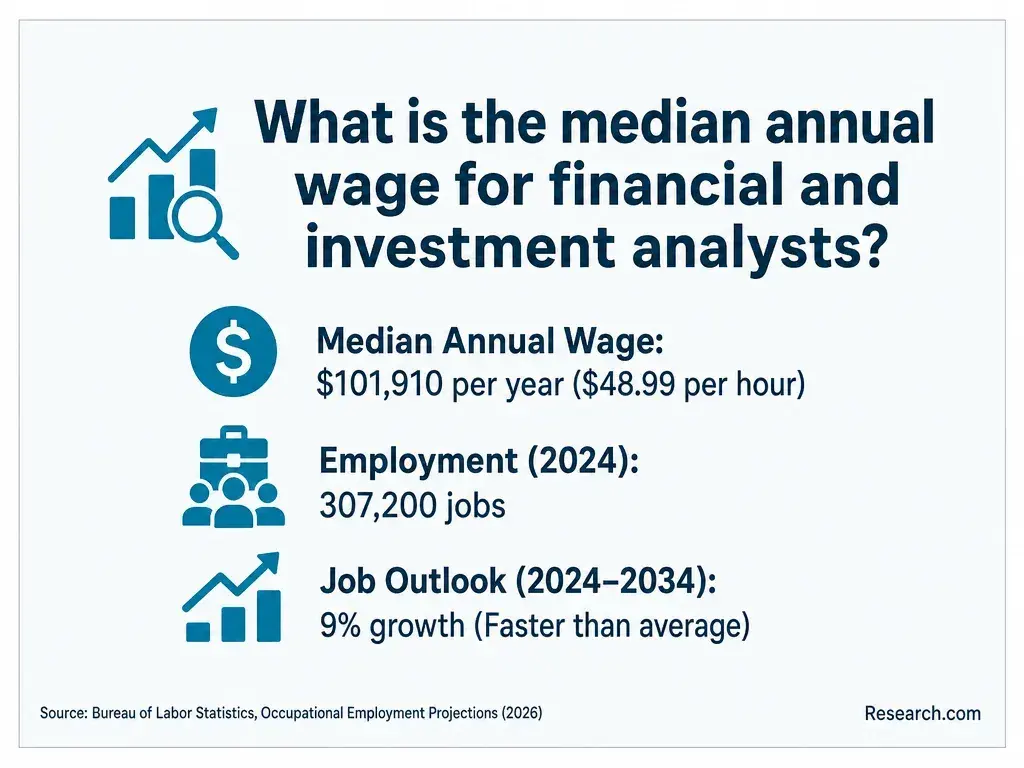
For context, the U.S. Bureau of Labor Statistics reports a May 2025 median annual wage of $78,760 for market research analysts, with employment projected to grow 7% from 2025 to 2035. That occupation-wide median is not a starting salary or an earnings estimate for business administration graduates. If speed to graduation matters, use US rankings for accelerated business bachelor's degrees as a starting point, then verify that the schedule leaves room for relevant quantitative practice and work samples.
Which certifications strengthen business administration career prospects?
A certification is most useful when it matches a target role and adds evidence that coursework alone does not provide. Spreadsheet or analytics training may help demonstrate tool use; project management or HR credentials may be relevant to those functions. Check each issuer's eligibility, exam, experience, renewal, and cost rules before committing. A business math course does not itself confer a professional credential.
If project work is your goal, compare a certification's required experience with the broader education and cost of a degree. Guidance on paying for project management bachelor's study with grants may help with the degree side of that comparison, but grants and certification funding have different eligibility rules. Choose the narrower credential when it addresses a defined skill gap without requiring another degree; choose coursework when you still need the underlying methods and practice.
Other Things You Should Know About Business Administration
Yes. Ask the department or instructor for a publicly shareable sample assignment, textbook section, or rubric. They may not be able to release past exams.
Ask how solutions are demonstrated and reviewed during the course. A missing sample is a reason to seek more information, not proof that instruction is weak.
That depends on the instructor's assessment rules. Confirm permitted tools for homework and exams separately; proficiency with a spreadsheet does not replace understanding the calculation.
Use instructor-provided, public, or clearly hypothetical datasets. Label assumptions and do not upload employer, customer, or employee information without authorization.
- The effects of example-free instruction and worked... - PMC https://pmc.ncbi.nlm.nih.gov/articles/PMC8379662/
- Evaluating Student Proficiency in Quantitative Reasoning | usf.edu https://digitalcommons.usf.edu/cgi/viewcontent.cgi
- What is a Syllabus? - Academic Advising - Stanford University https://advising.stanford.edu/current-students/advising-student-handbook/what-syllabus
- SQM-BBA Program | Baruch College Catalog https://baruch-undergraduate.catalog.cuny.edu/programs/SQM-BBA/requirements-p8gsV
- Mathematics Placement Information | Math - Queens College | The Center for Excellence in Teaching, Learning & Leadership https://www.qc.cuny.edu/academics/math/placement/
- Worked Examples - Teaching + Learning Lab - MIT https://tll.mit.edu/teaching-resources/how-people-learn/worked-examples/
- Quantitative Skills Requirement - Course Catalog | Syracuse University Academic Catalog https://coursecatalog.syracuse.edu/undergraduate/arts-sciences/liberal-arts-core/quantitative-skills/
- Interpreting a Syllabus | duke.edu https://hiddencurriculum.undergrad.duke.edu/preparing-for-class/interpreting-a-syllabus/