2027 Is an Online BS in Business Administration the Right Next Step for Operations Coordinators?
Audited and Verified:
Our Editorial and Data Verification Process
Research.com uses government datasets, official education statistics and primary institutional information to support its career and degree guides. Our review process checks factual accuracy, occupational definitions, source dates and the requirements associated with the credentials discussed.
How This Article Was Fact-Checked
Our editorial team verifies salary estimates, employment projections, education requirements and program information against original data providers and official organizations. Salary figures are checked against the relevant occupational definitions and reporting periods. Information about licensure, accreditation and required in-person training is reviewed separately.
Fact-checked and verified on:

Co-Founder and Chief Data Scientist
If you coordinate schedules, vendors, orders, or reports, you may already understand how an organization runs - but need broader financial, analytical, or management skills to take on more responsibility. An online BS in Business Administration can help, provided its coursework fits your target role and its schedule fits your job. This guide shows operations coordinators how to judge that fit, compare online programs with alternatives, and check the cost and career evidence before committing.
Key Things You Should Know
- An online BS in Business Administration is most useful when a target operations role calls for a bachelor's degree or broader budgeting, analytics, and management knowledge - not simply a new credential.
- Check live attendance, group work, exam rules, and required course availability: "online" does not necessarily mean self-paced or compatible with changing shifts.
- The Bureau of Labor Statistics projects 18% employment growth for logisticians from 2025 to 2035, but that specialized outlook is not a forecast for all operations coordinators or business graduates.
Is an Online BS in Business Administration Right for Operations Coordinators?
An operations coordinator typically keeps work moving across people, systems, and deadlines. Depending on the employer, that may mean tracking inventory, arranging deliveries, maintaining schedules, supporting purchasing, or preparing performance reports. A BS in Business Administration is a broad undergraduate degree; it can add context in accounting, management, and business decisions to the process knowledge you have gained at work.
It is a strong next step if postings for your intended role regularly request a bachelor's degree, you want to move beyond coordination into analyzing or improving operations, and you can complete the program without jeopardizing work or finances. Compare those postings with your actual duties - not your title alone. A coordinator who already owns vendor metrics may need different preparation from one whose work is primarily scheduling.
Consider a narrower path first if your immediate gap is one tool or task, such as advanced spreadsheets, inventory software, or project scheduling. Employer training, a targeted course, or a supervised improvement project may be faster and less expensive. A degree also cannot replace the experience usually needed to supervise staff or control a major budget. If you need to remain employed while studying, compare career advancement study options in business administration against the hours you can reliably protect each week.
What Can an Online Business Administration Bachelor's Degree Prepare You For?
The degree can help you interpret costs, explain operational trade-offs, work across departments, and assess process changes. For example, a coordinator who tracks late orders might learn to distinguish a supplier delay from a forecasting problem, estimate the cost implications, and present options to a manager. Coursework develops a framework for that analysis; employers will still look for evidence that you can apply it.
Build that evidence from work you are authorized to discuss: a de-identified process map, a spreadsheet model using permitted data, or a documented recommendation reviewed by a supervisor. Ask whether a program offers operations electives and an approved workplace-based capstone. Current employment does not automatically satisfy an internship or earn academic credit, and company information requires permission before use in coursework or a portfolio.
Choose a more specialized bachelor's pathway when you are confident about a specific function and its curriculum offers substantially more relevant depth. For instance, shorter bachelor's pathways in supply chain management may merit comparison if your goal is inventory, sourcing, or logistics rather than cross-functional administration. Check transfer-credit applicability and required courses before relying on an advertised completion timeline.
How Does an Online Degree Compare With Campus-Based Business Programs?
Delivery format changes how you participate, not the need to complete the degree's academic requirements. The useful comparison is whether each program lets you attend, collaborate, and finish required courses around your actual shifts.
| Consideration | Online program | Campus-based program |
| Attendance | May use recorded lessons, live sessions, or both; deadlines still apply | Usually requires travel and scheduled class meetings |
| Teamwork and assessment | May require scheduled video meetings, presentations, or proctored exams | Often coordinates group work and exams around campus meetings |
| Access to people | Depends on remote advising, faculty availability, and virtual career services | May make in-person advising and employer events easier to attend |
Ask for sample course schedules and assessment rules, including time zones, weekend obligations, technology requirements, campus visits, and how often required courses run. A program with asynchronous lectures may still be a poor fit if group meetings routinely conflict with peak operating hours. US business college rankings for online learners can help form a comparison list, but a ranking cannot confirm your individual schedule or degree plan.
Programs commonly combine general education with accounting, economics, statistics, finance, marketing, management, and business law. For an operations coordinator, the most consequential courses are often operations management, managerial accounting, analytics, information systems, and project management. They connect daily measures - such as backlogs, cycle times, and purchasing costs - to organizational decisions.
Look beyond course names. Check whether an operations course includes process mapping or capacity analysis, whether analytics requires spreadsheet modeling, and whether a capstone permits an approved operations problem. An elective on project management is not necessarily a formal concentration. Likewise, supervising schedules may involve staffing coordination without preparing you for the distinct responsibilities of an HR specialist; a guide to studying human resources can clarify that boundary if staffing is your intended career direction.
Review prerequisites and course sequencing before choosing an accelerated pace. Statistics or accounting may need to come before advanced electives, and a required course offered infrequently can delay graduation despite a fast term schedule. Compare the published sequence with other study options only after the school evaluates the credits you already hold.
Requirements vary by institution and by whether you apply as a first-year or transfer student. Schools generally request evidence of prior education, such as a high school credential or college transcripts; some business majors have separate GPA or prerequisite rules. Professional operations experience can strengthen an application, but it does not automatically waive admission requirements or award degree credit.
If you have previous college work, request an official evaluation showing which credits apply to general education, the business core, electives, and any concentration. Accepted credits that fill only free electives may do little to shorten the program. Ask admissions about entry requirements, the business department about major admission, and an adviser or registrar about the degree audit. If application charges matter, you can compare accredited schools with no application charge; confirm the current policy directly before applying.
A bachelor's degree is commonly structured around roughly 120 semester credits, but the credits and terms you personally need depend on transfer evaluation, residency rules, prerequisites, course availability, and enrollment pace. Part-time study may preserve income and make demanding courses manageable while extending the calendar time. Accelerated terms do not reduce the academic work required.
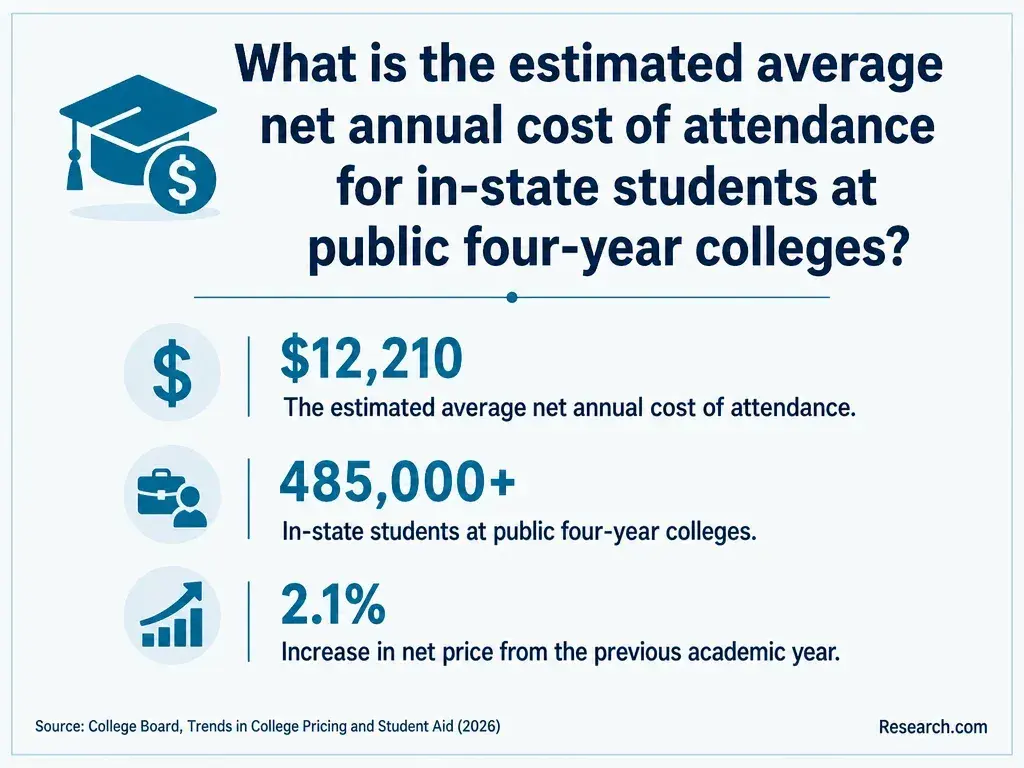
Request a written remaining-course plan and calculate cost from that plan, rather than multiplying an advertised per-credit rate by credits you hope will transfer. Include mandatory fees, books, software, exam proctoring, any travel, and potential borrowing costs. If your employer offers tuition assistance, check eligibility, reimbursement timing, grade rules, and what happens if you leave the job. Compare the resulting estimate with lower-priced accredited business administration study options, using the same assumptions for each school.
The financial test is practical: can you cover each term's cash payment, finish at a sustainable pace, and identify a plausible career benefit without assuming a promotion or salary increase? Ask the financial-aid office how your planned enrollment intensity affects aid eligibility before accepting an offer.
Start with the institution's accreditation by an accreditor recognized by the U.S. Department of Education. Confirm the school's current status through the accreditor or Department of Education, and check whether it applies to the institution awarding your degree. Institutional accreditation matters for quality oversight and can affect federal financial-aid eligibility, but it does not guarantee that another school will accept transfer credits.
AACSB, ACBSP, and IACBE are separate business-focused accreditors. If a school advertises one, verify which school, degree levels, and programs its accreditation actually covers; do not assume every business program is included. Business-focused accreditation is a comparison factor, not proof of an individual graduate's job prospects. When weighing affordability, federal aid options at accredited business administration colleges can provide a starting point, but confirm the institution's current aid participation and your own eligibility with its financial-aid office.
Your most realistic next move depends on what you have already done. An operations coordinator with purchasing and supplier experience might pursue a procurement or supply chain support role; one who owns schedules, status reports, and stakeholder follow-up might pursue project coordination. Experience analyzing workflow and presenting recommendations can support applications for operations analyst roles. In each case, compare the posting's required tools, industry knowledge, and decision authority with your own evidence.
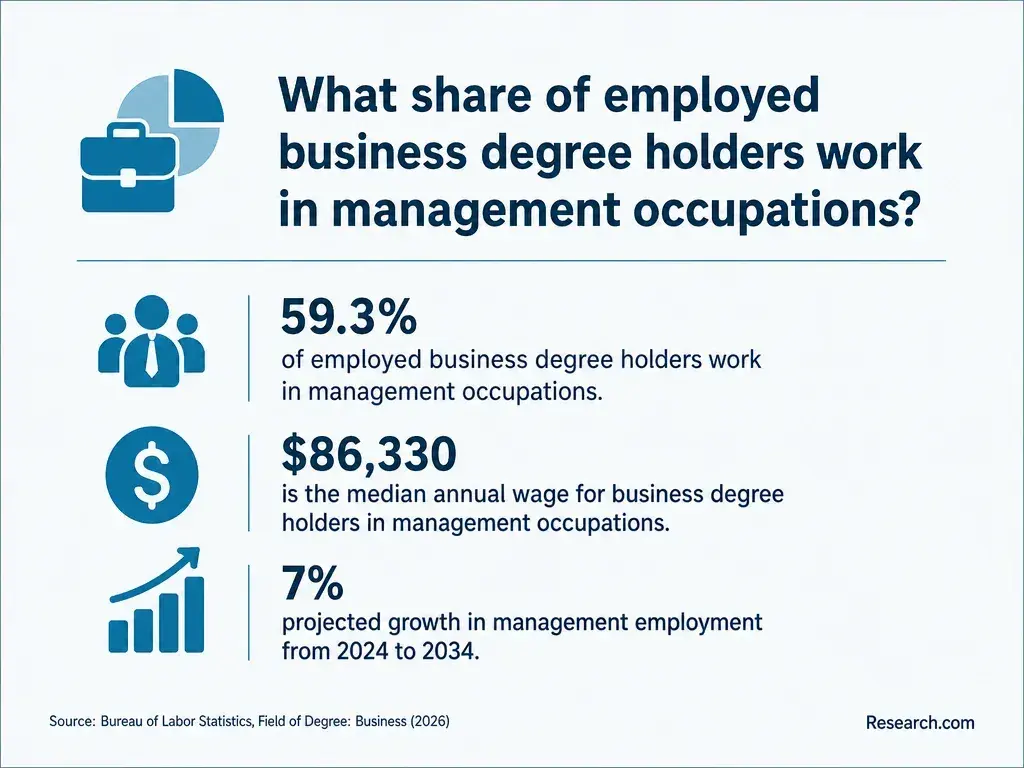
Management roles generally add responsibility for staffing, budgets, performance, and outcomes. A bachelor's degree can meet an education preference, but it does not itself establish readiness for those duties. If your desired work is primarily project planning rather than broad operations, compare the curriculum and total remaining cost of lower-tuition online programs for project management with a general business degree before committing.
"Operations coordinator" is not one uniform Bureau of Labor Statistics occupation, so there is no single national median that reliably describes the title. Use the occupation matching your target duties, then compare local postings. For logisticians, the BLS reports a May 2025 median annual wage of $82,320 and projects 18% employment growth from 2025 to 2035. Those figures describe the occupation across experience levels - not what a coordinator will earn after graduating or the outlook for every operations job.
Logistics data is most relevant if your work and target roles involve supply chains, inventory, or distribution. Supply chain education costs and career prospects can help frame that specialization decision, but compare its claims with specific job requirements and the price of completing your own degree. For internal advancement, your employer's pay bands and openings may be more informative than a national occupational median.
Do Operations Coordinators Need Certifications or Professional Licenses?
Operations coordination generally has no universal professional license. Employers may value training in the systems or methods they use, and specialized positions can have separate industry requirements. Even when exploring the fastest bachelor's-level business study options, a BS in Business Administration does not automatically confer a certification, qualify you for a particular exam, or authorize regulated work.
Choose a credential by starting with repeated requirements in your target job postings. If employers consistently request a particular project-management or supply chain certification, check the issuing organization's current education and experience rules before paying for preparation. If they instead emphasize software proficiency or documented process improvements, a focused course and credible work sample may serve you better. The best next step is the one that closes a verified gap: obtain a degree audit and schedule if a bachelor's is needed, or pursue targeted training if it is not.
Other Things You Should Know About Business Administration
No. Both are undergraduate business degrees, but their required courses and degree titles vary by school. Compare the actual curriculum and how your previous credits apply rather than assuming one title offers a particular advantage.
That depends on the institution. Ask for its diploma and transcript policies if the distinction matters to you; do not infer the wording from the program website.
Usually not to enroll in a degree. You may need approval to use employer tuition benefits, complete a workplace-based academic assignment, or share company information.
Often, but the change may alter required courses and your graduation date. Ask an adviser for an updated degree audit before switching.
- Education credits - AOTC and LLC | Internal Revenue Service https://www.irs.gov/credits-deductions/individuals/education-credits-aotc-and-llc
- General Schedule Qualification Policies | U.S. Office of Personnel Management https://www.opm.gov/policy-data-oversight/classification-qualifications/general-schedule-qualification-policies/
- Job Standard for Business Operations Coordinator | Boise State Online https://www.boisestate.edu/hrs-job-levels-job-standards/job-standard-for-business-operations-coordinator/
- How to Become a Business Operations Manager | GMercyU https://www.gmercyu.edu/academics/learn/become-operations-manager
- How to Choose an Accredited Online Business Degree Program with HR Focus | Colorado Technical University https://www.coloradotech.edu/degrees/studies/businesss-and-management/articles/online-business-degree-hr-options
- Operations Management Career Path | Roles, Skills & Salary | YSU https://online.ysu.edu/degrees/undergraduate/bsba/management/operations-manager-career-path/
- What Can You Do With a Business Administration Degree? | North Carolina Central University https://online.nccu.edu/blog/what-can-you-do-with-business-administration-degree/
- Management Careers in Business and Operations | St. Thomas University https://www.stu.edu/news/management-careers-in-business-and-operations/
- How Long Does It Take to Finish an Online Degree? | NMSU Global Campus https://global.nmsu.edu/blog/general/how-long-does-it-take-to-finish-an-online-degree/
- Career paths in operations: roles, responsibilities and skills | Capella University https://www.capella.edu/blog/business/career-in-operations/