2027 BS in Business Administration Curriculum: How to Evaluate Preparation in Employee Benefits
Audited and Verified:
Our Editorial and Data Verification Process
Research.com uses government datasets, official education statistics and primary institutional information to support its career and degree guides. Our review process checks factual accuracy, occupational definitions, source dates and the requirements associated with the credentials discussed.
How This Article Was Fact-Checked
Our editorial team verifies salary estimates, employment projections, education requirements and program information against original data providers and official organizations. Salary figures are checked against the relevant occupational definitions and reporting periods. Information about licensure, accreditation and required in-person training is reviewed separately.
Fact-checked and verified on:

Co-Founder and Chief Data Scientist
A business administration degree can provide a foundation for employee benefits work, but a general HR course may not teach you how to evaluate a health plan, administer retirement benefits, or explain enrollment choices to employees. That distinction matters when comparing BS programs, especially if you want to enter benefits administration or move into it from another role.
This guide shows which courses and practical assignments signal useful preparation, where a broader business degree falls short, and how to weigh program format, cost, credentials, and likely entry routes before enrolling.
Key Things You Should Know
- Prioritize HR, accounting, data analysis, and benefits-specific coursework; a general business core alone is not evidence of benefits readiness.
- Ask for syllabi and applied-work requirements: a plan comparison or enrollment-process project is more informative than an elective title.
- The U.S. median annual wage for human resources specialists was $75,940 in May 2025, but that occupation-wide figure is not a starting salary for benefits graduates.
What Is a Business Administration Degree's Role in Employee Benefits Preparation?
Employee benefits work involves helping an organization administer offerings such as health coverage, retirement plans, paid leave, and other employer-provided programs. Tasks vary by employer and role: one employee may maintain enrollment records and answer routine questions, while an experienced specialist may help assess plan costs, coordinate vendors, or support compliance reviews.
A BS in Business Administration can supply the business context behind those decisions: how organizations budget, manage employees, use data, and communicate policies. It is usually a foundation, not a benefits qualification. The strongest curriculum pairs that foundation with focused HR study and supervised practice.
If you already work in payroll, customer service, or HR operations, ask whether a program will let you build on that experience through an approved project; explore business administration colleges for working professionals with that question in mind. Current employment does not automatically satisfy an internship or capstone requirement.
What Employee Benefits Courses Should a Business Administration Curriculum Include?
Start with the required curriculum, then inspect elective descriptions and syllabi. The table distinguishes foundational subjects from the benefits-specific work a student should look for; it does not imply that every BS program offers each topic.
| Course area | Useful preparation | What to check in the syllabus |
| Human resource management and total rewards | Connects benefits to compensation, retention, and employee communication. | Coverage of plan types, enrollment, employee questions, and vendor coordination. |
| Accounting and managerial finance | Builds fluency with employer costs, budgets, and financial trade-offs. | Assignments comparing costs and explaining assumptions, rather than only memorizing terms. |
| Statistics and business analytics | Supports careful interpretation of participation, costs, and workforce data. | Spreadsheet work, data-quality checks, and privacy-conscious reporting. |
| Business law or employment law | Introduces the legal setting for employer decisions. | Whether benefits topics appear and whether students learn when to seek qualified advice. |
| Information systems and operations | Helps students understand enrollment workflows, records, and error prevention. | Process mapping or systems projects with appropriate data safeguards. |
Course depth matters more than a promising title. Ask for an example assignment: comparing hypothetical plan features for different employee needs tests different skills from calculating an employer budget. Check prerequisites before planning electives; business administration degree entry requirements can help frame questions, but the institution's catalog and adviser determine the sequence that applies to you. An HR elective, certificate, and formally recorded concentration are distinct credentials.
How Does Accreditation Affect Business Administration Program Quality?
First, verify that the institution holds recognized institutional accreditation. Then check whether any advertised business accreditation - such as AACSB, ACBSP, or IACBE - covers the school or program you would actually attend. Institutional accreditation and business-specific accreditation have different scopes; neither establishes that employee benefits is taught in depth or that graduates secure benefits jobs.
Use accreditation as a threshold, then examine the curriculum and student support. Request the current catalog, benefits-related syllabi, elective schedule, and rules for internships or workplace projects. For an online program, ask who supervises applied work and whether required courses run often enough for your planned sequence. Accreditation also matters when comparing financing options: use business administration college affordability and FAFSA participation as a starting point, then confirm the specific school's aid eligibility and your own eligibility with its financial-aid office.
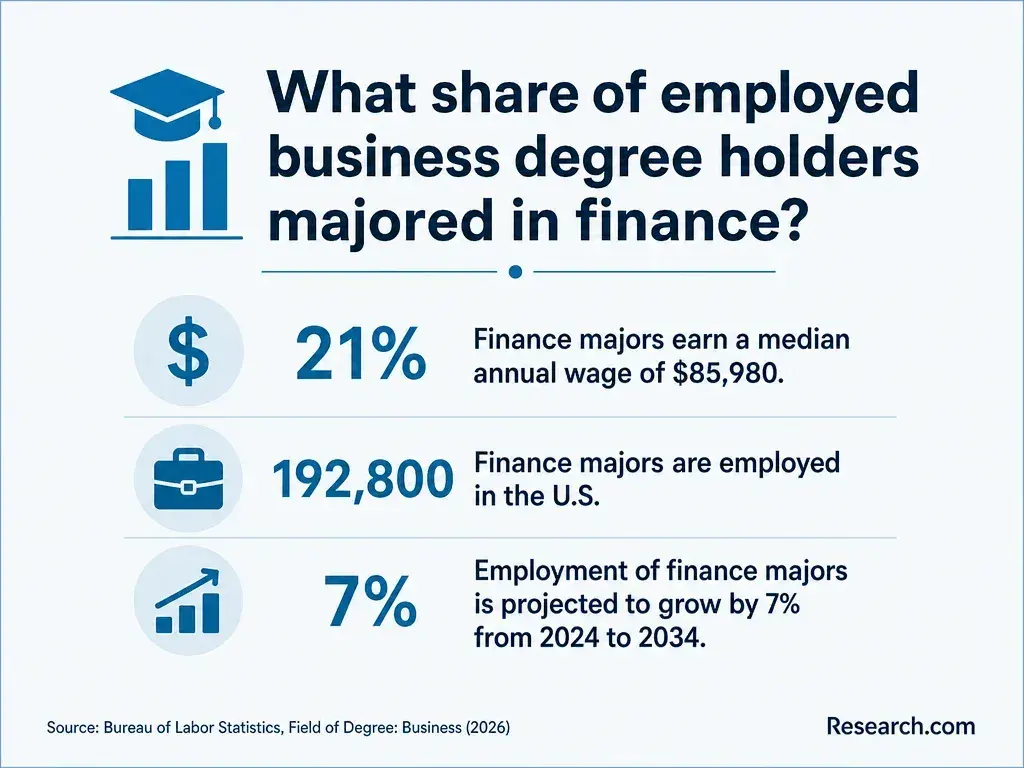
A general BS in Business Administration with substantial HR electives can fit someone seeking broad business options alongside benefits work. An HR major or formal concentration may offer more focused preparation if it includes total rewards, benefits administration, and HR systems. Accounting or finance study can be useful for cost analysis, but may leave gaps in employee communication and HR operations. Compare actual required courses and approved electives, not degree labels alone.
For a student transferring from an associate degree, the decisive issue is how prior credits apply to the remaining curriculum. Request a degree audit showing business-core requirements, HR electives, prerequisites, and residency credits before estimating completion time.
If the target is project coordination rather than benefits administration, project management bachelor's routes for associate degree graduates may be a better comparison. A person who already holds a bachelor's degree and relevant HR experience may instead need targeted benefits training, not a second undergraduate degree.
Either format can teach benefits concepts. The more meaningful difference is access to practice and feedback: Can you work through enrollment cases, explain a plan comparison, use spreadsheets, and receive corrections from an instructor or qualified workplace supervisor? Campus students may find in-person collaboration convenient; online students may be able to use an approved workplace project. Neither format guarantees a benefits placement.
If you work while studying, check live-session times, group-project schedules, exam rules, internship arrangements, and whether specialized electives are available online. An asynchronous lecture does not make every assignment self-paced. Before choosing among fast-paced online business degrees, compare the weekly workload and course sequence with the time you can reliably protect. Faster terms are useful only if you can complete the required learning and applied work.
Requirements depend on the institution and whether you apply as a first-year, transfer, or returning student. Schools commonly review prior education and transcripts; a business major may have separate entry or progression rules. Mathematics, accounting, economics, or statistics may be prerequisites for later courses even when they are not conditions of initial admission.
Ask admissions for the requirements tied to your applicant category, and ask an academic adviser which completed courses would satisfy the business core and HR-related prerequisites. The transfer office or registrar, not a preliminary search result, must evaluate prior credit. Application expenses are a separate consideration: online college options without an application fee may reduce the cost of applying, but compare curriculum and credit applicability before treating a fee waiver as a reason to enroll.
A traditional full-time bachelor's path often spans four academic years; transfer credit, part-time enrollment, course availability, and prerequisites can change the remaining timeline substantially. A shorter advertised format may compress the calendar without reducing required coursework. Ask for a term-by-term plan that includes the benefits-related electives you intend to take, not just the earliest possible graduation date.
Compare schools using the cost of your remaining requirements: tuition, mandatory fees, books, software, travel or proctoring, and any extra terms needed to reach a suitable elective or internship. Then account for grants, borrowing, employer reimbursement rules, and time away from paid work. Economical college choices for business administration majors can narrow a search, but a low advertised rate does not establish your total cost. Obtain a written degree audit and a school-specific aid estimate before making that calculation.
Possible entry routes include benefits assistant or coordinator roles, HR assistant positions with enrollment duties, and HR specialist positions where the applicant meets the employer's experience and skill requirements. Early responsibilities may include checking records, preparing employee communications, routing complex questions, and coordinating with payroll or vendors. More independent plan analysis or oversight usually calls for relevant experience and deeper benefits knowledge.
For applications, show evidence matched to the job description: a supervised enrollment-process map, a clearly labeled hypothetical plan comparison, or experience handling sensitive records under workplace rules. Do not present confidential employee data in a portfolio. If finishing a degree is necessary for roles you have identified, online business bachelor's degrees with shorter timelines may be worth comparing - but confirm that their course schedules still permit the HR electives and practical work you need. Graduation alone is not a substitute for role-specific experience.
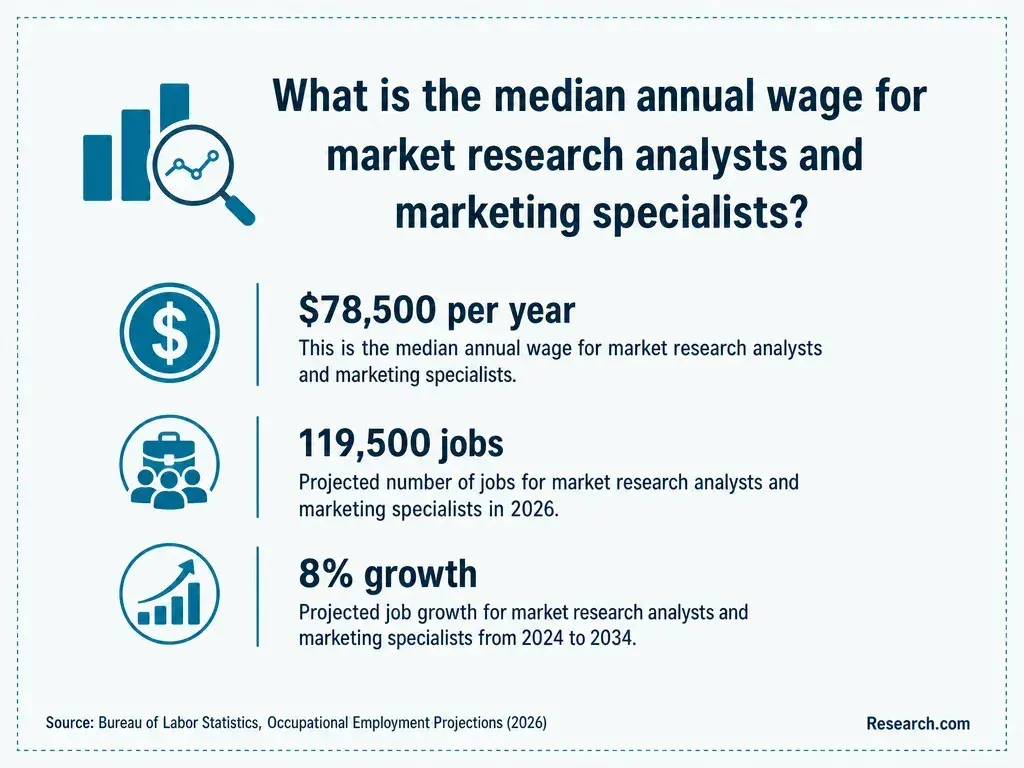
The U.S. Bureau of Labor Statistics reports a $75,940 median annual wage for human resources specialists in May 2025 and projects 6% employment growth for that occupation from 2025 to 2035. These are occupation-wide measures, not figures exclusively for employee benefits staff or new BS graduates. They are useful for understanding the broader HR market, but should not be treated as an offer or expected starting wage.
Benefits job titles and pay vary with responsibilities, employer, location, and experience. Compare local postings for the particular duties you want, including whether they require benefits administration, payroll systems, or prior vendor coordination. If you are weighing education against likely entry opportunities, affordable school choices for online business students can inform the cost side of that decision; use actual job requirements and a school-specific completion estimate for the other side.
Which Certifications Strengthen an Employee Benefits Career?
Benefits-focused education such as the Certified Employee Benefit Specialist (CEBS) program may help someone seeking deeper knowledge of benefit plans. Broader HR credentials, including SHRM-CP or PHR, may be relevant when a target role spans benefits and other HR functions. These are separate from a BS degree or an academic concentration. Check each issuing organization's eligibility, assessments, costs, and continuing requirements before choosing one.
Match the credential to the work you want to do. Someone seeking a benefits coordinator position may gain more immediate value from accurate enrollment and HR-systems experience; someone moving toward plan analysis may benefit from specialized study. If the goal has shifted toward project work rather than benefits, low-cost project management degree options offer a different education comparison - not a benefits certification. Avoid paying for a credential solely because it appears on a general list of HR qualifications.
Other Things You Should Know About Business Administration
Only with the necessary employer and academic permissions. Remove personal and proprietary information, and confirm what you may describe publicly; anonymizing a file alone may not resolve confidentiality concerns.
No. Plan structures, governing rules, procurement processes, and employment systems can differ. Look for training and supervised experience relevant to the employer you want to join.
Not necessarily. Access depends on the position and organization. Ask employers about authorized duties, privacy training, and procedures for referring questions involving sensitive information.
Not for every benefits role. Selling or advising on insurance products can trigger state-specific licensing requirements, while an employer's internal enrollment or administrative position may have different duties. Check the exact role and applicable state rules.
- Employment Law Guide - Employee Benefit Plans https://webapps.dol.gov/elaws/elg/erisa.htm
- The Federal Work-Study Program - FSA Partner Connect https://fsapartners.ed.gov/knowledge-center/fsa-handbook/2024-2025/vol6/ch2-federal-work-study-program
- ERISA | U.S. Department of Labor https://www.dol.gov/general/topic/health-plans/erisa
- How Quantitative Skills Are Used Outside of STEM Careers | upenn.edu https://lpsonline.sas.upenn.edu/features/how-quantitative-skills-are-used-outside-stem-careers
- BSBA vs BBA - What's the Difference? https://post.edu/blog/bsba-vs-bba-whats-the-difference/
- BS Business Administration | University at Albany https://www.albany.edu/business/programs/bs-business-administration
- Bachelor of Science in Business Administration | Purdue University Global Academic Catalog https://catalog.purdueglobal.edu/undergraduate/business-information-technology/business-administration-bs/
- 6 Types of Business Degrees and Career Paths | UMass Global https://www.umassglobal.edu/blog-news/6-types-business-degrees-and-career-paths
- Bachelor of Business Administration (BBA) | National University https://www.nu.edu/degrees/accounting-finance-economics/programs/bachelor-business-administration/
- Bachelor of Science in Business Administration | WPUNJ https://online.wpunj.edu/degrees/undergraduate/bsba/