2027 Choosing a BS in Business Administration: How to Check a Weekly Start Claim That Applies Only to Selected Courses
Audited and Verified:
Our Editorial and Data Verification Process
Research.com uses government datasets, official education statistics and primary institutional information to support its career and degree guides. Our review process checks factual accuracy, occupational definitions, source dates and the requirements associated with the credentials discussed.
How This Article Was Fact-Checked
Our editorial team verifies salary estimates, employment projections, education requirements and program information against original data providers and official organizations. Salary figures are checked against the relevant occupational definitions and reporting periods. Information about licensure, accreditation and required in-person training is reviewed separately.
Fact-checked and verified on:

Co-Founder and Chief Data Scientist
A weekly start date can make a BS in Business Administration easier to begin, but it may not make the degree easier to finish. If the claim applies only to selected courses, a required accounting class or capstone could still determine your graduation date.
This guide is for prospective students comparing flexible programs, especially those planning around work, caregiving, or transfer credits. You'll learn what evidence to request, how to test a proposed course schedule, and when a weekly-start option is worth choosing.
Key Things You Should Know
- "Weekly starts for selected courses" does not mean weekly starts for every required course or for the degree program as a whole.
- Request a written, term-by-term plan showing required courses, prerequisites, available start dates, and what happens if a class fills or is canceled.
- Many bachelor's degrees require about 120 semester credits, but your remaining requirements - not the frequency of introductory-course starts - determine your likely completion time.
What is a BS in Business Administration, and who is it for?
A BS in Business Administration is an undergraduate degree combining general education with business subjects such as accounting, finance, marketing, management, operations, and quantitative analysis. The exact curriculum depends on the school; a BS is not interchangeable with every BBA or specialized business degree.
It can suit students seeking broad business preparation or a bachelor's completion route. For someone with a job or caregiving responsibilities, though, the decisive feature may be whether required classes fit a workable calendar. Use ranked US college pathways in online business to identify options, then compare each school's actual degree requirements and course schedule rather than treating a ranking as proof of flexibility.
How can you verify a business administration program's accreditation?
Check institutional accreditation first. Search the institution in the U.S. Department of Education's accreditation database, confirm its name and campus or online division match the program you are considering, and ask the school whether the accreditation covers your enrollment location and delivery format. Also verify federal-aid eligibility separately if you intend to use aid.
AACSB, ACBSP, and IACBE accreditation concerns business education, but its scope varies. Check the relevant accreditor's directory for the school and ask whether the specific BS in Business Administration is included. Neither institutional nor business accreditation verifies a weekly-start promise. Even when reviewing US rankings for accelerated business bachelor's degrees, confirm accreditation and scheduling directly with the institution.
What does a weekly start claim actually mean for selected courses?
It may mean that at least one eligible course begins each week - not that you can enter every class, meet every prerequisite, or graduate on a weekly cycle. Ask for the exact list of eligible courses for your intended enrollment period. Distinguish a new course start from weekly admission processing, weekly orientation, or a rolling application deadline.
The quickest way to test the claim is to compare it with a proposed degree plan. Request these records in writing before committing:
- A current catalog and degree audit, including which transfer credits satisfy specific requirements.
- The next scheduled start dates and seat availability for each course you still need, especially prerequisites, concentration courses, and the capstone.
- Rules for enrollment cutoffs, course cancellations, minimum enrollment, waitlists, and required breaks between courses.
- A revised completion estimate if one required course is unavailable when you need it.
For example, weekly starts in introductory electives offer little time savings if a prerequisite must be completed before an advanced course offered only once a term. Online colleges with accelerated business programs may offer additional options, but "accelerated" and "weekly start" describe different features; verify both against required-course availability.
Programs commonly include general education, introductory accounting and economics, business communication, marketing, finance, management, operations, statistics or other quantitative work, and a strategic-management capstone. Requirements and course order vary. A formal concentration may add a sequence of specialized classes; an elective in that subject does not by itself create a concentration.
For a weekly-start claim, identify sequence bottlenecks: accounting before finance, statistics before analytics, or a capstone restricted to students who have completed the business core. Ask whether required group projects, presentations, internships, or capstones have fixed meeting or submission dates. A program advertising flexible starts may still have residency or transfer limits; the distinction is also important when comparing project management bachelor's residency and transfer requirements with a general business degree.
Schools generally ask first-year applicants for evidence of secondary-school completion and transfer applicants for prior college transcripts. Individual programs may set GPA, mathematics, or business-major entry requirements. Admission to the institution, admission to the major, and application of transfer credits to degree requirements are separate decisions.
Before choosing a start date, submit all transcripts and request a written evaluation of outstanding prerequisites. If you are returning to college, ask whether older accounting or quantitative courses still satisfy current requirements. For a broader preparation checklist, see entry conditions for prospective business administration students. Do not schedule a weekly-start course on the assumption that an unevaluated class will meet its prerequisite.
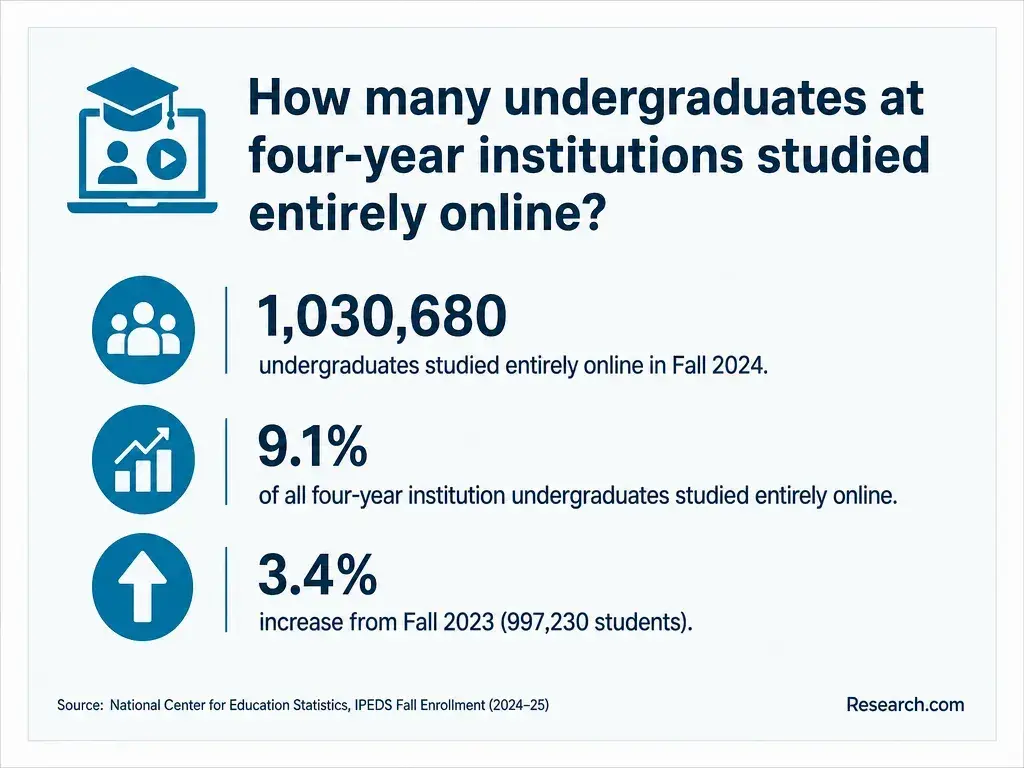
Neither format is inherently more flexible. An online class can still require live sessions, proctored exams, coordinated group work, and weekly deadlines. A campus program may have fewer entry dates but a more predictable sequence of required courses. Compare the time you can actually attend and study with the schedule for the classes you need, not merely the format advertised.
Working students and caregivers should ask about evening obligations, time zones, accessibility support, required visits, and leave policies. If you are applying to several online schools, online college options without an application fee may reduce the cost of gathering offers. A waived application fee, however, says nothing about course availability or graduation timing.
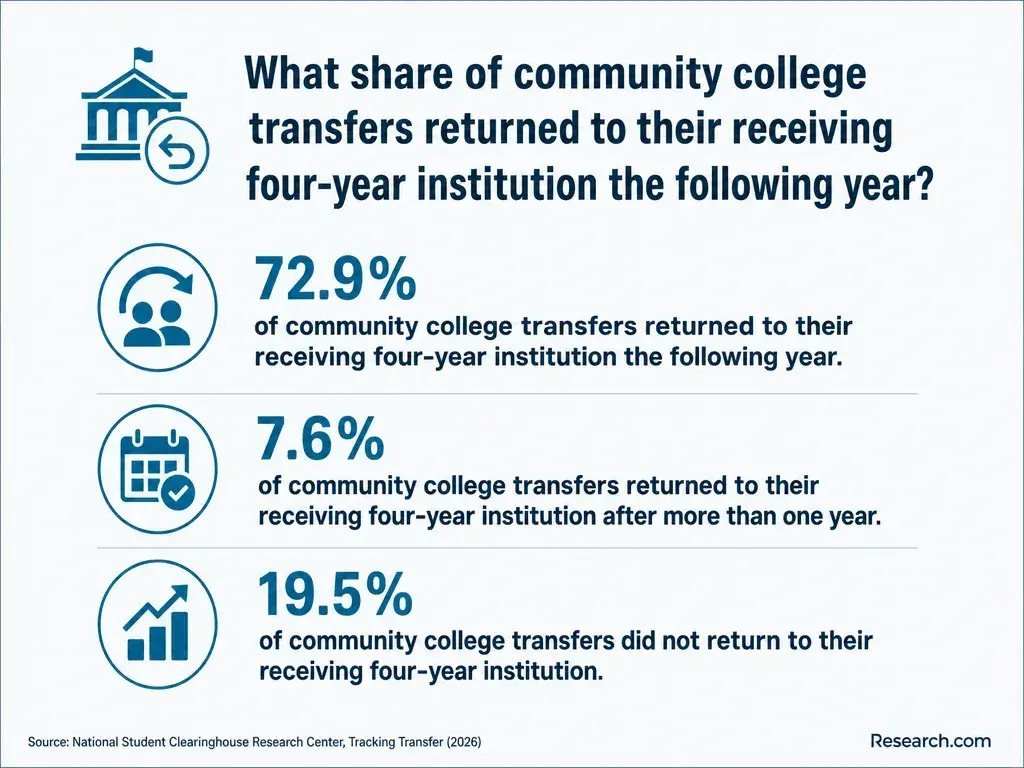
A traditional full-time bachelor's path is often planned across four academic years; transfer credit and enrollment pace can change the timeline. Weekly starts help only if they let you take applicable courses sooner without creating prerequisite conflicts or an unsustainable workload. Ask an adviser for both an earliest-feasible schedule and a conservative schedule allowing for a missed or unavailable class.
Compare costs using the same remaining-degree plan at each school. Include tuition and mandatory fees, books or software, proctoring or travel, and the cost of any extra term caused by course sequencing. Ask whether charges accrue per credit, course, or term and how a delayed start affects financial aid or employer reimbursement. Lists of low-cost shorter business administration programs are a starting point, not a substitute for an individualized credit evaluation and written cost estimate.
The degree can support applications for roles such as operations coordinator, administrative specialist, marketing coordinator, HR specialist, or project coordinator, depending on your experience and skills. These jobs have different tasks: an HR role may involve recruiting and employee records, while an operations role may focus on schedules, vendors, and processes. Graduation alone does not confer management responsibility.
Choose coursework and applied assignments that produce evidence relevant to your target role, such as a documented process analysis or spreadsheet-based budget. If HR is your goal, compare the broad business curriculum with HR education costs and career planning before deciding whether specialized study would serve you better. Check job postings for experience and technical requirements that the degree may not supply.
There is no single salary or growth rate for BS in Business Administration graduates; labor statistics describe occupations, not everyone holding a particular degree. For example, the U.S. Bureau of Labor Statistics reports a May 2025 median annual wage of $102,320 for project management specialists. That occupation-wide median includes experienced workers and should not be read as a starting salary for a new graduate or as the financial return from a faster course start.
Compare potential earnings with the duties and entry requirements of the role you want, then assess the cost of reaching it. If you are weighing a specialized project management degree against general business, comparing project management tuition and mandatory fees can help frame the cost side of that separate decision. Neither degree's advertised calendar establishes a salary outcome.
Do business administration graduates need certifications or licenses?
A general business degree does not normally require an occupational license to be awarded. Particular jobs may have separate requirements: CPA licensure is governed by state accountancy boards, and certain financial-services activities require appropriate licenses. Voluntary HR or project management certifications have their own eligibility rules; completing a related course does not automatically qualify you.
If a credential is your immediate objective, check its issuing organization's requirements before paying for a full degree. Financial aid for an eligible degree also should not be assumed to cover a stand-alone certification. Guidance on federal aid for undergraduate project management study illustrates why the program you enroll in - and its aid eligibility - matters independently of a future professional credential.
Other Things You Should Know About Business Administration
Yes. Save the dated program page and ask admissions to identify the eligible courses and applicable catalog in an email. An adviser can then confirm how the offer affects your individual plan.
Ask for the next available section, any change to your degree plan, and the applicable refund or deferral policy. Obtain the revised dates and charges in writing before switching courses.
It can if your employer pays only after course completion or has term-based deadlines. Check the benefit policy and payroll process before selecting a start that creates an unexpected upfront payment.
Start with the school's published student complaint process and provide the dated advertisement and written replies. Check the institution's escalation procedures if the issue remains unresolved.
- School-Determined Requirements - FSA Partner Connect https://fsapartners.ed.gov/knowledge-center/fsa-handbook/2026-2027/vol1/ch1-school-determined-requirements
- Filling Out the FAFSA® Form | studentaid.gov https://studentaid.gov/apply-for-aid/fafsa/filling-out
- Delayed Time-to-Degree and Post-college Earnings - PMC https://pmc.ncbi.nlm.nih.gov/articles/PMC7875953/
- Advising Guidelines, Get Ready for Wes | Wesleyan University https://www.wesleyan.edu/getreadyforwes/advising-guidelines/
- Learning Modalities | Golden Gate University https://ggu.edu/learning-modalities/
- Online Course Information https://online.uark.edu/courses/
- Class Formats | Ivy Tech Community College https://www.ivytech.edu/classes/class-formats/
- Course Explorer: Home | illinois.edu https://courses.illinois.edu/
- Frequently Asked Questions | The College | The University of Chicago https://college.uchicago.edu/new-student-advising/faqs
- Frequently Asked Questions | Course Placement | University of Connecticut https://placement.uconn.edu/faqs/