
2027 How to Become a Licensed Clinical Social Worker (LCSW)

Co-Founder and Chief Data Scientist
Becoming a Licensed Clinical Social Worker is a serious career decision because it requires graduate education, supervised clinical practice, state licensure, and ongoing professional development. The payoff is a career path that can lead to independent clinical practice, work with vulnerable populations, leadership roles in social service systems, and specialized practice in mental health, healthcare, schools, substance use treatment, aging services, and community programs.
This guide is for students, career changers, BSW graduates, MSW applicants, and early-career social workers who want a practical answer to one question: what does it actually take to become an LCSW, and is the path worth the time and cost? You will learn the typical education route, licensing steps, skills required, salary and job outlook information, program selection factors, financing options, burnout risks, technology trends, and alternative career paths.
If you are comparing graduate programs, cost will likely be one of your first filters. Some students start by reviewing the most affordable online MSW programs, but price should never be the only factor. Accreditation, field placement support, state licensure alignment, clinical training quality, and total debt matter just as much.
How to Become a Licensed Clinical Social Worker Table of Contents
- Why pursue a career in Clinical Social Work?
- Clinical Social Work Career Outlook
- Required Skills to Become a LCSW
- How to Become an LCSW
- How can I advance my career in Clinical Social Work?
- How do you select the best educational path for aspiring LCSWs?
- How can LCSWs manage self-care to avoid burnout?
- Can an Accelerated Online MSW Program Fast-Track Your LCSW Journey?
- What are the long-term career prospects for Licensed Clinical Social Workers?
- How can I finance my social work education and licensure journey?
- How do online advanced standing programs enhance the path to becoming an LCSW?
- What is the return on investment for social work education?
- What is the difference between an MSW and an LCSW?
- Alternative Career Options for Licensed Clinical Social Workers
- The Role of a Bachelor’s Degree in Social Work (BSW) for Aspiring LCSWs
- What are the specific steps to obtain an LCSW license in different states?
- How are emerging technologies reshaping clinical social work practice?
Quick Answer: How Do You Become an LCSW?
To become a Licensed Clinical Social Worker, you generally need to earn a bachelor’s degree, complete a Master of Social Work from an accredited program, finish supervised clinical experience required by your state, pass the clinical licensing exam, and maintain your license through continuing education. The route often takes around eight years when undergraduate education, graduate study, supervised practice, and licensing are considered together.
The fastest route is usually a CSWE-accredited BSW followed by an advanced standing MSW, because some graduate programs allow qualified BSW holders to reduce repeated foundational coursework. However, no shortcut should bypass accreditation, state licensing requirements, or quality clinical supervision.
Why pursue a career in Clinical Social Work?
Clinical social work is a good fit for people who want to combine mental health practice with advocacy, case coordination, and support for individuals and communities facing difficult circumstances. LCSWs often work with clients affected by trauma, chronic illness, poverty, housing instability, substance use disorder, family conflict, disability, grief, or serious mental health concerns.
The work is meaningful, but it is not easy. LCSWs may carry large caseloads, navigate complex systems, document care carefully, and manage emotionally demanding situations. The career is best suited for people who can build trust, think clinically, respect client autonomy, and work within ethical and legal boundaries.
Compensation can also make the path viable for many graduates. The median annual wage for social workers in the U.S. was $61,330, while another cited figure for social workers is $61,420. For comparison, the estimated median annual wage of 119.2 million full-time wage and salary workers in the country was $52,800. Clinical licensure can improve professional mobility because LCSWs have training that may qualify them for roles involving assessment, diagnosis, therapy, supervision, and independent practice where permitted by state law. You can compare earnings by location in this licensed clinical social worker salary guide.
If you are still deciding between helping professions, it can also help to compare this path with adjacent roles, such as the steps involved in learning how to become a mental health worker.
Clinical Social Work Career Outlook
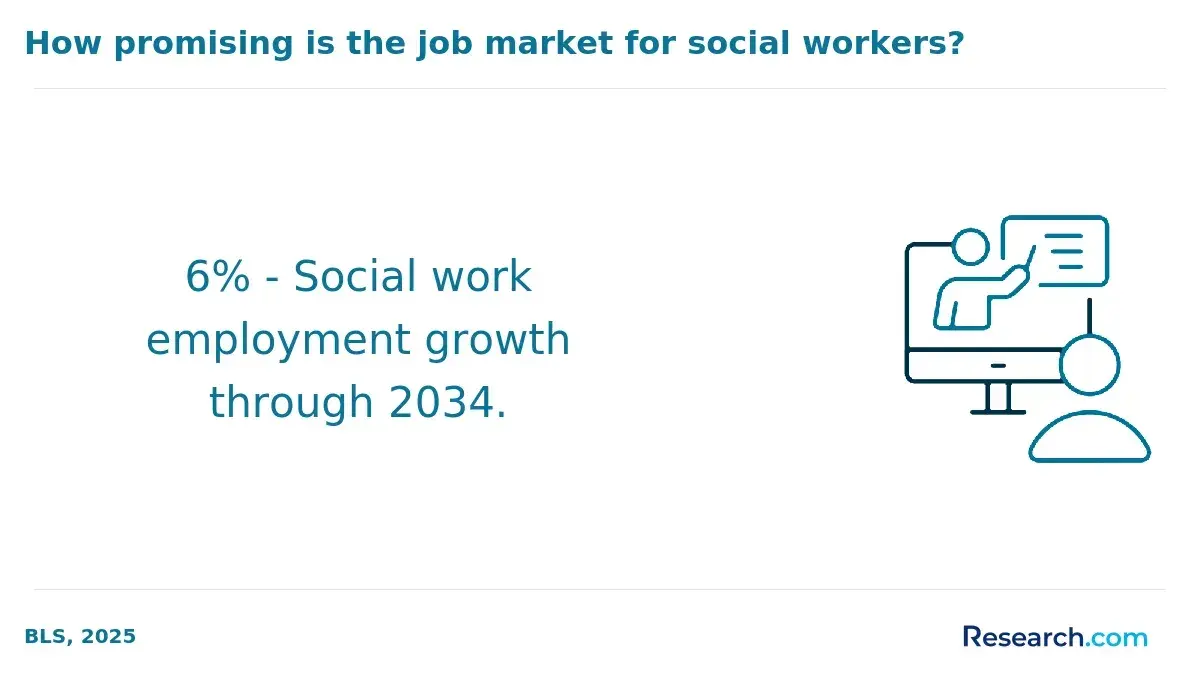
The labor market for social work remains favorable compared with many occupations. Social work employment has been projected to grow by 9% through 2031, compared with 5% for all occupations. The article also cites an estimated 74,700 unfilled positions annually in the United States between 2021 and 2031 based on that projected 9% employment increase for social workers.
Demand is connected to several long-running needs: access to behavioral healthcare, aging-related services, substance use treatment, school and family support, medical social work, and social services for underserved communities. The need for mental health and substance use care is especially visible when compared with the projected 22% job growth for substance abuse, behavioral disorder, and mental health counselors. Related addiction recovery occupations, such as substance abuse counselors, may appeal to students who want to focus on recovery services rather than the broader clinical social work route.
Public funding also affects demand. Expansions or contractions in healthcare, Medicaid, community mental health, child welfare, veterans services, and local social service budgets can change hiring patterns. Federal social service funding has been discussed as a factor in expanding mental health and social services, including by sources that track federal funding for social services.
| Role | Median Annual Wage | Job Outlook |
| Substance Abuse, Behavioral Disorder, and Mental Health Counselor | $48,520 | 22% |
| Social Worker | $61,420 | 9% |
| Psychologist | $81,040 | 6% |
| All Occupations | $52,800 (based on $1,100 median weekly earnings of 119.2 million full-time wage workers) | 5% |
Required Skills to Become a LCSW
LCSWs need more than compassion. They must combine clinical judgment, ethical decision-making, documentation discipline, cultural humility, and practical knowledge of health and social service systems. Students should also understand social work ethics before entering clinical practice, because confidentiality, mandated reporting, boundaries, informed consent, and client self-determination are central to the profession.
Clinical and Technical Skills
- Assessment and intake skills: LCSWs gather information about a client’s mental health, safety, family system, living conditions, finances, support network, and immediate risks. Strong assessment skills help clinicians choose appropriate interventions and referrals.
- Diagnostic knowledge: Clinical social workers must understand diagnostic frameworks, including the Diagnostic and Statistical Manual of Mental Disorders (DSM). Diagnosis is only one part of care, but it affects treatment planning, documentation, referrals, and insurance processes.
- Case documentation: Clinical notes, treatment plans, safety plans, discharge summaries, and referral records must be accurate, timely, and compliant with employer and regulatory standards.
- Technology literacy: Modern practice often involves electronic health records, telehealth tools, secure messaging, online training, scheduling systems, and data reporting platforms.
- Care coordination: LCSWs frequently coordinate with physicians, psychiatrists, schools, courts, housing agencies, child welfare teams, and family members when authorized and appropriate.
Interpersonal and Professional Skills
- Emotional intelligence: LCSWs must respond to distress without becoming overwhelmed or detached. This requires self-awareness, reflective practice, and strong professional boundaries.
- Communication: Effective clinical work depends on active listening, clear explanations, careful questioning, and the ability to communicate with clients, families, supervisors, and interdisciplinary teams.
- Cultural awareness: LCSWs serve clients from different racial, ethnic, religious, socioeconomic, linguistic, disability, gender, and family backgrounds. Culturally responsive care reduces assumptions and improves trust.
- Ethical judgment: Social workers often face competing obligations, such as protecting client confidentiality while responding to safety concerns. Ethical reasoning is essential.
- Resilience: Clinical work can involve trauma exposure, grief, crisis intervention, and system barriers. Resilience does not mean ignoring stress; it means using supervision, peer support, and healthy boundaries to sustain practice.
Empathy is not simply a soft skill in clinical social work. Moudatsou et al. explained that healthcare users who experience empathy during treatment may show better results and stronger potential for improvement. They also noted that social workers with higher empathy may be more effective in their role because empathy supports trust, helps clients feel safe enough to share concerns, and contributes to therapeutic change and improved social functioning.
How to Become an LCSW
The LCSW pathway is usually built in stages: undergraduate preparation, graduate social work education, supervised clinical practice, licensure examination, and continuing education. Many students start with a Bachelor of Social Work, but students with other undergraduate majors can still enter many MSW programs if they meet admission requirements.
A BSW commonly takes four years, and an MSW may take two years. Social work education introduces students to human behavior, policy, research, field practice, ethics, assessment, interventions, and social systems. Students also study ideas connected to advocacy, equity, and social work theories and models.
Some students pursue additional study after licensure, including doctoral education. Research, teaching, administration, policy leadership, and advanced specialization are common reasons to explore online PhD social work programs.
| Stage | What You Do | Decision Point |
| Undergraduate preparation | Complete a BSW or another bachelor’s degree that prepares you for graduate admission. | A BSW may qualify you for advanced standing MSW options, while another major may require the full MSW sequence. |
| MSW program | Choose an accredited MSW with clinical coursework and field education. | Confirm that the program supports the licensing rules in the state where you plan to practice. |
| Supervised clinical experience | Work under approved supervision after the MSW according to state requirements. | Verify supervisor qualifications, documentation rules, and required hours before you begin. |
| Licensing exam | Apply through your state board and pass the required clinical exam. | Plan for exam fees, preparation time, and state-specific application timelines. |
| Licensed practice | Practice within your state’s scope of practice and complete continuing education. | Track renewals, required topics, and any rules for telehealth or interstate practice. |
What can I do with an Associate’s Degree in Clinical Social Work?
An associate degree will not qualify you to become an LCSW, but it can help you enter support roles in social services, human services, or legal services. If you are exploring this level of education, start by understanding what a human services degree is and how it differs from social work licensure preparation.
Social and Human Service Assistant
Social and human service assistants help clients connect with programs, benefits, and community resources. They may support social workers, healthcare teams, and nonprofit agencies by helping clients complete forms, locate housing or food resources, arrange appointments, and document services.
- Help clients access social services, public benefits, healthcare, housing, and financial support.
- Offer basic support while referring clients with clinical needs to qualified professionals.
- Keep records of client contacts, services provided, and follow-up needs.
Many roles require at least a high school diploma or high school equivalency, such as the General Educational Development certificate, although some employers prefer postsecondary coursework. The employment outlook for social and human service assistants through 2031 is 12%.
Median salary: $37,610
Paralegal and Legal Assistant
Paralegals and legal assistants work under attorney supervision and can be relevant for students interested in child welfare, family law, disability rights, criminal justice, immigration, or public interest work.
- Conduct legal research and organize case information.
- Draft documents and prepare case materials.
- Maintain files and assist with trial preparation.
- Interview clients or witnesses under attorney direction.
An associate’s degree in paralegal studies is commonly the minimum educational route. The employment outlook for paralegals and legal assistants by 2031 is 14%.
Median salary: $56,230
What can I do with a Bachelor’s Degree in Clinical Social Work?
A bachelor’s degree can lead to entry-level or mid-level roles in human services, case management, community programs, and corrections, but it does not usually authorize independent clinical practice. Students who want to become LCSWs should treat the bachelor’s degree as a foundation for MSW study.
Social and Community Service Manager
Social and community service managers coordinate programs, supervise staff or volunteers, manage budgets, and evaluate whether services are meeting community needs. They may work for nonprofits, government agencies, healthcare organizations, or advocacy groups. The employment outlook for social and community service managers by 2031 is 12%.
Median salary: $74,000
Probation Officer and Correctional Treatment Specialist
Probation officers and correctional treatment specialists supervise people on probation or those returning from incarceration. They monitor compliance, connect clients to treatment and counseling services, and collaborate with courts, mental health professionals, and community agencies. Employment for probation officers and correctional treatment specialists by 2031 is expected to have little to no change.
Median salary: $60,250
Can you get a Clinical Social Work job with just a certificate?
A certificate may help you qualify for certain support roles, strengthen your resume, or build knowledge in areas such as trauma, aging, substance use, case management, or nonprofit work. However, a certificate alone does not replace an MSW or state clinical licensure. Independent clinical practice generally requires a graduate social work degree, supervised clinical experience, and a license issued by the state where you practice.
| Counseling Path | Social Services Path | Legal Path | |
| Primary Focus | Providing mental health services to individuals, families, and communities | Assisting with socio-economic matters, including foster care, homelessness, and child support | Providing research and therapeutic support |
| Entry Level Positions | Substance Abuse, Behavioral Disorder, and Mental Health Counselor ($48,520) | Social and Human Service Assistant ($37,610) | Paralegal and Legal Assistant ($56,230) |
| Middle Level Positions | Social Worker ($61,420) | Social and Community Service Manager ($74,000) | Probation Officer and Correctional Treatment Specialist ($60,250) |
| Senior Level Positions | Clinical and Counseling Psychologist ($90,130) | Child and Adolescent Psychologist ($87,600) | Forensic Psychologist ($68,569) |
How can I advance my career in Clinical Social Work?
Career advancement in clinical social work usually comes from a combination of licensure, supervised experience, specialization, leadership ability, continuing education, and professional reputation. An MSW is the central graduate credential for clinical social work, while doctoral study may support careers in research, teaching, policy, or executive leadership.
What can I do with a Master’s in Clinical Social Work?
Social Worker
Social workers support individuals, families, groups, and communities through direct services, advocacy, resource coordination, crisis response, and program participation. MSW-trained professionals may move into more advanced practice settings, and those who become licensed may qualify for clinical responsibilities allowed by their state.
Median salary: $61,420
School and Career Counselors and Advisors
School and career counselors and advisors help students clarify academic goals, career interests, strengths, challenges, and next steps. They may assist with college planning, career readiness, student support services, and referrals for students facing mental health or family-related concerns.
Median salary: $60,510
What kind of job can I get with a Doctorate in Clinical Social Work?
Child and Adolescent Counselor
Child and adolescent counselors support young people experiencing emotional, behavioral, developmental, or family-related challenges. They may work in schools, clinics, hospitals, community agencies, or private practice settings depending on their credentials and state rules. LCSWs interested in youth-focused work may also compare their options with careers in child and adolescent psychology.
Median salary: $87,600
Forensic Social Worker
Forensic social workers operate at the intersection of social work, behavioral health, and the legal system. They may work with courts, correctional facilities, law enforcement agencies, attorneys, victims, families, and people involved in criminal or civil legal matters. Students drawn to this area may also review careers in forensic psychology to understand differences in training and scope.
Median salary: $68,569
Which certification is best for Clinical Social Work?
The LCSW is the core credential for clinical practice, but additional certifications can signal advanced experience or specialization. Two examples are the Board Certified Diplomate in Clinical Social Work and the Clinical Social Worker in Gerontology.
- Board Certified Diplomate in Clinical Social Work: This credential, offered by the American Board of Clinical Social Work, recognizes advanced clinical practice qualifications tied to education, training, and experience.
- Clinical Social Worker in Gerontology: This National Association of Social Workers credential recognizes master’s-level expertise with older adults. It validates that MSW-trained social workers have met national standards, completed two years of clinical experience with older adults after the MSW, and agreed to professional and ethical standards.
Certifications are most useful when they match your client population, employer expectations, and long-term specialty. They should not be used as a substitute for the license required in your state. Currently, an estimated 187,402 clinical social workers are licensed in the U.S.
How do you select the best educational path for aspiring LCSWs?
The best educational path is the one that is accredited, affordable enough to complete, aligned with your state’s licensing rules, and strong in field education. Do not choose an MSW program only because it is online, fast, inexpensive, or easy to enter. Those factors matter, but they are secondary to whether the program can actually move you toward licensure.
Some applicants begin with accessible options, including the easiest social work programs to get into. Easier admission can help career changers or students with uneven academic records, but you should still check accreditation, field placement support, graduation requirements, and whether the program has clinical concentration options.
| Program Factor | Why It Matters for LCSW Preparation | Question to Ask Before Enrolling |
| CSWE accreditation | Accreditation is commonly tied to MSW recognition and licensure eligibility. | Is the program currently accredited by the Council on Social Work Education? |
| State licensure alignment | Licensing rules vary by state and may include specific coursework or field requirements. | Does this program meet educational requirements in the state where I plan to practice? |
| Field placement support | Clinical preparation depends heavily on supervised field experience. | Will the school help me secure placements near my location? |
| Total cost | Tuition, fees, books, travel, reduced work hours, and exam costs affect ROI. | What is the full estimated cost through graduation and licensure? |
| Format | Online, hybrid, and campus programs can all work if training quality and placements are strong. | Can I realistically complete coursework, field hours, and employment obligations together? |
| Clinical focus | Students seeking LCSW licensure need coursework and field experiences relevant to clinical practice. | Does the curriculum include assessment, diagnosis, intervention, ethics, and clinical fieldwork? |
The Council on Social Work Education is a key accreditation body in social work education. Accreditation helps indicate that the curriculum meets field standards and can support licensure eligibility, although students should still verify state-specific requirements directly with the relevant licensing board.
How can LCSWs manage self-care to avoid burnout?
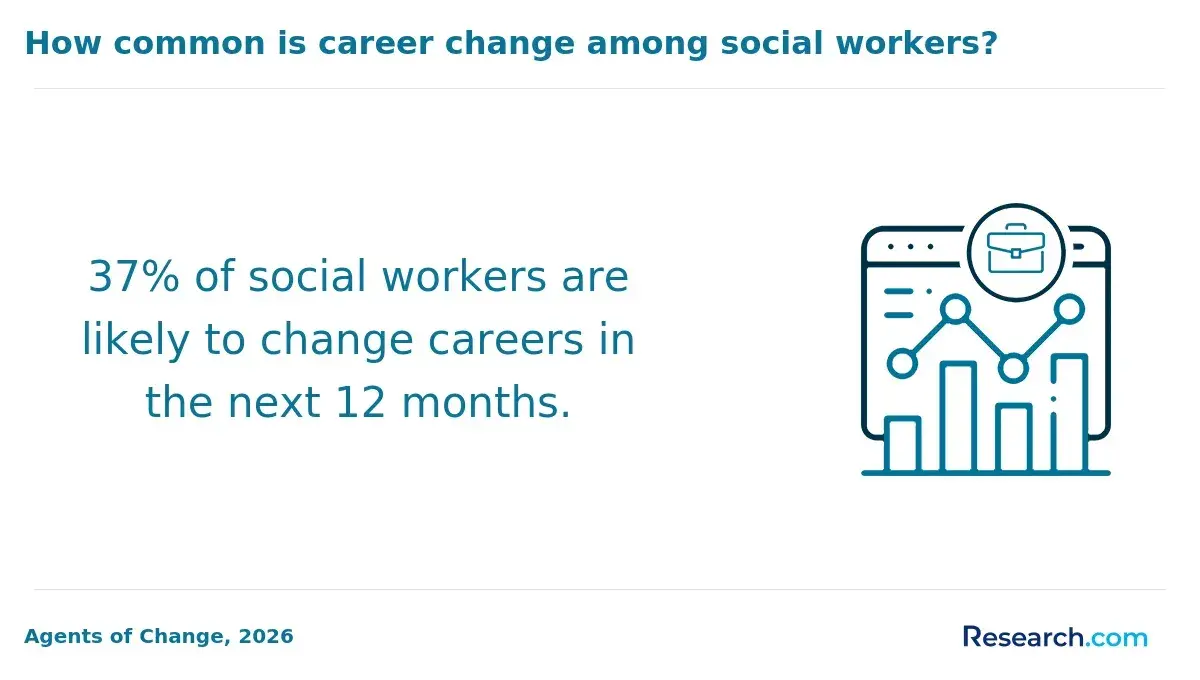
Burnout prevention is not optional in clinical social work. LCSWs may work with trauma, grief, crisis, family violence, poverty, discrimination, addiction, and severe mental illness. Without boundaries and support, the emotional weight of the work can affect judgment, health, and career longevity.
- Use supervision intentionally: Supervision is not only for new clinicians. It helps social workers process difficult cases, manage ethical issues, and avoid isolation.
- Set realistic caseload boundaries: When possible, track workload, documentation time, crisis demands, and after-hours expectations before they become unsustainable.
- Build peer consultation habits: Trusted colleagues can help normalize challenges, identify blind spots, and share resources.
- Protect recovery time: Exercise, sleep, relationships, hobbies, and quiet time are part of professional sustainability, not rewards for finishing all work.
- Learn trauma stewardship: Clinicians who repeatedly hear traumatic stories need strategies to recognize secondary traumatic stress and compassion fatigue.
- Keep training current: Continuing education in ethics, crisis work, telehealth, cultural humility, and self-care can improve confidence and reduce avoidable stress.
Good self-care also includes recognizing when a workplace is the problem. If supervision is poor, documentation expectations are unrealistic, or safety risks are ignored, individual coping strategies may not be enough.
Can an Accelerated Online MSW Program Fast-Track Your LCSW Journey?
An accelerated online MSW can shorten the academic portion of your path, especially if you already hold a BSW and qualify for advanced standing. These programs can be helpful for motivated students who have strong time management skills, stable schedules, and access to appropriate field placements.
However, accelerated does not mean easy. Condensed coursework, practicum requirements, work responsibilities, and personal obligations can create intense pressure. Before choosing a fast-track social work degree online, ask whether the program is accredited, whether it supports clinical placements in your area, and whether the pace is realistic for your life.
| Option | Best For | Main Risk |
| Traditional MSW | Students who want a standard pace and more time to absorb clinical material. | Longer time before graduation and licensure eligibility. |
| Accelerated online MSW | Students who can manage intensive coursework and fieldwork. | Higher workload compression and less schedule flexibility than expected. |
| Advanced standing MSW | Qualified BSW graduates who want to avoid repeating foundational content. | Eligibility depends on prior degree, grades, accreditation, and program rules. |
| Part-time MSW | Working adults, caregivers, and students managing financial constraints. | Longer completion timeline and delayed entry into supervised clinical licensure steps. |
What are the long-term career prospects for Licensed Clinical Social Workers?
LCSWs can move in several directions after gaining experience. Some remain direct clinicians and build expertise with specific populations, while others become supervisors, program directors, private practitioners, consultants, policy advisors, healthcare administrators, or educators.
Long-term advancement depends on your state license, clinical reputation, specialty training, supervision experience, and ability to work across systems. For a broader look at roles connected to graduate social work education, review these masters in social work careers.
How can I finance my social work education and licensure journey?
Financing an LCSW path requires planning beyond tuition. Students should budget for application fees, books, technology, transportation to field placements, reduced work hours during practicum, exam fees, supervision costs if not employer-provided, license applications, renewals, and continuing education.
- Complete federal aid forms early: Federal loans, grants, and work-study options may depend on timely applications and eligibility.
- Search for social work scholarships: Professional associations, schools, nonprofits, and community organizations may offer awards tied to service interests.
- Ask employers about tuition assistance: Some healthcare, government, school, and nonprofit employers offer reimbursement or professional development support.
- Compare total program cost: Tuition alone can be misleading. Include fees, travel, placement requirements, and the cost of taking fewer work hours.
- Consider affordable doctoral options carefully: If your goal requires doctoral study, compare outcomes and cost before enrolling in programs such as the cheapest online doctor of social work degree.
How do online advanced standing programs enhance the path to becoming an LCSW?
Online advanced standing MSW programs can be valuable for students who already completed a qualifying BSW. These programs recognize prior social work education and may reduce repeated foundational coursework, allowing students to focus more quickly on advanced practice content.
Students should still be cautious. Advanced standing programs are not automatically the best choice if they lack strong field support, clinical depth, or licensure alignment in your state. Accredited MSW online advanced standing programs are most useful when they combine flexibility with rigorous clinical preparation.
What is the return on investment for social work education?
ROI in social work should be measured through more than salary. The financial side matters, especially because graduate education can create debt, but students should also evaluate job stability, licensure mobility, benefits, loan repayment opportunities, mission fit, and the long-term value of clinical independence.
A careful ROI review compares total education cost against likely earnings in your state and specialty. It also considers opportunity cost: the income you may lose while completing field placements or reducing work hours. Students who want a lower-cost entry point before graduate study may review options such as the cheapest human services bachelors degree online, while remembering that human services degrees and social work licensure preparation are not always interchangeable.
| ROI Factor | Why It Matters | How to Evaluate It |
| Accreditation | A non-accredited program can limit licensure eligibility. | Verify status through the accreditor, not only the school website. |
| Total debt | Loan payments can reduce the benefit of higher earnings. | Estimate monthly payments before accepting loans. |
| Licensure timeline | Delays in supervised hours or exams can delay clinical earning potential. | Ask graduates how long they typically take to become licensed. |
| Local salaries | Pay varies by state, employer, and specialty. | Compare salary data for your intended location and setting. |
| Field placement logistics | Unpaid or distant placements can increase hidden costs. | Ask whether placements are local, paid, remote, or school-arranged. |
What is the difference between an MSW and an LCSW?
An MSW is a graduate degree. An LCSW is a state-issued license. The MSW provides academic and field preparation in social work, while the LCSW authorizes clinical practice within the scope defined by state law. You can graduate with an MSW and still not be an LCSW until you complete supervised clinical requirements, pass the required exam, and receive approval from your state board.
Students often confuse the two because the MSW is typically required before clinical licensure. For a deeper comparison, review this guide to MSW vs LCSW differences.
| Credential | What It Is | What It Allows |
| MSW | A Master of Social Work degree from a graduate program. | Prepares graduates for social work roles and may satisfy the education requirement for clinical licensure. |
| LCSW | A clinical license issued by a state licensing board. | May authorize independent clinical social work practice, depending on state scope-of-practice rules. |
Alternative Career Options for Licensed Clinical Social Workers
LCSWs are not limited to therapy roles. Their training in assessment, systems, crisis response, ethics, and advocacy can transfer into adjacent fields. Some transitions require added education, certification, or licensure, so it is important to check requirements before changing direction.
What else can a Clinical Social Worker Do?
- Criminologist: Criminologists study criminal behavior, justice systems, crime prevention, and policy outcomes. LCSWs interested in justice-involved populations may compare this route with jobs for criminology majors. Criminal justice and law enforcement teachers earned a median annual wage of $64,990, which is at least $12,000 more than that of 119.2 million full-time wage and salary workers in the country.
- Marriage and Family Therapist: Marriage and family therapists help individuals, couples, and families address relationship patterns, conflict, emotional distress, and behavioral concerns. This path usually has its own graduate education and licensure requirements.
- Program Director: Experienced LCSWs may lead community mental health programs, hospital social work departments, school-based services, or nonprofit initiatives.
- Clinical Supervisor: Licensed and experienced clinicians may supervise pre-licensed social workers, depending on state requirements.
- Policy or Advocacy Specialist: LCSWs who understand client needs and system gaps may contribute to policy design, legislative advocacy, or program evaluation.
The Role of a Bachelor’s Degree in Social Work (BSW) for Aspiring LCSWs
A BSW is often the most direct undergraduate foundation for future LCSWs. It introduces students to social welfare policy, human behavior, research, ethics, diversity, generalist practice, and field education. It can also help students confirm whether they are suited for social work before committing to graduate study.
Key Benefits of a BSW
- Earlier entry into human services: BSW graduates may qualify for roles such as case manager, social service assistant, community outreach worker, or program coordinator.
- Advanced standing eligibility: Many MSW programs offer advanced standing options for qualified BSW graduates, potentially reducing the time needed to complete graduate study.
- Field experience: BSW programs typically include supervised field education, giving students practical exposure before graduate school.
- Licensure preparation: A BSW does not replace the MSW for clinical licensure, but it can build the academic and ethical foundation needed for later LCSW training.
Students concerned about cost may compare the cheapest online BSW programs. As with MSW programs, affordability should be evaluated together with accreditation, field placement quality, student support, and transfer credit policies.
What are the specific steps to obtain an LCSW license in different states?
LCSW requirements vary by state, so every candidate should check the licensing board in the state where they plan to practice. The general pattern is similar across the U.S., but details such as supervised hours, approved supervisors, jurisprudence exams, application forms, background checks, fees, and continuing education rules can differ.
- Complete the required education: Most candidates need an MSW from an accredited program. Students considering distance learning should verify that accredited online LCSW programs satisfy the educational rules in their intended state.
- Apply for the correct pre-licensure status if required: Some states require graduates to register as associate, intern, or provisionally licensed social workers before they begin counting supervised hours.
- Complete supervised clinical practice: Most states require supervised post-MSW clinical experience, often between 2,000 and 4,000 hours, depending on state law.
- Document supervision carefully: Keep records of dates, hours, supervisor credentials, clinical activities, and required forms. Poor documentation can delay licensure.
- Pass the required licensing exam: Many states use the Association of Social Work Boards Clinical Exam, though procedures, approvals, and deadlines vary.
- Meet state-specific requirements: A state may require background checks, ethics coursework, cultural competency training, jurisprudence exams, or additional documentation.
- Maintain the license: LCSWs must renew their licenses and complete continuing education. Required topics may include ethics, trauma, mental health, substance abuse counseling, or other state-mandated subjects.
How are emerging technologies reshaping clinical social work practice?
Technology is changing how LCSWs deliver care, document services, communicate with teams, and reach clients. Telehealth has expanded access for many clients who face transportation, mobility, rural access, or scheduling barriers. Electronic health records can improve continuity of care when used well, but they also increase the importance of privacy, cybersecurity, and documentation discipline.
AI-supported tools may affect administrative tasks such as note drafting, scheduling, training, and information retrieval. However, clinical judgment, informed consent, confidentiality, bias awareness, and professional accountability remain essential. LCSWs should not rely on emerging tools without understanding employer policy, state regulations, and ethical risks.
Students weighing the cost of education against these workplace changes can review whether a social work degree is worth it for their goals.
Common Mistakes to Avoid on the LCSW Path
- Choosing a program without checking accreditation: Accreditation can affect licensure eligibility, transfer options, and employer recognition.
- Assuming online means automatically flexible: Online MSW programs still require field placements, deadlines, group work, supervision, and clinical training.
- Ignoring state licensing rules until after graduation: Requirements vary, and fixing a mismatch later can be expensive and frustrating.
- Looking only at tuition: Fees, travel, books, technology, lost work hours, exam fees, and supervision costs affect the true price.
- Underestimating field placement demands: Practicum schedules may conflict with full-time work, caregiving, or commuting limits.
- Assuming salary outcomes are guaranteed: Pay depends on location, employer, license status, specialization, experience, and funding environment.
- Skipping burnout planning: Clinical social work requires emotional stamina, supervision, boundaries, and recovery time.
- Using rankings as the only decision tool: A highly ranked program is not useful if it is unaffordable, poorly matched to your state, or weak in field support.
Questions to Ask Before Choosing an MSW Program
- Is the program currently accredited by the Council on Social Work Education?
- Does the curriculum meet educational requirements for the state where I plan to seek LCSW licensure?
- How are field placements arranged, and what happens if I cannot find one locally?
- Can I complete practicum requirements while working?
- What clinical concentrations, electives, or certificates are available?
- What is the total estimated cost, including fees and field-related expenses?
- What percentage of students graduate, pass licensing exams, and secure relevant employment?
- Are faculty experienced in clinical social work practice?
- What support is available for online students, career changers, and first-generation graduate students?
- How does the program help students prepare for supervised clinical licensure after graduation?
References
- Association of Social Work Boards. ASWB examination requirements. https://www.aswb.org/exam-candidates/
- American Board of Examiners in Clinical Social Work. Certified clinical social worker standards. https://www.abeclinicalboard.org/
- Bureau of Labor Statistics. Social workers: Occupational Outlook Handbook. https://www.bls.gov/ooh/community-and-social-service/social-workers.htm
- Council on Social Work Education. CSWE accreditation standards and social work education. https://www.cswe.org/accreditation/
- Health Resources & Services Administration. Healthcare workforce projections. https://bhw.hrsa.gov/
- National Association of Social Workers. Social worker salary and compensation data. https://www.socialworkers.org/Research/State-Fact-Sheets
- Norris, R., Smith, J., & Lee, K. Mental health service utilization in the United States: 2025 update. Journal of American Psychiatry, 182(3), 214-220. https://doi.org/10.1176/appi.ps.20250005
- U.S. Department of Health & Human Services. Health workforce requirements and licensing. https://www.hrsa.gov/
- Substance Abuse and Mental Health Services Administration. Behavioral health workforce data. https://www.samhsa.gov/data
Key Insights
- The LCSW is a license, not a degree: An MSW is usually the graduate education requirement, while the LCSW is granted only after state-required supervised experience, exams, and board approval.
- Accreditation should be your first program filter: Before comparing cost, speed, or format, confirm that the program is properly accredited and suitable for the state where you intend to practice.
- The career outlook is favorable but not uniform: Social workers have a projected 9% job outlook through 2031, while related substance abuse, behavioral disorder, and mental health counselor roles show 22% growth.
- Clinical preparation takes time: The path often includes a four-year bachelor’s degree, a two-year MSW, supervised clinical practice, and licensing exams, totaling around eight years for many students.
- Online and accelerated programs can work if field support is strong: Flexibility is valuable, but an MSW program must still provide rigorous clinical education and practical placement support.
- ROI depends on more than tuition: Consider debt, local salaries, licensing timelines, field placement costs, supervision access, and whether the career matches your long-term goals.
- Burnout prevention is part of professional competence: Supervision, boundaries, peer consultation, manageable caseloads, and recovery time help LCSWs sustain ethical and effective practice.
- Specialization can improve career direction: Certifications, supervised experience, and focused practice areas such as gerontology, forensic work, child and adolescent services, healthcare, or substance use treatment can shape long-term opportunities.
Other Things You Should Know About How to Become a Licensed Clinical Social Worker (LCSW)
To become a Licensed Clinical Social Worker in 2027, you must first obtain a Master's in Social Work (MSW) from an accredited institution. Following this, you must complete a set amount of supervised clinical hours, and finally, pass your state's LCSW examination.
Becoming an LCSW typically takes about eight years, including four years for a bachelor's degree, two years for a master's degree, and additional time for gaining clinical experience and passing licensure examinations.
Each state’s social work licensing board approves LCSW licenses, usually through a board of social work or behavioral health. For example, California uses the Board of Behavioral Sciences, while many other states rely on the state board of social work examiners for applications, supervision rules, and renewal.
To become a Licensed Clinical Social Worker in 2027, you must pass the Association of Social Work Boards (ASWB) Clinical Exam. This exam assesses your competence in clinical social work and is crucial for obtaining licensure. Ensure you meet the licensing board's requirements before applying.
In 2027, Licensed Clinical Social Worker applicants typically undergo criminal background checks as part of the licensure process. This often includes fingerprinting and verifying any past convictions to ensure the candidate meets ethical and legal standards.


