2027 Online Engineering Management Degrees That Help Build Strategic Decision-Making Skills

Co-Founder and Chief Data Scientist
Choosing an online engineering management degree is really a decision about career leverage: can you move from technical execution into strategy, budgeting, product delivery, and people leadership? The stakes are meaningful. The U. S. Bureau of Labor Statistics reported a 2024 median annual wage of $167,740 for architectural and engineering managers, but outcomes vary by industry, experience, and credentials. This guide is for engineers, STEM graduates, and technical professionals comparing online programs, costs, accreditation, admissions, curriculum, career paths, and ROI so they can choose a degree that fits their goals.
Key Things You Should Know
- Online engineering management degrees are best for technical professionals who want leadership roles without leaving the engineering, manufacturing, technology, energy, construction, or product-development environment.
- The strongest programs combine management coursework with quantitative engineering topics such as systems thinking, operations, finance, analytics, risk, and technology strategy.
- BLS data shows architectural and engineering managers had a 2024 median annual wage of $167,740, while employment is projected to grow 6% from 2024 to 2034, making program fit and specialization especially important.
What is an online engineering management degree and who is it best suited for?
An online engineering management degree blends engineering knowledge with business, leadership, and decision-making skills. Unlike a traditional engineering degree, which focuses heavily on design, analysis, and technical problem-solving, engineering management prepares students to guide technical teams, manage budgets, evaluate risk, improve processes, and translate engineering work into organizational strategy.
The degree is usually offered at the master's level as a Master of Engineering Management, Master of Science in Engineering Management, or engineering-focused MBA concentration. Some schools also offer bachelor's completion pathways or graduate certificates, but the master's degree is the most common option for professionals who already have engineering, computer science, technology, or applied science backgrounds.
This path is usually a strong fit for readers who want to stay close to technical work while taking on broader responsibility. It is not the same as a general management degree, and it is not always the right choice for someone who wants to leave technical environments entirely. Readers comparing this path with a broader project manager degree should look closely at whether they want to manage any type of project or specifically lead engineering-heavy teams and systems.
The degree tends to make the most sense for these profiles:
- Engineers who want to become engineering managers, technical program managers, product leaders, plant managers, operations directors, or systems leaders.
- STEM graduates who need business fluency but do not want a general MBA that may be less technical.
- Military, manufacturing, construction, energy, software, or infrastructure professionals who manage complex technical projects.
- Professionals who already supervise teams but need stronger skills in finance, analytics, organizational behavior, and strategic planning.
It may be less suitable for students who lack quantitative preparation, want a research-intensive engineering role, or need a professional engineering license for a design-heavy career. In those cases, a traditional engineering master's, an MBA, or a focused certificate may provide a cleaner path.
How do online engineering management programs compare with campus-based options?
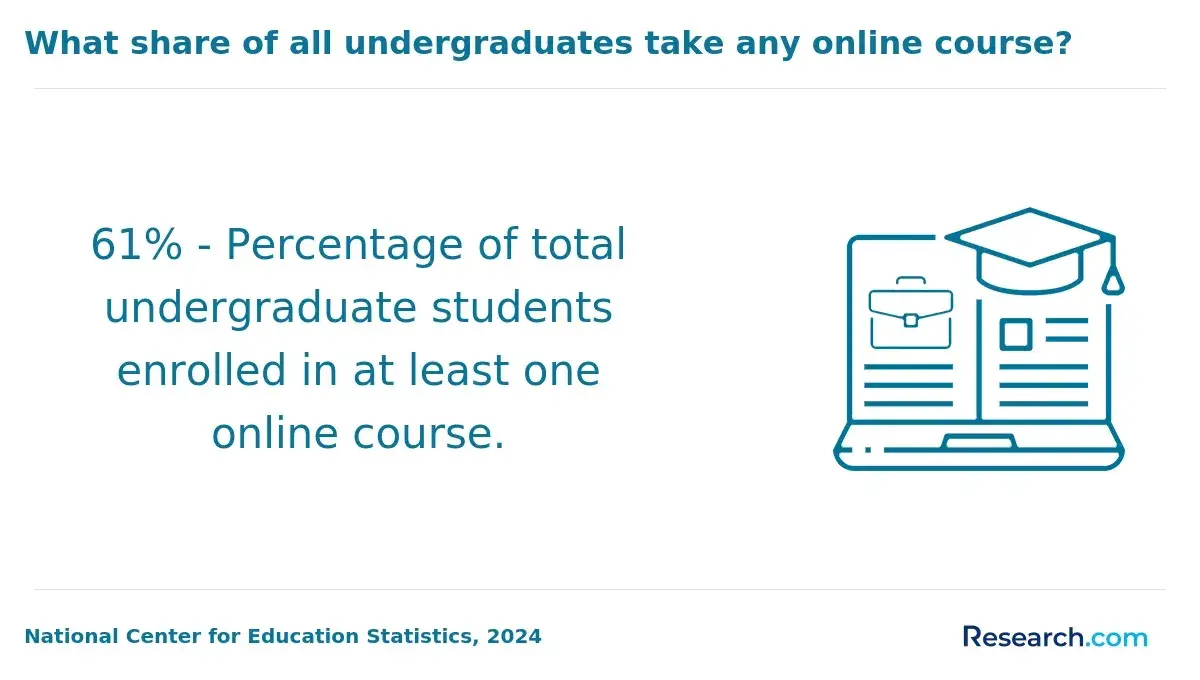
Online and campus-based engineering management programs often teach similar topics, but they differ in delivery, networking, pacing, and how much access students have to labs, employers, and in-person collaboration. For working engineers, the best format is usually the one that lets them complete the degree without weakening their professional momentum.
The table below compares the major decision factors. Use it to identify which format fits your work schedule, learning style, and career stage rather than assuming one format is always better.
| Factor | Online engineering management degree | Campus-based engineering management degree | Best fit |
| Schedule flexibility | Often asynchronous or evening-friendly, making it easier to study while employed | More fixed class times and commuting requirements | Online is better for full-time workers and military students |
| Networking | May include virtual cohorts, residencies, and employer-connected projects | Usually stronger face-to-face peer, faculty, and recruiting interaction | Campus may help students seeking local employer access |
| Learning style | Requires self-direction, written communication, and time management | Provides more structured in-person accountability | Campus may help students who prefer live discussion |
| Technical resources | Strong for analytics, management, systems, and software-based coursework | May provide easier access to labs or specialized facilities | Campus may be better for hands-on research tracks |
| Career continuity | Lets students apply coursework immediately at work | May require reduced work hours or relocation | Online is often better for mid-career advancement |
Online programs are not automatically easier. A strong online engineering management degree should require applied projects, group collaboration, data-informed decision-making, and rigorous assessment. For students still finishing undergraduate preparation, an adjacent option such as a project management bachelor degree online can build planning and leadership fundamentals before a graduate engineering management program.
A common mistake is choosing online study only because it is convenient. Before enrolling, ask whether the program uses real engineering cases, whether faculty have technical management experience, and whether the capstone can connect to your industry. Convenience matters, but the curriculum must still support the roles you want next.
How can you evaluate accreditation and program quality for engineering management degrees?
Accreditation is one of the first quality checks because it affects credit transfer, employer recognition, federal financial aid eligibility, and confidence that the school meets external standards. At a minimum, students should verify institutional accreditation from an accreditor recognized by the U.S. Department of Education or the Council for Higher Education Accreditation.
Programmatic accreditation is more nuanced. ABET accreditation is common and important for many undergraduate engineering programs, but engineering management master's programs may not always carry separate ABET accreditation. That does not automatically make a program weak, but it means students should examine curriculum rigor, faculty qualifications, employer relationships, and outcomes more carefully.
Use the following steps before applying, especially if you are comparing programs with similar names:
- Confirm the institution's accreditation status directly through the accreditor or federal database, not only on the school's marketing page.
- Check whether the degree is housed in an engineering school, business school, technology college, or interdisciplinary unit because this affects curriculum emphasis.
- Review required courses to see whether they include finance, analytics, operations, leadership, systems engineering, and risk rather than only general management topics.
- Ask whether the capstone, thesis, or final project can be aligned with your current workplace or target industry.
- Request recent career-outcome information, but treat salary claims cautiously unless the school explains methodology, sample size, and reporting period.
Red flags include vague accreditation language, unclear faculty credentials, very limited technical coursework, pressure-heavy admissions tactics, and promises of guaranteed promotion or salary increases. A reputable program should be transparent about requirements, costs, faculty, student support, and limitations.
What prerequisite education and experience are typically required for admission?
Admissions requirements vary by school, but most graduate engineering management programs are built for applicants with a bachelor's degree in engineering, computer science, technology, mathematics, physics, or a closely related STEM field. Some programs admit business or non-STEM graduates if they complete prerequisite coursework in calculus, statistics, programming, physics, or engineering fundamentals.
Work experience is often preferred but not always required. Programs designed for working professionals may value applicants who have led technical projects, supervised teams, managed budgets, contributed to product development, or worked in regulated technical environments. Early-career applicants can still be competitive if they show strong quantitative preparation and clear career goals.
The table below summarizes common admission expectations. Individual schools may set higher or lower thresholds, so applicants should confirm requirements before assuming eligibility.
| Requirement | Typical expectation | Why it matters |
| Bachelor's degree | Usually engineering, STEM, or closely related technical field | Ensures students can handle quantitative and systems-based coursework |
| GPA | Often a minimum undergraduate GPA, with flexibility for experienced applicants | Signals academic readiness but is rarely the only factor |
| Prerequisite coursework | Calculus, statistics, engineering science, programming, or economics may be required | Prevents gaps in analytics-heavy classes |
| Professional experience | Preferred or required in some executive-style programs | Improves classroom discussion and applied project quality |
| GRE or GMAT | Often optional or waived, especially for experienced applicants | May still help applicants with weaker academic records |
| Application materials | Resume, statement of purpose, transcripts, and recommendations | Shows fit between the program and the applicant's goals |
Applicants from adjacent fields should not assume they are disqualified. For example, professionals in healthcare technology, logistics, defense operations, or manufacturing quality may have relevant experience even if their degree title is not "engineering." The key is proving readiness for quantitative work and explaining why engineering management is the logical next step.
What core courses and specializations are common in engineering management curricula?
Engineering management curricula usually sit between an MBA and a technical master's degree. The goal is not to turn managers into accountants or engineers into executives overnight; it is to help technical professionals make better decisions when cost, schedule, risk, people, and technology constraints collide.
Most programs organize coursework around several core skill areas. These areas matter because strategic decision-making in engineering depends on both technical judgment and organizational awareness.
- Engineering economics and financial decision-making, including cost estimation, capital budgeting, and return-on-investment analysis.
- Operations and supply chain management, including process improvement, quality systems, capacity planning, and logistics.
- Project and program management, including scope, schedule, risk, stakeholder communication, and resource allocation.
- Systems engineering and systems thinking, including requirements, lifecycle planning, integration, and trade-off analysis.
- Data analytics and decision modeling, including statistics, forecasting, simulation, optimization, or business intelligence tools.
- Leadership and organizational behavior, including team dynamics, negotiation, change management, and ethical decision-making.
- Technology strategy and innovation, including product development, commercialization, digital transformation, and competitive analysis.
Specializations help students align the degree with a target industry or role. A student aiming for manufacturing leadership may benefit from lean systems and quality courses, while a software engineer targeting technical product leadership may prioritize analytics, agile program management, and technology strategy.
Common concentration areas include construction management, manufacturing systems, supply chain, data analytics, product management, systems engineering, quality engineering, cybersecurity management, and energy systems. When comparing concentrations, look beyond the title and read the course descriptions. A "technology management" specialization at one school may be business-oriented, while another may be deeply analytics-based.
How long do online engineering management programs take and what do they cost?
Most online master's degrees in engineering management require about 30 to 36 graduate credits, though some programs are longer if they include a thesis, residencies, or additional technical electives. Full-time students may finish in about one to two years, while part-time working professionals often take two to three years.
Cost varies widely by institution, residency status, credit load, fees, and employer tuition assistance. NCES Digest of Education Statistics 2024 reports average graduate tuition and required fees for the 2022-23 academic year of $12,596 at public institutions and $29,931 at private nonprofit institutions. That comparison helps frame the market, but it does not replace program-level cost calculations because online fees and per-credit pricing can change the total.
The table below shows the main cost and timeline factors to compare before deciding whether a program is affordable or worth accelerating.
| Decision factor | What to compare | Why it affects ROI |
| Credits required | Total credits, transfer limits, prerequisite credits, and capstone requirements | More credits usually mean higher tuition and longer completion time |
| Tuition model | Per-credit pricing, flat-rate terms, in-state discounts, and online program rates | The advertised price may not reflect your actual cost |
| Fees | Technology fees, graduation fees, course materials, proctoring, and residency costs | Fees can make a low-tuition program less affordable than it appears |
| Pacing | Full-time, part-time, accelerated, and cohort-based options | Faster completion can reduce time cost but increase workload risk |
| Employer support | Tuition reimbursement, professional development funds, and work-based capstone approval | Employer support can reduce out-of-pocket cost and strengthen career relevance |
| Opportunity cost | Work hours reduced, missed overtime, travel, and family schedule impact | The cheapest tuition is not always the lowest total cost |
Before enrolling, calculate total program cost rather than comparing tuition alone. Include tuition, required fees, books or software, travel for residencies, lost income if you reduce work hours, and interest if you borrow. Then compare that number with realistic advancement paths in your current industry, not with the highest salary posted on a school website.
Accelerated programs make sense for students with strong support systems, predictable work schedules, and recent academic experience. Part-time programs are often better for working engineers managing projects, travel, or family responsibilities. The best timeline is the one you can complete without sacrificing job performance or health.
What engineering management careers can these degrees prepare you for?
Engineering management degrees prepare graduates for roles that require both technical credibility and business judgment. The degree is most valuable when paired with prior engineering, technical, product, operations, or project experience because many management roles require proof that you can lead complex work, not just understand management theory.
The table below connects common roles with the type of responsibility a graduate may pursue. Titles vary by employer, and some senior roles may require several years of experience beyond the degree.
| Career path | Typical responsibilities | Where the degree may help |
| Engineering manager | Lead engineering teams, allocate resources, review technical decisions, and coordinate delivery | Builds leadership, finance, and systems-level decision skills |
| Technical program manager | Coordinate complex technical initiatives across engineering, product, operations, and customers | Strengthens risk, scheduling, stakeholder, and cross-functional management skills |
| Operations manager | Improve production, logistics, quality, staffing, and process performance | Supports data-driven process improvement and cost analysis |
| Product or technology manager | Translate market needs into technical roadmaps, feature priorities, and launch plans | Connects engineering trade-offs with customer value and business strategy |
| Manufacturing or plant leader | Oversee production systems, safety, quality, maintenance, and continuous improvement | Combines operations, quality, and leadership training |
| Systems engineering manager | Guide complex systems across requirements, integration, lifecycle, and risk | Develops systems thinking and decision modeling |
| Consultant or process improvement lead | Diagnose technical workflow problems and recommend operational changes | Provides frameworks for analysis, communication, and implementation |
Career outcomes also depend on industry. Engineering management skills are used in aerospace, construction, civil infrastructure, semiconductors, software, medical devices, logistics, defense, energy, manufacturing, and transportation. Some students may discover that they want industry-specific management instead of engineering-specific management; for example, professionals interested in venue operations, athletic facilities, or recreation businesses may compare this path with an online sports management degree.
To prepare for advancement, students should build evidence of leadership while enrolled. Strong examples include leading a cross-functional project, improving a process with measurable results, managing a budget, mentoring junior engineers, presenting to executives, or completing a capstone tied to an employer problem.
What salary ranges and earning potential are typical in engineering management roles?
Salary potential in engineering management is usually higher than in many individual-contributor engineering roles, but the range is broad. Pay depends on industry, location, company size, technical domain, management scope, and whether the role includes budget ownership, product responsibility, or executive-level decision-making.
The clearest national benchmark is the BLS occupational category for architectural and engineering managers. BLS May 2024 data reports a median annual wage of $167,740 for this occupation. Readers should treat that as a midpoint for an established management occupation, not as a starting salary for every graduate of an engineering management program.
The table below gives a practical way to interpret earning potential without assuming the degree alone determines pay.
| Career stage | Common position types | Salary interpretation |
| Early transition | Project engineer, team lead, associate technical project manager, operations analyst | The degree may help signal readiness, but experience and internal performance usually drive movement |
| Mid-career management | Engineering manager, technical program manager, manufacturing manager, quality manager | Pay often reflects team size, budget scope, industry, and technical complexity |
| Senior leadership | Director of engineering, operations director, product engineering leader, systems director | Compensation may include bonuses or equity and varies heavily by employer and sector |
| Specialized technical leadership | Cybersecurity program leader, energy systems manager, semiconductor operations manager | Specialized domain knowledge can matter as much as the management credential |
To evaluate ROI, compare the program cost with realistic next roles in your current or target market. A student already working as a senior engineer may see a clearer path to management than someone trying to use the degree to enter engineering for the first time. The degree can support advancement, but it does not replace technical credibility, leadership record, or industry experience.
What is the job outlook and industry demand for engineering management professionals?
Demand for engineering management professionals is shaped by infrastructure investment, advanced manufacturing, software-driven products, energy systems, automation, cybersecurity, and supply chain modernization. Employers increasingly need leaders who can make trade-offs among technical feasibility, cost, schedule, risk, compliance, and customer value.
BLS projects employment for architectural and engineering managers to grow 6% from 2024 to 2034, which is faster than the average for all occupations. For readers, the important point is not simply that the occupation is growing; it is that technical leadership roles are likely to favor professionals who can combine engineering judgment with business communication and data-informed planning.
AI and automation are also changing the skill mix. Engineering managers are less likely to be valued only for task supervision and more likely to be judged on how well they evaluate tools, redesign workflows, manage risk, protect quality, and guide teams through technology change. Programs that include analytics, systems thinking, ethics, and technology strategy may be more durable than programs focused only on generic leadership.
Students should watch for these employer signals when choosing electives or capstone topics:
- Job postings that ask for experience with agile delivery, lean systems, digital transformation, model-based systems engineering, cloud platforms, or data analytics.
- Industry requirements tied to safety, quality, environmental compliance, cybersecurity, or regulated product development.
- Roles that combine vendor management, technical roadmaps, budget planning, and executive communication.
- Organizations investing in automation, advanced manufacturing, infrastructure renewal, AI-enabled workflows, or supply chain resilience.
A common mistake is assuming that "management" means moving away from technology. In many engineering organizations, the strongest managers still need enough technical depth to challenge assumptions, evaluate risk, and earn trust from specialized teams.
How do professional certifications and licenses impact engineering management careers?
Professional certifications and licenses can strengthen an engineering management career, but their value depends on the role. A degree signals graduate-level preparation; certifications often signal competence in a narrower skill area such as project delivery, quality, agile methods, systems engineering, or safety.
For design-heavy engineering roles, professional licensure may matter. The Professional Engineer credential is regulated by state licensing boards and is especially important in civil, structural, environmental, and certain public-safety-related engineering fields. An engineering management degree alone does not grant licensure, and online students should verify whether their prior degree, exam history, and state requirements align with licensure goals.
Common credentials that may complement an engineering management degree include:
- Professional Engineer licensure for eligible engineers in fields where licensed practice is required or strongly preferred.
- Project Management Professional certification for professionals managing complex schedules, budgets, teams, and stakeholders.
- Certified ScrumMaster or other agile credentials for software, product, or technology delivery environments.
- Lean Six Sigma credentials for manufacturing, quality, healthcare operations, logistics, and process improvement roles.
- Certified Systems Engineering Professional credentials for systems engineering and lifecycle management roles.
- Industry-specific credentials in cybersecurity, safety, supply chain, construction, or quality management.
Specialized industries may also reward domain credentials. For example, a professional moving toward hospital technology operations, health data systems, or regulated healthcare workflows may find that a health information management associate degree online or related healthcare credential provides useful context alongside engineering or operations experience.
The smartest approach is to choose credentials after identifying target job postings. If most postings in your field ask for PMP, Lean Six Sigma, PE licensure, or systems engineering credentials, those signals are worth considering. If they rarely appear, your time may be better spent building leadership experience, technical portfolio evidence, or industry-specific expertise.
Other Things You Should Know About Engineering Management
Yes, it can be respected when the school is properly accredited, the curriculum is rigorous, and the student can connect the degree to real technical leadership experience. Employers usually care more about accreditation, skills, projects, and work history than whether the courses were completed online.
Some programs admit students from related STEM, technology, or business backgrounds, but they may require prerequisites in math, statistics, programming, or engineering fundamentals. Applicants without technical preparation should confirm requirements before applying.
Engineering management is usually better for professionals who want to lead technical teams, systems, products, or operations. An MBA may be better for students targeting finance, consulting, general corporate leadership, entrepreneurship, or roles outside technical environments.
Many programs waive the GRE, but some still require it for applicants below a minimum GPA, often 3.0 on a 4.0 scale. Schools may also ask for transcripts, a resume, and letters of recommendation, with waiver rules set by the university’s graduate admissions office.
References
- 2025 Most Affordable Online Master's Degrees in Engineering Management https://www.onlineu.com/most-affordable-colleges/engineering-management-masters-degrees
- Accreditation processes for technical programs https://edquip.co/blog/accreditation-processes-for-technical-programs
- The Role of Certifications in Advancing an Engineering Career | First Achieve https://www.firstachieve.com/blogs/the-role-of-certifications-in-advancing-an-engineering-career/
- Is Engineering Management a Good Degree? Comprehensive Guide https://engineeringmanagement.org/is-engineering-management-a-good-degree/
- Engineering Management Certificates: Your Guide to Advancing Your Career https://authory.com/ErinCates/a/Engineering-Management-Certificates-Your-Guide-to-Advancing-Your-Career-a78f96f9a74444673a1a2170dca041ecb
- ASEM https://asem.org/EM-Professional-Certifications
- Engineering Manager Certifications: Best Credentials to Advance Your Career | Teal https://www.tealhq.com/career-paths/engineering-manager-certifications
- Online Master of Science in Engineering Management | LSU New Orleans https://www.lsuneworleans.edu/academics/coe/engineering-management
- Job Market Trends for Engineering Management Graduates in Germany | BSBI https://www.berlinsbi.com/blog/job-market-trends-for-engineering-management-graduates-in-germany
- Engineering Manager Compensation: Salary and Equity Guide https://www.em-tools.io/career-path/engineering-manager-compensation