2027 Online BS in Business Administration vs. a BS in Real Estate: Which Route Fits Your Career Plan?
Audited and Verified:
Our Editorial and Data Verification Process
Research.com uses government datasets, official education statistics and primary institutional information to support its career and degree guides. Our review process checks factual accuracy, occupational definitions, source dates and the requirements associated with the credentials discussed.
How This Article Was Fact-Checked
Our editorial team verifies salary estimates, employment projections, education requirements and program information against original data providers and official organizations. Salary figures are checked against the relevant occupational definitions and reporting periods. Information about licensure, accreditation and required in-person training is reviewed separately.
Fact-checked and verified on:

Co-Founder and Chief Data Scientist
Choosing between business administration and real estate is less about which degree sounds more versatile and more about the work you want to do. A business administration degree can prepare you to pursue roles across industries; a real estate degree concentrates on property markets and transactions. Neither guarantees a job or replaces required licensing.
This comparison is for prospective online students, including working adults and career changers, who need to weigh career options against specialized coursework, completion cost, and practical experience before enrolling.
Key Things You Should Know
- Choose an online BS in Business Administration if you want to keep several industries or business functions open; choose a BS in Real Estate if you are committed to property-focused work and the program teaches the skills your target role requires.
- Neither degree automatically qualifies you as a real estate agent, broker, or appraiser. Check the rules of the state where you intend to work before treating degree courses as licensing education.
- National pay figures describe occupations, not new graduates. The May 2025 median for market research analysts was $78,760, and BLS projects 7% employment growth from 2025 to 2035. Your experience and target role matter more than the degree title alone.
What Is the Difference Between an Online Business Administration and Real Estate Degree?
An online BS in Business Administration is a general business degree, typically combining accounting, finance, marketing, management, operations, and quantitative decision-making.
A BS in Real Estate is a specialized bachelor's degree that applies business and analytical concepts to property, potentially including valuation, development, investment, and real estate law. Course content varies by school; a real estate degree is not necessarily a licensing program.
The difference that should drive your choice is portability versus property-specific depth. A business administration student can seek experience in many sectors, including real estate. A real estate student may develop stronger property-market fluency but should check whether the program also provides enough general business preparation for careers outside that sector.
Degree title does not determine pace. If completion speed matters, accelerated business bachelor's school comparisons can help you identify programs to investigate, but confirm their course schedules and the credits they would apply to your degree.
Which Degree Offers More Career Options: Business Administration or Real Estate?
Business administration generally offers more types of potential entry routes: graduates might pursue marketing, operations, sales support, human resources, or business analysis, subject to each employer's requirements. Real estate offers a narrower industry focus but several distinct functions within it, from brokerage support and property operations to development analysis.
For a career changer, existing experience can outweigh breadth on paper. Someone with customer-service experience interested in residential sales might benefit more immediately from state-required licensing education and supervised industry experience than from either bachelor's degree.
Someone with construction, banking, or local-government experience who wants to work on development projects may find specialized real estate coursework particularly relevant.
Do not mistake a broad degree for a clear career plan. If your interest is specifically in moving goods rather than managing property, compare three-year-or-less supply chain degrees alongside general business programs; a specialized alternative may fit your target work better.
What Jobs Can You Get With Each Bachelor's Degree?
Think in terms of responsibilities and experience requirements, not a list of jobs a diploma automatically unlocks. The table distinguishes plausible early-career directions from roles that usually require additional experience, licensing, or both.
| Degree | Potential starting directions | Roles requiring more preparation |
| BS in Business Administration | Marketing coordinator, operations coordinator, sales-support specialist, or administrative analyst, depending on skills and hiring criteria | Department manager, management consultant, or specialized financial role; employers commonly expect relevant experience or additional technical preparation |
| BS in Real Estate | Property-management assistant, leasing coordinator, brokerage operations assistant, or development project assistant | Licensed agent or broker, appraiser, property manager with substantial portfolio responsibility, or development manager; requirements vary by role and state |
A useful test is whether you can demonstrate the work behind a target job title. For property operations, that might mean customer communication, lease administration, and budgeting.
For business operations, it might mean spreadsheet analysis and process documentation. Relevant work, internships, and approved projects can provide evidence that coursework alone cannot.
If project coordination is your goal, investigate its skill and hiring requirements separately from either degree. Scholarship search options for project management majors may also help you compare the financing of a more directly targeted degree; awards and eligibility are never automatic.
Both degrees may require general education and foundational business courses. The meaningful comparison is how many required courses take you toward the work you want, not whether both catalogs contain a course called "finance."
| Learning area | Business administration emphasis | Real estate emphasis |
| Finance and analysis | Financial statements, managerial decisions, and business data | Property cash flows, valuation, financing, and market analysis, where offered |
| Operations and law | Organizational processes, management, and general business law | Property operations, land use, contracts, and real estate law, where offered |
| Applied work | Business cases, simulations, internships, or a capstone | Property analyses, development cases, internships, or a capstone |
Examine required courses and their prerequisites, not just electives. A business administration program with a real estate elective is not necessarily a real estate concentration, and a formal concentration is not a separate degree. Likewise, a property valuation class does not by itself qualify a student to practice appraisal.
If you are bringing prior coursework, ask how each school applies it to the major, not merely how many credits it accepts. Even outside your two leading options, comparing transfer policies at online project management colleges illustrates why program-specific credit application matters when weighing specialized degrees.
Real estate agent and broker licensing is controlled by the state where you seek the license. A state may require approved prelicensing education, examinations, background checks, supervised experience, or other steps.
Whether courses within an online bachelor's count toward any education requirement depends on that state's rules and the approval of the particular courses or provider. Appraisal has a separate credentialing path; do not assume agent-related coursework satisfies it.
Before enrolling for a licensing goal, ask the state licensing authority whether the exact courses and delivery format qualify, what documentation it requires, and whether the school makes any state-specific eligibility claims. Get the answer for the state where you plan to practice, especially if the online school is based elsewhere.
If your immediate goal is to become an agent, compare the cost and time of approved licensing education with the cost and broader purpose of a bachelor's degree. You can explore cheaper business administration college programs if you also want a degree for longer-term career flexibility, but do not buy an entire degree on the assumption that it is required for agent licensing.
Start by checking that the institution holds recognized accreditation and that the exact online degree appears in its current catalog. Then ask what, if any, business-school or programmatic accreditation covers it. AACSB, ACBSP, and IACBE have different scopes; a school's accreditation claim should not be assumed to include every degree it offers.
For either major, program quality also depends on access to required courses, faculty feedback, career services, and substantive applied work. A real estate program should show how students learn property analysis, not merely advertise industry connections.
A business administration program should make its concentrations and online course availability clear. Ask for outcomes data only with its cohort, time period, and reporting method; a testimonial is not a placement rate.
Accreditation also matters when investigating aid eligibility, though it does not by itself establish that a particular program or student qualifies for federal aid. Use lists of FAFSA-eligible online business administration colleges as a starting point, then verify current institutional and program eligibility directly.
Neither major is inherently quicker or cheaper. Your remaining requirements determine completion time, while tuition structure, fees, enrollment pace, and the courses you must take determine cost. An accepted transfer credit may count only as an elective; it may not replace a required business or real estate course.
Compare offers using the same assumptions: an official evaluation of applicable credits, a term-by-term course plan, and an itemized estimate of tuition and required fees. Include books, software, proctoring, any travel or internship expenses, and potential lost work hours. For working adults, an accelerated schedule can increase weekly workload even if it shortens calendar time.
To benchmark advertised short formats, compare cost-to-finish for shorter business administration programs. Do not substitute an advertised tuition rate or completion time for your own written degree plan and aid offer.
Requirements vary by institution and by whether you apply as a first-year, transfer, or returning student. Schools may request a secondary-school credential, prior college transcripts, and evidence that you meet their academic standards.
Some admit students directly to the major; others require introductory coursework or a separate business-school application. A real estate major may have its own course sequence even when admission criteria resemble those for general business.
Ask admissions which requirements apply to your academic history, then ask an adviser or transfer office for a degree-specific evaluation. If you have an associate degree or previous college credits, distinguish admission from the decision about which courses fulfill general education, prerequisites, and major requirements. Confirm any application fee before applying; application-cost-free online school options can help you identify schools to verify.
There is no reliable single "business administration salary" or "real estate degree salary." Pay follows an occupation, location, employer, and level of responsibility. Commission-based work introduces additional variability, so compare its expenses and income uncertainty with salaried alternatives before choosing a degree for earnings alone.
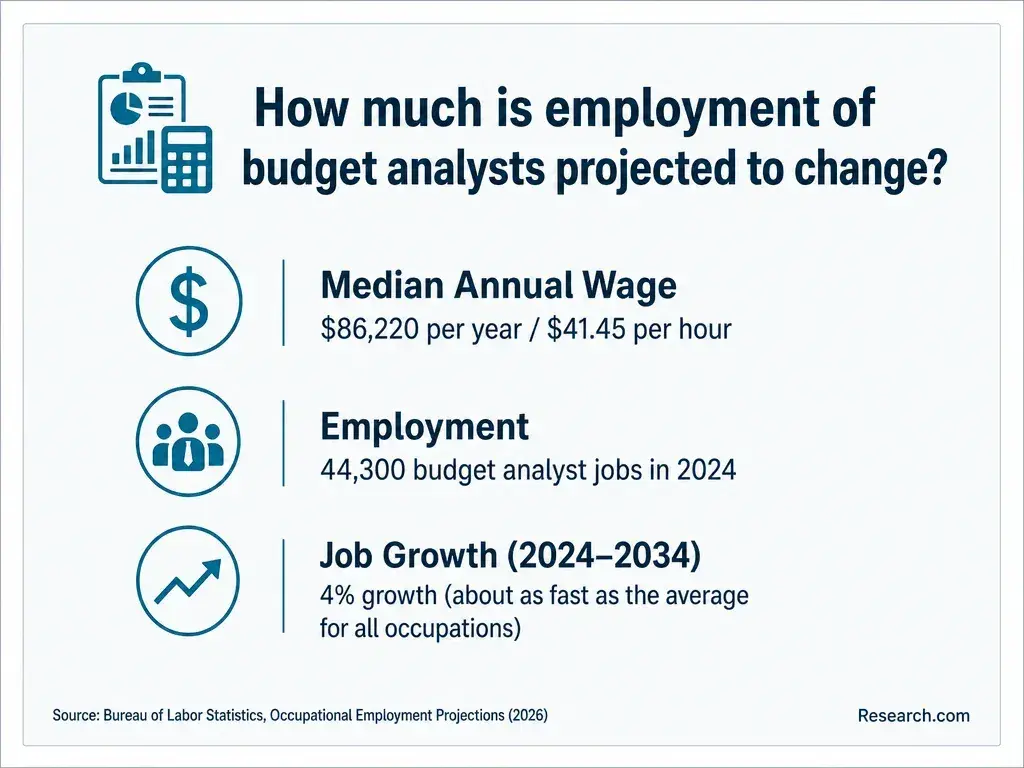
For an example of a business-oriented occupation, the U.S. Bureau of Labor Statistics reports a May 2025 median annual wage of $78,760 for market research analysts and projects 7% employment growth from 2025 to 2035. The median covers workers across experience levels; it is not a starting salary or a forecast for business administration graduates. Entry-level applicants still need evidence of research, data interpretation, and communication skills.
If logistics rather than property is your target, the occupation and degree choice change together. BLS projects 18% growth for logisticians from 2025 to 2035, but that occupational projection does not establish the return on a particular degree. Tuition and time comparisons for supply chain students can help you investigate a specialized path alongside its actual job requirements.
How Should You Choose the Right Online Degree Program?
Start with a target responsibility: analyzing property investments, supporting brokerage operations, coordinating business operations, or entering another defined function. Then compare the programs against that goal rather than choosing by degree title alone.
Use the same checks for every program on your shortlist:
- Match required courses and applied assignments to the skills in relevant job postings; identify any skills you will still need to gain through work or supervised projects.
- Request a written evaluation showing which previous credits satisfy specific degree requirements and when remaining required courses are offered.
- Confirm live-session times, deadlines, group work, exams, internships, campus visits, and part-time options; "online" does not mean self-paced.
- Obtain an itemized completion-cost estimate, check accreditation scope, and verify any licensing claim with the responsible state authority.
Choose business administration if you value cross-industry options and can build evidence for a specific function. Choose real estate if you want property-focused depth and the curriculum fits your intended role.
If you need only an agent license, approved licensing education may be the more direct route. If time is your main constraint, explore accelerated online degree programs, then test the advertised pace against your actual work and study schedule.
Other Things You Should Know About Business Administration Programs
Possibly, but the school must offer both majors online and permit the combination. Ask for a degree audit showing extra required courses, residency rules, and the effect on graduation timing.
Either may meet an MBA program's bachelor's-degree requirement. Graduate schools set their own standards for academic preparation, work experience, and admission; neither major guarantees acceptance.
No. A degree may help you study valuation and financing, but personal investing calls for careful financial, legal, and tax decisions. Consider targeted education if you do not need a bachelor's for another goal.
Usually you can request a change if the school offers both majors, but approval and course applicability are institution-specific. Get a revised degree audit before switching so you can see any added requirements.
- Online Bachelor's Degree in Business Administration | Purdue Global https://www.purdueglobal.edu/degree-programs/business/bachelor-business-administration/
- Accreditation in the U.S. | ed.gov http://www.ed.gov/laws-and-policy/higher-education-laws-and-policy/college-accreditation/accreditation-in-the-us
- Full article: Similarities, Differences, and Best Practices across Real Estate Education Programs in the United States https://www.tandfonline.com/doi/full/10.1080/15214842.2025.2454710
- MBA vs Master's in Finance: Which Degree Fits Your Goals? | SCU https://www.scu.edu/business/blog/mba/mba-vs-masters-in-finance/
- Bachelor's Degree in Business: Administration or Accounting? | Bay Path University https://www.baypath.edu/news/bay-path-university-blogs/post/bachelor-s-degree-in-business-administration-or-accounting/
- BS In Business Administration (Major) - Academics | Montclair State University https://www.montclair.edu/academics/programs/bs-business-administration
- How Do Transfer Credits Work When You Go Back to School? | Whitworth Online https://online.whitworth.edu/news-articles/how-do-transfer-credits-work-when-you-go-back-to-school/
- What Is an Accredited University? Understanding Accreditation | National University https://www.nu.edu/blog/what-is-an-accredited-university/
- Bachelor of Science in Business Administration, Real Estate | UNLV https://www.unlv.edu/degree/bsba-real-estate
- Online Bachelor's Degree in Business Administration | Purdue Global https://www.purdueglobal.edu/degree-programs/business/bachelor-business-administration/