2027 Comparing Online BS in Business Administration Options for Students with Significant Noncredit Professional Training
Audited and Verified:
Our Editorial and Data Verification Process
Research.com uses government datasets, official education statistics and primary institutional information to support its career and degree guides. Our review process checks factual accuracy, occupational definitions, source dates and the requirements associated with the credentials discussed.
How This Article Was Fact-Checked
Our editorial team verifies salary estimates, employment projections, education requirements and program information against original data providers and official organizations. Salary figures are checked against the relevant occupational definitions and reporting periods. Information about licensure, accreditation and required in-person training is reviewed separately.
Fact-checked and verified on:

Co-Founder and Chief Data Scientist
Years of employer training, industry courses, and professional responsibility may have prepared you for business study - but they do not automatically shorten a bachelor's degree. If you are comparing online BS in Business Administration programs, the decisive issue is how each school evaluates that learning and applies any awarded credit to graduation requirements.
This guide explains the available credit pathways, the documents to request, and the scheduling and cost questions that can change which program is your best fit.
Key Things You Should Know
- Noncredit training can lead to degree credit through an accepted credit recommendation, exam, or prior-learning assessment, but the enrolling school decides whether that credit satisfies a requirement.
- Many bachelor's degrees require about 120 semester credits; the useful comparison is each school's approved remaining-credit audit, not its advertised transfer maximum.
- Request written evaluations of your training, residency requirements, remaining courses, and total completion cost before choosing an online program.
What Is an Online BS in Business Administration for Professionally Trained Students?
An online BS in Business Administration is an undergraduate degree covering business functions such as accounting, management, marketing, operations, and quantitative decision-making. It is not a separate credential for experienced workers: professionally trained students complete the same degree requirements, though a school may allow documented prior learning to satisfy some of them.
Your experience matters in two different ways. Supervising staff, managing inventory, or completing employer-sponsored training may strengthen your academic work and career case. Only learning evaluated under the school's credit policies can reduce required coursework. A program built for working adults may offer asynchronous classes or multiple start dates, but those features say nothing by themselves about how much training credit it awards. Compare degree options for working business administration students against both your weekly schedule and your credit documentation.
Can Noncredit Professional Training Count Toward an Online Business Degree?
Noncredit means the original provider did not award college credit; it does not mean the learning is worthless. The receiving institution may recognize it through a published credit recommendation, an exam, or an assessment of what you learned. Its academic policies - not your employer's certificate - determine the award and where it applies.
These pathways differ in the evidence they require. The comparison below describes possible mechanisms, not a promise that a particular school offers them.
| Pathway | Evidence considered | Key limitation |
| Evaluated training | Identifiable course, completion record, and applicable credit recommendation, such as an ACE or NCCRS evaluation | The school may decline the recommendation or award only elective credit. |
| Credit-by-exam | Passing result on an exam the school accepts | Exam credit may not replace an upper-division business course. |
| Portfolio or other prior-learning assessment | Work products and explanations mapped to specific course outcomes | Experience alone is insufficient; assessment fees and credit limits may apply. |
Start with a training inventory: provider, course title, completion date, hours, syllabus or learning outcomes, assessments, and any credential identifier. Ask the transfer or prior-learning office which items it will review, then ask an academic adviser how potential awards would appear in your degree audit. Check whether credits fill general education, the business core, a concentration, or electives; excess electives may not shorten the degree. If much of your training concerns project delivery, project management undergraduate transfer pathways offer a useful comparison, but their policies do not establish what a business administration program will accept.
How Do You Choose an Accredited Online BS in Business Administration?
First verify that the institution holds recognized institutional accreditation and that the exact online degree is currently offered. Then check whether claims about AACSB, ACBSP, or IACBE accreditation actually cover the business school or program you would enter. Business-specific accreditation can inform a comparison, but it does not guarantee that your training earns credit or that graduates get particular jobs.
For applicants with substantial noncredit training, compare schools on credits applied to required courses, not just credits accepted. Request the current catalog's prior-learning rules, maximums by credit type, upper-division and residency requirements, assessment charges, and a written course-by-course evaluation where available. Ask whether decisions are provisional until enrollment and how to appeal a classification. You can compare leading American online business degree schools to develop a shortlist, then verify these policies directly with each institution.
Most programs combine general education, a business core, electives, and often a final applied course. The core may include accounting, economics, finance, marketing, management, business law, statistics, and operations. Requirements and course sequencing vary: documented leadership training might support an assessment in management but would not necessarily replace accounting or statistics.
Compare your training against individual course outcomes rather than broad topic labels. A procurement course, for example, may cover supplier selection without meeting a school's full operations requirement. If your goal is a specialized logistics role, examine the depth of the available electives or concentration as well as supply chain bachelor's programs with compressed schedules. A specialized degree could fit better, but only if its required courses, accepted credits, and pace work for you. An elective cluster is not automatically an officially designated concentration.
Admission and prior-learning credit are separate decisions. Schools commonly request previous college transcripts, or secondary-school records from applicants without college study; business-major entry may have additional academic requirements. Some programs admit students first and evaluate professional training later. Neither a certificate of completion nor years on the job should be assumed to replace an admissions prerequisite.
Before applying, check the school's requirements for mathematics, writing, introductory business courses, and minimum academic standing, as applicable. Send official records as directed and keep training certificates and syllabi ready for the separate credit review. If you already hold college credits, ask whether any courses meet prerequisites even when your noncredit training does not. A guide to credit and eligibility rules for business administration admission can help you frame questions, but the admitting school controls its requirements.
Many bachelor's programs require about 120 semester credits, but your completion time depends on the credits that apply, required course availability, prerequisites, enrollment pace, and residency rules. A large prior-learning award may still leave a sequence of business courses that cannot all be taken at once.
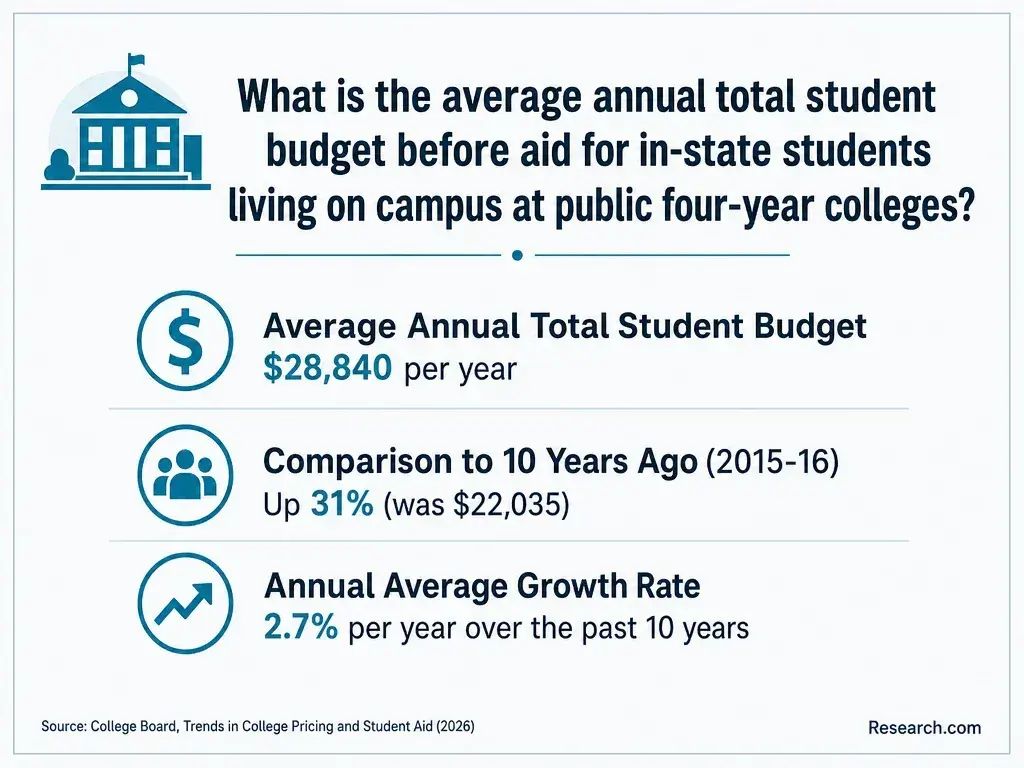
Compare cost-to-finish using each school's written audit: remaining tuition-bearing credits or terms, prior-learning assessment charges, mandatory fees, books or software, and any required travel. Ask whether assessment credit carries tuition, a separate fee, or both. Also check when employer reimbursement arrives and whether your planned enrollment qualifies for aid. Financial aid planning for low-cost business administration degrees is a starting point; your school's financial-aid office must confirm your eligibility and actual charges.
The relevant difference is usually delivery, not whether professional learning can be evaluated: either format's school may offer prior-learning credit, and either may restrict it. Online study can remove a commute, but courses may still have fixed deadlines, live meetings, group projects, proctored exams, or scheduled presentations. Campus study may provide easier access to in-person services while requiring travel and classes at set times.
Request a recent syllabus for required online courses, not just a description of the program format. Check live-session times, exam arrangements, internship or capstone expectations, and whether required courses run every term. If speed is important, US fast-track undergraduate business degree options can help identify formats to investigate; an accelerated calendar is useful only if its workload and remaining requirements fit your schedule.
The strongest next step often builds on responsibilities you already hold. Someone with purchasing training might target procurement or operations coordination; someone who has supported budgets and schedules might seek a broader administrative or project-coordination role. The degree can add business foundations and satisfy an employer's bachelor's requirement, but hiring still depends on demonstrated skills, sector knowledge, and the scope of your experience.
Choose coursework and an approved applied project around the tasks in your target job description. Document results you are permitted to share, such as a process map or an anonymized analysis, without disclosing employer records. For a project-focused career, compare business administration with a specialized degree and its financing options, including project management bachelor's scholarship options. A more specialized route makes sense when its coursework addresses a clear skill gap and the additional cost is justified for your target roles.
There is no single salary or growth rate for BS in Business Administration graduates. Occupation-wide figures include workers with different degrees and levels of experience. For one possible destination, the U.S. Bureau of Labor Statistics reports a May 2025 median annual wage of $75,940 for human resources specialists and projects 6% employment growth from 2025 to 2035. Those figures describe the occupation - not a starting offer or the return on this degree.
Use local job postings and your current compensation to assess a realistic next role. Compare the degree requirement, function-specific skills, and experience requested before estimating whether further study is worthwhile. If a shorter program is appealing, compare cost-to-finish for shorter business administration programs against your own credit evaluation; a program's advertised duration or career outcomes cannot predict your earnings.
Which Certifications and Licenses Complement a Business Administration Degree?
A degree and an occupational credential serve different purposes. Depending on your work, a relevant HR, supply chain, or project management certification may help demonstrate focused knowledge. Each certifying organization sets its own eligibility, examination, experience, and renewal rules. A business administration degree or a single course does not automatically confer certification.
Check the credential required or preferred in actual target-job postings before paying for one. If employers mainly seek evidence of applied project work, an approved workplace project or documented experience may be more immediately useful than another credential. If they require a specialized qualification, compare its requirements and cost with an additional degree; for a project-focused path, compare total costs of project management programs as one alternative. Regulated work, including licensed accounting practice, has separate requirements that a general business degree alone does not satisfy.
Do not rank programs by per-credit tuition alone. A lower rate can cost more overall if the program applies less of your training or requires additional terms. For the same reason, compare total costs of project management programs only if a project management degree is a genuine alternative for your goal, using the same remaining-credit and fee assumptions for both pathways.
Other Things You Should Know About Business Administration
Look for completion records, archived course descriptions, credential transcripts, or a credit recommendation tied to the course and dates you attended. Ask the school's prior-learning office what substitute documentation it accepts.
Generally, schools will not award duplicate degree credit for substantially overlapping learning. Ask how they resolve overlap between training, exams, and college courses before paying assessment fees.
Ask the school about location restrictions, live-session time zones, exam access, and any placement requirements. Online access alone does not establish that every course activity is available from another location.
Ask whether the school accepts a provider-issued record, a supervisor's verification, or a redacted portfolio. Obtain permission before sharing company documents; if acceptable evidence is unavailable, plan to complete the required course.
- Cost of Attendance (Budget) | 2025-2026 Federal Student Aid Handbook https://fsapartners.ed.gov/knowledge-center/fsa-handbook/2025-2026/vol3/ch2-cost-attendance-budget
- SEVP Governing Regulations for Students and Schools | ice.gov https://www.ice.gov/sevis/schools/reg
- Accreditation in the U.S. | ed.gov http://www.ed.gov/laws-and-policy/higher-education-laws-and-policy/college-accreditation/accreditation-in-the-us
- Prior Learning Assessment - NHTI Extranet - THE LYNX DEN https://lynx.nhti.edu/academics/academic-policies/prior-learning-assessment/
- Synchronous vs. Asynchronous Online Classes - ANU Alumni https://alumni.an.edu/synchronous-vs-asynchronous-online-classes-which-works-better-for-adult-learners/
- Learning Evaluations FAQ | acenet.edu https://www.acenet.edu/Programs-Services/Pages/Credit-Transcripts/CREDIT-Evaluations-FAQ.aspx
- Credit for Prior Learning | Admissions | nunez.edu https://www.nunez.edu/admissions/credit-for-prior-learning
- Credit for Prior Learning Policy | Riverland https://www.riverland.edu/about-riverland/policies-and-procedures/series-3-education/335-credit-for-prior-learning-riverland/index.html
- Recognition of Learning Across Military and Corporate Settings | WICHE https://www.wiche.edu/key-initiatives/recognition-of-learning/recognition-of-learning-across-military-and-corporate-settings/
- What's the Difference Between Asynchronous and Synchronous Learning? | Ohio State Online https://online.osu.edu/content-hub/blogs/whats-the-difference-between-asynchronous-and-synchronous-learning/