
2027 ESL Teacher Requirements & ESOL Certification in Texas

Co-Founder and Chief Data Scientist
Becoming an ESL teacher in Texas is a certification decision as much as a career decision. Texas public schools serve over 1.5 million English language learners, so districts need educators who can teach academic content while helping students build English proficiency. For aspiring teachers, career changers, and out-of-state educators, the key question is not just “Can I teach ESL?” but “Which Texas certification route fits my background, timeline, and goals?”
This guide explains the education requirements, ESOL and ESL certification steps, required exams, alternative routes, renewal rules, salary expectations, demand, and common pitfalls. It is designed to help you understand the Texas process clearly before you invest time or money in a teacher preparation program.
Quick Answer: Key Things to Know About ESL Teaching Requirements and ESOL Certification in Texas
- To teach ESL in Texas public schools, you generally need at least a bachelor’s degree, completion of an approved educator preparation route, and a valid Texas teaching certificate.
- The most common ESL credential is the ESL Supplemental certificate, which requires approved preparation and passing the TExES English as a Second Language Exam.
- Texas does not treat ESL certification as a simple add-on from any background. You usually need a base teaching certificate first, then the ESL supplemental or bilingual education credential.
- Certification can take four to six years if you are starting college from scratch, but candidates who already hold a bachelor’s degree may qualify for an alternative certification path that can be completed faster.
- Texas ESL teacher salaries vary by district, grade level, experience, and setting, with reported annual ranges from about $50,400 up to $64,500 and higher earnings possible for experienced teachers in high-demand areas.
- What are the education requirements to teach ESL in Texas?
- How do you get ESOL certified in Texas?
- What are the alternative routes to becoming an ESL teacher in Texas?
- What exams are required for ESL teacher certification in Texas?
- How often do ESL teachers need to renew their certification in Texas?
- What are the continuing education requirements for ESL teachers in Texas?
- What additional professional development opportunities are available for ESL teachers in Texas?
- How long does it take to become an ESL teacher in Texas?
- What common mistakes should be avoided during the ESL teacher certification process in Texas?
- Does Texas have reciprocity for ESL certification?
- Is there a demand for ESL teachers in Texas?
- How much do ESL teachers make in Texas?
- What challenges do ESL teachers face in Texas?
What are the education requirements to teach ESL in Texas?
Texas ESL teaching requirements start with general teacher certification. In most K–12 public school settings, ESL is not a stand-alone entry credential for someone with no teaching background. You need academic preparation, supervised teaching experience, and a Texas-approved route to certification before you can add the ESL specialization.
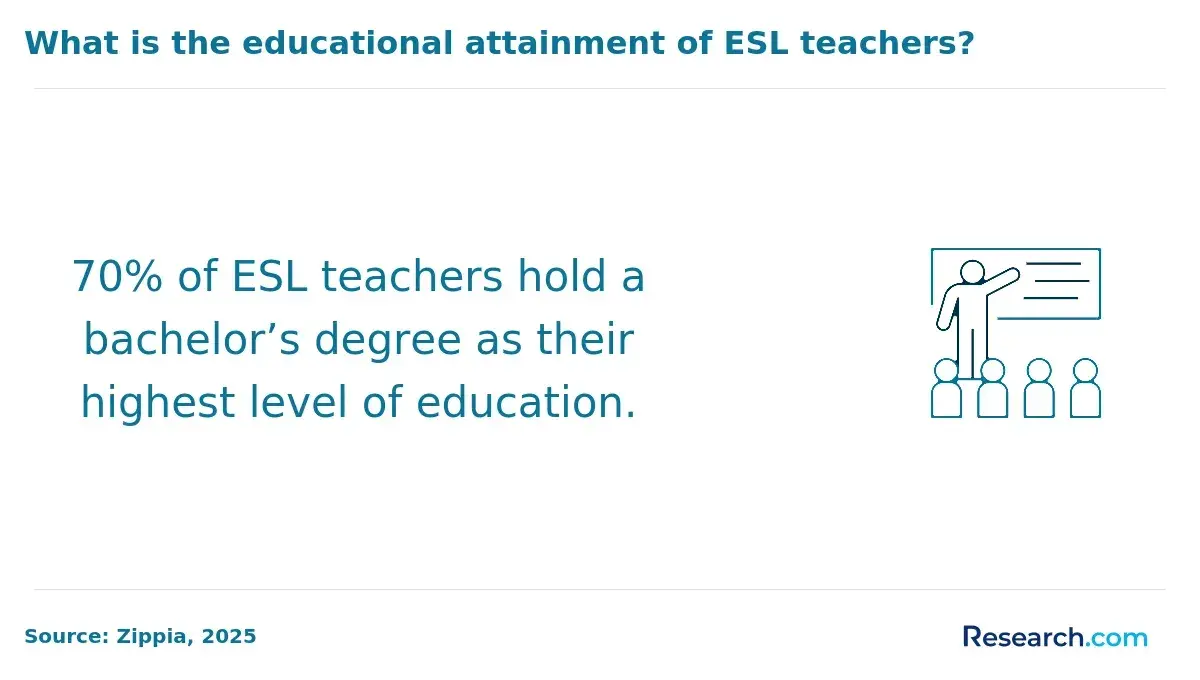
- Bachelor’s degree: Texas candidates need at least a bachelor’s degree from an accredited institution. The major does not always have to be education, but degrees in education, English, language studies, literacy, or related fields can make the transition smoother.
- Approved Educator Preparation Program (EPP): Candidates must complete a Texas-approved EPP. These programs combine pedagogy coursework, classroom practice, assessment preparation, and supervised teaching experiences.
- Base teaching certificate: Before adding ESL, most candidates need certification in a grade level or content area, such as elementary education, English language arts, or another approved teaching field.
- ESL Supplemental or bilingual education credential: After the base certificate, teachers commonly add the ESL Supplemental certificate. Some educators pursue bilingual education certification instead, especially if they teach in dual-language or bilingual program models.
The right academic path depends on where you are starting. A first-time college student may choose an undergraduate teacher preparation program with an ESL focus. A career changer with a bachelor’s degree may be better served by an alternative certification program. A certified teacher may only need to complete exam preparation and add the supplemental credential.
| Candidate situation | Likely path | Decision point |
| No bachelor’s degree yet | Earn a bachelor’s degree through a teacher preparation program | Choose a program that prepares you for both initial certification and ESL-related instruction |
| Bachelor’s degree in a non-education field | Enter a state-approved alternative certification program | Confirm the program is approved for the grade level and certificate area you want |
| Already certified in Texas | Add the ESL Supplemental certificate | Prepare for the ESL exam and verify TEA application steps |
| Certified in another state | Apply through Texas review procedures | Expect Texas-specific documentation, background checks, and possibly exams |
If you are thinking beyond classroom teaching, advanced credentials can open doors in curriculum, leadership, instructional coaching, and administration. Research.com’s guide to career options for master of education graduates can help you compare long-term paths.
How do you get ESOL certified in Texas?
In Texas, candidates often use the term “ESOL certification,” but the credential most K–12 teachers pursue is commonly the ESL Supplemental certificate. The process is managed through Texas educator certification rules and generally requires a bachelor’s degree, an approved preparation route, testing, background clearance, and an application through the Texas Education Agency.
- Earn a bachelor’s degree and complete approved preparation: Start with a bachelor’s degree from an accredited school and complete an approved Educator Preparation Program. The program should include teaching methods, classroom management, assessment, and instruction for English learners. Some programs may require a basic skills test before admission.
- Qualify for a Texas teaching certificate: You normally need certification in a grade level or subject area before adding ESL. This means satisfying the requirements for the initial teaching certificate, including required exams.
- Pass the required certification exams: Candidates commonly need the PPR EC-12 exam and the TExES ESL Supplemental (154) exam. The ESL exam passing score is 240 out of 300.
- Apply through TEA and pay required fees: Applications are submitted through the Texas Education Agency’s online system. Candidates should plan for fees, including around $116 per exam and a $57 fee for any emergency permits if needed. Transcripts, fingerprints, background checks, and test records must be complete.
- Maintain the credential after approval: Texas teachers renew certification every five years and complete 150 hours of professional development during each renewal period.
Before enrolling in any ESOL or ESL preparation option, ask whether the program is approved for Texas certification, which exams it prepares you for, what field experience is required, and whether graduates are eligible for the exact certificate you need.
| Certification step | What to verify before moving forward |
| Degree | The institution is accredited and your transcripts will be accepted |
| Preparation program | The program is approved for Texas educator certification |
| Base certificate | The certificate matches the grade level or subject you want to teach |
| ESL exam | You are preparing specifically for TExES ESL Supplemental (154) |
| Application | Your TEA account, fingerprints, fees, and documents are complete |
What are the alternative routes to becoming an ESL teacher in Texas?
Alternative certification routes are designed for candidates who already have a bachelor’s degree but did not complete a traditional undergraduate education program. These routes can be useful for career changers, paraprofessionals, substitute teachers, and professionals with strong content knowledge who want to move into the classroom.
- State-approved Alternative Certification Programs (ACPs): ACPs provide training, mentoring, field experience, and a route to certification for candidates with a bachelor’s degree. Some candidates teach as paid interns while completing requirements, often within about a year. This route is widely used in Texas, with over 40% of new Texas teachers coming through this path.
- Online alternative certification providers: Online ACPs, including providers such as 240 Certification, can work well for adults balancing employment, family responsibilities, and exam preparation. Candidates should still expect classroom experience requirements, testing, and TEA documentation.
- Regional Education Service Center programs: Programs offered through regional centers, such as TOPP, may provide local district connections, test support, mentoring, and structured preparation for ESL and core teaching areas.
- University-based accelerated and non-accelerated programs: Some Texas universities offer post-baccalaureate or graduate-level certification routes. These can be a good fit for candidates who want deeper academic preparation, university advising, and possible graduate credit.
- Emergency permits, intern certificates, and probationary certificates: When districts face staffing shortages, some candidates may begin teaching before full standard certification is complete. These options are temporary and normally require enrollment in an approved preparation pathway.
Alternative certification can be efficient, but it is not a shortcut around state standards. The better question is whether you want a faster, job-embedded path or a more structured university-based route with additional coursework and support.
| Route | Best for | Potential drawback |
| Traditional undergraduate program | Students starting college or changing majors early | Usually takes longer if you already have a degree |
| Alternative Certification Program | Career changers with a bachelor’s degree | Can feel intense if you teach while completing coursework |
| University post-baccalaureate program | Candidates who want academic depth and advising | May cost more or take longer than some ACPs |
| Emergency or intern route | Candidates hired by districts with urgent staffing needs | Temporary status and strict completion requirements |
A Texas ESL teacher who entered through an ACP after working in another field described the route as demanding but practical. The paid internship brought real classroom responsibility quickly, while mentors helped connect coursework to daily teaching. The main challenge was time management: lesson planning, certification assignments, and exam preparation all happened at once.
That experience highlights an important point: alternative certification is not a lesser route, but it requires discipline. Candidates who choose it should compare mentoring quality, exam support, district partnerships, and student teaching or internship expectations before enrolling.
What exams are required for ESL teacher certification in Texas?
Texas certification exams confirm that teacher candidates understand both general teaching practice and the specialized needs of English learners. The exact exam sequence can vary by program and certificate area, so candidates should follow their educator preparation program’s testing approval process carefully.
- Basic skills or admission-related testing: Some preparation programs require evidence of reading, writing, and math readiness before admission. The Texas Higher Education Assessment (THEA) or the Pre-Admission Content Test (PACT) may satisfy this for certain candidates, although programs may waive this requirement based on academic history.
- TExES Pedagogy and Professional Responsibilities (PPR) EC–12 exam: This 100-question exam assesses teaching practice, classroom management, student learning, professional responsibilities, and ethical expectations across grade levels.
- TExES ESL Supplemental (154) exam: This ESL-specific exam measures knowledge of language acquisition, culturally responsive instruction, ESL methods, assessment, and support for English learners. The passing score is 240.
Do not register for exams casually. Many candidates lose time and money by taking an exam before their program authorizes it or before they understand which certificate area they are pursuing. If you are still comparing preparation routes, Research.com’s guide to an online college to become a teacher can help you evaluate flexible degree options.
| Exam or requirement | Purpose | Practical preparation tip |
| Basic skills test, THEA, or PACT when required | Shows readiness for teacher preparation or content study | Ask your program whether this applies before paying for a test |
| PPR EC–12 | Assesses general teaching knowledge and professional responsibilities | Study classroom scenarios, ethics, assessment, and instruction |
| TExES ESL Supplemental (154) | Confirms ESL-specific teaching knowledge | Focus on second-language acquisition, English learner assessment, and instructional strategies |
How often do ESL teachers need to renew their certification in Texas?
Texas ESL teachers renew their certification every five years. Renewal is not automatic. Teachers are responsible for tracking deadlines, completing required Continuing Professional Education, and submitting renewal information through the proper state system.
- Five-year renewal cycle: Texas certificates must be renewed every five years. The Texas Education Agency may send an email reminder about six months before expiration, but educators should not rely only on reminders.
- 150 hours of Continuing Professional Education: Teachers must complete 150 hours of CPE during the five-year cycle. Activities should support professional practice and may include ESL instruction, content teaching, assessment, technology, ethics, and student support.
- Required training focus: Professional development should include relevant instruction for students with disabilities, including dyslexia-related training, consistent with Texas Education Agency expectations.
- Online renewal through ECOS: Educators renew through the Educator Certification Online System. The standard renewal fee is $20, and late renewal requires an extra $40.
- Additional review items: TEA may review criminal history, student loan status, and child support status. Unresolved issues can delay reinstatement or renewal.
The safest approach is to track professional development continuously instead of waiting until the final semester of the renewal cycle. Keep certificates, transcripts, agendas, completion records, and provider information in one place in case of audit.
What are the continuing education requirements for ESL teachers in Texas?
Continuing education keeps Texas ESL teachers current on instructional practice, assessment, compliance, and student support. It also protects certification status. The requirement is not only about collecting hours; it is about choosing professional learning that improves outcomes for English learners.
- Renewal period: ESL-related Texas educator certificates are renewed every five years.
- CPE total: Teachers must complete 150 hours of Continuing Professional Education within each five-year cycle.
- Eligible activities: Workshops, seminars, college courses, graduate courses, online training, in-service sessions, and approved professional learning may count when they are relevant to teaching practice.
- Specialized training: Teachers should include professional development on serving students with disabilities, including dyslexia instruction and support.
- Professional organizations: Participation in groups such as the Texas Association for Bilingual Education or TexTESOL can provide learning opportunities, networking, and resources.
- Recordkeeping: Educators should save certificates of completion, transcripts, attendance records, and descriptions of activities in case TEA requests documentation.
- Renewal submission: Teachers complete renewal through the Educator Certification Online System and should ensure all CPE documentation is accurate before submitting.
- Adult ESL annual requirement: Some publicly funded adult education ESL instructors must complete 15 hours of professional development each year to remain eligible for rehiring.
- Graduate study: Graduate programs such as an M.Ed. or MATL may satisfy CPE expectations while also supporting advancement into leadership, curriculum, or specialist roles.
If cost is a concern, compare local district training, regional service center sessions, professional association events, and online courses before paying for expensive options. Teachers considering additional education can also review affordable online elementary education programs as part of a longer-term credential plan.
What additional professional development opportunities are available for ESL teachers in Texas?
Beyond required CPE hours, ESL teachers in Texas can strengthen their practice through targeted training in language acquisition, bilingual education, literacy intervention, culturally responsive instruction, family engagement, assessment of English learners, and instructional technology. These opportunities are especially valuable for teachers working with mixed-proficiency classrooms or students who are learning academic English while also mastering grade-level content.
Professional development can come from school districts, regional Education Service Centers, professional associations, universities, conferences, and state-supported initiatives. Teachers who plan to move into instructional coaching, department leadership, curriculum development, or bilingual program coordination should choose professional learning that builds both classroom expertise and leadership skills. For a broader view of related certification pathways, review Research.com’s guide to Texas English teacher requirements.
How long does it take to become an ESL teacher in Texas?
The timeline to become an ESL teacher in Texas depends on your starting point. If you do not yet have a degree, the process usually takes four to six years. If you already hold a bachelor’s degree, an alternative certification route may shorten the timeline, although exams, field experience, and application processing still take time.
- Bachelor’s degree: A full-time bachelor’s degree commonly takes about four years.
- Teacher preparation or ESL certification route: After the degree, an Educator Preparation Program or ESL-related certification pathway may take 6 months to 2 years, depending on the model.
- Exam preparation and testing: Preparing for the PPR and ESL Supplemental exams can add a few months, especially if retesting is needed.
- Certification application: Once requirements are complete, TEA application review, fingerprinting, and background checks generally take several weeks.
- Clinical teaching, practicum, or internship: Traditional student teaching often lasts a full semester, about 12–16 weeks. Alternative certification candidates may complete a one-year paid internship.
| Starting point | Estimated timeline | Main factor that affects speed |
| No college degree | Four to six years | Bachelor’s degree completion and teacher preparation sequence |
| Bachelor’s degree already completed | 6 months to 2 years for preparation, plus testing and application steps | Alternative certification structure and internship requirements |
| Already certified teacher in Texas | Often shorter, depending on exam readiness and TEA processing | Passing the ESL Supplemental exam and completing application steps |
| Out-of-state certified teacher | Varies based on Texas review | Transcript evaluation, testing, background checks, and credential comparison |
One Texas ESL educator described the process as “long but worth it,” especially during the semester that combined student teaching, exam preparation, and certification paperwork. His advice was to treat each milestone as a separate project: finish coursework, schedule exams strategically, organize documentation early, and ask the program advisor to confirm requirements before every major step.
What common mistakes should be avoided during the ESL teacher certification process in Texas?
Many certification delays are preventable. The most common problems come from choosing the wrong program, misunderstanding the certificate sequence, missing documentation, or underestimating the required exams.
- Enrolling before checking program approval: Do not assume any education, TESOL, TEFL, or ESOL course leads to Texas teacher certification. Confirm state approval before paying tuition or fees.
- Confusing ESL, ESOL, TESOL, and TEFL credentials: Private language certificates may be useful in some settings, but they do not automatically qualify you for Texas public school ESL teaching.
- Skipping the base certificate requirement: Many candidates focus on ESL first and later discover they also need a grade-level or content-area teaching certificate.
- Taking exams too early: Testing before program approval or without enough preparation can waste time and money.
- Submitting incomplete documents: Missing transcripts, fingerprinting records, test results, or background check items can slow down certification.
- Ignoring renewal planning: New teachers should begin tracking CPE hours immediately instead of waiting until the end of the five-year cycle.
- Choosing only by price: Low-cost programs can be valuable, but candidates should also compare mentoring, exam support, district partnerships, and completion rates.
Before committing to a pathway, review official guidance and compare it with Research.com’s overview of Texas teacher certification requirements so you understand how ESL fits into the broader certification system.
| Question to ask before enrolling | Why it matters |
| Is this program approved for Texas educator certification? | Approval determines whether the program can lead to the credential you need |
| Which certificate area will I be eligible for first? | ESL is often added after a base teaching certificate |
| Does the program prepare me for TExES ESL Supplemental (154)? | The exam is central to adding ESL certification |
| What classroom placement or internship is required? | Field experience affects your schedule, workload, and readiness |
| What support is available if I do not pass an exam? | Retesting can delay certification and employment plans |
Does Texas have reciprocity for ESL certification?
No. Texas does not have reciprocity agreements for ESL teacher certification with other states. Out-of-state teachers cannot assume that an ESL or ESOL credential will transfer automatically into a Texas ESL certificate.
Teachers moving to Texas should expect a state review process. This may involve submitting transcripts, documenting completed coursework, verifying supervised teaching experience, completing fingerprinting and a background check, and meeting Texas-specific testing requirements. Depending on the comparison between your prior credential and Texas standards, you may need to pass the TExES ESL Supplemental exam or complete additional steps.
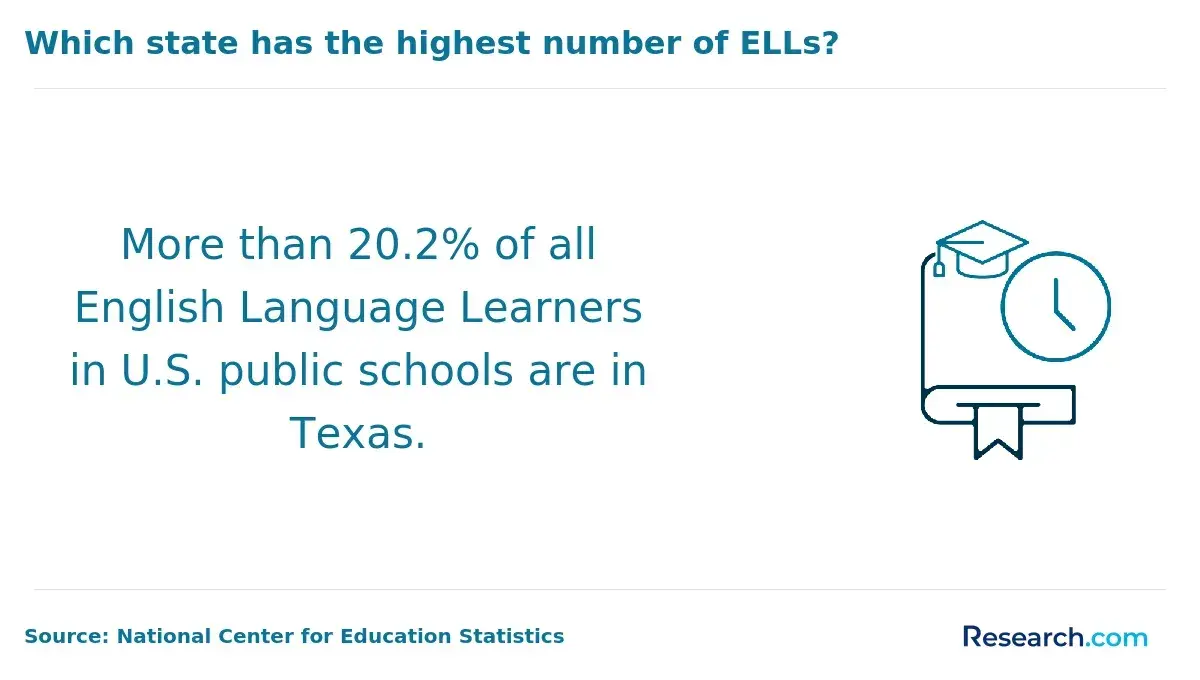
This can feel frustrating for experienced teachers, but the goal is to ensure that educators meet Texas expectations for serving English learners in local classrooms. Because Texas public schools serve over 1.5 million English language learners, districts need teachers who understand both ESL methods and Texas certification standards.
Is there a demand for ESL teachers in Texas?
Yes. Texas has strong need for qualified ESL teachers because of its large and diverse English learner population. Public schools, adult education providers, and high-growth districts all need educators who can support language development and academic progress at the same time.
The largest employment market is K–12 public education, especially in urban districts with large immigrant communities and in rural areas experiencing demographic change. Bilingual and ESL teaching have also been identified as shortage areas under state and federal policy discussions, which is why incentives such as TEACH Grants and loan forgiveness may be relevant for some candidates.
Demand is not limited to elementary classrooms. ESL teachers may work in middle schools, high schools, newcomer programs, intervention roles, adult education, community college settings, and family literacy programs. However, job availability varies by region, district funding, grade level, and language needs.
If you are still choosing a bachelor’s program and want an education-related foundation, Research.com’s guide to online bachelors degree in ECE benefits may help you compare early-childhood preparation with other teaching pathways.
How much do ESL teachers make in Texas?
ESL teacher pay in Texas depends heavily on district salary schedules, years of experience, credentials, grade level, and whether the role is in public school, private school, or adult education. Reported salaries for ESL educators generally range from about $50,400 up to $64,500 annually, with the median hovering around $64,000 for certified teachers in elementary and secondary schools.
Adult education roles may pay differently, with average pay around $61,300. Entry-level teachers may start near $50,000, while experienced ESL teachers in high-demand urban areas can earn close to $83,000 a year or more. For comparison, the statewide average salary for all Texas teachers is about $57,761.
- District location and size: Large urban districts such as Houston and Dallas may pay 10–15% above the state median and may use stipends to attract ESL-certified educators.
- Public school versus private school: Public schools often provide stronger salary schedules and benefits, while private school ESL teachers average around $43,405.
- K–12 versus adult education: K–12 ESL teachers earn about 5–6% more than adult education ESL teachers, partly because of funding differences.
- Education and credentials: A master’s degree, TESOL-related preparation, bilingual education training, or leadership credentials may improve advancement options.
- Experience level: Salary generally increases with years of service, and experienced teachers may qualify for stipends, bonuses, or leadership assignments.
| Factor | How it can affect salary |
| Urban district employment | May offer higher pay or stipends in shortage areas |
| Public school employment | Often tied to formal salary schedules and benefits |
| Private school employment | May offer lower average pay but different workplace conditions |
| Advanced education | Can support movement into specialist, leadership, or higher-paid roles |
| Years of experience | Typically increases placement on district salary schedules |
Salary should be one part of your decision, not the only part. Also compare benefits, commute, class size, mentoring, district support for English learners, and opportunities for advancement. If you are evaluating education majors more broadly, Research.com’s article on what can I do with education degree can help you think beyond one classroom role.
What challenges do ESL teachers face in Texas?
ESL teaching in Texas can be deeply meaningful, but it is also complex. Teachers often work with students who vary widely in English proficiency, academic background, literacy development, home language, and prior schooling. A single classroom may include newcomers, long-term English learners, students with interrupted education, and students who are already conversationally fluent but still developing academic English.
- Wide proficiency ranges: Teachers must differentiate instruction so beginners and advanced English learners can participate in the same content area.
- Academic language demands: Students need English support in reading, writing, speaking, listening, vocabulary, and subject-specific language.
- Limited planning time: ESL teachers often balance direct instruction, co-teaching, intervention, testing coordination, documentation, and family communication.
- Resource gaps: Not every campus has enough bilingual materials, trained staff, or instructional support for English learners.
- Compliance responsibilities: Teachers must understand student identification, assessment, accommodations, progress monitoring, and state expectations.
- Family and community engagement: Communication with families may require translation, cultural understanding, and coordination with school support teams.
These challenges are manageable when teachers receive strong mentoring, realistic caseloads, high-quality materials, and campus-wide support. Candidates planning their entry into the profession should also consider the broader certification timeline. Research.com’s guide to how long does it take to become a teacher in Texas can help you plan milestones before entering the classroom.
What Do ESL Teachers in Texas Say About Their Career
- Completing an ESOL certification program at Houston Community College changed the way I approached instruction. The training gave me classroom-ready strategies I could use immediately with multilingual students. Teaching locally also helped me build strong relationships with families and students from many backgrounds. What keeps me in the field is watching students gain confidence not only in English, but also in their ability to succeed academically. Leandro
- After finishing the ESOL program at Austin College, I realized that ESL teaching in Texas offers many ways to grow professionally. Schools need teachers who understand language development, and many communities value bilingual and ESL services. The hardest part is meeting students at very different proficiency levels, but that challenge has made me more flexible, creative, and committed to the work. Sophie
- My ESOL certification experience at the University of North Texas strengthened both my teaching skills and my sense of purpose. Working with English learners in Texas means engaging with many cultures, languages, and family stories. Some days are difficult because resources are limited and student needs are high, but those challenges have pushed me to become a stronger advocate for my students and their families. Mohammed
Related Articles for Nearby States
- 2027 ESL Teacher Requirements & ESOL Certification in Louisiana
- 2027 ESL Teacher Requirements & ESOL Certification in Oklahoma
- 2027 ESL Teacher Requirements & ESOL Certification in Arkansas
- 2027 ESL Teacher Requirements & ESOL Certification in New Mexico
- 2027 ESL Teacher Requirements & ESOL Certification in Kansas
- 2027 ESL Teacher Requirements & ESOL Certification in Missouri
- 2027 ESL Teacher Requirements & ESOL Certification in Colorado
- 2027 ESL Teacher Requirements & ESOL Certification in Mississippi
- 2027 ESL Teacher Requirements & ESOL Certification in Tennessee
- 2027 ESL Teacher Requirements & ESOL Certification in Arizona
References:
- Texas Education Agency, Standard Certificate Renewal and Continuing Professional Education (CPE) Information https://tea.texas.gov/texas-educators/certification/certification-renewals
- ESL Teacher EDU, Become an ESL Teacher in Texas: 2025 Certification Guide https://www.eslteacheredu.org/texas/
- ITTT TEFL & TESOL, ESL teacher certification renewal in Texas https://www.teflonline.net/ia/esl-teacher-certification-renewal-in-texas/
- TExES Test, Becoming an ESL Teacher in Texas https://texestest.org/texas-teacher-certification/texas-esl-teachers/
- Northeast Texas Community College, Adult Education ESL Instructor https://ntcc.edu/about-us/human-resources/job-openings/adult-education-esl-instructor
- University of Texas at Austin College of Education, English as a Second Language Core Subjects/Generalist (Early Childhood - 6th Grade ) https://education.utexas.edu/academics/bachelors/esl-elementary/
- Additional education credential resource: https://research.com/degrees/most-affordable-online-elementary-education-programs
- Teachers of Tomorrow, How to Become an ESL Certified Teacher in Texas in 2022 https://www.teachersoftomorrow.org/blog/insights/texas-how-to-become-an-esl-certified-teacher-in-texas-in-2022/
- TESOL Course, Where are ESL teachers in demand in the USA? https://www.tesolcourse.com/tesol-faqs/tefl-tesol-jobs/where-are-esl-teachers-in-demand-in-the-usa/
- University of Houston College of Education, Teaching in Texas: Employment Projections https://www.uh.edu/education/student-services/certifications/employment-projections/index.php
Key Insights
- Texas ESL teaching is usually built on a base teaching certificate plus an ESL Supplemental or bilingual education credential, not on a generic ESOL or TEFL course alone.
- The fastest route depends on your starting point: new college students typically need four to six years, while bachelor’s degree holders may use an alternative certification pathway.
- The TExES ESL Supplemental (154) exam is central to ESL certification, and candidates should prepare specifically for language acquisition, assessment, ESL methods, and culturally responsive teaching.
- Program approval matters. Before enrolling, confirm that the provider is approved for Texas educator certification and supports the exact certificate area you want.
- Certification is not finished after hiring. Texas teachers renew every five years and complete 150 hours of Continuing Professional Education.
- Demand is strong because Texas serves over 1.5 million English language learners, but job quality, pay, caseload, mentoring, and campus support vary by district.
- The best ESL certification choice is the one that fits your background, budget, timeline, and preferred teaching setting while keeping you fully aligned with Texas Education Agency requirements.
Other Things You Should Know About the ESL Teacher Requirements & ESOL Certification in Texas
In Texas, ESL teacher certification candidates must complete coursework in areas such as second language acquisition, ESL methodologies, and linguistics. These courses are typically part of a teacher preparation program approved by the Texas Education Agency for 2027 certification.
The Texas Education Agency, or TEA, oversees ESL teacher certification in Texas and approves educator preparation programs. Texas also uses certification rules tied to the State Board for Educator Certification, which sets the standards for ESL endorsement and related testing requirements.


