2027 BS in Business Administration Decision Guide: A Faster Degree Plan or a More Manageable Workload
Audited and Verified:
Our Editorial and Data Verification Process
Research.com uses government datasets, official education statistics and primary institutional information to support its career and degree guides. Our review process checks factual accuracy, occupational definitions, source dates and the requirements associated with the credentials discussed.
How This Article Was Fact-Checked
Our editorial team verifies salary estimates, employment projections, education requirements and program information against original data providers and official organizations. Salary figures are checked against the relevant occupational definitions and reporting periods. Information about licensure, accreditation and required in-person training is reviewed separately.
Fact-checked and verified on:

Co-Founder and Chief Data Scientist
Finishing a BS in Business Administration sooner can reduce the time until graduation, but a crowded schedule can make work, caregiving, and demanding courses harder to manage. This guide is for prospective, transfer, and returning students deciding between a faster degree plan and a lighter workload.
You'll learn how to compare remaining credits, course sequences, delivery formats, costs, and career benefits - then build a schedule you can sustain rather than relying on an advertised completion date.
Key Things You Should Know
- Choose the fastest pace you can sustain through required courses, not the fastest schedule shown in a program advertisement.
- In an illustrative plan with 60 applicable credits remaining, taking 12 credits per term requires five terms; taking six requires ten, assuming every needed course is available and completed as planned.
- Get an official degree audit and a term-by-term course schedule before comparing time or cost; accepted transfer credits may not satisfy business-major requirements.
What Is a BS in Business Administration?
A Bachelor of Science in Business Administration is an undergraduate degree covering several business functions, usually alongside general education and electives. Its exact requirements vary by institution. Compared with a BBA or a specialized business bachelor's degree, a BS may have different quantitative requirements, but the degree title alone does not establish its depth or career value.
For this decision, examine the remaining requirements, not just the total credits in the catalog. A concentration may add sequenced courses; an elective cluster is not necessarily a formal concentration. If your goal is specifically people leadership rather than broad business preparation, compare the curriculum and remaining credits with online organizational leadership programs for quicker graduation. A different degree is only quicker if the receiving school applies your existing credits favorably.
Is a BS in Business Administration Worth It?
It may be worth completing if a bachelor's degree is required for your target jobs or advancement and the remaining coursework develops skills you cannot adequately document through experience. It is less compelling to accelerate at the expense of income, health, or strong performance in courses central to your goal.
Start with the work you want to do. An employee moving toward operations coordination may benefit from the broad accounting, management, and analytics core. Someone focused narrowly on project coordination should also compare targeted training and online project management degrees with lower tuition. Compare the credentials employers request, the credits you would still need, and opportunities to demonstrate relevant work - not degree names alone. Neither pathway guarantees a management job or promotion.
How Long Does a BS in Business Administration Take?
Many bachelor's programs are designed around roughly 120 semester credits, but your completion time depends on credits applied to the degree, prerequisites, residency rules, course availability, and your enrollment pace. Compressed terms shorten individual courses; they do not remove required learning or guarantee an earlier graduation date.
This illustrative comparison holds the remaining requirement at 60 credits. It shows why a faster plan must be tested against the school's actual schedule before you commit.
| Pace | Illustrative credits per term | Terms for 60 credits | Key limitation |
| Higher load | 12 | Five | Several courses and assessments run concurrently. |
| Lower load | Six | Ten | More terms may increase calendar time and term-based costs. |
These are arithmetic examples, not graduation estimates; summer offerings, failed or withdrawn courses, and prerequisite chains can change both plans. Ask an adviser to map every required course to a term, including the capstone. Use a national comparison of accelerated business bachelor's schools to identify programs to investigate, then rely on each school's written evaluation and course rotation for your personal timeline.
Typical requirements include accounting, economics, finance, marketing, management, operations, statistics, and business communication. Programs may also require information systems, business law, a concentration, or a capstone. The workload is not evenly distributed: statistics, accounting, and finance can demand sustained practice, while group projects may require coordinating with classmates outside your preferred study hours.
When building a faster plan, avoid stacking several demanding quantitative courses without checking prerequisites and your available time. A lighter plan can put one challenging course beside a less technical requirement. If supply chain is your intended specialty, compare its required sequence with accelerated undergraduate supply chain programs; specialization can be useful, but an unavailable prerequisite may erase an apparent speed advantage.
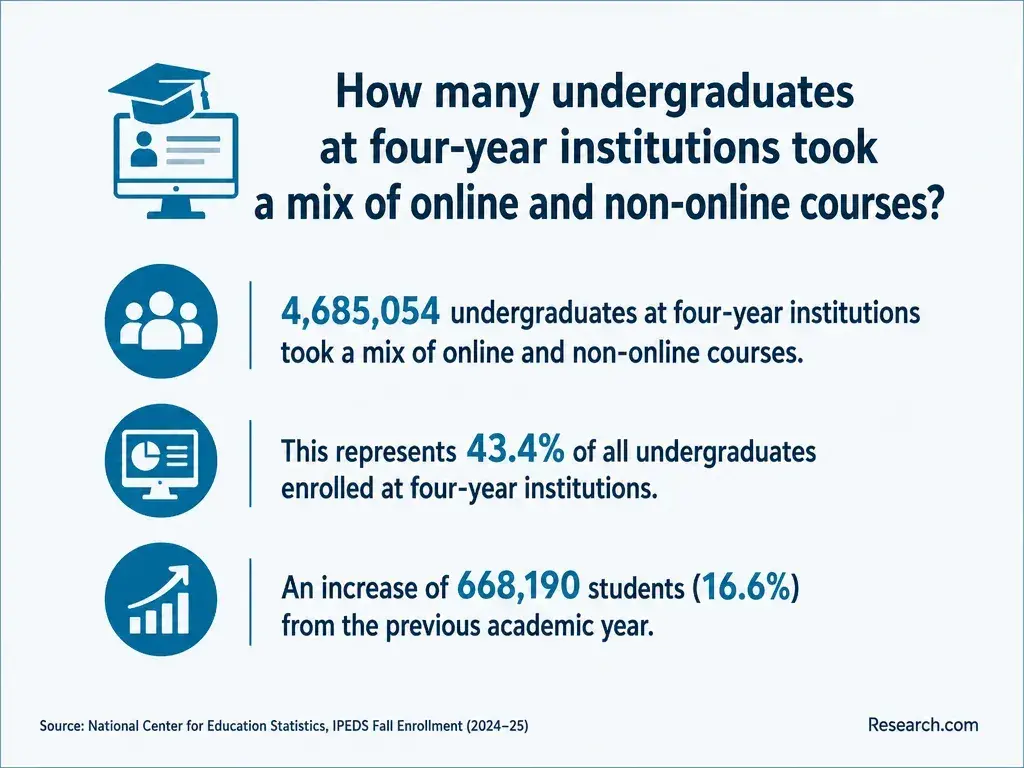
Choose the format that makes your planned pace workable. Online courses can remove a commute without removing deadlines, live meetings, proctored exams, presentations, or group assignments. Campus classes may provide a predictable routine and in-person access to faculty, but travel and fixed meeting times can constrain employment or caregiving.
Before selecting online business degrees with compressed terms, request sample syllabi for required courses. Check whether assignments overlap, when live participation occurs, whether any visits or internships are required, and how quickly you can switch to a lighter load. For a working parent or shift worker, an asynchronous course with firm weekly deadlines may be more manageable than a nominally flexible course with frequent group meetings.
Requirements vary by school and by whether you are entering as a first-year, transfer, or returning student. An institution may admit you before you qualify for the business major or before all prior coursework has been evaluated. Mathematics, accounting, or economics prerequisites can also affect when you may take upper-level courses.
Submit official transcripts and ask for a written evaluation showing where each accepted credit applies: general education, business core, concentration, elective, or no degree requirement. Then check the current catalog for major admission rules and course prerequisites. A business administration degree admissions requirements guide can help you frame questions, but the receiving institution has final authority over admission, transfer equivalencies, and graduation requirements.
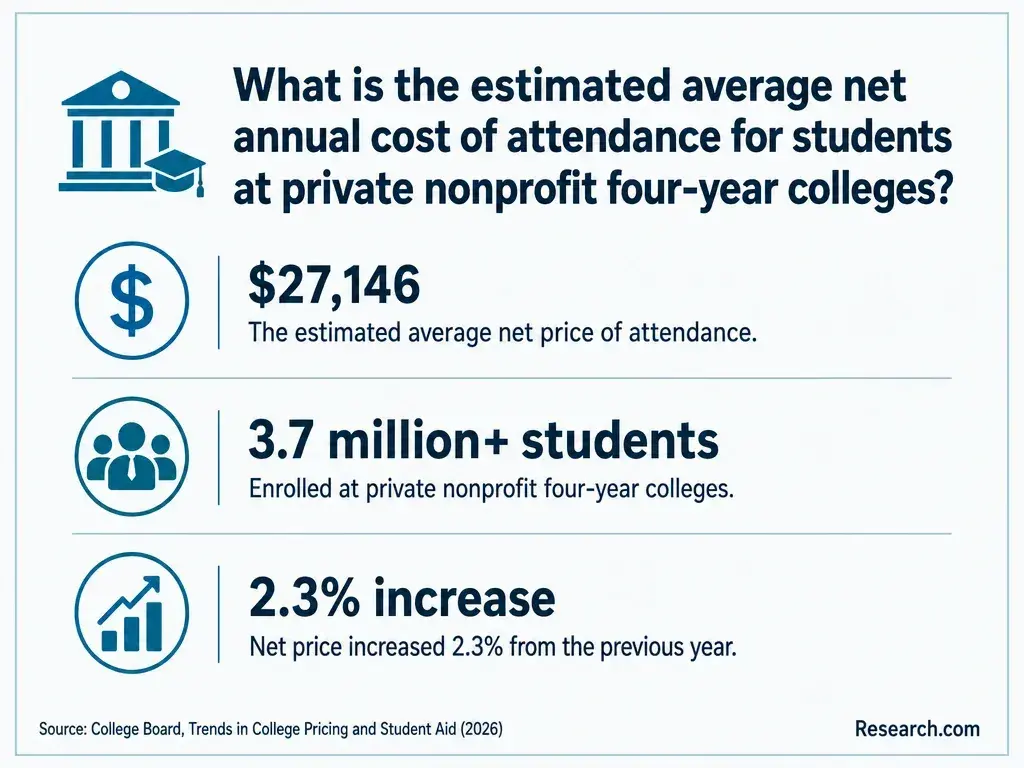
Compare the cost of finishing, not just advertised tuition. Request a school-specific estimate covering remaining credits, mandatory fees, books, software, exam or proctoring charges, and any travel. Then account for loans, grants, employer benefits, and wages you might forgo by taking a heavier load. A shorter plan may save on term-based fees yet cost more if it forces reduced work hours or leads to repeated courses.
For each pace, ask the financial-aid office how enrollment intensity affects your aid and whether a withdrawal would change what you owe. If your employer reimburses tuition, verify its payment timing and course-grade rules before assuming it will cover upfront bills. Compare budget-conscious online business administration education using the same remaining-credit assumptions; a low per-credit price does not establish the lowest total completion cost.
Check the institution's current accreditation status with its accreditor and confirm that the accreditor is recognized by the U.S. Department of Education or the Council for Higher Education Accreditation. Then, if a school advertises AACSB, ACBSP, or IACBE accreditation, check the business accreditor's directory and the exact scope of coverage. Institutional accreditation and business-school or programmatic accreditation are different claims.
Do this before choosing a faster format: the delivery schedule does not replace verification of the institution, degree, or applicable accreditation. When reviewing bachelor's programs for faster completion, also confirm that the business degree and required courses are actually available in the advertised format and that their policies apply to your intended enrollment term.
Graduates may pursue roles such as operations coordinator, administrative specialist, marketing coordinator, HR assistant, or project coordinator. Prior work and demonstrated skills matter: an employee who already tracks budgets and improves processes can present different evidence from someone seeking a first business role. Managerial jobs generally require relevant responsibility and results beyond completing a bachelor's degree.
Use your target role to decide which courses deserve time for projects, internships, or practical experience rather than maximum speed. For procurement or logistics work, compare a general business curriculum with specialized study and supply chain degree cost and duration comparisons. Ask whether the specialized route adds skills employers seek enough to justify any extra credits or delay.
What Salary and Job Outlook Can Business Graduates Expect?
There is no single salary or growth rate for a BS in Business Administration: labor statistics describe occupations, not everyone holding a degree. For example, the U.S. Bureau of Labor Statistics reports a May 2025 median annual wage of $75,940 for human resources specialists and projects 6% employment growth for that occupation from 2025 to 2035. The median covers workers across experience levels; it is not an expected starting salary for a new graduate.
For your decision, compare local openings and their experience requirements with the role you can realistically pursue upon graduation. Earlier completion might let you apply sooner, but a lighter load that preserves relevant employment or an internship could strengthen your candidacy. Use business administration program length and salary context as a starting point, not a forecast of your earnings.
Other Things You Should Know About Business Administration
Possibly. Ask the registrar about leave or readmission rules, catalog changes, and when required courses next run. Check financial-aid and loan implications before stopping enrollment.
Only if the program formally permits it and approves the duties, supervision, and assessment. Employment by itself does not award internship credit.
Check the school's repeat policy and the course's next offering. A repeat may affect your prerequisite sequence, degree audit, aid eligibility, and graduation term.
Find the registrar's deadline well before your final term. Request a final degree audit so you can resolve missing requirements while there is still time to enroll.
- Program Integrity Questions and Answers - Credit Hour http://www.ed.gov/laws-and-policy/higher-education-laws-and-policy/program-integrity-information-questions-and-12
- Recommended Course Sequence | Texas Higher Education Coordinating Board https://www.highered.texas.gov/data-submission-reporting/recommended-course-sequence/
- Cost of Attendance (Budget) | 2025-2026 Federal Student Aid Handbook https://fsapartners.ed.gov/knowledge-center/fsa-handbook/2025-2026/vol3/ch2-cost-attendance-budget
- Understanding Accelerated and Asynchronous Courses | ODUGlobal https://online.odu.edu/online-experience/taking-classes-online/8-week-asynchronous/frequently-asked-questions
- Schedule Builder Glossary - BC Knowledge for Students https://students.brooklyn.edu/knowledge-base/schedule-builder-glossary/
- Academic Advising & Transfer Credits | nyu.edu https://cas.nyu.edu/newstudents/transfer-transition-students/external-transfers/academic-advising.html
- Student Workload Guidelines | CLAS Resource Site | The University of Iowa https://resource.clas.uiowa.edu/student-workload-guidelines
- Incoming Transfers - "Know B4U Go" - Queens College | The Center for Excellence in Teaching, Learning & Leadership https://www.qc.cuny.edu/aac/incoming-transfer-know-b4u-go/
- Online Bachelor's Degree in Business Administration | Purdue Global https://www.purdueglobal.edu/degree-programs/business/bachelor-business-administration/
- BA vs. BS in Business Administration | New England College https://www.nec.edu/news/ba-vs-bs-business-administration