2027 ASHA Certification Requirements for Online SLP Students Explained

Co-Founder and Chief Data Scientist

Reviewed by Rhea Paul, PhD
SLP Education & Research Expert
Many aspiring speech-language pathologists struggle to navigate the complex requirements for ASHA certification while pursuing their studies online. Uncertainty about clinical hours, coursework standards, and supervisor qualifications can delay graduation or licensure. This challenge is especially pressing for professionals switching careers who need clear guidance on meeting accreditation criteria outside traditional campus programs. Understanding these rules is crucial to maintain eligibility and ensure a smooth transition into the field. This article explains the key ASHA certification requirements for online SLP students and offers practical insights to help streamline the certification process and avoid common pitfalls.
Key Things You Should Know
- ASHA requires online SLP students to complete a graduate program accredited by the Council on Academic Accreditation (CAA) to ensure rigorous academic standards.
- Students must finish a Clinical Fellowship and pass the Praxis exam with a 2026 minimum score of 162 to meet certification eligibility.
- At least 400 clinical practicum hours are mandated, with a minimum 25% completed via telepractice, reflecting recent flexibility for online learning.
What are ASHA certification requirements for SLP students?
The ASHA certification requirements for online slp students in 2026 focus on completing specific academic and clinical milestones. Candidates must graduate from a master's or doctoral program accredited by the Council on Academic Accreditation (CAA) in Audiology and Speech-Language Pathology. These programs include essential coursework covering diagnostics, treatment strategies, and foundational knowledge for various communication disorders and populations.
Clinical experience mandates a supervised practicum of at least 400 hours, with 375 hours in direct client contact. This hands-on training hones clinical judgment under expert guidance, involving cases like pediatric language delays or adult dysphagia management. Afterward, graduates enter a nine-month Clinical Fellowship year, gaining practical skills and mentorship before independent practice.
To meet asha requirements for speech pathology students, passing the Praxis Examination in Speech-Language Pathology is also necessary, validating essential professional knowledge for safe practice. Since 92% of speech-language pathologists held ASHA CCC-SLP certification in 2025, it remains the industry standard.
Students enrolled in online programs should confirm their institution's CAA accreditation and availability of supervised clinical hours via partnerships or telepractice to avoid certification delays. Prospective students can explore options through reliable sources, such as online masters in speech language pathology, to find programs meeting ASHA criteria that fit their needs.
Can online SLP programs lead to ASHA certification?
Online SLP programs recognized by ASHA must be accredited by the Council on Academic Accreditation (CAA) to qualify students for certification. Only graduate-level programs with full CAA accreditation meet the academic standards required for the Certificate of Clinical Competence (CCC). This requirement applies regardless of whether the program is delivered fully online or in a hybrid format.
To fulfill the requirements for ASHA certification through online SLP studies, students must complete all required coursework and accumulate supervised clinical practicum hours that comply with ASHA guidelines. Accredited online programs typically arrange local clinical placements or on-site residencies, so students should confirm these options are available in their area to avoid interruptions.
The increasing demand for online CAA-accredited programs is evident, with a 28% enrollment growth reported from 2024 to 2025. This trend demonstrates the appeal of flexible learning arrangements for working professionals and those balancing life commitments.
Prospective students must carefully evaluate accreditation status and clinical practicum arrangements before enrolling to ensure eligibility for ASHA certification. For those curious about how much do speech pathologists make, career prospects remain strong.
What accreditation do SLP programs need for ASHA?
For ASHA certification, accredited online SLP programs for ASHA certification must hold accreditation from the Council on Academic Accreditation in Audiology and Speech-Language Pathology (CAA), operating under the American Speech-Language-Hearing Association. This accreditation ensures programs meet rigorous national standards for curriculum, faculty qualifications, clinical training, and student outcomes. Without CAA accreditation, graduates cannot apply for the Certificate of Clinical Competence in Speech-Language Pathology (CCC-SLP), which is required for professional licensure in many states.
Online SLP programs need to demonstrate that their curriculum fully parallels on-campus offerings, maintaining equivalency in didactic content and supervised clinical experiences. Given the importance of hands-on practicum hours, CAA-accredited online programs collaborate with local clinical sites approved by ASHA, ensuring students complete the mandatory 400 clinical clock hours, which include direct patient contact and supervised observation.
Students should verify explicit ASHA recognized accreditation standards for SLP programs before enrollment, as some online degrees lack this essential validation. Attending non-accredited programs often leads to ineligibility for the ASHA certification exam. Institution websites usually list accreditation status, but direct confirmation from ASHA is recommended. Exploring accelerated SLP programs online can be a practical route for qualified students.
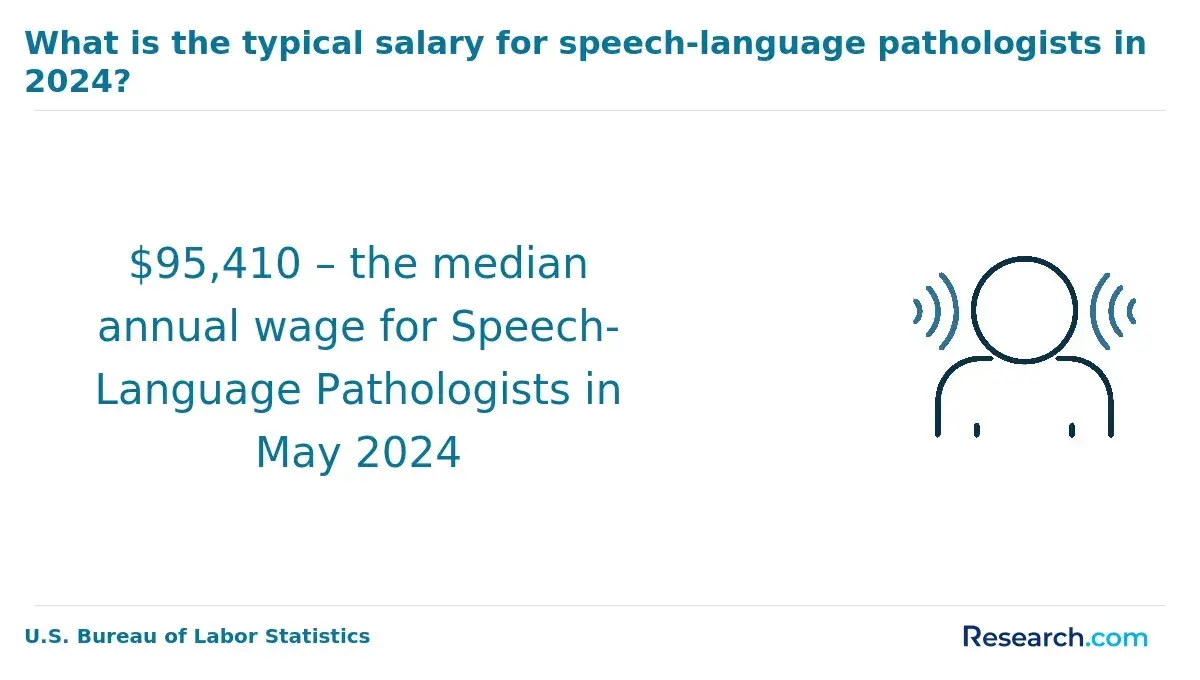
SLPs holding CCC-SLP certification earn a median salary of $97,870, which is approximately 15% higher than non-certified peers, according to the U.S. Bureau of Labor Statistics Occupational Outlook Handbook. Ensuring your program's proper accreditation directly affects licensure, certification, and long-term career earnings.
Bachelor's degrees that best prepare students for master's programs in speech pathology usually fall under communication sciences and disorders (CSD) or closely related fields. A Bachelor of Science or Bachelor of Arts in Communication Sciences and Disorders provides foundational knowledge in speech, language, and hearing sciences essential for graduate study. This degree path aligns well with bachelor's degree prerequisites for SLP master's programs in the US.
Other relevant undergraduate degrees include linguistics, psychology, education, or special education, especially when supplemented with required prerequisite coursework like anatomy and physiology of speech and hearing, phonetics, audiology, and language development. Students who don't hold a CSD degree should verify the coursework required by graduate programs early in their academic careers.
Some students with unrelated bachelor's degrees pursue prerequisite courses post-baccalaureate or through community colleges to qualify for master's programs. For example, a psychology graduate may need to complete speech science and audiology courses before applying. Practical experience gained through shadowing or volunteering in clinical or educational settings also strengthens applications.
Admission standards have become more rigorous, reflected in national exam results: 78% of first-time test-takers from online speech language pathology programs passed the 2025 Praxis SLP exam, up from 72% in 2024. This improvement highlights the importance of thorough academic preparation aligned with ASHA certification guidelines.
Admission to online speech pathology (SLP) programs in 2026 generally requires a bachelor's degree from an accredited institution, often in communication sciences and disorders or a related field. A minimum GPA of around 3.0 in prerequisite courses such as anatomy, physiology, linguistics, and psychology is commonly expected. Many programs request GRE scores, though some waive this based on academic background or relevant experience.
Applicants typically need to document 25 to 50 observation hours in clinical settings to prove familiarity with speech pathology practices. Submission of two or three letters of recommendation from academics or licensed clinicians who can verify the applicant's qualifications is standard. A personal statement outlining motivation and career objectives is also usually required.
Additional admission components may include background checks and proof of immunizations, essential due to clinical placements. International students often must provide TOEFL or IELTS scores to certify English proficiency. Experience with diverse populations and different age groups can strengthen an application.
Completing the Clinical Fellowship (CF) post-graduation is vital, highlighted by a 17% rise in job listings requiring CCC-SLP certification by 2035 (ASHA Public Notice on SLP Employment Trends 2025). These criteria help prospective students prepare effectively to meet eligibility for competitive programs.
Online master's programs in speech pathology generally take two to three years to complete, influenced by course load, clinical requirements, and enrollment status. Full-time students typically finish within two years, while part-time paths-often chosen by working professionals-may extend closer to three years. Many programs include asynchronous coursework for flexibility, though some synchronous sessions and clinical practicums remain mandatory.
Program duration can also vary depending on clinical practicum hours required by ASHA and whether placements are done sequentially or concurrently. Transfer credits from prior graduate work may shorten the timeline, subject to each institution's policies. Students balancing work or personal commitments frequently select part-time options, which delay eligibility for the Clinical Fellowship Year (CFY) and eventual Certification of Clinical Competence (CCC-SLP).
Ongoing certification maintenance is vital; nearly 90% of CCC-SLP holders renewed certification on time after completing continuing education units on diversity, equity, and inclusion, per the ASHA Certification Maintenance Report 2025. This reinforces lifelong learning as a key aspect of career planning.
Planning for program length and certification requirements ensures smoother progress through graduate education and professional milestones in speech pathology.
The SLP curriculum for ASHA certification provides extensive training across critical domains necessary for competent professional practice. It covers foundational topics such as the anatomy and physiology of speech and hearing mechanisms, along with the development of speech, language, and swallowing throughout the lifespan. Students study communication disorders, including articulation, fluency, voice disorders, aphasia, and cognitive-communication impairments.
Emphasis is placed on clinical methods, where students learn evidence-based assessment, diagnostic procedures, and intervention strategies. Many programs incorporate supervised clinical practicum experiences, enabling students to apply theoretical knowledge in real-world settings under expert supervision.
Additional coursework covers research methods and statistics to equip students for analyzing scientific literature and implementing outcome-driven practices. Professional ethics and standards as defined by ASHA are integral, preparing students for diverse healthcare and educational environments.
Most curricula align with ASHA's Knowledge and Skills Acquisition (KASA) standards, which specify required competencies before certification eligibility. The alignment between ASHA's standards and state licensure is significant: by 2025, 47 states have adopted the ASHA Praxis passing score of 162, streamlining licensure processes for about 85% of applicants. This alignment ensures that the curriculum not only meets certification requirements but also effectively prepares students for state licensure exams, supporting expedited professional entry.
The average cost of accredited online speech pathology master's programs ranges widely, typically between $25,000 and $70,000 in total tuition. Public universities often provide more affordable options, especially for in-state students, with fees sometimes as low as $20,000, while private institutions may charge over $60,000.
Additional expenses can include textbooks, clinical practicum fees, and technology costs for online learning platforms, which may add $2,000 to $5,000. Some programs also require on-site clinical hours, potentially leading to travel or lodging costs depending on the student's location.
For working professionals, certificate and continuing education courses are available, costing between $500 and $5,000. These offer focused curricula for certification renewal or specialized training with less financial commitment.
Key considerations when comparing programs include total cost, available financial aid and scholarships, clinical requirements, and post-graduation employment rates. Enrollment in accredited programs with career placement support can lead to successful entry into a rapidly growing job market.
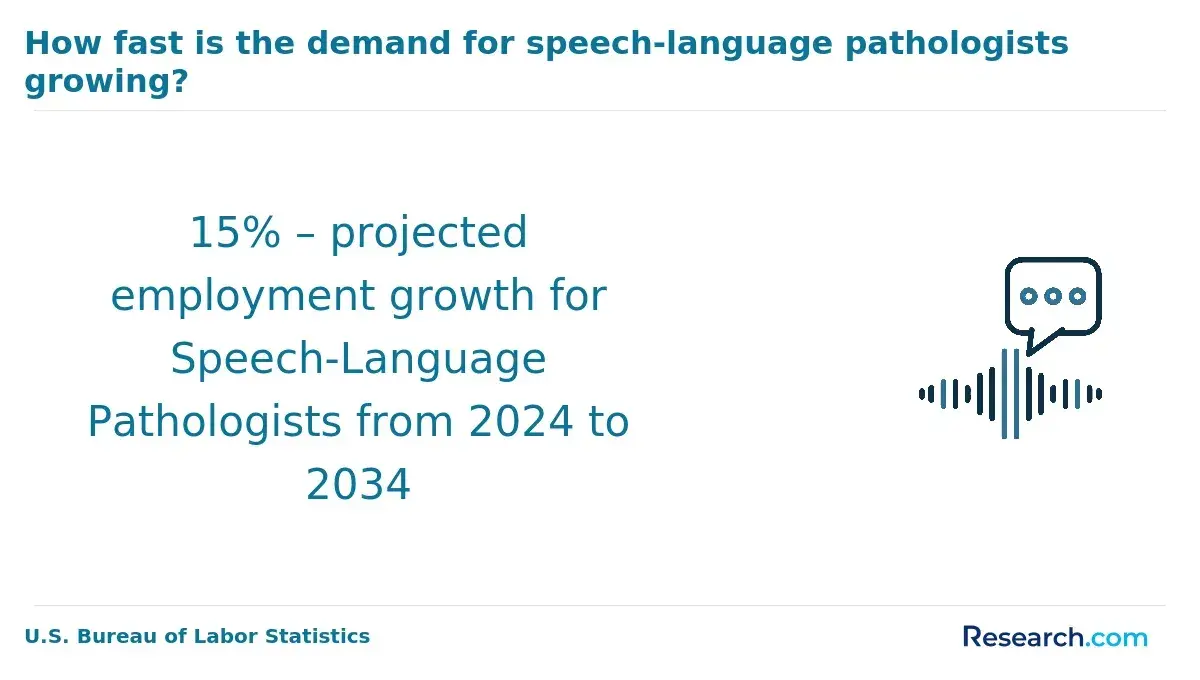
The U.S. Bureau of Labor Statistics Occupational Outlook Handbook 2025 projects an 17% growth in speech pathology employment from 2025 to 2035, with approximately 14,000 annual openings. This strong growth emphasizes the value of investing in quality education despite upfront costs.
ASHA-certified speech-language pathologists (SLPs) benefit from diverse career opportunities and competitive salaries across various settings. Clinical SLPs working in hospitals, rehabilitation centers, and outpatient clinics generally earn between $70,000 and $85,000 annually. School-based SLPs employed by educational institutions typically make $60,000 to $75,000, with potential advancement to leadership roles such as lead SLP or program coordinator. Private practice and research roles offer varied income, sometimes exceeding $90,000 depending on caseload and location.
The CCC-SLP certification greatly enhances earning potential. According to the Georgetown University Center on Education and the Workforce 2025 ROI Analysis, certified SLPs recover their graduate investment in fewer than 2.5 years and enjoy a lifetime earnings premium of about $1.2 million compared to non-certified peers.
Specializing in areas such as pediatric populations, neurogenic communication disorders, or augmentative and alternative communication often leads to higher salaries. Location matters, too-urban centers typically offer greater compensation than rural areas.
Career advancement often follows certification, opening doors to roles like clinical supervision, university faculty positions, and speech-language pathology administration, all associated with improved salary and job stability.
What is the job outlook for speech-language pathologists?
The demand for speech-language pathologists (SLPs) is projected to grow rapidly, with the U.S. Bureau of Labor Statistics expecting a 17% increase from 2025 to 2035. This growth is driven by needs in healthcare, education, and rehabilitation, focusing on aging populations, children with developmental delays, and patients recovering from strokes or injuries.
Employment options for graduates go beyond traditional clinical roles. SLPs increasingly work in telepractice, schools, specialized clinics, and hospitals, providing flexible career paths, especially for online graduates. Certification and licensure vary by state, influencing job availability and eligibility.
Challenges include a projected 17% rise in supervisors requiring updated clinical instruction PDUs by 2035, addressing previous shortages that delayed 12% of clinical fellowships (ASHA 2027 Standards Implementation Preview 2025). This may create temporary bottlenecks transitioning to professional practice.
To enhance career prospects, students should:
- Engage early in clinical experiences with qualified supervisors.
- Prepare for ongoing continuing education after certification.
- Be flexible regarding location and specialty areas to increase job opportunities.
This strategic approach helps graduates navigate evolving certification standards and a competitive job market within the growing field of speech pathology.
Other Things You Should Know About Speech Pathology
Yes, clinical experience is mandatory. For 2027 ASHA certification, online SLP students must complete a Clinical Fellowship after academic coursework. This supervised professional experience is crucial for applying theoretical knowledge in real-world settings and is a core component of the certification process.
In 2027, online SLP students must complete coursework covering normal and disordered communication, professional practice, and developmental and lifespan aspects. These courses are crucial for meeting ASHA's certification standards, ensuring a comprehensive understanding of speech-language pathology practices.
Yes. ASHA allows telepractice hours to count toward the supervised clinical practicum requirement when they are directly overseen by a qualified supervisor and documented in the graduate program’s records. The hours must still meet ASHA’s 25-hour observation rule and the program’s clinical competency standards.
- U.S. Bureau of Labor Statistics - Speech-Language Pathologists https://www.bls.gov/ooh/healthcare/speech-language-pathologists.htm
- ASHA EdFind - Accredited Speech-Language Pathology Programs https://find.asha.org/ed/
- ETS Praxis - Speech-Language Pathology (5331) https://praxis.ets.org/test/speech-language-pathology-5331.html
- James Madison University - Master of Science (M.S.) in Speech-Language Pathology (Distance Education / Online) https://www.jmu.edu/chbs/csd/online_ms/index.shtml
- University of Wisconsin-Eau Claire - Master of Science in Speech-Language Pathology (Online) https://www.uwec.edu/speech-language-and-hearing-sciences-department/graduate-program/speech-language-pathology-online
- Baylor University - Master of Science in Speech-Language Pathology (Online) https://csd.robbins.baylor.edu/graduate/online-csd-graduate-program
- Nova Southeastern University - SLP Program - Master of Science in Speech-Language Pathology https://osteopathic.nova.edu/degrees/masters/speech-language-pathology/index.html
- Ithaca College - Online Master of Science in Speech-Language Pathology https://slponline.ithaca.edu/programs/masters-speech-language-pathology-online