2027 How to Prepare for Online Learning as an SLP Graduate Student

Co-Founder and Chief Data Scientist

Reviewed by Rhea Paul, PhD
SLP Education & Research Expert
Many graduate students face challenges adapting to the unique demands of online learning while pursuing an slp degree. Technical issues, time management, and feelings of isolation often hinder progress and reduce engagement. These obstacles can affect academic performance and overall satisfaction with the program. Preparing effectively before enrollment can ease this transition and promote a smoother educational experience.
This article explores strategic steps to enhance readiness for online coursework, focusing on practical tools and habits that support success in slp graduate programs delivered virtually.
Key Things You Should Know
- Online learning for SLP graduate students in 2026 demands robust time management; over 70% of surveyed students report improved outcomes when using structured weekly schedules.
- Successful virtual clinical practicums rely on technology proficiency and remote supervision protocols, with 85% of programs adopting hybrid models in 2024-2025 to meet accreditation standards.
- Networking and peer collaboration remain critical; 68% of graduates highlight online professional communities as essential for job placement and skill development post-graduation.
What is online learning like for SLP graduate students?
Online learning experience for SLP graduate students combines flexibility with rigor, demanding strong self-discipline and effective time management. These programs typically include live virtual lectures, asynchronous assignments, and interactive case studies to digitally replicate many in-person elements. Practical skill development remains vital, supported through virtual simulations and remote clinical practica, although some hands-on clinical observation is still necessary.
The format helps students balance coursework with personal and professional duties, which is a key driver behind the growing appeal of online SLP programs. Successful navigation of challenges and opportunities in SLP graduate online education often depends on proactive communication with faculty, peers, and access to reliable technology. Common obstacles include technological issues, limited spontaneous peer interaction, and need for stable internet connections.
Programs that offer dedicated tech support, virtual study groups, and clear clinical placement guidance can help overcome these barriers. Success rates can be impressive: for example, Yeshiva University's online M.S. in Speech-Language Pathology achieved a 100% Praxis exam pass rate for its 2025 graduates, reflecting the effectiveness of strong student engagement and well-designed curricula.
Prospective students should cultivate independent learning habits, seek prompt technical help, and actively engage in clinical experiences-whether virtual or in person. Those interested can explore options among masters in speech pathology online programs to find a format that suits their needs.
How do I choose an accredited online SLP master's program?
Choosing accredited online speech pathology master's programs involves verifying accreditation by the Council on Academic Accreditation in Audiology and Speech-Language Pathology (CAA), a key factor ensuring quality and eligibility for certification. Programs lacking CAA accreditation may hinder graduates from obtaining state licensure or certification through the American Speech-Language-Hearing Association (ASHA).
When evaluating the best criteria for choosing an online SLP graduate program, review the curriculum for alignment with ASHA's knowledge and skills requirements. Clinical practicum opportunities are essential and vary by program; some help arrange local placements while others require students to secure sites independently.
Technology compatibility and support are critical, especially since 63% of U.S. students engage in online learning daily. Check that your devices meet technical specifications and that the program offers reliable platforms and accessible support for lectures and communication.
Consider faculty credentials, graduation rates, student support, and alumni feedback to gauge program outcomes and satisfaction. Tuition transparency, financial aid options, and flexible pacing-such as accelerated or part-time pathways-help accommodate diverse professional needs.
State authorization status is vital for enrollment eligibility based on your residence. For a deeper insight into career prospects after graduation, explore data on speech language pathologist salary.
What are the admission requirements for online SLP graduate programs?
Admission criteria for online SLP graduate programs generally require a bachelor's degree from an accredited institution, often in communication sciences, biology, psychology, or related fields. Most programs ask for a minimum GPA around 3.0 on a 4.0 scale. While GRE scores are frequently requested, some schools have made them optional or waived them recently. Relevant clinical or volunteer experience with individuals facing speech, language, or hearing challenges strengthens applications and is sometimes mandatory.
Applicants must also submit official transcripts, two to three letters of recommendation, and a personal statement outlining their career goals and motivation for speech pathology. Certain programs may require prerequisite courses in anatomy, linguistics, or developmental psychology if these were not completed during undergraduate studies. International students typically need to provide proof of English proficiency via tests such as TOEFL or IELTS. These requirements for enrollment in online speech pathology graduate programs ensure candidates are well-prepared for advanced study.
Technical readiness is essential, including reliable internet access and comfort with digital platforms. Some programs require synchronous participation, so verifying this in advance is important. Developing strong time management skills is critical, as online learning can reduce study time by 40% to 60% compared to traditional formats, according to Magnet ABA E-Learning Statistics.
Prospective students may also explore 5-year speech pathology programs as a pathway to efficiently enter the field.
An online slp degree accreditation for ASHA certification depends on the program's approval by the Council on Academic Accreditation in Audiology and Speech-Language Pathology (CAA). This accreditation confirms the curriculum meets ASHA's standards, allowing graduates to pursue the Certificate of Clinical Competence in Speech-Language Pathology (CCC-SLP). It's essential to verify accreditation before enrolling to avoid complications with certification and state licensure.
State licensure requirements for online slp programs vary widely. Most states accept degrees from CAA-accredited online programs, but additional mandates such as extra clinical hours or in-person supervised practicum may apply. Some states require that a portion of clinical placements be completed onsite under their jurisdiction, so candidates should consult their state licensing board early.
Online learning presents challenges for clinical placements, but many accredited schools collaborate with facilities nationwide to offer in-person practicum opportunities. This hybrid approach ensures quality clinical training while allowing flexibility with coursework.
Mastery of virtual communication tools is critical, as 70% of students find online classes more effective due to flexibility, according to Magnet ABA E-Learning Statistics. Practical advice includes confirming CAA accreditation, understanding state-specific requirements, and arranging quality clinical experiences.
For those exploring options, consider researching speech pathology programs known for accessibility and proper accreditation.
- online slp degree accreditation for ASHA certification
- state licensure requirements for online slp programs
Online SLP master's programs provide extensive training in both foundational and advanced topics crucial for clinical practice. Core coursework often covers anatomy and physiology of speech and hearing mechanisms, phonetics, speech and language development, and communication disorders. Students gain knowledge in language acquisition, articulation, fluency, voice, swallowing disorders, and audiology.
Programs emphasize practical skills through clinical practicum experiences, which may include virtual simulations or coordinated in-person placements. Specialized topics frequently include multicultural communication, augmentative and alternative communication (AAC), and technology use in therapy. Courses also focus on evidence-based assessment and intervention strategies, preparing students for diverse clinical settings.
Critical research methods and statistics enhance students' ability to evaluate and contribute to scientific literature, supporting evidence-based decision-making. Ethical and professional standards for certification and licensure are integrated, alongside training in documentation, interdisciplinary collaboration, and healthcare policy.
Asynchronous online formats require strong self-discipline; Magnet ABA E-Learning Statistics indicate e-learning can improve information retention by 25% to 60% compared to traditional methods. This structure enables flexible study while reinforcing deep learning.
Students should expect structured, intensive coursework with frequent assessments and detailed feedback. Requirements vary by program, so reviewing specific course descriptions and clinical components is essential to align education with career aspirations.
Online speech pathology graduate programs generally require 2 to 3 years for completion, with full-time students finishing in approximately 24 to 30 months. Part-time options extend this to 3 to 4 years, accommodating working professionals and those managing other responsibilities.
Program duration depends on credit loads, clinical practicum availability, and individual pacing. Some institutions offer accelerated tracks that combine coursework and clinical hours more intensively, while others provide flexible schedules tailored to students balancing work or family.
Clinical experiences such as practicums and internships are essential components, often involving minimum hour requirements set by accreditation bodies. While online clinical simulations can aid preparation, studies like the Illinois State University Perceptions Study (2024) show they do not significantly influence faculty performance ratings. This underscores the necessity of in-person client interactions, which may affect the timeline to program completion.
Students should evaluate how clinical components are integrated and whether local practicum placements fit their schedules. Programs with efficient clinical supervision and strong online coursework can shorten the time needed to graduate. Maintaining clear communication with program advisors about practicum options, course sequencing, and expected timelines is critical to realistic planning.
The cost of an online master's degree in speech pathology varies greatly based on the university, program length, and residency. Tuition generally ranges from $25,000 to $70,000 for the entire degree. Public institutions often charge lower rates for in-state students-sometimes about $500 per credit hour-while private schools can exceed $1,200 per credit hour. Additional expenses such as technology fees, clinical practicum charges, and course materials may add several thousand dollars more.
Students should also anticipate licensing exam fees around $1,000, plus costs for professional memberships or certification maintenance. Many speech pathology programs provide flexible payment plans, scholarships, and assistantships to help offset these expenses.
Digital resources play an important role in online speech pathology education, with expanded access to virtual simulations, libraries, and databases helping reduce textbook costs. The growth of the online education market, projected to reach $370 billion by 2026, supports greater availability of these tools.
Indirect costs also matter, including the need for reliable internet and updated technology. Prospective students should compare total program expenses and available financial aid across schools to fully understand the investment required to successfully complete an online master's degree in speech pathology.
An online SLP degree offers pathways across clinical, educational, research, and administrative settings. Graduates become licensed speech-language pathologists who provide diagnostic and therapeutic services in schools, hospitals, private practices, and rehabilitation centers. They work with diverse populations-pediatric and adult-addressing speech, language, cognitive-communication, and swallowing disorders.
Many graduates extend their careers to academia or research, serving as university instructors, clinical supervisors, or contributors to advancing communication science. Specializations such as augmentative and alternative communication or voice disorders enable practitioners to join multidisciplinary teams. Healthcare administration and telepractice are expanding fields; telepractice allows remote therapy, catering to flexible scheduling preferences, favored by 73% of U.S. students post-pandemic per Magnet ABA E-Learning Statistics.
Additional opportunities include roles in early intervention for infants and toddlers, as well as specialized environments like correctional facilities and skilled nursing homes. Certification in specialized assessments or therapies further enhances employability.
Job seekers should consider their preferred patient populations, work environments, and interest in research or technology when exploring career options. Online SLP programs typically include practicum components to meet licensure requirements and prepare candidates for clinical responsibilities across multiple settings.
The salary outlook for speech-language pathologists (SLPs) remains strong, with the U.S. Bureau of Labor Statistics reporting a median annual wage near $97,870 and the top 10% earning above $122,000. Salaries vary significantly based on work environment: those in specialized healthcare and rehabilitation centers typically earn more than counterparts in schools or private practices.
Location influences pay as well. Urban and high cost-of-living areas offer higher salaries, while rural areas may compensate with loan forgiveness and other benefits. Experience matters-new graduates start with lower salaries but usually see steady increases after certification and several years in the field.
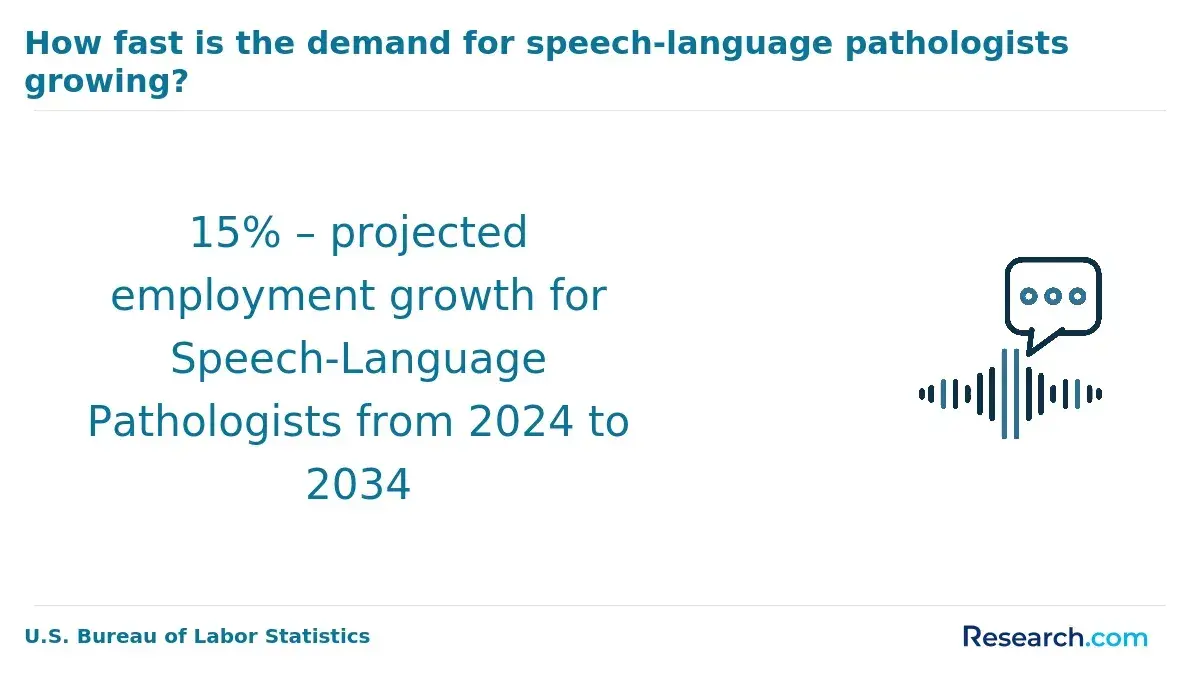
Job growth for speech pathology is projected at 17% through 2035, much faster than average, driven by workforce shortages in many regions. Programs like CSUSM's online M.S. in Speech Language Pathology, which graduated its first cohort in Spring 2025, prepare students for certification and job placement, boosting their competitive edge.
Specializing in areas such as pediatric or geriatric speech pathology can increase earning potential. Knowing regional demands and market trends is crucial for salary negotiation and career planning.
How strong is the job demand for SLPs in the coming years?
Demand for speech-language pathologists (SLPs) is expected to grow by 17% from 2025 to 2035, outpacing the average growth for all occupations. This rise is driven by greater awareness of communication disorders affecting all ages, especially as the population grows older. Schools, healthcare providers, and rehabilitation centers continue actively recruiting qualified SLPs to support speech, language, and swallowing needs.
Key factors fueling this demand include:
- Expanded public school services addressing more speech and language disorders.
- An aging population needing intervention for stroke, dementia, and related conditions.
- Increased early diagnosis and awareness of pediatric communication challenges.
Location plays a vital role in job opportunities; urban and suburban areas have more positions but greater competition, while rural areas may offer loan forgiveness or higher salaries to attract professionals. Specializing in augmentative and alternative communication (AAC) or telepractice boosts employability.
Networking is essential, particularly for students in online speech pathology programs. Online forums connect learners with mentors, job leads, and professional advice, helping compensate for limited campus resources. According to Liricare Exploring Online SLP Graduate Programs, virtual study options also reduce living costs, allowing greater focus on certification and continuing education.
Targeting certifications-such as pediatric feeding disorders or voice therapy-can improve marketability in specialty clinics and schools.
Other Things You Should Know About Speech Pathology
SLP graduate students should become proficient in telepractice platforms, electronic health record (EHR) systems, and specialized assessment and therapy software. Familiarity with augmentative and alternative communication (AAC) devices is also essential. These skills enhance both remote and in-person treatment delivery.
A stable connection of at least 25 Mbps download and 5 Mbps upload helps students join live lectures, upload clinical assignments, and use video platforms without interruptions. Programs may also require a webcam, microphone, and a quiet private space for telepractice or synchronous discussions.
Yes, speech-language pathologists can pursue specialties such as pediatric feeding disorders, neurogenic communication disorders, or voice therapy. Certification in specialty areas may require additional training or experience. Specializing allows SLPs to deepen their expertise and expand career opportunities within the field.
- U.S. Bureau of Labor Statistics - Speech-Language Pathologists https://www.bls.gov/ooh/healthcare/speech-language-pathologists.htm
- ASHA EdFind - Accredited Speech-Language Pathology Programs https://find.asha.org/ed/
- Audiology and Speech-Language Pathology Interstate Compact https://aslpcompact.com/compact-map/
- Nova Southeastern University - SLP Program - Master of Science in Speech-Language Pathology https://osteopathic.nova.edu/degrees/masters/speech-language-pathology/index.html
- Idaho State University - Master of Science in Speech-Language Pathology (Online/Distance Education) https://www.isu.edu/slp/programs-offered/slp-graduate-program/
- California State University-Northridge - Master of Science in Communicative Disorders (Online) https://tsengcollege.csun.edu/programs/CDS
- University of Nebraska at Kearney - Speech-Language Pathology, Master of Science in Education (Online Track) https://www.unk.edu/online/degrees-programs/speech-language-pathology-online.php
- Auburn University, Montgomery - Master of Science in Speech-Language Pathology https://www.aum.edu/degree/ms-speech-language-pathology/