2027 Comparing SLP Programs by Praxis Pass Rate, Cost, and Flexibility

Co-Founder and Chief Data Scientist

Reviewed by Rhea Paul, PhD
SLP Education & Research Expert
Choosing the right program to transition into speech pathology can be overwhelming for professionals with unrelated undergraduate degrees. Balancing the need for a strong Praxis pass rate with affordability and scheduling flexibility adds complexity.
Many find it challenging to identify programs that combine accreditation, proven outcomes, and adaptable formats suited for working adults. This confusion can delay career shifts and increase costs.
This article examines how various speech pathology programs compare by Praxis pass rate, cost, and flexibility. It aims to guide prospective students in selecting accredited paths that align with their professional goals and personal circumstances.
Key Things You Should Know
- The average Praxis pass rate for SLP programs in 2025 was approximately 85%, with top programs exceeding 95%, indicating strong preparation for certification.
- Program costs vary widely, ranging from $20,000 for in-state public options to over $60,000 for private institutions, impacting affordability and student debt.
- Flexibility through online and hybrid SLP programs expanded significantly by 2025, allowing working professionals to balance education with career obligations.
What Are the Best SLP Programs by Praxis Pass Rates?
Stephen F. Austin State University's residential SLP program exemplifies top speech pathology programs with highest Praxis success rates, achieving a 100% pass rate in 2024-2025 with an average score of 171.
This performance surpasses the national average and highlights a strong curriculum and preparation strategy. Programs with such results reflect comprehensive training and mastery of essential competencies.
Prospective students aiming to maximize success on the Praxis exam should prioritize verified high pass rates like SFASU's. These rates often indicate experienced faculty, robust academic support, and well-structured clinical experiences. Verification through official program disclosures ensures transparency and reliability of data.
Beyond pass rates, average scores serve as an important metric; high average scores demonstrate graduates not only pass but excel, enhancing competitiveness in job markets and graduate admissions. Residential programs like SFASU provide immersive learning environments, though online or hybrid programs may offer comparable preparation if maintaining equivalent support and rigor.
For those interested in flexible learning options, exploring a master's in speech pathology online can be valuable, but it is crucial to assess how such programs measure up in Praxis pass rates and academic quality.
Choosing the best SLP programs by Praxis pass rates ensures strong exam outcomes, reputable clinical training, and transparent data disclosure, which are critical for success in the field.
How Much Do SLP Programs Cost and What's the ROI?
SLP program tuition costs and return on investment vary significantly across institutions. Fort Hays State University offers an affordable in-state master's program at $16,210 total tuition for 57 credits, a stark contrast to private or out-of-state programs that may exceed $40,000 to $60,000.
Evaluating cost effectiveness of SLP programs in US requires weighing tuition against factors like program length, licensure passage rates, and graduate employment outcomes. Programs boasting high Praxis pass rates can accelerate certification timelines, reducing delays in workforce entry.
Students should assess potential earnings by comparing tuition and related costs with the average salary of speech-language pathologists in their desired locations, typically ranging from $62,900 to $134,160 annually. For insights on how much does a speech pathologist make, exploring detailed career data is beneficial.
Financial aid, scholarships, and residency-based tuition eligibility critically impact net costs. Differences between online and on-campus formats also affect expenses like fees and living costs. Many find it financially advantageous to opt for an in-state public university over a costly private option.
Career flexibility enhances return on investment by broadening job opportunities through varied clinical practicum settings. Consideration of graduate debt and repayment plans relative to expected salaries is vital when analyzing long-term program value.
Which SLP Programs Offer the Most Flexibility?
SLP programs with maximum schedule flexibility often blend online coursework with minimal on-campus obligations, enabling students to balance study alongside work and family life. Fully online options accommodate diverse geographic locations and personal schedules.
For instance, Fort Hays State University offers an online SLP program with a total tuition cost of $19,880 for all students, whether in-state or out-of-state, providing a cost-effective alternative to many traditional public programs. This model particularly benefits non-resident students seeking affordable access.
The flexibility of these programs varies based on factors such as asynchronous class schedules, the possibility of completing clinical hours locally, and program duration. Students choosing flexible online speech pathology graduate programs often appreciate clinical practica available within their own communities, which minimize travel and reduce time away from jobs or families.
Additional features may include part-time options and extended deadlines suited for working professionals. Some programs incorporate hybrid formats, combining online lectures with occasional in-person labs, which may suit those living near campus.
It is critical to verify whether any on-site intensives or campus visits are required, as these can limit convenience for distant students. Accreditation and state licensure approval remain important considerations because they directly affect clinical placement availability and future employment prospects.
Prospective students can explore a wide range of options by reviewing accelerated speech pathology programs that balance affordability, flexibility, and quality education while offering local clinical experiences.
Licensure as a speech-language pathologist (SLP) in the US requires completing a graduate degree accredited by the American Speech-Language-Hearing Association (ASHA) or a comparable state-approved program. The typical pathways include a master's or clinical doctorate such as AuD or SLPD, with programs involving 60 to 80 credit hours combining academic work and supervised clinical practicum.
Master's degrees remain the most common route to licensure and are offered in various formats like on-campus, hybrid, or fully online, catering to working professionals and out-of-state students.
Key prerequisites for Speech Pathology licensure programs generally include:
- Graduation from an accredited graduate program
- A minimum of 400 supervised clinical practicum hours, with 375 direct client contact hours
- Passing the Praxis exam in speech-language pathology
- Completing a 36-week Clinical Fellowship year under mentorship
Students with non-clinical undergraduate degrees may need additional prerequisites. Flexible program formats support part-time or accelerated study. It is important for candidates exploring SLP programs online to verify accreditation and ensure the degree meets state licensure criteria before enrolling, as requirements can vary.
Minot State University offers a notable example with a 65-credit master's program priced at a flat $25,000 tuition, regardless of residency, reducing financial barriers for many.
When researching SLP degree pathways for licensure in the US, factoring in program delivery, clinical requirements, and state-specific rules is essential for a smooth licensure process.
Online speech pathology programs offer flexibility by allowing students to manage coursework alongside work or family commitments from any location. This often reduces expenses like commuting and housing and allows learning at a personalized pace.
However, online formats may limit direct clinical experiences and face-to-face peer interaction, which are crucial for developing practical skills. Campus-based programs provide immersive, hands-on training, fostering immediate feedback and collaboration with faculty and classmates.
They typically include access to specialized clinical sites and advanced technology, enhancing learning quality. While campus programs often come with higher tuition and additional costs such as transportation, they may deliver stronger support for clinical placement and mentorship.
- Online programs usually have lower tuition and ancillary expenses
- Campus programs promote networking and in-person clinical practice
- University of Illinois demonstrated a 100% Praxis pass rate with 73 test-takers from 2022 to 2025
Prospective students should verify Praxis pass rates and clinical placement success when comparing options. Consider personal learning preferences, time availability, and career goals: flexibility and cost savings might favor online programs, while structured clinical experiences and direct mentorship may incline students toward campus programs.
Admission to speech pathology master's programs typically requires a bachelor's degree with a competitive GPA, usually 3.0 or higher. Prerequisite coursework often includes communication sciences and disorders, anatomy, physiology, and psychology to ensure foundational knowledge.
Applicants must submit a personal statement outlining their motivation and qualifications, alongside letters of recommendation that highlight clinical potential and communication skills. Many programs request GRE scores, though some have waived this requirement recently, especially post-pandemic.
Clinical or volunteer experiences in speech pathology settings strengthen applications by demonstrating commitment and practical insight. Additionally, applicants should provide a resume or CV of relevant experiences, and some programs require interviews.
Acceptance rates vary widely, with programs in Western states such as Wyoming, Montana, and the Dakotas showing rates between 50% and 85%, reflecting lower population density and less competitive applicant pools. In contrast, programs in other regions often have acceptance rates below 30%. International applicants face extra demands like credential evaluations and English language proficiency evidence.
Preparing well ahead is essential: retaking courses to raise GPA and gaining clinical experience can improve chances. Applicants should carefully verify each program's specific prerequisites and deadlines to ensure all materials are submitted correctly and on time.
Graduate speech pathology (SLP) programs typically take about two years to complete, though the timeline varies by program type and student circumstances.
Full-time master's programs generally require four academic semesters, including supervised clinical practicum hours, to meet certification requirements. Part-time or online options can extend to three or more years, providing flexibility for professionals balancing work and personal commitments.
Accelerated programs are available but less common. These intensive options demand focused coursework and clinical hours over a shorter span, suiting highly motivated students able to dedicate significant time. In contrast, part-time paths allow for a slower pace, accommodating those with family or job responsibilities.
Admission policies also impact program length. Private institutions such as the University of Southern California often have higher acceptance rates compared to many California public CSUs, which average under 10% acceptance. This can influence how soon students start their training.
When choosing a program, consider prerequisites, clinical placement availability, and scheduling flexibility. Programs with adaptable formats may extend duration but help students maintain balance between studies and other obligations. Planning for these variables is essential to successfully completing speech pathology training and entering the workforce.
Programs that best prepare students for Praxis success combine rigorous academic coursework with hands-on clinical experience. Emphasizing evidence-based treatment methods alongside core knowledge in communication sciences leads to higher pass rates.
Comprehensive curricula typically include phonetics, neuroanatomy, language development, and dysphagia, paired with extensive clinical practicum hours to connect theory with real-world practice. This integrated approach develops the diagnostic and therapeutic skills crucial for the Praxis exam.
Flexibility in delivery also matters, accommodating diverse learners such as working professionals. Hybrid or online formats with recorded lectures and remote supervision allow for mastery without strict time constraints. Smaller cohort sizes often enhance individualized mentorship and better exam readiness.
The Metropolitan State University of Denver's Speech Pathology program, currently in candidacy, exemplifies this balance. Their cohort size is limited to 24 students, fostering focused instruction, and they participate in the Washington Regional Graduate Program (WRGP), which offers reduced tuition rates for Western out-of-state applicants. Programs like these highlight explicit Praxis alignment in their organized curricula and student support.
Students should seek programs with strong Praxis alignment, clinical hours that exceed certification minimums, and financial or scheduling flexibility. Checking program pass rates, acceptance rates, and cohort sizes helps identify effective pathways to success.
Graduates of SLP programs often find careers as speech-language pathologists across healthcare, education, and private practice. Entry-level salaries typically range from $65,000 to $80,000 annually, varying by setting and location.
School-based positions usually offer salaries near the lower end, while hospitals and clinical environments tend to pay more. Experienced speech-language pathologists, especially those in leadership or specialized roles, may earn between $90,000 and $110,000 per year.
Career options commonly include:
- School-based speech-language pathologist working with children
- Healthcare provider in hospitals, outpatient clinics, or rehabilitation centers
- Clinician in private practice offering personalized therapy
- Research or academic roles focusing on communication disorders
Financial outcomes vary, but programs with a strong return on investment (ROI) maintain debt-to-income ratios below 40%. These generally have total costs under $75,000, aligned with Bureau of Labor Statistics (BLS) data on salary expectations.
Prospective students should research programs with robust ROI metrics to ensure manageable debt relative to earning potential. Salary differences by state and work setting are important considerations, as living costs can affect take-home pay and lifestyle.
What's the Job Outlook for SLP Graduates?
Job prospects for speech pathology graduates remain strong through 2026, driven by growth in healthcare, education, and rehabilitation services.
Minot State University shows a 100% employment rate and a 97% Praxis pass rate among its graduates, demonstrating the link between program success and job placement. Graduates from less competitive programs also find reliable employment, indicating that program selectivity is not the only predictor of career outcomes.
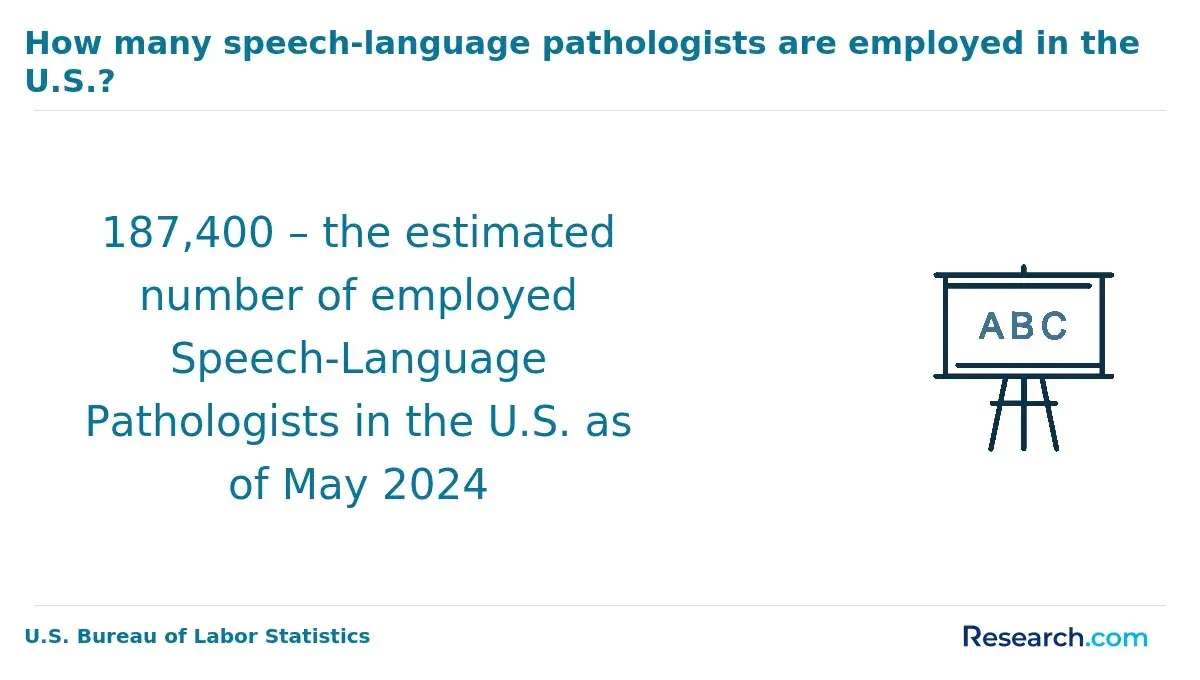
The U.S. Bureau of Labor Statistics forecasts a 17% growth in speech-language pathology roles from 2025 to 2035, driven by aging populations needing therapy for stroke recovery and dementia, plus expanding early intervention for children.
Employment settings include hospitals, rehabilitation centers, schools, outpatient care, private practice, and special education agencies.
- Hospitals and rehabilitation centers
- Public and private schools
- Outpatient care and private practice
- Special education agencies
Flexibility is common, with many speech pathologists working full-time, and some taking part-time or contract roles. Prospective students should consider Praxis pass rates and employment data when selecting programs to ensure strong credentialing support and job placement.
Geographic demand varies, with rural areas often requiring more speech pathologists, increasing job availability. Solid employment outcomes, like those from Minot State, show that graduates with proper certification and clinical experience can access ample opportunities across healthcare and education sectors.
Other Things You Should Know About Speech Pathology
After completing an SLP program, graduates must obtain certification from the American Speech-Language-Hearing Association (ASHA), known as the Certificate of Clinical Competence in Speech-Language Pathology (CCC-SLP). This certification requires completing a clinical fellowship and passing the Praxis exam in speech-language pathology. Additionally, state licensure is typically required to practice professionally, with specific requirements varying by state.
Yes, speech-language pathologists can work in a variety of settings beyond schools and hospitals. Common workplaces include rehabilitation centers, nursing homes, private practices, research institutions, and home health care. The diversity of settings reflects the wide range of populations SLPs serve, from children with developmental delays to adults with speech and swallowing disorders.
Most state licenses require at least 400 clock hours of supervised clinical practicum, including direct client contact and observation. The hours must usually be completed through an ASHA-accredited program, and many states also require a passing score on the Praxis Speech-Language Pathology exam.
- U.S. Bureau of Labor Statistics - Speech-Language Pathologists https://www.bls.gov/ooh/healthcare/speech-language-pathologists.htm
- ASHA EdFind - Accredited Speech-Language Pathology Programs https://find.asha.org/ed/
- Audiology and Speech-Language Pathology Interstate Compact https://aslpcompact.com/compact-map/
- University of Nebraska at Kearney - Speech-Language Pathology, Master of Science in Education (Online Track) https://www.unk.edu/online/degrees-programs/speech-language-pathology-online.php
- University of Wisconsin-Eau Claire - Master of Science in Speech-Language Pathology (Online) https://www.uwec.edu/speech-language-and-hearing-sciences-department/graduate-program/speech-language-pathology-online
- Ithaca College - Online Master of Science in Speech-Language Pathology https://slponline.ithaca.edu/programs/masters-speech-language-pathology-online
- Delaware Valley University - Master of Science in Speech-Language Pathology (M.S.) https://delval.edu/programs/graduate-programs/speech-language-pathology
- Auburn University, Montgomery - Master of Science in Speech-Language Pathology https://www.aum.edu/degree/ms-speech-language-pathology/