2027 SLP Admission Requirements for International Applicants

Co-Founder and Chief Data Scientist

Reviewed by Rhea Paul, PhD
SLP Education & Research Expert
International applicants with undergraduate degrees in unrelated fields often face challenges understanding the specific criteria needed for admission into U. S. speech pathology graduate programs. Confusion around credential evaluations, prerequisite coursework, and English proficiency tests can delay or prevent the application process. This situation can add stress and uncertainty to an already competitive selection environment.
This article outlines the core admission requirements for international students and provides clear guidance to help navigate the process efficiently.
Key Things You Should Know
- International applicants must hold a bachelor's degree in communication sciences or a related field to qualify for Speech Pathology master's programs in 2026.
- Proof of English proficiency through TOEFL or IELTS is required, with minimum scores typically at 90 iBT or 7.0 IELTS.
- Clinical practicum hours and passing the GRE remain critical components for admission, reflecting over 85% of accredited U.S. programs' requirements.
What are SLP admission requirements for international applicants?
International applicants aiming for admission to speech pathology (SLP) programs in the United States must meet specific requirements to increase their chances of acceptance. A critical factor is English proficiency, demonstrated by a minimum TOEFL iBT score-often an overall 90+ with a speaking subscore of at least 26 to ensure effective communication in clinical settings. According to ASHA's CSD Education Survey, 68% of international master's applicants scored below this speaking threshold in 2025, leading to rejection rates three times higher than native speakers.
Eligibility also includes holding a bachelor's degree from an accredited institution, with prerequisite coursework in anatomy, physiology, linguistics, and psychology. Some schools require regional accreditation, while others accept international degrees after evaluation by credentialing agencies. These criteria form the core of SLP admission requirements for international students in the United States.
Common application materials include:
- Official transcripts translated into English with course descriptionsLetters of recommendation from academic or clinical supervisors
- A personal statement outlining career goals and relevant experienceStandardized test scores like the GRE, which some programs now waive
- Proof of clinical experience, from volunteer roles to paid internships
Additional steps may involve credential evaluation and sometimes online interviews. Due to high competition and limited seats, early application is recommended. International applicant criteria for speech pathology programs also emphasize improving TOEFL speaking proficiency to boost admission chances. Prospective students might explore options such as a master's in speech pathology online for flexible and affordable pathways into this field.
Do international students need TOEFL for SLP programs?
International students applying to SLP programs in 2026 typically do need to submit TOEFL scores to demonstrate English language proficiency. Most U.S. speech pathology graduate programs require a minimum TOEFL iBT score, usually between 79 and 100, depending on the institution's standards. This ensures applicants can manage the academic rigor and clinical communication demands of the curriculum.
Exceptions exist for those who completed undergraduate education in an English-speaking country or at a university with English as the exclusive language of instruction. In such cases, schools may waive the TOEFL requirement after reviewing transcripts and supporting documents. Prospective students should verify TOEFL requirements for international applicants in speech pathology programs directly with each school's admissions office.
Programs use TOEFL scores to assess readiness, as speech pathology requires precise communication skills. Submitting strong scores can improve an application, especially as the average GPA for admitted international students rose to 3.7 in 2025, which correlated with 25% higher interview callback rates per CSDCAS analytics. Students should prepare carefully for the TOEFL and consider retakes if scores fall below averages, complementing results with relevant clinical experience or coursework taught in English. Direct contact with program coordinators about TOEFL expectations is highly recommended.
For those curious about the medical SLP salary and career prospects, strong English proficiency demonstrated by TOEFL scores often plays a critical role in admission and future success in the field.
Which accredited SLP programs accept international applicants?
Accredited speech pathology programs in the United States accepting international students remain highly selective, emphasizing prerequisite coursework and eligibility standards. Only 42% of international applicants in the 2025 cycle completed all ASHA-required prerequisite courses, which led to a 15% lower admission offer rate compared to domestic candidates.
Most accredited US slp graduate programs open to international applicants require full verification of coursework equivalency and English proficiency. Institutions like the University of Florida, Boston University, and Northwestern University actively enroll qualified international students who meet academic and language testing criteria.
Admissions committees prioritize applicants who have completed foundational courses in anatomy, physiology, linguistics, and communication sciences per ASHA standards. Failure to meet these prerequisites often results in denial or conditional acceptance requiring additional coursework.
Applicants should confirm if programs provide international credential evaluations or recommend agencies to validate course equivalency. Many programs also require TOEFL or IELTS scores exceeding minimum institution-specific thresholds to prove English proficiency.
Prospective students might also explore accelerated speech language pathology programs for expedited paths to credentialing and career entry.
Undergraduate coursework requirements for speech pathology programs typically include foundational classes in communication sciences and disorders, biology or anatomy, psychology, linguistics, and statistics. Most U.S. programs mandate at least one semester each of anatomy and physiology related to speech and hearing mechanisms, along with courses in phonetics and language development. Some institutions also require classes in cognitive science or neuroscience to deepen understanding of communication disorders.
Minimum GPA thresholds usually hover around 3.0, although certain programs may have more competitive standards. It is essential for international speech pathology applicants to verify specific prerequisite classes with targeted programs, as requirements can vary widely. Clinical-focused programs often emphasize observation hours or additional coursework in disorders, while research-oriented tracks may place greater weight on statistics and experimental methods.
Clinical observation is critical for admission success. The American Speech-Language-Hearing Association (ASHA) recommends 25 observation hours before graduate entry. However, CAPCSD data indicated international applicants averaged 18 hours in 2025, which is below this standard. Programs report a 20% increase in admission chances with over 40 observation hours. To gain practical exposure, seek volunteer or internship opportunities in hospitals, schools, or rehabilitation centers, focusing on quality hours documented by licensed clinicians.
For those exploring entry options, it helps to research the easiest speech pathology programs to get into for strategic application choices.
International transcripts for speech pathology admission require detailed evaluation to meet U.S. educational standards. Applicants must use recognized credential evaluation services like World Education Services (WES) or Educational Credential Evaluators (ECE). These agencies analyze course content, credit hours, and degree levels to ensure they align with U.S. program prerequisites.
Evaluation reports generally provide a course-by-course breakdown, including grades and credits translated into U.S. equivalents. Many programs require these evaluations to confirm that foundational coursework in communication sciences and disorders or related areas has been completed.
Requirements for transcript evaluation timing vary: some schools ask for evaluations before applying, others after admission offers. It's essential to verify deadlines and accepted agencies with each program's admissions office. Without proper evaluation, applications may not be considered.
Visa and clinical placement issues also impact international applicants. ASHA's international enrollment tracker shows 73% of speech pathology programs do not sponsor F-1 visas for master's candidates, an increase from 65%, due to rising clinical placement demands. This policy change limits opportunities, so confirming visa support before evaluation is critical.
Preparing early with thorough academic documentation and consulting credential evaluators strengthens admission chances and helps navigate complex international admissions processes.
Graduate programs in speech pathology generally require GRE scores, with expectations varying by school. Verbal reasoning and quantitative sections are the most important, with competitive applicants often scoring at or above the 50th percentile. For example, a verbal score of 150 and quantitative score of 145 are commonly the minimum for consideration.
Some programs prioritize verbal reasoning more, reflecting its importance for communication skills. Specific cutoffs may include a verbal score of 152, quantitative 148, or a writing score of 4.0 or higher. It's essential to check each school's admissions details carefully.
International applicants face extra hurdles. Credential evaluations for foreign transcripts delayed 55% of international applications by over eight weeks, while evaluation costs rose about 30%, now averaging $285. These factors can impact application timelines and budgeting.
To improve chances, international students should aim for GRE scores above minimum cutoffs-ideally in the 60th percentile-and submit verified credential evaluations early. Although some programs waive GRE requirements occasionally, applicants should prepare comprehensive files to avoid delays.
Several accredited universities now offer online speech pathology programs that cater to international students, often through hybrid or fully online formats. These programs blend asynchronous coursework with local or occasional on-campus clinical practicum requirements, which may sometimes be completed in the student's home country or nearby institutions.
Key considerations include verifying that the program meets accreditation standards set by the American Speech-Language-Hearing Association (ASHA) and understanding whether clinical hours can be fulfilled outside the U.S. Visa and travel restrictions make clinical placement flexibility crucial for international applicants.
Since 92% of speech pathology graduate programs dropped GRE requirements by 2025, as documented by the ASHA EdFind database, international applications increased by 18% year-over-year. Choosing programs without GRE prerequisites can streamline the admissions process.
Options range from fully online master's degrees to post-baccalaureate clinical certifications. Many institutions provide dedicated support advisors to help international students navigate licensing, visa issues, tuition fees, and technology requirements.
Before applying, prospective students should:
- Confirm program accreditation and clinical practicum policies
- Assess technology and tuition costs for nonresidents
- Explore available student support resources
These steps help ensure alignment with educational goals and U.S. professional licensing standards.
The average tuition cost for speech pathology master's programs for international students was $58,200, according to data from the Bureau of Labor Statistics (BLS). This figure mainly covers tuition and excludes additional expenses such as fees, materials, housing, or health insurance. Tuition rates vary significantly based on factors like institution type, location, and residency status. Public universities generally offer lower rates for international applicants, though total costs remain substantial.
These programs typically span two years of full-time study, with some offering accelerated or part-time options. Clinical practicum hours are a key component of the curriculum, influencing the time required to graduate. Some programs provide bridge options for students with relevant undergraduate backgrounds, potentially shortening program length.
Considering return on investment (ROI) is important; mid-career salaries for speech pathologists average around $102,000. The estimated payback period for tuition investment is approximately 2.8 years, emphasizing the financial viability despite upfront costs.
International students should also plan for visa-related expenses and recognize that financial aid availability may differ. Understanding total tuition and program length aids prospective students in budgeting and long-term career planning.
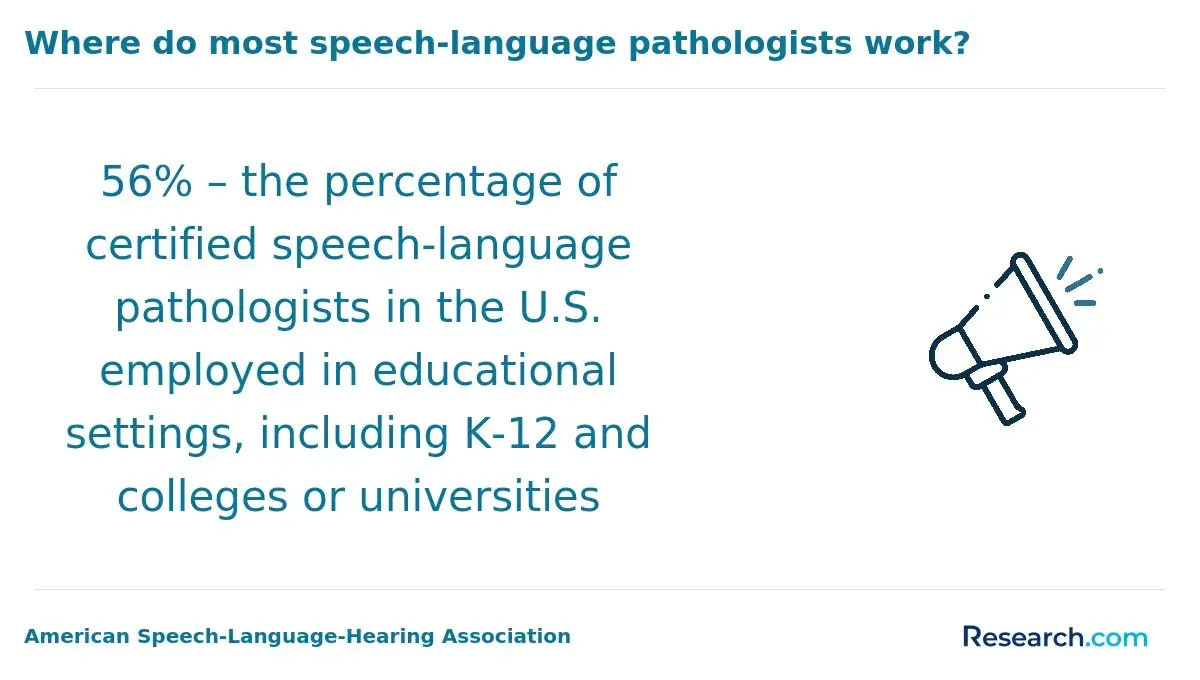
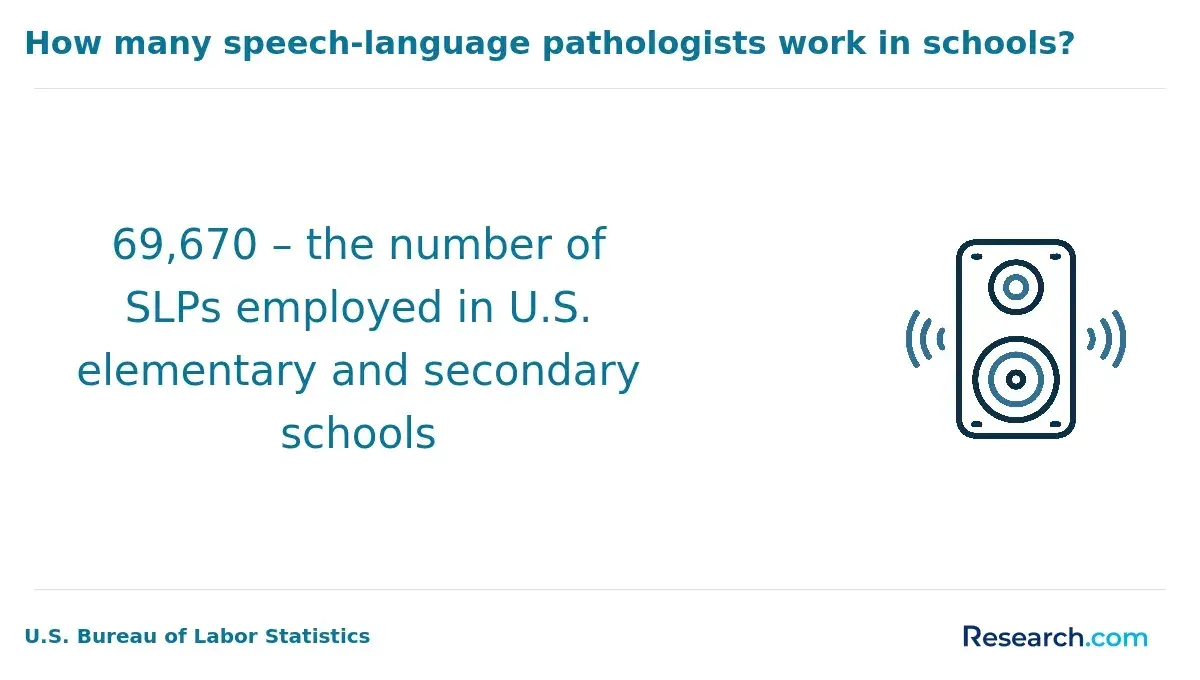
Certification in speech pathology opens doors to multiple career paths within healthcare, education, and research. Certified speech-language pathologists (SLPs) work in diverse environments such as hospitals, rehabilitation centers, schools, and private practices. Job roles include assessing and treating communication disorders, as well as specializing in areas like voice therapy, pediatric speech delays, or neurogenic disorders such as stroke-related aphasia. Experienced professionals may advance into clinical director roles or academic faculty positions.
Salaries vary depending on setting and experience. The U.S. Bureau of Labor Statistics reports a median annual wage around $80,000, with top earners exceeding $120,000. School-based SLPs generally earn between $60,000 and $75,000, while those in healthcare or private practice can surpass $90,000. Geographic location also influences pay, with urban centers often offering higher compensation.
International candidates face competitive graduate program acceptance rates, which declined to 28% amid a 14% rise in global applications, according to the CSDCAS annual report. Strong academic records and clinical experience are essential to improve admission chances.
Further advancement may require state licensure, continuing education, and specialized certifications such as swallowing disorder expertise or bilingual therapy. Credential evaluation and additional training often apply for licensure in the U.S., enhancing both job prospects and earning potential.
What is the job outlook for SLP professionals?
The job outlook for speech pathology professionals remains exceptionally strong through 2035, with the U.S. Bureau of Labor Statistics projecting a 17% employment growth rate-much faster than the average across all occupations. This demand stems from an aging population needing rehabilitation, increased recognition of speech and language disorders in children, and expanding services in schools, healthcare facilities, and private practices.
International students and graduates will find particularly abundant opportunities in high-demand states like California, where starting salaries for international graduates average 12% above the national median. Nationwide, the median starting salary sits around $82,000, reflecting solid earning potential for new professionals in speech pathology.
Key career considerations include:
- Exploring diverse work environments beyond hospitals, such as outpatient clinics, schools, and telepractice.
- Focusing on states with strong demand and better salary prospects to maximize return on educational investment.
- Obtaining clinical experience and state licensure early, as certification is required to practice.
While international graduates face challenges like state licensure and credential evaluation, the robust market demand helps ease these barriers. Staying current with clinical skills and licensure requirements boosts job placement success. The positive growth outlook and competitive compensation make speech pathology a strategic career path for those aiming to establish a sustainable professional future in the U.S.
Other Things You Should Know About Speech Pathology
Most programs require proof of English proficiency through IELTS or TOEFL. Common minimums are IELTS 6.5 to 7.0 overall with no band below 6.0, or TOEFL iBT 90 to 100. Some universities also accept Duolingo English Test scores.
In addition to completing a master's degree, many states require passing the Praxis exam in speech pathology and obtaining state licensure. Some may also require clinical fellowship completion, making it important for international students to review licensure requirements in the state where they intend to practice.
International students on student visas can often work on-campus during their studies, but off-campus work is usually restricted unless authorized by specific programs like Optional Practical Training (OPT). It is crucial to consult an international student advisor for guidance on allowable employment during the program.
For 2027 SLP admissions, international applicants should be aware of the potential necessity for English proficiency certifications such as TOEFL or IELTS. These certifications provide proof of language proficiency, which is crucial for ensuring effective communication skills required in speech-language pathology programs.
- U.S. Bureau of Labor Statistics - Speech-Language Pathologists https://www.bls.gov/ooh/healthcare/speech-language-pathologists.htm
- ASHA EdFind - Accredited Speech-Language Pathology Programs https://find.asha.org/ed/
- Audiology and Speech-Language Pathology Interstate Compact https://aslpcompact.com/compact-map/
- University of Wisconsin-Eau Claire - Master of Science in Speech-Language Pathology (Online) https://www.uwec.edu/speech-language-and-hearing-sciences-department/graduate-program/speech-language-pathology-online
- New England Institute of Technology - Master of Science in Speech Language Pathology https://www.neit.edu/academics/graduate-degrees/speech-language-pathology-ms
- California State University-San Marcos - Online MS in Speech-Language Pathology https://www.csusm.edu/slp/programs/mastersonline/index.html
- University of Nebraska at Kearney - Speech-Language Pathology, Master of Science in Education (Online Track) https://www.unk.edu/online/degrees-programs/speech-language-pathology-online.php
- James Madison University - Master of Science (M.S.) in Speech-Language Pathology (Distance Education / Online) https://www.jmu.edu/chbs/csd/online_ms/index.shtml