2027 Private Practice Careers for Speech-Language Pathologists

Co-Founder and Chief Data Scientist

Reviewed by Rhea Paul, PhD
SLP Education & Research Expert
Many professionals with unrelated undergraduate degrees face uncertainty about entering private practice in speech pathology. Challenges include navigating certification requirements, selecting accredited programs, and understanding flexible training options that accommodate busy schedules. This uncertainty can delay career transitions and limit access to reliable information about the profession's evolving landscape.
Choosing the right educational path is essential for timely credentialing and successful practice ownership. This article explores accredited flexible pathways, licensure essentials, and emerging trends to guide prospective practitioners through a clear, actionable route into private speech pathology careers.
Key Things You Should Know
- Private practice careers for speech-language pathologists in 2026 offer median salaries around $85,000, with high demand driven by aging populations and increased telepractice opportunities.
- Clinicians benefit from flexible schedules, diverse caseloads, and autonomy, but must navigate administrative duties and insurance reimbursement challenges.
- State licensure and continuing education remain essential, with expanding telehealth regulations shaping private practice growth nationwide.
What is private practice for speech-language pathologists?
Private practice for speech-language pathologists (SLPs) involves independently providing diagnostic and therapeutic services outside institutional settings such as schools or hospitals. Common models include solo practices, group clinics, and partnerships with other health professionals. Each differs in administrative demands, financial risk, and workload. According to ASHA data cited by Advanced Therapy Clinic, 25% of speech-language pathologists worked in private practices and rehabilitation facilities, indicating significant private speech-language pathology practice opportunities.
SLPs in private practice serve diverse patient populations-children with articulation disorders, adults recovering from strokes, and patients with voice disorders. Running a practice requires clinical expertise alongside business skills in billing, insurance management, and marketing. Many clinicians seek additional training in practice management to better navigate these areas.
The flexibility of private practice allows customization of therapeutic approaches and schedules but also demands handling regulatory compliance, client acquisition, and financial planning. Understanding insurance codes (CPT) and reimbursement is vital, as many rely on Medicare or private insurance. Those wondering how to start a private practice for speech pathologists should evaluate their readiness to manage both clinical and administrative responsibilities. Partnering or seeking mentorship can ease startup challenges.
Educational pathways often include advanced degrees, and prospective clinicians may consider options such as an SLP degree online to build the necessary foundation efficiently.
What education is required for SLP private practice?
Establishing a private practice as a speech-language pathologist requires a master's degree in Speech-Language Pathology from an accredited program. This graduate degree typically spans 1.5 to 2 years and includes coursework alongside clinical practicum experiences, preparing candidates for state licensure and certification. Some states and employers prefer candidates with a clinical doctorate (SLP-D), which involves advanced training focused on research and clinical expertise.
Licensing is essential and involves passing the national Praxis exam administered by the American Speech-Language-Hearing Association (ASHA) and completing a supervised clinical fellowship, usually a 36-week full-time or equivalent part-time placement. Private practice ownership demands compliance with state-specific licensing rules and ongoing certification maintenance through continuing education. This process is fundamental to meeting certification and licensing for private practice speech pathology requirements nationwide.
Private practitioners benefit from additional knowledge in healthcare billing, insurance, and business management, areas often not emphasized in academic programs. Many pursue specialty certifications in pediatric feeding, voice disorders, or neurogenic communication disorders to broaden their service offerings.
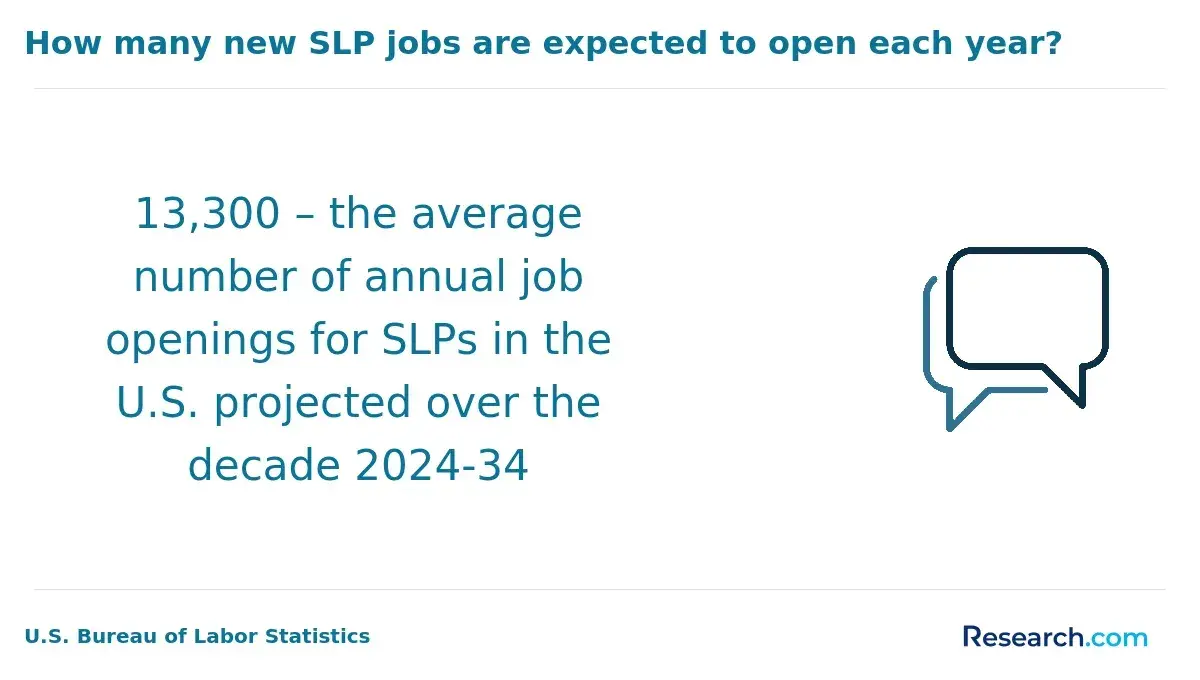
Demand for speech-language pathologists is increasing rapidly, with employment projected to grow 17% from 2025 to 2035, well above the average for all occupations. This growth offers expansion opportunities for private practices and highlights the need for advanced education and credentials. Prospective practitioners interested in the highest paid speech pathologist careers should consider enhancing their qualifications accordingly.
Those pursuing an SLP private practice education requirements in the United States should carefully plan their academic and professional path to include these critical elements.
How to become a licensed SLP for private practice?
To obtain private practice licensure for speech-language pathologists, candidates must first earn a master's degree in speech-language pathology from a program accredited by the Council on Academic Accreditation in Audiology and Speech-Language Pathology (CAA). This academic credential is mandatory for all U.S. licensure applicants.
Next, speech-language pathologists must complete a supervised clinical fellowship of at least 1,260 hours under a certified mentor. This step ensures practical competence beyond academic instruction. Many states also require passing the Praxis Examination in Speech-Language Pathology administered by the Educational Testing Service.
After these steps, apply for state licensure, noting that requirements differ by state and may include jurisprudence exams or background checks. Maintaining licensure requires ongoing continuing education to stay current with evolving clinical practices. Licensing timelines and fees vary widely, so planning ahead is essential.
The Certificate of Clinical Competence in Speech-Language Pathology (CCC-SLP) from the American Speech-Language-Hearing Association is highly recommended to enhance professional credibility and assist with insurance reimbursement in private practice settings.
According to the Bureau of Labor Statistics' May 2023 Occupational Employment and Wage Statistics, about 42,750 speech-language pathologists work in offices of other health practitioners. For those seeking autonomy, private practice offers an attractive alternative but demands strict adherence to licensing rules.
For prospective students exploring faster pathways, accelerated speech pathology programs online can provide a streamlined educational route.
The best slp degree programs for private practice in the US blend rigorous academic instruction with clinical experiences designed for diverse healthcare environments. Accredited by the Council on Academic Accreditation (CAA), these programs provide foundational knowledge and skills aligned with professional standards necessary for success in private practice.
Top accredited speech pathology programs for private practice careers often include specialized coursework covering adult and pediatric rehabilitation, voice disorders, and neurogenic communication conditions. Many universities maintain strong affiliations with healthcare facilities, offering extensive clinical practicums and externships in private clinics or outpatient centers. These experiences help students develop essential hands-on skills and prepare for the unique challenges of managing independent caseloads and client communication.
Applicants should consider programs that offer flexibility, such as part-time or online options, especially to accommodate working professionals planning a transition into private practice. Accredited master's degrees remain the standard entry point for certification, while some accelerated or dual-degree options incorporate business courses. This combination equips clinicians to handle both clinical and administrative aspects of private practice, including operations and billing.
Speech-language pathologists in private practice report a mean annual wage of $96,540 (BLS May 2023 OEWS), highlighting the value of comprehensive training. Prospective students should verify faculty expertise in private practice management and seek programs that include seminars on insurance, client acquisition, and telepractice. For more insight into accessible studies, explore speech language pathology programs.
Online and campus speech-language pathology programs each offer unique benefits and challenges for those aiming at private practice careers. Online formats provide flexibility to balance clinical hours, coursework, and work, ideal for working professionals or students in remote locations. However, online students must independently find quality local clinical placements, which can be inconsistent. Campus programs provide structured clinical resources with faculty supervision, fostering hands-on experience crucial for mastering assessment and therapy skills in a controlled environment that may speed up readiness for independent practice.
Private practice requires versatility with diverse client populations and settings. Campus programs typically have established partnerships with nursing care facilities and schools, offering students practical experience in higher-paying settings like nursing care facilities, which report mean annual wages of $108,640 versus $83,720 in schools, based on BLS May 2023 OEWS data. Exposure to varied settings enhances clinical decision-making skills essential in private practice.
Financially, online programs may save on relocation and commuting but often charge similar tuition to campus options. Accreditation and state licensure eligibility remain vital for clinical fellowships and certification. While some online programs offer virtual clinical mentorship, campus-based face-to-face supervision often provides stronger support.
SLP private practice curriculum integrates clinical expertise with essential business and operational skills needed for independent success. Core clinical training covers advanced assessment methods, individualized therapy planning, and intervention strategies for diverse disorders and age groups-ranging from articulation issues in children to post-stroke aphasia in adults.
Business components include insurance billing, coding, regulatory compliance, and marketing techniques to attract and retain clients. This combination equips practitioners to manage finances and navigate healthcare laws effectively. Ethical topics such as HIPAA confidentiality and informed consent are stressed to reduce legal risks.
Programs also develop soft skills like client communication, interdisciplinary teamwork, and cultural competence, all vital for building a strong professional reputation and ensuring client retention. Practical experience through case studies, internships, or mentorships offers hands-on learning before full independence.
Prospective students should prioritize programs balancing clinical training with business acumen to maximize career opportunities and financial rewards in SLP private practice.
Admission requirements for slp graduate programs generally include a bachelor's degree from an accredited institution, often in communication sciences and disorders or a related field. A minimum GPA of 3.0 is typically required, though competitive programs favor GPAs above 3.5. Many schools require GRE scores, but this requirement may be waived at some; applicants should confirm with their chosen program.
Prerequisite courses usually cover anatomy and physiology of speech and hearing mechanisms, phonetics, and linguistics. Programs often ask for 25 to 50 documented supervised observation hours in clinical or educational settings to ensure exposure to the field. Letters of recommendation, usually from faculty or clinical supervisors, provide insight into academic performance and interpersonal skills.
Personal statements should express clear motivation, career goals, and understanding of speech pathology responsibilities. Some programs include interviews to assess communication skills and professional readiness. International students or those with non-traditional backgrounds might need additional credential validation.
Most speech pathology programs require at least two years of graduate study after earning a bachelor's degree, with a typical master's program lasting 24 to 27 months. Accelerated or combined bachelor's-to-master's tracks can shorten this to around three years, while doctoral paths (PhD or AuD) may extend four to six years depending on focus and research demands.
Costs vary by institution and residency status. Public universities generally charge $20,000 to $40,000 for the full master's program for in-state students, whereas out-of-state and private school tuitions can range from $50,000 to $90,000. Additional costs include clinical practicum fees, textbooks, and certification exams. Financial aid options such as scholarships, assistantships, and federal loans are often available to ease the financial burden.
Licensing usually requires a clinical fellowship lasting about 9 months to 1 year post-graduation, which is essential for certification and independent practice, especially in private practice settings.
With offices of other health practitioners accounting for 3.75% of industry employment (BLS May 2023 OEWS), targeted training and timely program completion are critical for entering these specialized fields. Planning finances early and choosing programs with strong clinical placements can optimize both time and costs.
The annual salary for private practice speech-language pathologists (SLPs) typically ranges from $75,000 to $95,000, influenced by factors such as geographic location, specialization, and experience level. Entry-level clinicians may start closer to $70,000, while experienced practitioners with specialties like pediatric or neurogenic disorders often earn over $100,000.
Earnings vary by practice setting: independent clinics generally offer higher income potential due to business management and client volume, whereas those contracting with schools or healthcare facilities tend to have more stable but lower salaries. Regional factors also play a role, with metropolitan areas usually providing higher compensation than rural locations.
The speech therapy services sector is forecasted to grow at a 17% compound annual rate from 2025 to 2035, fueled by demographic trends such as aging populations and increased recognition of speech disorders. Technological advances, including telepractice, also contribute to expanding opportunities and salary prospects according to Profihitch.
Private practitioners can supplement their income through consulting, training, and telehealth services. However, they should consider overhead costs that impact net income despite promising gross salaries.
What is the job outlook for private practice SLPs?
The demand for private practice speech-language pathologists (SLPs) continues to grow, fueled by aging populations and expanded insurance coverage. Skilled nursing and private facilities are actively competing for qualified SLPs, often providing sign-on bonuses over $2,500 in certain regions, as detailed by the SpeechPathologyGraduatePrograms.org 2026 Salary Guide. This trend highlights workforce shortages and creates valuable opportunities for clinicians pursuing private or contract roles.
Employment settings extend beyond traditional clinics to include schools, outpatient centers, home health, and independent practice, serving pediatric, adult neurological, and rehabilitative populations. Those considering private practice should be prepared to navigate business essentials like marketing, healthcare compliance, and patient management.
The growing need for speech therapy services paired with competitive compensation signals a promising future for private practice SLPs.
Other Things You Should Know About Speech Pathology
Continuing education is essential for speech-language pathologists to maintain licensure and certification. It ensures they stay current with advancements in assessment techniques, treatment methods, and technology used in the field. Private practitioners must regularly complete professional development courses to provide evidence-based care and comply with state and professional board requirements.
Private practice SLPs usually must obtain individual National Provider Identifier numbers and complete payer enrollment with Medicare, Medicaid, and private insurers before billing. Many commercial plans also require CAQH profiles, malpractice coverage, and proof of state licensure before claims can be processed.
Starting a private practice involves challenges such as managing business operations, marketing services, and navigating insurance reimbursements. New practitioners also must establish a referral network and build a client base from scratch, which can take time. Developing strong organizational and financial management skills alongside clinical expertise is critical for long-term success.
- U.S. Bureau of Labor Statistics - Speech-Language Pathologists https://www.bls.gov/ooh/healthcare/speech-language-pathologists.htm
- ASHA EdFind - Accredited Speech-Language Pathology Programs https://find.asha.org/ed/
- O*NET OnLine - Speech-Language Pathologists https://www.onetonline.org/link/summary/29-1127.00
- California State University-East Bay - Online Master of Science in Speech-Language Pathology https://ce.csueastbay.edu/programs/speech-language-pathology/
- California State University-San Marcos - Online MS in Speech-Language Pathology https://www.csusm.edu/slp/programs/mastersonline/index.html
- University of North Carolina at Greensboro - Speech-Language Pathology, M.A. (Online) https://csd.uncg.edu/graduate/masters-of-arts-online/
- Auburn University, Montgomery - Master of Science in Speech-Language Pathology https://www.aum.edu/degree/ms-speech-language-pathology/
- Baylor University - Master of Science in Speech-Language Pathology (Online) https://csd.robbins.baylor.edu/graduate/online-csd-graduate-program