2027 ASHA Praxis Exam Guide for Speech Pathology Students

Co-Founder and Chief Data Scientist

Reviewed by Rhea Paul, PhD
SLP Education & Research Expert
Many aspiring professionals from unrelated fields face uncertainty when preparing for the ASHA Praxis exam required for certification in speech pathology. The exam's comprehensive scope and the lack of clear, accessible guidance create obstacles that delay career transitions. Without a strategic study plan, candidates risk wasting time and resources on ineffective methods. This challenge can discourage even the most motivated individuals seeking flexibility and accreditation in their educational paths.
This article offers a detailed guide on exam content, preparation strategies, and resources to help candidates navigate the process efficiently and increase their chances of success in the ASHA Praxis exam.
Key Things You Should Know
- The 2026 ASHA Praxis exam requires passing both the Spoken Language Processing and Clinical Skills sections, with a current passing rate near 87% among U.S. test takers.
- Preparation emphasizes updated content in evidence-based practices, including neurogenic disorders and pediatric speech pathology, reflecting 2024 ASHA standards revisions.
- Test fees average $230, and candidates must complete a relevant graduate program accredited by the Council on Academic Accreditation for eligibility.
What is the ASHA Praxis Exam for Speech Pathology?
The ASHA Praxis exam requirements for speech pathology include a national certification test essential for licensure in many U.S. states. Administered by the Educational Testing Service (ETS), the exam assesses foundational knowledge and skills necessary for clinical practice in speech pathology. Key content areas cover speech sound production, language development, swallowing disorders, and professional ethics.
According to the ASHA National Summary Report for Praxis Data in Speech-Language Pathology, 10,410 examinees took the exam in the 2024-2025 test year. Of these, 22.1% scored between 170 and 184, highlighting the exam's challenging nature. This data emphasizes the need for rigorous study and focused preparation.
The exam format includes multiple-choice questions on typical and atypical communication disorders, assessment methods, and intervention strategies. Preparing thoroughly requires mastery of content related to graduate coursework and clinical experience. Common challenges involve managing time and applying clinical knowledge to complex scenarios.
Students and professionals can improve readiness by using official study guides, practice tests, and peer study groups. Additionally, understanding state-specific certification requirements connected to Praxis results is crucial for planning one's career path. Prospective candidates may also explore online SLP programs to support their education and training.
An overview of the ASHA Praxis exam for speech pathology students underscores its pivotal role in ensuring competence and safety in clinical settings and advancing careers in this field.
Who must take the Praxis Exam for ASHA certification?
All candidates pursuing ASHA certification must take the Praxis Exam in speech pathology, specifically the Praxis 5331 for Speech-Language Pathology Assistants. This requirement primarily affects students enrolled in or graduates of accredited graduate programs who need to meet the Certificate of Clinical Competence (CCC-SLP) prerequisites. The exam serves as a standardized assessment to confirm foundational knowledge before clinical practice.
State licensure boards also often mandate the Praxis 5331 exam, though requirements vary. While ASHA sets the base passing score at 162, many states adopt this benchmark; some states set higher passing thresholds through independent standard-setting studies reflecting local standards of clinical competence. Candidates should verify the specific score required by their state to meet licensure standards.
International candidates seeking certification in the U.S., professionals re-entering clinical practice after a lapse, and those transitioning from related disciplines with a speech pathology focus typically must pass the Praxis 5331 to fulfill ASHA or state eligibility criteria. These requirements ensure consistent standards across diverse educational backgrounds.
Most candidates take the Praxis 5331 during their final semester, coinciding with clinical training. Early preparation is vital because failure delays certification and licensure due to retakes. Utilizing reliable study resources and understanding exam formats can help mitigate risks.
Students interested in specialties such as a pediatric SLP career should also keep these exam requirements in mind when planning their education path.
What are the passing scores and retake policies?
The passing score for the 2026 ASHA Praxis exam in speech pathology is a scaled score of 162 or higher. This threshold, set by the American Speech-Language-Hearing Association (ASHA), ranges from 100 to 200 and reflects proficiency across diverse content areas rather than a simple percentage correct. Candidates aiming to meet certification requirements must focus their preparation accordingly.
Retake policies and exam eligibility for speech pathology students allow multiple attempts to pass the exam. After an initial failure, candidates can retake the exam as many times as needed but must wait at least 21 days between attempts. Each retake requires paying the full exam fee, encouraging thorough preparation to avoid delays and additional costs.
Prioritizing study efforts on heavily weighted topics is essential. For instance, Clinical Management and Phonological and Language Disorders each constitute 19% of exam questions, tying as the second-largest content areas based on the ASHA Speech-Language Pathology Praxis Exam Content. Reviewing ETS performance reports after any unsuccessful attempt helps identify weaker areas for focused study.
Prospective students interested in accelerating their path to certification may consider an accelerated SLP master's program, which can provide a streamlined route to entering the profession and preparing effectively for the exam.
To register for ASHA Praxis exam in the United States, candidates must create an account on the official ETS Praxis website and select a test center and date early, as spots fill quickly. The exam fee is payable upon registration and is non-refundable. Rescheduling is allowed but may involve extra charges. Confirm eligibility per ASHA guidelines before registration to avoid issues.
Effective preparation for the ASHA Praxis Speech Pathology test requires focused study on key content: human communication and swallowing processes, assessment, and intervention. Utilize official ETS study materials alongside comprehensive textbooks and online practice tests designed for speech pathology candidates. Regularly timed practice exams help build stamina and identify weaknesses.
Group study sessions or preparatory workshops can enhance understanding, while varied methods like flashcards, video lectures, and clinical case reviews deepen knowledge. Allocate 8 to 12 weeks of study with several hours weekly depending on your background and familiarity.
Recent pass rates of 89.9% among ASHA certification seekers illustrate the exam's accessibility with proper preparation. Stay updated on exam policies from ETS and ASHA. Rest well before the test and arrive early to complete check-in smoothly. For those looking to further their education, exploring ASHA accredited online SLP programs can provide flexible pathways to advance your career.
The Praxis exam for speech pathology assesses five essential areas integral to professional practice: assessment of speech, language, and communication disorders; intervention strategies; foundational knowledge of speech science and linguistics; ethical and professional standards; and cultural and linguistic diversity in service delivery. Each domain targets key skills needed for effective diagnosis and treatment across all age groups.
Assessment questions evaluate candidates' familiarity with both standardized and nonstandardized tools, interpretation of results, and case history analysis. Intervention focuses on planning and implementing treatments for diverse populations, including children with articulation issues and adults with aphasia.
Foundational knowledge covers speech anatomy, phonetics, and language acquisition, providing the theoretical framework for clinical practice. Ethical queries center on applying the American Speech-Language-Hearing Association (ASHA) Code of Ethics to real-world scenarios. Additionally, culturally competent care is emphasized through questions about serving multicultural and multilingual clients.
Strong program performance reflects mastery of this content. For instance, a speech-language pathology program achieved a 100% pass rate on the Praxis exam for its 2019 graduates, maintaining six consecutive years of perfect results and top accreditation status, as reported by The Highlander News.
Thorough familiarity with the Praxis speech pathology content outline enables candidates to tailor their study approach, ensuring readiness for successful clinical practice.
Graduate programs that best prepare students for the Praxis exam in speech pathology combine rigorous coursework with extensive clinical experience. Accreditation by the Council on Academic Accreditation in Audiology and Speech-Language Pathology (CAA) ensures that curricula meet current certification standards. Strong programs include courses on evidence-based practice, neuroanatomy, language development, and audiology to build broad foundational knowledge.
Clinical practicum is a key component, with a minimum of 400 supervised hours required across varied settings like schools, hospitals, and rehabilitation centers. Early and progressive clinical placements, including pediatric and adult populations, enhance practical readiness for the Praxis exam's diverse content.
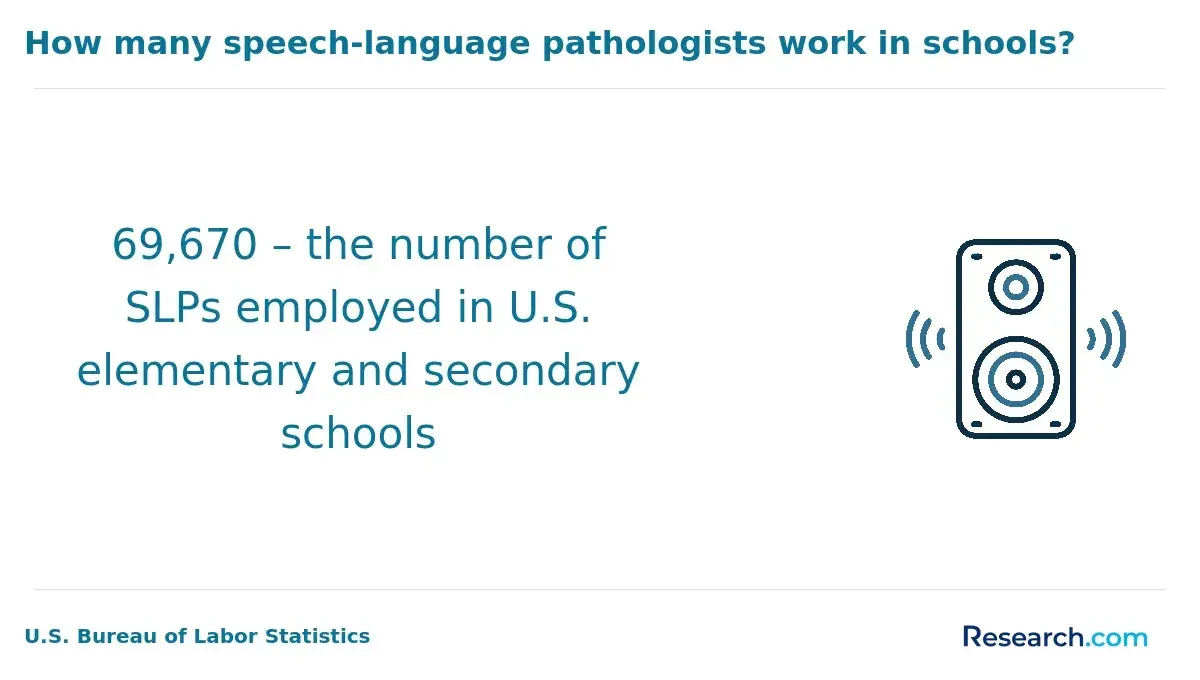
Faculty expertise and active research in communication disorders provide up-to-date insights and critical thinking skills. Programs with embedded Praxis review seminars or test preparation resources offer direct benefits for exam success. According to the U.S. Bureau of Labor Statistics Occupational Outlook Handbook (2024 update), employment for speech-language pathologists is growing rapidly, driven by aging populations and early intervention demands.
To obtain the ASHA Certificate of Clinical Competence in speech-language pathology (CCC-SLP), candidates must complete a master's or doctoral degree approved by the Council on Academic Accreditation in Audiology and Speech-Language Pathology (CAA). These programs cover crucial areas such as anatomy, neurophysiology, speech and language development, and assessment methods.
Clinical experience is critical, requiring at least 400 clock hours of supervised practicum. This includes a minimum of 25 hours observing and 375 hours of direct client interaction. Clinical placements occur in schools, hospitals, or rehabilitation centers, providing hands-on exposure to various communication disorders.
Candidates must also successfully pass the Praxis exam, assessing entry-level skills in speech pathology. Maintaining ASHA certification involves continuing education and regular renewal of credentials, which ensures professionals remain current with industry advances and best practices.
The U.S. Bureau of Labor Statistics reports a median annual wage of $89,290 for speech-language pathologists, with the top 10% earning over $129,930, underscoring the value of meeting ASHA's standards.
Graduate study in speech pathology in the United States typically requires two to three years beyond a bachelor's degree. Most students pursue a master's degree, the minimum credential needed for entry-level certification and clinical practice. Some schools offer combined bachelor's-to-master's programs lasting five to six years. Doctoral degrees, while uncommon for initial licensing, add three to five years beyond the master's level.
Costs vary significantly by institution type and location. Public universities charge approximately $15,000 to $35,000 annually for in-state students, with out-of-state tuition often exceeding $40,000 per year. Private institutions can demand $30,000 to over $50,000 yearly. Part-time and online options provide flexible pacing but rarely reduce total tuition.
Ancillary expenses also impact budgeting, including clinical practicum fees, licensure exams, and living costs during study. Early research into financial aid, scholarships, and employer sponsorships is highly recommended.
The Georgetown University Center on Education and the Workforce reports that speech-language pathologists with master's degrees earn an estimated $1.2 million more over their careers than those with bachelor's degrees, after accounting for tuition and opportunity costs.
ASHA certification in speech pathology opens diverse career paths, with salaries typically ranging from $65,000 to $100,000 annually depending on the role and setting. Clinical speech-language pathologists commonly work in schools, hospitals, and private practices, earning between $65,000 and $85,000. Audiologists and researchers focusing on communication disorders with ASHA credentials often see salaries from $75,000 to $100,000, influenced by experience and workplace environment.
Licensure requirements differ across states, impacting job eligibility and salary. While most states (45) accept the ASHA-recommended Praxis passing score of 162 for speech-language pathology licensure, five states require scores up to 170 as set by local standards. These variations affect when and where candidates can obtain certification.
Other opportunities include pediatric specialization, geriatrics, university faculty positions, and clinical supervision-roles that generally offer salaries above $70,000. Speech pathologists with ASHA certification may also advance into leadership or launch private practices, where income depends on business scale.
Students preparing for the Praxis exam should consider state-specific score requirements to maximize certification prospects and career mobility within the U.S.
What is the job outlook for speech-language pathologists?
Employment for speech-language pathologists (SLPs) is expected to grow 17% from 2025 to 2035, according to the U.S. Bureau of Labor Statistics. This rapid expansion, far exceeding the average for all occupations, is driven by factors such as an aging population needing rehabilitation for speech and swallowing disorders, increased awareness of childhood communication challenges, and greater access to healthcare and education services. Approximately 27,000 new job openings arise annually, offering strong prospects for new graduates.
SLPs work in varied environments, including hospitals, schools, nursing care facilities, rehabilitation centers, and private practices. For instance, school-based SLPs focus on developmental speech and language delays, while medical settings often require skills in swallowing disorder treatment and voice therapy. This diversity enables specialization based on individual interests.
States that require ASHA certification emphasize high Praxis exam passing rates, which reflect professional standards and affect licensure and job opportunities. Accredited programs now publicly report three-year Praxis results, promoting accountability and transparency.
The demand for bilingual SLPs and culturally competent practitioners is growing, enhancing employability in diverse communities. Developing expertise in evidence-based assessment and intervention techniques is essential for career advancement in speech pathology.
Other Things You Should Know About Speech Pathology
Many school systems require speech pathologists to hold state licensure, which can differ from ASHA certification. While ASHA certification is a national credential that enhances professional standing, some schools accept state licenses in lieu of ASHA certification. Graduates should confirm requirements with the school district's hiring policies.
Clinical experience is crucial for understanding practical speech pathology skills tested on the Praxis exam. Hands-on work with diverse patient populations helps reinforce theoretical knowledge and build professional confidence. Graduate programs typically include supervised clinical practicum opportunities to prepare students effectively.
Most states and ASHA use a passing score of 162 on the Speech-Language Pathology Praxis exam. The test is administered by ETS, and a passing result is required for ASHA certification and often for state licensure in speech-language pathology.
- U.S. Bureau of Labor Statistics - Speech-Language Pathologists https://www.bls.gov/ooh/healthcare/speech-language-pathologists.htm
- ASHA EdFind - Accredited Speech-Language Pathology Programs https://find.asha.org/ed/
- ETS Praxis - Speech-Language Pathology (5331) https://praxis.ets.org/test/speech-language-pathology-5331.html
- University of Scranton - Master of Science (M.S.) in Speech-Language Pathology https://www.scranton.edu/academics/pcps/health-and-human-performance/programs/speech-language-pathology/index.shtml
- Baylor University - Master of Science in Speech-Language Pathology (Online) https://csd.robbins.baylor.edu/graduate/online-csd-graduate-program
- Idaho State University - Master of Science in Speech-Language Pathology (Online/Distance Education) https://www.isu.edu/slp/programs-offered/slp-graduate-program/
- University of Nebraska at Kearney - Speech-Language Pathology, Master of Science in Education (Online Track) https://www.unk.edu/online/degrees-programs/speech-language-pathology-online.php
- California State University-San Marcos - Online MS in Speech-Language Pathology https://www.csusm.edu/slp/programs/mastersonline/index.html