2027 Online SLP Programs for Parents and Caregivers

Co-Founder and Chief Data Scientist

Reviewed by Rhea Paul, PhD
SLP Education & Research Expert
Parents and caregivers often face challenges when seeking quality speech pathology education that fits their busy lives. Traditional programs may require on-campus attendance or rigid schedules, making it difficult to balance family and study commitments. Additionally, finding accredited options that cater to non-traditional students with unrelated undergraduate backgrounds can be confusing and time-consuming.
This article explores flexible, accredited online SLP programs designed to accommodate the unique needs of parents and caregivers. It aims to provide clear information on program structure, accreditation, and accessibility to help readers confidently choose a path that enables a successful career transition into speech pathology.
Key Things You Should Know
- Online Speech Pathology programs for parents and caregivers in 2026 offer flexible, evidence-based training designed to enhance home support for children with communication disorders.
- Recent data shows over 40% of such programs integrate telepractice methods, enabling real-time interaction with licensed clinicians and tailored practice strategies.
- Completion rates for online Speech Pathology courses have improved to nearly 70%, reflecting increased accessibility and comprehensive digital resources available since 2024.
What Are Online SLP Programs for Parents and Caregivers?
Online SLP programs for parents and caregivers provide specialized training to help family members support individuals facing speech, language, and communication challenges at home. These courses offer practical knowledge on speech disorders, communication strategies, and assistive technology, promoting better therapy results between clinical visits. They often include video lessons, interactive modules, and downloadable resources designed to fit diverse schedules and learning paces.
With 63 million Americans serving as family caregivers in 2025-a 45% rise since 2015-there is increased demand for accessible education. These programs tailor their content to varying needs, addressing children with speech delays, adults recovering from stroke, and people with developmental disabilities. Techniques taught include articulation exercises, language stimulation, and behavioral reinforcement.
Parents and caregivers benefit from online speech pathology programs for parents and caregivers by gaining flexible access to vital skills without disrupting busy routines. Many courses also include guidance on observing speech patterns and collaborating effectively with licensed speech-language pathologists, enhancing overall care coordination.
By fostering informed decision-making and confidence, these programs support improved communication environments and reduce reliance on clinical settings. For those interested in advancing their knowledge further, exploring online speech pathology masters programs can be a valuable step.
How Do Online SLP Programs Differ from Traditional On-Campus Options?
Online speech pathology programs for parents and other students offer greater flexibility compared to traditional on-campus courses. These programs allow asynchronous access to lectures, virtual simulations, and telepractice labs, enabling those balancing employment or caregiving to complete coursework without rigid schedules. This flexibility is particularly beneficial since 71% of family caregivers are employed and often face workplace disruptions (AARP and National Alliance for Caregiving, Caregiving in the US 2025).
The differences between online and on-campus speech pathology courses include varied delivery methods and clinical training. Online programs frequently incorporate telehealth techniques and digital communication, preparing students for remote patient care. Meanwhile, on-campus programs emphasize face-to-face clinical interaction, providing immediate supervision and feedback. Some online programs also arrange local clinical placements to fulfill accreditation standards, combining remote learning with in-person practice.
Another advantage of online formats is reduced geographic barriers, which supports students in rural or underserved areas where specialized facilities are limited. Traditional programs generally require relocation, increasing financial and time costs. Online learners can also benefit from virtual study groups and digital peer collaboration platforms, fostering a sense of community without physical presence constraints.
Financially, online speech pathology programs may reduce costs by eliminating campus fees and commuting expenses. However, verifying program accreditation and clinical placement support is essential for licensure. For those exploring career prospects and compensation, understanding the speech therapist salary can help guide decisions.
Which Accredited Universities Offer the Best Online SLP Programs?
Several accredited online SLP degree programs for parents offer flexible, career-focused education suitable for those balancing caregiving responsibilities. The University of Wisconsin-Madison delivers a well-established online master's program in speech pathology, featuring clinical practicum options that accommodate working adults. Similarly, the University of Florida provides a comprehensive, ASHA-accredited program emphasizing evidence-based practice, with fieldwork completed in local communities.
East Carolina University's online master's program offers multiple start dates annually, adapting well to caregiving schedules. This program includes telepractice training, preparing students to deliver remote therapy services-an increasing need as 11 million caregivers receive compensation through Medicaid, VA, or state programs (AARP and National Alliance for Caregiving, Caregiving in the US 2025).
MGH Institute of Health Professions features an accredited speech-language pathology degree with a hybrid format combining self-paced learning and virtual labs, ideal for managing family duties. The University of Arizona provides a fully online master's pathway with electives focused on AAC specialization or pediatric emphasis. These top universities offering online speech pathology programs prioritize CAA accreditation, clinical placement support, and state licensure preparation, ensuring smooth career entry.
For those interested in expedited options, consider exploring fast track speech pathology programs. Programs with asynchronous modules and local clinical arrangements offer both flexibility and professional rigor, supporting caregivers' unique time constraints.
Admission requirements for online speech pathology degrees in the United States typically include a bachelor's degree from an accredited institution, often emphasizing communication sciences or related fields. Applicants usually need transcripts showing a minimum GPA around 3.0, though some programs may require higher standards. Prerequisite courses in anatomy, physiology, linguistics, and statistics are common to ensure foundational knowledge.
Standardized tests like the GRE may be required by some programs; however, many waive this for candidates with strong undergraduate records or relevant experience. Letters of recommendation from academic or professional sources help evaluate an applicant's potential. Practical experience in clinical or educational settings, whether paid or volunteer, is recommended or sometimes required, helping demonstrate commitment to the profession.
Parent and caregiver eligibility for online speech pathology programs is enhanced by flexible formats. For example, Baylor's online MS-SLP offers mostly asynchronous coursework with only one live session weekly, allowing those balancing caregiving or work responsibilities to participate effectively.
Applicants must also meet technical requirements such as reliable internet and familiarity with virtual learning platforms. Some states require background checks for clinical practicum eligibility. For prospective students exploring options, there are valuable resources highlighting online speech pathology programs that are more accessible for entry.
Online speech pathology programs for parents and caregivers provide essential training to support children's communication development. These programs cover areas such as speech sound production, language comprehension, social communication, and augmentative and alternative communication techniques. Caregivers learn to identify speech delays, track developmental milestones, and apply evidence-based therapy methods at home.
The curriculum often includes practical modules to guide age-appropriate speech exercises, instruction on progress monitoring using data, strategies for handling behavioral challenges, and foundational knowledge about neurological and physiological aspects of speech disorders. Telehealth technology is commonly used to facilitate interactive sessions with certified speech-language pathologists.
Programs like More Than Words highlight the effectiveness of such training, with studies showing 95% caregiver satisfaction over a 13-week telehealth intervention. Some curricula incorporate cultural and linguistic diversity to assist caregivers working with bilingual or culturally diverse children.
Combining theory with hands-on practice through video demonstrations, live coaching, and personalized feedback, these programs address challenges such as limited therapist access and the need for flexible learning. This ensures caregivers are empowered partners in their child's speech pathology journey.
Online speech pathology programs typically last between 2 to 4 years, depending on the credential level. Master's degree programs, often required for entry-level certification, usually involve about 2 years of full-time study. Part-time options extend this timeline to 3 or 4 years, which can better accommodate caregivers and working professionals. Certificate programs or continuing education courses may take several months to a year but do not lead to full licensure.
Tuition costs vary widely based on factors such as institution type, program format, and residency status. Graduate programs generally range from $20,000 to $60,000 in total tuition. Public universities typically offer lower fees in-state, whereas private institutions charge more. Additional costs include textbooks, clinical placement fees, and technology for online learning. Financial aid, scholarships, and employer tuition assistance may be available to help offset expenses.
Balancing caregiving duties with rigorous coursework can be demanding. National Alliance for Caregiving reports that family caregivers spend on average 27 hours weekly providing care; nearly 25% dedicate 40 or more hours. Choosing part-time or self-paced programs with asynchronous classes and flexible scheduling can ease the workload without compromising academic success or well-being. Students should prioritize programs offering strong clinical support and evaluate costs holistically, including potential lost wages and care constraints, to make informed decisions about enrollment in 2026.
Graduates of online speech pathology programs have diverse career opportunities addressing communication disorders across various age groups and settings. Common roles include clinical speech-language pathologists working in schools, healthcare facilities, rehabilitation centers, and private practice. They evaluate, diagnose, and treat speech, language, voice, and swallowing disorders.
Beyond clinical work, many speech pathologists pursue roles in research, education, or healthcare administration, often serving as university instructors or trainers for future clinicians. Others specialize in augmentative and alternative communication (AAC) or neurogenic communication disorders related to stroke or traumatic brain injury.
Family caregivers, especially those managing care for both children and aging adults-a group comprising 29% of caregivers according to AARP and the National Alliance for Caregiving-benefit from professionals skilled in multiple population needs. Telepractice expands access, enabling remote delivery of services to rural and underserved communities. Specialized careers also include pediatric speech therapy, geriatric communication support, and consulting for assistive technology firms developing speech recognition and rehabilitation tools.
Advancing through certifications or earning a clinical doctorate can lead to leadership roles such as clinical supervisors, program directors, or health policy advisors focused on systemic improvements in speech and language services. Combining practical experience with an online degree equips graduates for impactful careers in healthcare and education sectors.
Speech language pathology professionals enjoy a strong salary outlook and robust job growth across the United States. The U.S. Bureau of Labor Statistics reports a median annual wage of $97,870 for speech-language pathologists, with the top 10% earning over $122,000. Entry-level salaries typically range from $55,000 to $65,000, often higher in healthcare settings, private practice, or specialized areas like pediatric or geriatric care.
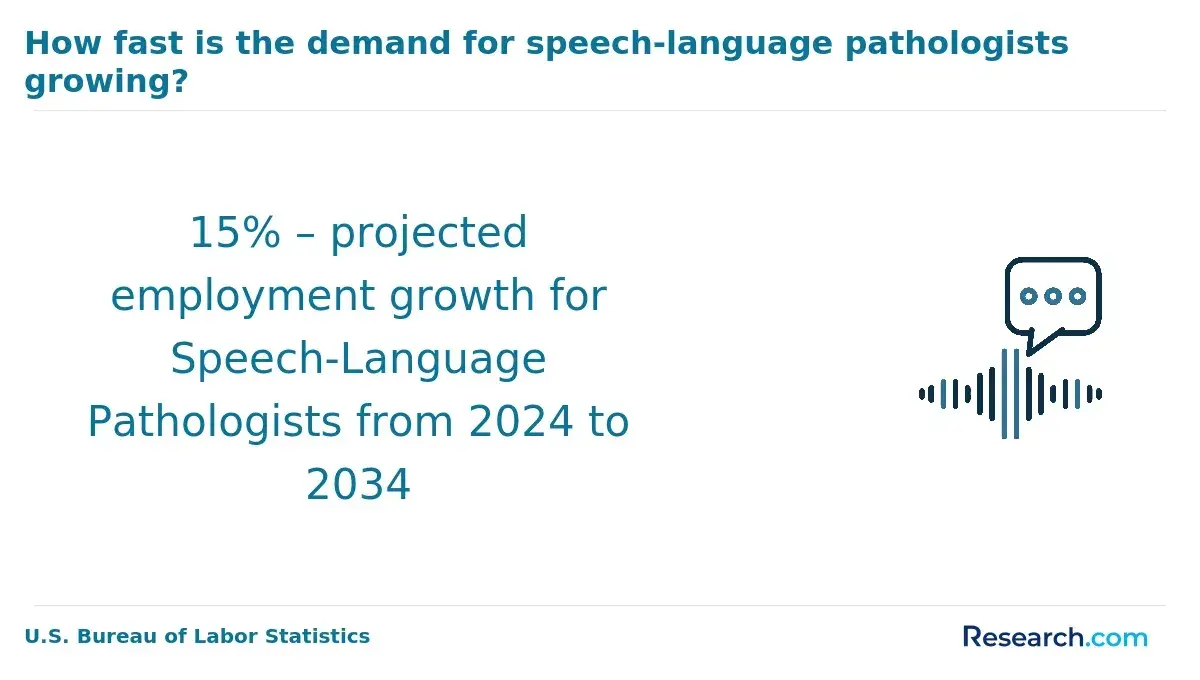
Job opportunities are expected to grow by 21% from 2022 to 2032, driven by an aging population, increased early intervention programs, and greater awareness of communication disorders. For example, Pennsylvania has about 23% of adults serving as unpaid family caregivers, creating meaningful demand for qualified specialists.
Specializing in areas such as stroke recovery, autism spectrum disorders, or voice therapy can enhance earning potential. Earning a Certificate of Clinical Competence (CCC-SLP) from the American Speech-Language-Hearing Association further boosts employability. Career stability is supported by ongoing demand in schools, hospitals, rehabilitation centers, and private practice. Opportunities also exist in academia and healthcare administration for those combining clinical and research skills.
Licensing and certification ensure speech-language pathologists (SLPs) are qualified and protect public safety in the U.S. All SLPs need a master's degree from a program accredited by the Council on Academic Accreditation in Audiology and Speech-Language Pathology (CAA). After earning their degree, candidates must obtain the Certificate of Clinical Competence in Speech-Language Pathology (CCC-SLP) from the American Speech-Language-Hearing Association (ASHA) to practice in many settings.
The CCC-SLP requires completing a supervised clinical fellowship of at least 36 weeks and passing the Praxis exam in speech-language pathology. State licensure is mandatory and varies by state; most states require ASHA certification for eligibility. Some also mandate jurisprudence or ethics exams, so researching specific state board requirements early is important for students and graduates planning local practice.
For those considering online SLP programs, confirming that the education and clinical experiences meet national and state standards is essential to qualify for both in-person and telehealth work. A PMC study reported a 97.35% satisfaction rate among caregivers and clients using virtual therapy for the first time, highlighting telehealth's growing role in service delivery. Graduates must maintain certification through continuing education required by ASHA and state boards to stay current with evolving best practices and telehealth regulations.
How to Choose a Reputable Online SLP Program?
When selecting an online speech pathology program, accreditation from recognized bodies like the Council on Academic Accreditation (CAA) of the American Speech-Language-Hearing Association (ASHA) is essential. This ensures the program meets professional standards required for certification and licensure.
Review the curriculum carefully to ensure it covers core areas such as communication disorders, clinical methods, and caregiver training. Programs offering specialized modules for multi-recipient caregiving provide better preparation for parents managing complex care needs. Look for evidence-based instruction and practical assessments reflecting real-world caregiving situations.
Faculty expertise greatly influences the quality of education. Prioritize programs with instructors who have clinical experience and strong academic backgrounds in speech pathology and related fields. Such faculty provide valuable mentorship and current knowledge. Support services are crucial for students balancing study and caregiving responsibilities. Consider programs that offer flexible scheduling, clinical practicum opportunities, advising, and reliable online platforms to facilitate learning and communication.
Other Things You Should Know About Speech Pathology
In 2027, online speech pathology programs are designed to equip parents and caregivers with detailed instructional videos, interactive modules, and real-time guidance from professionals. These resources ensure that caregivers understand therapy techniques, enabling them to effectively support speech therapy at home.
Online speech pathology programs designed for parents and caregivers typically include foundational content that requires no prior clinical experience. These programs focus on practical strategies to assist loved ones and understanding basic speech and language development. Still, they are not intended to replace professional certification or clinical degrees for practicing clinicians.
Yes, many 2027 online SLP parent and caregiver programs use live telepractice sessions through HIPAA-compliant video platforms for coaching and feedback. Some also include recorded lessons and home practice logs, but live meetings are commonly required to demonstrate strategies and receive supervised guidance.
Quality online speech pathology programs include training on a wide range of speech and language disorders affecting various age groups and cultural backgrounds. They emphasize individualized approaches, evidence-based interventions, and cultural competency to meet diverse client needs effectively. This broad scope helps parents and caregivers provide appropriate support tailored to specific challenges.
- U.S. Bureau of Labor Statistics - Speech-Language Pathologists https://www.bls.gov/ooh/healthcare/speech-language-pathologists.htm
- ASHA EdFind - Accredited Speech-Language Pathology Programs https://find.asha.org/ed/
- Audiology and Speech-Language Pathology Interstate Compact https://aslpcompact.com/compact-map/
- Auburn University, Montgomery - Master of Science in Speech-Language Pathology https://www.aum.edu/degree/ms-speech-language-pathology/
- Abilene Christian University - Master of Science in Speech-Language Pathology (Online) https://acu.edu/academics/graduate/master-of-science-in-speech-language-pathology/
- University of Wisconsin-Eau Claire - Master of Science in Speech-Language Pathology (Online) https://www.uwec.edu/speech-language-and-hearing-sciences-department/graduate-program/speech-language-pathology-online
- Pepperdine University - Master of Science in Speech-Language Pathology https://healthscience.pepperdine.edu/online-masters-in-speech-language-pathology/
- University of Scranton - Master of Science (M.S.) in Speech-Language Pathology https://www.scranton.edu/academics/pcps/health-and-human-performance/programs/speech-language-pathology/index.shtml