2027 SLP Master's Programs With University Clinics: How Initial Clinical Training Works

Co-Founder and Chief Data Scientist

Reviewed by Rhea Paul, PhD
SLP Education & Research Expert
Choosing an SLP master's program means choosing how you will first learn to work with real clients. University clinics can offer a closely supervised bridge between coursework and off-campus practicum, but their structure, access, caseloads, and timing vary substantially. This guide explains how clinic-based training works, what standards apply, which program details matter most, and how to compare schools before you commit to a graduate program and its clinical-placement model.
Key Things You Should Know
- Most future speech-language pathologists must complete at least 400 supervised clinical clock hours for ASHA certification, including 375 hours of direct client or patient contact and 25 guided observation hours.
- A university clinic is usually a student training facility with close faculty supervision; it is not the same as an external school, hospital, skilled-nursing, early-intervention, or private-practice placement.
- There is no single national count of SLP master's programs with in-house clinics, so applicants should verify each program's published practicum sequence, client access, supervision model, and placement responsibilities.
How do university clinic SLP master's programs structure initial clinical training?
University clinic training usually begins after students have completed foundational coursework in assessment, intervention, ethics, documentation, and professional communication. The clinic gives beginning graduate clinicians a controlled setting in which they can prepare for sessions, work with a limited caseload, receive immediate feedback, and revise their clinical decisions before moving into less predictable external settings.
Programs commonly use a developmental sequence. Early experiences may involve observation, simulated cases, co-treatment, and a small number of clients.
As students demonstrate readiness, they typically assume greater responsibility for assessment planning, treatment delivery, counseling, progress reporting, and coordination with families or other professionals. This structure is especially valuable for students who have strong academic preparation but limited prior client-contact experience.
The exact model differs by school. Some programs operate a dedicated speech, language, and hearing center on campus. Others partner with an affiliated health clinic, public school, or telepractice service.
A smaller number begin clinical preparation through external placements rather than a campus clinic. Applicants comparing online speech pathology masters programs should be especially careful: an online academic format does not necessarily mean remote clinical training, and programs may still require campus intensives, locally arranged placements, or travel.
The table below shows a typical progression. It is a planning framework rather than a universal sequence; individual programs may place these experiences in different semesters.
| Training stage | Typical student role | What supervision often emphasizes |
| Preparation and observation | Observes evaluation or treatment, discusses clinical rationale, completes guided reflections | Ethics, client confidentiality, behavior expectations, and clinical terminology |
| Beginning university clinic | Assists with sessions or manages a small caseload under close direction | Session planning, data collection, rapport, cueing, and accurate documentation |
| Developing clinician | Conducts more independent treatment and participates in evaluations | Clinical reasoning, differential diagnosis, goal writing, family counseling, and case management |
| External practicum | Works in schools, medical facilities, early-intervention programs, or other community settings | Adapting to site procedures, interdisciplinary collaboration, productivity expectations, and population-specific care |
Do not assume that "clinic" means every student sees the same number or type of clients. Client availability can fluctuate with community demand, insurance arrangements, academic calendars, and the needs of the people served. Ask programs what happens if a student's preferred population is not available during a particular term.
Which universities require on campus client clinics before outside placements?
Many campus-based SLP programs use an in-house or university-affiliated clinic before assigning students to external practica, but a universal requirement cannot be assumed. Schools may describe this experience as clinic practicum, diagnostic practicum, speech and hearing center practicum, or clinical methods. The curriculum language matters more than the facility name.
Programs at universities with long-standing speech and hearing centers often publish clinic-based practicum in their graduate curriculum or clinical handbook.
Examples of institutions commonly associated with university-operated communication-disorders clinics include the University of Washington, the University of Iowa, the University of Kansas, and the University of Arizona. Applicants should confirm the current sequence directly with each department because clinic requirements, available services, and placement models can change.
A program's published curriculum can help distinguish a required initial clinic from an optional experience. The comparison below identifies the wording to look for rather than treating any institution's model as permanent.
| Published program language | What it may indicate | What to verify |
| "University clinic practicum" or "in-house clinical practicum" | An on-campus or institution-operated experience may be part of the required sequence | Whether every student is assigned clients and when the practicum begins |
| "Clinical rotation" or "community practicum" | Training may occur primarily at external sites | Whether the school guarantees placements and who arranges them |
| "Diagnostic practicum" | Students may participate in assessments before carrying a therapy caseload | Whether treatment and evaluation experiences are both available |
| "Affiliated clinic" | The site may be connected to the university but located off campus | Travel, schedule, supervisor employment, and client population |
An on-campus clinic can be an advantage for students who want structured feedback at the beginning of graduate school. It may be less attractive for applicants whose main priority is early immersion in a specific medical, school-based, bilingual, or rural practice environment.
When exploring speech pathology programs, compare clinical design alongside admissions accessibility; a program's fit should not be judged by admission criteria alone.
What skills do students gain in their first university clinic experiences?
Initial clinic experiences build the habits that make later placements safer and more productive. Students learn that a session plan is only a starting point: they must observe client responses, adjust support, record meaningful data, communicate respectfully, and decide what should happen next. Faculty supervisors can often pause, model, debrief, or review recordings in ways that are harder to arrange in a busy external workplace.
Beginning clinicians typically develop skills in several connected areas:
- Building therapeutic rapport with children, adults, caregivers, and family members while maintaining professional boundaries.
- Using structured and informal assessment information to identify strengths, needs, and functional communication priorities.
- Writing measurable goals, selecting evidence-informed activities, and changing a plan when the client's performance differs from expectations.
- Collecting session data accurately enough to support progress decisions and future documentation.
- Explaining procedures and home-practice ideas in plain language without overstating likely outcomes.
- Protecting confidential information and using secure procedures for records, recordings, telepractice, and electronic communication.
These skills matter across settings, but the emphasis can differ. A child-language clinic may focus heavily on play-based intervention and caregiver coaching. An adult clinic may emphasize cognitive-communication, voice, motor speech, swallowing-related communication, or return-to-work goals.
Bilingual and multicultural clinics can also help students practice culturally responsive interviewing and recognize when standardized tools do not fully represent a client's language background.
A common mistake is treating university clinic work as less rigorous than "real-world" placement. It is real client care, with ethical and documentation responsibilities, but it is deliberately structured as learning. The best programs make expectations clear and provide sufficient feedback without expecting first-semester students to function as independent clinicians.
How many SLP master's programs still operate their own student clinics?
No central public database reports a definitive national total of SLP master's programs that operate their own student clinics. ASHA accreditation information establishes whether a graduate program is accredited or in candidacy status; it does not function as a census of university-owned clinics, client volume, or the percentage of clinical hours completed in-house.
That distinction is important. A program can meet accreditation expectations through a mix of university clinic work, affiliated clinics, schools, hospitals, rehabilitation centers, early-intervention agencies, and other community partners.
Conversely, the presence of a speech and hearing center does not guarantee that every graduate student will receive the same caseload, specialty exposure, or number of clinic hours there.
Instead of relying on a national count, use these indicators to determine how central a clinic is to a particular program:
- Look for a separate clinical education office, clinic handbook, client-services page, and named practicum courses.
- Check whether the curriculum specifies a university clinic before external rotations or simply lists it as one possible site.
- Ask how many semesters students typically spend in the clinic and whether that schedule is guaranteed or dependent on client demand.
- Ask which populations are consistently available, including pediatric language, speech sound disorders, fluency, voice, adult neurogenic communication, swallowing, or augmentative and alternative communication.
- Confirm whether the clinic serves the public year-round, only during academic terms, or primarily through specialized programs.
The practical question is not whether a school advertises a clinic. It is whether the clinic gives you enough well-supervised, varied, and reliably scheduled experience to support your professional goals. A robust external-placement network may be a better fit than an in-house clinic for an applicant seeking a setting the university clinic does not regularly serve.
Which accreditation and licensure standards shape university clinic training?
University clinic training is shaped primarily by ASHA certification standards, the Council on Academic Accreditation in Audiology and Speech-Language Pathology standards, state licensure rules, and the policies of the clinical site. These frameworks overlap but are not interchangeable. Completing an accredited degree supports the path to certification, but graduates must still meet the licensure requirements of the state where they plan to practice.
For ASHA certification in speech-language pathology, applicants generally need a minimum of 400 supervised clinical clock hours. This includes at least 25 hours of guided clinical observation and 375 hours of direct client or patient contact.
At least 325 of the 400 total hours must be completed at the graduate level. These thresholds are minimums, not a recommended endpoint for competence in every specialty.
The following requirements explain why programs carefully track clinic activity rather than simply counting time spent at a placement site.
| Standard area | Core expectation | Why it affects students |
| Clinical clock hours | At least 400 total supervised clinical hours, including observation and direct contact requirements | Students need documented experiences that meet category definitions, not just attendance at a clinic |
| Graduate-level experience | At least 325 of the required hours must be earned at the graduate level | Undergraduate observation or practica alone cannot satisfy the full requirement |
| Qualified supervision | Supervisors must meet ASHA and applicable credentialing requirements | Not every licensed professional or site can automatically supervise hours for certification purposes |
| Direct and indirect supervision | ASHA sets minimum supervision expectations, while programs and sites may require more | Students should expect observation, feedback, conferences, and review of records or recordings |
| State licensure | Requirements vary by jurisdiction and can include a postgraduate clinical fellowship and examinations | Students should compare their intended state's rules with the program's disclosures before enrolling |
Some students consider accelerated routes, including speech pathology 5 year programs. These pathways can reduce the time between undergraduate and graduate study, but they do not remove the need for supervised clinical education, graduate competencies, or postdegree licensure steps.
Ask how the program separates undergraduate observations from graduate clinical hours and whether its sequence fits the state where you intend to seek a license.
State boards may impose additional requirements beyond ASHA certification. Before accepting an offer, review the school's professional-licensure disclosure and contact the licensing board in the state where you expect to work, particularly if you may relocate after graduation.
How do university clinics differ from external practicum placements?
University clinics and external placements serve different educational purposes. A campus clinic usually prioritizes teaching, close observation, and progressive responsibility. External placements introduce students to the workflow, regulations, documentation systems, collaboration demands, and client volume of a specific employment setting.
Strong programs use both rather than assuming either one is sufficient on its own. The table compares the trade-offs applicants should consider.
| Factor | University clinic | External practicum placement |
| Supervision access | Often immediate and faculty-led, with frequent case discussion | Varies by site and supervisor workload; still must meet program and professional requirements |
| Learning pace | Usually designed for novice clinicians and skill development | Often reflects the pace and procedures of the host organization |
| Client population | Depends on the clinic's community services and specialty offerings | May provide concentrated exposure to schools, hospitals, rehabilitation, early intervention, or other settings |
| Administrative exposure | May be moderated to prioritize instruction | More likely to include site-specific systems, schedules, team meetings, and productivity expectations |
| Travel and schedule | Frequently campus-based but may still require evening or daytime availability | May require commuting, relocation, site-matched hours, and adherence to partner-site calendars |
Students who want confidence with foundational intervention and feedback may benefit from a substantial university-clinic sequence. Students focused on a particular setting should ask whether the program can provide meaningful external exposure in that setting.
For example, a prospective medical SLP should not assume that general campus-clinic experience alone will provide the same exposure as a hospital-based practicum.
A red flag is a program that cannot clearly explain how it handles an unavailable placement, a supervisor change, or a delayed background check. Clinical education is complex, but a transparent program should explain its contingency process and the student's responsibilities.
What supervision, hours, and documentation rules apply in student clinics?
Student clinicians do not practice independently. They provide services under supervision, and the amount and form of supervision should reflect client needs, the student's competence, the complexity of the task, and the program's policies. Supervisors may observe live, join a session, review recordings, discuss plans before and after appointments, review notes, or provide written feedback.
ASHA certification standards require a minimum amount of direct and indirect supervision for clinical practicum, but programs and sites can exceed those minimums.
Direct supervision generally involves observing the student's interaction with the client. Indirect supervision may include reviewing documents, meeting for case conferences, evaluating recordings, or providing feedback on clinical plans. Students should not interpret a minimum requirement as a ceiling on the support they can request.
Clinical-hour documentation is equally important. Programs usually use a tracking system that records the date, client or patient category, service type, time, supervisor, and direct-contact minutes. Only qualifying activities count toward required clinical hours, and errors can create delays when a program audits records before graduation or certification applications are submitted.
To protect your records and prevent avoidable problems, use a consistent process:
- Enter hours promptly after each approved clinical activity rather than reconstructing them at the end of a term.
- Confirm the correct category for observation, evaluation, treatment, screening, counseling, and indirect activity under your program's rules.
- Request supervisor approval on the timeline required by the clinic or placement site.
- Keep copies of approved evaluations, hour reports, and required compliance documents in secure locations.
- Report discrepancies early, especially after a client cancellation, schedule change, supervisor substitution, or site transfer.
Do not count administrative work, lesson preparation, commuting, or general coursework as direct client-contact hours unless your program explicitly identifies an activity as eligible. Programs may apply more detailed rules than the broad certification minimums, so the clinic handbook is the document students should follow day to day.
Which types of clients and caseloads do university clinics serve?
University clinics often serve local children and adults who seek communication, voice, cognitive-communication, feeding, swallowing, fluency, hearing-related communication, or augmentative and alternative communication services. Their actual caseload depends on the clinic's expertise, referral patterns, facilities, insurance or payment arrangements, and community partnerships.
A clinic may be particularly strong in one area without being equally strong in every area. A program known for pediatric language services, for example, may offer extensive child and caregiver interaction but fewer adult neurogenic cases.
Another clinic may have an interdisciplinary voice center or aphasia group but limited school-age therapy. Neither model is inherently better; the right choice depends on what experience you need before graduation.
When reviewing clinic access, distinguish between the following client-experience patterns:
- Generalist clinic: A mixed caseload that can help students develop broad foundational skills across ages and disorders.
- Specialty clinic: A focused service such as voice, fluency, autism, aphasia, bilingual assessment, or augmentative communication that may provide depth in one area.
- Community partnership clinic: Services delivered through schools, agencies, or health partners, often with stronger real-world context but less control over schedules.
- Telepractice clinic: Supervised remote services that can develop skills in technology use, privacy, caregiver coaching, and client engagement at a distance.
Ask whether caseloads are assigned, requested, or matched according to availability. Also ask how cancellations affect minimum clinical participation and whether the school provides make-up opportunities. A student may have an excellent supervisor yet receive limited direct-contact time if client attendance is inconsistent.
How should applicants evaluate clinic access when comparing SLP programs?
Evaluate clinic access as a core academic and career factor, not as a campus amenity. The strongest fit is a program that can explain when clinical work starts, how placements are assigned, what support students receive, which populations are reliably available, and how the sequence supports your intended practice setting.
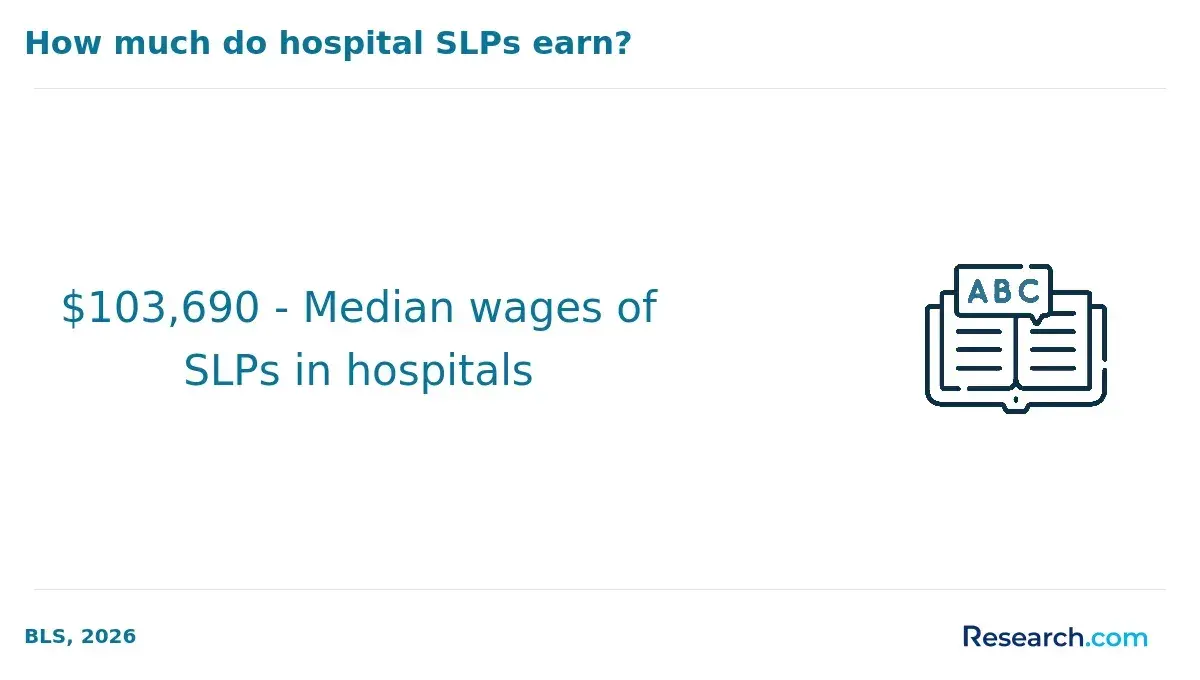
Start with accreditation and licensure compatibility, then compare the actual clinical pathway. For career context, the U.S. Bureau of Labor Statistics reports a median annual wage of $97,870 for speech-language pathologists in May 2025 and projects 17% employment growth from 2025 to 2035.
Those national figures do not predict an individual's pay, but they reinforce why a program's placement quality, geographic reach, and preparation for the settings you want can be more consequential than a clinic brochure alone.
If location is a major career consideration, review where do SLPs make the most money alongside state licensing requirements and local employment conditions.
The comparison criteria below can help applicants separate a well-documented clinical model from a vague promise of "hands-on experience."
| Comparison question | Stronger answer | Potential concern |
| When does clinical work begin? | The program identifies the semester, readiness requirements, and expected progression | The answer is only "students receive clinical opportunities" |
| Who secures placements? | The school explains its placement office, partner network, and student responsibilities | The student is expected to find sites with little written guidance |
| What happens if a placement falls through? | A clear contingency process and communication timeline are provided | No explanation of delays, substitutions, or graduation impact |
| Can students access desired populations? | The program provides examples of typical settings and explains availability limits | Specialty opportunities are advertised without information about access |
| What costs accompany placements? | Travel, parking, screening, immunizations, background checks, insurance, and site costs are disclosed | Only tuition is discussed |
Applicants should also calculate the full cost of clinical participation. An on-campus clinic may reduce commuting for early practica, while distant external placements can add transportation, temporary housing, health-clearance, and schedule-related costs. A lower tuition figure may not represent a lower total educational expense if a program requires extensive travel or unpaid time away from work.
What questions should students ask before enrolling in a clinic based program?
Admissions representatives can describe broad program strengths, but clinical education staff are often best positioned to explain the details that affect your schedule and readiness. Ask for answers in writing when a point could affect your ability to enroll, remain employed, travel, or qualify for licensure.
These questions can reveal whether a clinic-based program matches your goals:
- Is an on-campus or university-affiliated clinic required for every student, and in which semester does it begin?
- How many terms do students typically spend in the university clinic before external placements?
- What client age groups, diagnoses, languages, and service types are consistently available?
- How are caseloads assigned, and what happens if cancellations or low referrals reduce direct-contact opportunities?
- How often will a supervisor observe my sessions, review my documentation, and provide formal feedback?
- Does the program arrange all external placements, or must students locate, contact, and secure sites themselves?
- What travel, background-check, health-screening, liability-insurance, parking, or technology costs should I budget beyond tuition?
- Can the program support placements relevant to my intended setting, such as schools, medical facilities, early intervention, bilingual services, or telepractice?
- Are there evening, weekend, or daytime clinic obligations that could conflict with employment or caregiving?
- Does the curriculum meet educational requirements for licensure in the state where I plan to practice?
One of the most common mistakes is accepting a general statement that placements are "available" without learning what that means for your cohort, location, and preferred setting. Another is assuming that a university clinic eliminates the need for travel.
It may reduce travel during one phase of training, but external practica are still commonly required and can involve site-specific hours that are difficult to combine with full-time work.
Choose a clinic-based program when you value structured feedback, a gradual transition into client care, and clear access to faculty supervision. Consider a program with a broader external-placement model when your priority is early experience in a particular community, school district, medical specialty, or geographic area that the campus clinic cannot consistently provide.
Other Things You Should Know About Speech Language Pathology
Usually, no. Many programs use university clinics for foundational training and require external practicum in settings such as schools, hospitals, rehabilitation facilities, early-intervention programs, or private practices. The exact mix varies by program and should be stated in the curriculum or clinical handbook.
They can count when the experience meets ASHA requirements and is properly supervised and documented through the graduate program. Students should follow their program's hour-tracking rules because not every activity performed at a clinic qualifies as direct client or patient contact.
It may be difficult. Clinic appointments, supervisor meetings, documentation deadlines, and external placements often occur during business hours. Ask for a typical weekly schedule by semester before enrolling, particularly if you need to maintain employment or have caregiving responsibilities.
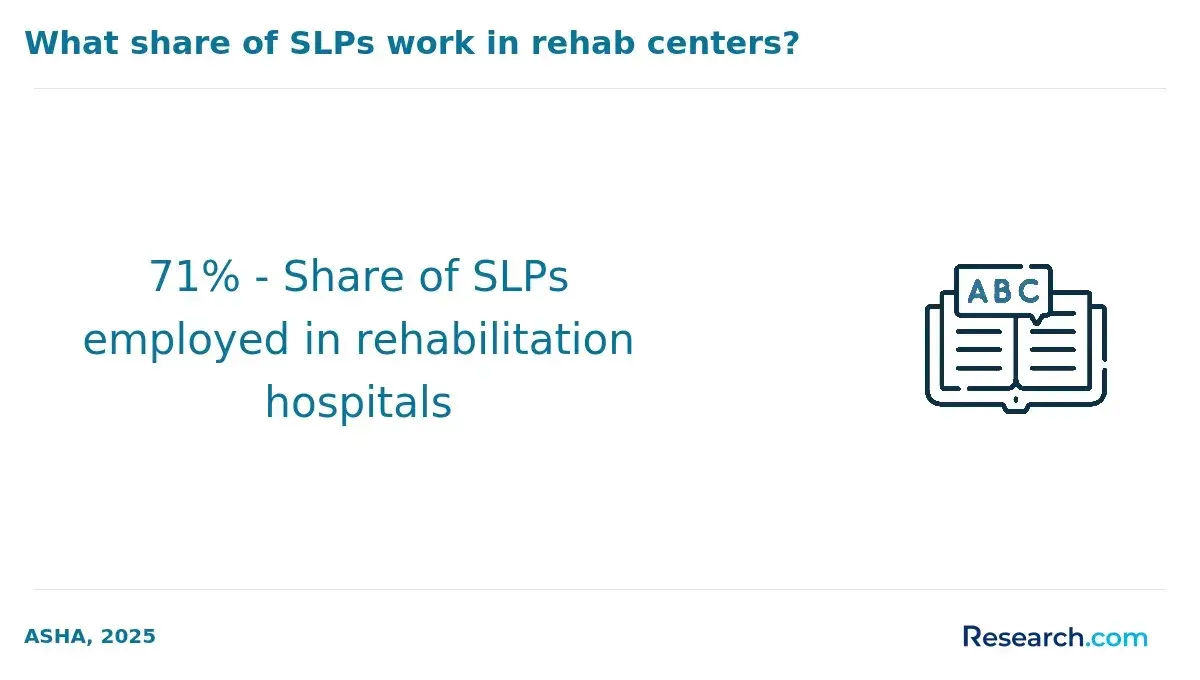
A university clinic can build important foundational skills, but medical employers may place particular value on relevant adult and medical practicum experience, clinical fellowship training, and job-specific competencies. If medical practice is your goal, ask whether the program offers hospital, rehabilitation, outpatient, or swallowing-related placements.
References
- Clinical Education in the Master's Program in Speech... https://chs.uky.edu/communication-sciences-and-disorders/graduate-program/clinical-education
- Speech-Language Pathology (M.S.) https://www.ttuhsc.edu/programs/health-professions/master-of-science-speech-language-pathology
- Master's in Speech-Language Pathology (MS) https://www.commonwealthu.edu/academics/programs/speech-language-pathology-ms
- Speech-Language Pathology Program Details https://mercy.edu/academics/programs/masters-speech-language-pathology-details