2027 Return on Investment (ROI) of an Online Master’s in SLP

Co-Founder and Chief Data Scientist

Reviewed by Rhea Paul, PhD
SLP Education & Research Expert
An online master’s in speech-language pathology can be a strong career investment, but the payoff depends on more than the headline tuition price. Prospective SLP students need to compare total program cost, clinical placement requirements, licensure fit, time to completion, and likely earnings after graduation before deciding whether the degree makes financial sense.
This guide explains how to evaluate the ROI of an online master’s in SLP with a practical lens. You will learn what programs typically cost, how long they take, what jobs graduates can pursue, how licensure affects employability, and which hidden expenses can change your break-even timeline. Use it to compare programs, estimate your debt risk, and choose a path that supports both certification goals and long-term career growth.
Key Benefits of Learning About the ROI of an Online Master’s in SLP
- Understanding the ROI of an Online Master’s in SLP helps you identify the jobs the degree can lead to, including school-based SLP roles, medical settings, private practice, and telepractice opportunities.
- It provides insight into the median salary for speech-language pathologists, helping you gauge how quickly the degree can pay off and plan for long-term financial stability.
- Evaluating ROI highlights the advantages of earning the degree online, such as flexible scheduling, the ability to work while studying, and access to accredited programs without relocating.
- Knowing the ROI allows you to weigh costs against benefits, including tuition, hidden fees, and clinical requirements, so you can make an informed decision and maximize the financial and professional value of your investment.
How much does an online master’s in SLP cost on average?
An online master’s in Speech-Language Pathology can cost very different amounts depending on whether the school is public or private, how many credits the program requires, and how clinical placements are handled. On average, tuition for public online SLP programs ranges from $20,000 to $50,000 for the entire degree, while private programs can cost between $40,000 and $80,000. Those figures usually refer to tuition, not the full cost of attendance.
To estimate your real investment, look beyond the posted tuition rate. Many students also need to budget for technology fees, lab or clinical fees, textbooks, software, online learning materials, application fees, graduation fees, and professional expenses. Books, software, and online learning materials can range from $1,000 to $3,000. Clinical practicum requirements may also create travel, lodging, parking, or transportation costs if placements are not close to home.
The most useful cost comparison is the total out-of-pocket price after grants, scholarships, employer assistance, and federal aid—not simply the per-credit rate. A lower-cost program can improve ROI by reducing debt and shortening the time it takes to break even after employment. However, the cheapest option is not automatically the best one if it creates licensure problems, weak clinical support, or delays in graduation.
Cost factors to compare before enrolling
- Total tuition: Confirm whether the estimate covers the full degree or only one academic year.
- Mandatory fees: Ask about technology, lab, clinical, graduation, and placement-related fees.
- Clinical placement costs: Find out whether the program helps arrange local placements or expects students to locate sites independently.
- Time to completion: A longer program may increase living costs and delay full-time earnings.
- Financial aid: Compare net cost after scholarships, grants, assistantships, employer support, and loan eligibility.
Is an online SLP degree worth the tuition fees?
An online SLP degree can be worth the tuition fees when it leads to licensure eligibility, strong clinical preparation, manageable debt, and access to the settings where you want to work. The degree is not valuable simply because it is online; it is valuable if it helps you become eligible for speech-language pathology roles without unnecessary cost or delay.
For many students, the main advantage is flexibility. Online coursework can reduce relocation and commuting costs, and some students are able to keep working while enrolled. Accredited speech pathology online masters programs can also provide a pathway into a profession with opportunities in schools, hospitals, rehabilitation centers, private clinics, and telepractice. The strongest ROI usually comes from combining reasonable tuition with timely graduation, successful licensure, and employment in a setting that matches your salary and lifestyle goals.
The degree may be less financially attractive if the program is expensive, does not support clinical placements well, or does not align with the licensure rules in the state where you plan to practice. Before enrolling, ask direct questions about accreditation, Praxis preparation, clinical site availability, graduation rates, and whether graduates obtain jobs in your preferred setting.
When the tuition is more likely to be worth it
- The program is accredited and aligns with your state licensure requirements.
- You can complete clinical hours without major travel or relocation expenses.
- Your expected debt is reasonable compared with likely earnings after graduation.
- The program offers strong advising, placement support, and certification preparation.
- You plan to work in a setting with steady demand for SLPs.
When to be cautious
- The school is unclear about clinical placement responsibility.
- The program cost would require heavy borrowing with limited financial aid.
- The online format does not fit your learning style or schedule.
- You may need to move states and are unsure whether the program satisfies licensure rules there.
How long does it take to complete an online master’s in SLP?
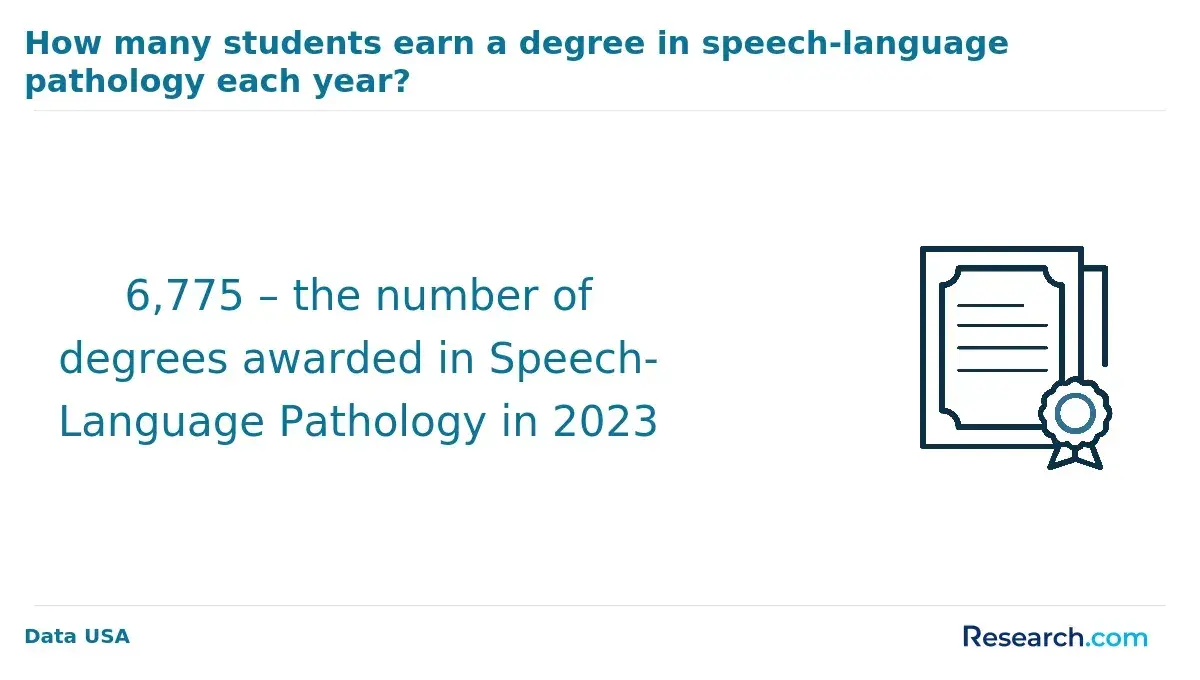
Most online master’s in Speech-Language Pathology programs take two to three years for full-time students. Many programs require 60 to 75 credit hours, including graduate coursework and supervised clinical practicum experiences. Courses commonly cover areas such as anatomy, linguistics, speech disorders, language development, assessment, intervention, and clinical practice.
Time to completion matters because it affects ROI. The sooner you finish an eligible program, complete licensing steps, and enter the workforce, the sooner you can begin earning as an SLP. For that reason, students comparing programs should look at more than academic calendar length. They should also ask whether clinical placements are available on time, whether required courses are offered every term, and whether the program has bottlenecks that can delay graduation. These timing issues can influence a future speech pathologist salary with a master's degree by delaying entry into paid professional roles.
Some online programs offer accelerated tracks that allow students to finish in as little as 18 to 24 months. These options may appeal to students who can study full time, manage intensive coursework, and complete clinical requirements without interruption. Part-time students often need longer, but a slower pace may be the better choice for those balancing work, caregiving, or financial constraints.
What can extend your timeline?
- Clinical placement availability: Delays in securing practicum sites can postpone completion.
- Part-time enrollment: Taking fewer courses per term lowers workload but lengthens the program.
- Prerequisite requirements: Students without a related undergraduate background may need additional coursework.
- State requirements: Licensure paperwork, supervised experience, and exam timing can affect when you can start practicing.
- Personal schedule: Work and family responsibilities may make an accelerated pace unrealistic.
Does finishing faster affect the quality or ROI of my SLP degree?
Finishing faster does not automatically lower the quality of an online SLP degree. What matters is whether the program is accredited, covers the required curriculum, provides appropriate clinical training, and prepares graduates for certification and state licensure. Employers generally focus on eligibility, clinical competence, certification progress, and fit for the role—not the exact number of months it took to complete the degree.
An accelerated speech pathology accelerated program can improve ROI if it helps you graduate sooner, borrow less, and start earning earlier. It may also reduce the opportunity cost of staying out of the full-time workforce. For students who are academically prepared and can commit the time, a faster pathway can be financially efficient.
The trade-off is workload. Accelerated programs often require heavier course loads, continuous enrollment, shorter terms, and tight coordination with clinical placements. If the pace causes burnout, poor academic performance, or delayed clinical completion, the expected ROI advantage can disappear.
How to decide whether an accelerated timeline fits you
- Choose faster completion if: you can study full time, have reliable support, can manage clinical scheduling, and want to enter the workforce as soon as possible.
- Choose a traditional timeline if: you need to keep working, have major family responsibilities, or learn better with more time between clinical and academic demands.
- Avoid rushing if: the program cannot clearly explain how clinical hours will be completed on an accelerated schedule.
What jobs can I get with an online master’s in SLP?
Graduates of an online master’s in Speech-Language Pathology can pursue many of the same roles as graduates of campus-based programs, provided the program meets certification and state licensure requirements. The degree can lead to work in schools, hospitals, rehabilitation centers, skilled nursing facilities, outpatient clinics, early intervention programs, telepractice, and private practice.
The best job for you depends on your preferred population, work environment, schedule, tolerance for documentation, and interest in leadership or entrepreneurship. Some settings emphasize pediatric language development, while others focus on swallowing disorders, neurological conditions, rehabilitation, or complex medical cases.
Common SLP career paths
- Medical Speech-Language Pathologist – Works in hospitals or rehabilitation centers with patients who may have stroke-related communication disorders, brain injuries, swallowing disorders, or other complex medical needs. Acute care and rehabilitation settings can offer strong earning potential because of clinical complexity and demand.
- Pediatric SLP in Private Practice – Provides therapy for children with speech, language, fluency, or developmental communication needs. Private practice roles may offer flexibility and higher earning potential, especially for clinicians with specialized services or full caseloads.
- Telepractice Speech-Language Pathologist – Delivers assessment and therapy remotely. This path may appeal to clinicians who want location flexibility, contract work, or access to clients in underserved areas.
- School-Based SLP Supervisor/Coordinator – Oversees school speech-language services, supports compliance, manages caseload processes, and may supervise other clinicians. Leadership responsibilities can increase compensation compared with entry-level school-based roles.
- SLP Program Director or Clinic Owner – Manages a therapy program or owns a clinic. This path combines clinical judgment with operations, staffing, compliance, marketing, and business management.
How to choose a setting
- Schools: Often appealing for those who prefer pediatric populations and school-year schedules.
- Hospitals and rehabilitation centers: Better suited for clinicians interested in medical complexity and interdisciplinary care.
- Private practice: Offers autonomy but may require business, billing, and client acquisition skills.
- Telepractice: Provides flexibility but requires comfort with technology, remote engagement, and state practice rules.
What is the average salary of a speech-language pathologist with a master’s degree?
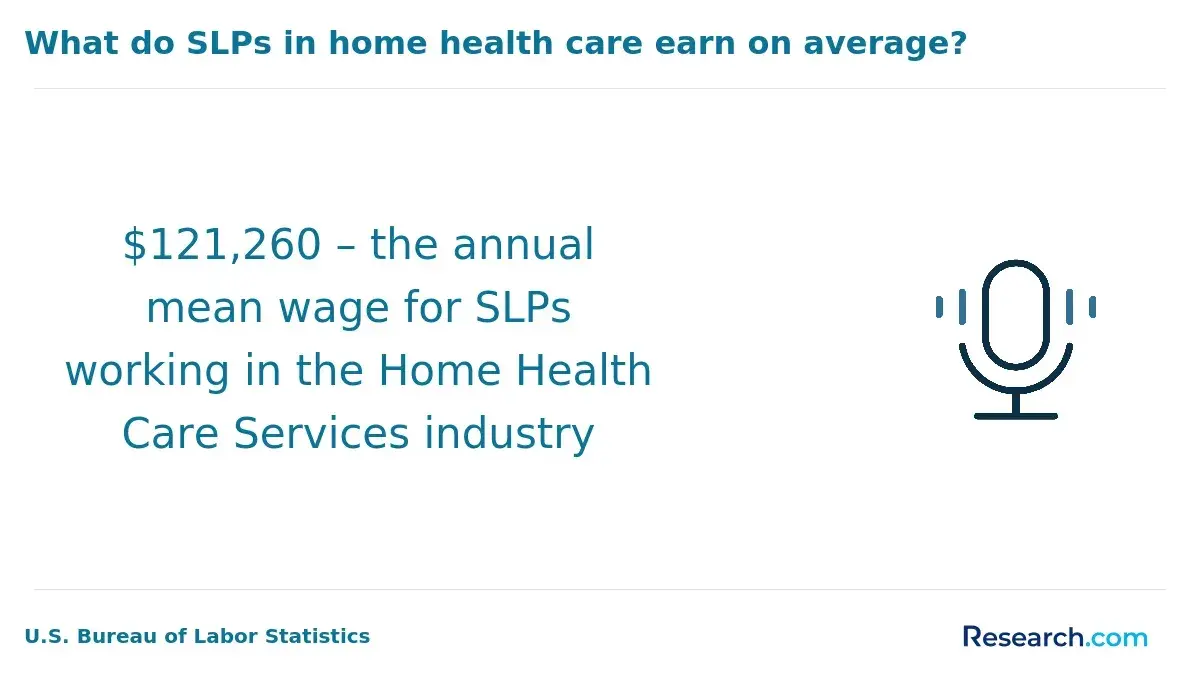
The average salary for a speech-language pathologist in the U.S., who typically holds a master’s degree, is about $95,410 per year as of May 2024 according to the Bureau of Labor Statistics for this occupation. Graduates from online speech language pathology programs may qualify for roles in different settings, and those settings can strongly influence compensation.
Other salary sources may report different figures. For example, one salary site lists the median around $97,870 annually for SLPs with a master’s. Differences across sources can reflect methodology, job titles included, reporting periods, experience levels, and whether the data separates full-time and part-time workers.
Salary should be treated as a range rather than a guarantee. Earnings depend on work setting, geographic location, years of experience, employer type, specialization, and schedule. SLPs in hospital or nursing-care settings often earn more than those in school-based positions, while school roles may offer benefits, calendars, and stability that some clinicians value more than maximum pay.
Factors that can raise or lower SLP earnings
- Practice setting: Medical, rehabilitation, school, private practice, and telepractice roles may pay differently.
- Location: Demand, cost of living, and state-level reimbursement patterns can affect salaries.
- Experience: Pay often increases as clinicians gain independence, specialization, and supervisory responsibilities.
- Specialization: Skills in areas such as dysphagia, neurological rehabilitation, pediatrics, or augmentative communication may improve competitiveness.
- Employment model: Full-time employee, part-time employee, contractor, and clinic owner income can vary substantially.
How does state licensure affect the ROI of an online SLP degree?
State licensure directly affects the ROI of an online SLP degree because it determines whether you can legally practice. Each U.S. state requires SLPs to hold a valid license, and requirements generally involve completing an accredited master’s program, supervised clinical hours, and passing the Praxis exam in Speech-Language Pathology. If your program does not align with the state where you want to work, your job search may be delayed or restricted.
Licensure can affect ROI in two main ways: access to jobs and speed to employment. A graduate who completes all licensing steps efficiently can begin earning sooner. A graduate who faces paperwork delays, missing requirements, exam timing issues, or state-specific deficiencies may have to wait before working as an SLP, which can increase the effective cost of the degree.
Location also matters. States and regions with higher demand for SLPs or more generous reimbursement rates may offer better earning opportunities, improving long-term ROI. However, moving across state lines can add complexity if requirements differ. Students considering telepractice should be especially careful because remote services may involve licensure rules for the state where the client is located, not only where the clinician lives.
Licensure questions to ask before enrolling
- Does the program meet education requirements in the state where I plan to practice?
- How does the school support Praxis preparation and clinical documentation?
- Will I need additional supervised experience after graduation?
- Can the program help me understand requirements if I move to another state?
- Are there continuing education costs required to maintain licensure?
Can I earn a positive ROI from an online SLP degree within five years?
Yes, many graduates can earn a positive ROI from an online SLP degree within five years, but it is not automatic. The outcome depends on tuition, fees, borrowing, living expenses, whether you work during school, how quickly you graduate, and your salary after licensure. Most SLP programs take two to three years to complete, and graduates typically enter the workforce with starting salaries between $70,000 and $85,000 annually.
A lower-cost program makes a five-year positive ROI more realistic because there is less tuition to recover. Scholarships, grants, employer tuition assistance, part-time work, and careful borrowing can also shorten the break-even period. Public online SLP programs tend to have lower costs than private programs, which can make them financially attractive for students who are focused on minimizing debt.
Career choices after graduation also influence ROI. High-demand regions, medical settings, pediatric therapy, telepractice, and specialized clinical skills may improve earning potential. However, students should avoid assuming the highest possible salary when planning. A safer approach is to calculate ROI using conservative earnings, total debt, loan interest, and the time required to become licensed.
A practical way to estimate your five-year ROI
- Add tuition, mandatory fees, books, software, travel, and clinical expenses.
- Subtract grants, scholarships, employer assistance, and income you can use to pay costs while enrolled.
- Estimate how much you will borrow and what repayment will cost.
- Compare your expected post-graduation earnings with your current or alternative earnings.
- Account for licensure timing, because delays can postpone full SLP income.
What hidden costs should I expect in an online SLP program?
Hidden costs can change the ROI of an online SLP program even when tuition looks affordable. The largest overlooked expense is often clinical practicum participation. Students may need to travel to schools, hospitals, clinics, or rehabilitation settings for supervised hours. Depending on placement location, that can mean transportation, parking, lodging, meals, background checks, immunizations, or reduced work hours.
Academic expenses can also add up. Books, software, and specialized learning materials can range from $1,000 to $3,000 over the course of the program. Some schools charge technology fees, lab fees, placement fees, graduation fees, or other mandatory costs that are not obvious from the tuition rate alone.
Students should also budget for professional and licensing-related expenses. These may include the Praxis exam for SLPs, state licensure applications, certification-related documentation, professional association dues, and continuing education after graduation. While these costs may be smaller than tuition, they matter because they often appear near the end of the program when students are already managing clinical work and preparing to enter the job market.
Hidden cost checklist
- Technology, online platform, lab, and course fees
- Textbooks, software, assessment tools, and learning materials
- Travel, parking, lodging, or transportation for clinical placements
- Background checks, health records, immunizations, or site onboarding requirements
- Praxis exam and state licensure application costs
- Graduation fees and transcript fees
- Professional dues and continuing education
- Lost income if clinical hours reduce your ability to work
How do public and private online SLP programs compare in cost?
Public and private online SLP programs can lead to similar professional goals, but their costs may differ substantially. That difference affects debt load, repayment pressure, and how quickly graduates can recover their investment through SLP earnings.
Public online SLP programs tend to be less expensive, especially for in-state students. One public school lists tuition and fees leading to a total program cost of approximately $29,000 for its online MS-SLP. Another data source indicates many affordable online SLP master’s from public institutions fall in the range of $14,000 to $21,000 annually, depending on credit load.
Private online SLP programs generally carry a higher price tag. A private program lists tuition of $51,300 plus about $6,000 in fees (total ~$57,300) for its online MS-SLP. Another private institution lists tuition alone at $95,400 for a 53-credit online MS-SLP.
| Program type | Typical cost pattern | ROI considerations |
| Public online SLP programs | Often lower cost, especially for in-state students | Lower borrowing can shorten the break-even timeline and reduce financial risk |
| Private online SLP programs | Often higher tuition and fees | May offer specific resources, networks, or formats, but higher cost raises the salary needed to justify the investment |
Cost should not be the only factor, but it should be a major one. A lower-priced public program may produce a stronger ROI if it is accredited, supports clinical placement, and meets licensure requirements. A private program may still make sense if it offers better access, stronger fit, or a format that helps you complete the degree successfully. The best choice is the program that combines licensure alignment, clinical quality, manageable debt, and a realistic path to employment.
References
- U.S. Bureau of Labor Statistics - Speech-Language Pathologists https://www.bls.gov/ooh/healthcare/speech-language-pathologists.htm
- ASHA EdFind - Accredited Speech-Language Pathology Programs https://find.asha.org/ed/
- Audiology and Speech-Language Pathology Interstate Compact https://aslpcompact.com/compact-map/
- University of Wisconsin-Eau Claire - Master of Science in Speech-Language Pathology (Online) https://www.uwec.edu/speech-language-and-hearing-sciences-department/graduate-program/speech-language-pathology-online
- Ithaca College - Online Master of Science in Speech-Language Pathology https://slponline.ithaca.edu/programs/masters-speech-language-pathology-online
- Auburn University, Montgomery - Master of Science in Speech-Language Pathology https://www.aum.edu/degree/ms-speech-language-pathology/
- Abilene Christian University - Master of Science in Speech-Language Pathology (Online) https://acu.edu/academics/graduate/master-of-science-in-speech-language-pathology/
- Baylor University - Master of Science in Speech-Language Pathology (Online) https://csd.robbins.baylor.edu/graduate/online-csd-graduate-program