2027 Online SLP Admission Interview Questions and How to Answer Them

Co-Founder and Chief Data Scientist

Reviewed by Rhea Paul, PhD
SLP Education & Research Expert
Preparing for an online admission interview in SLP can be daunting, especially for candidates transitioning from unrelated fields. Unfamiliarity with typical interview formats and questions often leads to uncertainty and missed opportunities. The virtual setting adds complexity, requiring clear communication and confidence through a screen.
Navigating these challenges effectively is crucial to securing a spot in competitive SLP graduate programs. This article outlines common interview questions and offers strategies to answer them thoughtfully, helping candidates present their best selves and improve their chances of success in the admission process.
Key Things You Should Know
- Most online SLP admission interviews in 2026 emphasize behavioral questions assessing communication skills, critical thinking, and ethical decision-making relevant to clinical settings.
- Applicants should prepare by reviewing foundational speech pathology concepts and current ASHA standards, with 72% of programs using panel interviews to evaluate holistic competencies.
- Effective responses often include specific examples from clinical or academic experiences, showing adaptability and empathy, vital traits for success in the evolving speech pathology field.
What are common online SLP admission interview questions?
Common online SLP admission interview questions and best answers often explore your motivation, understanding of the field, and preparedness for graduate study. Typical questions include:
- "Tell me about yourself" - Answer concisely, focusing on experiences like relevant coursework, volunteer work, or personal connections to speech pathology.
- "Why did you choose speech pathology?" - Emphasize your awareness of the profession's challenges and rewards, covering communication disorders, patient care, or research interests.
- "What are your clinical experience and research background?" - Share examples of observational hours, internships, or research projects that highlight your readiness for advanced training.
- "Describe a challenging situation and how you handled it" - Demonstrate problem-solving skills in teamwork or patient care scenarios.
- "How do you plan to balance the coursework and clinical practicum?" - Show effective time management and commitment with a realistic strategy.
Given the competitive nature of speech pathology online programs-with a 45.3% acceptance rate reported by ASHA's Communication Sciences and Disorders Education Survey-thorough preparation is essential.'
Interviews also address your knowledge of current topics like telepractice and cultural competence, alongside behavioral questions assessing ethics and professionalism. Practicing clear, structured answers based on concrete examples can greatly improve your chances of success.
For those exploring affordable options, consider speech language pathology online programs that combine quality education with accessibility.
How to answer SLP admission interview questions effectively?
Successfully answering speech pathology admission interview questions involves a well-prepared approach that emphasizes your genuine motivation, relevant skills, and knowledge of the profession's demands.
Since the median cohort size for SLP master's programs was only 34 students recently, competition is intense. It's crucial to provide specific, personal reasons that set you apart from other applicants.
For example, when addressing "Why do you want to pursue SLP?" share detailed examples from clinical experiences, volunteer work, or academic projects where you witnessed the impact of speech therapy.
Highlight what motivates you, such as helping children with communication disorders or contributing to research on neurogenic speech impairments. These effective strategies for answering speech pathology admission interview questions show your commitment and insight.
Be ready to discuss challenges in the field, including managing diverse patient needs, maintaining ethical standards, and applying evidence-based practices. Mentioning these demonstrates awareness of professional realities and patient confidentiality issues within interprofessional collaboration.
When asked about your strengths and weaknesses, connect them to skills critical for SLP, like strong communication, patience, and analytical thinking. Use concrete examples for development and explain improvement plans for any weaknesses. Practice concise, structured answers to make your responses memorable and professional.
Understanding how much do speech language pathologists make can also provide motivation and show your awareness of career prospects, an important aspect for successful responses in speech pathology graduate program interviews.
Why do SLP programs conduct admission interviews?
Admission interview questions for speech pathology programs are designed to assess candidates' genuine understanding and commitment to the profession. These interviews help distinguish applicants who have thoroughly researched the field from those with only a superficial interest.
Common questions such as "What is your understanding of the SLP profession?" or "Why do you want to become a speech pathologist?" gauge this depth.
Interviews also evaluate interpersonal skills essential for clinical success-empathy, communication, and professionalism. Unlike written applications, interviews offer a live setting to observe how applicants handle complex ideas or ethical dilemmas in client scenarios. This interpersonal assessment is a key part of the importance of admission interviews in speech pathology programs.
Programs look for alignment between a candidate's career goals and the program's values, fostering student retention. According to ASHA, only 57.7% of accepted applicants enroll in first-year graduate SLP programs.
Interview performance often predicts who is likely to commit and succeed. Interviewers may also explore specific experiences like volunteer work or observation hours to ensure applicants have realistic expectations.
Preparation tips include bringing clear examples and approaching the interview as a professional dialogue. Prospective students interested in flexible options should consider accelerated speech pathology programs, which often emphasize these interview components.
Admission to online SLP programs typically requires a bachelor's degree with prerequisite coursework in communication sciences, biology, psychology, and statistics. Most programs expect a minimum GPA of 3.0, while some competitive programs may ask for higher grades.
Although standardized tests like the GRE are occasionally required, they are becoming more optional in many cases. These typical SLP graduate program entry requirements emphasize academic readiness and foundational knowledge.
Clinical experience is crucial and usually involves documented volunteer or paid hours working with speech, language, or hearing populations. Programs often ask for 25 to 50 hours of observation or direct service, demonstrating applicants' practical understanding.
Strong personal statements and letters of recommendation from instructors or clinical supervisors attest to applicants' motivation, work ethic, and interpersonal skills. Interviews commonly assess problem-solving and ethical decision-making in clinical contexts.
Acceptance rates vary regionally; western states such as Wyoming and Montana report rates between 50% and 85%, reflecting lower population density and expanded program capacities. This offers more opportunities for well-prepared applicants. Since admission criteria can differ greatly, candidates should carefully verify specific prerequisites for their chosen programs.
Success strategies include compiling transcripts, documenting clinical hours, and securing professional references early. Planning and gaining relevant experience are key steps when navigating online SLP program admission criteria.
For those exploring options, the easiest SLP grad schools to get into can provide a useful starting point for identifying programs with accessible entry requirements.
Online speech pathology programs differ primarily in delivery method, flexibility, and student interaction compared to campus-based options. They allow students to access lectures, discussions, and assignments remotely, making it easier to balance study with work or family responsibilities.
However, online students rely heavily on digital platforms for communication and clinical simulations, which may reduce spontaneous peer engagement but usually include scheduled virtual group activities to promote collaboration.
These programs must meet accreditation standards by ensuring clinical practicum experiences are completed locally. This requires students to proactively secure appropriate clinical placements, unlike campus programs where clinical experiences are often arranged on-site. Navigating these logistics independently is a key consideration for online students.
Admission competitiveness varies. Private Texas SLP programs and those with newer candidacy status report acceptance rates above 50%, comparable to many public universities. This suggests that some online pathways offer accessible enrollment without sacrificing educational quality.
Prospective students should evaluate their learning preferences and support needs. Online learning demands strong self-discipline and reliable technology, while campus programs provide immediate face-to-face faculty support and established peer networks. Being mindful of these differences can help applicants select a path aligned with their career goals and personal circumstances.
The Council on Academic Accreditation in Audiology and Speech-Language Pathology (CAA), under the American Speech-Language-Hearing Association (ASHA), is the essential accrediting body for speech pathology programs in the U.S.
Programs accredited by CAA meet rigorous educational standards, preparing students for professional practice and making them eligible for the Certificate of Clinical Competence in Speech-Language Pathology (CCC-SLP), a key credential for licensure and employment.
Graduates from non-CAA-accredited programs often face barriers to taking the Praxis Examination in Speech-Language Pathology, a requirement for state licensure in most jurisdictions.
For instance, Baylor University's online program, with CAA accreditation, reports Praxis pass rates close to 90%, demonstrating how accreditation correlates with student success, according to speechpathologygraduateprograms.org.
Prospective students should verify a program's accreditation status through university websites or ASHA's official directory. Accreditation also signals adherence to necessary curricula, including clinical practicum hours and qualified faculty, which ensure adequate preparation for certification and licensure.
- Is the program currently accredited by the CAA?
- What is the program's recent Praxis exam pass rate?
- How does the program arrange clinical practicums to fulfill licensure requirements?
Choosing a program lacking CAA accreditation may cause significant challenges in licensure and employment, underscoring its importance in selecting a speech pathology education path.
An SLP program curriculum thoroughly covers anatomy and physiology related to speech, language, and hearing mechanisms, alongside speech and language development through all ages. Students examine disorders such as aphasia, dysarthria, stuttering, and voice disorders, learning assessment and evidence-based interventions.
Core topics often include communication sciences, acoustics, and neuroanatomy, helping students explore the biological and neurological foundations of communication.
Clinical practicum experiences are essential, offering supervised, hands-on practice with pediatric, adult, and geriatric clients. This prepares students for diverse populations and real-world challenges, including cultural and linguistic diversity and interdisciplinary collaboration.
Many programs include research methods and statistics, which help students critically evaluate studies and incorporate findings into clinical decision-making. Ethical and professional standards are emphasized to ensure understanding of regulatory requirements and patient confidentiality.
Specialized electives may focus on bilingual speech pathology, augmentative and alternative communication (AAC), or swallowing disorders (dysphagia), allowing students to align studies with career goals.
Online SLP programs have gained popularity, providing flexibility for working professionals. Acceptance rates vary widely, partly due to increasing demand from these demographics.
Online speech pathology programs generally require two to three years of full-time study to earn a master's degree, the primary credential needed for clinical licensure. Part-time options extend this timeline to four or more years, enabling working professionals to balance study and work commitments.
Program components typically include coursework, clinical practicum, and sometimes a thesis or research project, but accelerated tracks are uncommon due to mandatory clinical observation hours required by state licensing boards.
Costs vary widely based on school type and residency status. Public universities usually charge between $20,000 and $40,000 for in-state tuition, whereas private institutions can exceed $60,000. Additional fees may include technology, textbooks, and clinical supervision.
Financial aid or assistantships might be available to help offset expenses. It's important for prospective students to confirm these details early, as competitive acceptance rates-such as those under 10% in the California CSU system-demand early preparation and budgeting.
Clinical practicum placement is essential and often requires balancing online coursework with in-person training. This hybrid structure influences program length and scheduling. Compliance with state licensure can also entail extra costs and time beyond graduation.
Speech-language pathologist (SLP) graduates can build careers in healthcare, education, research, and private practice. They commonly work in hospitals, schools, rehabilitation centers, and clinics.
In healthcare, SLPs diagnose and treat speech, language, and swallowing disorders caused by stroke, brain injury, or developmental conditions. In schools, they help children with speech delays, autism, or learning disabilities improve communication and academics.
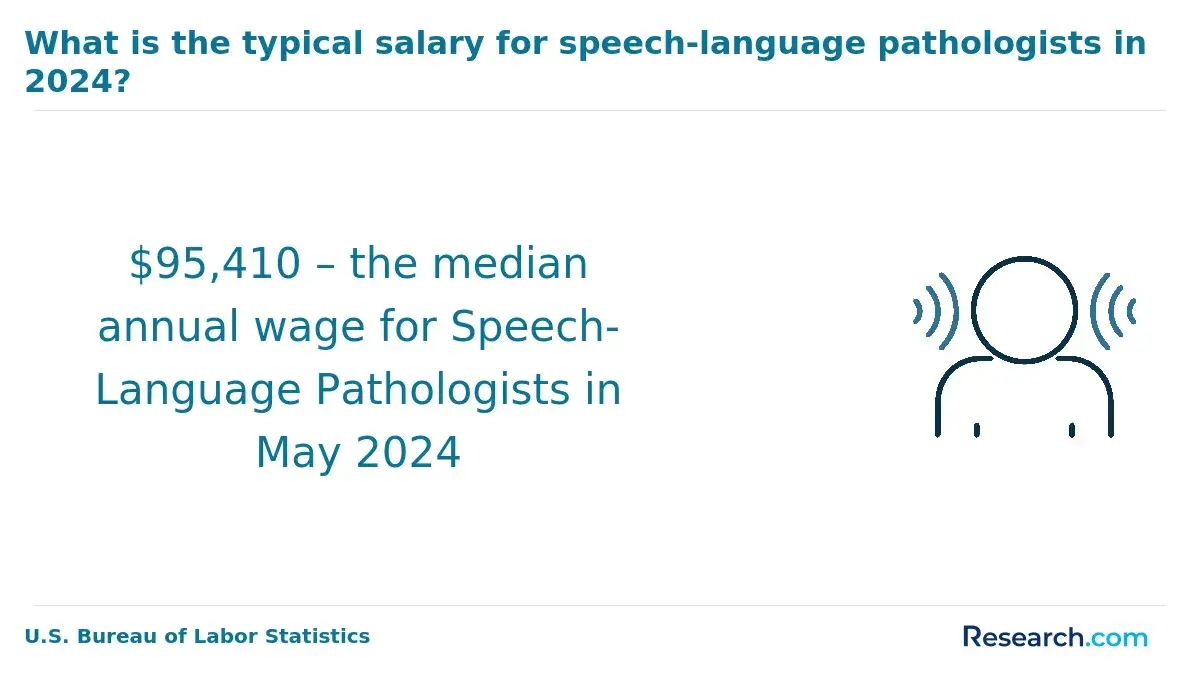
Salary varies by experience and work setting: entry-level SLPs generally earn $65,000 to $75,000 annually, while those in hospitals or specialized clinics may earn $90,000 or more.
School-based SLP salaries typically range from $60,000 to $80,000 depending on district and location. Advanced certifications, such as in pediatric feeding or neurogenic communication disorders, often lead to higher pay.
Career growth can involve supervisory roles, clinical specialization, or academic positions training new clinicians. Programs like Touro College, which admits over 50% of applicants from a cohort of 53 students, often use behavioral interview questions to assess teamwork and interpersonal skills, highlighting their importance.
Job stability remains strong thanks to an aging population and increased awareness of developmental disorders.
What licensing steps follow SLP program completion?
After completing an SLP program, graduates must earn the Certificate of Clinical Competence in Speech-Language Pathology (CCC-SLP) from the American Speech-Language-Hearing Association (ASHA).
This requires a clinical fellowship of at least 1,260 supervised hours and passing the Praxis exam, which evaluates skills in assessment, treatment planning, and professional ethics.
State licensure is essential for most workplaces, with requirements varying by state. Typically, candidates submit proof of their degree, ASHA certification, Praxis scores, and clinical fellowship completion. Some states also demand jurisprudence exams or background checks. Early research on your state's specific requirements can prevent delays.
Continuing education is often mandatory to maintain licensure, ensuring professionals stay up to date with industry standards. Failure to comply may result in suspension of practice rights.
Those seeking school-based roles might need additional certification or licensure, such as an Educational Speech-Language Pathologist license, depending on state regulations.
SUNY Plattsburgh reports SLP acceptance rates above 65% due to a smaller applicant pool, but prospective students should prepare thoroughly to meet these licensing milestones, which can influence early career progress.
Other Things You Should Know About Speech Pathology
Most programs require a laptop or desktop with a webcam, microphone, and stable broadband of at least 25 Mbps download and 5 Mbps upload. Applicants should use a quiet room, test Zoom or Microsoft Teams before the interview, and keep a government-issued ID ready for identity verification.
Cultural competence is crucial in speech pathology because it ensures that services are respectful of and tailored to clients' cultural backgrounds. Speech pathologists need to understand linguistic and cultural variations to provide effective assessments and interventions. This competence helps avoid misdiagnosis and improves therapy outcomes across diverse populations.
Speech pathologists work in a variety of settings, including schools, hospitals, rehabilitation centers, private practices, and nursing homes. They may also be employed in research institutions or work as consultants. Each setting offers unique challenges and opportunities for specializing in different age groups or disorders.
Yes, continuing education is a requirement for maintaining licensure and certification in speech pathology. Professionals must stay current with advancements in treatment techniques and research through workshops, courses, and conferences. This ongoing learning ensures high standards of care and adherence to evolving best practices.
- U.S. Bureau of Labor Statistics - Speech-Language Pathologists https://www.bls.gov/ooh/healthcare/speech-language-pathologists.htm
- ASHA EdFind - Accredited Speech-Language Pathology Programs https://find.asha.org/ed/
- ETS Praxis - Speech-Language Pathology (5331) https://praxis.ets.org/test/speech-language-pathology-5331.html
- New York University - Online MS, Communicative Sciences and Disorders (Speech@NYU) https://steinhardt.nyu.edu/degree/online-ms-communicative-sciences-and-disorders
- University of Wisconsin-Eau Claire - Master of Science in Speech-Language Pathology (Online) https://www.uwec.edu/speech-language-and-hearing-sciences-department/graduate-program/speech-language-pathology-online
- University of North Carolina at Greensboro - Speech-Language Pathology, M.A. (Online) https://csd.uncg.edu/graduate/masters-of-arts-online/
- California State University-Northridge - Master of Science in Communicative Disorders (Online) https://tsengcollege.csun.edu/programs/CDS
- Abilene Christian University - Master of Science in Speech-Language Pathology (Online) https://acu.edu/academics/graduate/master-of-science-in-speech-language-pathology/