2027 Best Online Bachelor's in Data Science With Transfer-Friendly Policies

Co-Founder and Chief Data Scientist
Choosing an online bachelor's in data science is really a transfer-credit decision: the right program can shorten your path, lower your cost, and move you faster toward analytics roles. The timing is strong: the U. S. Bureau of Labor Statistics projects data scientist employment to grow 36% from 2023 to 2033, far faster than average. This guide is for students with prior college credits, associate degrees, military training, or work experience who want to compare accredited online options, understand costs, and choose a program that fits their career goals.
Key Things You Should Know
- Transfer-friendly online bachelor's programs often accept up to 90 eligible credits toward a 120-credit degree, but major, residency, and upper-division requirements determine how much time you actually save.
- BLS data published in 2024 lists the median annual wage for data scientists at $108,020, but outcomes vary by technical skill, portfolio quality, location, industry, and prior experience.
- Public four-year in-state tuition and fees averaged $11,610 for 2024-25, according to College Board data, so transfer credits, employer tuition aid, and flat-rate online pricing can materially change total cost.
What makes an online bachelor's in data science transfer-friendly for prior college credits?
A transfer-friendly online bachelor's in data science is designed to evaluate previous learning efficiently and apply as many eligible credits as possible toward degree completion. That matters because data science degrees usually combine general education, programming, statistics, database systems, machine learning, and a capstone or portfolio project. If a school accepts your general education and lower-division credits but rejects math, computer science, or statistics courses, your time savings may be smaller than the headline transfer limit suggests.
The most important feature is not simply the maximum number of credits a school accepts. It is how those credits apply to the degree audit. A student transferring 75 credits that count toward the core curriculum is in a better position than a student transferring 90 credits that mostly become electives.
Use the checklist below when comparing transfer policies because it separates truly useful credit from credit that looks good only on paper.
- Maximum transferable credits: Many adult-friendly bachelor's programs allow up to 90 eligible credits, but the final number depends on course equivalency, grades, accreditation, and recency rules.
- Major-course acceptance: Ask whether previous Python, SQL, calculus, statistics, database, or computer science courses can satisfy data science major requirements, not just electives.
- Residency requirement: Most schools require you to complete a minimum number of credits through the institution, commonly including upper-division major courses.
- Credit for prior learning: Some programs evaluate military training, professional certifications, exams, workplace learning, or portfolios for possible credit.
- Course sequencing: Even with many credits accepted, prerequisites such as statistics, programming, and linear algebra can affect how quickly you reach machine learning and capstone courses.
A strong transfer policy should produce a clear, written degree plan before you enroll. If a school will not show how your credits apply, you risk committing before you know your real cost and timeline.
Which accredited schools offer the best online bachelor's in data science?
The best online bachelor's in data science programs for transfer students combine institutional accreditation, transparent transfer evaluations, relevant technical coursework, and enough flexibility for working adults. Program names vary: some schools use "data science," while others use "data analytics," "computer science with data science," or "business analytics." The right choice depends on whether you want a technical, business-focused, or interdisciplinary path.
The table below highlights accredited U.S. schools that are commonly suitable for transfer students seeking online data science or closely related analytics bachelor's programs. Always confirm current catalog details, tuition, and transfer evaluations with the institution before applying.
| School | Online degree focus | Why it may fit transfer students | Best fit |
| University of Maryland Global Campus | Data science | Known for adult learner and military-friendly transfer pathways, with substantial eligible transfer credit allowed toward bachelor's completion | Students with prior college, military, or workplace learning who want a career-oriented public university option |
| Southern New Hampshire University | Data analytics | Accepts a high volume of eligible transfer credits and offers asynchronous online coursework | Students who want broad scheduling flexibility and an applied analytics curriculum |
| Arizona State University Online | Data science | Offers a large public university online platform and structured transfer pathways, especially for lower-division coursework | Students seeking a recognizable public research university with a more traditional academic structure |
| Maryville University | Data science | Offers an online data science pathway with transfer evaluation for previously completed college credit | Students who want a private nonprofit option with an applied technical curriculum |
| Bellevue University | Data science or analytics-oriented study | Designed for adult and transfer students, often with degree-completion-friendly policies | Students with an associate degree or significant prior coursework who want a practical completion route |
| Eastern University | Data science | Offers online study with transfer-credit review and an interdisciplinary data science focus | Students seeking a smaller institution and a flexible online data science pathway |
| Western Governors University | Data analytics | Uses a competency-based model and evaluates prior college work and some industry credentials | Self-directed students who can move quickly through material they already know |
Do not choose a school based only on a "maximum transfer credits" number. Ask for a pre-enrollment credit evaluation and compare how many credits remain in math, programming, statistics, and upper-division major courses. If your long-term plan includes graduate study, compare undergraduate prerequisites with the requirements of affordable master's options, including the cheapest masters in data science.
How do online data science bachelor's programs compare to campus-based options?
Online and campus-based data science bachelor's programs can lead to similar academic outcomes when they are accredited, rigorous, and supported by faculty access, projects, and career services. The main difference is delivery. Online programs are usually better for transfer students, working adults, military learners, and students who cannot relocate. Campus programs may be stronger for students who want face-to-face networking, research labs, in-person clubs, or a residential college experience.
The comparison below summarizes the practical trade-offs that matter most before you choose a format.
| Factor | Online bachelor's in data science | Campus-based bachelor's in data science |
| Schedule | Often asynchronous or evening-friendly, which helps working students | Usually follows fixed class times and campus calendars |
| Transfer fit | Often designed for adult learners and degree completion | May be less flexible if upper-division sequencing is strict |
| Networking | Depends on virtual events, discussion boards, projects, and career platforms | Often easier through clubs, labs, faculty office hours, and local recruiters |
| Hands-on learning | Can be strong if the program includes coding labs, cloud tools, datasets, and capstones | May offer in-person labs, research assistantships, and faculty-led projects |
| Cost structure | May reduce relocation, commuting, and housing costs | May include campus fees, housing, and transportation costs |
| Self-management | Requires strong discipline and time planning | Provides more built-in daily structure |
Online programs make the most sense if you already have credits, need to keep working, or want to compare schools beyond commuting distance. Campus programs may be the better fit if you are early in your college journey and want more in-person academic structure. If your main interest is artificial intelligence rather than analytics, compare data science coursework with the best online AI degree programs before committing.
What admissions requirements and transfer credit policies do data science programs use?
Admissions requirements for online bachelor's in data science programs vary, but most schools ask for a high school diploma or equivalent, official transcripts from every college attended, and a minimum GPA for transfer admission. Some selective programs require college algebra, precalculus, calculus, statistics, or introductory programming before you can enter upper-division major courses.
Transfer policies usually depend on course level, grade earned, institutional accreditation, and alignment with the receiving school's curriculum. A grade of C or higher is commonly required for transfer, but some major courses may require a higher grade or recent completion if the content changes quickly.
Before you apply, prepare the materials below so admissions and academic advising can evaluate your credits accurately.
- Request official transcripts from every college, university, community college, and dual-enrollment provider you attended.
- Collect syllabi for math, statistics, programming, database, and computer science courses because these are the courses most likely to require detailed equivalency review.
- List professional certifications, military training, workplace training, or standardized exams that may qualify for credit for prior learning.
- Ask for a written degree audit showing credits accepted, credits applied to the major, credits applied to electives, and credits still required.
- Confirm whether any accepted credits will expire or need to be repeated because of technology, statistics, or programming recency policies.
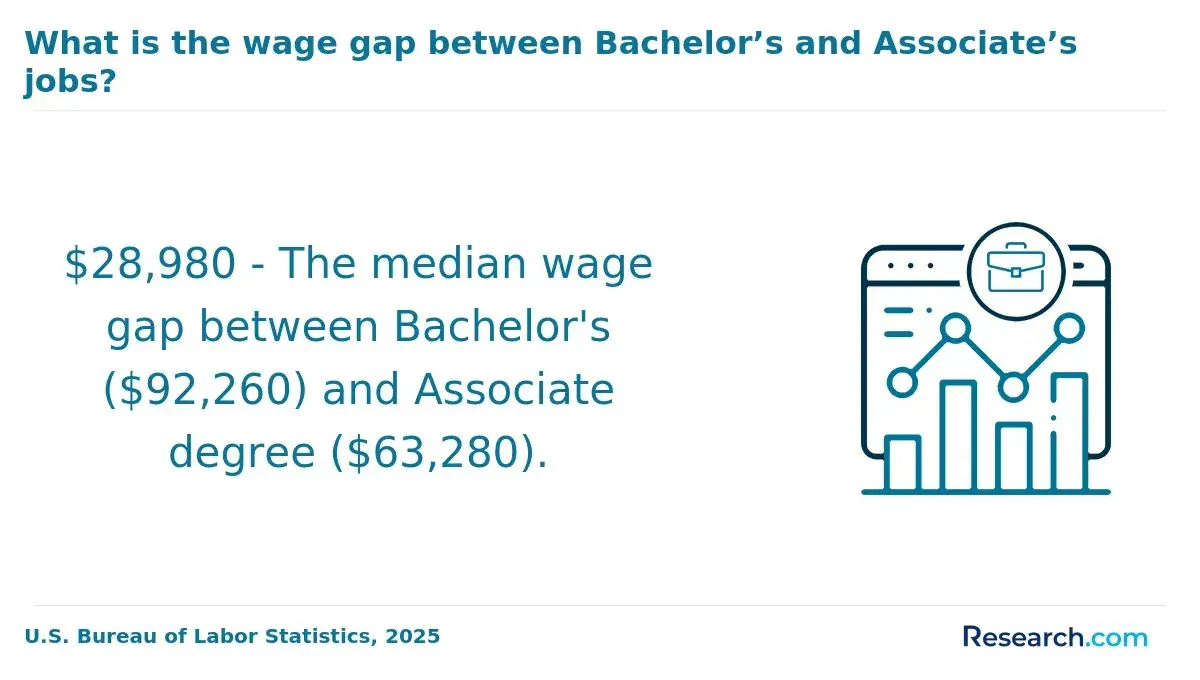
A common mistake is assuming that an associate degree automatically satisfies the first two years of a data science bachelor's degree. It may satisfy general education, but it may not cover calculus, statistics, Python, or database prerequisites. The safest approach is to compare degree maps course by course before enrolling.
What courses and concentrations are typical in an online data science curriculum?
An online bachelor's in data science teaches students how to collect, clean, analyze, model, interpret, and communicate data. The strongest programs balance technical skills with ethical reasoning and business or domain knowledge because employers rarely hire analysts only to run code. They need professionals who can turn messy information into decisions.
Most bachelor's programs include a mix of general education, mathematics, programming, statistics, and applied data work. The courses below are common in data science or analytics-oriented curricula.
- Programming for data analysis: Usually Python, R, or both, with emphasis on data structures, scripting, and reproducible analysis.
- Statistics and probability: Covers inference, distributions, regression, experimentation, and uncertainty.
- Database systems and SQL: Teaches how to store, query, join, and manage structured data.
- Data visualization: Focuses on charts, dashboards, storytelling, and communication for nontechnical audiences.
- Machine learning: Introduces supervised and unsupervised learning, model evaluation, and practical prediction problems.
- Big data or cloud analytics: May include distributed computing, cloud platforms, or large-scale data pipelines.
- Ethics, privacy, and governance: Addresses bias, responsible AI, data security, and appropriate use of personal information.
- Capstone or portfolio project: Requires students to solve an applied problem using real or realistic datasets.
Concentrations vary by school. Business analytics is useful for students targeting marketing, operations, finance, or product roles. Artificial intelligence or machine learning concentrations fit students who want deeper modeling work. Health analytics, cybersecurity analytics, or geographic information systems may be better for students with a specific industry in mind.
Data science also pairs well with environmental, agricultural, and life science interests because many organizations need professionals who can analyze climate, sustainability, animal health, and resource data. If you are still comparing science majors, guides such as what jobs can you get with an environmental science degree can help you evaluate whether a domain-focused science degree or a data-focused degree better matches your goals.
How long does an online bachelor's in data science take and what does it cost?
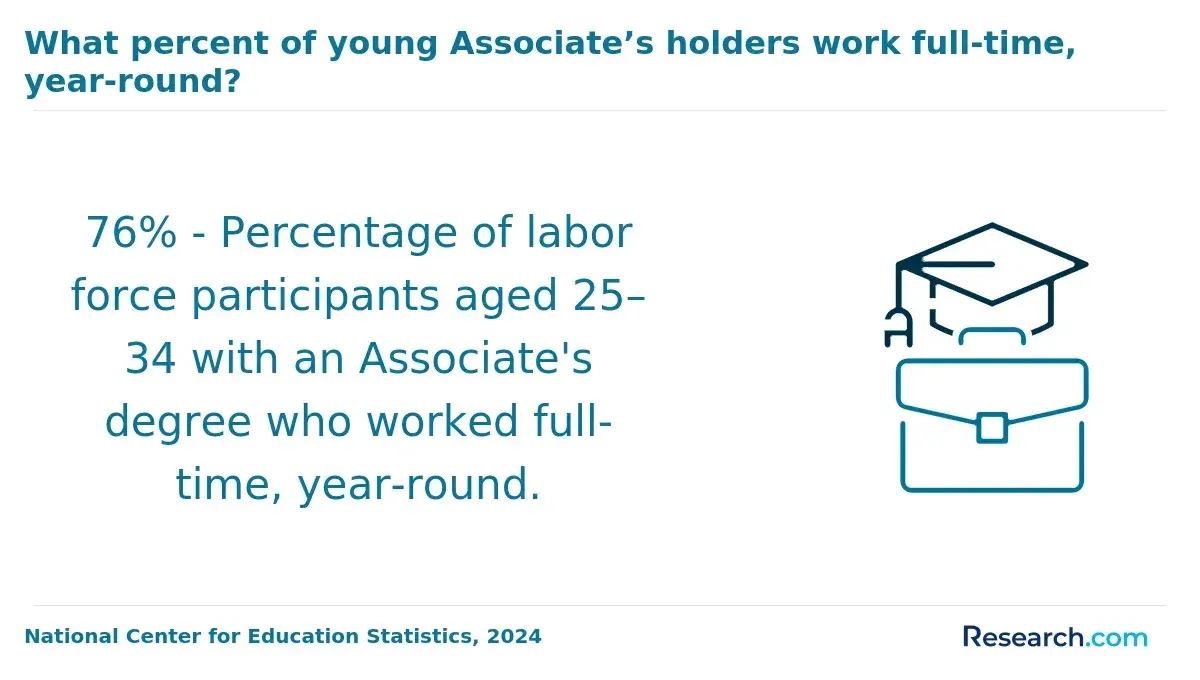
A bachelor's degree typically requires about 120 credits. First-time college students often need four years of full-time study, while transfer students may finish faster depending on how many credits apply to the degree. A student entering with an associate degree may still need two or more years if major prerequisites are missing, while a student with strong math, programming, and general education credits may have a shorter path.
Cost depends on tuition model, transfer credits, fees, textbooks, software, and whether the school charges in-state, out-of-state, flat-rate, or per-credit online tuition. College Board data published for 2024-25 reports average public four-year in-state tuition and fees of $11,610. That figure is a useful benchmark, but online students should compare total program cost rather than assuming public tuition is always cheaper after fees and transfer-credit loss.
When schools provide a cost estimate, look beyond the advertised tuition rate. The items below are the cost categories most likely to change your final bill.
- Remaining credits after transfer: This is usually the biggest cost driver because each accepted credit can reduce tuition only if it applies to your degree requirements.
- Per-credit tuition: Online programs may charge the same rate to all students or separate rates by residency.
- Technology and online fees: Some schools add per-course or per-term fees that increase the effective cost.
- Books, software, and cloud tools: Many data science tools are open source, but some courses require paid platforms, proctoring, or cloud usage.
- Financial aid and employer support: Federal aid, grants, scholarships, military benefits, and tuition reimbursement can change out-of-pocket cost.
- Pace and withdrawal risk: Accelerated study can save time, but overloading courses while working can lead to withdrawals and repeated tuition.
The best value is not always the lowest sticker price. A slightly higher-tuition program that accepts more major credits, offers better advising, and helps you graduate sooner may cost less in total than a cheaper program that requires many repeated prerequisites.
What data science careers can you pursue with an online bachelor's degree?
An online bachelor's in data science can prepare graduates for entry-level and early-career roles that involve collecting, cleaning, analyzing, visualizing, and interpreting data. The degree is especially useful when paired with a project portfolio, internship, industry experience, or a domain specialization such as healthcare, finance, logistics, public policy, sports, environmental science, or retail.
The table below shows common roles connected to undergraduate data science training. Job titles vary widely by employer, so read job descriptions carefully rather than relying only on titles.
| Role | Typical responsibilities | What helps you compete |
| Data analyst | Clean datasets, build reports, analyze trends, and communicate findings to business teams | SQL, Excel, Python or R, dashboards, and strong communication |
| Business intelligence analyst | Create dashboards, define metrics, and support operational decision-making | SQL, Tableau or Power BI, data modeling, and stakeholder communication |
| Junior data scientist | Build predictive models, test features, evaluate model performance, and explain results | Python, statistics, machine learning, Git, and a strong project portfolio |
| Data engineer associate | Support data pipelines, databases, data quality checks, and cloud-based workflows | SQL, Python, ETL tools, databases, and cloud fundamentals |
| Marketing analyst | Analyze campaigns, customer behavior, conversion data, and segmentation | Statistics, experimentation, visualization, and business writing |
| Operations analyst | Use data to improve processes, inventory, logistics, staffing, or service delivery | Analytics, forecasting, process improvement, and spreadsheet modeling |
A bachelor's degree may be enough for many analyst roles, but some data scientist postings prefer graduate education or substantial experience. If you want machine learning research, advanced AI engineering, or senior modeling roles, plan for continued learning through graduate study, certificates, or employer-sponsored training.
Students exploring applied science careers should also think about domain expertise. For example, someone comparing data science with an online animal science degree may find that the strongest path is not choosing one interest over the other, but combining data skills with agriculture, veterinary, or food systems knowledge.
What salary ranges and earning potential do data science graduates typically see?
Salary outcomes in data science vary by role, industry, location, experience, technical depth, and portfolio quality. The BLS reported a median annual wage of $108,020 for data scientists in May 2023, in data published in 2024. That median is not an entry-level guarantee; it reflects workers across experience levels, industries, and regions.
The table below gives a practical way to interpret earning potential by career stage rather than treating one salary number as a promise.
| Career stage | Common roles | Salary context | What influences pay |
| Entry level | Data analyst, reporting analyst, business intelligence associate, junior analytics specialist | Often below the overall data scientist median because these roles emphasize reporting, cleaning, and business analysis | Internships, SQL skill, dashboard work, communication, and industry familiarity |
| Early to mid-career | Data scientist, BI analyst, analytics engineer, product analyst | May move closer to occupational medians as responsibilities include modeling, experimentation, automation, and stakeholder ownership | Python, statistics, machine learning, cloud tools, portfolio depth, and measurable business impact |
| Advanced or specialized | Senior data scientist, machine learning specialist, data science manager, data platform lead | Can exceed median levels in high-demand industries, but usually requires experience beyond the bachelor's degree | Leadership, architecture, advanced modeling, industry specialization, and cross-functional influence |
To evaluate return on investment, compare your remaining program cost against realistic starting roles, not only senior-level salaries. A transfer-friendly program can improve ROI by reducing the number of credits you must pay for, but your portfolio, internships, and ability to explain results will strongly affect your early job search.
How strong is the job outlook and industry demand for data science professionals?
The job outlook for data science is strong, but it is also competitive. BLS projections published in 2024 estimate 36% employment growth for data scientists from 2023 to 2033. That growth reflects the expanding use of data in business operations, healthcare, finance, logistics, cybersecurity, marketing, government, and artificial intelligence systems.
At the same time, employers have become more selective. Many entry-level postings ask for SQL, Python, statistics, visualization tools, Git, and evidence that applicants can work with messy data. A degree helps, but it is strongest when paired with projects that show your ability to define a problem, prepare data, choose a method, interpret results, and communicate limitations.
Several current trends should shape your program choice and career preparation.
- AI is changing workflows, not eliminating the need for judgment: Generative AI can help draft code or summarize data, but employers still need people who can validate outputs, understand bias, protect privacy, and explain decisions.
- Data governance is becoming more important: Organizations want analysts who understand responsible data use, security, documentation, and compliance expectations.
- Business communication is a differentiator: Technical analysis has limited value if you cannot explain what it means and what decision it supports.
- Cloud and automation skills are increasingly useful: Even analyst roles may involve scheduled reports, cloud databases, APIs, or automated data pipelines.
The smartest path is to treat the bachelor's degree as the foundation, not the finish line. Build a portfolio throughout the program, choose projects in industries you care about, and practice presenting findings to nontechnical audiences.
How can you choose a reputable, accredited online data science program?
Start with accreditation. For U.S. students, the school should hold institutional accreditation from an accreditor recognized by the U.S. Department of Education or the Council for Higher Education Accreditation. Programmatic accreditation is less common for data science than for fields such as nursing or engineering, so institutional accreditation, curriculum quality, faculty credentials, outcomes transparency, and employer relevance are especially important.
Use a structured decision process before enrolling because online programs can look similar on the surface. The steps below help you compare programs based on fit, cost, and career value.
- Verify institutional accreditation through official federal or accreditor databases, not only through marketing pages.
- Request a written transfer-credit evaluation before committing to the program.
- Compare the remaining courses, especially calculus, statistics, programming, databases, machine learning, and capstone requirements.
- Ask whether courses use current tools such as Python, SQL, R, Git, cloud platforms, and visualization software.
- Review faculty qualifications and whether instructors have academic, analytics, industry, or applied research experience.
- Look for portfolio-building assignments, real datasets, capstones, internships, or experiential learning options.
- Compare total cost after transfer credits, fees, financial aid, and employer tuition assistance.
- Ask career services how they support online students with resumes, portfolios, internships, interview preparation, and employer connections.
Watch for red flags: unclear accreditation language, pressure to enroll before credit evaluation, vague curriculum descriptions, no capstone or portfolio work, limited advising, or claims that the degree guarantees a high-paying job. Strong programs are transparent about requirements, limitations, and the work required to become job-ready.
Finally, compare data science with adjacent online STEM paths if you are still deciding. Students interested in agriculture, environment, health, or policy may benefit from combining analytics with a domain degree or certificate rather than choosing a data science major alone.
Other Things You Should Know About Data Science
Not always. Many bachelor's programs start with introductory programming, but you will have an easier transition if you learn basic Python, spreadsheets, and algebra before enrolling. If you are transferring into upper-division courses, coding readiness matters more.
A bachelor's in data science typically offers comprehensive foundational knowledge and skills, which can lead to better long-term career prospects compared to a bootcamp. While bootcamps provide quick, intensive training, a degree is more likely to open doors to research and higher-level positions.
Many transfer-friendly online data science bachelor’s programs accept up to 90 semester credits toward a 120-credit degree. Schools usually require a minimum 2.0 GPA for transfer work, and upper-division major courses are often completed at the granting institution.
Yes, many online students work full time, but data science courses can be time-intensive because they involve coding, math, and projects. Part-time enrollment may be more realistic if you have a demanding job or family responsibilities.
References
- More Data on Credit Transfer (Part 3) | HESA https://higheredstrategy.com/more-actual-data-on-credit-transfer-part-3/
- Online Bachelor's Degree: Data Science https://www.umgc.edu/online-degrees/bachelors/data-science
- 2026 Best Online Data Science Degrees https://www.onlineu.com/degrees/data-science
- Data Science Course vs. University – Which path is better in 2026? https://www.wbscodingschool.com/blog/data-science-course-vs-university/
- Best Online Data Science Masters Programs (2026 Guide) https://skillifysolutions.com/blogs/data-science/best-online-data-science-masters/
- J Multimed Inf Syst: An Analysis of Curricula for Data Science Undergraduate Programs https://www.jmis.org/archive/view_article
- Best Data Science Bachelor's Degrees Online https://www.computerscience.org/degrees/best-online-bachelors-data-science/
- The Future of Data Science: Job Market Trends 2025 – 365 Data Science https://365datascience.com/career-advice/the-future-of-data-science/
- Top Online Schools That Accept Transfer Credits https://www.edvisorly.com/student-guides/online-schools-that-accept-transfer-credits
- Data Scientist Employment Outlook: BLS 2024-2034 Projections, UK Market & Salaries (2026) | Qualify Nation https://qualifynation.com/en-gb/insights/data-science-job-market/