2027 Cost Planning Guide for Future Speech-Language Pathology Students

Co-Founder and Chief Data Scientist

Reviewed by Rhea Paul, PhD
SLP Education & Research Expert
Many prospective students face uncertainty when budgeting for a graduate program in speech pathology, especially when balancing work, life commitments, and variable tuition rates. Unexpected costs such as textbooks, clinical fees, and certification exams often create financial strain. This confusion can delay decisions or lead to inadequate funding, affecting enrollment and success.
This article outlines key expense categories and financial planning strategies tailored for individuals transitioning from unrelated fields. It aims to equip readers with clear cost expectations and actionable insights to create a realistic education budget for a flexible, accredited path into the speech pathology profession.
Key Things You Should Know
- The average graduate tuition for speech-language pathology master's programs reached approximately $41,000 in 2025, with distinct variations between public and private institutions.
- Clinical practicum and certification costs add an estimated $3,000-$5,000 in expenses, which are essential for state licensure and ASHA certification.
- Employment projections show a 17% growth in speech-language pathology jobs through 2035, emphasizing the value of investment despite significant educational costs.
What is a speech-language pathology degree and what do SLPs do?
A speech-language pathology degree prepares students to assess, diagnose, and treat communication and swallowing disorders across all ages. Speech-language pathologists address challenges such as speech delays, stuttering, voice disorders, language impairments, and cognitive-communication deficits caused by injury or illness.
Their career roles and responsibilities of speech-language pathologists include rehabilitation for stroke survivors, aiding children with developmental delays, and assisting individuals with neurological diseases like Parkinson's.
Master's degrees are the standard credential required for clinical practice and certification. These programs combine courses in anatomy, phonetics, neuroanatomy, and communication science with supervised clinical experiences, equipping graduates to develop personalized therapy plans using evidence-based approaches.
Speech pathologists work in diverse environments like schools, hospitals, outpatient clinics, rehabilitation centers, and private practices. Specializations include pediatric language development, adult neurological disorders, voice therapy, augmentative and alternative communication (AAC) devices, and swallowing therapy for dysphagia.
Costs vary significantly: in-state Master's programs average about $31,193, while out-of-state tuition can reach $54,321. Private institutions with living expenses may exceed $125,000.
Financial planning should consider tuition, clinical fees, textbooks, and living costs. Prospective students seeking affordable options can explore the cheapest online SLP master's programs.
What are the education and licensing requirements to become a speech-language pathologist?
To enter the field of speech-language pathology in the United States, candidates must complete specific education requirements for speech-language pathology careers in the United States, beginning with a master's degree from a program accredited by the Council on Academic Accreditation in Audiology and Speech-Language Pathology (CAA).
These programs usually require between 60 and 76 credit hours. Tuition costs range widely, with public university rates per credit hour varying from $286 to over $800, which can lead to total tuition costs between $23,000 and $75,000.
After completing graduate education, prospective speech-language pathologists must undertake a supervised clinical fellowship lasting approximately 36 weeks. This hands-on experience, completed under licensed professionals, satisfies clinical practice requirements established by state licensing boards and the American Speech-Language-Hearing Association (ASHA).
Licensing and certification process for speech-language pathologists in the U.S. generally involves passing the Praxis Examination in Speech-Language Pathology, completing the clinical fellowship, and fulfilling any state-specific requirements such as background checks.
Although professional certification through ASHA to obtain the Certificate of Clinical Competence in Speech-Language Pathology (CCC-SLP) is voluntary, it greatly enhances employment opportunities and professional credibility.
Prospective students can explore detailed education pathways and career prospects through resources like masters in speech pathology. Planning for 2 to 3 years of graduate education plus clinical training helps candidates manage their time and finances effectively.
How long does it take to earn a speech-language pathology degree?
Earning a speech pathology degree completion time in the US typically spans 6 to 7 years, beginning with a 4-year bachelor's degree followed by a 2 to 3-year master's program, which is required for professional licensure.
While some opt for a doctoral degree adding 3 to 4 more years, it's not necessary for clinical work. Graduate programs often admit students who hold bachelor's degrees in communication sciences, linguistics, psychology, or related fields.
The average duration to earn a speech pathology degree may vary if part-time or hybrid graduate programs are chosen, or if extra semesters are needed for retaking courses or extending clinical practicum hours that support certification requirements. Practical clinical experience is integrated throughout these graduate studies and can impact the overall timeline.
Financial planning should consider mandatory fees averaging $840 per semester, covering registration, technology, and department charges, alongside a $490 certification fee required by the American Speech-Language-Hearing Association (ASHA). These essential costs are part of the education process and non-negotiable, as noted by Advanced Therapy Clinic.
For students seeking faster options, accelerated speech pathology programs online offer intensive pathways but require significant commitment. It is crucial to select a program that meets ASHA standards to ensure timely attainment of the Certificate of Clinical Competence (CCC-SLP), vital for career progress in this field.
The average cost of a master's program in speech pathology in the US varies widely based on factors such as institution type, residency status, and location.
Typical tuition fees for speech pathology graduate programs generally range from $20,000 to $60,000 for the full two- to three-year course. Public universities usually offer more affordable rates for in-state residents, while private schools and out-of-state tuition can be significantly higher.
Tuition differences also depend on geographic region. For instance, the University of Washington charges between $8,142 and $10,084 per quarter, with residents paying less than nonresidents.
Consequently, residents might expect to pay approximately $32,568 to $40,336 over two years, whereas nonresidents may face tuition costs exceeding $40,000 for the same program length.
Additional expenses to consider include fees, books, clinical practicum costs, and living expenses, which may add thousands annually. Some programs require certification or licensing fees. Exploring financial aid opportunities such as scholarships, grants, and assistantships can help offset tuition costs, especially at large public universities.
Prospective students interested in flexible learning should also consider exploring online SLP programs. Comparing multiple options and factoring in residency rules and extra fees provides a clearer understanding of the full investment needed for a speech pathology master's degree.
Campus-based and online speech pathology programs differ greatly in format and cost, shaping student decisions based on lifestyle, finances, and study preferences.
Campus programs usually span two to three years, requiring physical attendance for lectures, labs, and clinical practicums. They offer direct faculty access and on-site resources but come with higher costs due to fees for facilities, housing, and commuting.
Online programs deliver coursework digitally, providing flexibility ideal for working professionals or those in remote locations. Clinical placements are arranged locally to reduce travel, and some programs allow part-time study or have shorter durations. Yet, success in online formats depends on strong self-discipline and time management.
Cost comparisons reveal private institutions such as Loyola University Maryland charge between $69,538 and $74,076 for a two-year speech-language pathology master's, representing typical private university expenses.
Public schools often offer lower tuition but may add extra fees for out-of-state students or campus services. Online programs can lower housing and commuting costs but might include technology fees and limited financial aid opportunities.
- Total expenses include tuition, clinical fees, materials, and costs like relocation or technology
- Financial aid options and institutional reputation should be carefully considered
- Campus programs emphasize immersive training while online programs prioritize flexibility and independence
Students pursuing speech pathology must ensure their graduate program is accredited by the Council on Academic Accreditation in Audiology and Speech-Language Pathology (CAA), the only accrediting body recognized by the American Speech-Language-Hearing Association (ASHA).
This accreditation is crucial because only graduates from CAA-accredited programs can earn the Certificate of Clinical Competence in Speech-Language Pathology (CCC-SLP), a key credential required by most employers and for clinical practice nationwide.
After graduation, obtaining the CCC-SLP involves passing the Praxis exam in speech-language pathology and completing a supervised Clinical Fellowship Year (CFY).
Licensing requirements vary by state, with some including extra exams or clinical hours-California's rules are notably distinct. Prospective students should verify their state's licensing board prerequisites early to avoid unexpected hurdles.
Programs should offer clear pathways to these credentials and prepare candidates for state-specific requirements. Certifications may differ depending on whether one aims to work in public health, education, or private practice, so aligning your credentials with career goals is essential.
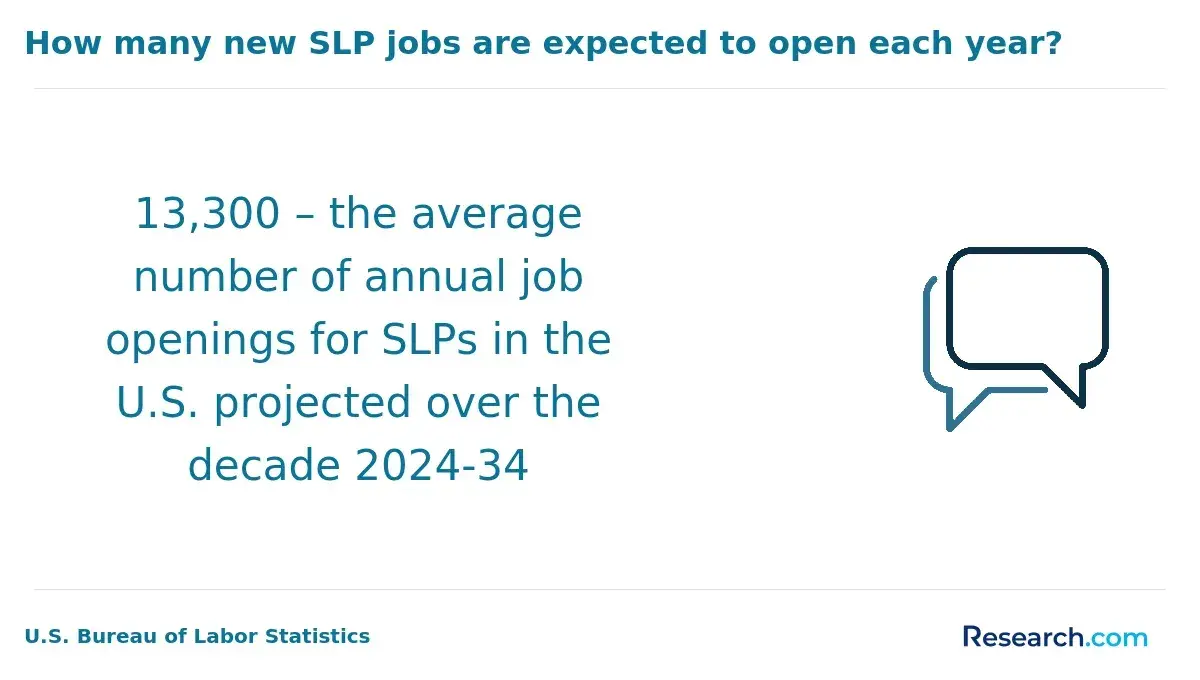
Job prospects in speech pathology are strong: the U.S. Bureau of Labor Statistics projects 17% growth through 2035, with a median annual salary of $97,870. Verifying proper accreditation and certification options ensures access to these rewarding opportunities.
Accredited speech-language pathology programs combine detailed coursework with extensive clinical practicum to prepare students for certification and licensure. Core classes cover anatomy and physiology of speech and hearing mechanisms, neuroanatomy related to communication disorders, phonetics, language development, speech sound and voice disorders, and audiology.
Specialty topics often include fluency disorders, augmentative communication, dysphagia, and multicultural issues in communication.
Most programs require at least 400 clock hours of supervised clinical practicum, as directed by the American Speech-Language-Hearing Association (ASHA).
These hours consist of direct client contact and clinical observation in settings such as schools, hospitals, rehabilitation centers, and private practices. Exposure to diverse populations and therapy methods is essential for skill development.
Students must demonstrate proficiency in diagnostic evaluation, treatment planning, and interventions across speech, language, and swallowing disorders. A clinical fellowship year following graduation is frequently required to fulfill licensure criteria.
Post-graduation, licensed speech-language pathologists with specialized certifications earn between $150 and $300+ per session, with experienced clinicians at the higher end (Speechblubs). This earning potential reflects the importance of comprehensive clinical training and specialization during education.
Admission to speech-language pathology graduate programs generally requires a bachelor's degree from an accredited institution, preferably in communication sciences and disorders or a related area. Applicants typically need to submit official transcripts showing a minimum GPA of 3.0, though some programs have higher standards.
While many still require Graduate Record Examination (GRE) scores, an increasing number of schools are waiving this or offering alternatives due to recent changes in testing availability.
Hands-on experience of at least 25 to 50 hours in speech-language pathology settings, through observation or volunteer work, is often required.
This ensures applicants have practical insight into the field. Programs also mandate letters of recommendation from faculty or professionals familiar with the applicant's academic and clinical abilities, along with a personal statement outlining career goals and motivation.
International candidates must usually demonstrate English proficiency via exams like TOEFL or IELTS. Some programs require prerequisite courses in anatomy, linguistics, psychology, and statistics if these were not completed during undergraduate studies.
Application fees range between $50 and $100, and candidates should prepare for interviews, which may be virtual or in-person. As noted in Financing and Financial Aid Strategies, detailed scholarship and assistantship data for these cycles are limited, so early research is essential for securing financial aid.
The outlook for speech-language pathologists is strong, with a projected 17% growth rate from 2025 to 2035 according to the U.S. Bureau of Labor Statistics. This growth is driven by rising awareness of communication disorders, an aging population needing rehabilitation, and increased services in schools and healthcare.
Salary varies widely based on experience, location, and work setting. The American Speech-Language-Hearing Association (ASHA) reports a median annual wage around $81,000. Entry-level pathologists often start near $55,000, while specialists or those in metropolitan areas can earn over $100,000.
Work environments affect compensation-school-based pathologists might earn less but enjoy stable benefits, whereas hospital or private practice clinicians often see higher pay. Specialists in pediatrics or certified in neurogenic communication disorders or swallowing disorders usually command premiums for their expertise.
Cost of living plays a key role in comparing salaries. States like California, New York, and Massachusetts offer higher compensation but also bring increased living expenses. Prospective students should factor this into their education and career planning.
Additionally, budgeting for textbooks and certification prep materials can add several hundred dollars yearly, an important consideration for financial planning in speech pathology education.
How should prospective students choose a reputable speech-language pathology program?
When selecting a reputable speech pathology program, verify accreditation by the Council on Academic Accreditation in Audiology and Speech-Language Pathology (CAA), which confirms adherence to national education standards essential for certification and licensure. Clinical practicum hours are vital; hands-on experience ensures professional competence upon graduation.
Examine program outcomes, focusing on graduation rates, certification exam pass rates (ideally 85% or higher), and employment placement data. Faculty qualifications also matter-programs led by licensed speech-language pathologists with doctoral degrees typically offer stronger mentorship and academic rigor.
Financial considerations include assessing debt-to-income ratios and 10-year return on investment (ROI) for alumni. The American Speech-Language-Hearing Association (ASHA) recommends targeting programs with a manageable debt ratio below 1.5, reflecting sustainable graduate earnings relative to loan debt.
Location and delivery format affect opportunities. Urban programs may provide more clinical placements, while online or hybrid formats add flexibility but require validation of clinical accessibility. Specialized tracks, such as pediatric or neurologic rehabilitation speech pathology, can enhance career focus.
Contact admissions and current students directly to clarify curriculum specifics, financial aid, and any hidden costs. Combining this research with reliable data from ASHA and the Bureau of Labor Statistics supports informed decisions balancing quality education and financial viability.
Other Things You Should Know About Speech Pathology
Speech pathology students have access to various financial aid options, including scholarships, grants, federal student loans, and work-study programs. Many universities also offer specific scholarships for speech-language pathology students. Additionally, professional organizations may provide financial aid resources tailored to students in this field.
Working while enrolled in a speech pathology program is possible but can be challenging due to the demanding coursework and clinical practicum hours. Part-time jobs related to communication disorders or volunteer opportunities in relevant settings may complement studies, but full-time work is generally discouraged during intensive graduate training.
Future students should budget for application fees, background checks, immunizations, textbooks, clinical placement costs, travel, and the Praxis exam fee. In 2027, the Praxis Subject Assessment for Speech-Language Pathology costs $146, and many graduate applications also require a separate fee.
- U.S. Bureau of Labor Statistics - Speech-Language Pathologists https://www.bls.gov/ooh/healthcare/speech-language-pathologists.htm
- ASHA EdFind - Accredited Speech-Language Pathology Programs https://find.asha.org/ed/
- ETS Praxis - Speech-Language Pathology (5331) https://praxis.ets.org/test/speech-language-pathology-5331.html
- University of North Carolina at Greensboro - Speech-Language Pathology, M.A. (Online) https://csd.uncg.edu/graduate/masters-of-arts-online/
- Maryville University - Master of Science in Speech-Language Pathology https://www.maryville.edu/masters/speech-language-pathology/
- Auburn University, Montgomery - Master of Science in Speech-Language Pathology https://www.aum.edu/degree/ms-speech-language-pathology/
- California State University-East Bay - Online Master of Science in Speech-Language Pathology https://ce.csueastbay.edu/programs/speech-language-pathology/
- Idaho State University - Master of Science in Speech-Language Pathology (Online/Distance Education) https://www.isu.edu/slp/programs-offered/slp-graduate-program/