2027 Medical Speech Pathology Online Programs: What to Look For

Co-Founder and Chief Data Scientist

Reviewed by Rhea Paul, PhD
SLP Education & Research Expert
Many prospective students face uncertainty when choosing an online medical speech pathology program. Challenges include verifying accreditation, balancing flexibility with clinical requirements, and ensuring the curriculum aligns with certification standards.
These obstacles can delay or derail career transitions for individuals with unrelated undergraduate degrees seeking timely entry into the field. Navigating program quality and state licensing prerequisites adds complexity to the decision-making process.
This article examines key factors such as accreditation, clinical practicum options, program flexibility, and certification preparation. It aims to equip readers with clear criteria to select a program that supports a successful career pivot into medical speech pathology.
Key Things You Should Know
- Online medical speech pathology programs in 2026 emphasize evidence-based clinical training, essential for ASHA certification and licensure, with over 60% of programs offering virtual practicums or telehealth experience.
- Accreditation by the Council on Academic Accreditation (CAA) remains critical; students must ensure programs meet these standards for eligibility in state licensure and Clinical Fellowship Year placement.
- Flexible pacing and part-time options are increasingly common, supporting working professionals; meanwhile, 2025 data shows a 17% projected employment growth for speech pathologists through 2035.
What is a speech pathology degree and what do speech-language pathologists do?
A speech pathology degree usually refers to a master's program emphasizing diagnosis and treatment of communication and swallowing disorders. These graduate programs blend coursework in anatomy, physiology, linguistics, and audiology with hands-on clinical training.
Obtaining a master's degree is the minimum education required to become a licensed speech-language pathologist (SLP) in the United States. Increasingly, medical speech pathology programs online offer flexible options for working professionals while maintaining accreditation standards.
Speech-language pathologists assess and treat difficulties in speech, language, voice, cognitive-communication, and swallowing. Their patient base ranges from children with developmental delays to adults recovering from strokes or managing conditions like Parkinson's disease.
Treatment plans often include exercises to improve articulation, comprehension, or swallowing safety. SLPs collaborate with healthcare providers, educators, and families to ensure tailored therapy approaches.
Admission into these programs is competitive. Recent data show only 45% of applicants were admitted into master's programs despite more than 52,000 applications. Strong academic records, relevant experience, and clear career goals improve chances of acceptance.
Prospective students should prioritize accredited programs offering evidence-based coursework and clinical practicum. Familiarity with licensure requirements, like passing the Praxis exam and completing supervised clinical hours, is essential.
Many applicants consider SLP master's programs online to accommodate life and work commitments. However, verifying state licensing acceptance for online degrees is important. Understanding speech-language pathologist job roles and responsibilities early helps in selecting the right program aligned with career objectives.
What are the accreditation and licensing requirements for speech pathology programs in the U.S.?
Accreditation requirements for speech pathology programs in the U.S. are essential to ensure educational quality and eligibility for certification.
The Council on Academic Accreditation in Audiology and Speech-Language Pathology (CAA), under the American Speech-Language-Hearing Association (ASHA), is the primary accrediting body. CAA accreditation confirms that a program meets strict standards in curriculum, faculty credentials, clinical training, and graduate outcomes.
Graduating from a CAA-accredited program is mandatory to earn the Certificate of Clinical Competence in Speech-Language Pathology (CCC-SLP), which is required for licensure and employment.
Licensing and certification criteria for U.S. speech pathology graduates vary by state but typically include completing a CAA-accredited graduate degree, a supervised clinical fellowship, and passing the Praxis Examination in Speech-Language Pathology. Some states may have additional clinical hour requirements or unique application steps.
Online programs must be accredited and offer sufficient clinical practicum options, often through local partnerships, to meet both state licensure and ASHA certification standards. Most top speech pathology programs boast a 98.5% on-time graduation rate over recent years, reflecting strong support systems and effective curricula.
When selecting a program, prioritize those with CAA accreditation, confirm alignment with your state's licensure board, and ensure access to quality clinical experiences for smooth professional entry. For those curious about career prospects, the highest paid speech pathologist roles often require robust credentials and certification.
How do online speech pathology programs compare to campus-based options for clinical training?
Online speech pathology clinical training effectiveness continues to improve as programs incorporate supervised, hands-on experiences through local clinical placements.
Accredited online options arrange practicums near students' homes, offering flexibility while meeting certification requirements. This contrasts with campus-based speech pathology programs where clinical training takes place on university grounds or affiliated facilities, often requiring travel or relocation.
Differences between online and campus speech pathology programs mainly involve logistics and access to clinical populations. Campus students benefit from immediate interaction with faculty and peers and exposure to specialized cases in university clinics.
Online learners might encounter challenges securing diverse clinical settings, but many programs provide structured support and partnerships to help meet ASHA's clinical hour requirements.
Applicants should also consider service options like tele-supervision, digital faculty mentorship, and clinical skills resources.
Admission standards remain competitive across both types, with admitted GPAs ranging from 3.08 to 3.98 according to the Communication Sciences and Disorders Education Survey. Prospective students are encouraged to verify clinical placement quality and program accreditation to ensure licensure eligibility.
For those seeking accelerated pathways, accelerated speech language pathology programs offer intensive training that can shorten completion time. Careful planning and communication with coordinators is crucial to secure enough accredited clinical hours to fulfill state and certification requirements.
Accredited master's programs in medical speech pathology combine coursework and clinical practicum hours designed to fulfill certification standards like those of the American Speech-Language-Hearing Association (ASHA).
Coursework typically covers anatomy and physiology of speech and hearing mechanisms, language development, audiology, phonetics, neurological communication bases, intervention strategies, research methods, and professional ethics.
Clinical practicum requirements are rigorous, with students completing at least 400 clock hours of supervised experience, including 325 hours of direct patient/client contact. This hands-on training often takes place in university clinics and extends to settings such as schools, hospitals, and rehabilitation centers, providing exposure to a broad range of populations and communication disorders.
Many accredited online speech pathology master's programs offer flexibility in practicum placement, preparing students to work with pediatric and adult clients affected by speech sound disorders, aphasia, voice disorders, and other communication challenges. This diverse clinical experience ensures readiness for certification and future employment.
Program costs vary widely. For example, in-state tuition for speech pathology master's students at San Diego State University is $9,724 yearly, with out-of-state fees adding $396 per credit unit. Prospective students should also consider extra costs like practicum-related travel and licensure preparation.
Students interested in identifying accessible programs might explore a range of SLP master's programs offering different entry requirements and specializations to fit their career goals.
Admission to online speech pathology programs generally requires a bachelor's degree from an accredited institution, often in communication sciences, health sciences, or related areas. Most programs expect a minimum GPA of 3.0, with more competitive ones sometimes demanding higher academic achievement.
Applicants must provide official transcripts, letters of recommendation, a resume or CV, and a personal statement outlining their interest and suitability for the profession.
Prerequisites frequently include foundational courses such as anatomy and physiology of the speech and hearing mechanism, language development, phonetics, and statistics.
Some programs allow equivalent work or life experience in place of certain courses but emphasize academic rigor in related subjects. Completion of undergraduate coursework in communication disorders is often required before enrollment.
Clinical experience plays a vital role. Many programs require observation or volunteer hours in speech-language pathology settings to ensure applicants understand clinical responsibilities and demonstrate their commitment.
Technical requirements include having reliable internet access and the ability to engage in both synchronous and asynchronous online coursework.
Because clinical practicum must adhere to accreditation standards, students need access to supervisors and facilities nearby or through coordinated remote placements.
For example, the University of Oklahoma Health Sciences Center's MA in SLP program boasts a 95.6% on-time completion rate for 2022-2023, highlighting the importance of well-designed curricula and sufficient clinical hours. Prospective students should research how programs organize clinical practica and support on-time graduation to meet certification requirements.
The completion time for an online master's degree in speech pathology generally ranges between 20 and 36 months, influenced by program format and enrollment status. Full-time students often finish in about two years, while part-time students may take three years or more. Programs designed for flexibility support working professionals by extending the timeline without affecting accreditation.
Emerson College's online MS in Communication Disorders, for example, can be completed in as little as 20 months. This program offers options to accelerate or slow progress to balance work and family life. Some programs may require additional clinical practicum hours or on-site residencies, which can impact duration.
Key factors that affect program length include required credits, course availability, asynchronous versus live sessions, cohort start dates, and course sequencing. Accreditation by the Council on Academic Accreditation (CAA) is crucial and may influence curriculum pacing.
- Verify how clinical practicum requirements fit into the online format.
- Check whether local placements are supported to avoid program extensions.
- Consider program flexibility for balancing career and personal commitments.
Paying attention to these aspects strongly supports selecting a program aligned with professional goals and licensure timelines.
The cost of online speech pathology degree programs varies widely, ranging from $15,000 to over $60,000 for completion. Public universities generally offer lower tuition for in-state students, sometimes under $20,000, while private schools often charge $40,000 or more.
Certificate or master's completion tracks may be less expensive depending on credit requirements. Additional fees for clinical practicum placements, technology, and course materials can add several thousand dollars to the total cost.
Financial aid options are abundant and include federal programs like Pell Grants, Direct Loans, and work-study. Many institutions offer merit-based scholarships specifically for speech pathology or health sciences fields.
In-state residents may qualify for state grants and tuition assistance. Employer tuition reimbursement is often available, especially in healthcare settings. Applying early for FAFSA and institutional aid improves chances of receiving substantial financial support.
- Scholarships from professional organizations such as the American Speech-Language-Hearing Association (ASHA).
- State and federal grants.
- Employer tuition assistance programs.
According to the U.S. Bureau of Labor Statistics Occupational Outlook Handbook, speech-language pathologists earn a median salary of $95,410 annually with a strong 15% job growth forecast-faster than average. Investing in an accredited online speech pathology program can provide significant career returns.
Speech-language pathologists (SLPs) perform a wide range of roles across healthcare, education, and private practice settings.
They assess and treat speech, language, cognitive-communication, and swallowing disorders in hospitals, rehabilitation centers, nursing facilities, and outpatient clinics. Common patient needs include stroke recovery, traumatic brain injury, and developmental delays.
In schools, SLPs collaborate with teachers and families to support children with speech and language impairments, often developing individualized education plans (IEPs). Early intervention specialists focus on infants and toddlers, guiding developmental milestones through family coaching.
Other opportunities exist in research institutions advancing communication sciences and corporate roles such as voice therapy and consulting. Telepractice continues to grow, widening access to remote speech therapy services and job options.
Many SLPs advance to supervisory, administrative, or academic careers, requiring leadership skills and advanced certifications.
Certification and licensure remain essential for entry and progression-for instance, 100% of University of Oklahoma Health Sciences Center's 2022 MA SLP graduates passed the Praxis exam on their first try, highlighting the value of accredited programs that prepare students well for clinical roles (OUHSC Student Outcome Data PDF).
- Employment often requires matching settings to professional interests and licensure needs.
- Strong preparation supports success on national certification exams.
- Diverse settings include healthcare, education, research, corporate, and telepractice environments.
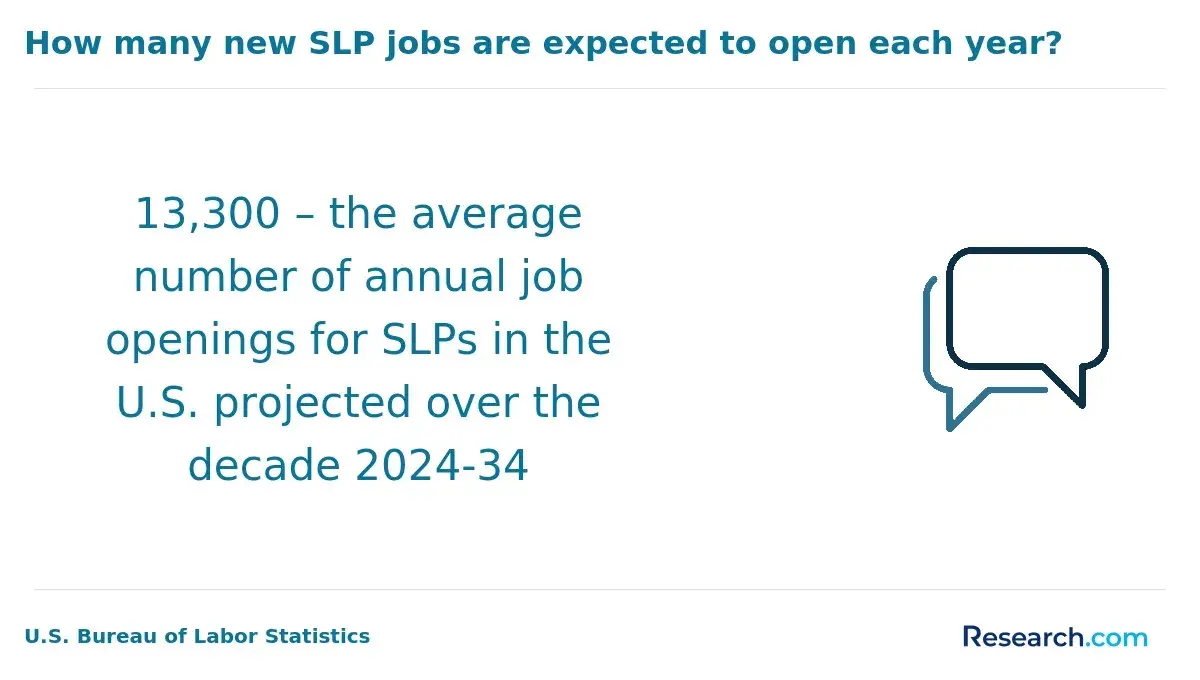
The job outlook for speech-language pathologists is notably strong, with the U.S. Bureau of Labor Statistics forecasting a 17% growth through 2035.
This growth surpasses the average for all occupations and is fueled by factors such as an aging population, increased awareness of speech and language disorders, and heightened demand across schools, healthcare settings, and rehabilitation centers.
Salary ranges vary based on experience, location, and work environment. The median annual wage is about $83,000, while entry-level roles may start near $60,000. Experienced professionals or those with specializations can earn more than $100,000, especially clinical specialists in hospitals or skilled nursing facilities.
Credentialing, like obtaining the Certificate of Clinical Competence (CCC) from the American Speech-Language-Hearing Association, can boost both employment opportunities and pay.
Quality education plays a vital role in career success. Vanderbilt University ranks #1 for speech-language pathology graduate programs according to U.S. News & World Report Best Graduate Schools.
Many top online programs offer accredited curricula combined with clinical practicum opportunities, essential for practical experience and networking within the field.
Career seekers can benefit from exploring these educational paths to position themselves effectively for the growing field of speech pathology.
How should prospective students evaluate the quality and reputation of online speech pathology programs?
When choosing an online speech pathology program, accreditation by the Council on Academic Accreditation (CAA) is essential. This accreditation ensures the curriculum meets national standards necessary for certification and licensure, preventing obstacles in obtaining state licenses.
Faculty expertise greatly impacts learning quality. Seek programs led by certified speech-language pathologists with active clinical experience who provide current, industry-relevant insights. Checking faculty credentials on program websites helps confirm this expertise.
Hands-on clinical practicum opportunities are crucial for developing practical skills. Quality online programs partner with healthcare or educational institutions to offer supervised practicum hours. Insufficient practicum can delay graduation and certification.
Program outcomes like graduation rates, certification exam pass rates, and employment placement data indicate quality and market reputation. Prospective students should request this information from admissions if unavailable publicly.
Employment for speech-language pathologists is expected to grow by 28,200 jobs annually through 2033, according to the U.S. Bureau of Labor Statistics Occupational Outlook Handbook. This demand underscores the importance of selecting a reputable program.
Practical factors to consider include program flexibility, technology platforms, and student support services such as virtual tutoring, career advising, and technical help to support academic progress.
Other Things You Should Know About Speech Pathology
Yes. Accredited programs must include supervised clinical practicum, and many medical-focused tracks require placement in hospitals, rehabilitation centers, or skilled nursing facilities. For ASHA certification, students need at least 400 total supervised clinical clock hours, including 25 observation hours, before graduation and licensure eligibility.
Yes, graduates from fully online accredited master's programs in speech pathology can generally pursue certification and licensure in the United States. They must meet clinical practicum requirements, which are typically arranged locally to ensure supervised hands-on experience. Verification of program accreditation and state licensure regulations remains essential before enrolling.
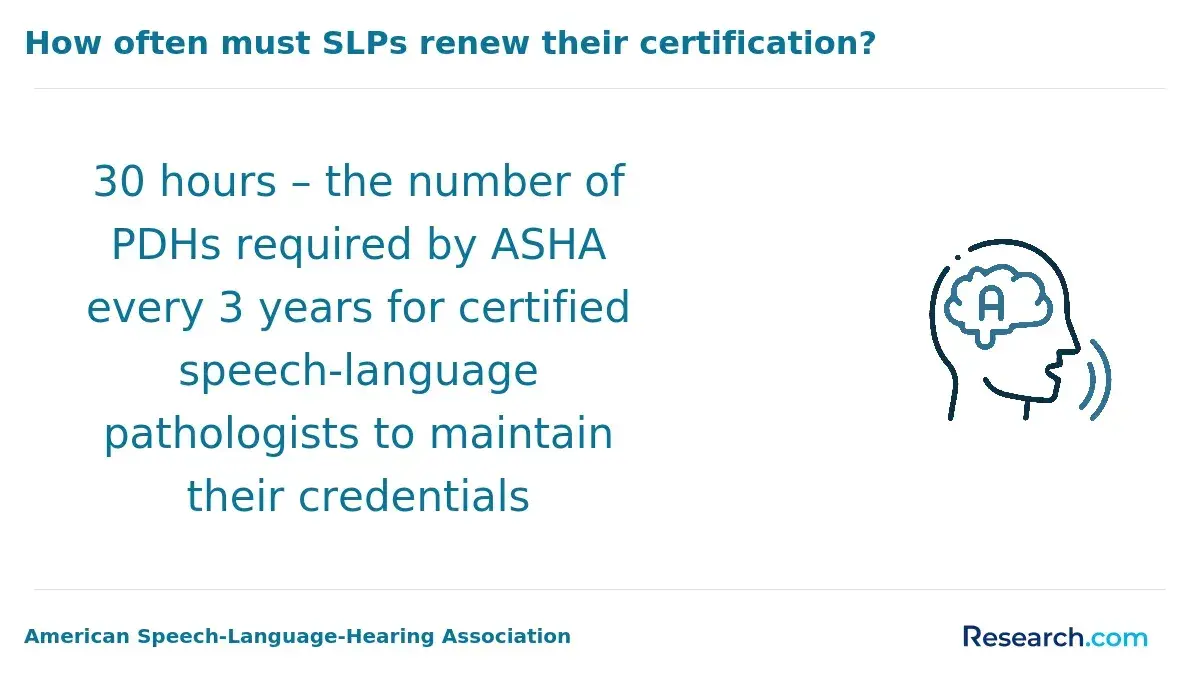
Most states require licensed speech pathologists to complete continuing education units (CEUs) regularly to maintain their credentials. These requirements help professionals stay current with advances in treatment techniques and research. Online courses and workshops often provide convenient options to fulfill CEU obligations.
When selecting a 2027 medical speech pathology online program, consider accreditation status, faculty credentials, curriculum comprehensiveness, clinical practicum opportunities, and flexibility for working professionals. Ensure the program meets state licensure requirements and offers strong student support services to aid in academic and clinical success.
- U.S. Bureau of Labor Statistics - Speech-Language Pathologists https://www.bls.gov/ooh/healthcare/speech-language-pathologists.htm
- ASHA EdFind - Accredited Speech-Language Pathology Programs https://find.asha.org/ed/
- O*NET OnLine - Speech-Language Pathologists https://www.onetonline.org/link/summary/29-1127.00
- New England Institute of Technology - Master of Science in Speech Language Pathology https://www.neit.edu/academics/graduate-degrees/speech-language-pathology-ms
- Nova Southeastern University - SLP Program - Master of Science in Speech-Language Pathology https://osteopathic.nova.edu/degrees/masters/speech-language-pathology/index.html
- Maryville University - Master of Science in Speech-Language Pathology https://www.maryville.edu/masters/speech-language-pathology/
- California State University-San Marcos - Online MS in Speech-Language Pathology https://www.csusm.edu/slp/programs/mastersonline/index.html
- California State University-East Bay - Online Master of Science in Speech-Language Pathology https://ce.csueastbay.edu/programs/speech-language-pathology/