2027 Best Online Communication Degrees for Organizational Communication Careers

Co-Founder and Chief Data Scientist
Choosing an online communication degree is really a career decision: will the program help you lead teams, manage change, improve workplace messaging, or move into PR, HR, training, or internal communications? The U. S. Bureau of Labor Statistics reported a $70,300 median annual wage for media and communication occupations in May 2024, above the $49,500 median for all occupations. This guide explains how organizational communication programs work, which online options are worth comparing, what they cost, and how to judge career value before enrolling.
Key Things You Should Know
- Organizational communication degrees are best for students who want careers in internal communications, public relations, HR communication, training, change management, employee engagement, or communication strategy rather than licensed clinical or technical roles.
- Recent BLS wage data show relevant U.S. median salaries ranging from $65,850 for training and development specialists to $138,520 for public relations managers, but outcomes depend heavily on experience, industry, location, and portfolio quality.
- Before choosing a program, verify institutional accreditation, transfer-credit policy, total online tuition and fees, internship or capstone options, and whether the curriculum includes writing, research, analytics, leadership, conflict, and digital communication.
What is an online communication degree focused on organizational communication and how does it work?
An online communication degree focused on organizational communication teaches students how information moves inside workplaces and between organizations and their audiences. Instead of concentrating only on public speaking or journalism, this path emphasizes leadership messaging, team communication, conflict resolution, employee engagement, culture, change communication, crisis response, and strategic writing.
At the bachelor's level, the degree is usually a BA or BS in Communication, Communication Studies, Strategic Communication, or Organizational Communication. At the graduate level, it may be a master's in communication with a concentration in organizational communication, leadership communication, corporate communication, or strategic communication. Students who already have professional experience often use graduate study to move from execution roles into management, consulting, or communication strategy.
Most online programs combine asynchronous coursework with discussion boards, group projects, recorded presentations, research papers, and applied assignments. A good program does not simply ask students to read theory; it should require them to produce workplace-ready deliverables such as communication audits, internal campaign plans, stakeholder maps, crisis memos, presentation decks, and employee communication strategies.
This degree tends to fit students who enjoy writing, problem solving, persuasion, teamwork, and translating complex information for different audiences. It may be less suitable for students who want a highly technical credential, a licensed health profession, or a role where a specialized degree such as accounting, computer science, or nursing is expected.
Which accredited online communication programs offer strong organizational communication specializations?
The best online communication degree for organizational communication is usually not the one with the flashiest title. It is the accredited program whose curriculum, faculty expertise, applied projects, and career support match the work you want to do. If you already have a bachelor's degree and want a leadership-focused credential, comparing online masters in communication programs can be especially useful because many graduate options focus on strategic, corporate, or organizational communication.
The table below highlights examples of accredited U.S. institutions and program types that are commonly relevant for organizational communication careers. Program names, concentrations, and delivery formats can change, so use this as a shortlist for comparison rather than a final ranking.
| School or program type | Organizational communication fit | Institutional accreditation to verify | Best for |
| Arizona State University Online communication programs | Communication coursework commonly includes persuasion, leadership, conflict, and workplace communication themes | Higher Learning Commission | Students who want a large public university with broad online infrastructure |
| Southern New Hampshire University online communication programs | Business communication and professional writing options can support corporate communication goals | New England Commission of Higher Education | Students seeking flexible terms and career-oriented online delivery |
| Purdue Global communication programs | Applied communication, professional communication, and organizational messaging may align with working adults | Higher Learning Commission | Adult learners balancing school with employment |
| University of Missouri online communication programs | Communication studies pathways may include organizational, interpersonal, and strategic communication content | Higher Learning Commission | Students who want a public university communication studies foundation |
| University of Kansas online communication studies options | Communication studies coursework can support organizational, leadership, and interpersonal communication interests | Higher Learning Commission | Students who want a research university environment with communication theory depth |
| Florida International University online communication-related programs | Strategic communication and communication arts options may support multicultural and workplace communication goals | Southern Association of Colleges and Schools Commission on Colleges | Students interested in diverse audiences, public-facing communication, and organizational messaging |
When comparing programs, look beyond whether the words "organizational communication" appear in the catalog. A program can be a strong fit if it includes applied courses in leadership, persuasion, conflict, research methods, communication campaigns, internal communication, and digital media. Conversely, a program with a relevant-sounding title may be weaker if it lacks career projects, writing-intensive assignments, or faculty with workplace communication expertise.
How does an online organizational communication degree compare to a campus-based program?
An online organizational communication degree can be just as academically legitimate as a campus-based degree when it comes from an institutionally accredited school and uses the same academic standards. The practical difference is not usually the diploma; it is the learning experience, networking format, schedule, cost structure, and access to local internships or campus services.
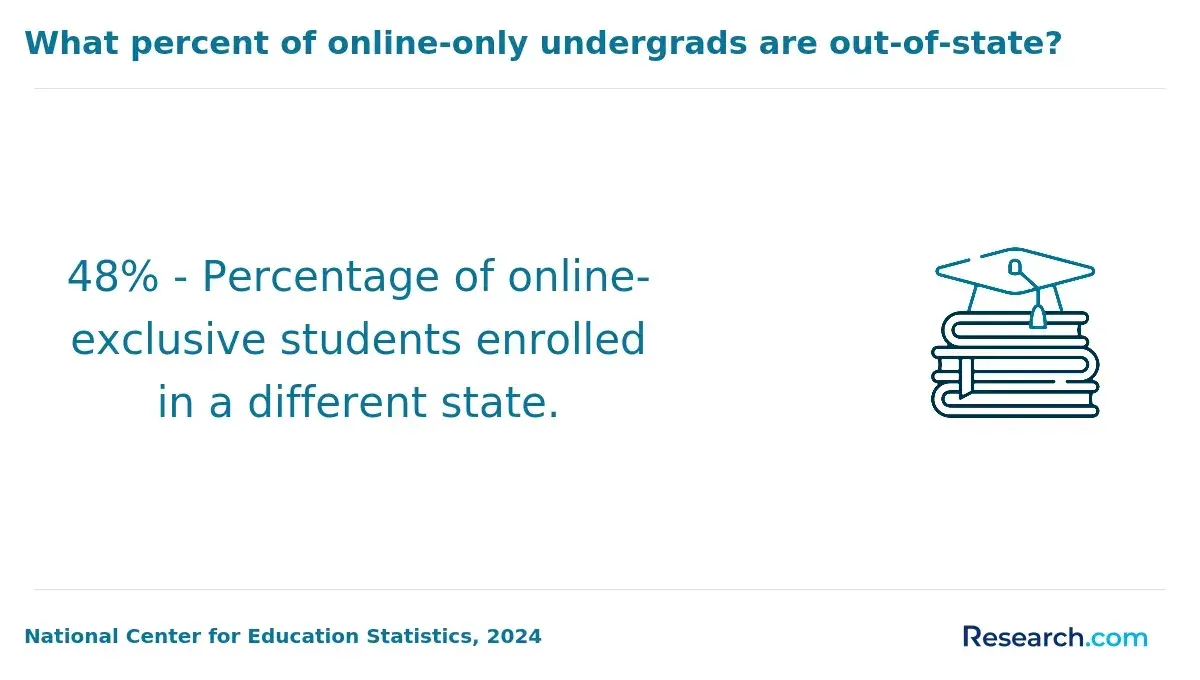
Online learning has become a mainstream part of U.S. higher education. NCES distance education data released in recent years show that a large share of college students now take at least one online course, which means employers are increasingly familiar with online credentials from accredited institutions. For communication students, that matters because remote collaboration, digital presentations, and asynchronous writing mirror many modern workplace communication tasks.
The table below compares online and campus formats for students deciding which environment will help them succeed.
| Factor | Online program | Campus-based program | How to decide |
| Schedule | Often asynchronous or evening-friendly | Usually tied to set class times | Choose online if work or caregiving makes daytime attendance difficult |
| Networking | Digital discussions, virtual teams, alumni platforms, remote events | In-person clubs, campus events, faculty office hours | Choose campus if you need face-to-face networking to stay motivated |
| Applied learning | May use virtual presentations, workplace projects, and online portfolios | May offer local internships, labs, and in-person production facilities | Ask both types of programs how students complete real communication projects |
| Cost structure | May reduce relocation and commuting costs, but fees vary | May include housing, commuting, parking, and campus fees | Compare total cost of attendance, not tuition alone |
| Self-management | Requires strong time management and written communication | Provides more physical structure and routine | Choose the format that matches your learning habits, not just your calendar |
The strongest online candidates are students who can manage deadlines independently, participate actively in written discussions, and turn class projects into portfolio samples. Students who need regular in-person accountability, campus media opportunities, or local employer pipelines may prefer a hybrid or campus-based program.
What courses and skills are taught in organizational communication degree programs?
Organizational communication programs teach both theory and practice. The theory helps students understand why workplace messages succeed or fail; the practice helps them write, present, research, and advise leaders in real organizational settings. Students interested in broader management roles sometimes compare this path with a business administration degree, which usually offers more coursework in accounting, finance, operations, and general management.
Most programs include a mix of communication core courses, specialization courses, research methods, electives, and a capstone. The following list shows the course areas that matter most for organizational communication careers.
- Organizational communication theory: how workplace culture, hierarchy, networks, and power shape communication.
- Strategic writing and editing: memos, executive messages, newsletters, scripts, reports, web copy, and internal announcements.
- Leadership communication: how managers communicate vision, feedback, expectations, change, and difficult decisions.
- Conflict and negotiation: techniques for managing disagreement, facilitating dialogue, and improving team communication.
- Communication research methods: surveys, interviews, focus groups, content analysis, and data interpretation.
- Public relations and crisis communication: stakeholder messaging, media response, reputation management, and issue monitoring.
- Digital and social media communication: audience segmentation, platform strategy, analytics, and brand voice.
- Diversity, equity, and intercultural communication: communicating across identity, culture, geography, and organizational roles.
Skills matter as much as course titles. Employers often evaluate communication candidates through writing samples, interview performance, project examples, and evidence that they can turn messy information into clear recommendations.
The table below connects common program skills to the workplace tasks they support.
| Skill | How it is used at work | Evidence to build during the degree |
| Clear writing | Drafting internal messages, announcements, briefs, and campaign materials | Portfolio samples with different audiences and formats |
| Research and listening | Running surveys, interviews, communication audits, and stakeholder analysis | Research reports and recommendations based on data |
| Presentation | Briefing leaders, training employees, and explaining communication plans | Recorded presentations and slide decks |
| Strategic thinking | Aligning messages with business goals, culture, and audience needs | Campaign plans, crisis plans, and communication calendars |
| Digital fluency | Using collaboration platforms, analytics dashboards, social media tools, and content systems | Projects using real or simulated digital channels |
AI is also changing the skill mix. Generative AI can draft outlines and summarize feedback, but employers still need people who can judge tone, ethics, accuracy, audience risk, and organizational context. Students should learn to use AI as a drafting and analysis aid while preserving human judgment, fact-checking, and confidentiality.
What admission requirements and prior education are needed for online communication degrees?
Admission requirements depend on degree level. Bachelor's programs are usually designed for first-time college students, transfer students, or adults returning to school. Master's programs are designed for students who already hold a bachelor's degree, often in communication, English, journalism, business, psychology, sociology, education, or another related field.
Typical requirements are straightforward, but details vary by school. Review them early so you can estimate both your admission chances and the number of credits you may still need.
- For a bachelor's degree: high school diploma or GED, official transcripts, application form, and sometimes a minimum GPA or placement requirements.
- For transfer admission: college transcripts from all prior institutions, minimum transferable credits, minimum GPA, and course equivalency review.
- For a master's degree: accredited bachelor's degree, undergraduate transcripts, statement of purpose, resume, recommendations, and sometimes writing samples.
- For international or multilingual applicants: English proficiency documentation may be required, depending on prior education and school policy.
- For test scores: many communication programs are test-optional or do not require GRE scores, but policies vary by institution and degree level.
Prior education can change the smartest path. If you have significant transfer credit, a bachelor's completion program may be faster and less expensive than starting over. If you already have a bachelor's degree and need a targeted career pivot, a graduate certificate or master's degree may make more sense than a second bachelor's degree.
One common mistake is assuming that every prior credit will transfer. Schools may reject credits because they are too old, not from an accredited institution, below the required grade, duplicated by other courses, or not equivalent to the degree plan. Before enrolling, ask for a written transfer evaluation and a remaining-course map.
How long do online organizational communication degrees take and what do they cost?
A bachelor's degree in communication usually requires about 120 credits, while a master's degree often requires about 30 to 36 credits. Completion time depends on transfer credits, term length, course load, and whether the program offers accelerated sessions. Working adults should be careful with accelerated programs: a faster calendar can reduce time to completion, but it can also compress reading, writing, and group projects into a demanding schedule.
Published tuition benchmarks help frame the cost decision, even though your actual online price may differ. College Board's 2024-25 pricing data reported average published tuition and fees of $11,610 for in-state students at public four-year institutions and $43,350 at private nonprofit four-year institutions. For online students, those figures are best used as comparison points because online tuition, distance-learning fees, transfer credits, and residency rules can change the final bill.
Use the following cost checkpoints when comparing programs because tuition alone rarely shows the real price.
- Average 2024-25 published in-state public four-year tuition and fees: $11,610.
- Average 2024-25 published private nonprofit four-year tuition and fees: $43,350.
- Additional costs to verify: online course fees, technology fees, textbooks, graduation fees, transcript fees, prior-learning assessment fees, and any required campus visits.
- Potential savings to verify: transfer credits, employer tuition assistance, military education benefits, scholarships, grants, and flat-rate tuition for full-time course loads.
The table below summarizes common timelines. Use it to estimate opportunity cost as well as tuition cost, because time away from full-time work or delayed advancement can affect return on investment.
| Credential | Typical credit load | Common completion time | Best fit |
| Bachelor's degree, first-time student | About 120 credits | About 4 years full time | Students starting college or seeking broad entry-level preparation |
| Bachelor's completion degree | Varies after transfer review | Often 1 to 3 years | Students with prior college credit or an associate degree |
| Graduate certificate | Often fewer courses than a master's | Often less than 1 year to about 1 year | Professionals seeking a targeted skill upgrade without a full degree |
| Master's degree | Often about 30 to 36 credits | About 1 to 2 years full time; longer part time | Professionals seeking advancement, specialization, or leadership credibility |
To judge affordability, calculate net cost after grants and transfer credit, not just sticker price. Also compare monthly workload: a low-cost program that causes you to withdraw or repeat courses can become more expensive than a slightly higher-priced program with better advising and scheduling support.
What jobs can you get with an online organizational communication degree?
An online organizational communication degree can lead to roles that require clear writing, audience analysis, employee communication, project coordination, training, and stakeholder management. It is not limited to one industry; graduates may work in corporations, healthcare systems, universities, nonprofits, government agencies, technology firms, consulting groups, and public relations agencies.
Common job titles vary because employers use different labels for communication work. The table below groups likely roles by career direction and shows what the work typically involves.
| Career direction | Example roles | Typical responsibilities | Helpful preparation |
| Internal and employee communication | Internal communications specialist, employee communications coordinator, change communication associate | Writing leadership messages, managing intranet content, supporting change initiatives, measuring employee feedback | Writing samples, survey projects, leadership communication coursework |
| Public relations and external communication | Public relations specialist, media relations coordinator, communications associate | Drafting press materials, managing stakeholder messages, monitoring reputation, supporting campaigns | PR coursework, crisis communication plans, media writing portfolio |
| Human resources communication | HR communications specialist, employer brand coordinator, employee engagement associate | Explaining benefits, culture initiatives, onboarding messages, policy updates, and employee programs | Intercultural communication, HR basics, internal campaign examples |
| Training and development | Training coordinator, learning and development specialist, onboarding specialist | Designing learning materials, delivering workshops, evaluating training effectiveness | Presentation experience, instructional materials, assessment projects |
| Communication operations | Communications project coordinator, content operations associate, stakeholder engagement coordinator | Managing calendars, approvals, deliverables, vendors, and campaign workflows | Project coordination, collaboration tools, campaign planning |
Entry-level candidates should expect to prove ability through samples rather than the degree alone. Strong portfolio pieces include a crisis communication plan, employee newsletter package, executive email series, communication audit, social media campaign brief, training outline, and presentation deck.
Some adjacent fields require different preparation. For example, students interested in diagnosing or treating communication disorders should look at accredited online speech pathology programs instead, because speech-language pathology is a regulated clinical profession with specific graduate education and supervised practice requirements.
What are typical salaries for organizational communication careers in the United States?
Salaries in organizational communication vary widely because the degree can support several career tracks. Industry, metro area, seniority, portfolio strength, management responsibility, and technical skills all affect compensation. The most useful way to view salary is by role family rather than by degree title.
The table below uses U.S. Bureau of Labor Statistics May 2024 median annual wage data for roles commonly related to organizational communication. These are national medians, not starting salaries and not guaranteed outcomes for any program.
| Role | May 2024 U.S. median annual wage | How the role connects to organizational communication |
| Training and development specialists | $65,850 | Uses presentation, instructional communication, employee learning, and feedback analysis |
| Public relations specialists | $69,780 | Uses strategic writing, media messaging, stakeholder communication, and reputation management |
| Human resources specialists | $72,910 | Uses employee communication, policy explanation, recruiting messages, and conflict-sensitive writing |
| Market research analysts and marketing specialists | $76,950 | Uses audience research, survey interpretation, messaging insights, and campaign analysis |
| Technical writers | $91,670 | Uses clear explanation, document design, subject-matter interviews, and user-focused writing |
| Public relations managers | $138,520 | Uses advanced strategy, leadership advising, crisis planning, team management, and stakeholder judgment |
For students, the takeaway is that organizational communication can support both specialist and management pathways, but management salaries usually require experience, measurable results, and leadership responsibility. A degree may help open doors, but internships, writing samples, analytics ability, and industry knowledge often determine how competitive a candidate is.
Students who want to move closer to operations, timelines, budgets, and cross-functional delivery may also compare communication programs with affordable online project management degrees. That alternative can be a better fit for people who prefer managing scope, schedules, and resources over writing messages and advising stakeholders.
What is the job outlook and industry demand for organizational communication roles?
Demand for organizational communication skills is tied to how organizations handle change, reputation, employee engagement, digital work, and public trust. Hybrid work, AI adoption, labor market uncertainty, crisis response, and constant platform changes all increase the need for professionals who can make messages clear, credible, timely, and audience-specific.
The latest long-term BLS projections published in 2024 for the 2023-2033 period show steady demand in several related occupations. These projections describe occupations, not degree outcomes, so use them as labor-market context rather than promises.
| Occupation | BLS projected employment growth, 2023-2033 | What the projection suggests for students |
| Training and development specialists | 12% | Organizations continue to need people who can build learning materials and help employees adapt to new tools and processes |
| Market research analysts | 8% | Audience insight and data-informed messaging remain valuable for marketing and communication teams |
| Human resources specialists | 8% | Recruiting, employee relations, and HR communication needs support continued demand |
| Public relations and fundraising managers | 7% | Leadership-level communication remains important for reputation, donors, stakeholders, and crises |
| Public relations specialists | 6% | Organizations still need writers and coordinators who can manage messages across channels |
AI will likely change entry-level tasks before it removes the need for communication professionals. Routine first drafts, summaries, and content variations are increasingly automated, but human workers are still needed to validate facts, protect confidentiality, adapt tone, manage sensitive stakeholders, and decide what should not be said. Students can improve resilience by pairing communication skills with analytics, project coordination, change management, HR knowledge, or industry-specific expertise.
The strongest career strategy is to build a "T-shaped" profile: broad communication ability plus one deeper specialty. Examples include internal communication for healthcare, crisis communication for public agencies, employee engagement for HR teams, technical communication for software companies, or training communication for fast-growing organizations.
How can you evaluate and choose a reputable online organizational communication program?
Choosing a reputable online program starts with accreditation, but it should not end there. Institutional accreditation confirms that a school meets broad quality standards, while your career fit depends on curriculum, faculty, applied work, advising, cost transparency, and graduate support.
Use this step-by-step process before submitting an enrollment deposit. It will help you avoid programs that look convenient but do not match your goals.
- Verify institutional accreditation through the school's accreditor and federal recognition sources, and be cautious if a school avoids naming its accrediting agency clearly.
- Match the curriculum to your target role by checking for courses in organizational communication, strategic writing, leadership, research methods, conflict, digital communication, and crisis communication.
- Ask for a written transfer-credit evaluation before enrolling, especially if you have prior college credit or an associate degree.
- Calculate total cost of attendance, including online fees, books, technology charges, residency rules, and the number of credits you must complete at that institution.
- Review applied learning requirements such as capstones, internships, client projects, simulations, or portfolio-building assignments.
- Ask how career services support online students, including resume reviews, mock interviews, employer events, alumni networking, and internship guidance.
- Check whether faculty have relevant academic or professional experience in organizational, corporate, strategic, or leadership communication.
- Compare student support services such as online tutoring, library access, writing center help, disability accommodations, and advisor availability.
Red flags deserve special attention because communication degrees are broad and easy to market. Avoid choosing a school based only on speed, vague career promises, or a low advertised tuition rate without knowing the total number of credits required.
The table below summarizes common mistakes and better alternatives.
| Common mistake | Why it can hurt you | Better approach |
| Choosing only the cheapest tuition per credit | Fees, lost transfer credits, and poor support can raise the real cost | Compare net cost, completion plan, and student services |
| Ignoring curriculum details | A general communication program may not include enough workplace-focused coursework | Map required courses to your target roles before applying |
| Assuming online means easier | Online writing, group work, and deadlines can be demanding | Choose a course load that fits your weekly schedule |
| Relying only on rankings | Rankings may not reflect your transfer credits, cost, or career goals | Use rankings as one input, then verify fit directly |
| Skipping portfolio development | Employers often want proof of writing and strategic thinking | Save and refine class projects into professional samples |
A final decision should balance credibility, affordability, completion speed, and career alignment. The best program is the one you can finish, afford, explain confidently to employers, and use to build evidence of real communication ability.
Other Things You Should Know About Communication
No. Organizational communication focuses on how messages, relationships, culture, leadership, and information flow work inside organizations. Human resources focuses more on employment processes such as recruiting, benefits, compliance, employee relations, and talent management. The fields overlap in employee communication, onboarding, engagement, and change initiatives.
Not always. Many entry-level roles are open to bachelor's degree holders with strong writing samples, internships, and digital communication skills. A master's degree may be more useful for professionals seeking leadership roles, consulting work, teaching-adjacent opportunities, or a career change into strategic communication.
A certificate can be worthwhile if you already have a degree and need a targeted skill upgrade in areas such as public relations, digital communication, training, or leadership communication. A full degree is usually better if you need a foundational credential, broader career mobility, or eligibility for jobs that require a bachelor's or master's degree.
References
- Bachelor’s Degree Program / Media University https://www.media-university.de/en/application-form/admission-requirements/bachelors-degree-program/
- Online Communication Degree | University of Phoenix https://www.phoenix.edu/online-liberal-arts-degrees/communication-bachelors-degree.html
- Online Master’s in Communication Management Programs in 2025 https://www.mastersincommunications.org/online-communication-management/
- Master's in Communication Salaries by Career and Position (2025 Update) https://www.mastersincommunications.com/faqs/masters-in-communication-salary
- How Long is an Online Master’s in Communication Program? https://www.onlineeducation.com/communication/faqs/how-long-to-earn-a-communications-masters-degree-online
- Organizational Communication https://www.assumption.edu/undergraduate/organizational-communication
- Essential Strategies for Organizational Communication | FranklinCovey https://www.franklincovey.com/blog/essential-strategies-for-organizational-communication/
- Where can you do a Master's degree in Digital Communication? - INSEEC https://www.inseec.com/en/guides/orientation-guide/where-can-you-do-a-masters-degree-in-digital-communication/