2027 Online Communication Degrees for Students Who Want Internal Communication Careers

Co-Founder and Chief Data Scientist
Choosing an online communication degree for an internal communication career means weighing cost, flexibility, skills, and job outcomes. The timing is strong: the U. S. Bureau of Labor Statistics projects public relations specialist employment to grow 5% from 2024 to 2034, faster than the average for all occupations. This guide is for students, career changers, and working professionals who want employee communication, change communication, culture, or executive messaging roles. You will learn which degree level fits your goal, how online programs compare, what to check before enrolling, and how to evaluate career return.
Key Things You Should Know
- Internal communication careers usually fit best with communication, public relations, strategic communication, organizational communication, or corporate communication degrees, especially programs with writing, analytics, crisis communication, and change management coursework.
- Cost varies widely: College Board's 2024 pricing data lists average published 2024-25 tuition and fees at $11,610 for in-state public four-year colleges and $43,350 for private nonprofit four-year colleges, before grants, transfer credits, and employer aid.
- BLS May 2024 wage data reports a median annual wage of $69,780 for public relations specialists and $138,520 for public relations managers, but internal communication pay depends heavily on industry, location, experience, and management responsibility.
What is an online communication degree focused on internal communication careers?
An online communication degree focused on internal communication prepares students to plan, write, deliver, and measure messages for employees inside an organization. Instead of targeting customers or the public, internal communicators help employees understand strategy, workplace changes, policies, culture, leadership decisions, benefits, crises, and organizational priorities.
Common program names include communication, strategic communication, organizational communication, corporate communication, public relations, digital communication, and integrated communication. Some schools offer a formal internal communication concentration, but many do not. In that case, the best fit is usually a broader communication degree that lets you choose courses in employee engagement, leadership communication, change management, crisis communication, research methods, and digital media.
Internal communication is different from speech-language pathology, journalism, advertising, and marketing, although there can be overlap. For example, students comparing communication careers with clinical communication work should understand that online speech pathology programs generally lead toward healthcare or educational licensure pathways, while internal communication degrees are usually business, corporate, nonprofit, or government-oriented and do not typically require state licensure.
The degree is a strong fit if you enjoy writing for different audiences, translating complex information into plain language, advising leaders, using communication tools, and measuring whether employees understand and act on messages. It may be a weaker fit if you want a career centered mostly on design, sales, technical coding, clinical practice, or external media relations without much organizational change work.
How can an online communication degree prepare me for internal communication roles?
An online communication degree can prepare you by combining communication theory with practical workplace deliverables. A strong program does not just teach you to write well; it teaches you how to diagnose audience needs, choose the right channel, support leadership decisions, build trust, and measure whether messages changed awareness or behavior.
In internal communication roles, employers often expect graduates to handle several responsibilities from the first year on the job. These are the areas a well-designed program should help you practice before graduation:
- Employee messaging: writing announcements, newsletters, intranet copy, talking points, FAQs, executive messages, and manager toolkits.
- Change communication: explaining restructuring, technology rollouts, policy changes, mergers, return-to-office plans, benefits updates, and culture initiatives.
- Leadership communication: helping executives communicate consistently, transparently, and credibly with employees.
- Crisis communication: coordinating fast, accurate internal updates during cybersecurity incidents, safety events, layoffs, public controversies, or operational disruptions.
- Measurement: using surveys, engagement data, email analytics, intranet metrics, and feedback channels to improve communication plans.
- Cross-functional collaboration: working with HR, legal, IT, operations, marketing, compliance, and senior leadership.
Because internal communicators often work across departments, many students benefit from adding business, HR, project management, or industry-specific electives. If your long-term goal is communication in an operations-heavy field, reviewing related pathways such as construction management courses can also help you understand the vocabulary and workflows of specialized employers.
Online study can be especially useful because many assignments mirror remote and hybrid workplace communication. Discussion boards, group projects, recorded presentations, collaborative documents, and asynchronous deadlines can help you build the same habits used in distributed organizations.
What types of online communication degrees are best for internal communication careers?
The best degree type depends on your starting point and target role. Internal communication is not usually a licensed profession, so the "best" credential is the one that helps you build the right portfolio, professional network, writing samples, and management readiness for the level you want.
The table below compares common online communication degree options and when each one makes the most sense. Use it to match the credential to your current education level rather than assuming a higher degree is always the best first move.
| Degree or credential | Best for | Typical internal communication outcome | Main trade-off |
| Certificate in communication or public relations | Professionals with a degree who need targeted skills | Skill update, portfolio pieces, or transition support | May not satisfy jobs requiring a bachelor's or master's degree |
| Associate degree in communication | Students starting college or lowering initial cost | Transfer pathway, communication assistant roles, or general education foundation | Often not enough for corporate specialist roles by itself |
| Bachelor's in communication | First-time degree seekers and career changers | Entry-level internal communication, PR, HR communication, or content roles | Requires careful elective and internship planning to stand out |
| Master's in strategic, corporate, or organizational communication | Working professionals targeting senior specialist, manager, or director-track roles | Advanced strategy, leadership communication, analytics, and change communication roles | Higher cost and time commitment than a certificate |
A bachelor's degree is the most common starting point for entry-level internal communication jobs. A master's degree can make sense if you already have workplace experience and want to move into strategy, leadership advising, or communication management. Students comparing graduate options can review online communications masters programs to understand how cost, curriculum, and flexibility differ across schools.
How do online and campus-based communication programs compare for internal communication?
Online and campus-based communication programs can both prepare students for internal communication careers. The better choice depends on your schedule, learning style, networking needs, internship access, and ability to build a portfolio. Employers typically care more about accreditation, skills, experience, and work samples than whether the program was online or in person.
The comparison below highlights practical differences that matter for internal communication students. It can help you decide which format supports your life and career goals instead of choosing based only on convenience.
| Factor | Online program | Campus-based program | Best choice when |
| Schedule | Often asynchronous or evening-friendly | Usually tied to class meeting times | Online is better if you work full time or have caregiving duties |
| Networking | Depends on virtual events, alumni access, and instructor engagement | More spontaneous in-person networking | Campus may help if you need local internships and face-to-face networking |
| Portfolio building | Can be strong if courses require campaigns, writing samples, analytics, and presentations | Can be strong if tied to student media, clubs, and local employers | Choose the program with more real deliverables, not just the format you prefer |
| Cost control | May reduce relocation, commuting, and housing costs | May include higher living or transportation costs | Online may be better if total attendance cost is your main constraint |
| Career support | Quality varies; remote advising and employer connections are important | May offer on-campus recruiting and local employer relationships | Choose the school that can show relevant internship and alumni outcomes |
A common mistake is assuming online automatically means easier. Strong online communication courses can be writing-heavy, deadline-driven, and collaborative. Another mistake is assuming campus automatically means better networking. If a campus program has weak career services or limited communication internships, an online program with active alumni and employer partnerships may be more useful.
Before choosing a format, ask admissions or the program director for specifics. The following questions help reveal whether the program actually supports internal communication careers:
- Which courses require internal communication plans, leadership messages, employee campaigns, or change communication projects?
- Can online students access the same career coaching, internship boards, alumni events, and faculty office hours as campus students?
- Are group projects designed around workplace collaboration tools used by employers?
- Can students complete internships or applied projects in their own city or current workplace?
- Does the program help students build a portfolio that includes writing samples, strategy documents, and measurement reports?
Students who want internal communication roles in corporate settings may also consider business electives or a double major. If you are still deciding between communication and business, a cheap online business degree may be worth comparing, especially if your target jobs involve operations, HR, management, or employee experience rather than writing-centered communication work.
What courses and skills are taught in internal communication-focused programs?
Internal communication-focused programs usually combine writing, strategy, research, leadership, and digital media. The goal is to help students understand both message quality and organizational context. In practice, the strongest programs teach students to ask: Who needs to know this, why do they need it, what action should follow, and how will we know the communication worked?
Course names vary by school, but the most relevant subjects usually fall into a few categories. Look for these topics when comparing curricula:
- Organizational communication: how information, culture, power, conflict, and collaboration work inside organizations.
- Strategic communication planning: how to set objectives, segment audiences, choose channels, and evaluate communication results.
- Public relations writing: how to write clear messages, announcements, executive copy, newsletters, intranet stories, and talking points.
- Internal or employee communication: how to support engagement, culture, HR initiatives, and leadership communication.
- Change management communication: how to communicate uncertainty, resistance, timelines, stakeholder needs, and adoption goals.
- Crisis and risk communication: how to provide fast, accurate, ethical internal updates during high-pressure events.
- Communication research and analytics: how to use interviews, surveys, focus groups, content audits, and platform data.
- Digital communication tools: how to work with email platforms, intranets, collaboration software, social platforms, video, podcasts, and dashboards.
Generative AI is also changing the skill set. Employers may expect communicators to use AI tools for drafting, summarizing feedback, repurposing content, or brainstorming message variations. However, AI does not replace the need for judgment. Internal communicators still need to understand confidentiality, tone, employee trust, legal review, accessibility, and cultural sensitivity.
To make the degree more career-ready, prioritize courses that produce portfolio evidence. A hiring manager is more likely to respond to a polished change communication plan, executive message set, campaign calendar, and measurement summary than to a transcript alone.
What admission requirements do online communication programs typically have?
Admission requirements vary by school and degree level, but most online communication programs use a familiar mix of academic records, writing materials, and proof that the student can succeed in a distance-learning format. Selective graduate programs may also review professional experience and career goals.
The table below summarizes common requirements by credential level. It is a planning tool, not a universal rule, because each school sets its own policies.
| Program level | Common requirements | What the school is evaluating |
| Certificate | Application, prior college coursework or degree, resume for some programs | Readiness for focused professional coursework |
| Associate degree | High school diploma or equivalent, placement requirements, transcripts | College readiness and general education placement |
| Bachelor's degree | High school or transfer transcripts, minimum GPA, personal statement for some schools | Academic preparation and transfer standing |
| Master's degree | Bachelor's degree, transcripts, resume, statement of purpose, recommendation letters, writing sample for some programs | Graduate readiness, writing ability, professional direction, and fit with the program |
Students with prior college credits should pay close attention to transfer policies. A program that accepts more applicable transfer credits can reduce both time and cost, but only if those credits count toward degree requirements rather than just general electives.
Before applying, take these practical steps to avoid delays or unnecessary expense:
- Request unofficial transcript reviews from multiple schools before committing.
- Ask whether communication, business, English, journalism, or HR courses from prior study can apply to the major.
- Confirm whether online students must attend any campus residencies, synchronous sessions, or internship placements.
- Ask whether standardized tests are required or waived for graduate applicants.
- Prepare a writing sample that shows clear, audience-centered communication rather than academic complexity alone.
A common mistake is applying only to the fastest-advertised program without checking fit. Speed matters, but a rushed program with weak writing feedback, limited career support, or few relevant electives may not help you compete for internal communication roles.
How long do online communication degrees take and what do they cost?
Program length depends on degree level, transfer credits, enrollment pace, and whether courses are offered in accelerated terms. Cost depends on tuition, fees, books, technology charges, residency requirements, and lost work time. The sticker price is only a starting point; net cost after aid and transfer credit is more useful.
College Board's 2024 Trends in College Pricing reported average published 2024-25 tuition and fees of $11,610 for in-state students at public four-year institutions and $43,350 at private nonprofit four-year institutions. For online students, this matters because some public universities charge different online rates, and some private institutions offer flat-rate or accelerated pricing that changes the comparison.
Typical time ranges and cost factors include the following. Use these as planning categories rather than guaranteed timelines or prices:
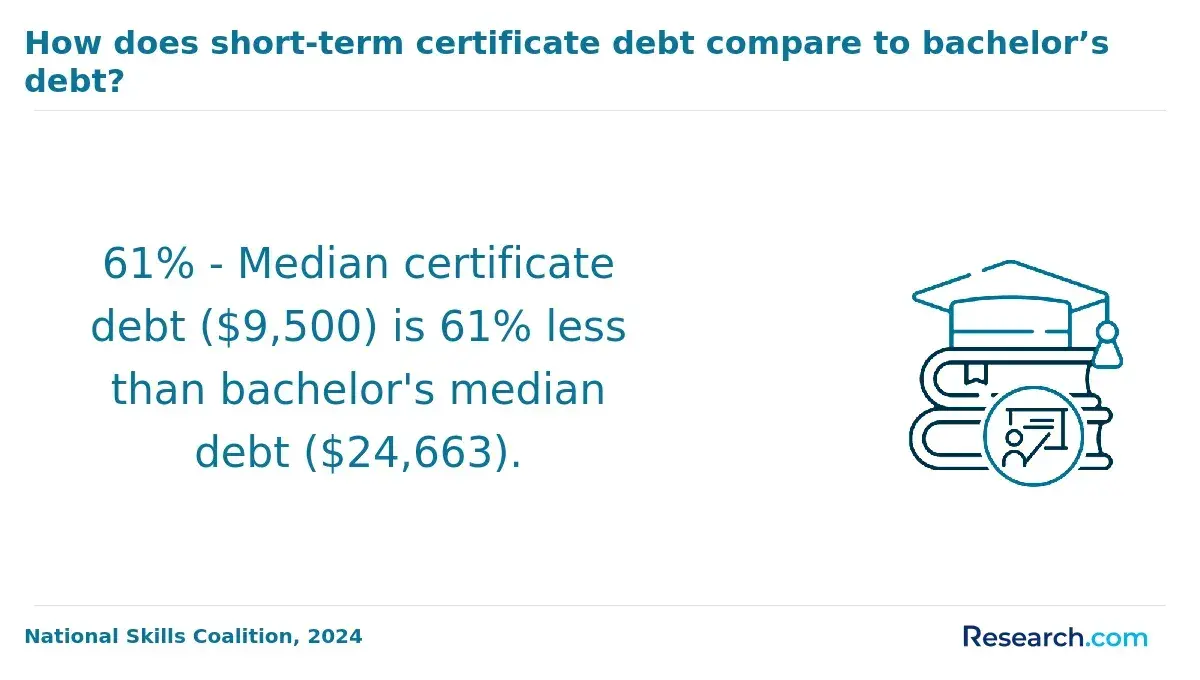
- Certificate: often a few months to one year, with cost driven by credit count and whether courses can later transfer into a degree.
- Associate degree: commonly about two years full time, or longer part time, with community colleges often offering lower per-credit costs.
- Bachelor's degree: commonly about four years full time from the start, but transfer students may finish faster if prior credits apply.
- Master's degree: often one to three years, depending on credit load, capstone or thesis requirements, and whether the student studies while working.
To estimate real cost, calculate the full cost of attendance instead of looking only at tuition. Include fees, books, software, graduation fees, internship travel, and any required campus visits. Then subtract grants, scholarships, employer tuition assistance, military benefits, and transfer-credit savings.
Students should also compare opportunity cost. A slower part-time program may cost less per term and allow you to keep working, while an accelerated program may help you finish sooner but create a heavier workload. The better ROI is not always the cheapest program; it is the program that gets you relevant skills, portfolio evidence, and career mobility at a manageable total cost.
How do I verify accreditation and quality for online communication programs?
Accreditation is one of the most important checks before enrolling. For most communication degrees, the key baseline is institutional accreditation from an agency recognized by the U.S. Department of Education or the Council for Higher Education Accreditation. This affects credit transfer, graduate school eligibility, employer trust, and access to federal financial aid.
Programmatic accreditation is less common and less essential in communication than in fields such as nursing, counseling, or speech-language pathology. However, specialized recognition, strong faculty credentials, industry partnerships, and clear learning outcomes can still signal quality.
Use the following steps to verify quality before you apply or submit a deposit:
- Search the school in the U.S. Department of Education's accreditation database and confirm the institution is currently accredited.
- Check whether the online program is offered by the same accredited institution that appears on the diploma and transcript.
- Review the curriculum for internal communication, strategic communication, organizational communication, research, writing, and analytics coursework.
- Ask for examples of capstone projects, portfolio assignments, internships, or applied client work completed by online students.
- Confirm student support services, including writing help, library access, career coaching, disability accommodations, and technology support.
- Look for transparent tuition, fees, refund policies, transfer-credit rules, and graduation requirements.
Red flags include vague accreditation language, pressure-heavy admissions calls, unclear total cost, unusually broad promises about job placement, and programs that cannot explain how online students build professional portfolios. Rankings can be useful, but they should not replace accreditation checks, curriculum review, and career outcome questions.
What internal communication jobs, salaries, and advancement paths can these degrees lead to?
Online communication degrees can lead to roles in corporate communication, employee communication, HR communication, change communication, public relations, executive communication, and employee experience. Job titles vary widely because some companies place internal communication under communications, public affairs, HR, marketing, or operations.
The table below connects common job titles with responsibilities and salary context. Salary data is best understood through broader BLS categories because "internal communication specialist" is not always tracked as a separate occupation.
| Role | Typical responsibilities | Relevant salary context | Common next step |
| Internal communication coordinator | Draft newsletters, maintain calendars, update intranet content, support events, track metrics | Often aligned with entry-level communication or PR support roles | Internal communication specialist |
| Internal communication specialist | Write employee messages, support campaigns, advise departments, manage channels, measure engagement | BLS reported a May 2024 median annual wage of $69,780 for public relations specialists | Senior specialist or communication manager |
| Change communication specialist | Build communication plans for technology, policy, culture, restructuring, or process changes | Pay varies by industry, project complexity, and whether the role sits in communications, HR, or consulting | Change communication manager or transformation communications lead |
| Executive communication specialist | Prepare leader messages, town hall content, speeches, talking points, and employee Q&A materials | Often higher when the role supports senior executives or regulated industries | Executive communications manager |
| Internal communication manager | Lead strategy, manage staff or vendors, advise leaders, oversee channels, and report outcomes | BLS reported a May 2024 median annual wage of $138,520 for public relations managers | Director of communications or employee experience leader |
Advancement usually depends on moving from production to strategy. Early roles focus on writing, editing, scheduling, and channel support. Mid-level roles add campaign ownership, measurement, stakeholder advising, and change communication. Senior roles require leadership counsel, budget responsibility, team management, crisis judgment, and the ability to connect communication work to business outcomes.
To improve employability while enrolled, build a portfolio that shows range. Strong samples might include an employee announcement, change communication plan, executive email, intranet story, crisis FAQ, survey summary, and dashboard-style measurement report. If possible, complete internships or applied projects in industries where internal communication is central, such as healthcare, technology, finance, higher education, government, manufacturing, and large nonprofits.
What is the job outlook and industry demand for internal communication professionals?
Demand for internal communication professionals is supported by several workplace trends: hybrid work, organizational change, employee engagement pressure, AI adoption, cybersecurity risk, leadership transparency expectations, and the need for consistent communication across distributed teams. These trends do not guarantee jobs, but they do increase the value of people who can communicate clearly inside complex organizations.
The BLS projects employment for public relations specialists to grow 5% from 2024 to 2034. Internal communication jobs are often classified within or adjacent to public relations, so this projection is a useful labor-market proxy, though it does not isolate employee communication roles specifically.
Current employer expectations are also shifting. Internal communicators are increasingly expected to understand data, not just writing. They may be asked to report email open patterns, intranet use, employee sentiment, survey themes, campaign reach, and message effectiveness. This makes analytics coursework and practical measurement projects more valuable than they were for earlier generations of communication students.
AI is another major factor. It can speed up drafting and content repurposing, but it also raises risks around accuracy, confidentiality, bias, and tone. Students who learn to use AI responsibly while maintaining human judgment, ethical review, and employee trust may be better positioned than students who avoid the technology entirely or rely on it without verification.
If you want the smartest path into the field, take these steps while comparing and completing programs:
- Choose a program with strategic communication, organizational communication, writing, research, and analytics rather than a curriculum focused only on general media theory.
- Complete at least one internship, employer-based project, or volunteer communication role before graduation.
- Build a portfolio around internal communication deliverables, not just academic essays.
- Learn common workplace tools such as intranet platforms, email campaign systems, presentation software, collaboration tools, survey tools, and basic analytics dashboards.
- Track job postings in your target city and industry to see which degree level, tools, and writing samples employers request most often.
The degree is most likely to be worth it when it helps you gain practical experience, lower your total education cost, and produce evidence of job-ready communication skills. It may not be worth it if the program is expensive, weakly supported, poorly aligned with internal communication, or unlikely to improve your employment options beyond what a targeted certificate, work experience, or portfolio could accomplish.
Other Things You Should Know About Communication
Many 2027 online communication programs require 120 total credit hours, and the internship requirement is often 120 to 240 hours in a workplace communication setting. Some schools count a practicum instead, but the final requirement is usually documented experience in employee communication, change messaging, or corporate communications.
Yes. HR professionals often bring employee policy and culture knowledge, marketers bring audience segmentation and campaign skills, and journalists bring interviewing and writing strengths. The main gap to close is usually organizational strategy, leadership advising, and employee-focused measurement.
A strong portfolio should include practical samples such as employee announcements, leader messages, change communication plans, newsletter content, intranet articles, campaign calendars, FAQs, and measurement summaries. Remove confidential information and rewrite sensitive details before sharing samples publicly.
Entry-level roles are often writing- and channel-focused, while senior roles become more strategic. Over time, professionals are expected to advise leaders, plan campaigns, manage change, interpret employee feedback, and connect communication decisions to organizational goals.
References
- Advancing Your Career in Internal Communications https://www.ioic.org.uk/resource/advancing-your-career-in-internal-communications.html
- Internal Communications in Education - Axios HQ https://www.axioshq.com/industry/education
- Top 5 No-Cost Internal Comms Training Programs for HR Teams in 2025 | Thesmia.ai https://www.thesmia.ai/blog/top-5-no-cost-internal-comms-training-programs-for-hr-teams-in-2025
- Internal Communications Job Market Analysis: H1 2025 https://www.strictlyinternal.com/p/internal-communications-job-market-analysis-h1-2025
- Inside Internal Communications: Careers, Skills, and Strategic Value https://politemail.com/internal-communication-roles-and-responsibilities/
- Internal Communication: 2026 Complete Guide for IC Professionals https://www.contactmonkey.com/blog/internal-communication
- The Crushing Wave of Internal Communications https://shep.ca/2021/01/24/the-crushing-wave-of-internal-communications/
- Careers in Communication: What Can You Do With a Degree in Communications? https://www.mastersincommunications.com/features/careers-in-communication
- What Kind of Jobs Can You Get With a Communications Degree? https://www.belmont.edu/stories/articles/2025/what-kind-of-jobs-can-you-get-with-a-communications-degree.html
- Certificate in Internal Communication Training Course https://rcademy.com/course/certificate-in-internal-communication-training-course/