2027 From Municipal Administration to Public Service Management: When Does a BS in Business Administration Make Sense?
Audited and Verified:
Our Editorial and Data Verification Process
Research.com uses government datasets, official education statistics and primary institutional information to support its career and degree guides. Our review process checks factual accuracy, occupational definitions, source dates and the requirements associated with the credentials discussed.
How This Article Was Fact-Checked
Our editorial team verifies salary estimates, employment projections, education requirements and program information against original data providers and official organizations. Salary figures are checked against the relevant occupational definitions and reporting periods. Information about licensure, accreditation and required in-person training is reviewed separately.
Fact-checked and verified on:

Co-Founder and Chief Data Scientist
If you work in a city department, you may already coordinate services, track spending, or support procurement without having a business degree. A BS in Business Administration could help you take on broader responsibilities - but municipal hiring rules and public accountability make the choice less straightforward than a private-sector career move.
This guide is for public employees and career changers weighing that degree against public administration study, specialized training, and experience. It explains which roles the degree can support, where its limits lie, and how to judge whether the time and cost fit your next move.
Key Things You Should Know
- A BS in Business Administration makes the most sense when a target municipal role calls for a bachelor's degree and substantial budgeting, operations, personnel, or procurement skills; check the actual job posting before enrolling.
- Choose public administration coursework or targeted training instead when your main gap is government policy, municipal law, or a specific procedure - not broad business knowledge.
- The U.S. median annual wage for budget analysts was $91,640 in May 2025, but that occupation-wide figure is not a starting salary or a predicted return on a business degree.
What Is a BS in Business Administration for Public Service Management?
A BS in Business Administration is an undergraduate degree built around organizational decisions: accounting, finance, management, operations, and related subjects. Applied to public service, those skills can help an employee interpret a department budget, improve a service process, or supervise administrative work. The degree is not a municipal-management credential, and it does not replace knowledge of public law, elected governance, or civil-service rules.
Program names matter. A BS in Business Administration, a BBA, and a BS in Management may have different required courses; a public administration elective does not create a formal concentration. Compare the required curriculum with the duties of the job you want. For a broader picture of undergraduate study and career expectations, use a business administration education length and salary outlook guide as context, then verify each program's current requirements directly.
When Does a Business Administration Degree Make Sense for Municipal Administration?
The strongest case is a specific next role - not a general hope that a degree will lead to promotion. Start with your experience and several relevant postings from your city, county, or neighboring governments. Separate the bachelor's requirement from the experience, civil-service, and technical requirements you would still need to meet.
The comparison below shows how the best educational choice changes with the work you want to do.
| Goal | Likely better fit | Reason to reconsider |
| Move from departmental support into broader operations or administrative leadership | BS in Business Administration plus documented municipal responsibility | A degree will not substitute for supervisory or public-sector experience required by the employer. |
| Work primarily on policy, intergovernmental affairs, or public governance | Public administration or a relevant policy pathway | Business courses may offer useful budget skills but less direct coverage of government institutions. |
| Qualify for a defined procurement or budget task in a current job | Employer training or focused coursework first | A full bachelor's may be justified later if it removes an advancement barrier. |
| Keep both municipal purchasing and private-sector supply chain options open | Compare business and specialized supply chain curricula | Public purchasing rules still require separate training and experience. |
For someone considering that last option, supply chain college costs versus potential career outcomes can inform the education-cost comparison. It cannot establish what a municipal employer will pay or accept. Before committing, ask a supervisor or HR office which qualifications govern the particular vacancy and whether education assistance is available.
What Careers Can You Pursue in Public Service With a Business Administration Degree?
Municipal employers hire for duties and classification requirements, not for a degree title alone. A business graduate with relevant experience might pursue administrative, purchasing, budget-support, or personnel roles; a management position generally requires a stronger record of responsibility.
These examples distinguish plausible entry routes from roles that usually demand additional experience.
| Role or pathway | Typical work | Evidence beyond the degree |
| Administrative or operations coordinator | Track service requests, schedules, contracts, or departmental measures | Process documentation, spreadsheets, and stakeholder communication |
| Purchasing or procurement staff | Support solicitations, vendor records, and purchase orders | Knowledge of applicable purchasing rules and documented procurement work |
| Budget or financial support staff | Prepare reports and monitor spending | Accounting skills, careful data work, and familiarity with government budgets |
| Department administrator or administrative services manager | Oversee services, staff, resources, or facilities | Substantial relevant experience and any required supervisory qualifications |
Public HR is another possible direction, but employee relations, labor agreements, and merit-system rules call for specialized preparation. Compare actual coursework and career requirements using a human resources program selection guide if that is your target function. For any pathway, save redacted examples of reports or process improvements only when your employer permits their use.
There is no standard degree called a "public administration business degree." A business program may offer public-sector electives, while a public administration program may teach budgeting and management from a government perspective. Read the catalog rather than relying on a program label.
For municipal work, useful business courses include accounting for reading financial reports, operations for mapping service workflows, statistics for interpreting performance measures, and management for coordinating teams. Look for coursework that also addresses public budgeting, procurement, ethics, or governance if those subjects are central to your goal. Private-sector methods can improve efficiency, but a city must also follow legal requirements and serve residents fairly - not simply maximize revenue.
An applied project can make the learning visible: for example, a proposed way to track permit-processing delays using approved, nonpersonal data. A classroom proposal is not an implemented city policy. If project coordination is your intended specialty and you have prior college work, compare project management bachelor's credit transfer rules alongside business programs; accepted credits do not necessarily satisfy either program's major requirements.
They can be, provided the institution meets your employer's education requirements and the schedule is workable. Online delivery does not mean self-paced study: a program may require live classes, group meetings, proctored exams, an internship, or a fixed capstone sequence. Those obligations matter for employees covering council meetings, emergency operations, or rotating shifts.
Request a recent course schedule and sample syllabi before enrolling. Check whether required classes are offered when you need them, whether workplace projects need advance approval, and whether part-time enrollment affects aid or completion time. A guide to flexible online study for business administration career growth can help frame those questions, but the program's published policies control. Ask your employer separately whether its tuition benefit covers online courses and when reimbursement occurs.
First, verify the institution's accreditation with the accreditor and confirm that it applies to the school awarding the degree. Then check whether the business school or the particular program holds applicable AACSB, ACBSP, or IACBE accreditation. These are different scopes of review; a school's institutional accreditation does not imply business-program accreditation, and business accreditation alone does not establish municipal hiring eligibility or graduate outcomes.
If an accelerated specialized program looks like a faster alternative, apply the same checks rather than judging it by pace. Listings of online colleges with accelerated supply chain bachelor's study are a starting point for comparing options, not proof that your credits will apply or that the shorter schedule fits a government workweek. Confirm the exact degree, accreditation scope, required courses, and your employer's policy with the responsible parties.
Requirements vary by institution and by whether you apply as a first-year, transfer, or returning student. Schools commonly request prior academic records; some business majors have separate admission standards or prerequisite courses. Employment in a municipal office may strengthen an application, but it does not automatically earn credit or waive academic requirements.
If you have previous college study, send official transcripts and request a written evaluation showing which credits satisfy general education, the business core, electives, and any residency requirement. Ask admissions whether mathematics, accounting, or statistics must be completed before entering the major, then ask an academic adviser to confirm the resulting degree plan. Application fees are a smaller cost than lost transfer credit, but application-cost-free online school options may help you assemble a comparison shortlist.
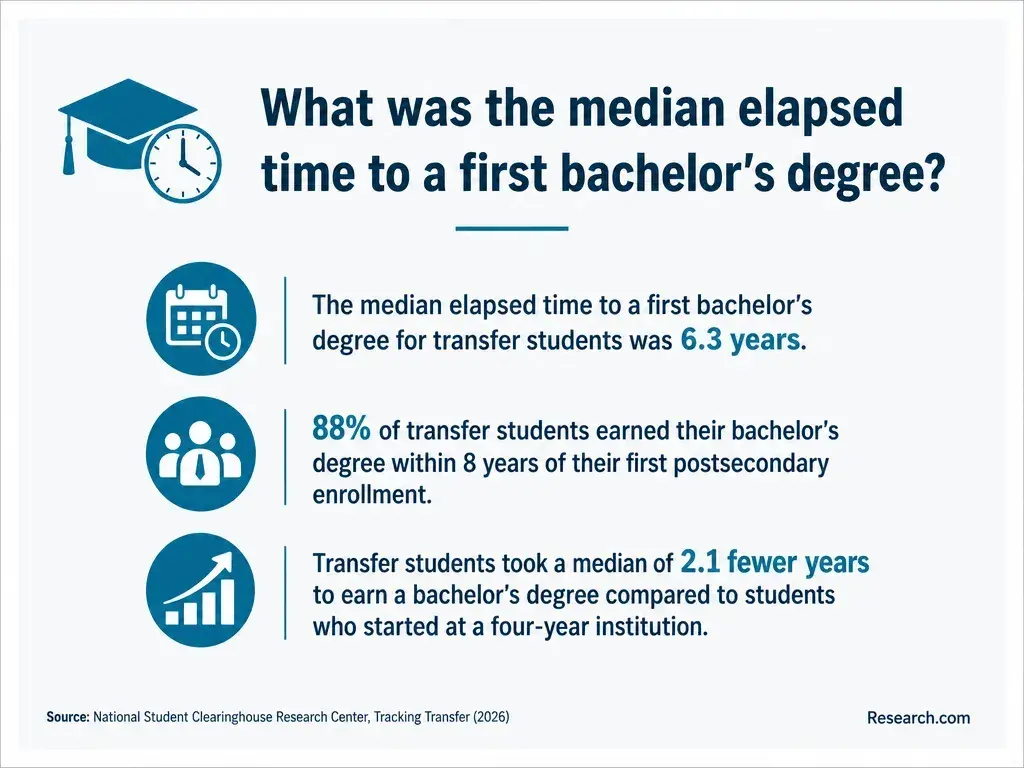
A bachelor's commonly takes about four years of full-time study from the start; a working employee's completion time depends on applicable transfer credits, course availability, and enrollment pace. An accelerated calendar does not remove the work required, while part-time study may better protect employment and household finances.
Compare a written remaining-course plan with a school-specific estimate of tuition, mandatory fees, books, technology, and any travel or proctoring costs. Then account for employer reimbursement timing, aid eligibility, and the cost of reducing work hours. A published price is not your final completion cost until the school evaluates your credits.
If you are weighing a specialized project management degree against business administration, review tuition and aid questions for project management students as part of that separate comparison. Ask both schools for costs based on your remaining requirements, and get your employer's reimbursement terms in writing before relying on them.
There is no reliable single salary for "public management graduates." Pay depends on the occupation, jurisdiction, classification, union agreement where applicable, and experience. The U.S. Bureau of Labor Statistics reports a $91,640 median annual wage for budget analysts in May 2025 and projects 2% employment growth for that occupation from 2025 to 2035. Those figures cover budget analysts across employers; they are neither municipal starting pay nor the expected earnings of someone with a BS in Business Administration.
For a realistic comparison, read posted pay ranges for roles you could qualify for now and after graduation. Check whether the degree changes eligibility for a higher classification, whether experience remains the limiting factor, and how much completing it would cost. Resources on online business administration degrees at lower prices may help identify programs to price, but a lower sticker price alone does not establish a better return.
Do Public Service Managers Need Licenses or Professional Certifications?
There is no universal license to manage a municipal department. Specific positions may require credentials, exams, or training under state law, local policy, or a job classification. Procurement, accounting, engineering, and other specialized functions can have different rules; a business bachelor's does not confer a professional license or automatically qualify someone for a voluntary certification.
Read the target posting and ask HR which requirements are mandatory at hiring, which can be completed after appointment, and which are merely preferred. If a short course or employer-sponsored training closes the actual gap, compare that cost with a full degree. A business degree tuition comparison guide can help frame the larger expense, but the deciding factor is whether the degree addresses a real qualification barrier or skill need.
Other Things You Should Know About Business Administration
Possibly, if the school offers an approved prior-learning assessment. Ask what evidence it accepts, what requirements any awarded credit can satisfy, and what fees apply. Employment alone does not guarantee credit.
Check with your instructor and employer first. Use only information you are authorized to share, and remove personal, confidential, or protected records from anything you submit or display publicly.
It may be if your target role emphasizes public governance, policy, or executive administration and calls for graduate study. Compare the job requirements and curriculum before assuming another degree is necessary.
Describe your actual responsibility and results within disclosure rules: the process you supported, the stakeholders you worked with, and the measures you tracked. Do not claim sole ownership of a team outcome or reveal restricted information.
- Students & Recent Graduates | U.S. Office of Personnel Management https://www.opm.gov/policy-data-oversight/hiring-information/students-recent-graduates/
- A Hire Calling: Modernizing Recruitment and Hiring in Los Angeles | lacity.gov https://controller.lacity.gov/audits/a-hire-calling-modernizing-recruitment-and-hiring-in-los-angeles
- Business Administration vs. Management: What's the Difference? | calmu.edu https://www.calmu.edu/business-administration-vs.-management-whats-the-difference
- Top Jobs in Business Administration & Career Paths | CityU of Seattle https://cityu.edu/what-can-you-do-with-a-business-administration-degree/
- What is a Business Administration Degree? | jefferson.edu https://www.jefferson.edu/news/2025/09/what-is-a-business-administration-degree.html
- BBA vs BSBA: which business degree is right for you? | Strayer University https://www.strayer.edu/buzz/difference-between-bba-and-bsba/
- What is the Difference between Public Policy vs. Public Administration? | CU Denver News https://news.ucdenver.edu/public-policy-vs-public-administration/
- Public Administration Early Start (Linked B.S. or B.A. & M.P.A.) | Old Dominion University https://www.odu.edu/academics/programs/linked/linked-public-administration
- BBA vs. BS in Business Administration | National University https://www.nu.edu/blog/bba-vs-bs-business-administration/
- What is a business administration degree? | Northwest Media Center https://www.nwmissouri.edu/media/news/2025/07/what-is-a-business-administration-degree.htm