2027 Computer Science Degree Programs That Accept Transfer Credits

Co-Founder and Chief Data Scientist
Transferring into a computer science degree can save time and tuition, but only if the new school accepts the right credits in the right way. A course that appears equivalent on a transcript may still be denied because it is too old, lacks a required lab or programming component, falls below a grade threshold, or does not match the receiving program’s major sequence.
The stakes are practical. Accepted credits can shorten the path to graduation; rejected credits can mean retaking classes, delaying upper-division coursework, or paying for requirements you thought were already complete. For a field where computer science graduates earn a median annual salary over $95,000 nationally, transfer planning can affect both education costs and career timing.
This guide explains how accredited computer science programs evaluate transfer credit, how community college pathways and articulation agreements work, what GPA and documentation standards to expect, and how online, graduate, military, professional, and prior-learning credits are commonly reviewed. Use it to compare programs before you enroll, ask sharper questions, and protect as much of your prior learning as possible.
Key Things to Know About Computer Science Degree Programs That Accept Transfer Credits
- Many programs require a minimum GPA-often 2.5 to 3.0-to accept transferred credits, ensuring academic readiness and alignment with program rigor.
- Course recency rules commonly restrict transfer of credits older than five to seven years to maintain relevance with current computer science technologies.
- Transfer credits may be limited for specific concentrations due to curriculum variations, necessitating detailed documentation to validate course content and equivalency.
Which Computer Science Degree Programs That Accept Transfer Credits Are Available at the Undergraduate Level?
At the undergraduate level, transfer-friendly computer science options usually fall into a few clear categories: associate-to-bachelor pathways, bachelor’s completion programs, traditional four-year degrees with published transfer policies, and programs connected by articulation agreements. The right choice depends on how many credits you already have, where they were earned, and whether they fit the computer science major rather than only general education requirements.
Students coming from community colleges, the military, prior university study, or a career-change background should focus less on broad promises such as “transfer friendly” and more on written rules: maximum transferable credits, residency requirements, course equivalencies, grade minimums, and whether major courses can transfer.
- Associate-to-bachelor pathways: These are designed for students who start at a two-year college and finish at a four-year institution. They often allow lower-division general education, calculus, introductory programming, and foundational computing courses to apply toward a bachelor’s degree when the courses match the receiving school’s curriculum.
- Bachelor’s completion programs: These programs serve students who already have substantial college credit. They typically emphasize upper-division computer science coursework while applying eligible prior credits to general education, electives, and some lower-division major requirements.
- Traditional four-year degrees with transfer policies: Many public and private universities accept transfer students into standard computer science majors. These programs may require GPA thresholds commonly between 2.0 and 2.5, and they may limit which programming, math, or systems courses can satisfy major requirements.
- Articulation agreements and statewide frameworks: These arrangements specify how courses transfer between participating institutions. They are especially useful for students planning from the first semester at a community college because they reduce uncertainty about which classes will count.
Before choosing a program, ask for a preliminary credit review and compare it with the degree plan. A generous transfer policy is most valuable when credits apply to required courses, not just free electives. Students planning long-term academic pathways can also review related Research.com guidance on what is the easiest masters degree to get when considering future graduate study after completing a bachelor’s degree.
What Are the Most Common Transfer Credit Policies Among Accredited Computer Science Programs?
Accredited computer science programs commonly use a layered review process. The registrar may determine whether credits are institutionally eligible, while the computer science department decides whether specific courses are equivalent to major requirements. This distinction matters because a course can be accepted by the university but still fail to satisfy a computer science core requirement.
- Maximum transferable credits: Most four-year public universities cap credit transfers between 60 and 90 semester hours. Private institutions often apply stricter limits. These caps are tied to residency expectations and the requirement that students complete a meaningful portion of the degree at the awarding institution.
- Course equivalency review: Schools compare course content, credit hours, prerequisites, learning outcomes, and instructional level. Computer science courses are reviewed closely because a missing topic in programming, discrete math, data structures, or algorithms can affect later coursework.
- Grade thresholds: Many institutions require a C or higher for transfer eligibility. Some computer science departments set higher standards for math, science, programming, or other major courses because these classes serve as prerequisites for advanced study.
- Recency and relevance: Because computing changes quickly, older technical courses may require additional review. A general education course may transfer after many years, while a programming, networking, or systems course may be rejected or treated as elective credit if the material is outdated.
- Institution type differences: Public universities may follow statewide articulation systems, while private colleges often rely on individual course-by-course evaluation. Two-year institutions generally provide the first half of a bachelor’s pathway, but their upper-limit policies differ from four-year degree-completion policies.
- Documentation requirements: Official transcripts are the baseline. For computer science major credit, students may also need syllabi, catalog descriptions, textbook lists, project descriptions, lab details, or evidence of programming language coverage.
Students comparing online and campus-based options should request transfer evaluations before committing financially. If affordability is part of the decision, compare tuition policies alongside the cost of online computer science degree programs, since transfer acceptance can change the real price of completion. Students with many prior credits may also consider an accelerated bachelor's degree online accredited if the program applies transfer credit efficiently.
How Many Transfer Credits Can Students Typically Apply Toward a Computer Science Degree?
Students can often apply a meaningful portion of prior coursework toward a computer science degree, but the total number accepted is not the same as the number that counts toward the major. In many cases, general education and elective credits transfer more easily than core computer science requirements.
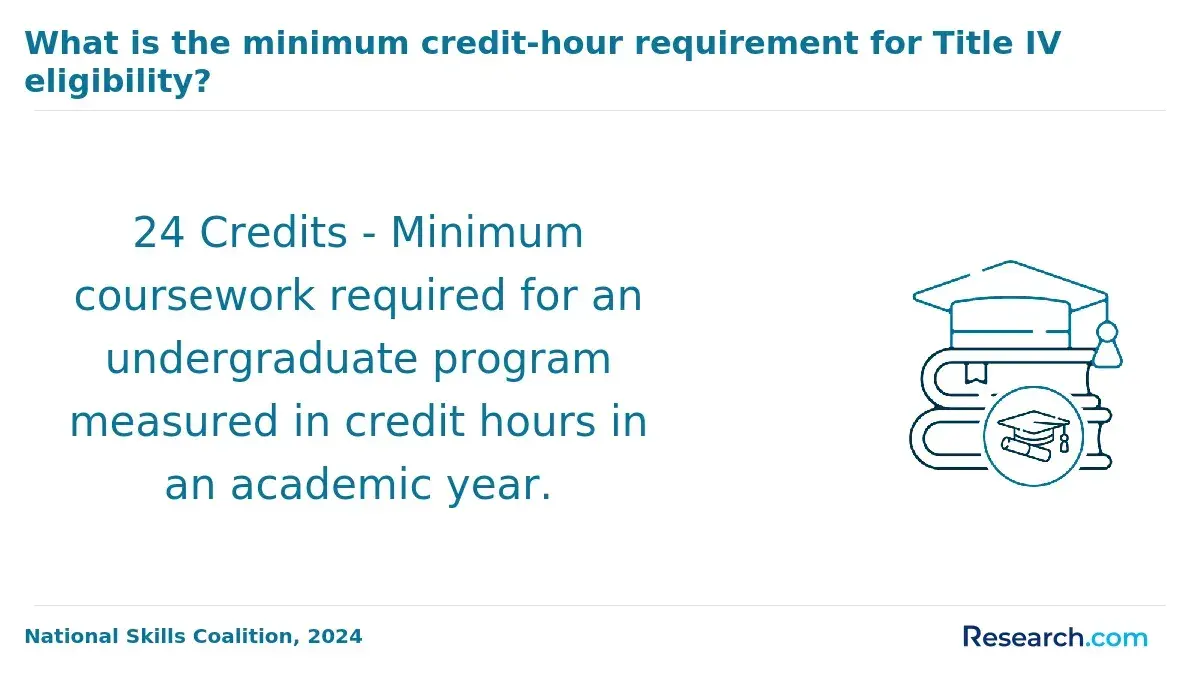
- Total transfer limits: Most accredited programs accept between 30 and 90 credits in transfer, typically up to two-thirds of the 120-credit bachelor’s degree requirement. The remaining coursework is usually tied to residency rules, upper-division requirements, and institutional standards.
- Major-specific credits: Fewer credits usually apply directly to the computer science major. Schools may accept introductory programming, discrete structures, data structures, calculus, or algorithms only when the previous course closely matches their own sequence.
- Institutional quality: Credits from regionally accredited schools are generally more likely to be reviewed favorably. Evaluators also consider grades, course level, academic rigor, and whether the coursework is recent enough to reflect current expectations.
- Strategic planning: Students can save time by completing widely transferable courses first, such as general education requirements, math prerequisites, and introductory computing courses listed in an articulation agreement.
- Policy variability: Two students with the same number of prior credits can receive different evaluations depending on the receiving school’s curriculum, documentation requirements, GPA rules, and concentration requirements.
A useful way to interpret transfer limits is to separate credits into three categories: credits accepted by the university, credits applied to the degree, and credits applied to the computer science major. The third category is usually the most restrictive and the most important for graduation planning.
One computer science graduate described the process as “challenging but worthwhile.” He said it took several months to gather syllabi and transcripts, and that “waiting on approvals felt stressful because I wasn't sure which credits would count.” His experience reflects a common lesson: start the evaluation process early, keep copies of course materials, and maintain regular contact with both admissions and departmental advisors.
Which Computer Science Programs Accept Credits From Community Colleges and Two-Year Institutions?
Many four-year computer science programs accept credits from community colleges and two-year institutions, especially when the schools participate in articulation agreements or statewide transfer systems. These pathways are often the most predictable route for students who want to complete lower-division coursework affordably before transferring into a bachelor’s program.
- Articulation agreements: These agreements identify which community college courses are equivalent to university requirements. For computer science students, they may cover programming fundamentals, discrete math, calculus, general education, and introductory computing courses.
- Transfer associate degrees: Associate of Science and transfer associate degrees are commonly built to match the first half of a bachelor’s curriculum. They can simplify transfer when the student remains within the same state system or follows a documented pathway.
- State transfer guarantee programs: Several states support structured transfer among public institutions:
- California's Associate Degree for Transfer (ADT) offers guaranteed admission and credit recognition at CSU campuses for eligible community college students.
- Florida's articulation system supports credit mobility within its state colleges and universities, including computer science coursework.
- New York's transfer and articulation initiatives promote consistency in accepting community college credits for SUNY bachelor's degrees.
- Institutional variability: Even with an agreement, computer science departments may require minimum grades, current coursework, or specific course sequences. Upper-level classes and specialized electives are less likely to transfer from two-year institutions.
- Advising and research: Students should meet with advisors at both institutions before registering for community college courses. The goal is to avoid classes that transfer only as electives or fail to satisfy prerequisites for the computer science major.
The strongest community college transfer plan starts with the destination program, not just the sending school. Identify the bachelor’s degree requirements first, then choose two-year courses that map directly to that plan. Students comparing transfer systems in other disciplines can also review Research.com’s coverage of a bachelor's in criminal justice to see how affordability and transfer planning differ by field.
What Is the Minimum GPA Requirement for Computer Science Transfer Credit Acceptance?
Accredited computer science programs typically set a minimum cumulative GPA around 2.5 to 3.0 for transfer applicants to qualify for credit evaluation. However, meeting the admission GPA does not automatically mean every course will transfer into the computer science major.
Course-level standards can be stricter. A school may accept a student for admission while requiring a B grade or better in programming, calculus, science, or other prerequisite courses before those credits satisfy major requirements. Some institutions also use sliding-scale policies, where students with stronger GPAs may receive more favorable credit consideration.
- Admission threshold: Transfer applicants usually need at least a 2.5 to 3.0 cumulative GPA for consideration, although exact rules vary by institution and program.
- Course-level standards: Individual courses may need higher grades, commonly B or above, to apply to core computer science requirements.
- Sliding scale credits: Some programs allow students with higher GPAs to transfer more applicable coursework, while students near the minimum may face closer review.
- Official policies: Students should rely on the catalog, registrar, transfer guide, or written departmental policy rather than informal admissions statements.
- Remediation opportunities: If a course does not meet the grade requirement, students may be able to retake the equivalent course at the new institution and then continue in the major sequence.
A computer science graduate described the process this way: “It wasn't just about having a good GPA, but also ensuring each course aligned with the curriculum-sometimes needing extra approval.” Her experience shows why students should prepare for both academic and administrative review. Strong grades help, but clear documentation and course alignment often determine whether credit actually applies to the degree.
How Do Computer Science Programs Evaluate Non-Traditional or Professional Transfer Credits?
Computer science programs evaluate non-traditional and professional credits by asking whether the learning can be documented, assessed at a college level, and matched to a specific degree requirement. These credits may come from military training, employer-sponsored programs, professional certifications, standardized exams, or structured prior learning assessment.
Many institutions use American Council on Education (ACE) Credit recommendations to evaluate military and workforce training. CLEP exams can demonstrate college-level knowledge in approved subjects. Portfolio reviews allow students to submit evidence of learning when no standard transcript exists.
- ACE Credit Recommendations: These help colleges translate eligible military and civilian training into academic credit when the receiving institution recognizes the recommendation.
- CLEP Exams: These standardized exams can validate knowledge in approved areas, though they may be more useful for general education than advanced computer science requirements.
- Portfolio reviews: Students may submit work samples, certifications, employer evaluations, project documentation, syllabi, or training records for faculty review.
- Recognized experiences: Programs may consider military education, corporate technical training, programming certifications, professional development, and documented skill-based learning.
- Documentation: The stronger the evidence, the better the chance of review. Vague job descriptions rarely substitute for course-level learning outcomes or assessed competencies.
- National consortia: Membership in recognized credit recommendation networks, such as the National College Credit Recommendation Service, can improve the likelihood that learning is considered.
Recent data reveal that over 60% of accredited computer science programs have broadened acceptance of non-traditional credits. Even so, acceptance is not guaranteed. Students should ask whether these credits count toward general education, electives, technical electives, or required computer science courses, because the category determines how much progress the credit actually provides.
Which Online Computer Science Degree Programs Offer the Most Flexible Transfer Credit Policies?
Online computer science programs at regionally accredited institutions often offer flexible transfer policies because they serve many adult learners, community college graduates, military students, and career changers. The most flexible programs typically combine high transfer caps, clear course equivalency tools, low residency requirements, and formal processes for evaluating professional or military learning.
Flexibility should not be confused with weak academic standards. A strong online program may accept many credits overall while still protecting the integrity of the computer science major by requiring key upper-division courses to be completed through the institution.
- Residency limits: Programs that limit residency credits to 30 or less allow students to bring in more prior coursework while still completing required institutional credits.
- Acceptance range: Many online computer science programs review general education credits, technical certificates, prior college coursework, military training, and professional learning if the credits meet relevance and grade standards.
- Transfer criteria: Institutions commonly require minimum grades of C or better, enforce course currency limits, and restrict major-specific transfer credits unless the department approves equivalency.
- Program accreditation: Regional accreditation is important for transferability and recognition. Programmatic accreditation such as ABET, where applicable, may also matter for students seeking particular academic or career pathways.
- Market drivers: Online programs compete for students who already have college credit, so many publish transfer guides, credit evaluation tools, and dedicated transfer advising.
- Potential trade-offs: A highly flexible policy can reduce time to completion, but students should still evaluate academic rigor, faculty support, career services, employer recognition, and how many credits apply to the major rather than electives.
- Advisory considerations: Before enrolling, compare residency rules, major-credit limits, concentration restrictions, and documentation deadlines. Ask for the credit evaluation in writing whenever possible.
The best online option is usually the one that accepts the most useful credits, not simply the most credits. A program that transfers many electives but requires students to restart the computer science sequence may be less efficient than a program with a smaller total transfer allowance but stronger major alignment.
What Role Does Regional Versus National Accreditation Play in Computer Science Transfer Credit Decisions?
Accreditation can strongly affect whether computer science credits transfer. Regional accreditation is generally more widely accepted in academic transfer decisions, especially among colleges and universities that award bachelor’s and graduate degrees. National accreditation is legitimate in some contexts, but credits from nationally accredited institutions are often reviewed more cautiously by regionally accredited schools.
The U.S. Department of Education and the Council for Higher Education Accreditation (CHEA) define regional accreditation as a quality assurance process conducted by agencies overseeing specific geographic areas. In practice, regionally accredited institutions tend to have more established reciprocal transfer relationships.
- Reciprocity: Regionally accredited computer science programs are more likely to consider credits from other regionally accredited institutions, provided the courses match in level, content, credit hours, and rigor.
- National accreditation: Nationally accredited schools often focus on vocational, technical, or career-oriented education. Their credits may not transfer easily into regionally accredited computer science programs, especially for core academic requirements.
- Transfer risks: Students who begin at a nationally accredited institution and later seek a regionally accredited computer science degree may face denied credits, elective-only credit, or repeated coursework. This can add time and cost.
- Policy verification: Accreditation is only the starting point. The receiving school will still apply its own GPA thresholds, course recency rules, documentation standards, and departmental equivalency reviews.
Students should verify transfer acceptance before enrolling at the sending institution, not after completing credits. If a future bachelor’s or graduate degree is possible, prioritize credits that are most likely to be portable. Working adults and career changers comparing flexible degree structures in other fields can also review Research.com’s guide to online MFT programs for examples of how program format and transfer rules may affect completion planning.
How Do Articulation Agreements Facilitate Transfer Credit Acceptance in Computer Science Programs?
Articulation agreements make transfer planning more predictable by listing how courses or degree pathways move from one institution to another. In computer science, these agreements can help students choose the right programming, math, science, and general education courses before transferring.
They are especially valuable because computer science curricula are sequential. If a transferred programming course does not satisfy the receiving school’s prerequisite, a student may be delayed even if the credit is accepted as an elective.
- Common structures: Articulation agreements may be bilateral agreements between two schools, statewide transfer systems across public institutions, or broader frameworks intended to improve credit mobility.
- Course transfer clarity: Students can see which courses satisfy specific requirements and which transfer only as electives. This helps prevent duplicate coursework.
- Researching agreements: Prospective transfer students should check the websites of both the sending and receiving institutions and confirm details with academic advisors.
- Reading the agreement: Agreements can expire or change. Students should check the effective dates, catalog year, GPA requirements, course numbers, credit limits, and whether a concentration has additional restrictions.
- Advising collaboration: Advisors at both schools can help students build a term-by-term plan that preserves transfer eligibility and keeps prerequisites in order.
Students returning after a break, veterans, and career changers should treat an articulation agreement as a planning tool, not a guarantee for every circumstance. Grades, course recency, documentation, and admission to the major may still affect the final decision. Students evaluating fast, low-cost graduate pathways in other subjects can compare how prior coursework is considered in Research.com’s guide to the quickest cheapest masters degree.
What Prior Learning Assessment Options Are Available for Prospective Computer Science Transfer Students?
Prior learning assessment (PLA) allows students to seek academic credit for college-level learning gained outside a traditional classroom. For computer science students, PLA may apply to workplace training, military education, certifications, independent study, or demonstrable technical skills.
PLA is different from standard transfer credit. Transfer credit comes from prior coursework at another institution. PLA requires the receiving school to evaluate evidence that the student has already mastered specific learning outcomes.
- CLEP and DSST exams: These standardized exams can award credit for approved subjects. They are often more useful for general education or broad knowledge areas than for advanced computer science courses.
- Institutional challenge exams: Some colleges allow students to test out of specific courses by demonstrating competency directly through an exam or assessment designed by the institution.
- Portfolio assessments: Students compile evidence such as code samples, project documentation, certifications, job training records, supervisor evaluations, and reflective explanations of learning.
- ACE-evaluated training: Military and workplace training reviewed by the American Council on Education may be considered for credit when the institution accepts those recommendations.
PLA credits may appear differently on a transcript, such as credit-by-examination or prior learning credit. They may also be limited by residency rules, major-credit rules, or maximum nontraditional credit caps.
Research from the Council for Adult and Experiential Learning highlights PLA's potential to cut both time and cost for degree completion, especially benefiting veterans, working adults, and career changers. Before relying on PLA, students should ask the registrar and the computer science department which PLA methods are accepted, how credits are recorded, whether they satisfy major requirements, and what fees or deadlines apply.
Which Computer Science Graduate Programs Accept Undergraduate Transfer Credits or Prior Graduate Coursework?
Graduate computer science programs are usually more restrictive with transfer credit than undergraduate programs. Some master’s programs, bridge pathways, and post-baccalaureate certificates accept prior graduate coursework, but research-intensive master’s and doctoral programs often require more coursework in residence.
Undergraduate credits generally do not transfer into a graduate degree unless the program has a formal bridge, accelerated, or degree-completion structure that allows specific undergraduate work to satisfy prerequisites or preparatory requirements. Prior graduate coursework is more likely to be considered if it is recent, relevant, and earned from an appropriately accredited institution.
- Academic level equivalency: Credits must match graduate-level rigor. Undergraduate coursework may help satisfy prerequisites but is less likely to replace graduate degree credits.
- Course recency: Institutions commonly require credits to be earned within a five-to-seven year timeframe so the student’s knowledge remains current.
- Accreditation: Coursework from regionally accredited schools or recognized programs is usually more likely to receive review.
- Course relevance: Foundational graduate courses that align with the new curriculum may transfer more easily than specialized electives, seminars, or research credits.
Professional master’s programs, MBA hybrids with a computer science focus, and programs designed for career changers may offer more flexibility. Doctoral programs and thesis-focused degrees are often less flexible because research advising, residency, and program-specific methods are central to the credential.
Prospective graduate students should request a formal graduate credit evaluation during admission. They should also confirm GPA minimums, maximum transferable credits, concentration restrictions, documentation requirements, and whether transferred credits reduce tuition, course load, or only prerequisite obligations.
What Graduates Say About Computer Science Degree Programs That Accept Transfer Credits
- : "When I started my online computer science degree, I was thrilled to learn that they accepted transfer credits with a fairly flexible GPA threshold-anything above 2.5 counted. That really motivated me throughout my previous courses, knowing my earlier efforts wouldn't go to waste. However, I did discover the importance of submitting proper documentation early on-without the right paperwork, they wouldn't even review my credits! Apollo"
- : "Reflecting on my journey, the course recency rule caught me off guard-it meant some of my older credits didn't transfer because they were more than five years old. It felt disappointing at the time, but I appreciate how it ensures that the knowledge applied is current and relevant. Also, knowing there were concentration-specific restrictions helped me tailor my electives smartly to maximize the credits that actually counted toward my degree. Aldo"
- : "From a professional standpoint, understanding the nuances around documentation requirements was key to streamlining my transfer process. Many programs are strict about official transcripts and course descriptions-something I initially underestimated. Additionally, recognizing that GPA thresholds vary by institution made me focus on keeping my grades consistent across previous coursework to avoid losing valuable credits. Micah"
Other Things You Should Know About Computer Science Degrees
Prerequisites typically include completing coursework at an accredited institution and maintaining a minimum GPA, often around 2.0 to 3.0, for transfer eligibility. Some programs may require prior completion of introductory computer science or mathematics courses.
Students usually need to provide official transcripts from their previous institutions to verify courses and grades. Additionally, detailed course descriptions or syllabi are often required to assess equivalency with Computer Science curriculum components. Some programs may request evaluation forms or learning outcomes mapping to confirm credit applicability.
International transfer credits often undergo a more rigorous evaluation process, including credential verification by recognized agencies. Programs assess course content for alignment with their Computer Science requirements and may require translations or course-by-course evaluations. Because of variations in curricula and accreditation, some credits may be accepted as elective rather than core requirements.
Most Computer Science programs in 2027 allow up to 60 transfer credits, though limits can vary. Check with individual institutions, as some may have specific restrictions on the type or age of credits accepted for transfer.
References
- A smoother transfer path for computer science https://www.ccdaily.com/2017/10/smoother-transfer-path-computer-science/
- Computer Science Transfer Pathway https://www.anokaramsey.edu/academics/degrees-diplomas-certificates/associate-degrees/associate-of-science-degrees/computer-science-transfer-pathway-degree/
- Computer science | UC Admissions https://admission.universityofcalifornia.edu/admission-requirements/transfer-requirements/uc-transfer-programs/transfer-pathways/computer-science.html
- Online Bachelor’s Degree Computer Science https://www.umgc.edu/online-degrees/bachelors/computer-science
- Transfer College Credit Limits https://www.ivyscholars.com/transfer-college-credit-limits/
- 4 Ways Transfer Students Can Maximize College Credits for Prior Experience https://www.umassglobal.edu/blog-news/4-ways-transfer-students-can-maximize-college-credits-prior-experience
- Computer Science Transfer Pathway - Saint Paul College https://www.saintpaul.edu/programs/computer-science-transfer-pathway/
- What Is an Articulation Agreement? Transfer Guide 2026 https://www.edvisorly.com/student-guides/what-is-an-articulation-agreement