2027 Online Communication Degrees That Help Build Career-Ready Communication Skills

Co-Founder and Chief Data Scientist
Choosing an online communication degree is really a career-fit decision: you are weighing cost, flexibility, skills, and job outcomes. The field remains relevant because employers still need people who can explain ideas clearly across digital, social, internal, and public channels. The U.S. Bureau of Labor Statistics projects about 109,500 openings each year in media and communication occupations from 2023 to 2033.
This guide helps prospective students, career changers, and working adults compare degree levels, accreditation, costs, courses, and career paths before enrolling.
Key Things You Should Know
- An online communication degree can support careers in public relations, content strategy, corporate communication, digital media, marketing communication, and related roles, but salary outcomes vary by role, location, experience, and portfolio quality.
- Choose an institutionally accredited college, then evaluate curriculum, faculty, student support, internship access, transfer credit policy, and career outcomes.
- BLS May 2024 wage data places several communication-adjacent roles in the middle-to-upper salary range, including public relations specialists at a median of $69,780 and technical writers at $91,670.
What is an online communication degree and how does it help build career-ready skills?
An online communication degree is a college program that teaches students how people create, interpret, manage, and distribute messages across professional settings. Instead of focusing only on speaking or writing, modern communication programs usually combine audience analysis, media literacy, persuasion, research methods, digital platforms, organizational communication, ethics, and applied projects.
The "online" format means most or all coursework is delivered through a learning platform. Students may watch lectures, join live discussions, complete writing assignments, record presentations, analyze campaigns, collaborate on group projects, and build a portfolio without relocating. Some programs are fully asynchronous, while others require scheduled virtual meetings.
Career-ready communication skills are practical and transferable. A strong program should help you build evidence that you can solve communication problems, not just understand communication theory. The most useful skills usually include the following:
- Strategic writing: creating press releases, internal announcements, web copy, scripts, reports, proposals, and campaign briefs for specific audiences.
- Public speaking and presentation: organizing ideas clearly, supporting claims with evidence, using visuals effectively, and adapting tone for different stakeholders.
- Digital communication: planning content for websites, social media, email, video, podcasts, and collaboration tools while measuring performance.
- Research and analytics: using surveys, interviews, social listening, media metrics, and audience data to guide decisions.
- Interpersonal and organizational communication: improving teamwork, conflict management, leadership communication, and workplace culture.
- Ethics and media judgment: evaluating misinformation, privacy risks, representation, accessibility, and responsible use of AI-generated content.
The degree is often a good fit if you enjoy writing, speaking, planning messages, interviewing people, interpreting audience needs, or translating complex information into plain language. It may be less ideal if you want a career with a strict licensing pathway, such as nursing or clinical speech-language pathology, unless you choose a specialized program that meets that field's requirements.
Are online communication degrees respected by employers and comparable to campus programs?
Online communication degrees can be respected by employers when they come from institutionally accredited colleges and include rigorous coursework, faculty interaction, measurable projects, and career support. Employers usually care less about whether the course was online or on campus and more about whether the degree is legitimate, relevant, and supported by work samples.
The better comparison is not "online versus campus" in general; it is "high-quality program versus weak program." A strong online program should produce the same learning outcomes as its campus version while using digital tools to simulate professional communication environments. That can be an advantage because many communication roles now involve remote meetings, collaborative documents, content management systems, analytics dashboards, and digital campaign tools.
The table below compares the decision factors that matter most when deciding whether an online or campus format is a better match. Use it to identify trade-offs rather than assuming one format is automatically better.
| Factor | Online communication degree | Campus communication degree | Best fit |
| Schedule flexibility | Often stronger for working adults and caregivers | Usually tied to class times and campus availability | Online if you need to keep working while studying |
| Networking | Depends on virtual events, faculty access, alumni groups, and internships | Often easier through campus clubs, local media, and in-person events | Campus if you want frequent face-to-face interaction |
| Skill practice | Strong for digital writing, virtual presentations, collaboration tools, and online campaigns | Strong for live speaking, campus media, debate, events, and in-person production | Either, if the program includes applied projects |
| Employer perception | Generally strongest when the school is accredited and the transcript does not signal a low-quality provider | Generally familiar to local employers if the institution has a strong regional reputation | Choose the program with better outcomes and portfolio opportunities |
| Cost control | May reduce commuting, housing, and relocation costs | May offer campus-based assistantships, labs, or local internship pipelines | Compare total cost, not only tuition |
Red flags include vague accreditation claims, no faculty information, no sample curriculum, aggressive admissions pressure, poor transfer credit transparency, or a program that promises specific jobs or salaries. A respected online degree should make it easy to verify institutional status, course requirements, learning outcomes, and student support.
What types of online communication degrees are available and which level do I need?
Online communication programs are available from associate through doctoral levels, but most career-focused students compare bachelor's and master's options. The right level depends on your current education, target role, budget, and how quickly you need to enter or advance in the labor market.
The table below summarizes common degree levels and the decisions they support. It can help you avoid overpaying for more education than you need or choosing a short credential that does not meet your goal.
| Degree level | Typical student | Common goals | When it makes sense |
| Associate degree in communication | First-time college students or transfer-focused learners | Build general education credits, explore communication, prepare for transfer | You want a lower-cost starting point before a bachelor's degree |
| Bachelor's degree in communication | Students seeking entry-level professional roles | Public relations, social media, content, corporate communication, sales support, nonprofit outreach | You do not yet have a four-year degree and want broad career flexibility |
| Master's degree in communication | Working professionals, career changers, or bachelor's graduates seeking specialization | Leadership communication, strategic communication, health communication, corporate training, digital strategy | You already have a bachelor's degree and need advanced skills or career mobility |
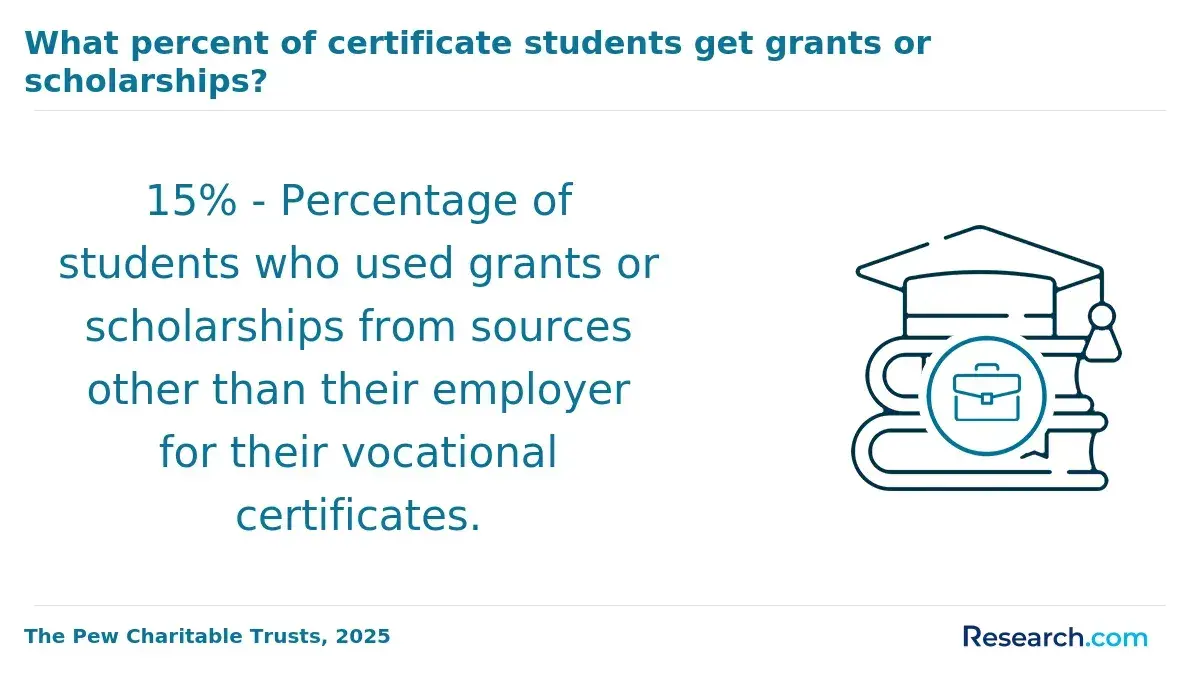
| Graduate certificate | Professionals who need a focused skill upgrade | Crisis communication, digital media, communication leadership, health communication, public relations | You need targeted training but are not ready for a full master's degree |
| Doctoral degree | Advanced professionals interested in research, teaching, or executive expertise | Higher education, research, consulting, senior leadership | You need scholarly or high-level applied expertise, not just entry-level preparation |
A bachelor's degree is usually the most practical baseline for entry-level communication roles. A master's degree may be worthwhile if you want to move into strategy, management, consulting, higher education, or specialized communication fields. However, a master's degree is not always necessary for content, social media, public relations assistant, event communication, or coordinator roles if you already have a strong portfolio.
Some students confuse general communication with clinical communication fields. If your goal is to become a speech-language pathologist, a general communication degree is not enough; you should compare prerequisites and licensure-focused graduate options such as an online speech pathology masters instead.
How do I evaluate accreditation and institutional quality for online communication programs?
Accreditation is the first quality check because it affects credit transfer, graduate school eligibility, employer recognition, and access to federal financial aid. For most students, the key requirement is institutional accreditation from an agency recognized by the U.S. Department of Education or the Council for Higher Education Accreditation.
Communication programs do not always require programmatic accreditation the way nursing, counseling, or education licensure programs often do. However, some related programs may hold specialized recognition, such as ACEJMC accreditation for journalism and mass communication programs or PRSA Certification in Education for Public Relations. These can be helpful quality signals, but they are not universal requirements for communication careers.
Before applying, use this step-by-step process to evaluate whether an online program is credible and worth deeper consideration:
- Verify the college's institutional accreditation through official accreditation databases or the school's accreditation page, and make sure the accreditor's name is specific rather than vague.
- Review the curriculum to confirm that it includes writing, research, ethics, digital media, presentation, and applied communication projects.
- Check whether online students have access to advising, tutoring, library resources, career services, alumni networks, and internship support.
- Look for transparent information about faculty credentials, course delivery format, technology requirements, transfer credit limits, and total program cost.
- Ask admissions staff for recent career outcome information, but treat broad marketing claims cautiously unless they explain methodology and sample size.
Common mistakes include choosing a program because it is fast without checking accreditation, assuming every online credit will transfer, ignoring student support, or enrolling before confirming whether the curriculum aligns with your intended career. The safest approach is to shortlist only accredited schools, then compare fit, cost, flexibility, and outcomes.
What core courses and specializations are offered in online communication degrees?
Most online communication degrees combine theory and applied work. Theory courses teach how messages influence people and organizations, while applied courses help students produce deliverables they can show employers. A strong curriculum should leave you with a portfolio, not just completed exams.
Core courses commonly cover the foundations that employers expect communication graduates to understand. These areas are important because they show whether the program builds broad professional competence or only offers a loose collection of media classes.
- Communication theory: how people create meaning, persuade audiences, form identities, and interact across contexts.
- Writing for media and organizations: press releases, newsletters, web copy, executive messages, speeches, and professional reports.
- Public speaking or presentation: audience analysis, delivery, visual support, and persuasive structure.
- Research methods: surveys, interviews, focus groups, content analysis, and basic data interpretation.
- Digital media and analytics: content planning, platform strategy, engagement metrics, and campaign evaluation.
- Ethics and law: privacy, copyright, defamation, transparency, accessibility, and responsible communication in public settings.
- Capstone or portfolio: a final project, campaign plan, research report, or professional portfolio that demonstrates readiness.
Specializations help you connect the degree to a clearer career path. For example, students interested in content calendars, influencer campaigns, and brand engagement may compare a communication degree with a social media marketing major, especially if they want more coursework in paid media, platform analytics, and marketing strategy.
Common communication specializations include strategic communication, public relations, digital media, organizational communication, health communication, political communication, sports communication, technical communication, journalism, media production, and communication leadership. When choosing a specialization, look at the assignments: a public relations track should include campaigns and media writing, while a technical communication track should include documentation, usability, and plain-language editing.
AI is also changing communication coursework. The best programs do not simply ban or celebrate AI tools; they teach students how to use them responsibly for drafting, research support, audience testing, workflow efficiency, and content variation while still checking accuracy, bias, originality, and brand voice.
What are the typical admission requirements for online communication bachelor's and master's programs?
Admission requirements vary by school, but communication programs are usually less rigid than licensure-based majors. The main differences are whether you are entering as a first-time undergraduate, a transfer student, or a graduate applicant.
The table below summarizes common requirements so you can prepare documents early and identify programs that match your academic background. Always confirm details with each school because GPA thresholds, test policies, and transfer rules differ.
| Program type | Typical requirements | What admissions teams are assessing |
| Online bachelor's, first-year entry | High school diploma or GED, official transcripts, application form, possible essay, and sometimes test scores depending on policy | College readiness, writing ability, academic preparation, and fit for online learning |
| Online bachelor's, transfer entry | College transcripts, minimum transferable credits, minimum GPA, and sometimes a statement of purpose | Prior college performance, completed general education credits, and likelihood of finishing efficiently |
| Online bachelor's completion program | Often requires an associate degree or significant prior credits | Whether the student can enter upper-division communication coursework quickly |
| Online master's in communication | Bachelor's degree, transcripts, minimum GPA, resume, statement of purpose, recommendation letters, and sometimes writing samples | Professional goals, writing strength, readiness for graduate analysis, and leadership potential |
| Graduate certificate | Bachelor's degree or professional experience requirements, depending on the school | Readiness for focused graduate-level coursework |
If your GPA is below the preferred range, you may still have options. Some schools offer conditional admission, allow applicants to explain academic context, or place more weight on professional experience and writing samples. For communication programs, a polished statement of purpose and strong writing sample can matter because they demonstrate the exact skills the degree develops.
To strengthen your application, prepare materials that show direction rather than vague interest. A concise application plan can help you stay organized:
- Identify your target concentration or career goal before writing your statement of purpose.
- Request transcripts early, especially if you have attended multiple colleges.
- Choose recommenders who can discuss writing, leadership, teamwork, or professional communication.
- Revise your writing sample for clarity, structure, evidence, and grammar instead of submitting an old paper unchanged.
- Ask how many credits will transfer before committing to an undergraduate program.
How long do online communication degrees take and what do they cost to complete?
Completion time depends on degree level, transfer credits, course load, academic calendar, and whether the program is accelerated. Cost depends on tuition, fees, textbooks, technology, residency rules, transfer credits, and financial aid. The best comparison is total net cost to graduate, not the advertised per-credit price.
The College Board's 2024 Trends in College Pricing reported average published tuition and fees of $11,610 for in-state students at public four-year colleges and $43,350 at private nonprofit four-year colleges. Those figures are not specific to communication or online programs, but they show why institution type, residency, and aid can create very different price ranges for the same degree level.
The table below summarizes common timelines and cost drivers. Use it as a planning tool, then request a personalized degree audit and financial aid estimate from each school.
| Program type | Common completion time | Main cost drivers | Cost-control opportunity |
| Associate degree | About 2 years full time | Community college tuition, online fees, books, transfer planning | Choose transferable courses that apply to a bachelor's degree |
| Bachelor's degree | About 4 years full time, less with transfer credits | Per-credit tuition, residency rate, required credits, fees, repeated courses | Maximize transfer credits and compare completion programs |
| Master's degree | Often 1 to 2 years full time, longer part time | Graduate tuition, program length, technology fees, capstone requirements | Ask whether employer tuition assistance or graduate certificates can stack into the degree |
| Graduate certificate | Often several months to 1 year | Number of credits, graduate tuition, whether credits transfer to a master's | Use it when you need a focused skill upgrade before committing to a full degree |
Online study may reduce relocation, housing, parking, and commuting costs, but it can add technology fees or require reliable equipment. Students comparing communication with business-oriented paths may also find it useful to research how much is a business degree online because marketing, management, and communication programs often overlap in career outcomes.
Before enrolling, ask these cost questions in writing so you can compare schools fairly:
- What is the total estimated cost to complete the degree after my transfer credits are evaluated?
- Are online students charged in-state, out-of-state, or separate online tuition?
- Which fees are mandatory, and are they charged per course, per credit, or per term?
- Can prior learning, military training, professional certificates, or community college credits reduce the number of required credits?
- What percentage of students in this program complete on time, and what support is available if I need to stop out temporarily?
What careers can I pursue with an online communication degree in the United States?
An online communication degree can lead to roles in corporate communication, public relations, marketing communication, social media, nonprofit outreach, government affairs, content strategy, technical communication, media production, and training. The degree is broad, so career outcomes depend heavily on specialization, internships, work experience, location, and portfolio quality.
The table below connects common career paths with practical responsibilities. This can help you choose electives and projects that match the work you actually want to do.
| Career path | Typical responsibilities | Helpful preparation |
| Public relations specialist | Write press materials, pitch media, manage brand reputation, support crisis communication, track coverage | PR writing, media relations, campaigns, ethics, analytics |
| Corporate communication specialist | Create internal messages, executive updates, employee newsletters, change communication, and stakeholder materials | Organizational communication, business writing, leadership communication |
| Social media or digital content coordinator | Plan posts, manage calendars, analyze engagement, adapt content by platform, coordinate campaigns | Digital media, content strategy, analytics, visual communication |
| Technical writer | Write manuals, help content, process documentation, product guides, and user-focused instructions | Technical communication, editing, usability, subject-matter interviewing |
| Marketing communication specialist | Develop campaign messaging, email content, sales collateral, brand copy, and audience research summaries | Strategic communication, marketing principles, consumer behavior, data interpretation |
| Training and development support | Create learning materials, facilitate workshops, write job aids, support onboarding, evaluate learner feedback | Presentation, instructional communication, organizational communication |
| Nonprofit or community outreach coordinator | Communicate with donors, volunteers, community partners, media, and public agencies | Public communication, grant writing exposure, event communication, intercultural communication |
Communication also pairs well with related fields. For example, students interested in employee engagement, internal messaging, training, and organizational culture may compare communication graduate programs with the best online masters degree in human resource management programs, especially if they want a clearer path into HR leadership.
To make the degree more career-ready, build a portfolio before graduation. Include writing samples, campaign plans, social media calendars, presentation recordings, analytics summaries, research reports, and before-and-after editing examples. Employers often need proof that you can produce clear work under real constraints.
What salary ranges and job outlook can communication graduates expect in today's market?
Communication salaries vary widely because graduates enter many different roles. A degree can help you qualify for professional opportunities, but it does not determine salary by itself. Industry, metro area, technical skills, writing quality, analytics ability, internships, and management responsibility all affect compensation.
BLS May 2024 wage data offers a useful benchmark for several communication-related occupations. The table below should be read as labor-market context, not a promise of individual earnings.
| Occupation | Median annual wage, May 2024 | Typical relevance to communication graduates | Projected employment growth, 2023 to 2033 |
| Public relations specialists | $69,780 | Direct fit for PR, media relations, and reputation management tracks | 6% |
| Technical writers | $91,670 | Strong fit for students who combine writing with technology, documentation, or product knowledge | 4% |
| Market research analysts and marketing specialists | $76,950 | Relevant for strategic communication, audience research, and marketing communication roles | 8% |
| Editors | $75,260 | Relevant for publishing, content quality, digital media, and organizational content roles | -2% |
| Public relations and fundraising managers | $138,520 | More common after experience, leadership responsibility, and a record of campaign success | 7% |
The outlook is strongest when communication skills are paired with measurable business value. Digital analytics, AI-assisted workflow, crisis communication, technical documentation, stakeholder management, and audience research can make a graduate more competitive than general writing skills alone.
At the same time, some traditional media roles face pressure from shrinking newsrooms, automation, and changing advertising models. Students should avoid assuming that a communication degree automatically leads to a media job. A more resilient strategy is to choose coursework and internships that connect communication to business, healthcare, technology, government, education, or nonprofit needs.
How can I choose the best online communication program for my goals and learning style?
The best online communication program is the one that matches your career goal, budget, schedule, support needs, and preferred learning format. Rankings can help you discover schools, but they should not replace a detailed fit check.
Start by defining the outcome you want. If you want entry-level work in public relations or digital content, a bachelor's program with internship support and portfolio assignments may matter more than a highly theoretical curriculum. If you already work in communication and want leadership roles, a master's program with strategic communication, analytics, crisis communication, or organizational leadership may be a better fit.
Use the following process to compare programs in a practical way:
- Write down your target role, preferred industry, budget ceiling, weekly study availability, and ideal graduation timeline.
- Remove any school that does not clearly show institutional accreditation, total credit requirements, tuition, fees, and online student support.
- Compare curricula by looking for applied assignments, not just attractive course titles.
- Ask whether online students can access internships, career coaching, portfolio review, student media, alumni events, or employer connections.
- Request a transfer credit estimate before applying if you have prior college coursework.
- Review course delivery carefully so you know whether classes are asynchronous, synchronous, accelerated, self-paced, or cohort-based.
- Calculate total net cost after grants, scholarships, employer assistance, and transfer credits rather than relying on advertised tuition alone.
Also consider your learning style. Asynchronous programs work well if you need flexibility and can manage deadlines independently. Live online courses may be better if you want discussion, accountability, and real-time presentation practice. Accelerated programs can save time, but they may be difficult if you work full time or need more feedback on writing-intensive assignments.
The biggest mistakes are choosing the cheapest program without checking graduation requirements, choosing the fastest program without considering workload, ignoring career services, assuming all communication specializations lead to the same jobs, and waiting until the final semester to build a portfolio. A smart choice balances affordability, credibility, flexibility, and evidence of career preparation.
Other Things You Should Know About Communication
Many communication degrees are fully online, but some programs may include internships, live presentation sessions, campus residencies, or proctored assessments. Check the delivery format, residency requirements, and internship rules before enrolling.
Most communication careers do not require licensure, but targeted certifications can help in areas such as project management, analytics, social media platforms, technical writing, or public relations. Choose certifications that match job postings in your target field.
Online communication degrees in 2027 teach students essential skills such as digital literacy, understanding AI communication tools, and ethical communication practices. These skills ensure graduates can effectively navigate and utilize AI-enhanced platforms, maintaining the value of strong communication skills in a tech-driven world.
Include polished samples that show range and results: press releases, campaign plans, social content calendars, reports, presentations, newsletters, scripts, editing samples, and analytics summaries. Briefly explain the goal, audience, your role, and the outcome for each piece.
References
- Online Communication Degree | University of Phoenix https://www.phoenix.edu/online-liberal-arts-degrees/communication-bachelors-degree.html
- What skills will I get with a communication degree? - CIS University https://www.cis-spain.com/en/blog/what-skills-will-i-get-with-a-communication-degree/
- Master's in Communication Salaries by Career and Position (2025 Update) https://www.mastersincommunications.com/faqs/masters-in-communication-salary
- Checking your browser https://1883magazine.com/how-to-choose-the-right-online-course-for-your-career-goals/
- Are they worth it? An analysis of Chilean accreditation quality reports https://www.eua.eu/publications/conference-papers/are-they-worth-it-an-analysis-of-chilean-accreditation-quality-reports.html
- The 9 Best Online Learning Platforms in 2026 https://www.ispring.com/knowledge-hub/best-online-learning-platforms
- Cutting through the clutter: how to choose the right e-Learning application https://www.flowsparks.com/resources/e-learning-application
- Marketing and Communication Degree Careers and Salary in Europe - StudyinEurope.eu https://www.studyineurope.eu/marketing-communication/marketing-communication-degree-careers-salary-europe/
- Communications Degree Job Outlook 2026: Career Tips & Data https://www.mastersincommunications.org/communications-degree-job-outlook/