2027 Cost Comparison: Online vs On-Campus Speech Pathology Degrees

Co-Founder and Chief Data Scientist

Reviewed by Rhea Paul, PhD
SLP Education & Research Expert
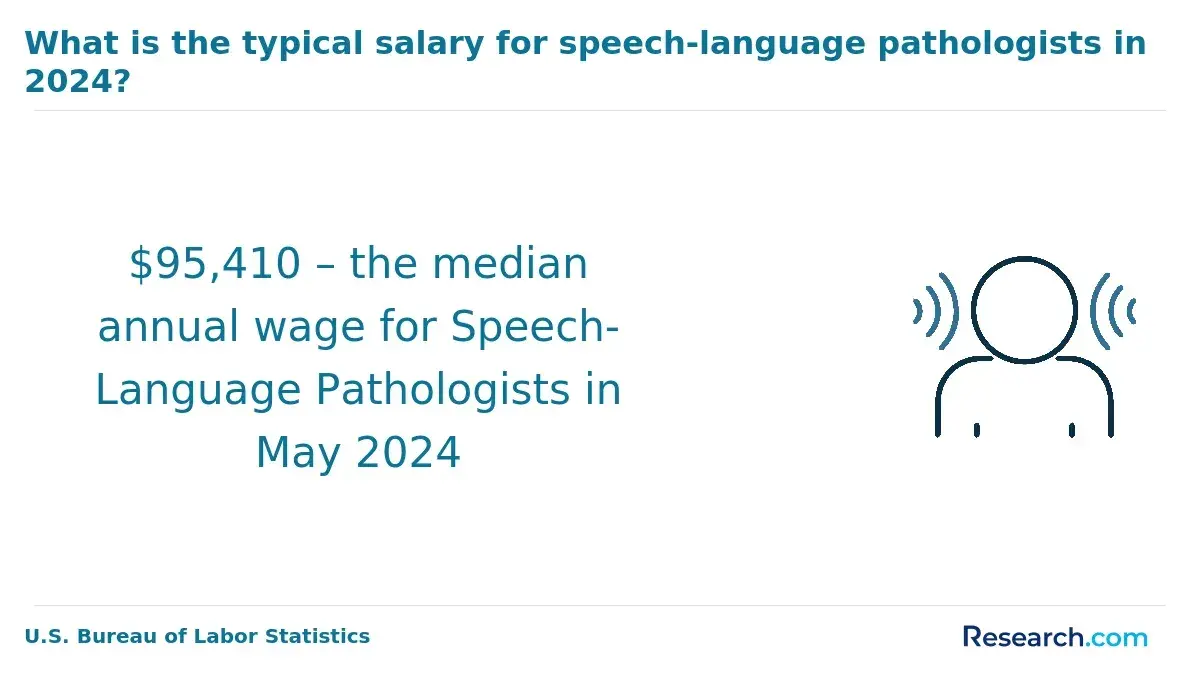
Choosing a speech-language pathology program is a financial, academic, and career decision—not just a question of online versus on campus. Tuition can range from $15,836 to $69,552, while median salaries are around $95,410, so the right choice depends on total cost, clinical placement support, flexibility, accreditation, licensure fit, and how quickly you can enter the workforce.
This guide compares online and on-campus speech pathology programs from a practical return-on-investment perspective. It explains typical tuition ranges, financial aid differences, hidden costs, program flexibility, career outcomes, licensure considerations, and the factors that matter most when deciding which format is worth the investment.
What are the benefits of getting a Speech Pathology degree?
- A degree in speech pathology qualifies you for roles such as clinical SLPs in hospitals, schools, and private practices, positively impacting individuals with communication disorders.
- The median annual wage for speech-language pathologists was $97,870 in May 2026.
- Online programs offer flexibility, allowing students to balance studies with personal or professional commitments.
What are the typical tuition costs for online speech pathology programs?
Online speech pathology master's programs vary widely in price. At the lower end, Tennessee State University charges $286 per credit hour. At the higher end, California State University-Northridge charges $832 per credit hour. Depending on the institution, number of credits, and program structure, the total cost can range from $15,836 to over $69,000.
The main advantage of an online program is not always lower tuition. In many cases, the bigger savings come from avoiding relocation, campus housing, daily commuting, and lost income if the format allows students to keep working. However, online students still need to budget beyond tuition.
| Cost factor | Why it matters for online students |
| Tuition per credit | Online tuition can differ substantially by school, residency status, and program length. |
| Textbooks and course materials | Graduate-level clinical and diagnostic coursework may require specialized materials. |
| Clinical placement fees | Some programs charge fees related to practicum coordination, supervision, or site requirements. |
| Technology and software | Students may need a reliable computer, webcam, broadband internet, testing platforms, or virtual learning tools. |
| Licensure preparation costs | Graduates should plan for exam preparation, application fees, and state-specific requirements after completing the degree. |
When comparing online programs, look beyond the advertised tuition. Ask whether clinical placements are arranged by the program, whether any campus visits are required, whether tuition differs for out-of-state students, and whether the program is designed to meet licensure requirements in the state where you plan to practice.
Students focused on cost can compare affordable online SLP master's programs to identify lower-priced options and understand how tuition varies by institution.
How much do on-campus speech pathology programs cost on average?
On-campus speech pathology programs also have a wide cost range. For example, the University of North Dakota's program costs approximately $47,136 for out-of-state students, while Minot State University offers a more affordable option at around $15,836.
For residential students, tuition is only one part of the total price. On-campus study may require relocation, housing, meal plans, transportation, parking, campus fees, and reduced work hours. These costs can make a lower-tuition program more expensive in practice if it requires moving or limits your ability to earn income while enrolled.
| On-campus cost category | Questions to ask before enrolling |
| Tuition and fees | Is the published rate based on in-state, out-of-state, or graduate tuition? |
| Housing and meals | Will you live on campus, rent nearby, or commute from home? |
| Transportation | Will you need to pay for gas, parking, transit, or relocation? |
| Campus-based expenses | Are there student services, lab, clinic, or facility fees? |
| Opportunity cost | Will the schedule make it difficult to work part time or maintain current employment? |
On-campus programs may be worth the added cost for students who value face-to-face faculty access, structured schedules, campus clinics, peer networking, and local placement relationships. They may be less practical for students who cannot relocate or who need to continue working while completing graduate coursework.
Students interested in completing training on a faster timeline may also compare 5-year speech pathology programs as an alternative to a traditional sequence.
What are the differences in financial aid options between online and on-campus programs?
Online and on-campus speech pathology students may both qualify for federal loans, scholarships, grants, and state aid, but the availability of institutional funding can differ by school and delivery format. The most important step is to confirm that the program participates in eligible financial aid programs and that your enrollment status meets aid requirements.
Scholarships and grants
- Online programs: Some online programs offer institutional scholarships, grants, or tuition assistance. For example, the University of Northern Colorado provides assistantships and other forms of tuition assistance for online students.
- On-campus programs: Traditional campus programs may offer a broader set of institutional scholarships and grants, often tied to academic merit, financial need, department funding, or campus-based service roles.
Assistantships and work-based funding
Graduate assistantships can reduce costs, but they are not equally available in every format. On-campus students may have more access to teaching, research, clinic, or department roles that require physical presence. Online students should ask whether remote assistantships exist or whether tuition discounts are available instead.
Employer tuition assistance
- Online programs: Online students may be better positioned to use employer tuition assistance because they can often keep working while enrolled, especially if they already work in healthcare, education, rehabilitation, or a related setting.
- On-campus programs: Employer tuition assistance may be harder to use if the program schedule requires full-time daytime attendance or relocation away from the employer.
Federal loans and state aid
Students in both online and on-campus programs are generally eligible for federal student loans if they meet program and enrollment requirements. Some states also offer aid for residents attending in-state institutions. Before committing, ask the financial aid office to provide a program-specific cost of attendance, not just a tuition estimate.
| Funding source | Online programs | On-campus programs |
| Federal loans | Often available when the program and enrollment status qualify | Often available when the program and enrollment status qualify |
| Institutional scholarships | Available at some schools, but policies vary | May be more common or more varied at some institutions |
| Assistantships | May be limited or remote, depending on the school | May be more accessible when duties require campus presence |
| Employer tuition assistance | Often easier to combine with continued employment | May be harder to use if attendance limits work hours |
| State aid | Depends on residency, institution, and program eligibility | Depends on residency, institution, and program eligibility |
How do online and on-campus programs compare in terms of duration and flexibility?
Online and on-campus speech pathology programs can lead to the same professional goal, but they often serve different types of students. Online programs are usually stronger for flexibility, while on-campus programs are usually stronger for structure and immediate access to campus-based resources.
Program length
- Online programs: Online programs often provide more flexibility in where students complete coursework. Some formats may allow students to balance graduate study with employment, caregiving, or other obligations.
- On-campus programs: On-campus programs typically follow a more structured academic calendar with fixed class times, clinic schedules, and in-person expectations.
Scheduling flexibility
- Online programs: Many online programs use asynchronous coursework, allowing students to complete lectures and assignments around work and family commitments. However, live sessions, clinical hours, exams, and practicum requirements may still occur at set times.
- On-campus programs: On-campus programs usually require students to attend classes and clinical experiences at scheduled times. This can be challenging for students with jobs or caregiving duties, but it can also provide a clearer routine and more direct accountability.
Clinical training and placement logistics
Flexibility should not be confused with convenience. Speech pathology programs include supervised clinical experiences, and those requirements can be the most complex part of an online program. Before enrolling, online students should ask whether the school finds placements, approves student-identified sites, or expects students to take the lead locally. On-campus students should ask how placements are assigned, how far they may need to travel, and whether specialized settings are available.
| Student priority | Format that may fit better | Reason |
| Continue working while enrolled | Online | Greater scheduling and location flexibility may make employment easier to maintain. |
| Prefer fixed routines and in-person support | On campus | Regular class meetings and campus access can provide structure. |
| Cannot relocate | Online | Coursework can often be completed from a distance, though clinical placements still require planning. |
| Want frequent faculty and peer interaction | On campus | In-person programs may offer more informal access to faculty, classmates, and campus clinics. |
Applicants looking for additional options can also review speech language pathology programs with accessible admissions pathways.
What are the additional costs beyond tuition for both program types?
The best cost comparison includes all required expenses, not just tuition. Speech pathology students should build a full budget for coursework, clinical training, technology, travel, and licensure preparation.
- Textbooks and supplies: Both online and on-campus students may need textbooks, assessment materials, clinical documentation tools, and other course-related resources.
- Clinical placement fees: These may apply in either format. Online students should pay close attention to whether the program charges for placement support or requires students to secure local sites.
- Technology and software: Online students may need specific software, webcam equipment, reliable broadband internet, online testing tools, or virtual lab resources. On-campus students may also need a capable laptop and program-required software.
- Travel expenses: On-campus students may pay for commuting, parking, public transit, or relocation. Online students may still face travel costs for clinical placements, residencies, orientations, or required campus visits if the program includes them.
- Housing and campus fees: These are most common for on-campus students and may include housing, campus facilities, student services, and meal plans.
- Background checks and health requirements: Clinical sites may require immunizations, screenings, background checks, or other onboarding steps.
- Licensure and certification preparation: Graduates should plan for costs tied to exams, state applications, and required documentation after completing the degree.
| Expense | Online programs | On-campus programs |
| Housing | Often avoidable if the student stays in place | May be significant if relocation is required |
| Commuting | Usually lower for coursework, but possible for clinical sites | Often recurring for classes and placements |
| Technology | Often higher because coursework depends on online platforms | Still required, but less central to daily instruction |
| Clinical placement costs | Can vary based on local site availability and program support | Can vary based on assigned sites and travel distance |
| Campus fees | May apply depending on the institution | More likely to include facility and student service charges |
A useful rule of thumb is to request a written cost breakdown from each program and then add personal expenses the school may not include, such as lost wages, childcare, transportation, and relocation.
What career paths are available for graduates of a speech pathology degree program?
Graduates of speech pathology degree programs can pursue clinical and non-clinical roles across healthcare, education, rehabilitation, private practice, telepractice, research, and consulting. The right path depends on the populations you want to serve, your licensure status, your preferred work environment, and your tolerance for schedule demands.
Clinical roles
- Hospitals: SLPs may work with patients recovering from surgeries, injuries, neurological conditions, or medical events that affect communication, swallowing, or cognition.
- Schools: SLPs support students with speech, language, fluency, voice, and communication disorders that affect learning and participation.
- Rehabilitation centers: SLPs help patients regain or adapt communication and related skills after illness, injury, or disability.
- Private practices: SLPs provide individualized therapy services, often with more control over caseload focus, scheduling, and service model.
Non-clinical and specialized roles
- Telepractice: SLPs deliver services remotely, which can expand access for clients in underserved areas or for those who need flexible service delivery.
- Research: Professionals may conduct studies that improve assessment, intervention, technology use, or outcomes in speech-language pathology.
- Consulting: SLPs may advise schools, healthcare organizations, companies, or community programs on communication access, training, and service design.
| Career setting | Best fit for graduates who want |
| Schools | Work with children, education teams, and academic support plans |
| Hospitals | Medical cases, interdisciplinary teams, and acute or complex needs |
| Rehabilitation centers | Ongoing recovery-focused care and patient progress over time |
| Private practice | Greater autonomy, client specialization, or entrepreneurial options |
| Telepractice | Remote service delivery and flexible access models |
| Research or consulting | Program development, evidence-building, training, or advisory work |
Graduates interested in maximizing compensation can compare career options associated with the highest paid speech pathologist roles.
What is the job market for graduates of a speech pathology degree program?
The job market for speech-language pathologists is favorable. Demand is projected to grow by 17% from 2025 to 2035, much faster than the average for all occupations. This growth is tied to factors such as an aging population and increased awareness of speech and language disorders.
Even with strong overall demand, job conditions are not identical everywhere. Openings can vary by state, city, employer type, school district funding, healthcare access, and specialty. Graduates who are willing to work in high-need locations, serve multiple populations, or build expertise in specialized clinical areas may have more options.
Factors that can improve job prospects
- Clinical breadth: Experience with children, adults, medical cases, schools, and rehabilitation settings can make a graduate more adaptable.
- Geographic flexibility: Areas with larger populations or greater access to healthcare services may offer more opportunities, while some underserved areas may have staffing needs.
- Licensure readiness: Employers often prefer candidates who understand state requirements and can move efficiently through the licensure process.
- Specialized interests: Experience in areas such as swallowing, neurogenic communication disorders, early intervention, school-based services, or telepractice may help differentiate applicants.
Students comparing programs should ask about job placement support, alumni outcomes, clinical site relationships, and whether the program prepares graduates for the work settings they are most likely to pursue.
How does earning potential compare for graduates from online vs on-campus programs?
Earning potential is generally tied more to licensure, experience, setting, geography, and specialization than to whether the degree was completed online or on campus. Speech-language pathologists have median annual wages around $97,870, and the delivery format of an accredited program is usually not the main salary driver.
Online program graduates
- Work continuity: Flexible scheduling may allow some students to keep working during graduate study, which can reduce opportunity cost and help maintain professional momentum.
- Local market access: Completing clinical experiences near home may help students build relationships with employers in the region where they plan to work.
- Networking trade-off: Online students may need to be more intentional about building faculty, peer, supervisor, and employer connections because fewer interactions happen naturally in person.
On-campus program graduates
- Clinical access: On-campus programs may provide more direct access to faculty mentorship, campus clinics, and established local placement networks.
- Professional networking: In-person programs often create more frequent opportunities to connect with classmates, faculty, supervisors, guest speakers, and regional employers.
- Opportunity cost: Students may have less flexibility to continue working if the schedule requires full-time daytime attendance.
| Salary factor | Why it matters more than format |
| Geographic location | Local demand, cost of living, and employer budgets can affect pay. |
| Clinical experience | Supervised practice and post-graduate experience can influence job competitiveness. |
| Work setting | Schools, hospitals, rehabilitation centers, private practices, and telepractice roles may differ in compensation structure. |
| Specialization | Advanced experience with certain populations or disorders can support stronger career positioning. |
| Licensure and certification readiness | Employers need candidates who can legally practice and meet role requirements. |
For ROI, the better question is not “Will an online or on-campus degree pay more?” but “Which accredited program gets me to licensure with the least unnecessary debt and the strongest clinical preparation for my target job market?”
Are there differences in licensure and certification outcomes between online and on-campus graduates?
Online and on-campus graduates can both qualify for licensure and certification if they complete the required education and supervised clinical experience. The critical issue is not format; it is whether the program is properly accredited and whether it meets the requirements for the state where the student intends to practice.
Applicants should confirm that the program is accredited by the Council on Academic Accreditation in Audiology and Speech-Language Pathology (CAA). They should also verify state-specific licensure requirements before enrolling, especially if they plan to attend an online program based in another state.
Online program graduates
- Clinical placements: Some online programs coordinate placements, while others may expect students to help identify approved local sites. This can affect timeline, stress level, and readiness for licensure.
- State requirements: Students must confirm that the program meets the licensure requirements of the state in which they plan to practice.
- State authorization: Online applicants should ask whether the school is authorized to enroll students from their state and whether any placement restrictions apply.
On-campus program graduates
- Clinical placements: On-campus programs often coordinate placements through established relationships, which may make it easier to complete required experiences in the program's region.
- State requirements: Programs are typically designed to meet the licensure requirements of the state in which they are located, but students who plan to move should still verify requirements elsewhere.
| Licensure checkpoint | What applicants should verify |
| CAA accreditation | Confirm the program's accreditation status before enrolling. |
| Clinical hour requirements | Ask how supervised experiences are documented and approved. |
| State licensure fit | Check requirements in the state where you plan to practice, not only where the school is located. |
| Placement support | Find out who secures clinical sites and what happens if a local placement is unavailable. |
| Certification preparation | Ask how the curriculum supports post-graduation certification and licensure steps. |
A common mistake is assuming that any online speech pathology degree automatically qualifies a graduate for licensure in every state. Always verify state rules directly before committing to a program.
Which program type provides the best return on investment?
The best return on investment depends on total cost, debt, time to completion, clinical placement quality, licensure alignment, and the graduate's target job market. Online programs may offer stronger ROI for students who can avoid relocation, keep working, and complete clinical requirements efficiently. On-campus programs may offer stronger ROI for students who benefit from in-person mentorship, established placement networks, and campus-based clinical resources.
| Choose an online program if... | Choose an on-campus program if... |
| You need to stay employed while studying. | You prefer a structured, in-person learning environment. |
| You cannot relocate or commute regularly. | You want frequent face-to-face access to faculty and peers. |
| You have strong local clinical placement options. | You want the program to coordinate placements through local networks. |
| You are comfortable managing deadlines and remote communication. | You learn better through direct interaction and campus-based support. |
| You can confirm the program meets your state's licensure requirements. | You plan to work in the state or region where the campus has employer relationships. |
To judge ROI accurately, compare programs using net cost rather than sticker price. Include tuition, fees, books, technology, travel, housing, lost income, loan interest, and the practical likelihood of finishing on time. Then weigh those costs against the program's accreditation, clinical support, licensure fit, and career preparation.
A lower-cost program is not automatically the better investment if it offers weak placement support or does not align with your state's licensure rules. A higher-cost program is not automatically better if it creates unnecessary debt without improving clinical readiness or employment prospects. The strongest choice is the accredited program that gets you to licensure, prepares you for your preferred work setting, and keeps borrowing at a manageable level.
Other Things You Should Know About Speech Pathology Programs
Yes, some public universities extend in-state tuition to fully online students through reciprocity agreements or border-state policies. Others charge a flat online rate. Check whether the program is SARA-approved and whether the university classifies online learners as resident or nonresident for billing.
In 2027, online speech pathology degrees generally offer lower tuition and reduced commuting costs compared to on-campus programs. However, variances exist based on institution and location, such as additional fees for online platforms or higher living expenses for on-campus students, which may affect the overall cost.
In 2027, location affects tuition as some colleges charge different rates for in-state and out-of-state students. Delivery method also plays a role; online programs typically have lower associated costs like commuting, but on-campus options sometimes offer greater access to resources that may justify higher tuition.
References
- U.S. Bureau of Labor Statistics - Speech-Language Pathologists https://www.bls.gov/ooh/healthcare/speech-language-pathologists.htm
- ASHA EdFind - Accredited Speech-Language Pathology Programs https://find.asha.org/ed/
- ETS Praxis - Speech-Language Pathology (5331) https://praxis.ets.org/test/speech-language-pathology-5331.html
- Pepperdine University - Master of Science in Speech-Language Pathology https://healthscience.pepperdine.edu/online-masters-in-speech-language-pathology/
- New York University - Online MS, Communicative Sciences and Disorders (Speech@NYU) https://steinhardt.nyu.edu/degree/online-ms-communicative-sciences-and-disorders
- Maryville University - Master of Science in Speech-Language Pathology https://www.maryville.edu/masters/speech-language-pathology/
- University of Scranton - Master of Science (M.S.) in Speech-Language Pathology https://www.scranton.edu/academics/pcps/health-and-human-performance/programs/speech-language-pathology/index.shtml
- California State University-San Marcos - Online MS in Speech-Language Pathology https://www.csusm.edu/slp/programs/mastersonline/index.html