2027 How to Build an SLP Resume Before Graduate School

Co-Founder and Chief Data Scientist

Reviewed by Rhea Paul, PhD
SLP Education & Research Expert
Many aspiring clinicians struggle to create an effective Speech Pathology resume before entering graduate school, especially when their background stems from unrelated fields. Without relevant experience or clear focus, applications often lack the persuasive impact needed to stand out. Addressing these challenges early ensures clearer pathways into competitive programs and smoother career transitions.
This article explores actionable strategies to develop a compelling resume that highlights transferable skills, relevant coursework, and volunteer experience, helping prospective students align their profiles with program expectations and improve their chances of acceptance into Speech Pathology graduate programs.
Key Things You Should Know
- Strong academic records, relevant clinical experience, and tailored resumes increase admission chances to graduate programs in speech pathology, where competition has grown by 15% since 2024.
- Including measurable outcomes from internships and volunteer work demonstrates practical skills, crucial as 75% of programs emphasize applied learning in 2026 admissions.
- Highlighting communication, teamwork, and research involvement aligns with ASHA recommendations, enhancing resumes for a field expecting 17% job growth through 2035.
What is an SLP resume and why build it before grad school?
An SLP resume is a professional document outlining your education, clinical experience, certifications, skills, and achievements related to speech-language pathology.
Building a strong SLP resume before graduate school is essential to position yourself competitively for clinical placements, graduate assistantships, and early career opportunities. A well-crafted resume demonstrates your preparedness and motivation, showing admissions committees and potential supervisors that you have relevant experience and a clear career focus.
Preparing a speech pathology resume early helps identify gaps in qualifications and guides targeted actions such as gaining volunteer experience with speech therapy programs, completing relevant coursework, or securing certifications like CPR or ASHA's e-Portfolio elements.
Including clinical observation hours or work with diverse populations can significantly strengthen your application and future job prospects. Waiting until after acceptance risks missing these valuable opportunities.
The demand for speech-language pathologists is projected to grow 17% from 2025 to 2035, according to the Bureau of Labor Statistics Occupational Outlook Handbook.
This growth highlights the importance of early preparation to enter a competitive yet expanding field with strong job prospects. Employers often favor candidates who have demonstrated clinical engagement and professionalism before graduate training.
Focus on clear, quantifiable achievements such as hours of clinical observation, research involvement, or communication skills development.
Tailoring your resume to highlight leadership roles, teamwork, and adaptability reflects qualities critical for success. For prospective students interested in advanced options, consider exploring online MS SLP programs to enhance your credentials.
Which experiences should you include on an SLP resume?
Include clinical and volunteer experiences relevant to Speech Pathology on your resume, prioritizing roles with direct patient interaction such as therapy aide work, shadowing certified speech-language pathologists (SLPs), or assisting in communication disorder assessments.
Highlight specific populations served-pediatric, adult, or geriatric-to demonstrate versatility and focus. Clinical practicum experience for SLP resume applicants is especially valuable, showcasing hands-on skills in therapy techniques, progress documentation, and treatment planning.
Research experience related to speech, language, or hearing sciences strengthens your profile, particularly if you contributed to studies on therapy methods or outcomes.
Volunteer opportunities relevant to Speech Pathology that develop practical skills or support clinical teams add meaningful context to your credentials. Administrative roles in healthcare settings can also illustrate organizational abilities and familiarity with clinical environments.
Certifications and training such as CPR, first aid, or early completion courses for the ASHA Certificate of Clinical Competence (CCC-SLP) must be clearly listed.
Missing keywords like CCC-SLP in your resume may cause automatic rejection by tracking systems, according to Resume Adapter's SLP resume keywords guide. Quantify experiences when possible-note how many patients you assisted weekly or documented results during your involvement.
Avoid unrelated work history unless transferable skills like communication, teamwork, or leadership apply. Tailor your resume to reflect SLP-relevant experience, which improves your chances in competitive graduate admissions.
For insight into how much do speech pathologists make, reviewing salary data can also guide your career goals.
How do you format an SLP resume for graduate admissions?
Format an SLP resume for graduate admissions starting with a clear contact header that includes your full name, phone number, email, and LinkedIn profile if relevant.
Follow with a focused objective or summary highlighting your career goals and interest in speech pathology graduate study, aligning with best practices for creating a speech pathology graduate school resume.
Organize the resume into distinct sections such as education, clinical experiences, certifications, skills, and relevant achievements. Use reverse chronological order, listing the most recent credentials first.
Each clinical experience should specify the setting, population served, and specific responsibilities or interventions administered, for example, "Conducted language assessments with pediatric clients in a school-based setting."
Incorporate 15 to 25 keywords from graduate program descriptions, focusing on certifications, clinical skills, and patient populations as suggested by Resume Adapter's 2026 SLP resume keywords guide.
Keywords like "articulation therapy," "AAC devices," and "adult neurogenic disorders" help your application pass filters and demonstrate alignment with program expectations.
Quantify accomplishments where possible, replacing vague statements with measurable outcomes such as "increased client speech intelligibility by 20% over 12 sessions." Maintain professional formatting with consistent fonts and bullet points, avoid pronouns, and tailor your resume for each program's focus.
Proofread thoroughly to eliminate errors, as polished documents reflect the attention to detail essential in speech pathology practice. For options to pursue your education, consider exploring accelerated SLP programs, which may align with your career goals.
Clinical hours for speech pathology graduate school applications are strongest when they show both direct client interaction and diverse experiences across various age groups and settings.
Hands-on hours in speech-language evaluations, intervention planning, and therapy delivery with children, adults, and seniors build a well-rounded resume. For instance, logging hours in school-based environments highlights familiarity with pediatric speech and language disorders common in educational contexts.
Observation experiences that enhance an SLP resume typically include shadowing licensed speech-language pathologists specializing in pediatric, adult neurogenic, and voice therapy. Volunteering in elementary and secondary schools enhances understanding of communication challenges in academic settings, even if it offers fewer clinical hours.
Data from the BLS 2023 Occupational Employment Statistics show that speech-language pathologists in schools earn a mean annual wage of $83,720, lower than the overall field average, emphasizing the importance of varied clinical experiences to boost employability and salary potential.
It's recommended to seek clinical hours in hospitals, rehabilitation centers, and outpatient clinics for broader case exposure. Additional targeted experiences include:
- Providing therapy for articulation, fluency, and language disorders.
- Assisting with augmentative and alternative communication (AAC) devices.
- Participating in developmental screenings and treatment team meetings.
- Volunteering at special education or early intervention programs.
Engaging in research observations or community health screenings showcases initiative. Most graduate programs require documenting 400-600 hours of direct clinical contact with a good balance of assessment and treatment experiences.
Exploring the easiest speech pathology programs to get into may also guide those starting their career path.
Volunteering in environments that offer direct interaction with individuals facing communication disorders greatly strengthens your graduate school application for speech pathology.
Focus on roles in hospitals, rehabilitation centers, schools, and clinics, where you can assist speech-language pathologists or work with diverse populations such as children with speech delays, elderly stroke survivors, or those with autism spectrum disorder.
For example, pediatric speech therapy volunteering exposes you to early intervention strategies, while outpatient adult rehab experience highlights adaptability across speech and language challenges.
Additional valuable opportunities include community centers and non-profits dedicated to language development, hearing loss, or cognitive communication disorders. Participation in research labs engaged in speech and language projects further demonstrates your commitment to evidence-based practice and strengthens your resume.
Hands-on experiences like data collection, administering speech screenings, or supporting therapy sessions reflect familiarity with clinical procedures. These roles not only fulfill prerequisites but build practical skills vital for graduate studies.
Highlighting relevant volunteer work and coursework can help align your resume with top earners in the profession; for instance, the top 25% of speech-language pathologists earned $112,510 or more, according to U.S. News & World Report Careers. Prioritized, targeted volunteer engagement is key to competitive admissions and success in this field.
Research experience strengthens an SLP resume by demonstrating critical analytical skills and a commitment to evidence-based practices.
Employers highly value candidates who can interpret research findings to improve patient outcomes, such as those involved in studies on speech therapy techniques or neurological disorders. This experience highlights the ability to integrate data-driven methods into clinical treatment plans.
Working in research also builds key competencies like data collection, statistical analysis, and professional writing. These skills are directly applicable to clinical documentation and reporting, boosting confidence when evaluating new therapies or adapting to updated clinical guidelines.
Including completed research projects or presentations can differentiate candidates in a competitive field. Settings like nursing care facilities, offering the highest mean annual wage for SLPs at $108,640, place a high value on interdisciplinary collaboration and advanced clinical skills-making research experience particularly relevant.
To maximize impact, applicants should highlight specific contributions such as experiment design or co-authoring papers rather than vague descriptions. Participating in summer research programs, assistantships, or university-led studies offers concrete proof of expertise.
Research involvement may also lead to certifications or specialized training that enhance employability. Employers look for candidates who combine clinical knowledge with strong analytical and communication skills-qualities consistently developed through research.
Skills and certifications on an SLP resume must show clinical expertise and readiness to succeed professionally. Essential skills include speech and language assessment, evidence-based intervention techniques, and experience with diverse populations such as children, adults, and people with disabilities.
Strong oral and written communication is vital for documenting patient progress and collaborating with healthcare teams.
The Certificate of Clinical Competence in Speech-Language Pathology (CCC-SLP) from the American Speech-Language-Hearing Association (ASHA) remains the gold standard certification.
Listing progress toward this credential, including completed coursework or clinical practicum hours, adds value. State licensure is also mandatory for practicing as an SLP.
Additional credentials in areas like augmentative and alternative communication (AAC) or bilingual speech pathology enhance a candidate's appeal. Fluency in relevant languages and cultural competence further improve care quality.
Technical skills with diagnostic tools, electronic health records (EHR), and telepractice platforms reflect current clinical trends. Ongoing professional development through training in assistive technology or workshops is recommended.
- California employs 17,270 speech-language pathologists.
- The mean annual wage in California is $112,030, according to BLS Occupational Employment Statistics.
These facts highlight a rewarding and competitive field where proven skills and certifications position candidates for success.
To enhance your chances in graduate speech pathology programs, customize your resume by aligning your qualifications with each program's goals. Begin by researching the program's mission, faculty interests, and clinical priorities.
Highlight academic achievements, relevant clinical experiences, and volunteer work that reflect these focal areas. For example, if the program emphasizes pediatric speech pathology, prioritize internships or research involving children rather than adults or geriatric patients.
Modify your resume's objective or summary to mention the program by name and demonstrate your fit with its mission. Include pertinent coursework or certifications such as augmentative and alternative communication (AAC) or bilingual services, especially if the program serves diverse populations.
Quantify your clinical and research experience with concrete metrics, like hours completed in clinical placements or clients served, as admissions committees respond well to evidence-based qualifications.
Many programs expect specific technical skills; incorporate relevant keywords to help your resume pass automated screenings. Address any gaps by highlighting related experiences that showcase transferable skills.
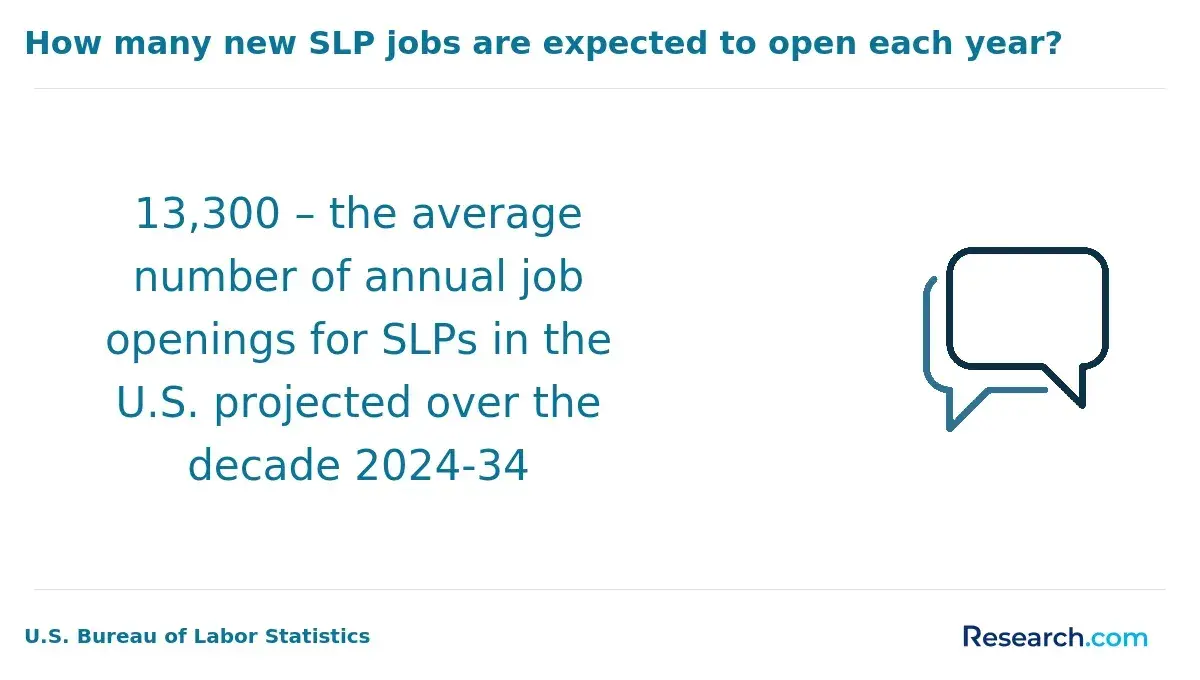
With roughly 13,300 openings yearly for speech-language pathologists, competition remains strong. Tailoring your application, including the cover letter, signals commitment and distinguishes you from other applicants. Carefully proofread and follow each program's formatting guidelines to avoid disqualification.
Failing to tailor your resume for the specific graduate program or employer diminishes its effectiveness. Resumes that do not highlight relevant clinical experiences or academic achievements make it challenging for admissions committees or hiring managers to assess your fit.
Including unrelated jobs without linking transferable skills such as communication or teamwork weakens your profile. Focus on skills directly related to speech pathology to create a stronger impression.
Quantifying your accomplishments is essential. Instead of vague phrases like "worked with clients," specify details such as "provided speech therapy to 10 pediatric clients weekly, resulting in measurable improvement in 80% of cases."
This clarity shows the real impact of your work. Also, avoid spelling or grammatical errors by proofreading carefully or using professional editing services to maintain professionalism.
A clean, organized format with clear sections, consistent fonts, and easy-to-read bullet points enhances readability. Avoid cluttered layouts and inconsistent styles that confuse readers.
The 5-10 year retention rate for speech pathologists aligns with about 50% for healthcare workers, highlighting high turnover challenges. Demonstrate commitment and resilience through sustained clinical placements or volunteer work on your resume.
Finally, exclude outdated certifications and irrelevant personal details. Prioritize current qualifications, skills, and experiences that support your graduate school application goals.
How to get feedback and refine your SLP resume?
Consulting professionals familiar with school-based speech pathology hiring standards is essential for targeted feedback on your resume. Reach out to current school-based SLPs, graduate program advisors, or licensed clinical supervisors who understand employer priorities.
Ask if your resume clearly showcases clinical skills, relevant practicum experiences, and certifications. Key questions include whether your objective statement aligns with school settings, if accomplishments are quantified, and whether technical language is professional but accessible.
Campus career services offer valuable mock interviews and resume critiques from specialists experienced in healthcare and education fields. Additionally, online forums and professional groups like the American Speech-Language-Hearing Association (ASHA) communities provide peer reviews that help identify overlooked errors or weaknesses.
Use an iterative process to refine your resume after feedback, focusing on clarity and impact. Tailor content specifically for school-based roles, which are expected to grow by 25%, increasing competition in the field. Systematically address issues such as vague wording or inconsistent tenses.
Submit your revised resume to multiple reviewers for a broad range of perspectives, balancing clinical competencies with communication and organizational skills relevant to education.
Keep your format clean and professional, updating regularly to reflect new experience and certifications that demonstrate readiness for graduate school and employment.
Other Things You Should Know About Speech Pathology
To become a speech pathologist, you must earn a master's degree in speech-language pathology from an accredited program. Before graduate school, a bachelor's degree in communication sciences and disorders or a related field is common, but not always mandatory. Graduate programs typically expect foundational coursework in anatomy, linguistics, and psychology.
The strongest volunteer experience is direct, supervised work with communication or swallowing needs, such as speech-language clinics, special education classrooms, or aphasia support programs. Aim for at least 50 hours and note your role, the population served, and skills used, such as data collection, cueing, or AAC support.
To enhance your SLP resume before graduate school in 2027, focus on relevant experiences such as shadowing a licensed therapist, volunteering at speech clinics, and earning certifications like CPR. Highlight skills in communication and empathy. Tailor your resume with specific experiences pertinent to the SLP field.
Networking is a valuable part of the graduate school application process for speech pathology. Building connections with faculty, current students, and professionals can provide insights into specific programs and increase access to mentorship opportunities. Participation in relevant organizations and conferences can also strengthen your professional profile before applying.
- U.S. Bureau of Labor Statistics - Speech-Language Pathologists https://www.bls.gov/ooh/healthcare/speech-language-pathologists.htm
- ASHA EdFind - Accredited Speech-Language Pathology Programs https://find.asha.org/ed/
- O*NET OnLine - Speech-Language Pathologists https://www.onetonline.org/link/summary/29-1127.00
- West Virginia University - Speech-Language Pathology, M.S. - Online https://medicine.hsc.wvu.edu/communications-sciences-and-disorders/speech-language-pathology-ms/future-students/curriculum/online-slp-program/
- University of Wisconsin-Eau Claire - Master of Science in Speech-Language Pathology (Online) https://www.uwec.edu/speech-language-and-hearing-sciences-department/graduate-program/speech-language-pathology-online
- Pennsylvania Western University - Master of Science in Speech-Language Pathology https://online.pennwest.edu/programs/speech-language-pathology-grad/index.php
- California State University-East Bay - Online Master of Science in Speech-Language Pathology https://ce.csueastbay.edu/programs/speech-language-pathology/
- Emerson College - Master of Science (M.S.) in Communication Disorders (Speech@Emerson, online) https://speech.emerson.edu/