2027 Is Speech-Language Pathology a Good Career for Parents Seeking Flexibility?

Co-Founder and Chief Data Scientist

Reviewed by Rhea Paul, PhD
SLP Education & Research Expert
Parents juggling work and family often struggle to find careers that offer both meaningful work and flexible schedules. Traditional nine-to-five roles can clash with childcare needs and daily responsibilities. This challenge is particularly acute for those considering a major career change, as pursuing additional education and training demands time and resources.
Speech-language pathology presents a unique opportunity for parents seeking a balance between professional fulfillment and adaptability. This article examines the flexibility of speech pathology careers, the pathways to accreditation, and how parents can navigate this transition effectively to achieve both personal and professional goals.
Key Things You Should Know
- Speech-language pathology offers flexible work options, including part-time, telepractice, and school-based roles, appealing to parents balancing career and family responsibilities.
- Job growth for speech-language pathologists is projected at 17% from 2025 to 2035, faster than average, supporting stable employment for career changers and parents.
- Entry into the field requires a master's degree and certification, typically allowing parents to plan education timelines around family needs with programs offering evening or online courses.
Is Speech-Language Pathology a good career for parents?
Speech-language pathology offers notable work-life balance benefits for parents, with flexible opportunities in diverse settings such as schools, private practices, bilingual programs, and corporate environments. Part-time roles in schools often follow academic calendars, providing parents with extended breaks during summers and holidays, ideal for balancing family time and career growth.
Private practice or telepractice further enhances flexibility by allowing control over caseloads and appointment scheduling, making it easier for parents to align work hours with childcare needs. For bilingual or multilingual speech-language pathologists, growing opportunities in bilingual education and community health centers expand culturally relevant and adaptable work options.
Corporate roles, including positions in healthcare technology firms, often offer standard business hours and remote work possibilities, supporting parents in managing both professional and home responsibilities. The strong demand for speech-language pathology services, with projected employment growth exceeding 20% over the decade, ensures job security alongside this flexibility.
Parents interested in this field should be aware that a master's degree and ASHA certification are required, laying the groundwork for entering adaptive and flexible work environments. Many students explore online speech language pathology programs to accommodate their educational and family schedules while advancing their careers.
What is a speech-language pathologist and what do they do?
A speech-language pathologist (SLP) is a licensed healthcare professional who evaluates, diagnoses, and treats communication and swallowing disorders. Their roles and duties of a speech-language pathologist include working with individuals at various ages, from infants with developmental delays to adults recovering from strokes.
Common issues addressed include speech sound disorders, language delays, stuttering, voice problems, and cognitive-communication impairments. An SLP might help a child improve speech articulation or assist a stroke survivor in regaining swallowing and language skills.
SLPs work in diverse environments such as schools, hospitals, nursing homes, rehabilitation centers, and private practices. These settings offer a range of schedules, sometimes appealing to parents or those seeking flexible work hours. Many conduct individual or group therapy sessions, and increasing opportunities in telepractice provide options for remote work.
The speech-language pathologist job responsibilities often involve collaboration with educators, physicians, and psychologists to deliver comprehensive care. This cooperation allows SLPs to integrate clinical expertise with educational and therapeutic methods tailored to each patient's needs. Such a multidisciplinary approach can be rewarding for those seeking a career combining science with meaningful human interaction.
Employment growth for SLPs is projected to be much faster than average, with a 15% increase expected over the decade. This growth reflects rising demand in healthcare and education due to aging populations and better awareness of communication disorders. For those considering this career path, understanding the speech language pathology salary is also important to evaluate job prospects and financial expectations.
What education is required to become a speech-language pathologist?
To become a certified speech-language pathologist in the United States, candidates must complete a master's degree in speech-language pathology from an accredited program. This graduate degree generally takes two years of full-time study following a bachelor's degree, which may be in any field but often includes communication sciences, linguistics, or psychology.
Accreditation by the Council on Academic Accreditation in Audiology and Speech-Language Pathology (CAA) ensures the program meets professional standards and prepares graduates for certification.
Graduates then complete a clinical fellowship with at least 1,260 supervised hours, gaining hands-on experience diagnosing and treating speech, language, and swallowing disorders. Passing the Praxis examination in speech-language pathology, administered by the Educational Testing Service, is required for state licensure and certification through the American Speech-Language-Hearing Association (ASHA). Some states may mandate additional licenses involving exams or continuing education.
Parents seeking flexibility can find online or hybrid accelerated SLP master's program options accredited by the CAA that accommodate diverse schedules while maintaining clinical standards. These programs support educational requirements for speech-language pathologists and parents balancing family commitments.
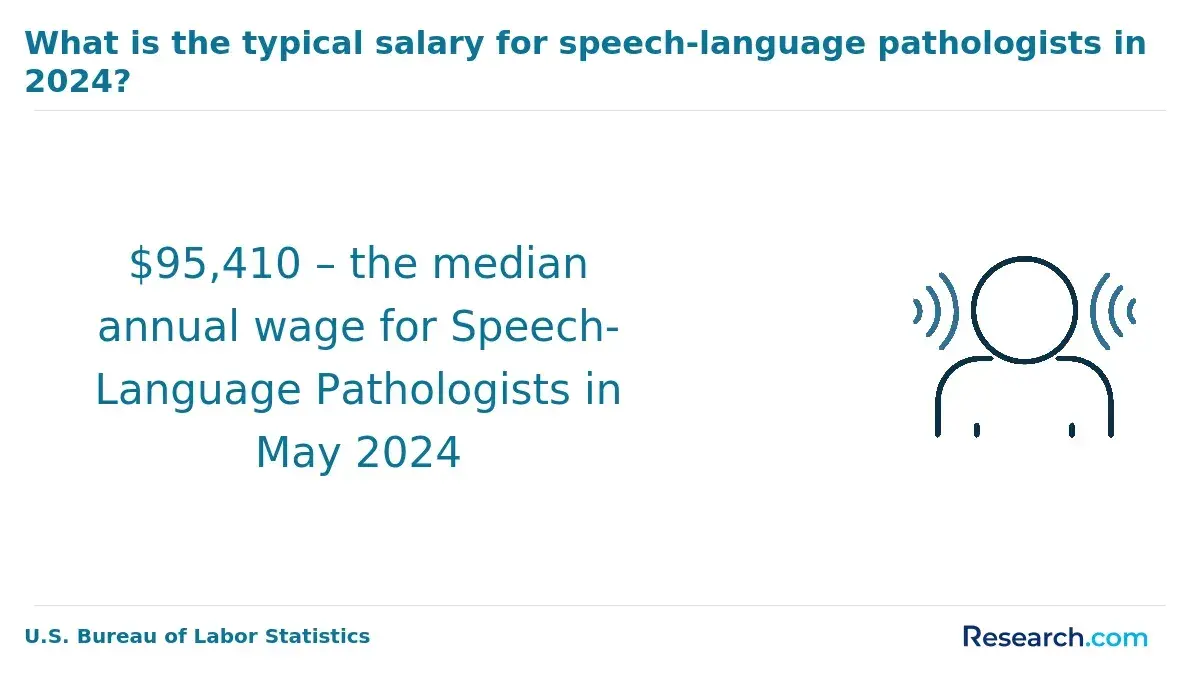
The median annual wage for speech-language pathologists, according to the Bureau of Labor Statistics, is $95,410, with an hourly rate of $45.87. This reflects the specialized training and education required, offering a career path with strong earning potential and adaptable educational pathways.
You can earn a speech-language pathology degree online in the United States through many accredited universities offering flexible online programs for speech-language pathology parents and working adults. These programs often combine asynchronous coursework with synchronous live lectures or discussions to accommodate various schedules.
Most programs also require in-person clinical practicum hours supervised locally to satisfy certification standards by the American Speech-Language-Hearing Association (ASHA). This allows parents to balance caregiving while completing essential hands-on training near their homes.
When exploring online options, consider factors such as:
- Program accreditation for ASHA certification and state licensure eligibility.
- Flexible course delivery and scheduling tailored for busy parents.
- Support services including academic advising and technical assistance for remote learners.
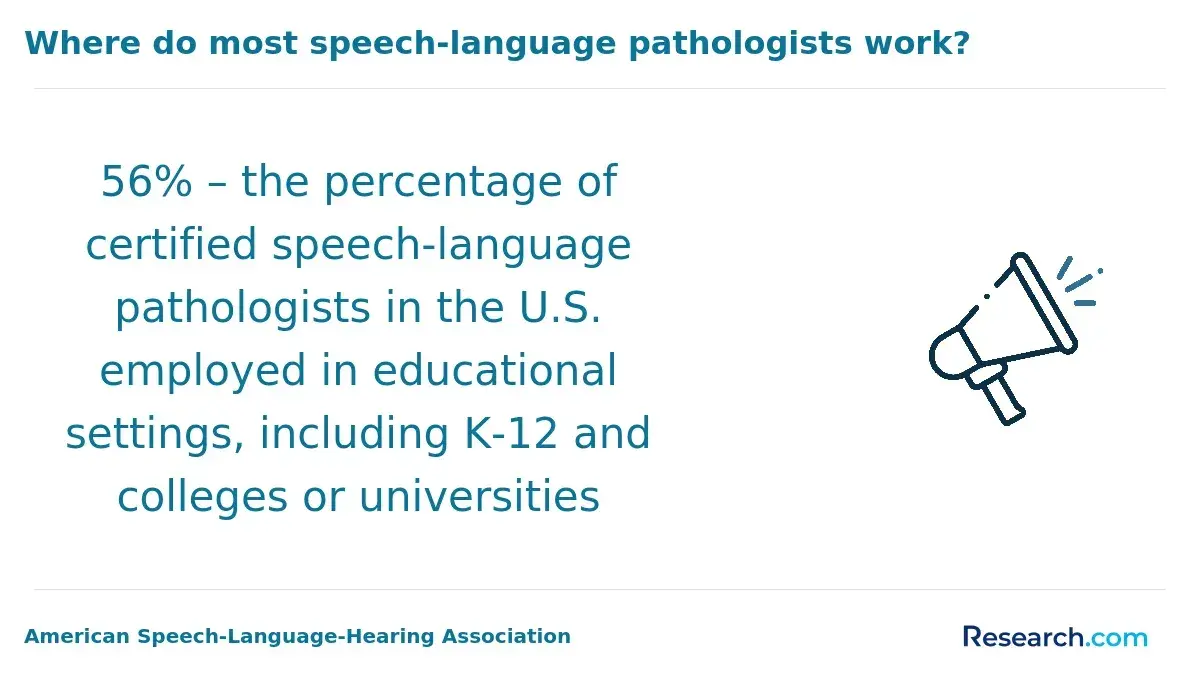
School-based employment dominates the profession, with about 60% of certified speech-language pathologists working in educational settings, according to Sacred Heart University citing ASHA data. These roles often align well with typical school hours and holidays, offering family schedule integration after graduation.
Choosing an online speech-language pathology degree combined with local practicums supports long-term career growth without sacrificing family time.
Parents interested in easier admissions might explore the easiest SLP grad schools to get into for more options. Overall, online degrees provide a practical and flexible path for speech-language pathology students balancing parenting and professional goals.
Becoming a licensed speech-language pathologist (SLP) generally involves six to seven years of post-secondary education and supervised clinical experience. Candidates start by earning a bachelor's degree, which usually takes four years, followed by a master's degree in speech-language pathology that typically requires an additional two years. Some universities offer accelerated or combined bachelor's and master's programs to shorten this timeline.
After completing graduate education, candidates must finish a clinical fellowship lasting about 36 weeks of full-time supervised work. This fellowship provides essential hands-on training and is required for state licensure. Licensure often involves passing the Praxis Examination in Speech-Language Pathology and maintaining continuing education credits, though specific requirements vary by state.
Emerging trends in teletherapy and remote work have expanded opportunities for SLPs, including hybrid and fully remote positions in school-based and private practice settings. These options can improve work-life balance, especially for parents, once licensed.
Many universities support students balancing family and career by offering part-time, evening, or online graduate programs. Early planning for these flexible paths helps manage financial and time constraints without sacrificing career goals.
The Council on Academic Accreditation in Audiology and Speech-Language Pathology (CAA), under the American Speech-Language-Hearing Association (ASHA), sets rigorous accreditation standards for speech-language pathology graduate programs. To earn certification and state licensure, students must complete a CAA-accredited program that covers critical subjects such as communication sciences, anatomy, neurology, and evidence-based clinical practices.
Clinical training is a vital requirement, with students mandated to complete at least 400 supervised clinical clock hours, including 325 direct client contact hours. These hours provide practical experience with guidance from qualified mentors. Programs undergo regular self-assessments and on-site reviews by the CAA to maintain compliance with professional standards.
Program formats vary, including online and hybrid options designed to accommodate parents and professionals seeking flexibility. However, clinical placements are often required locally to ensure hands-on experience. Key program outcomes focus on preparing graduates for the Praxis Examination in Speech-Language Pathology and eligibility for ASHA certification.
For those seeking maximum schedule control, private practice ownership offers the ultimate flexibility. With a projected 17% job growth through 2035, earning a degree from an accredited program lays the foundation for a successful career. Resources like these provide valuable guidance for aspiring clinicians aiming to balance career demands and personal commitments.
Employer Confidence in Online vs. In-Person Degree Skills, Global 2024

Speech-language pathologists in the United States earn between $75,000 and $85,000 annually on average, though this varies by experience, location, and work setting. Entry-level salaries often start near $60,000, while seasoned professionals or those in metropolitan private practices can exceed $100,000. School positions tend to offer lower pay but may provide more consistent schedules, whereas healthcare facilities and private practices usually pay higher wages.
Flexible work arrangements are increasingly common, particularly with roles such as teletherapy coordinators emerging alongside technology integration in the field. This growth is supported by a projected 17% CAGR in speech therapy services from 2025 to 2035. Professionals seeking work-life balance may consider part-time or partially remote options, although these typically come with reduced income.
Factors affecting salary include:
- Specialization areas like pediatrics or complex communication needs usually lead to higher pay
- Geographic location impacts wages, with states like California and New York offering higher compensation due to cost of living
- Work settings influence earnings-healthcare and private practice pay more than schools
Evaluating job type, setting, and location can help individuals maximize both earning potential and flexibility in the speech pathology profession.
The job outlook for speech-language pathologists (SLPs) is strong and includes many flexible career options suitable for parents. According to the American Speech-Language-Hearing Association (ASHA), there are 210,815 certified SLPs out of 247,000 total professionals, making this the largest group in the organization and highlighting widespread demand across the U.S.
Employment growth for SLPs is expected to surpass many other healthcare fields due to rising cases of speech, language, and swallowing disorders across all ages. Pediatric settings, schools, and early intervention programs benefit from increased awareness of developmental disabilities, while aging populations require rehabilitation after strokes or neurological issues in hospitals and nursing homes.
Many SLP roles offer flexible schedules that accommodate family needs, including part-time positions and telepractice, which expanded significantly after the COVID-19 pandemic. School-based SLPs often follow the academic calendar, providing regular breaks, while private practice allows control over caseload and hours.
- Strong job security across healthcare and education sectors
- Remote work opportunities reduce commute and rigid hours
- Ability to specialize by age group or disorder to fit personal interests
Overall, speech pathology combines growth potential with adaptable work options, appealing to parents balancing career and family life. The profession's robust data from ASHA confirms its reputation as a sustainable and fulfilling career path.
Speech-language pathology (SLP) offers various work settings with differing flexibility, making it an appealing career for parents seeking balance between profession and family life. School-based SLP jobs commonly provide predictable weekday hours and summers off, which align with typical academic calendars and benefit parents needing consistent childcare and scheduling.
Such roles generally avoid evening or weekend commitments, as confirmed by parental testimonials and retention data from Amergis Education. This stability contrasts with hospital or clinical SLP positions that may include irregular shifts, on-call duties, or rotating schedules, which can be challenging for parents requiring steady timing.
Beyond schools, private practice and teletherapy options provide further flexibility-teletherapy, for example, allows appointments to be scheduled around family needs, sometimes including evenings or weekends. Private practitioners can adjust caseloads and appointment times but often handle additional administrative tasks that may reduce personal time.
Key factors for parents to consider include:
- Work setting: school, medical, private practice, or teletherapy
- Guaranteed breaks such as summers or holidays
- Control over caseload and scheduling
- Administrative duties outside clinical sessions
The nationwide shortage of qualified SLPs also enables parents to negotiate flexible roles such as part-time work or job sharing. Those exploring speech pathology education and career paths can find resources and data supporting these insights elsewhere.
How to choose the best SLP program?
Choosing an SLP program requires careful evaluation of key factors that affect career flexibility and success. Start by confirming program accreditation through the Council on Academic Accreditation in Audiology and Speech-Language Pathology (CAA), which ensures the curriculum meets national standards needed for certification and licensure.
Consider the program's delivery format. Hybrid or fully online options offer flexibility for parents, allowing them to balance caregiving with clinical practicum requirements. It's important to verify practicum scheduling and whether local or extended placement options are available to support family commitments.
Look for programs with strong graduation and certification pass rates; those with over 90% passing the Praxis exam on the first try indicate solid preparation. Faculty involvement in active clinical roles helps keep training current with best practices.
Part-time study options can help manage workload alongside childcare and household duties, even though they may extend the program duration. Also, explore financial aid and scholarships tailored for non-traditional students or those returning after a career break.
The American Speech-Language-Hearing Association (ASHA) notes employment growth for SLPs is faster than average, highlighting ongoing demand. Programs that include telepractice training offer valuable remote work flexibility for parents balancing work and home life.
Support services such as academic advising, childcare referrals, and peer mentoring play an important role in student success and retention, especially for those managing multiple responsibilities.
Other Things You Should Know About Speech Pathology
Most states require speech-language pathologists to complete continuing education before each renewal cycle, often 10 to 30 hours every 2 years. State licensing boards set the exact rules, and many employers also require proof of CPR training and background checks for ongoing practice.
In 2027, speech pathology offers a variety of specialties including pediatric speech therapy, geriatric communication disorders, voice therapy, and neurogenic communication disorders. These specialties allow practitioners to tailor their careers to their interests and often provide flexible opportunities, accommodating the needs of working parents.
Speech pathologists must be licensed in the state where they practice, and most states require ongoing continuing education to maintain licensure. Additionally, many SLPs pursue certification through the American Speech-Language-Hearing Association (ASHA), which also requires periodic recertification. Keeping certifications current ensures professional standards and access to employment.
Telepractice, or delivering services remotely via technology, has become increasingly common in speech pathology, especially since the COVID-19 pandemic. It offers flexibility in scheduling and location, making it a valuable option for parents seeking work-life balance. However, telepractice may not be suitable for all clients or therapy goals.
- U.S. Bureau of Labor Statistics - Speech-Language Pathologists https://www.bls.gov/ooh/healthcare/speech-language-pathologists.htm
- ASHA EdFind - Accredited Speech-Language Pathology Programs https://find.asha.org/ed/
- O*NET OnLine - Speech-Language Pathologists https://www.onetonline.org/link/summary/29-1127.00
- New England Institute of Technology - Master of Science in Speech Language Pathology https://www.neit.edu/academics/graduate-degrees/speech-language-pathology-ms
- Baylor University - Master of Science in Speech-Language Pathology (Online) https://csd.robbins.baylor.edu/graduate/online-csd-graduate-program
- University of Wisconsin-Eau Claire - Master of Science in Speech-Language Pathology (Online) https://www.uwec.edu/speech-language-and-hearing-sciences-department/graduate-program/speech-language-pathology-online
- West Virginia University - Speech-Language Pathology, M.S. - Online https://medicine.hsc.wvu.edu/communications-sciences-and-disorders/speech-language-pathology-ms/future-students/curriculum/online-slp-program/
- University of Nebraska at Kearney - Speech-Language Pathology, Master of Science in Education (Online Track) https://www.unk.edu/online/degrees-programs/speech-language-pathology-online.php