2027 SLP Assistant to SLP: Academic and Career Transition Guide

Co-Founder and Chief Data Scientist

Reviewed by Rhea Paul, PhD
SLP Education & Research Expert
Transitioning from an unrelated undergraduate degree to a career as an SLP can seem overwhelming. Many face challenges understanding the educational requirements, accreditation standards, and clinical experiences needed for licensure. Balancing full-time work while fulfilling prerequisite courses and graduate program demands also complicates this path.
Without clear guidance, potential candidates may delay or abandon their pursuit of a rewarding SLP career. This article outlines flexible, accredited academic routes and offers practical career advice to navigate this transition efficiently, helping readers align their goals with industry standards and professional expectations.
Key Things You Should Know
- In 2026, transitioning from SLP assistant to licensed SLP requires a master's degree in speech pathology, with 75% of new professionals completing accredited graduate programs by 2025.
- Clinical hours increased to 400 supervised practicum hours as per ASHA's 2025 standards, emphasizing hands-on experience before certification eligibility.
- The U.S. Bureau of Labor Statistics projects a 17% employment growth rate for speech pathologists from 2025 to 2035, driven by aging populations and expanded telepractice opportunities.
What is an SLP Assistant and how does it differ from an SLP?
An SLP assistant (SLPA) supports licensed speech-language pathologists (SLPs) by delivering therapeutic services under direct supervision. Unlike SLPs, who hold a master's degree and national certification, SLPAs generally earn an associate's degree or postsecondary certificate and are not independently licensed to assess or diagnose.
Their role centers on implementing therapy plans developed by SLPs rather than creating or adjusting treatment programs. This distinction shapes the key differences between SLP assistants and speech language pathologists in terms of education and professional responsibilities.
SLPAs assist with speech and language exercises, document patient progress, and prepare materials for therapy sessions but do not conduct diagnostic evaluations or make clinical decisions.
For example, an SLPA in schools may help children practice articulation drills devised by the supervising SLP but cannot determine eligibility for services. These tasks illustrate typical SLP assistant roles and responsibilities within varied care settings.
Becoming an SLPA requires less time and financial investment compared to becoming a fully licensed SLP, often serving as a stepping stone toward advanced credentials.
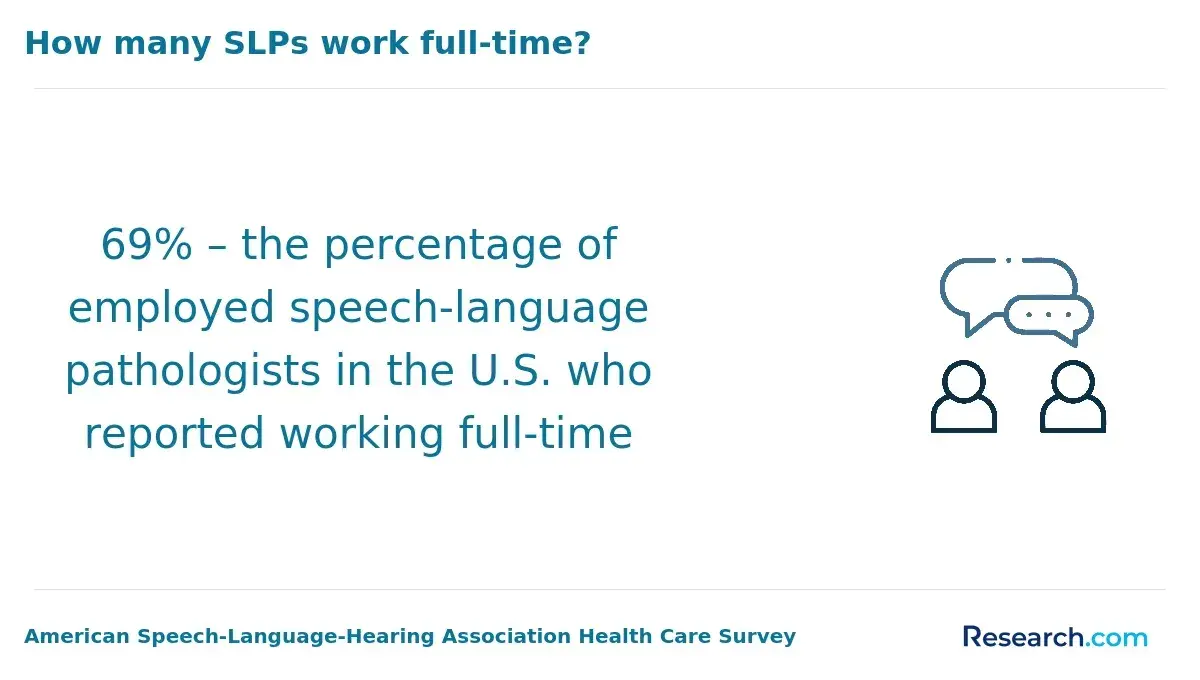
Demand remains strong for both professions, with 70% of employed SLPs working full time in 2025, signaling stable job prospects that SLPAs can leverage for career growth. Prospective students should consider factors such as education, scope of practice, and autonomy before choosing their career path.
Those interested in advancing their credentials can explore accredited online masters speech pathology programs to become licensed SLPs and expand their professional opportunities.
What education is required to transition from SLP Assistant to SLP?
Transitioning from an SLP assistant to a licensed speech-language pathologist requires completing a master's degree in speech-language pathology from a program accredited by the American Speech-Language-Hearing Association (ASHA).
This advanced education is essential beyond the associate's degree or certification usually held by SLP assistants. The master's program typically lasts two years, combining rigorous coursework with supervised clinical practicum experiences.
The curriculum emphasizes communication disorders, assessment techniques, intervention strategies, and research methods.
Students must complete at least 400 supervised clinical hours, split between academic practica and external clinical placements, to develop practical skills across diverse settings such as schools, hospitals, and private practices. This reflects key educational pathways for speech language pathologist career transition.
After earning the master's degree, candidates must successfully pass the Praxis Examination in Speech-Language Pathology to qualify for state licensure. Several states also require a Clinical Fellowship Year (CFY), offering 36 weeks of mentored professional practice before full clinical status is granted.
Demand for speech-language pathologists is projected to grow 17% through 2035, driven by shortages in educational and healthcare settings. For assistants seeking career advancement, investing in graduate education and certification is a strategic move with strong job stability and opportunities.
For insight into compensation, see the speech therapist salary. This information is vital for those looking to meet SLP assistant to SLP degree requirements successfully.
How do I become a licensed Speech-Language Pathologist in the US?
Becoming a licensed speech-language pathologist in the US requires completing a master's degree from a Council on Academic Accreditation (CAA)-accredited program.
Most candidates start with a bachelor's degree in fields such as communication sciences, biology, or psychology; 72% of speech-language pathology assistants already hold such degrees, positioning them well to pursue graduate studies.
During the master's program, students must complete at least 400 supervised clinical hours, followed by a 36-week Clinical Fellowship (CF) under professional mentorship.
The speech-language pathology licensing process and exam in the United States includes passing the Praxis Examination administered by ETS, completing the clinical fellowship, and applying for state licensure, which might also involve jurisprudence exams or background checks. Maintaining licensure typically requires biennial continuing education units (CEUs), with specifics varying by state.
Many professionals use bridge programs to transition quickly from assistant roles to licensed speech-language pathologists, often through an accelerated speech-language pathology program.
While the American Speech-Language-Hearing Association's Certificate of Clinical Competence (CCC-SLP) is optional, it is widely recognized and can enhance career opportunities.
Bachelor's and master's degrees accepted for SLP programs generally come from fields closely related to communication sciences and disorders.
Common qualifying bachelor's degrees include Communication Sciences and Disorders, Linguistics, Psychology, Education (especially special education or language-focused programs), and Biology or other health science majors with relevant prerequisites.
- Communication Sciences and Disorders
- Linguistics
- Psychology
- Education, particularly special education or language-focused programs
- Biology or other health science majors with prerequisite coursework
Applicants lacking a directly related bachelor's degree typically complete prerequisite courses in anatomy, physiology, phonetics, language development, and audiology to fulfill academic prerequisites for SLP programs in the United States.
For master's programs, students usually enter with a completed bachelor's degree in a related field plus prerequisites. Some programs allow applicants with prior master's degrees if GRE scores and other admission criteria are met.
These graduate programs focus on speech pathology coursework and clinical practicum experience and often do not accept unrelated graduate degrees without significant additional preparation.
Experience as a speech-language pathology assistant (SLPA) can provide an advantage; 85% of SLPs with 1-5 years of experience worked full time, indicating early-career stability. Those considering a transition from SLPA to certified SLP should weigh this for both financial and professional reasons.
Prospective students evaluating speech pathology graduate programs are advised to confirm program-specific prerequisites and complete foundation courses if their degrees are outside communication sciences, enhancing competitive standing and smoothing admission hurdles.
SLP programs that support transitions from assistant roles balance accreditation, flexibility, and clinical experience. Online SLP programs stand out for their flexibility, enabling students to complete coursework remotely while working.
These are ideal for those needing self-paced schedules or living far from campuses. Programs accredited by the Council on Academic Accreditation (CAA) maintain high academic standards comparable to traditional campus-based offerings.
Campus-based programs emphasize hands-on clinical experience through on-site labs and local partnerships. They offer structured schedules, direct mentorship, and frequent supervisor access during practicum hours, benefiting those who prefer in-person interaction. These programs also foster important networking opportunities crucial for job placement.
When choosing a program, consider:
- Program accreditation and alignment with state licensure.
- Availability of supervised clinical practicum.
- Structure that fits personal and professional commitments.
- Job placement rates and support services.
Transition timelines from assistant to SLP typically range from 6 to 18 months. Around 3 to 6 months focus on developing skills, while 2 to 4 months involve employment searches, emphasizing the value of programs that support efficient preparation and networking, as noted in the ReplacedByAI Transition Guide.
Hybrid programs offering online coursework with campus residencies blend flexibility with hands-on learning. Veterans and working professionals often benefit from fully online accredited programs with adaptable practicum arrangements, which can reduce barriers and shorten transitions.
SLP master's programs provide comprehensive training in key scientific and clinical areas necessary for licensure as a speech-language pathologist.
Coursework typically covers anatomy and physiology of speech and hearing systems, neuroanatomy, and neurophysiology related to communication disorders. Students develop skills in standardized and dynamic assessment methods for speech, language, voice, fluency, and cognitive-communication challenges in diverse age groups.
Intervention techniques emphasize evidence-based treatments for articulation, language acquisition, stuttering, swallowing disorders (dysphagia), and augmentative communication. Clinical practicum components allow students to apply knowledge through supervised patient care, which is critical for certification.
Many programs also include research methods and statistics to support evidence-based practice and professional growth. Topics like professional ethics, multicultural communication, and counseling prepare students to succeed in diverse clinical environments and interdisciplinary teams.
For SLP assistants aiming to become fully credentialed speech-language pathologists, this transition demands both rigorous academic coursework and practical clinical experience.
Advancing in this career can also help address economic disparities; for example, according to Zippia Speech-Language Pathology Assistant Demographics, women assistants earn about 93¢ for every dollar men make, a gap that can narrow with higher credentials and salaries in SLP roles.
Admission to graduate programs in speech pathology typically requires a bachelor's degree from an accredited institution, often emphasizing communication sciences, psychology, linguistics, or related fields. Most programs expect a minimum GPA of 3.0, with more competitive ones preferring 3.5 or higher.
Applicants usually submit GRE scores, though some schools have recently waived or made this optional. Essential prerequisite courses often include anatomy and physiology of speech and hearing, phonetics, linguistics, psychology, and statistics. Some programs accept relevant work or volunteer experience in place of certain coursework.
Letters of recommendation, typically from professors and professionals aware of the applicant's readiness for graduate study, are required. Additionally, a personal statement must clearly outline career goals and motivation for entering the speech pathology field.
Clinical observation or shadowing hours under a licensed speech-language pathologist, usually ranging from 25 to 100 hours, are often mandated to demonstrate understanding of clinical responsibilities.
There are over 44,334 speech-language pathology assistants employed in the US, reflecting a specialized but competitive workforce. This niche highlights both the competitive nature of admissions and the potential for higher earnings in this field (Zippia Speech-Language Pathology Assistant Demographics).
Speech pathology programs generally take between 2 and 4 years to complete, depending on the type of degree and previous education. Most students pursue a master's degree, which typically requires about 2 years after earning a bachelor's degree.
Some part-time or accelerated options may extend this timeframe to 3 or 4 years. Those with relevant undergraduate studies might have fewer prerequisites, shortening the overall duration.
The cost varies widely. Public universities usually charge $20,000 to $40,000 for the full master's program, while private schools can exceed $60,000. Additional costs include clinical practicum fees, textbooks, and licensing exams.
Online programs offer flexibility with tuition ranging from $30,000 to $50,000. For those interested in Speech-Language Pathology Assistant (SLPA) certificates through community colleges, one-year programs typically cost between $5,000 and $10,000.
SLPA professionals seeking to advance to full speech pathologist roles should consider both time and financial investments carefully. The field sees high turnover, with 33% of assistants having less than one year's experience. Completing a speech pathology program improves job stability and career prospects.
Important factors to consider include:
- Balancing program length and cost with your current education and work commitments.
- Exploring financial aid, scholarships, and employer tuition reimbursement options.
- Checking state-specific licensure requirements for program eligibility.
- Preparing for supervised clinical hours and national certification exams.
Speech-language pathologists (SLPs) starting their careers often find roles in educational settings like public schools, with median salaries ranging from $60,000 to $70,000.
Clinical opportunities in hospitals, rehab centers, and private practices typically offer $65,000 to $80,000 for new graduates. Specialized fields such as pediatric or geriatric therapy tend to command higher salaries due to their demand and expertise.
Advanced positions in research, higher education, and administration may exceed $90,000 annually. Some states provide loan repayment options and salary supplements for SLPs serving in underserved communities, which can enhance financial incentives.
SLPs face increasing caseload demands as reported by the ASHA SLP Health Care Survey: the share of practitioners experiencing reduced caseloads dropped from 23% in 2021 to 8% in 2025. This trend highlights the growing need for qualified professionals to manage complex workloads effectively.
Work environments vary from home health care and early intervention to telepractice, impacting salaries and working conditions. Prospective and current SLPs should negotiate contracts that reflect caseload complexity and available support to ensure sustainable careers.
What is the job outlook for Speech-Language Pathologists?
The job outlook for speech-language pathologists (SLPs) is strong, fueled by growing demand in healthcare, education, and private practice settings. Employment growth is expected to surpass many other fields due to an aging population with communication and swallowing disorders, as well as greater awareness of developmental delays in children.
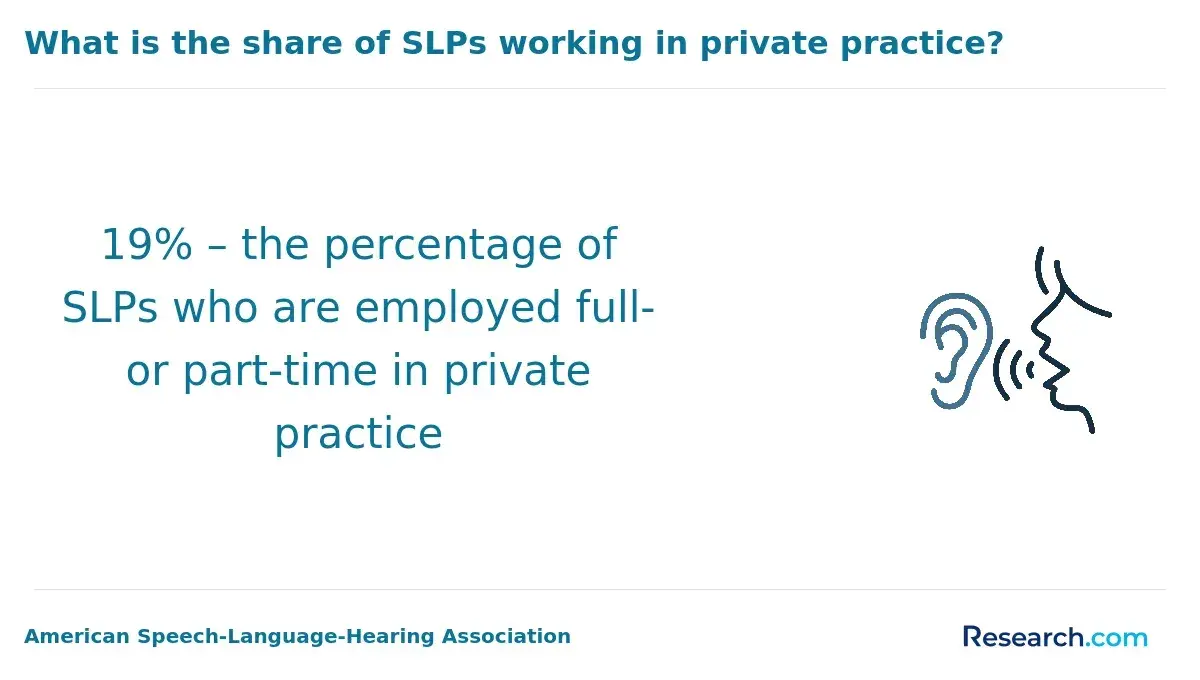
Private practice for SLPs has grown from 27% of employment in 2021 to 31% in 2025, offering expanded entrepreneurial options. Those working in school districts will meet steady demand addressing children's speech and language needs, while hospital-based SLPs will see increased work with stroke survivors and neurological patients. Telepractice is also rising, broadening access to more patients and flexible work environments.
Career shifts into private practice can provide more control over caseloads and schedules, but require business skills and administrative management. Staying current with state licensure and clinical expertise across diverse disorders is essential to remain competitive.
- Continuing education in augmentative and alternative communication (AAC) and swallowing disorders boosts skills and income potential.
- Adaptability to telehealth and private practice roles enhances career opportunities.
According to data from the American Speech-Language-Hearing Association (ASHA), the SLP workforce is expanding, presenting strong opportunities for graduates and experienced clinicians willing to embrace private practice and telepractice models.
Other Things You Should Know About Speech Pathology
In 2027, transitioning from an SLP Assistant to a licensed Speech-Language Pathologist is supported through graduate programs offering robust mentorship, clinical training, and supervision opportunities. Professional organizations like ASHA also provide resources and networking opportunities for guidance throughout this academic and career shift.
Most SLP programs require 400 clock hours of supervised clinical practicum, including 25 hours of observation and at least 375 hours of direct client contact. These hours must be completed through an accredited graduate program before applying for the ASHA Certificate of Clinical Competence and state licensure.
To transition from an SLP Assistant to a licensed SLP in 2027, a master's degree in Speech-Language Pathology from an accredited program is required. Additionally, prerequisites often include undergraduate coursework in linguistics, biology, and anatomy, along with clinical observation hours.
- U.S. Bureau of Labor Statistics - Speech-Language Pathologists https://www.bls.gov/ooh/healthcare/speech-language-pathologists.htm
- ASHA EdFind - Accredited Speech-Language Pathology Programs https://find.asha.org/ed/
- ETS Praxis - Speech-Language Pathology (5331) https://praxis.ets.org/test/speech-language-pathology-5331.html
- Auburn University, Montgomery - Master of Science in Speech-Language Pathology https://www.aum.edu/degree/ms-speech-language-pathology/
- University of Wisconsin-Eau Claire - Master of Science in Speech-Language Pathology (Online) https://www.uwec.edu/speech-language-and-hearing-sciences-department/graduate-program/speech-language-pathology-online
- James Madison University - Master of Science (M.S.) in Speech-Language Pathology (Distance Education / Online) https://www.jmu.edu/chbs/csd/online_ms/index.shtml
- Delaware Valley University - Master of Science in Speech-Language Pathology (M.S.) https://delval.edu/programs/graduate-programs/speech-language-pathology
- University of Nebraska at Kearney - Speech-Language Pathology, Master of Science in Education (Online Track) https://www.unk.edu/online/degrees-programs/speech-language-pathology-online.php