2027 Online Sociology Degrees for Students With Prior Human Services Coursework

Co-Founder and Chief Data Scientist
If you already have human services coursework, an online sociology degree can turn that foundation into a broader credential for case management, community programs, policy, advocacy, or graduate study. The timing matters: BLS May 2024 data reports a $44,240 median wage for social and human service assistants, while bachelor's-level pathways can lead toward higher-responsibility roles.
This guide explains transfer credits, admissions, online formats, costs, careers, salaries, accreditation, and how to compare programs so you can decide whether this degree fits your goals and budget.
Key Things You Should Know
- Prior human services credits may reduce the time and cost of an online sociology bachelor's degree, but transfer value depends on accreditation, course equivalency, grades, and whether credits satisfy major, elective, or general education requirements.
- Career outcomes vary by role: BLS May 2024 data lists $44,240 as the median wage for social and human service assistants and $78,240 for social and community service managers, so the degree is usually most valuable when paired with relevant experience, internships, or graduate planning.
- For cost comparison, College Board's 2024-25 figures show average published tuition and fees of $11,610 for in-state public four-year colleges and $43,350 for private nonprofit four-year colleges, making transfer policy and total program cost critical decision factors.
What is an online sociology degree for students with prior human services coursework?
An online sociology degree is usually a Bachelor of Arts or Bachelor of Science program that studies how people, groups, institutions, inequality, culture, family systems, work, crime, health, and public policy shape social life. For students who have taken human services courses, it can be a practical next step because it builds on topics such as helping relationships, community resources, crisis intervention, social welfare, addiction, aging, family support, and case documentation.
The main difference is scope. Human services coursework is often practice-oriented and focused on assisting individuals or families through agencies and support systems. Sociology adds a broader analytical lens: why certain communities experience different outcomes, how institutions create barriers, how data can guide programs, and how policy affects service delivery. That can be useful for students who want to move from direct support roles into program coordination, advocacy, research support, nonprofit work, public service, or graduate study.
This degree tends to fit students who want a flexible bachelor's completion path and already have college credits from an associate degree, certificate, or unfinished bachelor's program. It may not be the best standalone choice for students whose primary goal is licensed clinical counseling, independent social work practice, school social work, or psychology licensure, because those paths usually require specific graduate degrees and state licensing requirements.
The table below summarizes how prior human services coursework may connect with common online sociology degree options. Use it to match your academic background with the credential that best supports your next step.
| Degree option | Best fit | How human services coursework may help | Important limitation |
| Online BA in Sociology | Students interested in social inequality, policy, culture, family, community, or nonprofit work | Courses may transfer as electives, social science requirements, or related major electives | May include less statistics or research depth than some BS programs |
| Online BS in Sociology | Students interested in research, data, evaluation, public agencies, or graduate study | Human services credits may complement applied electives while the BS adds methods and analysis | May require more math, statistics, or research coursework |
| Online degree completion program | Students with substantial previous college credit | Often designed to maximize eligible transfer credit and shorten time to graduation | Major residency rules may require a minimum number of credits from the new institution |
| Online interdisciplinary social science program | Students combining sociology, human services, psychology, criminal justice, or public health interests | Can provide more flexibility for applied credits | May be less recognizable than a clearly titled sociology degree for some graduate programs |
How can prior human services credits transfer into an online sociology program?
Transfer credit is one of the biggest advantages for human services students, but it is not automatic. Schools evaluate where the credits came from, whether the institution was accredited, what grade you earned, how old the credits are, and whether each course matches a requirement in the new sociology curriculum.
Most transferred courses fall into one of three categories. Understanding these categories helps you estimate whether your previous coursework will shorten the degree or simply appear on your transcript without moving you much closer to graduation.
- General education credit: Courses such as English composition, public speaking, statistics, introductory psychology, ethics, or social science may satisfy broad bachelor's requirements.
- Major or related elective credit: Courses such as social welfare policy, family services, addiction, community resources, crisis intervention, or case management may count toward sociology electives if the department considers them academically comparable.
- Free elective credit: Courses that do not match a specific requirement may still count toward the total credits needed for graduation, which can reduce the number of remaining courses.
Before enrolling, ask for a written or portal-based transfer evaluation, not just an informal estimate. A verbal statement such as "most credits should transfer" does not tell you whether credits apply to the degree plan or whether you will still need several semesters of major requirements.
Follow these steps before committing to a program so you can avoid losing time or money:
- Request official transcripts from every college or training institution you attended.
- Collect syllabi for specialized human services courses, especially if course titles are broad or unfamiliar.
- Ask the sociology department whether human services courses can satisfy major electives, not only general electives.
- Confirm the maximum transfer credit limit and the minimum number of credits you must complete at the new school.
- Ask whether older credits, pass/fail credits, military credits, workplace training, or prior learning assessments are accepted.
- Compare the total remaining credits across schools rather than comparing tuition rates alone.
A common mistake is choosing the school with the lowest advertised tuition per credit while ignoring how many credits it accepts. A higher per-credit price can still cost less overall if the school accepts more of your prior coursework toward actual degree requirements.
What admission requirements do online sociology degrees have for human services students?
Admission requirements vary by institution, but online sociology bachelor's programs usually look for evidence that you can complete upper-division college work. Students with human services coursework may enter as first-time transfer students, associate degree graduates, returning adults, or bachelor's completion students.
Most programs ask for a combination of academic records and identity or residency documentation. Selective programs may also consider GPA, completed prerequisites, or the number of transferable credits.
- Application form: Usually submitted through the university website or a shared application platform.
- Official transcripts: Required from all previously attended colleges, even if you do not want to transfer those credits.
- Minimum GPA: Many programs set a minimum college GPA, though thresholds vary by school and may be flexible for adult learners.
- High school record or GED: Often required if you have limited college credit.
- Personal statement: Some programs ask transfer students to explain goals, prior experience, or reasons for choosing sociology.
- English or math placement: May be required if you have not completed college-level writing or quantitative coursework.
If your long-term goal is behavioral health, counseling support, or graduate psychology, compare sociology carefully with psychology options. Some students who want a faster psychology-focused path may also evaluate an accelerated psychology degree, especially if their target graduate program expects specific psychology prerequisites.
Admissions red flags include schools that promise immediate acceptance without reviewing transcripts, avoid discussing accreditation, pressure you to enroll before transfer evaluation, or refuse to provide a clear degree plan. A reputable online program should be able to show how your previous courses fit, what remains, and which policies could affect your timeline.
How do online sociology degrees compare with campus-based programs for flexibility and support?
Online sociology programs are often attractive to human services students because many already work in agencies, shelters, schools, residential facilities, nonprofits, or community organizations. The main benefit is scheduling flexibility, but the best choice depends on your learning style, work hours, need for campus resources, and whether you want local networking.
Online learning can be synchronous, with scheduled live classes, or asynchronous, with weekly deadlines but no required meeting time. Asynchronous formats are usually easier for shift workers, caregivers, and students with unpredictable human services schedules. Synchronous formats may offer more real-time discussion and accountability.
The table below compares online and campus-based formats across factors that matter most for working students. Use it to decide which environment better matches your responsibilities and support needs.
| Factor | Online sociology degree | Campus-based sociology degree | Best choice when... |
| Scheduling | Often more flexible, especially in asynchronous courses | Class times are usually fixed | Online fits students balancing work, caregiving, or irregular shifts |
| Peer interaction | Occurs through discussion boards, group projects, video meetings, or virtual clubs | Occurs before and after class, through campus events, and in-person study groups | Campus may fit students who want frequent face-to-face interaction |
| Faculty access | Usually through email, learning platforms, virtual office hours, and video calls | Includes in-person office hours and campus advising | Either can work if response times and advising are strong |
| Field experience | May allow local internships near the student's home | May rely on campus-area partners | Online can be stronger if you already work near relevant agencies |
| Student services | Quality varies; strong programs offer online tutoring, library access, career advising, and disability services | Services are often centralized on campus | Choose the format with services you will actually use |
Do not assume online means easier. Sociology courses often require extensive reading, writing, data interpretation, and discussion. For many students, the real advantage is control over when and where the work happens, not a lighter academic load.
Before choosing online or campus-based study, ask whether the program offers online writing support, statistics tutoring, career coaching, internship coordination, library database access, and faculty advising. These services matter because sociology degrees are most useful when students can connect academic concepts to real projects, community issues, or career goals.
What core sociology courses and human services-related electives are typically included?
Online sociology degrees usually combine theory, research methods, statistics, social institutions, inequality, and electives. Students with human services backgrounds often recognize many themes, but sociology courses typically ask them to analyze those issues at the group, community, institutional, or policy level.
Core courses create the academic backbone of the major. They help students move beyond personal observation and use evidence, theory, and research design to understand social patterns.
- Introduction to sociology: Covers foundational concepts such as socialization, culture, institutions, stratification, and social change.
- Sociological theory: Introduces major frameworks for explaining power, inequality, identity, institutions, and collective behavior.
- Research methods: Teaches how sociologists design studies, collect data, assess evidence, and evaluate ethical issues.
- Social statistics: Builds quantitative reasoning for interpreting surveys, demographic data, program outcomes, and research findings.
- Social inequality: Examines class, race, gender, disability, age, immigration, and other dimensions of unequal opportunity.
- Capstone or senior seminar: Often requires a research paper, applied project, portfolio, or policy analysis.
Human services students should pay close attention to electives because they shape career relevance. The best electives depend on whether you want direct service, program leadership, policy work, research, criminal justice, public health, or graduate school.
| Elective area | Typical course examples | Career relevance |
| Family and youth | Family sociology, child welfare, juvenile delinquency, sociology of education | Useful for youth programs, family services, schools, and community organizations |
| Health and aging | Medical sociology, aging and society, disability studies, mental health and society | Relevant to healthcare navigation, aging services, community health, and advocacy |
| Crime and justice | Criminology, deviance, corrections, restorative justice | Useful for reentry programs, victim services, probation support, and justice-focused nonprofits |
| Policy and inequality | Poverty, race and ethnicity, gender, immigration, urban sociology | Relevant to policy advocacy, community organizing, public agencies, and nonprofit leadership |
| Research and data | Program evaluation, survey research, demography, data analysis | Useful for grant reporting, needs assessments, evaluation support, and graduate study |
Students interested in community health, workplace safety, or public-sector compliance may also compare sociology with adjacent options such as accredited online environmental health and safety programs. That route may make more sense if the target career is safety regulation, occupational health, or environmental compliance rather than social analysis or human services leadership.
How long do online sociology programs usually take and what do they cost?
A full bachelor's degree usually requires about 120 semester credits, but students with prior human services coursework may need far fewer remaining credits. The actual timeline depends on transfer acceptance, full-time or part-time enrollment, course availability, and whether the school offers accelerated terms.
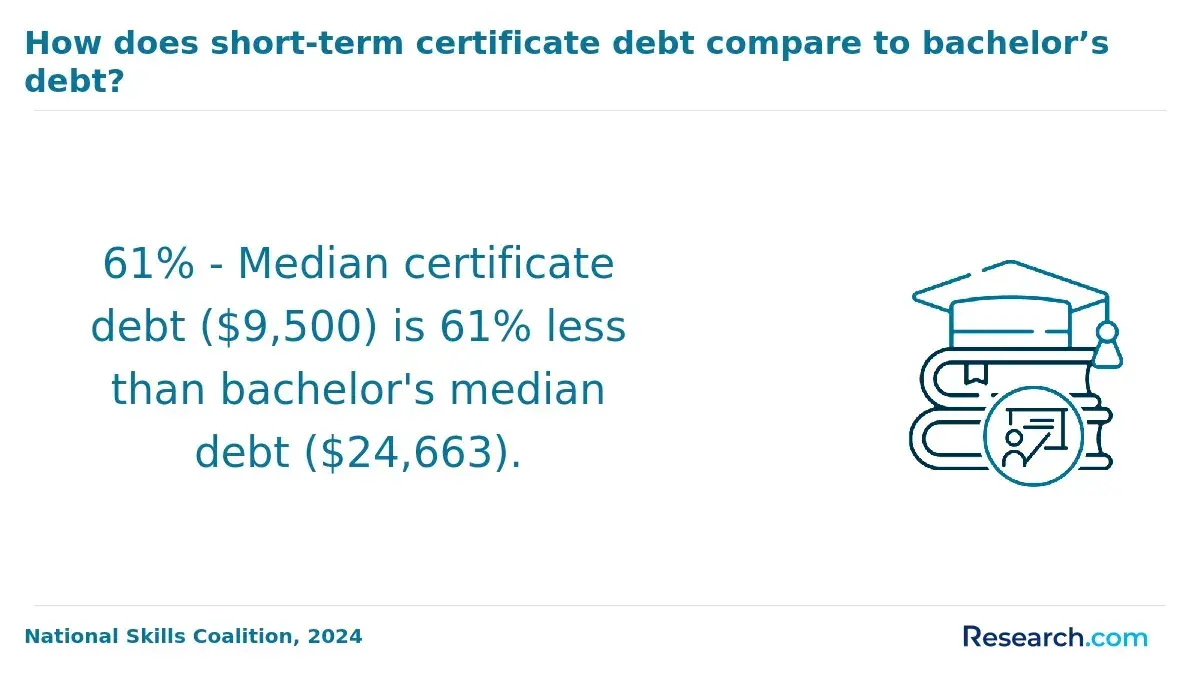
Cost is not only tuition. Students should also compare fees, textbooks, technology requirements, proctoring costs, graduation fees, transcript fees, lost work hours, and financial aid eligibility. College Board's 2024-25 data lists average published tuition and fees of $11,610 for in-state public four-year institutions and $43,350 for private nonprofit four-year institutions. For online students, that difference makes residency rules, transfer credit, and institutional aid especially important.
The table below shows common timeline and cost drivers. It does not predict your exact price, but it highlights the variables that most often change the final bill.
| Factor | What to check | Why it matters |
| Transfer credits accepted | How many credits apply to general education, major requirements, and electives | More applicable credits can reduce both time and tuition |
| Tuition model | Per-credit tuition, flat-rate terms, online tuition, or residency-based pricing | The cheapest model depends on how many courses you take per term |
| Enrollment pace | Full-time, part-time, accelerated, or self-paced options | Faster programs may reduce time but can be difficult for working students |
| Fees | Technology, online course, student services, proctoring, and graduation fees | Fees can make two similar tuition rates very different in total cost |
| Financial aid | Federal aid eligibility, scholarships, employer tuition assistance, and payment plans | A higher sticker price may be more affordable after grants or employer support |
Use this practical sequence to estimate affordability before you apply widely:
- Get a preliminary transfer review from each school on your shortlist.
- Calculate remaining credits, not total program credits.
- Multiply remaining credits by tuition and add mandatory fees.
- Subtract confirmed grants, scholarships, employer benefits, or tuition discounts.
- Compare the net price with realistic career goals, not with the highest possible salary you can find online.
The main trade-off is speed versus sustainability. An accelerated online program can be a good choice if you have strong writing skills, predictable work hours, and fewer family obligations. A part-time program may cost more over time if fees repeat each term, but it can reduce burnout and make it easier to keep earning income while studying.
What careers can a sociology degree unlock for those with human services experience?
A sociology degree can broaden career options for students who already understand client needs, community resources, documentation, and agency workflows. It is especially useful when paired with human services experience because employers may value both direct-service insight and the ability to analyze social systems, write reports, coordinate programs, and evaluate community needs.
Common paths include direct service advancement, program support, nonprofit operations, community outreach, research assistance, public agency work, and preparation for graduate study. Some roles may require only a bachelor's degree, while others require experience, specialized training, certification, or a graduate credential.
| Career path | Typical responsibilities | Why sociology plus human services helps |
| Case management support | Assess needs, document services, coordinate referrals, track client progress | Human services provides practice familiarity; sociology adds context on systems and inequality |
| Community outreach coordinator | Build partnerships, run outreach events, connect communities with services | Sociology helps interpret community barriers and design culturally aware outreach |
| Program coordinator | Schedule services, support staff, monitor participation, prepare reports | The degree strengthens writing, evaluation, and organizational analysis |
| Research or evaluation assistant | Collect data, support surveys, summarize findings, help assess program outcomes | Methods and statistics courses build evidence-based decision skills |
| Advocacy or policy assistant | Track policy issues, communicate with stakeholders, support campaigns or reports | Sociology connects individual problems to institutional and policy causes |
| Volunteer or nonprofit services manager track | Coordinate volunteers, support grants, supervise projects, manage community programs | Prior agency experience can support advancement into leadership responsibilities |
For students planning long-term advancement in clinical social work, administration, or higher-level social services leadership, graduate education may eventually be necessary. Some experienced professionals compare master's options with DSW programs later in their careers, but a sociology bachelor's can first provide a broad undergraduate foundation.
Students should also understand what this degree does not do. A sociology bachelor's by itself generally does not qualify someone for independent clinical counseling, licensed social work, school counseling, or psychologist roles. If licensure is the goal, check the exact graduate degree and supervised experience rules in your state before choosing undergraduate electives.
What salary ranges and job outlook can sociology and human services graduates expect?
Salary outcomes depend on role, state, employer, experience, graduate education, and whether the position is direct service, supervisory, analytical, or policy-focused. A sociology degree can support upward mobility, but it should not be treated as a salary guarantee.
BLS May 2024 wage data provides a useful benchmark for several related occupations. These figures describe national medians, so local pay may be higher or lower based on cost of living and employer type.
| Occupation | Median annual wage, BLS May 2024 | How it may connect to sociology and human services |
| Social and human service assistants | $44,240 | Common starting or continuing role for students with human services coursework |
| Community and social service specialists, all other | $51,130 | Broad category that can include program, outreach, and support roles |
| Social workers | $61,330 | Usually requires a social work degree for licensed roles, but sociology can support related preparation |
| Social and community service managers | $78,240 | Potential advancement area for experienced workers who move into program leadership |
| Sociologists | $101,770 | Often requires graduate education and research expertise rather than only a bachelor's degree |
Job outlook is strongest when graduates combine the degree with practical skills employers can immediately use. In human services-related workplaces, that often means documentation, case coordination, data literacy, grant support, program evaluation, trauma-informed communication, and experience with client management systems.
Technology is also changing expectations. Agencies increasingly use digital case records, dashboards, telehealth-adjacent service coordination, and data reporting tools. Sociology students who learn statistics, spreadsheet analysis, survey design, and ethical data use may be better positioned for program support and evaluation roles than students who choose only theory-based electives.
If your goal is doctoral-level clinical psychology or assessment, a sociology bachelor's may not include enough psychology prerequisites. In that case, compare graduate expectations early and review options such as PsyD online programs only after confirming accreditation, residency, internship, and state licensure rules.
How do accreditation and institutional quality affect online sociology degree value?
Accreditation is one of the clearest quality filters for online sociology degrees. In the U.S., students should prioritize institutions accredited by agencies recognized by the U.S. Department of Education or the Council for Higher Education Accreditation. Institutional accreditation affects federal financial aid eligibility, credit transfer, graduate school recognition, and employer trust.
Sociology bachelor's programs typically do not have the same kind of required programmatic accreditation that fields such as nursing, teaching, counseling, or social work may have. That makes institutional accreditation, curriculum quality, faculty qualifications, student support, and outcomes transparency especially important.
Quality should be evaluated through multiple signals, not one ranking or advertisement. Look for evidence that the program serves online students well and that the curriculum matches your goals.
- Recognized institutional accreditation: Confirm the school's accreditation through official accreditor or federal databases, not only the school's marketing page.
- Clear transfer policies: The program should explain maximum transfer credits, minimum grades, residency requirements, and how prior learning is evaluated.
- Qualified faculty: Faculty should have relevant graduate education, research experience, applied expertise, or strong teaching backgrounds in sociology and related fields.
- Online student support: Look for advising, tutoring, library access, technical support, disability services, and career services available remotely.
- Transparent costs: Reputable schools clearly list tuition, fees, refund policies, and financial aid procedures.
- Career alignment: The curriculum should include electives, internships, capstones, or projects connected to human services, research, policy, or community work.
Common red flags include unclear accreditation language, vague transfer promises, high-pressure enrollment tactics, limited faculty information, no sample degree plan, and refusal to provide total estimated cost. If a school cannot explain how its online sociology degree will work for a transfer student with human services credits, keep looking.
How can students choose a reputable online sociology program aligned with human services goals?
The best online sociology program is not necessarily the cheapest, fastest, or highest ranked. It is the program that accepts the most useful prior credit, fits your schedule, provides credible academic support, and connects clearly to your career or graduate school goals.
Start by defining your target outcome. A student who wants nonprofit program coordination should evaluate electives, internship options, and leadership coursework. A student who wants graduate social work should focus on grades, research writing, social welfare content, and prerequisites. A student who wants public policy or research support should look for methods, statistics, data analysis, and capstone opportunities.
Use these questions when speaking with admissions, transfer advisors, or department staff:
- How many of my prior human services credits will apply directly to the degree plan?
- Which remaining courses are required for the sociology major, and how often are they offered online?
- Can I complete internships, service-learning, or capstone projects in my local community?
- Are courses asynchronous, synchronous, or mixed, and are any campus visits required?
- What online support is available for writing, statistics, library research, and career planning?
- What is the total estimated cost after transfer credits, fees, and likely aid?
- Will this degree meet prerequisites for the graduate programs or career paths I am considering?
It also helps to compare sociology with adjacent degrees before enrolling. Sociology is a strong fit for students interested in social systems, policy, inequality, community programs, and research-informed service delivery. Human services may be more practice-focused, social work may be more directly tied to licensure, psychology may be better for mental health graduate prerequisites, and public health may fit population health or prevention work.
The smartest next step is to request degree audits from at least three accredited schools. Compare remaining credits, not just acceptance letters. Then choose the program that gives you the clearest route from your existing coursework to a credential that supports the work you actually want to do.
Other Things You Should Know About Sociology
Sociology can prepare students for graduate study in sociology, social work, public policy, public administration, law, education, public health, or related fields. The best preparation usually includes strong grades, research methods, statistics, writing-intensive courses, and faculty recommendations.
Most sociology programs require at least statistics or research methods, but they are usually applied to social data rather than advanced abstract math. If math is a concern, look for programs with tutoring, statistics labs, or slower-paced quantitative courses.
Many students do, especially in asynchronous programs. However, full-time work plus full-time study can be demanding because sociology courses require reading, writing, discussion, and research projects. Part-time enrollment may be more realistic if your human services job involves emotional labor, overtime, or rotating shifts.
References
- Online Degree vs. Traditional: Choosing the Right Path https://beal.edu/online-degree-vs-traditional/
- Online Human Services Degrees: Finding the Right Program https://www.edumed.org/online-schools/human-services-degrees/
- Choosing a bachelor's in human services | edX https://www.edx.org/resources/how-to-choose-a-bachelors-in-human-services
- Institutional Accreditation is in Dire Need of Change https://changinghighered.com/institutional-accreditation-is-in-dire-need-of-change/
- Community College vs Online Degrees: A Comparison https://www.sophia.org/blog/higher-education/community-college-vs-online-degree/
- Human Services (Online Program) https://www.simpson.edu/academics-programs/all-programs/human-services-online-program/