2027 Best Online Bachelor's in Sociology for Adults Over 30

Co-Founder and Chief Data Scientist
Choosing an online bachelor's in sociology after 30 is usually about more than finishing a degree; it is about fitting school around work, family, and a clearer career goal. NCES data published in 2024 shows that more than half of U. S. undergraduates took at least one distance education course, confirming that online study is now mainstream rather than unusual. This guide explains who sociology fits, how online programs compare, what accredited schools offer, what the degree costs, and how to judge whether the investment supports your next career move.
Key Things You Should Know
- An online bachelor's in sociology is best for adults who want flexible study in social research, inequality, communities, organizations, criminal justice, human services, policy, or graduate preparation rather than a license-specific clinical career.
- College Board's 2024-25 pricing data places average published tuition and fees at $11,610 for in-state public four-year institutions and $43,350 for private nonprofit four-year institutions, so transfer credits and tuition structure can change total cost substantially.
- BLS May 2024 wage data shows sociology-related paths vary widely, from social and human service assistant roles around the mid-$40,000s to management, research, HR, and analyst roles often requiring experience or graduate study.
What makes an online bachelor's in sociology a good fit for adults over 30?
An online bachelor's in sociology teaches students how social groups, institutions, culture, inequality, data, and policy shape human behavior. For adults over 30, the degree can be a practical fit because it builds broad, transferable skills: writing, research, interviewing, statistical reasoning, cultural analysis, and program evaluation.
The strongest fit is usually an adult learner who already has work experience and wants a bachelor's credential to move into people-centered, policy-oriented, nonprofit, public service, HR, research, or community roles. Sociology may also work well for adults who started college earlier and need a transfer-friendly major that does not require heavy lab rotations, clinical placements, or daytime campus attendance.
It may be less suitable if your primary goal is a licensed clinical role such as therapist, psychologist, or clinical social worker. Sociology can prepare you for graduate school, but it does not by itself meet professional licensure requirements. If you want direct counseling or licensed practice, compare sociology with social work, counseling, psychology, or human services before enrolling.
Adults over 30 should think about fit in practical terms. The right program should reduce friction, not add it. Look for these features when judging whether a sociology degree matches your life:
- Asynchronous courses that let you complete lectures and assignments outside fixed class meeting times.
- Generous transfer-credit review for prior college coursework, military learning, standardized exams, or professional training.
- Clear pathways into applied areas such as criminology, community leadership, nonprofit work, data analysis, public policy, or diversity and inclusion.
- Advising that understands adult learners, including part-time pacing, stop-out risks, and financial aid limits.
The main trade-off is breadth versus specialization. Sociology gives you a flexible foundation, but some career targets require added credentials, internships, graduate study, or experience in a specific field.
How do online sociology degrees compare with campus programs for working adults?
For working adults, the biggest difference between online and campus sociology programs is not academic content; it is delivery. A well-designed online sociology degree should cover similar theory, research methods, statistics, social inequality, and capstone requirements as the campus version. The decision comes down to schedule, support, networking, and cost.
The table below summarizes the most important differences for adults balancing school with work or caregiving. Use it to identify where an online program helps and where you may need to compensate intentionally.
| Factor | Online sociology bachelor's | Campus sociology bachelor's | Best fit |
| Schedule | Often asynchronous or evening-friendly | Usually tied to set class times | Online fits adults with unpredictable work or family schedules |
| Access to faculty | Office hours by email, video, chat, or learning platform | In-person office hours and department events | Campus fits students who benefit from spontaneous face-to-face interaction |
| Networking | Requires intentional participation in forums, virtual events, and internships | More informal peer and faculty contact | Online fits self-directed learners; campus fits students who need built-in community |
| Cost structure | May charge online tuition, technology fees, or flat-rate per-credit pricing | May include campus fees, commuting, parking, or housing costs | Online often helps commuters and parents, but total cost must be verified |
| Hands-on experience | Internships may be completed locally if approved | Internships may be easier to coordinate near campus | Either can work if the school has strong internship support |
Online is usually the better choice when attendance flexibility is the deciding factor. Campus may be better if you need a highly structured routine, prefer live discussion, or want access to local campus-based research centers, student organizations, and nearby agencies.
A common mistake is assuming that "online" automatically means easier. Strong online programs still require weekly reading, discussion posts, research projects, exams, and group work. Before applying, ask whether courses are asynchronous, how often live sessions are required, and whether exams use proctoring software or scheduled testing windows.
Which accredited schools offer the best online bachelor's in sociology for adults?
The "best" online bachelor's in sociology for an adult learner is not always the school with the most famous name. It is the accredited program that fits your transfer credits, schedule, budget, support needs, and career direction. Regional institutional accreditation is the baseline to verify because it affects credit transfer, graduate school eligibility, and employer confidence.
The following accredited schools are examples of online sociology bachelor's options that are especially worth comparing because they offer established online delivery, adult-friendly formats, or strong public university value.
Program names, availability, tuition, and state authorization can change, so confirm details directly with the school before applying.
| School | Online sociology option | Why adults over 30 may compare it | Best-fit student |
| Arizona State University Online | BA in Sociology | Large online infrastructure, frequent start dates, broad course selection | Students who want a nationally recognized online platform and multiple pacing options |
| Oregon State University Ecampus | BA or BS in Sociology | Strong Ecampus reputation and access to public university sociology coursework | Students who want a research university degree with online support services |
| University of Florida Online | BA in Sociology | Public university brand and structured online bachelor's pathway | Florida residents and cost-conscious students who meet admission requirements |
| Penn State World Campus | BA in Sociology | Established online division and recognized institutional network | Adults seeking a widely known university with fully online student services |
| Fort Hays State University | Online sociology bachelor's pathway | Often compared by students seeking lower public university tuition | Budget-focused students who want a flexible public institution option |
| University of Central Florida Online | Online sociology degree pathway | Large public university with extensive online advising and transfer pathways | Transfer students, especially in Florida or from partner colleges |
Do not choose from a list alone. A program that looks excellent on paper may be a poor match if it accepts few of your credits, requires synchronous meetings you cannot attend, or does not offer the applied electives you need. Contact admissions and the sociology department before you commit.
For adults over 30, the best short list usually includes one low-cost public option, one transfer-friendly option, one accelerated or multiple-start-date option, and one program with a strong specialization related to your career goal.
What admission requirements and prior credits matter most for adult sociology students?
Admission requirements for online sociology bachelor's programs are usually similar to other undergraduate degrees. First-year applicants may need a high school diploma or GED, transcripts, and sometimes standardized test scores, though many adult-focused programs are test-optional. Transfer applicants typically submit transcripts from every college previously attended.
Prior credit matters more for adults than for traditional first-time students because it affects cost, timeline, and motivation. Even 30 to 60 accepted credits can turn a four-year plan into a two- to three-year completion path. Ask for an official transfer evaluation before enrolling, not after you have paid a deposit.
Adult sociology applicants should pay close attention to these credit policies because they can change the real value of a program:
- Maximum transfer credits accepted toward the bachelor's degree.
- Minimum number of credits that must be completed at the institution, often called residency credits.
- Whether older credits expire, especially statistics, research methods, or general education courses.
- Whether the school grants credit for CLEP, DSST, military training, workplace learning, or prior learning assessment.
- Whether community college associate degrees satisfy general education requirements through articulation agreements.
The biggest red flag is vague transfer advising. If a school cannot explain how your prior credits apply to sociology major requirements, electives, and general education, your projected graduation date may be unreliable.
Adults with weak prior grades should not assume they are excluded. Some schools offer conditional admission, academic renewal, or a fresh-start policy. If your GPA is a concern, ask whether recent coursework, professional experience, or an associate degree can strengthen your application.
How long does an online sociology bachelor's take and what does it cost?
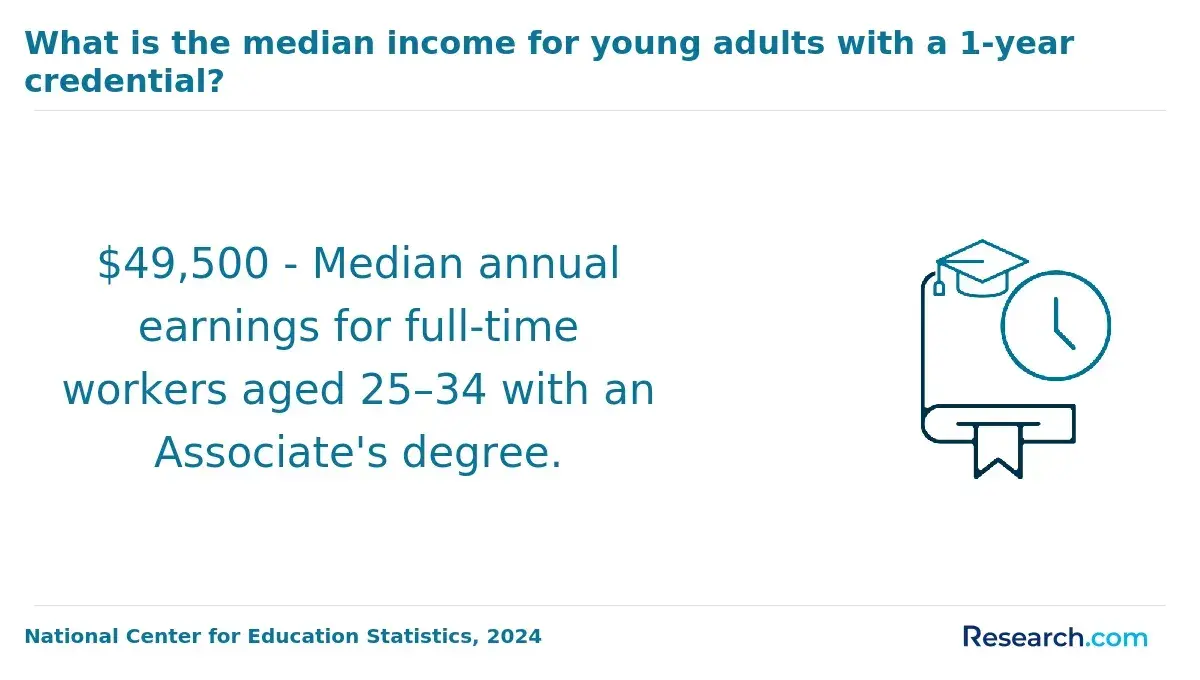
A traditional bachelor's degree requires about 120 semester credits. The time you need depends on how many credits you transfer and how many courses you can complete each term. Full-time students with no transfer credit often need about four years, while adults entering with an associate degree may finish in about two years if the credits apply cleanly.
Cost varies because online programs use different tuition models. College Board's 2024-25 data reported average published tuition and fees of $11,610 for in-state students at public four-year institutions and $43,350 at private nonprofit four-year institutions. Those figures are not sociology-specific, but they show why public tuition, transfer credits, and financial aid can heavily influence return on investment.
Most students should estimate total cost using more than tuition. The list below includes the common price components to request from each school before enrolling:
- Per-credit tuition for online undergraduate students.
- Online learning, technology, or distance education fees.
- Books, digital course materials, statistics software, or proctoring fees.
- Transfer-credit evaluation fees, graduation fees, and transcript fees.
- Lost income or reduced work hours if you study full time.
The table below shows how pacing affects the adult learner experience. It does not estimate exact price because institutional tuition and aid vary, but it clarifies the trade-off between speed and workload.
| Enrollment pace | Typical course load | Potential advantage | Potential drawback |
| Full time | 12 or more credits per term | Faster completion and stronger momentum | Harder to manage with full-time work or caregiving |
| Part time | 3 to 9 credits per term | More realistic for busy adults | Longer time to degree and possible aid implications |
| Accelerated sessions | Short courses, often 5 to 8 weeks | Can help motivated students complete credits quickly | Compressed workload can be intense |
| Degree completion | Upper-division credits after transfer | Efficient for associate degree holders | Less useful if previous credits do not match requirements |
To control cost, prioritize credit transfer, employer tuition assistance, state grants, military benefits, and low-fee online options. Avoid borrowing based on the full cost of attendance if you can complete part time while continuing to work.
What core courses and specializations are typical in online sociology programs?
Online sociology programs typically combine theory, research, statistics, writing, and applied electives. The major is less about memorizing facts and more about learning how to ask evidence-based questions about families, organizations, race and ethnicity, gender, crime, health, education, technology, and social change.
Common required courses often include the following areas. These courses matter because they shape whether the degree prepares you for research, public service, graduate study, or applied community work:
- Introduction to sociology and major sociological theories.
- Social research methods, including survey design, interviews, observation, and ethical research practice.
- Statistics or quantitative analysis for social science data.
- Social inequality, race and ethnicity, gender, class, and stratification.
- Deviance, criminology, family, health, education, urban sociology, or organizations.
- Senior seminar, capstone project, internship, or applied research project.
Specializations are useful when they connect directly to a career direction. For example, criminology can support justice-related roles, health sociology can support public health or patient advocacy paths, and organizational sociology can support HR or workforce development. If you are drawn more to individual behavior and mental processes, compare sociology with accelerated psychology programs before deciding.
Technology is also changing the skill mix. Sociology students increasingly benefit from comfort with spreadsheets, survey platforms, data visualization, AI-assisted literature search, and basic statistical tools. AI can help organize sources or summarize themes, but it does not replace ethical research design, critical interpretation, or strong writing.
A common mistake is avoiding statistics because it feels intimidating. For adults returning to school, statistics may be one of the most valuable courses in the major because it supports research, HR analytics, program evaluation, policy analysis, and graduate school readiness.
What careers can you pursue with an online bachelor's in sociology?
A bachelor's in sociology can lead to many entry-level and mid-career paths, but it is not a single-occupation degree. The best outcomes usually come when students combine the major with internships, data skills, volunteer work, a relevant minor, or previous professional experience.
The table below summarizes common career directions for sociology graduates. It focuses on responsibilities rather than promises, because job title, pay, and advancement vary by employer, location, experience, and graduate education.
| Career direction | Typical responsibilities | Helpful sociology strengths | May require |
| Human services and case support | Client intake, referrals, documentation, resource coordination | Understanding inequality, families, communities, and service systems | Experience, certifications, or a related graduate degree for advancement |
| Nonprofit and community programs | Program coordination, outreach, grant support, volunteer management | Community research, communication, cultural awareness | Project management and fundraising experience |
| Criminal justice and corrections | Reentry support, probation-related services, victim advocacy, program support | Criminology, deviance, social policy, data interpretation | Background checks, agency training, or state-specific requirements |
| Human resources and workforce development | Recruiting support, employee relations, training coordination, DEI initiatives | Organizations, group behavior, inequality, communication | HR software skills or certifications for advancement |
| Research and policy support | Survey work, data collection, reports, literature reviews, program evaluation | Methods, statistics, writing, critical analysis | Strong quantitative skills or graduate study for senior research roles |
| Marketing, user research, and insights | Customer research, audience analysis, qualitative interviews, reporting | Culture, social behavior, research design | Portfolio, analytics tools, or business experience |
If your goal is direct service in community agencies, compare sociology with a health and human services degree, which may be more explicitly applied to client support, social programs, and service delivery roles.
Adults over 30 often bring an advantage that younger graduates may not have: work history. A sociology degree can reframe prior experience in customer service, healthcare support, corrections, education, retail management, military service, ministry, or caregiving into a credentialed path toward program coordination, advocacy, HR, or community leadership.
The degree is weakest when pursued without a career strategy. Before you enroll, choose at least one target field and build related experience during the program through internships, volunteer work, campus research, professional associations, or employer-based projects.
What salary ranges and job outlook can sociology graduates expect?
Sociology salary outcomes vary because graduates enter different occupations. The degree can support entry-level roles after graduation, but higher-paying research, management, policy, or clinical paths often require experience, graduate study, specialized technical skills, or licensure.
BLS May 2024 wage data provides useful national benchmarks for sociology-adjacent occupations. These are occupation-level medians, not guaranteed salaries for sociology majors.
| Occupation | May 2024 national median pay | How sociology may connect | Important limitation |
| Social and human service assistants | $44,240 | Entry-level client support, referrals, and community services | Some roles accept associate-level education; advancement may require experience or graduate study |
| Probation officers and correctional treatment specialists | $64,520 | Criminology, reentry, corrections, and justice-system support | Requirements vary by state and agency |
| Human resources specialists | $72,910 | Organizations, workplace culture, employee relations, and training | Business experience and HR systems knowledge may matter as much as the major |
| Market research analysts | $76,950 | Survey research, social behavior, audience analysis, and reporting | Quantitative skills, analytics tools, and portfolio work are important |
| Social and community service managers | $78,240 | Program leadership, nonprofit management, and community services | Usually requires experience beyond the bachelor's degree |
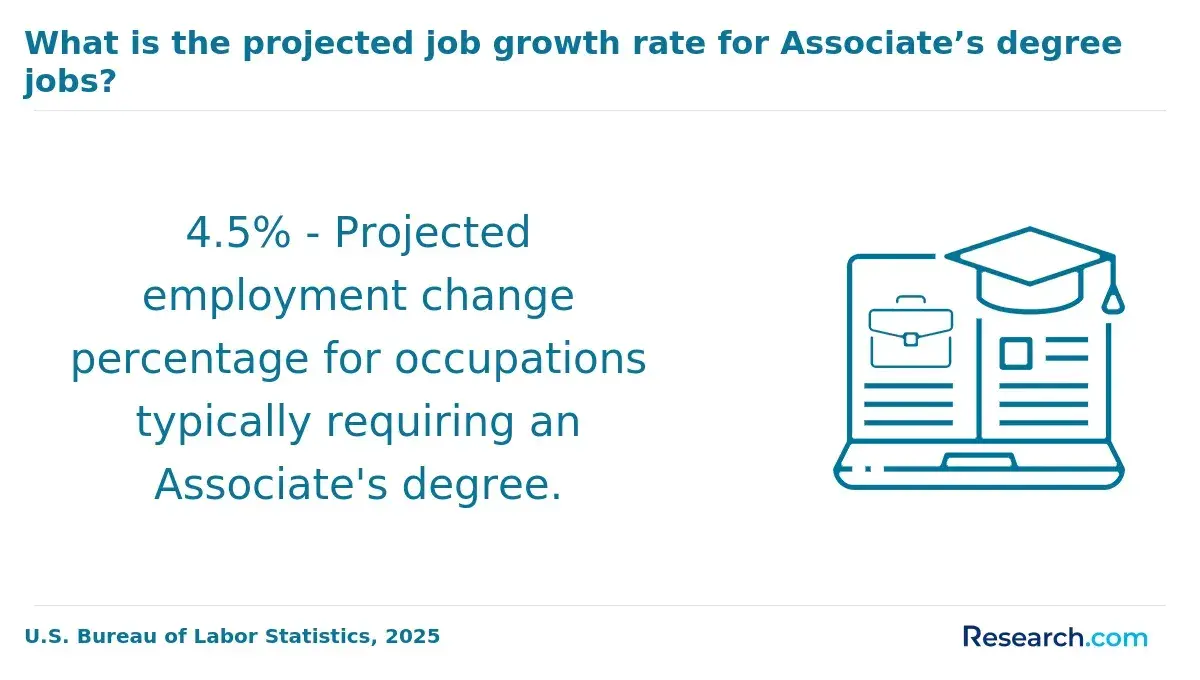
Job outlook also depends on the occupation you target. Roles tied to healthcare, aging populations, behavioral health support, social services, and data-informed decision-making may offer steadier demand than general "sociology" job searches. Use BLS projections by occupation rather than relying on a broad assumption that every sociology-related job is growing at the same pace.
If your long-term goal is licensed clinical psychology, sociology can be a helpful undergraduate background, but it is only an early step. You would need graduate training and licensure, and students comparing doctoral routes should separately research PsyD programs online APA accredited because clinical psychology has accreditation and state licensing rules that differ sharply from sociology.
To improve salary potential, pair sociology with measurable skills. Statistics, Excel, SQL basics, grant writing, case documentation, Spanish or another in-demand language, HR platforms, GIS, survey tools, and internship experience can make your degree easier for employers to understand.
How can adults over 30 maximize flexibility and support in online sociology study?
Adults over 30 succeed in online sociology programs when they design school around real life instead of ideal life. Flexibility is not just about logging in at night; it is about course sequencing, predictable deadlines, responsive advising, and knowing when to slow down before burnout affects grades.
Before enrolling, ask each school direct questions about support. These questions help reveal whether the online program is built for adult learners or simply moved online:
- Are courses asynchronous, synchronous, or mixed?
- How many hours per week should students expect for a 3-credit sociology course?
- Can part-time students take required major courses every term, or are some offered only once per year?
- Is tutoring available for statistics and research methods?
- Can internships or capstones be completed in my local community?
- Who advises online sociology students: a general online advisor or a department-based sociology advisor?
Strong support services for adults usually include online tutoring, writing help, library access, career coaching, disability accommodations, mental health resources, technical support, and proactive advising. Career services are especially important because sociology is broad; you may need help translating coursework into a resume that employers recognize.
The most practical study strategy is to protect consistency. Schedule fixed weekly blocks for reading, discussion posts, research, and writing. If you have children or rotating shifts, choose programs with predictable assignment windows rather than courses that require frequent live participation.
Another useful strategy is to connect every major paper to your target field. A student interested in HR might write about workplace inequality, while a student interested in criminal justice might research reentry programs. This turns coursework into interview examples and writing samples.
How do you evaluate and choose a reputable online sociology program?
A reputable online sociology program should be transparent, accredited, transfer-aware, and honest about career outcomes. Do not rely only on rankings, advertisements, or speed claims. Your goal is to verify that the program can help you finish efficiently and move toward a realistic career or graduate-school plan.
Use the following step-by-step process before committing to a school. It will help you avoid the most expensive mistakes adult learners make:
- Verify institutional accreditation through the school's accreditor and the U.S. Department of Education's recognized accreditation database.
- Request an official transfer-credit evaluation showing exactly which credits count toward general education, major requirements, electives, and graduation.
- Compare total cost, including fees, books, digital materials, and remaining credits, not just tuition per credit.
- Review the course rotation to confirm required sociology classes are available when you need them.
- Ask whether the program offers applied electives, internships, capstones, or research projects connected to your career goal.
- Check whether career services support online students with resume reviews, internship searches, graduate-school planning, and employer connections.
- Read policies on withdrawal, repeats, academic probation, financial aid satisfactory academic progress, and maximum time to completion.
Red flags include unclear accreditation language, pressure to enroll immediately, no written transfer evaluation, vague tuition estimates, limited faculty information, and promises of specific salaries. A trustworthy school will explain both the strengths and limits of the sociology degree.
If your main goal is counseling or therapy, evaluate sociology carefully against programs designed for licensure pathways. A guide to types of therapy degrees can help clarify whether counseling, social work, psychology, marriage and family therapy, or another route is more appropriate.
The best final choice is usually the program that gives you the shortest credible path to graduation, the lowest manageable net cost, the strongest adult learner support, and the clearest connection to your next job or graduate program.
Other Things You Should Know About Sociology
Yes, a sociology major can prepare you for law school. Sociology provides a strong foundation in understanding social structures, critical thinking, and research skills, all of which are valuable in legal studies. Many programs in 2027 offer courses that emphasize social justice and policy analysis, beneficial for law school preparation.
Employers are more likely to respect an online sociology degree when it comes from a properly accredited institution and the graduate can show relevant skills. The diploma often does not distinguish online from campus study, but you should verify the school's accreditation, reputation, internship options, and career support.
Useful minors include statistics, data analytics, criminal justice, public health, psychology, business, human resources, political science, nonprofit management, or Spanish. The best minor depends on your target field: choose one that adds a practical skill or industry focus to sociology's broad social science foundation.
References
- Improving opportunity and choice for mature students - Office for Students https://www.officeforstudents.org.uk/publications/improving-opportunity-and-choice-for-mature-students/
- Best Online Colleges for Working Adults [2026] https://www.straighterline.com/blog/degree-completion-best-online-colleges-for-working-adults
- Sociology Courses & Degrees https://www.open.edu.au/study-online/humanities-social-science/sociology
- College Admissions for Adult Learners https://www.mefa.org/article/college-admissions-for-adult-learners/
- Online Learning For Adults | 5 Benefits You Can't Overlook | TCA https://careeracademy.ie/blog/online-learning-for-adults-5-benefits-you-cant-overlook/
- Bachelor of Arts inSociology Online or On Campus https://www.albany.edu/sociology/programs/ba-sociology
- 20 Great Value Online Colleges for a Sociology Degree (Bachelor’s) https://www.greatvaluecolleges.net/online-colleges-sociology-bachelors/
- High School Classes Required for College Admission - National Association for College Admission Counseling (NACAC) https://www.nacacnet.org/high-school-classes-required-for-college-admission/
- 2025 Most Affordable Online Sociology Degrees https://www.onlineu.com/most-affordable-colleges/sociology-degrees
- 5 High School Classes Highly Selective Colleges Expect You to Take https://www.saraharberson.com/blog/high-school-classes-highly-selective-colleges-expect-you-to-take