2027 Best Accredited Online Disability Studies Degree Programs: Compare Tuition, Admissions, and Career Outcomes

Co-Founder and Chief Data Scientist
Choosing an online disability studies degree is a high-stakes decision because the field connects education, healthcare, policy, accessibility, and civil rights. The CDC reported in 2024 that more than 1 in 4 U. S. adults has a disability, which means employers need professionals who understand access, inclusion, services, and advocacy. This guide is for first-time students, transfer students, and working adults comparing accredited online options. You'll learn how programs differ in cost, admissions, format, accreditation, and career fit so you can choose a degree that matches your goals and budget.
Key Things You Should Know
- Fully online disability studies degrees are relatively niche, so the strongest values usually combine institutional accreditation, transfer-friendly policies, disability-focused coursework, and a clear fit with advocacy, human services, accessibility, or higher education support roles.
- College Board's 2024 tuition data shows a major cost gap between public in-state tuition and private nonprofit tuition, so students should compare total program cost, not only whether a program is online.
- BLS May 2024 wage data places social and community service managers at a median annual wage of $78,240, but disability studies graduates' outcomes depend heavily on role, experience, graduate education, licensure, and employer type.
Which Accredited Online Disability Studies Degree Programs Offer the Best Overall Value?
The best overall value is not always the lowest sticker price. For disability studies, value usually means an accredited institution, online delivery that fits adult learners, enough disability-specific coursework to build expertise, and a realistic path into your intended career field.
The table below compares commonly considered accredited online disability studies options and closely aligned degree pathways. Because program availability, tuition, and delivery rules can change, use this as a decision framework and verify current details directly with each school before applying.
| Program or pathway | Best fit | Value strengths | Potential trade-offs |
| CUNY School of Professional Studies BA in Disability Studies | Transfer students and working adults seeking a disability-focused bachelor's degree | Public university setting, online adult-learner design, strong fit for advocacy and disability services roles | May be most cost-effective for students who can maximize transfer credit and qualify for favorable tuition policies |
| University of Toledo BA in Disability Studies | Students who want a public university disability studies degree with broad human services relevance | Institutionally accredited university, online access, coursework tied to disability, inclusion, and community support | Students should compare residency rules, online fees, and whether the curriculum aligns with their target state or employer expectations |
| Arizona State University Online BA in Disability Studies | Students who want a large online university infrastructure and frequent online course scheduling | Strong online platform, nationally recognized public university brand, broad interdisciplinary approach | Students should review total per-credit cost and whether accelerated sessions fit their learning style |
| CUNY School of Professional Studies MS in Disability Services in Higher Education | Professionals aiming for college disability services, accessibility coordination, or higher education support roles | Graduate-level specialization in a defined employment setting | Best for students already committed to higher education disability services rather than general entry-level roles |
| Online human services, rehabilitation, or interdisciplinary studies degrees with disability-focused electives | Students whose local public university does not offer a standalone disability studies major | May offer broader career mobility and more school choices | Requires careful review to confirm enough disability-specific coursework, fieldwork, and career relevance |
For most cost-conscious students, a public online bachelor's program that accepts substantial transfer credit is often the strongest starting point. For students who already hold a bachelor's degree and want to work in campus accessibility or disability resource offices, a targeted graduate program may offer better alignment than a second bachelor's degree.
A common mistake is treating every online disability-related degree as interchangeable. Disability studies is usually interdisciplinary and non-licensure-focused, while rehabilitation counseling, special education, social work, occupational therapy, and nursing often have separate licensure or certification requirements.
What Accreditation Should Students Look for in an Online Disability Studies Degree Program?
Students should first verify institutional accreditation. In the U.S., this means the college or university is accredited by an accreditor recognized by the U.S. Department of Education or the Council for Higher Education Accreditation, which is essential for federal financial aid eligibility, credit transfer, and employer recognition.
Disability studies programs typically do not have one universal specialized accreditor. That makes institutional accreditation, curriculum quality, faculty expertise, and career alignment especially important. The table below shows what accreditation checks matter most depending on your goal.
| Student goal | Accreditation or approval to verify | Why it matters |
| General disability advocacy, accessibility, or nonprofit work | Institutional accreditation | Confirms the school meets recognized academic and administrative standards |
| Social work licensure | CSWE-accredited social work program | A disability studies degree alone usually does not meet licensed social work requirements |
| School-based special education teaching | State-approved educator preparation program | Teacher licensure is controlled by state rules, not by disability studies coursework alone |
| Rehabilitation counseling | Counseling-related accreditation and state licensure rules, where applicable | Clinical or counseling roles may require a specific graduate degree and supervised experience |
| Healthcare practice roles | Programmatic accreditation tied to the profession | Clinical credentials such as nursing or occupational therapy follow separate accreditation and licensure pathways |
Before enrolling, students should take a few practical verification steps. These checks reduce the risk of choosing a program that is legitimate but poorly matched to your intended career.
- Confirm the institution's accreditation status through an official accreditation database or the school's accreditation page.
- Ask whether the online program is the same credential as the campus version, if a campus version exists.
- Review whether credits will transfer into graduate programs, social work programs, counseling programs, or educator preparation programs if those are future goals.
- Ask admissions staff to identify which roles the program is designed to prepare students for and which roles require additional credentials.
The biggest red flag is a school that implies a disability studies degree automatically qualifies graduates for licensed counseling, teaching, or clinical practice. It may be excellent preparation for those paths, but it is rarely a substitute for profession-specific licensure education.
How Do Tuition Costs Compare Across Accredited Online Disability Studies Degree Programs?
Tuition can vary widely because online disability studies programs may be housed at public universities, private institutions, degree-completion divisions, or continuing education units. The most useful comparison is total cost to completion, not the per-credit rate shown on a marketing page.
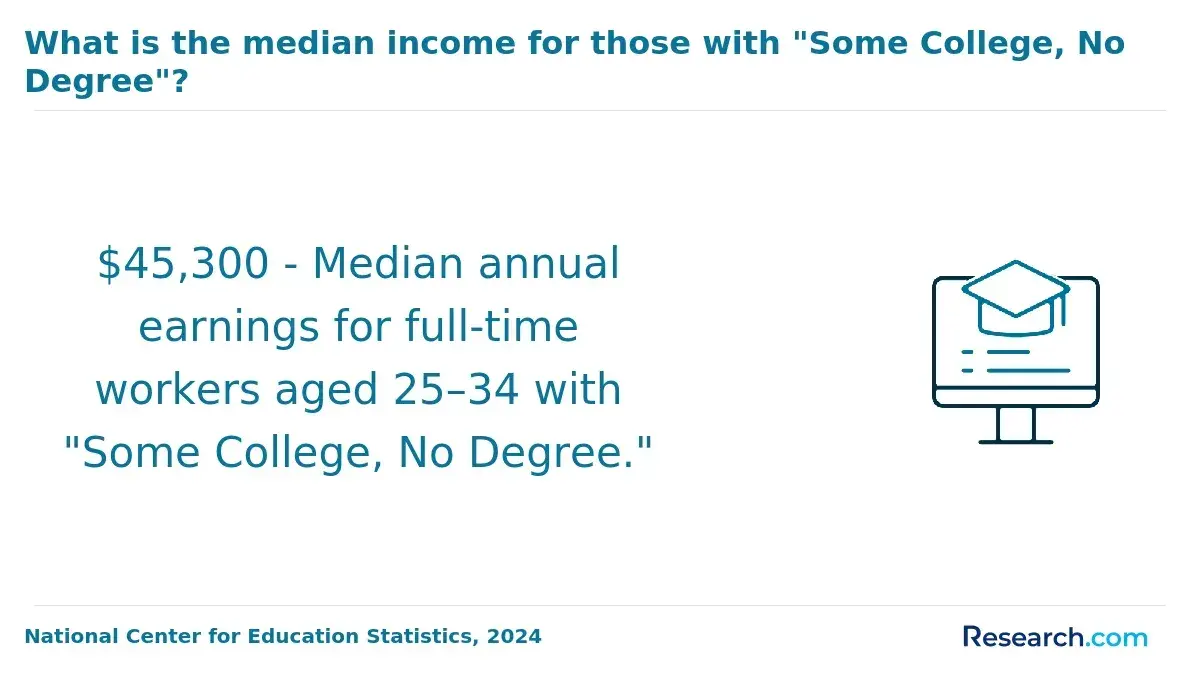
College Board's 2024 Trends in College Pricing reported average published tuition and fees of $11,610 for in-state students at public four-year institutions and $43,350 at private nonprofit four-year institutions for the 2024-25 academic year. This gap matters because many disability studies students are transfer or adult learners who may be able to reduce cost by choosing a public online program and applying previous credits.
The table below explains the major cost variables students should compare before deciding which program is truly more affordable.
| Cost factor | Why it changes total price | What to ask the school |
| Residency status | Public universities may charge different tuition for in-state, out-of-state, and online students | Is there a separate online tuition rate, and does residency affect it? |
| Transfer credits | Accepted credits reduce the number of courses you must pay for | How many credits can I transfer, and will they apply to major requirements or only electives? |
| Online fees | Technology, distance learning, graduation, and student service fees can raise the final bill | What mandatory fees apply to online students each term? |
| Course load | Flat-rate tuition can favor full-time students, while per-credit tuition may favor part-time students | Is tuition billed per credit, per term, or by enrollment band? |
| Fieldwork or practicum requirements | Some programs may require supervised experiences that affect work schedules or transportation costs | Are there placement, background check, insurance, or travel costs? |
To compare programs accurately, calculate your personal net cost. Multiply required remaining credits by the tuition rate that applies to you, add mandatory fees, subtract grants and scholarships, and then compare the amount you would actually need to pay or borrow.
A frequent mistake is choosing the lowest tuition rate without checking transfer-credit limits. A school that costs slightly more per credit can be cheaper overall if it accepts more of your prior coursework toward the major.
How Competitive Is Admission to Accredited Online Disability Studies Degree Programs?
Admission to online disability studies programs is usually less standardized than admission to clinical healthcare or licensure-based graduate programs. Many bachelor's options are designed for transfer students, working adults, or degree completers, while graduate disability services programs may expect a completed bachelor's degree and a clear professional purpose.
The table below summarizes the admissions factors that most often affect competitiveness. Students should use it to identify where they are likely to be admissible and where they may need to strengthen their application.
| Program level | Common admissions requirements | How competitive it may feel | Best applicant profile |
| Online bachelor's degree completion | Prior college credits, minimum GPA, transcripts, general education completion status | Moderate; transfer fit often matters more than essays or test scores | Students with previous college coursework who want to finish a bachelor's degree online |
| First-time bachelor's pathway | High school transcript or equivalency, placement requirements, general university admission | Varies by university selectivity | Students beginning college who want a disability-focused major from the start |
| Online master's degree in disability services | Bachelor's degree, GPA review, statement of purpose, resume, possible recommendations | Moderate; professional alignment can strengthen the application | Professionals interested in accessibility, student services, or higher education roles |
| Related licensure pathway | Prerequisite coursework, GPA thresholds, field experience, background checks, state requirements | Often more competitive because licensure programs have regulated outcomes | Students seeking teaching, counseling, social work, nursing, or therapy credentials |
Students who want admissions flexibility should still evaluate academic quality. Open or transfer-friendly admissions do not automatically mean weak instruction; they may simply reflect an adult-learner mission.
Before applying, take these steps to avoid wasted time and application fees.
- Request an unofficial transfer evaluation before committing to a school.
- Confirm the minimum GPA for both university admission and the disability studies major, if separate requirements exist.
- Ask whether online students must complete orientation, placement testing, or prerequisite courses before enrolling in major classes.
- For graduate programs, align your statement of purpose with specific roles such as accessibility coordinator, disability resource professional, advocate, or program manager.
The main admissions mistake is applying only to the school with the easiest application. A better strategy is to apply to programs that match your academic record, schedule, budget, and career objective.
Which Learning Formats Offer the Greatest Flexibility in Online Disability Studies Degree Programs?
Flexibility is one of the main reasons students choose online disability studies programs, but "online" can mean several different things. The best format depends on your work schedule, caregiving responsibilities, learning style, and need for live interaction.
The table below compares the formats students are most likely to encounter. It can help you decide whether a program's delivery model will support your success or create avoidable scheduling stress.
| Online format | How it works | Best for | Watch out for |
| Asynchronous online | Students complete weekly work without required live class meetings | Working adults, caregivers, students in different time zones | Requires strong time management and comfort with independent learning |
| Synchronous online | Students attend live virtual classes at scheduled times | Students who want discussion, structure, and instructor interaction | May conflict with work shifts or family responsibilities |
| Accelerated sessions | Courses run in shorter terms, often with faster pacing | Motivated students who can focus on fewer courses at a time | Assignments can pile up quickly if life or work demands increase |
| Part-time online | Students take a lighter course load over a longer period | Students balancing school with employment or caregiving | Longer completion time may affect aid eligibility or motivation |
| Hybrid or low-residency | Most coursework is online, but some activities may occur in person | Students who value occasional face-to-face networking or field experiences | Travel requirements can reduce flexibility |
If you need maximum schedule control, prioritize asynchronous courses, clear weekly deadlines, and predictable course rotations. Students comparing broader flexible education options may also find it useful to review accredited self-paced online courses, especially when completing general education or prerequisite credits before entering a degree program.
The most common format mistake is assuming faster is always better. Accelerated terms can be efficient, but they are not ideal if you need extended time for reading, discussion, writing, or field-based projects.
What Student Support Services Improve Success in Online Disability Studies Degree Programs?
Student support services can make the difference between enrolling and actually graduating. This matters especially for online disability studies students, many of whom are adult learners, transfer students, first-generation students, caregivers, or students with disabilities themselves.
The support areas below are worth asking about before enrollment because they directly affect persistence, accessibility, and career readiness.
- Academic advising that understands transfer credits, degree maps, and disability studies career pathways.
- Accessible learning technology, captioned media, assistive technology compatibility, and responsive disability services for online students.
- Writing, research, and library support for policy papers, case studies, advocacy projects, and capstone assignments.
- Career services that can help translate disability studies coursework into resumes for nonprofit, higher education, government, healthcare-adjacent, and community roles.
- Field placement or experiential learning guidance when the program includes internships, service learning, or practicum-style projects.
Students should ask whether online learners receive the same support as campus students. If a school lists tutoring, counseling, career advising, or disability services but limits access by location or time zone, the program may be less flexible than it appears.
A red flag is vague language such as "support is available" without named offices, online appointment options, or response-time expectations. Strong programs make it easy to identify who helps with advising, accessibility, transfer credit, and career planning.
Which Financial Aid Options Are Available for Accredited Online Disability Studies Degree Students?
Accredited online disability studies students may qualify for the same major federal aid programs as campus students if the institution and program are eligible. The first step is completing the FAFSA and comparing aid offers based on net price rather than headline tuition.
The federal Pell Grant maximum award for the 2024-25 award year is $7,395. For lower-income students, that grant can materially reduce the cost of an online public program, but eligibility depends on financial need, enrollment intensity, lifetime limits, and federal rules.
The table below explains the most common aid sources and how each affects affordability.
| Aid option | How it can help | Key limitation |
| Federal grants | Reduce out-of-pocket cost and usually do not need to be repaid | Eligibility depends on FAFSA results, enrollment level, and federal limits |
| Federal student loans | Can cover tuition and required costs when grants are not enough | Must be repaid with interest, so borrowing should be tied to a realistic career plan |
| State grants | May provide additional aid for residents attending eligible institutions | Often depends on residency, deadlines, and enrollment intensity |
| Institutional scholarships | Can reduce cost at the school level | May require separate applications, GPA minimums, or full-time enrollment |
| Employer tuition assistance | Useful for students already working in education, healthcare, government, or nonprofits | May require repayment if you leave the employer too soon |
| Vocational rehabilitation support | May assist eligible students with disabilities pursuing employment-related education | Rules vary by state agency and individual eligibility plan |
When comparing aid offers, focus on the amount you would need to borrow after grants and scholarships. Students considering healthcare-adjacent alternatives can also compare how aid works for career-focused options such as medical assistant classes online, but the best choice depends on whether your goal is direct patient care, advocacy, accessibility, or long-term degree progression.
A common financial aid mistake is ignoring satisfactory academic progress rules. Dropping courses, enrolling below required credit levels, or repeatedly changing programs can affect aid eligibility and increase total cost.
Which Career Outcomes Are Associated With Accredited Online Disability Studies Degree Programs?
Disability studies is best understood as an interdisciplinary degree rather than a single-occupation credential. Graduates may work in advocacy, accessibility, human services, education support, nonprofit programs, government agencies, healthcare-adjacent coordination, or higher education disability services.
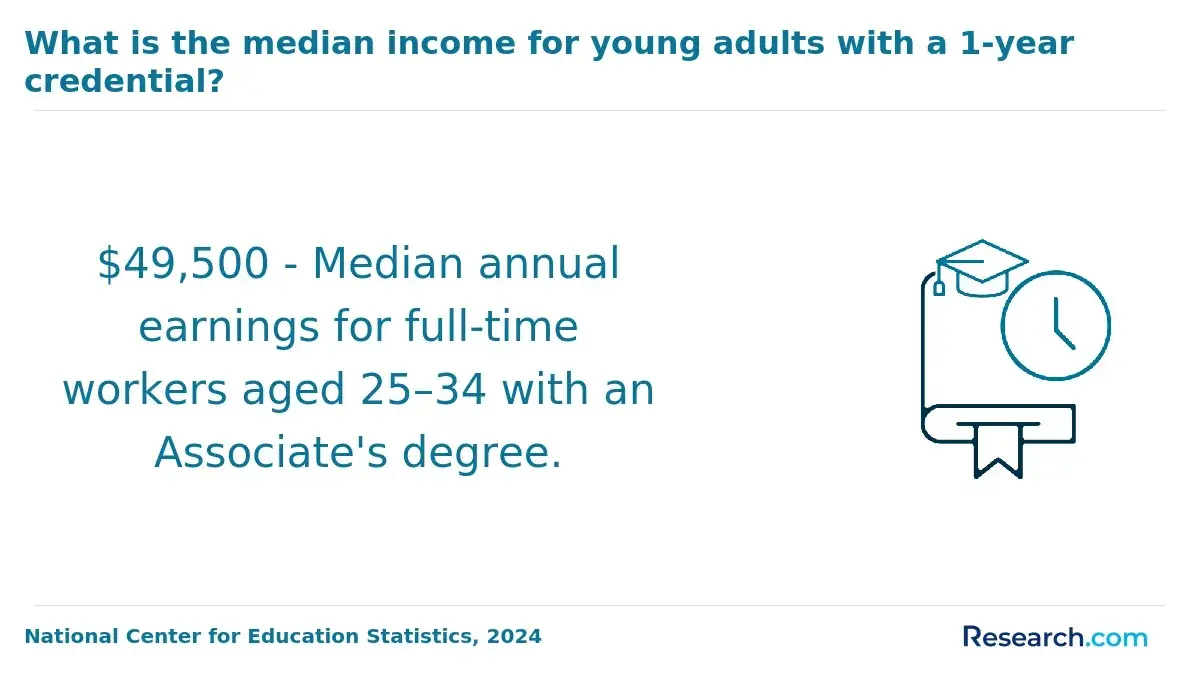
BLS May 2024 data reported a median annual wage of $78,240 for social and community service managers. That figure is useful because some disability studies graduates may eventually move into program management, but it should not be treated as an entry-level salary estimate or a guaranteed outcome.
The table below connects disability studies preparation with possible career directions. It also identifies when additional education, certification, or licensure may be required.
| Career direction | Typical responsibilities | How disability studies helps | Additional credential considerations |
| Disability advocate | Support access, rights education, systems navigation, and community inclusion | Builds knowledge of disability policy, identity, barriers, and person-centered support | Licensure is not usually required, but employer requirements vary |
| Accessibility coordinator | Improve access to programs, services, facilities, or digital content | Develops understanding of accommodations, universal design, and inclusive practice | Technology, ADA, or digital accessibility training may strengthen candidacy |
| Higher education disability services professional | Coordinate accommodations, documentation processes, student support, and faculty communication | Directly aligns with disability services, access, and postsecondary inclusion | Graduate study may be preferred for coordinator or director roles |
| Human services case support | Connect clients with services, benefits, community supports, and care teams | Provides disability-informed communication and systems knowledge | Clinical case management or social work roles may require separate credentials |
| Program manager in nonprofit or public services | Oversee services, staff, grants, outreach, and performance goals | Combines disability knowledge with leadership, policy, and community engagement | Experience and graduate education can matter more than major alone |
This degree is usually worth considering if you want to improve access, services, and inclusion rather than provide licensed clinical treatment. If you want a faster direct-care credential instead of a bachelor's pathway, comparing medical assistant programs accelerated can clarify the trade-off between short-term employment entry and broader degree-based career mobility.
The main career mistake is assuming the major title alone will define your job options. Students should build a portfolio through internships, service learning, research projects, accessibility training, policy analysis, or work experience related to their target setting.
How Do Online and Campus-Based Disability Studies Degree Programs Compare?
Online and campus-based disability studies programs can lead to the same academic credential when offered by the same accredited institution, but the learning experience can be very different. The better choice depends on your schedule, preferred interaction style, local opportunities, and need for campus resources.
The table below compares the practical differences that matter most for students choosing between online and in-person study.
| Comparison factor | Online disability studies program | Campus-based disability studies program |
| Schedule flexibility | Often better for working adults and caregivers | More structured class times may help students who need routine |
| Peer interaction | Discussion boards, video meetings, group projects, and virtual communities | More informal networking before and after class |
| Access to internships | May allow local placements near the student | May have established campus-area placement partners |
| Accessibility services | Depends on online platform quality and remote support availability | May include physical campus resources and in-person support |
| Cost control | Can reduce relocation and commuting costs | May offer campus-based scholarships, assistantships, or local networks |
Online learning is usually the stronger fit if you need to keep your job, live far from campus, or want to complete a degree without relocating. Campus learning may be better if you thrive through in-person discussion, want local campus networks, or need structured face-to-face support.
Students comparing disability studies with clinical healthcare graduate pathways should recognize that format flexibility does not remove licensure requirements. For example, an online DNP program may offer online coursework, but clinical practice requirements and nursing licensure rules still shape the path.
A common mistake is assuming online programs are automatically easier. Strong online programs can be academically rigorous, writing-intensive, and discussion-heavy, especially in fields like disability studies where ethics, policy, lived experience, and systems analysis matter.
How Should Students Choose the Best Accredited Online Disability Studies Degree Program?
The best accredited online disability studies program is the one that fits your career goal, accepts your prior credits, offers credible academic quality, and keeps debt manageable. Rankings can help you discover options, but your final decision should be based on fit and evidence.
Use the following steps to compare programs in a practical order. This sequence helps prevent common mistakes such as choosing by tuition alone or enrolling before confirming career alignment.
- Define your target outcome, such as advocacy, accessibility coordination, disability services in higher education, nonprofit program work, or preparation for graduate study.
- Confirm institutional accreditation and check whether your intended career requires a separate accredited licensure program.
- Request a transfer-credit evaluation and ask how many credits will apply to major, general education, and elective requirements.
- Calculate total net cost using your remaining credits, mandatory fees, grants, scholarships, and expected borrowing.
- Review the curriculum for disability policy, accessibility, ethics, inclusive design, services systems, research, and applied learning.
- Compare online format details, including live meeting requirements, course length, part-time options, and fieldwork expectations.
- Ask about career support, internship options, alumni roles, and whether online students receive equal access to advising and disability services.
Students should prioritize affordability when two programs offer similar accreditation, curriculum depth, and support. Paying more can make sense when a program offers a stronger match for a specific career goal, better transfer acceptance, a respected online infrastructure, or specialized graduate-level preparation.
If your real goal is licensed mental health diagnosis and prescribing rather than disability advocacy or services coordination, compare disability studies with clinical pathways carefully. A shortest PMHNP program serves a very different audience and typically requires nursing credentials, clinical training, and state licensure.
The best final question is simple: "Will this program help me reach my specific goal at a cost I can justify?" If the answer is unclear after speaking with admissions, financial aid, and career services, keep comparing before you enroll.
Other Things You Should Know About Disability Studies
Admission requirements typically include a high school diploma or equivalent and a completed application. Some programs may require a personal statement or letters of recommendation. Most programs do not require prior healthcare experience or specific background knowledge for entry.
Yes. Many disability studies students come from education, social services, advocacy, public policy, psychology, sociology, communication, or lived experience with disability. A healthcare background can help in some roles, but it is not usually required for admission to a bachelor's program.
Graduates can pursue roles such as disability services coordinator, advocacy specialist, or program manager. According to the Bureau of Labor Statistics, these positions are expected to grow by 8% by 2027, driven by increasing awareness and inclusivity initiatives.
References
- Faculty of Graduate and Postdoctoral Studies | University of Manitoba - Disability Studies (MA, MSc) https://umanitoba.ca/graduate-studies/admissions/programs-of-study/disability-studies-ma-msc
- Career Outcomes for Graduates https://online.utoledo.edu/programs/disability-studies/career-opportunities.html
- Academic Programs in Disability Studies | Review of Disability Studies: An International Journal https://rdsjournal.org/index.php/journal/article/view/23
- Disability Studies: Is it the Field for You? https://enablingdevices.com/blog/disability-studies-is-it-the-field-for-you/
- Disability Studies - BA https://www.torontomu.ca/programs/undergraduate/disability-studies/
- Study and Work Abroad https://www.independentliving.org/studyworkabroad/US/
- Disability Studies Beyond SDS https://disstudies.org/resources/beyond-sds/
- Links | ECLBS EU Council of Business Schools https://www.eclbs.eu/list
- 3 Career Pathways for Disabled Adults | Boone Center Inc. https://boonecenter.com/community-events/continuing-education-and-job-opportunities-for-adults-with-disabilities-after-high-school/
- Master of Arts in Disability Studies | Iowa Graduate Degree https://loras.edu/academics/disability-studies/