2027 Cheapest Accredited Online Disability Studies Degree Programs That Accept FAFSA

Co-Founder and Chief Data Scientist
Finding an affordable online disability studies degree is tricky because true fully online majors are limited, and FAFSA eligibility does not automatically mean a program will be inexpensive. The need is real: the CDC reported in 2024 that more than 1 in 4 U. S. adults has a disability, increasing demand for professionals who understand accessibility, advocacy, services, and policy. This guide is for students comparing low-cost accredited online options, federal aid, transfer credits, and career value so they can choose a program based on total cost, not just advertised tuition.
Key Things You Should Know
- The cheapest FAFSA-eligible online disability studies options are usually public universities, but the best net price depends on residency, transfer credits, grants, fees, and whether the program is a true major or a disability-focused human services pathway.
- For the 2024-25 aid year, the maximum Federal Pell Grant is $7,395, which can materially reduce annual out-of-pocket cost for eligible students but may not cover full tuition, fees, books, and living expenses.
- Standalone online disability studies bachelor's degrees are uncommon, so students should compare institutional accreditation, Title IV federal aid participation, online format, transfer limits, and career fit before choosing the lowest advertised tuition.
Which Are the Cheapest Accredited Online Disability Studies Degree Programs That Accept FAFSA?
The cheapest accredited online disability studies degree programs that accept FAFSA are usually found at public institutions that participate in federal Title IV student aid. Because the field is specialized, students should broaden their search to include programs titled disability studies, disability services, developmental disabilities, human services, or rehabilitation-related studies when the curriculum clearly supports disability advocacy and service careers.
The table below highlights practical low-cost starting points for U.S. students. Tuition can change by residency, course load, fees, and transfer status, so treat this as a comparison shortlist rather than a final bill.
| School | Online disability-focused degree option | FAFSA participation | Accreditation status to verify | Why it may be affordable |
| CUNY School of Professional Studies | BA in Disability Studies | Yes, for eligible degree-seeking students | Institutional accreditation through Middle States | Often one of the strongest values for New York residents because public resident tuition can be substantially lower than many private online programs |
| University of Toledo | BA in Disability Studies | Yes, for eligible degree-seeking students | Institutional accreditation through the Higher Learning Commission | Offers a direct disability studies bachelor's pathway from a public university with online study options |
| Minot State University | BS in Human Services with an intellectual and developmental disabilities focus | Yes, for eligible degree-seeking students | Institutional accreditation through the Higher Learning Commission | Public-university pricing and a disability-services curriculum can make it a strong alternative when a student wants direct practice preparation |
| Eastern Washington University | Disability studies-related bachelor's pathway or concentration, subject to current online availability | Yes, for eligible degree-seeking students | Institutional accreditation through Northwest Commission on Colleges and Universities | May be worth comparing for transfer students in the region, especially if prior credits apply efficiently |
The most important takeaway is that "cheapest" depends on the student. A New York resident with transfer credits may find CUNY SPS to be the lowest-cost option, while an out-of-state student may find a different public university cheaper after aid, accepted credits, and fees are included.
Students who are also comparing disability-support roles with broader healthcare training should recognize that shorter credentials can have different aid rules and career outcomes; for example, medical assistant classes online may fit students seeking a faster clinical support route rather than a full disability studies bachelor's degree.
How Does FAFSA Eligibility Work for Online Disability Studies Degree Programs?
FAFSA eligibility works at three levels: the institution must participate in federal student aid, the student must meet federal eligibility rules, and the specific program must be eligible for Title IV aid. An accredited university may offer both aid-eligible degree programs and non-aid-eligible certificates, so students should confirm the exact program before enrolling.
Use the following sequence before assuming an online disability studies degree can be paid for with federal aid:
- Confirm that the school appears in Federal Student Aid's school search and has a valid federal school code.
- Ask the financial aid office whether the exact online disability studies degree is Title IV eligible, not just whether the institution accepts FAFSA.
- Verify that you will be admitted as a degree-seeking student because nondegree enrollment often limits federal aid access.
- Check enrollment requirements because some grants and loans require at least half-time enrollment.
- Review satisfactory academic progress rules because failing to meet GPA or completion-rate standards can interrupt aid renewal.
A common mistake is assuming FAFSA acceptance means the government will pay the entire program cost. FAFSA is an application, not a scholarship; it determines eligibility for grants, loans, work-study, and sometimes state or school aid.
How Much Does an Online Disability Studies Degree Cost After Financial Aid?
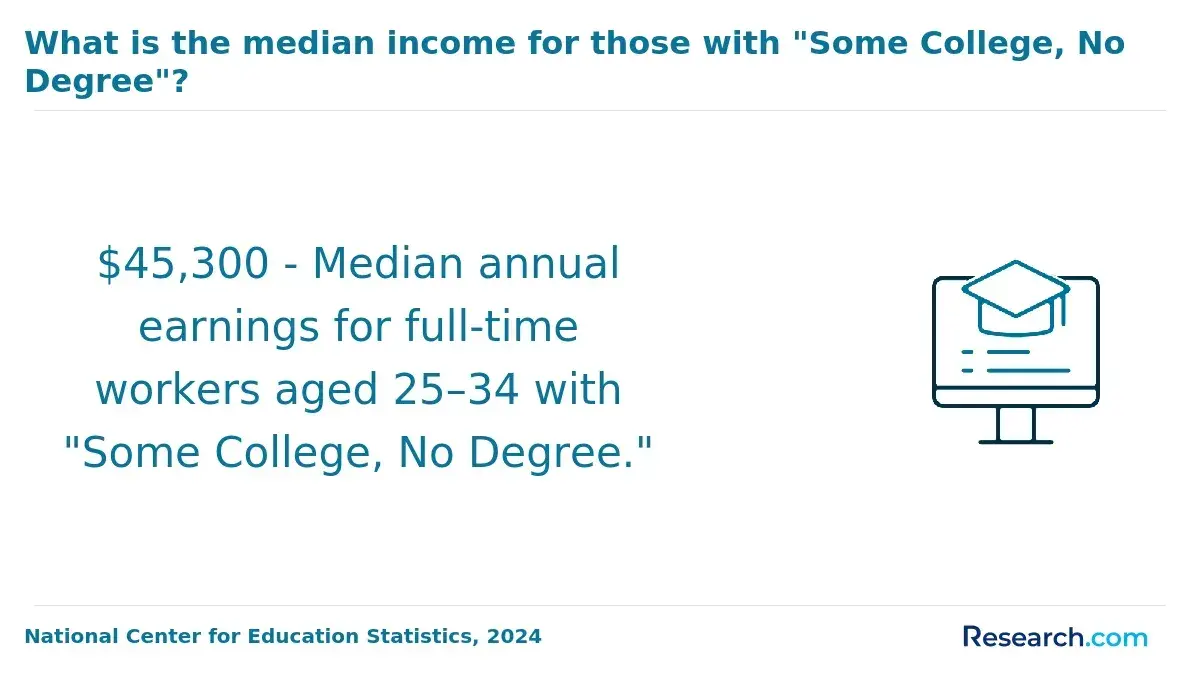
The cost of an online disability studies degree after financial aid is the published cost of attendance minus grants, scholarships, tuition assistance, and other aid that does not need to be repaid. Loans can cover remaining costs, but they lower affordability if the student leaves with high debt.
The Federal Pell Grant is the most important federal grant for many low- and moderate-income undergraduates. For 2024-25, the maximum award is $7,395, which can cover a meaningful portion of annual tuition at some public online programs but will not necessarily cover fees, books, technology, or living expenses.
The table below shows the cost categories students should compare when estimating real out-of-pocket cost. This is more useful than looking only at tuition per credit.
| Cost item | Why it matters | How it affects affordability |
| Tuition per credit | Most online bachelor's programs require about 120 total credits, minus accepted transfer credits | A low per-credit rate matters most when few transfer credits are accepted |
| Mandatory fees | Online, technology, student service, graduation, and course fees may be charged separately | Fees can make a low-tuition program more expensive than expected |
| Books and materials | Disability studies courses may use textbooks, policy materials, software, or accessibility-related tools | Open educational resources can reduce costs |
| Transfer credit acceptance | Accepted credits reduce the number of courses a student must pay for | A higher-tuition school may cost less overall if it accepts more prior credits |
| Grant and scholarship aid | Federal, state, institutional, and private grants reduce net price | Students should compare aid offers, not just sticker prices |
A practical estimate starts with this formula: total remaining credits multiplied by tuition per credit, plus fees and materials, minus grants and scholarships. If the result still requires borrowing, compare the monthly loan repayment estimate with likely entry-level pay in the roles you are targeting.
Which Affordable Online Disability Studies Degree Programs Offer the Best Value?
The best-value affordable online disability studies program is not always the one with the lowest tuition. Value comes from the combination of low net cost, accepted transfer credits, strong student support, flexible scheduling, relevant curriculum, and career alignment.
The table below compares value profiles rather than ranking schools by tuition alone. This helps students decide when a slightly higher-cost program may be the better financial choice.
| Value priority | Best-fit student | What to look for | When a higher-cost program may be worth it |
| Lowest resident tuition | Students who qualify for in-state rates at a public university | Resident tuition, state grants, and local scholarship eligibility | If another school accepts far more transfer credits |
| Maximum transfer savings | Students with community college, military, workplace, or prior university credits | Generous transfer limits and clear degree audits | If the higher tuition applies to fewer remaining credits |
| Career-specific disability services preparation | Students aiming for advocacy, independent living services, case coordination, or developmental disability support | Courses in disability policy, accessibility, community services, and ethics | If the curriculum aligns better with target jobs |
| Flexibility for working adults | Students balancing employment, caregiving, or disability-related access needs | Asynchronous courses, part-time pacing, and strong online advising | If flexibility improves the likelihood of finishing |
Students should also compare degree level. An associate degree or certificate may be cheaper and faster, but a bachelor's degree may be preferred for advocacy, case management, program coordination, policy, or nonprofit leadership roles. Graduate study is a different investment; students comparing advanced healthcare leadership paths should review how an online DNP program differs from disability studies in licensure, cost, and career purpose.
Are the Cheapest Online Disability Studies Degree Programs Properly Accredited?
The cheapest online disability studies degree is only worth considering if the institution is properly accredited. For FAFSA purposes, students should look for institutional accreditation from an agency recognized by the U.S. Department of Education; this is also important for credit transfer, graduate school admission, and employer trust.
Disability studies itself usually does not require a specialized programmatic accreditor in the way nursing, social work, counseling, or teacher education may. That means institutional accreditation, curriculum quality, field experience options, and career outcomes become especially important.
Before applying, students should complete these checks:
- Search the school in the U.S. Department of Education's accreditation database and confirm the accreditor listed is currently recognized.
- Ask whether the online version of the degree is covered under the same institutional accreditation as the campus programs.
- Confirm the program leads to a degree, not only a noncredit certificate or continuing education credential.
- Check whether courses transfer to graduate programs in social work, counseling, education, public health, or human services if future study is part of your plan.
- Be cautious with schools that emphasize speed and discounts but provide little information about accreditation, faculty, student outcomes, or total cost.
A red flag is a school that says it is "licensed," "approved," or "authorized" but does not clearly identify recognized institutional accreditation. State authorization and accreditation are not the same thing.
What FAFSA Grants and Federal Aid Can Pay for an Online Disability Studies Degree?
FAFSA can connect eligible students to several types of federal aid for an online disability studies degree. Grants are usually the most valuable because they do not need to be repaid, while loans should be used cautiously and only after estimating total debt.
The main federal aid sources to understand are:
- Federal Pell Grant: Need-based grant aid for eligible undergraduate students; the maximum award for 2024-25 is $7,395.
- Federal Supplemental Educational Opportunity Grant: Campus-based grant aid for students with exceptional financial need, available only at participating schools with limited funds.
- Federal Direct Subsidized Loan: Need-based undergraduate loan where the government pays interest during certain enrollment and deferment periods.
- Federal Direct Unsubsidized Loan: Undergraduate or graduate loan that accrues interest while the student is in school.
- Federal Work-Study: Part-time employment funding offered by participating schools, sometimes useful for students seeking disability services, nonprofit, or campus accessibility experience.
Students should also ask about state grants, institutional scholarships, employer tuition assistance, military education benefits, AmeriCorps awards, and scholarships from disability advocacy organizations. These sources can reduce borrowing, but deadlines and eligibility rules vary.
How Do Transfer Credits Lower the Cost of an Online Disability Studies Degree?
Transfer credits can be the biggest cost reducer in an online disability studies bachelor's degree. If a program requires 120 credits and a student transfers in 60 accepted credits from a community college, the student may only need to pay for the upper-division half of the degree.
The key is not how many credits you have earned; it is how many credits the new school applies to the degree. A student with many general credits may still face a high bill if those credits transfer only as electives and do not satisfy major, general education, or residency requirements.
Before choosing a program, ask admissions or the registrar for a written transfer evaluation that addresses these points:
- How many total credits will transfer into the disability studies degree?
- Which transferred courses satisfy general education, major, elective, or upper-division requirements?
- What is the school's maximum transfer credit limit?
- How many credits must be completed through the enrolling institution?
- Does the school award credit for prior learning, military training, professional certifications, or standardized exams?
Students planning to finish prerequisites or general education requirements before enrolling should make sure those courses are regionally accredited and transferable. Carefully selected accredited self-paced online courses may help some students reduce time to completion, but only if the target school approves them in advance.
Which Students Benefit Most From a Low-Cost Online Disability Studies Degree With FAFSA?
A low-cost online disability studies degree with FAFSA is especially useful for students who need flexibility and want to work in accessibility, advocacy, disability services, independent living, human services, nonprofit programs, or policy-related roles. It can also fit working adults already employed in direct support, caregiving, community services, or education support who want a bachelor's credential for advancement.
The students who benefit most usually fall into several groups:
- Transfer students who can enter with substantial completed credits and avoid paying for the full 120-credit degree.
- Working adults who need asynchronous or part-time online courses to stay employed while studying.
- Students eligible for Pell Grants, state grants, employer assistance, or tuition waivers that reduce net price.
- People with lived disability experience or caregiving experience who want formal training in disability rights, accessibility, policy, and services.
- Direct support professionals seeking advancement into coordination, advocacy, training, or program roles.
Students should avoid choosing purely on low tuition if they need a licensed clinical role. Disability studies can be excellent for advocacy and services, but it generally does not replace degrees required for licensed counseling, nursing, occupational therapy, social work, or special education. If the goal is faster entry into a healthcare support job, medical assistant programs accelerated may be a more direct comparison point than a bachelor's degree.
How Does the Cost of an Online Disability Studies Degree Affect Career ROI?
The cost of an online disability studies degree affects ROI because many related careers are mission-driven and may not pay enough to justify heavy borrowing. The degree can still be worthwhile when it is low-cost, grant-supported, transfer-friendly, and aligned with roles that require or prefer a bachelor's degree.
Salary expectations vary widely by role. The U.S. Bureau of Labor Statistics reported a May 2024 median annual wage of $78,240 for social and community service managers, a role that may require experience and often a bachelor's degree. That figure should not be treated as an entry-level guarantee; instead, it shows why students aiming for program coordination or management should keep debt low enough to preserve long-term value.
To evaluate ROI, students should compare the degree cost with realistic career paths:
- For advocacy or nonprofit service roles, prioritize low net price and internships because early-career pay may be modest.
- For program coordination or management goals, look for courses in policy, budgeting, leadership, data, and community services.
- For graduate school plans, choose a program with strong academic advising and transferable prerequisites.
- For clinical ambitions, verify the required licensure pathway before enrolling because disability studies alone may not meet clinical credential requirements.
Students interested in clinical mental health prescribing roles should understand that those paths require nursing credentials and graduate clinical preparation; a shortest PMHNP program serves a very different audience than an undergraduate disability studies degree.
How Should Students Choose the Cheapest FAFSA-Eligible Online Disability Studies Degree?
Students should choose the cheapest FAFSA-eligible online disability studies degree by comparing net cost, accreditation, transfer credits, aid availability, flexibility, and career fit together. The right program is the one that you can afford, complete, and use for your target role.
A practical selection process should look like this:
- Start with accredited public universities that clearly identify an online disability studies or disability-focused degree pathway.
- Confirm the school and exact program participate in federal student aid before submitting deposits.
- Request a full cost estimate that includes tuition, fees, books, technology costs, and expected time to completion.
- Submit transcripts early and compare official transfer evaluations across schools.
- Review the financial aid offer and separate free aid from loans.
- Ask whether online students receive the same advising, disability accommodations, career services, and library access as campus students.
- Compare curriculum against your goal, such as advocacy, independent living services, human services, policy, accessibility, or graduate study.
- Estimate total borrowing before enrolling and decide whether the expected career path can reasonably support repayment.
The biggest mistakes are choosing based only on advertised tuition, ignoring fees, assuming all FAFSA applicants receive grants, failing to verify accreditation, overlooking transfer limits, and borrowing up to the maximum without a repayment plan. A more expensive program can be the better choice if it accepts more credits, offers stronger advising, reduces time to graduation, or aligns more closely with your intended career.
Other Things You Should Know About Disability Studies
Often, yes. Many online programs are designed for working adults, but the workload still matters. Ask whether courses are asynchronous, how often assignments are due, and whether any internship, fieldwork, or live class sessions are required.
Some are fully online, while others may include optional or required in-person components. Always confirm residency, orientation, internship, and exam requirements before enrolling, especially if you live outside the school's state.
Employers are more likely to focus on institutional accreditation, relevant skills, experience, and the degree's fit for the role than on whether courses were online. Internships, volunteer work, and disability services experience can strengthen your resume.
Sometimes, but not always. Federal aid eligibility depends on whether the certificate is an approved Title IV program at that institution. Ask the financial aid office about the exact certificate before assuming FAFSA will apply.
References
- Do Online Colleges Accept FAFSA? | Ascent Funding https://www.ascentfunding.com/blog/do-online-colleges-accept-fafsa/
- Special Education and Applied Disability Studies https://www.mercyhurst.edu/academics/grad/special-education
- Master of Arts in Disability Studies | Iowa Graduate Degree https://loras.edu/academics/disability-studies/
- The 4 Best Online Colleges that Accept FAFSA https://joinjuno.com/financial-literacy/financial-aid/online-colleges-accept-fafsa
- 9 Online Schools That Accept FAFSA (and How to Get Financial Aid) https://www.studentloanplanner.com/financial-aid-online-colleges/
- Paying For College With A Disability https://www.affordablecollegesonline.org/financial-aid/scholarships/paying-for-college-for-students-with-disabilities/
- National Council on Disability | Students with Disabilities Face Financial Aid Barriers https://www.ncd.gov/report/students-with-disabilities-face-financial-aid-barriers/
- Online Degrees While on Disability: SSDI, Financial Aid, and Work Incentives https://www.collegetransitions.com/blog/online-degrees-disability-ssdi-financial-aid-work-incentives/
- The Fully Accessible Guide To Paying For College For Students With Disabilities https://ilcac.org/accessible-guide-to-paying-for-college-for-students-with-disabilities/
- 2025 Best Online Colleges for Students with Disabilities https://www.onlineu.com/online-schools/students-with-disabilities