2027 Fastest Accredited Online Disability Studies Programs: Accelerated Degrees and Completion Times

Co-Founder and Chief Data Scientist
As disability rights law, accessibility mandates, and inclusive-design standards expand across healthcare, education, and the public sector, employers increasingly seek professionals who understand disability not as a clinical afterthought but as a core policy and design consideration. To meet this shift, a growing number of accredited universities now offer hybrid-online disability studies degrees that pair flexible coursework with hands-on community-based practicums.
While traditional programs require two to three years of full-time study, accelerated tracks compress this timeline into as few as 16 to 20 months without diluting the interdisciplinary rigor employers expect. Through this guide, students can compare the top accredited online disability studies programs, weigh real completion times against tuition costs, and understand how licensure and practicum requirements differ by state so you can start shaping policy and practice sooner.
Key Things You Should Know
- The shortest realistic path is typically 12 to 24 months for students entering an accredited online Disability Studies bachelor's-completion program with about 60 to 90 transferable credits; students starting with no college credit usually need closer to 3 to 4 years.
- Accelerated formats usually use 6-week, 7-week, or 8-week courses, multiple start dates, summer enrollment, or self-paced coursework, but shorter terms mean the same credit hours are compressed into fewer weeks.
- Most fast programs rely on transfer policies, prior learning assessment, and residency rules; many bachelor's programs require 120 semester credits and commonly allow up to 90 transfer credits, but the exact limit depends on the school and major.
Which Colleges Offer the Fastest Accredited Online Disability Studies Programs?
The fastest accredited online Disability Studies programs are usually transfer-friendly bachelor's degrees or closely related disability services programs offered by institutionally accredited universities. Because official catalog requirements can change, use the table below as a decision-support starting point and confirm current credit totals, residency requirements, course rotation, and online availability directly with each school.
| College or university | Online program type | Accreditation to verify | Why it may be fast | Realistic fastest path |
| CUNY School of Professional Studies | BA in Disability Studies | Institutional accreditation through Middle States Commission on Higher Education | Designed for online adult learners and transfer students; strong fit for students with prior college credit | About 1 to 2 years for students who transfer substantial credit and can enroll full time |
| University of Toledo | BA in Disability Studies | Institutional accreditation through the Higher Learning Commission | Online bachelor's option with transfer pathways that may work well for students who already completed general education or an associate degree | About 18 to 24 months with an associate degree or high transfer-credit standing |
| Eastern Washington University | Online Disability Studies bachelor's pathway | Institutional accreditation through the Northwest Commission on Colleges and Universities | Quarter-based or modular enrollment can help motivated students progress faster when required courses are available | Often 2 years or less for well-prepared transfer students, depending on accepted credits and course sequencing |
| Bellevue University | Disability Services or related human services bachelor's pathway | Institutional accreditation through the Higher Learning Commission | Adult-focused online delivery and generous transfer review may shorten time for students with prior coursework or military training | About 18 to 30 months for transfer students, depending on remaining major and general education credits |
| Minot State University | Human Services or Intellectual/Developmental Disabilities-related online study | Institutional accreditation through the Higher Learning Commission | Relevant disability-focused curriculum for students seeking service, advocacy, or developmental disabilities roles | Usually fastest for students entering with an associate degree or completed lower-division credits |
For most students, the "fastest" option is not simply the school with the shortest marketing claim. It is the accredited program that accepts the most usable credits, offers required major courses frequently, and does not add hidden delays such as unavailable capstones, internships that require local placement approval, or strict course sequencing.
Disability Studies programs vary in emphasis. Some focus on disability rights, policy, advocacy, accessibility, and culture, while others lean toward human services, developmental disabilities, rehabilitation support, or community programs. If your goal is direct clinical practice, counseling licensure, nursing, occupational therapy, or social work licensure, verify whether the bachelor's degree is only a stepping stone rather than the final credential.
How Long Does It Take to Complete an Accredited Online Disability Studies Degree?
An accredited online Disability Studies degree usually follows the same credit expectations as an on-campus bachelor's program: about 120 semester credits, or the quarter-credit equivalent. What changes in an accelerated online program is the calendar, not the academic standard.
The table below compares common starting points and the timelines students can usually expect. It is important because advertised completion times often assume the student already has transfer credits, can take a full course load, and does not need remedial coursework or repeated classes.
| Student starting point | Credits still needed | Likely online pace | Realistic completion time | Best fit |
| No previous college credit | About 120 semester credits | Full-time, year-round | 3 to 4 years | First-time college students who want maximum flexibility but can sustain a steady workload |
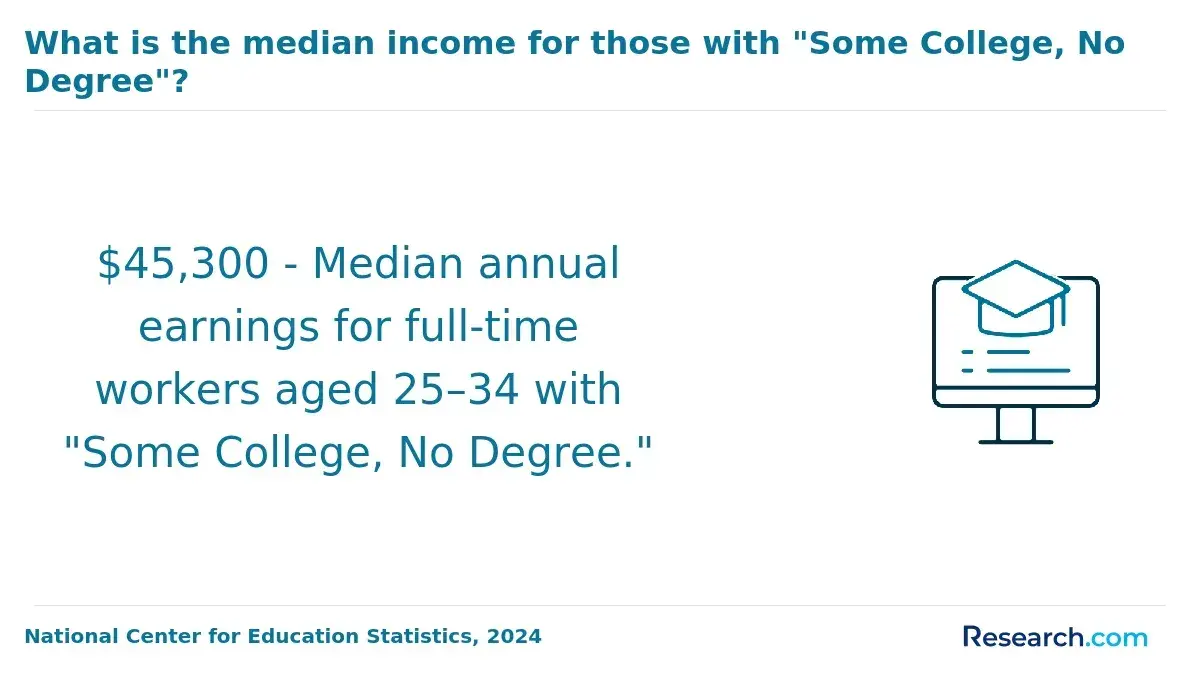
| Some college credit | About 60 to 90 credits remaining | Full-time or heavy part-time | 2 to 3 years | Students returning after stopping out or changing majors |
| Associate degree completed | About 45 to 60 credits remaining | Full-time, accelerated terms | 18 to 24 months | Community college graduates seeking a bachelor's-completion route |
| High-transfer student | About 30 to 45 credits remaining | Full-time, year-round | 12 to 18 months | Students whose credits satisfy both general education and major prerequisites |
Completion time depends heavily on whether your credits apply to the major, not just whether they appear on a transcript. A student with 90 elective-heavy credits may still need two years if required Disability Studies courses are offered in a fixed sequence, while a student with fewer but better-matched credits may graduate sooner.
Course length also affects the experience. An 8-week course can help you complete more terms per year, but it normally requires faster reading, writing, discussion, and project deadlines. A 16-week course may be slower on paper, but it can be more manageable for students with full-time jobs, caregiving duties, or limited weekly study time.
How Do Accelerated and Competency-Based Online Disability Studies Programs Work?
Accelerated Disability Studies programs work by changing the delivery model. They may divide the academic year into shorter sessions, allow overlapping enrollment periods, offer summer courses, or let students move quickly through material they already understand. Competency-based programs go further by allowing progress after students demonstrate mastery, although fully competency-based Disability Studies degrees are less common than term-based online programs.
The comparison below explains the main formats you may encounter. Understanding these models matters because the fastest format is only helpful if it matches how you learn and how much time you can commit each week.
| Format | How it works | Speed advantage | Main trade-off |
| 8-week courses | Courses run in half-semester sessions instead of a traditional 15- or 16-week term | Students can complete more courses across the year | Weekly workload is compressed |
| 6- or 7-week courses | Even shorter sessions often used in adult-focused online programs | Can support rapid progress for focused learners | Missed deadlines can be harder to recover from |
| Year-round enrollment | Students take fall, spring, and summer courses | Reduces calendar downtime | Less time for breaks, work travel, or family obligations |
| Self-paced coursework | Students move through approved material within a defined subscription or term window | Fastest for students with strong prior knowledge and discipline | Requires strong planning and may not be available for every major course |
| Bachelor's-completion format | Upper-division coursework is built for students who already completed lower-division credits | Often the fastest accredited route to a bachelor's degree | Students without transfer credits will not benefit as much |
If you are comparing self-paced options, look for regionally or institutionally accredited providers and confirm that credits apply to your degree plan before enrolling. A broader overview of accredited self-paced online courses can help you understand how self-paced learning differs from standard asynchronous courses.
Students should be careful with the word "accelerated." It does not mean easier, less work, or automatic graduation by a specific date. In most cases, a 3-credit accelerated course still carries the same academic expectations as a 3-credit traditional course; the assignments are simply packed into a shorter calendar.
What Accreditation Should an Online Disability Studies Program Have?
For Disability Studies, the most important accreditation factor is institutional accreditation from an agency recognized by the U.S. Department of Education or the Council for Higher Education Accreditation. Unlike nursing, counseling, social work, or teacher education, Disability Studies bachelor's programs do not usually have a universal required programmatic accreditor.
Accreditation affects financial aid eligibility, credit transfer, graduate school review, and employer confidence. Before applying, students should verify the following items because they can determine whether a fast degree is also a useful degree:
- Institutional accreditation: Confirm that the college or university is accredited by a recognized institutional accreditor, such as the Higher Learning Commission, Middle States Commission on Higher Education, Northwest Commission on Colleges and Universities, New England Commission of Higher Education, Southern Association of Colleges and Schools Commission on Colleges, or WASC Senior College and University Commission.
- State authorization: Make sure the school is authorized to offer online education to students in your state, especially if the program includes fieldwork, practicum, or internship activities.
- Program fit: If your intended career requires licensure, verify whether the Disability Studies degree meets prerequisites for that pathway or whether you will need a separate graduate or professional program.
- Credit recognition: Ask whether credits from the program are typically accepted by graduate schools, public universities, or professional programs you may pursue later.
How Can Transfer Credits and Prior Learning Shorten an Online Disability Studies Degree?
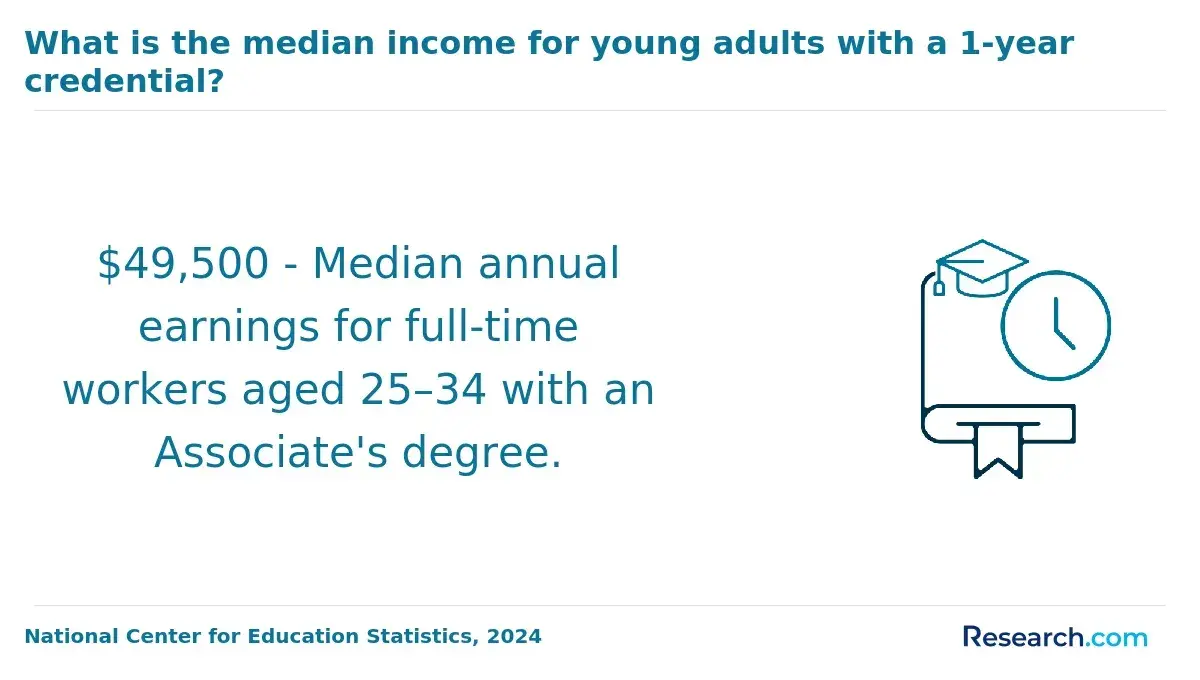
Transfer credit is usually the biggest factor in shortening an online Disability Studies degree. A student who transfers an associate degree, completed general education courses, military learning, professional training, or exam-based credit may cut years from the calendar if those credits satisfy degree requirements.
The table below shows how common credit sources may affect completion time. The key is "applicable credit": a course only saves time if the registrar or department applies it to general education, major, elective, or residency requirements.
| Credit source | How it may help | Common limitation | Time-saving potential |
| Associate degree | May satisfy lower-division general education and elective requirements | Major prerequisites may still be required | Often reduces a bachelor's timeline to about 18 to 24 months |
| Prior college coursework | Can reduce total credits needed | Older, low-grade, duplicate, or non-equivalent courses may not apply | Can save one term to two years |
| Military or workforce training | May be evaluated through ACE recommendations or institutional review | Often applies as elective credit rather than major credit | Can reduce elective requirements |
| Credit by exam | May satisfy general education or introductory requirements | Schools set their own accepted exams and score minimums | Can save selected courses |
| Portfolio or prior learning assessment | Allows students to document college-level learning from work or service experience | Requires evidence, faculty review, and fees; not all subjects qualify | Can be valuable for experienced human services workers |
To graduate as quickly as possible, request an official transfer evaluation before committing to a program. Then ask the advisor to map your remaining courses by term, including summer. This prevents a common mistake: enrolling because the school accepts many credits overall, only to discover that required Disability Studies courses are not offered in the order you need.
A practical transfer-credit strategy usually follows these steps:
- Send official transcripts from every college attended, even if you completed only one or two courses.
- Ask for a written degree audit showing which credits apply to general education, the major, electives, and residency requirements.
- Confirm the maximum transfer limit and the minimum number of credits you must complete at the university.
- Ask whether any remaining lower-division courses can be completed at a community college while you are enrolled.
- Review whether prior learning assessment, portfolio credit, or exam credit can satisfy specific remaining requirements.
What Are the Admission Requirements and Start Dates for Accelerated Online Disability Studies Programs?
Admission requirements for accelerated online Disability Studies programs are usually more flexible than those for selective clinical programs, but they still vary by school. Bachelor's-completion programs may require a minimum number of transferable credits, a minimum GPA, transcripts from all prior colleges, and proof of high school completion if the student has limited college history.
Multiple start dates can shorten waiting time, but they do not always shorten the degree itself. The most useful admissions question is whether you can begin required major courses immediately or whether you must wait for a fall-only or spring-only course sequence.
Students comparing accelerated calendars should ask admissions teams these questions before applying:
- How many start dates are available each year for online students?
- Are Disability Studies major courses offered every term, or only once per year?
- Can new students begin in summer, or only in fall and spring?
- What is the maximum course load allowed without special approval?
- Are internships, practicums, service-learning projects, or capstones required?
- Can transfer students receive an official degree plan before paying an enrollment deposit?
Accelerated calendars are common across many career-focused online programs, not only Disability Studies. For example, students exploring allied health timelines sometimes compare medical assistant programs accelerated with bachelor's-level study to decide whether they need a short workforce credential or a broader degree focused on policy, advocacy, and services.
One common red flag is a program that advertises frequent starts but offers required upper-division courses infrequently. Another is a program that says students can finish "as fast as one year" without explaining how many transfer credits, weekly study hours, or prerequisite courses that timeline assumes.
How Much Does a Fast Online Disability Studies Degree Cost, and Is Financial Aid Available?
The cost of a fast online Disability Studies degree depends on tuition per credit, the number of credits you must complete at the university, fees, books, technology costs, transfer-credit acceptance, and whether you qualify for financial aid. Faster graduation can reduce living and opportunity costs, but it does not always reduce tuition if you still need the same number of credits.
College Board's 2024 Trends in College Pricing reported average published tuition and fees of $11,610 for in-state students at public four-year institutions and $43,350 at private nonprofit four-year institutions. For online Disability Studies students, this means the biggest cost question is often not the sticker price alone, but how many credits remain after transfer evaluation.
- Per-credit tuition: Online programs may charge in-state, out-of-state, or flat online tuition rates.
- Mandatory fees: Technology, distance education, graduation, portfolio assessment, and course materials fees can add to the total.
- Transfer-credit savings: Accepted credits may reduce the number of courses you must pay for at the university.
- Financial aid eligibility: Students at accredited institutions may be eligible for federal grants, loans, work-study, employer tuition assistance, scholarships, or state aid if they meet enrollment and aid requirements.
- Enrollment intensity: Taking more credits per term may speed graduation, but it can affect work hours, childcare costs, and academic performance.
Students who are comparing short job-training routes with bachelor's programs may also want to review medical assistant classes online to understand how certificate-style costs and financial aid options differ from degree-based costs. That comparison can clarify whether your immediate goal is employment entry, advancement in disability services, graduate school preparation, or a longer-term advocacy and policy career.
Do not assume the cheapest advertised tuition produces the lowest total cost. A program with a slightly higher per-credit rate may be less expensive overall if it accepts more transfer credits, offers year-round courses, and avoids delaying graduation by a term or more.
Can You Work Full Time While Completing an Accelerated Online Disability Studies Degree?
Many students complete online Disability Studies degrees while working full time, but accelerated enrollment requires careful planning. The more compressed the course format, the more consistent weekly study time you need. A realistic workload matters because failing or withdrawing from one accelerated course can erase the time savings you were trying to gain.
The table below shows how enrollment intensity can affect pace and feasibility. Use it to estimate whether a fast schedule fits your job, caregiving responsibilities, and energy level.
| Enrollment pattern | Typical course load | Best-case speed | Work-life fit | Main risk |
| Full-time accelerated | Two courses per 8-week session or equivalent | Fastest for transfer students | Best for students with predictable schedules | High weekly workload and limited recovery time |
| Moderate part-time | One course per accelerated session | Steady progress year-round | Often realistic for full-time workers | Timeline may extend beyond advertised estimates |
| Traditional part-time | One or two courses per 16-week term | Slower but manageable | Good for caregivers or demanding jobs | May take several years after transfer |
| Variable enrollment | Heavy terms mixed with lighter terms | Can be efficient if planned well | Useful for seasonal workers | Course availability may not match your preferred pace |
Students working full time should ask for syllabi or sample weekly schedules before enrolling. Disability Studies courses often involve reading, writing, discussion, applied projects, policy analysis, and community-based reflection. These assignments can be flexible, but they are not always quick.
A slower plan may be the better choice if you are new to online learning, returning after a long academic break, managing unpredictable shifts, or taking writing-intensive upper-division courses. Graduating one term later with strong grades and less debt-related stress may be more valuable than rushing into an unsustainable schedule.
Are Accelerated Online Disability Studies Degrees Respected by Employers and Graduate Schools?
Employers and graduate schools generally focus less on whether a degree was online and more on whether the institution is accredited, the curriculum is relevant, and the student can demonstrate applicable skills. An accredited online Disability Studies degree can be respected when it includes rigorous coursework in disability rights, accessibility, policy, communication, ethics, service systems, and applied problem-solving.
Career outcomes vary because Disability Studies is an interdisciplinary field rather than a single licensed occupation. Graduates may work in advocacy organizations, community services, accessibility coordination, case support, nonprofit programs, education support, government agencies, or human services administration. BLS May 2024 wage data shows that social and community service managers had a median annual wage of $78,240, but that figure reflects a broader occupation and may require experience beyond a bachelor's degree.
The table below connects common pathways with how an accelerated Disability Studies degree may fit. It is not a salary guarantee; it is a way to understand whether the degree supports your intended direction.
| Pathway | How Disability Studies helps | Possible additional requirement |
| Disability advocacy | Builds knowledge of rights, accessibility, inclusion, and community systems | Experience with policy, benefits, or nonprofit work may be preferred |
| Human services support | Develops understanding of service coordination and person-centered support | Some roles require background checks, training, or state-specific credentials |
| Accessibility or inclusion work | Connects disability theory with practical accommodations and universal design concepts | Technology, ADA, or workplace accommodation training may strengthen candidacy |
| Graduate study | Can provide a foundation for social work, public health, education, policy, rehabilitation, or healthcare-related programs | Graduate programs may require prerequisites, licensure alignment, exams, or field experience |
| Healthcare leadership or advanced practice pathway | Can complement prior healthcare experience by adding disability policy and systems knowledge | Clinical roles require separate professional education and licensure |
Students who already work in healthcare may use Disability Studies to add expertise in accessibility, patient advocacy, or systems improvement. Those planning advanced nursing leadership might later compare an online DNP program, but a Disability Studies bachelor's degree alone does not replace nursing prerequisites, clinical licensure, or graduate admission requirements.
Graduate schools may respect an accelerated degree when the transcript shows strong grades from an accredited institution. However, applicants should confirm prerequisites early, especially for programs in counseling, social work, occupational therapy, public health, special education, or rehabilitation counseling.
How Should You Compare the Fastest Accredited Online Disability Studies Programs?
To compare the fastest accredited online Disability Studies programs, start with your personal degree audit rather than the school's shortest advertised timeline. The best program is the one that gets you to a useful credential quickly without sacrificing accreditation, affordability, academic fit, or future options.
The checklist below helps you compare programs in the order that usually matters most for completion speed and long-term value. Use it before applying, and ask schools to put key answers in writing.
- Verify institutional accreditation through a recognized accreditor before reviewing speed claims.
- Request a preliminary or official transfer-credit evaluation showing exactly how many credits remain.
- Ask whether the program is a full bachelor's degree, bachelor's-completion program, minor, certificate, or concentration.
- Confirm whether all required Disability Studies courses are available online.
- Review the course rotation to see whether required classes are offered every term, once per year, or in a fixed sequence.
- Compare 6-week, 8-week, and 16-week options based on weekly workload, not just calendar length.
- Ask whether fieldwork, service learning, capstones, or internships are required and whether they can be completed near you.
- Calculate total cost based on remaining credits, not the full program sticker price.
- Ask how many credits you can take per term without overload approval.
- Confirm whether the degree supports your target career, graduate program, or licensure pathway.
Common mistakes include assuming all prior credits will transfer, confusing institutional accreditation with programmatic accreditation, choosing a program only because it has short terms, and ignoring the possibility that required courses may not be offered when you need them. A better approach is to compare final graduation date, total cost, and career fit together.
If your long-term plan involves mental health or advanced clinical practice, remember that Disability Studies may be relevant but not sufficient by itself. For example, students comparing disability advocacy with psychiatric nursing pathways may eventually research the shortest PMHNP program, but those programs require nursing credentials and clinical requirements that are separate from Disability Studies.
The fastest good choice is usually the accredited program that accepts the most applicable transfer credit, offers the remaining major courses in a predictable online sequence, and fits your weekly schedule. If two programs look similar, choose the one that gives you the clearest written degree plan before enrollment.
Other Things You Should Know About Disability Studies
The fastest route is usually a bachelor's-completion program at an institutionally accredited university. Students who transfer about 60 to 90 applicable credits and study year-round may finish in about 12 to 24 months.
No. Accelerated courses usually cover the same credit-bearing material in fewer weeks. They can be faster, but they often require more weekly reading, writing, discussion, and project work.
Usually no. Institutional accreditation is the key requirement for most Disability Studies degrees. However, if you plan to enter a licensed field later, check the accreditation and prerequisite rules for that specific graduate or professional program.
Common delays include transfer credits that do not apply to the major, required courses offered only once per year, missing prerequisites, internship placement issues, part-time enrollment, course withdrawals, and maximum-credit-load limits.
References
- Certificate of Graduate Studies in Disability Fundamentals https://www.assumption.edu/graduate/certificate-of-graduate-studies-in-disability-fundamentals
- Free Online Courses on Disability Studies - AccessNow https://accessnow.com/blog/free-online-courses-on-disability-studies/
- Faculty of Graduate and Postdoctoral Studies | University of Manitoba - Disability Studies (MA, MSc) https://umanitoba.ca/graduate-studies/admissions/programs-of-study/disability-studies-ma-msc
- Disability Studies https://online.utoledo.edu/programs/disability-studies/index.html
- Collaborations to Support Employment Outcomes of Youth with Disabilities https://transition.vcurrtc.org/resources/content.cfm/1423
- Program https://www.torontomu.ca/disability-studies/program/
- There is still an unacceptable gap in employment outcomes for disabled graduates https://wonkhe.com/blogs/there-is-still-an-unacceptable-gap-in-employment-outcomes-for-disabled-graduates/
- Concurrent Sessions https://www.ahead.org/events-learning/in-person/2026/concurrent-sessions
- Interdisciplinary Leadership and Disability Studies https://online.umkc.edu/programs/graduate-certificate-interdisciplinary-leadership-disability-studies/index.php
- Become a Certified Disability Rights & Accessibility Consultant https://disabilityrightscourses.org/