2027 Online Disability Studies Degree Programs With No Application Fee and Rolling Admissions

Co-Founder and Chief Data Scientist
Choosing an online disability studies degree is really a question of access, cost, timing, and career fit. CDC disability data updated in 2024 shows that more than 1 in 4 U.S. adults has a disability, which keeps demand high for professionals who understand accessibility, advocacy, services, and inclusive policy.
This guide is for students who want flexible admission without paying to apply. You'll learn which options to verify, how rolling admissions work, what costs matter beyond the waived fee, and how to choose a legitimate program that fits your goals.
Key Things You Should Know
- Dedicated online disability studies degrees with both no application fee and rolling admissions are limited, so students should also verify closely related programs in human services, rehabilitation, special education, accessibility, and disability policy.
- A waived application fee usually saves a small upfront amount, while total program cost is driven by tuition, required fees, transfer-credit acceptance, books, technology fees, and time to completion.
- BLS projections released in 2024 show community and social service occupations growing 8% through 2033, so program choice should be based on career alignment and credentials, not only free applications or flexible deadlines.
Which Online Disability Studies Degree Programs Have No Application Fee and Rolling Admissions?
Online disability studies programs are not as common as online business, psychology, or nursing programs. The most useful approach is to separate true disability studies degrees from adjacent online degrees that may still lead to disability services, advocacy, case management, education support, accessibility coordination, or nonprofit roles.
The table below summarizes program types that students often evaluate when they want a no-fee, rolling-admission pathway connected to disability services. Always confirm the current fee waiver, start date, and admission calendar directly with the school before applying, because policies can change by term, applicant type, state authorization, and program level.
| School or program type | Online disability-related pathway | No application fee status to verify | Rolling admissions status to verify | Best-fit student |
| University of Toledo | Online BA in Disability Studies | Domestic undergraduate application fee is commonly listed as waived or $0, but students should confirm before submitting | Undergraduate admission is generally reviewed on an ongoing basis for available terms | Students who want a dedicated disability studies major with a broad advocacy, policy, services, and inclusion focus |
| Southern New Hampshire University | Online BA in Human Services or related social service pathway | SNHU commonly advertises no application fee | Admissions are typically reviewed on a rolling basis with multiple online start dates | Students who want a broad human services degree and plan to pursue disability support, nonprofit, community services, or case coordination roles |
| Purdue Global | Online BS in Human Services or related public-service pathway | Purdue Global commonly advertises no application fee | Programs commonly use frequent start dates and rolling-style admission review | Working adults who want structured online terms and a disability-adjacent human services pathway |
| Public universities with online special education, rehabilitation, or interdisciplinary studies options | Disability-focused coursework may appear inside education, rehabilitation, psychology, public health, or social science degrees | Fee waivers may be available for certain applicants or promotional periods | Some use rolling review, while others use fixed priority deadlines | Students who need a state licensure-aligned pathway or a public-university option with transfer-credit depth |
A key caution: a human services or special education degree is not automatically the same as disability studies. Disability studies usually examines disability through social, cultural, legal, policy, accessibility, and advocacy frameworks, while special education may focus on school-based instruction and licensure, and human services may focus on service delivery and case coordination.
How Does Rolling Admission Work for Online Disability Studies Degree Programs?
Rolling admission means a school reviews applications as they arrive instead of waiting for one fixed annual deadline. For online disability studies and disability-adjacent programs, this can be valuable because students may be able to start in the next available term rather than waiting a full semester or year.
Rolling admissions still have real deadlines. Schools may stop accepting applications once a cohort fills, once a financial aid processing cutoff passes, or once there is not enough time to evaluate transcripts before the next start date.
Use this comparison to understand the practical difference between rolling and fixed-deadline admissions.
| Admission model | How applications are reviewed | Student advantage | Main risk |
| Rolling admission | Applications are reviewed continuously for available start dates | More flexibility for working adults, transfer students, and late decision-makers | Students may apply too late for financial aid, course availability, or transcript review |
| Priority rolling admission | Applications are reviewed continuously, but earlier applicants may receive stronger scheduling or aid consideration | Students can benefit from applying early without facing a hard single deadline | Later applicants may still be admitted but have fewer enrollment options |
| Fixed deadline | Applications are reviewed after a stated deadline | Clear planning structure and predictable decision windows | Missing the deadline may delay enrollment by a term or year |
Students who like flexible online formats may also compare disability studies programs with accredited self-paced online courses, but self-paced coursework and rolling admission are not the same thing. A program can have rolling admission and still require weekly deadlines, live sessions, or fixed term dates.
How Much Can Students Save by Choosing an Online Disability Studies Degree With No Application Fee?
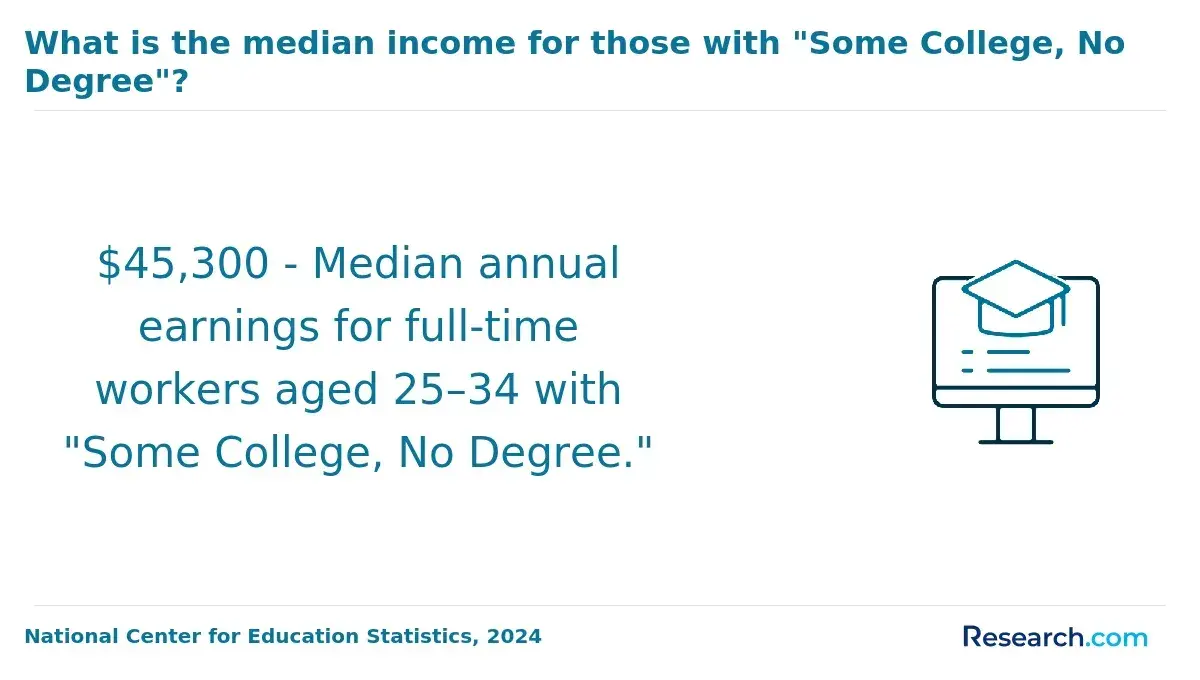
A no-application-fee program can reduce upfront risk, especially if you want to compare several schools. However, the application fee is usually small compared with tuition, mandatory fees, and the cost of taking extra credits that do not transfer.
Here is the right way to think about the savings: if a school waives a $50 application fee, you save $50 immediately; if four schools waive a $50 fee, you save $200 across applications. That is useful, but it will not offset a program that costs thousands more in tuition or requires additional semesters.
For context, College Board's 2024 college pricing data lists average published tuition and fees for full-time undergraduates at public four-year in-state institutions at $11,610 for the 2024-25 academic year. This matters because one extra term, a higher per-credit rate, or poor transfer-credit acceptance can outweigh application-fee savings very quickly.
When comparing cost, look beyond the free application and request a full cost estimate that includes the following items:
- Per-credit tuition for online students, including whether tuition differs for in-state and out-of-state learners
- Mandatory online, technology, student service, graduation, practicum, portfolio, or transcript-evaluation fees
- How many credits you must complete after transfer credits are evaluated
- Whether disability studies electives rotate every term or only once per year
- Estimated book, software, proctoring, and accessibility-technology costs
- Whether part-time enrollment changes tuition, fees, aid eligibility, or time to completion
If your main goal is fast entry into a hands-on healthcare support role rather than disability policy, advocacy, or services leadership, compare this degree path with alternatives such as medical assistant programs accelerated. A shorter credential may be cheaper and faster, but it serves a different career purpose.
What Are the Admission Requirements for No-Fee Online Disability Studies Degree Programs?
No-fee online programs are not automatically open-admission programs. Most disability studies bachelor's programs and disability-adjacent degrees still evaluate academic readiness, transfer history, identity documentation, and program fit.
Requirements vary by school and degree level, but applicants should prepare for these common items before relying on a rolling deadline:
- Completed online application, even when the fee is waived
- Official high school transcript, GED documentation, or prior college transcripts
- Minimum GPA requirement or conditional admission review if the GPA is below the standard threshold
- Transfer-credit evaluation for students with prior college coursework
- Personal statement or short essay for some programs, especially interdisciplinary or upper-division pathways
- Resume or work history if the program values human services, advocacy, education, healthcare, or nonprofit experience
- English language proficiency documentation for applicants whose prior education requires it
- Background check or field-placement clearance if the degree includes school, agency, or service-learning components
Students comparing service-oriented roles should notice the difference between academic admission and career-entry requirements. For example, medical assistant classes online may emphasize clinical skills and externship expectations, while disability studies programs usually emphasize accessibility, systems, advocacy, inclusion, disability culture, and policy.
When Should Students Apply to Online Disability Studies Degree Programs With Rolling Admissions?
The best time to apply to a rolling-admission online disability studies program is earlier than the final posted cutoff. Rolling admission gives you flexibility, but early application gives you more time to solve transcript delays, financial aid issues, transfer-credit questions, and course availability problems.
A practical timeline is to work backward from your preferred start date. Use this sequence if you want to avoid the most common rolling-admission mistake: assuming "rolling" means "whenever I feel ready."
- Choose your target start date and ask the school for the last date to apply, the last date to submit transcripts, and the last date to register for courses.
- Request official transcripts at least several weeks before the school's internal processing deadline.
- Submit the FAFSA and any institutional aid forms before the program's financial aid priority date, even if admission remains open.
- Ask for a preliminary transfer-credit review before committing, especially if you have prior general education or social science credits.
- Confirm whether the disability studies core courses you need are available in your first term.
- Accept admission only after you understand tuition, fees, transfer credits, start date, withdrawal rules, and financial aid status.
Working adults should also ask whether online courses are asynchronous, synchronous, or mixed. Rolling admission may help you enter faster, but it does not guarantee that every course will fit a full-time work schedule.
How Can Students Strengthen an Online Disability Studies Degree Application?
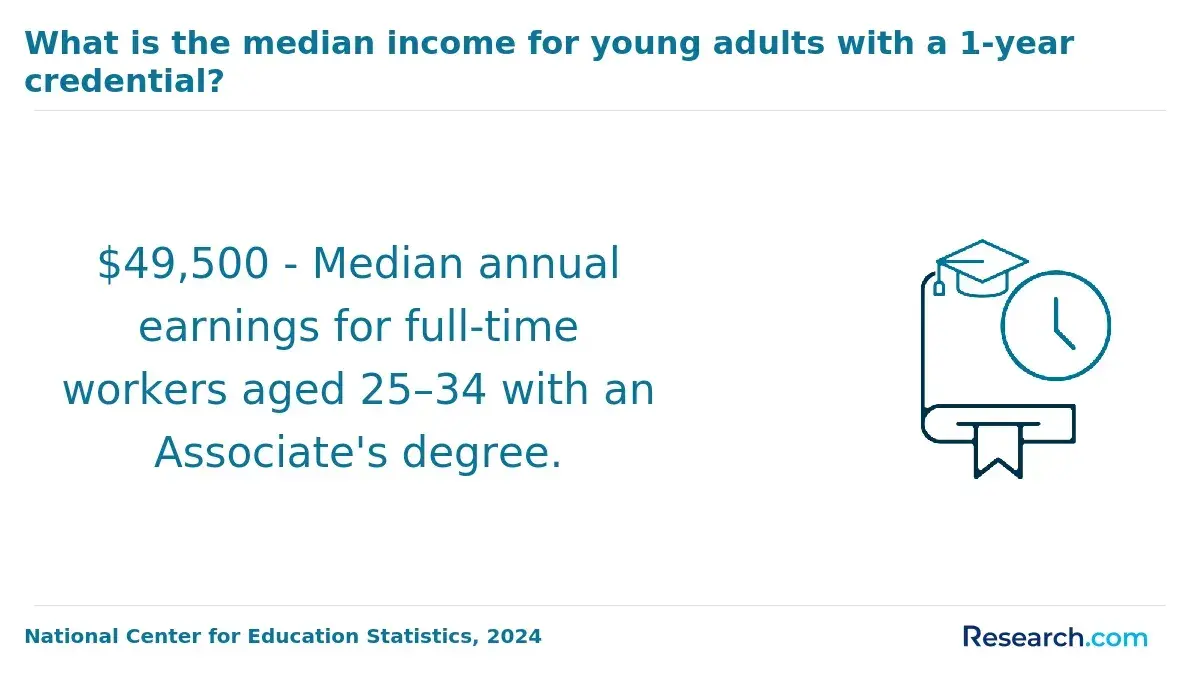
A strong disability studies application shows that you understand the field and can succeed in an online learning environment. Even if admission is less competitive than a capped cohort program, a thoughtful application can improve placement, advising, scholarship consideration, or conditional-admission review.
Focus your application materials on evidence that connects your background to disability-related study and service. The following steps are especially useful for transfer students, adult learners, and applicants with uneven academic records:
- Explain your interest in disability studies through specific experiences, such as advocacy, caregiving, inclusive education, accessibility work, nonprofit service, healthcare support, or community programs.
- Show readiness for online learning by describing time-management habits, technology access, writing skills, and support systems.
- Ask whether a resume, statement, or recommendation can strengthen the file even if it is optional.
- Address academic setbacks directly and explain what has changed since the grades occurred.
- Map your prior credits to the degree plan so admissions and advising staff can see that you are prepared to progress efficiently.
- Use person-centered and respectful language when discussing disability, and avoid framing disabled people only through medical deficits or charity.
If you are deciding between disability studies and another helping profession, compare the coursework and work settings before applying. A program in disability studies may prepare you for advocacy and systems-level work, while other routes may lead more directly to patient-facing clinical support.
Are Online Disability Studies Degree Programs With No Application Fees Accredited and Legitimate?
No application fee and rolling admissions do not determine legitimacy. Accreditation, institutional reputation, transparent costs, qualified faculty, clear transfer policies, and honest career information are much better indicators of whether an online disability studies degree is worth considering.
At minimum, the institution should hold accreditation from an accreditor recognized by the U.S. Department of Education or the Council for Higher Education Accreditation. For disability-adjacent fields, students should also check whether the program meets any state-specific or employer-specific requirements.
This accreditation and legitimacy checklist can help you avoid programs that look convenient but carry unnecessary risk:
- Confirm institutional accreditation through an official federal or recognized accreditation database, not only the school's marketing page.
- Ask whether the program is fully online, hybrid, or online with required campus visits, fieldwork, practicums, or synchronous class meetings.
- Verify whether the degree title will appear as disability studies, human services, special education, rehabilitation, interdisciplinary studies, or another field on the transcript.
- Check whether the program leads to teacher licensure, certification eligibility, or no licensure at all.
- Review faculty backgrounds in disability studies, accessibility, rehabilitation, education, policy, social work, public health, or related areas.
- Avoid schools that will not provide written tuition, fee, transfer-credit, accreditation, or refund information before enrollment.
One important red flag is vague career wording. A legitimate program can describe possible career paths, but it should not promise admission, licensure, employment, salary, or promotion simply because you complete the degree.
How Do Financial Aid and Total Costs Compare Among Online Disability Studies Degree Programs?
Financial aid can make a larger difference than application-fee savings. Students should compare the full cost of attendance, aid eligibility, scholarship timing, transfer-credit policy, and pace of completion before deciding that a no-fee option is the most affordable option.
Use the categories below when asking schools for a written cost estimate. This is especially important for online students because fees, tuition residency rules, and enrollment pace can vary widely.
| Cost or aid factor | Why it matters | Question to ask |
| Tuition per credit | Determines the largest share of degree cost | Is the online rate the same for in-state and out-of-state students? |
| Required fees | Can add cost even when the application is free | What technology, online, student service, graduation, and proctoring fees apply? |
| Transfer credits | Can shorten completion time and reduce cost | How many prior credits will count toward this exact degree? |
| Financial aid deadlines | May be earlier than the rolling-admission cutoff | What is the priority date for FAFSA-based aid and institutional scholarships? |
| Course availability | Delayed required courses can extend enrollment | Are required disability studies courses offered every term? |
| Field or practicum costs | May affect students in service-learning or licensure-adjacent pathways | Are background checks, transportation, placement fees, or liability insurance required? |
Students comparing disability studies with advanced clinical healthcare pathways should recognize the credential difference. An online DNP program is a graduate nursing pathway with different admission requirements, licensure expectations, and career outcomes; it should not be compared with a bachelor's disability studies degree on application fee alone.
Which Students Benefit Most From No-Fee, Rolling-Admission Online Disability Studies Degrees?
No-fee, rolling-admission online disability studies degrees are especially useful for students who need flexibility without delaying enrollment. They can be a strong fit when the program also has fair tuition, recognized accreditation, transfer-credit friendliness, and coursework aligned with the student's career goal.
These students often benefit most from the combination of a waived fee and rolling review:
- Working adults who need to apply around employment, caregiving, military, or health-related responsibilities
- Transfer students who want multiple schools to review credits without paying several application fees
- Students exploring disability advocacy, accessibility coordination, independent living services, case coordination, public policy, nonprofit work, or inclusive community programs
- Applicants who missed fixed deadlines at traditional universities but are academically ready to start sooner
- Adult learners returning to college who want an admissions process with fewer upfront barriers
These programs may be a poor fit if your goal requires a specific license, clinical credential, or state-approved pathway that the disability studies degree does not provide. For example, students who are already nurses and want psychiatric prescribing authority may need a nursing graduate route such as the shortest PMHNP program instead of a disability studies degree.
How Should Students Choose Among No-Fee Online Disability Studies Degree Programs?
The smartest choice is not always the school with the easiest application. A no-fee, rolling-admission program is valuable when it helps you compare options, start at the right time, and avoid unnecessary costs, but it should not outweigh accreditation, curriculum quality, transfer-credit value, faculty expertise, and career alignment.
Use this decision process before enrolling. It keeps the free application in perspective and helps you compare programs on long-term value.
- Confirm the degree title and make sure it matches your career goal, whether that is disability studies, human services, special education, rehabilitation, public health, or policy.
- Verify institutional accreditation through a recognized source and ask whether any program-specific approvals apply.
- Ask the admissions office to confirm in writing that the application fee is currently $0 for your applicant type.
- Ask whether admission is truly rolling or only available for selected terms with priority cutoffs.
- Request a transfer-credit estimate before paying enrollment deposits or registering for classes.
- Compare total program cost, not just the application fee.
- Review the course schedule to confirm that required disability-related courses are available when you need them.
- Ask what graduates typically do next, while remembering that schools should not promise jobs or salaries.
- Check whether the program includes fieldwork, synchronous meetings, residency requirements, or technology requirements that affect your schedule.
- Choose the program that best balances affordability, legitimacy, flexibility, and career relevance.
A common mistake is applying only where the application is free. A better strategy is to use no-fee applications to compare several legitimate options, then choose the one with the strongest overall fit.
Other Things You Should Know About Disability Studies
No. Disability studies usually examines disability through social, cultural, legal, accessibility, policy, and advocacy perspectives. Special education focuses more on teaching students with disabilities and may involve state teacher-licensure requirements.
Possible pathways include disability services coordination, accessibility support, advocacy, nonprofit program work, independent living services, case coordination, community outreach, policy support, and human services roles. Some positions may require additional credentials, graduate study, or field-specific experience.
Some do, especially programs connected to human services, education, rehabilitation, or community-based practice. Others are coursework-only. Students should ask whether fieldwork is required and whether placements can be completed locally.
Yes, depending on the program and your grades, it may support graduate study in social work, public policy, rehabilitation counseling, education, public health, law, or disability studies. Check prerequisite courses before assuming it meets admission requirements for a specific graduate program.
References
- Course | AHEAD Start https://www.ahead.ie/aheadstart
- Conditions of the Scholarship - Arqus https://arqus-alliance.eu/arqus-talent-scholarship-fund/conditions/
- Disability Studies degrees & courses https://universitycompare.com/courses/degrees/disability-studies
- Scholarships for students and doctoral candidates with disabilities https://www.studierendenwerk-oldenburg.de/en/geld/stipendien/scholarships-for-students-with-disabilities
- Applied Learning Disability Studies https://cambriancollege.ca/programs/applied-learning-disability-studies
- Scholarship for the Disabled - WSEI University https://www.wsei.pl/en/for-the-student/career-and-student-affairs-office/scholarships/scholarship-for-the-disabled/
- There is still an unacceptable gap in employment outcomes for disabled graduates https://wonkhe.com/blogs/there-is-still-an-unacceptable-gap-in-employment-outcomes-for-disabled-graduates/
- The 10 Best Online Universities for Students With Disabilities | Special Education Degrees https://www.special-education-degree.net/best-online-universities-students-disabilities/
- Disability Scholarship https://yesbud.online/disability-scholarship/
- Disability Studies - BA https://www.torontomu.ca/programs/undergraduate/disability-studies/