2027 Online Disability Studies Degree Programs That Accept 60, 75, or 90 Transfer Credits

Co-Founder and Chief Data Scientist
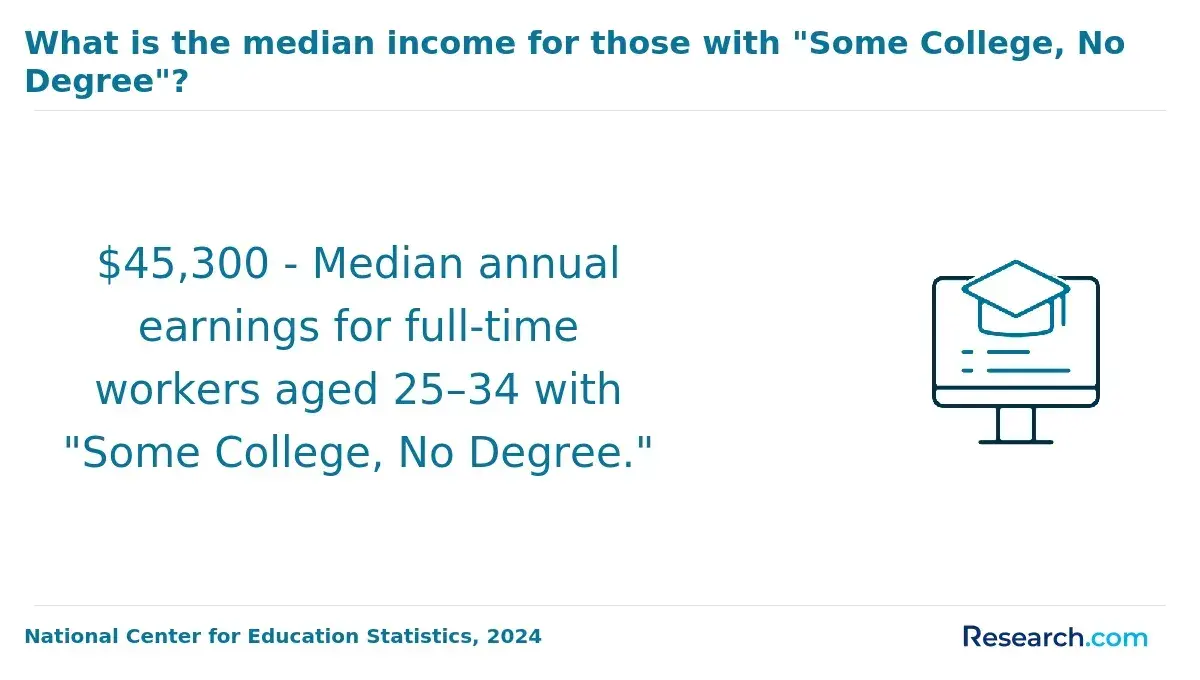
Transferring into an online Disability Studies degree can shorten your path, but only if your credits apply to the right requirements. National Student Clearinghouse Research Center data reported a 5.3% increase in transfer enrollment in spring 2024, showing that more students are using prior credit to finish degrees. This guide is for transfer and degree-completion students with 60, 75, or 90 credits who want to compare programs, avoid wasted credits, estimate remaining tuition, and understand how transfer limits, residency rules, and major requirements affect graduation.
Key Things You Should Know
- Most bachelor's degrees require about 120 credits, so transferring 60, 75, or 90 credits may leave roughly 60, 45, or 30 credits, but only after the school decides which credits apply to general education, electives, upper-division work, and Disability Studies major requirements.
- A 90-credit transfer allowance is not automatically better than a 60-credit allowance because many schools still require 30 credits in residence, a minimum number of upper-division credits, and specific Disability Studies courses that cannot be replaced by general electives.
- Before enrolling, request an official transfer evaluation, confirm institutional accreditation, ask which credits count toward the major rather than only free electives, and calculate tuition on remaining required credits instead of the number of credits the school says it can accept.
How Many Transfer Credits Can You Apply Toward an Online Disability Studies Degree?
An online Disability Studies bachelor's degree usually follows the same credit structure as other U.S. bachelor's programs: about 120 total credits, including general education, major courses, electives, and sometimes a capstone or internship. When a school says it accepts 60, 75, or 90 transfer credits, that number describes the maximum amount of prior college work it may bring into the transcript. It does not always mean all of those credits reduce the courses you still need to take.
The most important distinction is accepted credits versus applied credits. Accepted credits may appear on your record, but applied credits are the ones that satisfy a graduation requirement. For example, a sociology course might apply to a social science requirement, while an unrelated elective could transfer but not shorten your Disability Studies major sequence.
The table below shows how common transfer-credit scenarios can affect a 120-credit bachelor's degree. Use it as a planning model, not a guarantee, because each school's evaluation can change the final number.
| Transfer scenario | Possible remaining credits in a 120-credit degree | What it usually means for the student | Main risk to check |
| 60 transfer credits | About 60 credits remaining | Often fits students with an associate degree or two years of prior coursework | Some courses may fill electives instead of Disability Studies requirements |
| 75 transfer credits | About 45 credits remaining | Often fits students with an associate degree plus extra college, military, exam, or professional credits | Upper-division and residency rules may still require more than 45 credits |
| 90 transfer credits | About 30 credits remaining | Often fits degree-completion students close to finishing a bachelor's degree | The school may require the final 30 credits, major capstone, or advanced courses in residence |
A useful way to compare programs is to ask, "How many credits will I still need to graduate after the official evaluation?" rather than "How many credits can the school accept?" That question keeps the focus on completion time, cost, and remaining requirements.
Which Online Disability Studies Degree Programs Accept 60, 75, or 90 Transfer Credits?
Online Disability Studies programs are less common than online psychology, social work, or human services degrees, so transfer students often need to compare a smaller group of specialized bachelor's programs and related degree-completion options. The strongest candidates are institutionally accredited schools that publish a clear bachelor's credit total, transfer policy, residency requirement, and online course format.
The table below summarizes examples of online or transfer-friendly Disability Studies bachelor's options and how a student with 60, 75, or 90 prior credits should interpret the policy. Always confirm directly with the university because catalog rules, articulation agreements, and major requirements can change.
| School or program type | Online Disability Studies option | Transfer-credit fit | Best for | What to verify before applying |
| CUNY School of Professional Studies | Online BA in Disability Studies | Often suitable for students entering with substantial prior college credit, including associate-degree holders | Students seeking a disability-focused major in a public university system | How many credits apply to the major, how many remain in residence, and whether prior human services courses match required outcomes |
| University of Toledo | Online disability studies bachelor's pathway | Commonly relevant for students with 60 or more credits who need a degree-completion format | Students with community college, health, education, or social service coursework | Limits on community college transfer, final-credit residency rules, and upper-division requirements |
| Arizona State University Online | Online BA in Disability Studies or closely related online pathway, depending on current catalog availability | May be transfer-friendly, especially for students with regionally accredited lower-division coursework | Students who want a large online university with structured advising and transfer tools | Community college transfer caps, major map requirements, and whether 75 or 90 credits can apply beyond electives |
| Online human services, rehabilitation, or interdisciplinary studies programs with a disability concentration | Related degree rather than a standalone Disability Studies major | Can be useful if your credits do not fit a specialized Disability Studies curriculum | Students whose credits are broad, older, or heavily elective-based | Whether the degree title, concentration, and curriculum match your career goals in accessibility, advocacy, case coordination, or disability services |
Programs that "accept 75 credits" are often not a separate category. In practice, 75 credits is usually a student scenario inside a school that accepts up to 90 credits or evaluates transfer work course by course. A student with 75 credits may still need 45 credits, but that number can increase if the remaining Disability Studies major sequence is longer than expected.
If your previous coursework is in health care or allied health, a Disability Studies degree may pair well with experience supporting patients, clients, or students with disabilities. For example, students comparing medical assistant programs accelerated may later use some general education or health-related credits toward a broader bachelor's degree, but major applicability still depends on the receiving university.
How Can You Tell Whether Transfer Credits Will Actually Apply Toward Your Disability Studies Degree?
The only reliable way to know whether credits will count is to review how each course maps to the new degree plan. A school may accept your old course because it came from an accredited institution, but it may apply it as an elective if there is no equivalent requirement in the Disability Studies curriculum.
Use the following sequence before you commit to a program. It helps you separate marketing language from the official academic decision that determines your real timeline and cost.
- Request the current degree plan for the online Disability Studies major, including general education, major core, electives, upper-division requirements, and capstone courses.
- Send official transcripts from every college you attended, even if you believe some courses will not transfer.
- Ask for an official or written preliminary transfer evaluation, not only a verbal estimate from admissions.
- Mark each transferred course as general education, major requirement, elective, upper-division credit, or non-applicable credit.
- Ask how many credits remain after the evaluation and whether any required courses are offered every term online.
- Compare the remaining credits, tuition rate, fees, and course sequence across at least two programs before enrolling.
Red flags include vague phrases such as "up to 90 credits accepted" without a degree audit, pressure to enroll before transcripts are evaluated, unclear accreditation status, or a plan that transfers many credits as electives while leaving most major requirements unfinished.
What Types of Previous College Credits Can Transfer Into an Online Disability Studies Degree?
Disability Studies is interdisciplinary, so transfer credits may come from many areas: sociology, psychology, education, social work, health sciences, rehabilitation, public policy, communication, ethics, and human services. This can be an advantage for students with varied academic histories, but it also means course matching matters.
The table below explains common sources of previous credit and how they typically fit into an online Disability Studies degree. The key question is whether each source satisfies a requirement or only adds elective credit.
| Credit source | How it may apply | Common limitation | What to ask the school |
| Community college courses | General education, introductory social science, electives, or lower-division prerequisites | Some universities cap lower-division or two-year college transfer credit | Is there a maximum number of community college credits that can count toward the bachelor's degree? |
| Associate degree | May satisfy blocks of general education or lower-division requirements | The associate degree may not cover Disability Studies major courses | Does the school have an articulation agreement for my specific associate degree? |
| Four-year college courses | May apply to upper-division electives, major requirements, or general education | Course content must be comparable to the receiving school's curriculum | Can any prior upper-division courses replace Disability Studies core courses? |
| Health or human services coursework | May support electives or related-field requirements | Clinical or technical courses may not match liberal arts major outcomes | Will these credits apply beyond free electives? |
| Exam or alternative credit | May apply to general education or elective requirements | Schools often limit nontraditional credit totals | What is the maximum exam, portfolio, or alternative-credit allowance? |
Students who earned credits through medical assistant classes online should pay close attention to whether those credits were issued by an institutionally accredited college. Noncredit training, continuing education units, and clock-hour certificates may help with employment, but they do not automatically become bachelor's-level transfer credit.
How Do Residency and Upper-Division Requirements Affect Disability Studies Transfer Students?
Residency requirements determine how many credits you must complete at the school awarding the degree. For many bachelor's programs, the practical effect is that even a transfer-friendly university may require the final 30 credits, a set number of upper-division credits, or key major courses to be completed through that institution.
Upper-division requirements are especially important in Disability Studies because advanced courses often cover disability theory, accessibility law and policy, inclusive practice, research methods, ethics, advocacy, or a capstone project. A student with 90 lower-division credits may still need more than 30 credits if the major requires upper-division coursework that was not completed previously.
The table below shows why the highest transfer-credit maximum does not always equal the shortest path to graduation.
| Policy factor | How it can affect a student with 60 credits | How it can affect a student with 75 credits | How it can affect a student with 90 credits |
| 30-credit residency rule | Usually not restrictive because about 60 credits remain | May require at least 30 of the remaining 45 credits at the new school | Often becomes the main reason the student still needs about one academic year of coursework |
| Upper-division minimum | May require careful junior-level planning | Can reduce the value of older lower-division electives | Can prevent a student from graduating with only transferred lower-division credit |
| Major core requirement | Likely leaves several Disability Studies courses to complete | May still require most advanced major courses | Can add time if the program sequences courses over multiple terms |
| Capstone or practicum | Usually completed near the end of the program | Usually cannot be transferred in | May be one of the required in-residence courses |
Students comparing undergraduate transfer pathways with advanced health programs, such as an online DNP program, should remember that graduate or professional coursework usually follows separate rules. A bachelor's completion program may not accept graduate-level credits toward undergraduate residency or major requirements unless the catalog explicitly allows it.
How Does the Transfer Credit Evaluation Process Work for an Online Disability Studies Degree?
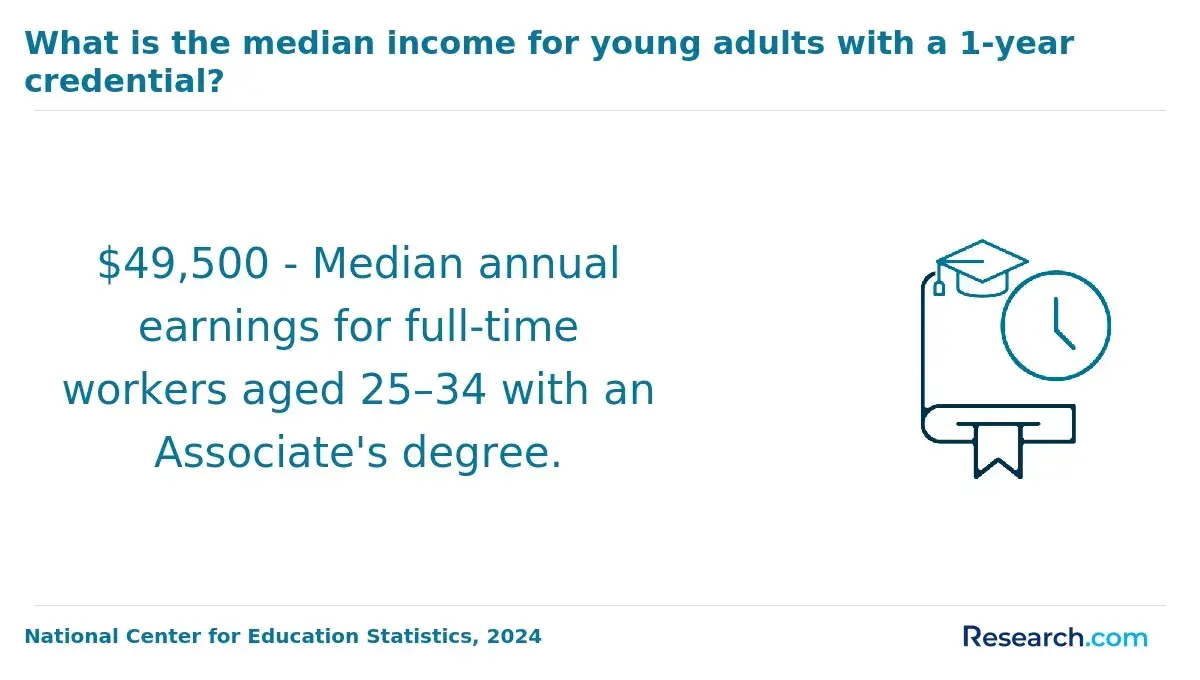
The transfer evaluation process is the formal review that turns your prior coursework into a degree plan. It can be centralized through the registrar, reviewed by academic departments, or handled in stages, with general education evaluated first and major courses reviewed later by faculty.
To make the process faster and more accurate, gather documents before you apply or immediately after admission. These steps help the school evaluate not just the number of credits, but the usefulness of those credits in the Disability Studies curriculum.
- Order official transcripts from every college, including schools where you withdrew, earned low grades, or completed only one term.
- Download course descriptions and syllabi for courses that may match Disability Studies, psychology, sociology, education, rehabilitation, policy, ethics, or human services requirements.
- Ask whether the evaluation is unofficial, preliminary, conditional, or final because only a final degree audit should guide enrollment decisions.
- Request clarification for any course marked as elective credit if you believe it should satisfy a specific requirement.
- Confirm whether pending credits, in-progress courses, exam scores, military transcripts, or portfolio credit can be added later.
- Save the written evaluation and compare it against the catalog year that will govern your degree.
A common mistake is enrolling in the first term before knowing whether key courses transfer. That can lead to duplicate coursework, unused electives, or a longer sequence than expected. If the school cannot complete the evaluation before your start date, ask which first-term courses are safest to take without creating overlap.
How Long Does It Take to Finish an Online Disability Studies Degree With 60, 75, or 90 Transfer Credits?
Completion time depends on remaining credits, course availability, enrollment intensity, and whether the Disability Studies major has sequenced courses. A student with 90 applicable credits may finish quickly if the remaining 30 credits are available online in consecutive terms. The same student may take longer if a required capstone is offered only once per year or if upper-division prerequisites must be completed first.
The table below gives realistic planning ranges based on remaining credits. It assumes the credits apply cleanly, so students should adjust the timeline after receiving an official evaluation.
| Applicable transfer credits | Approximate remaining credits | Full-time pace | Part-time pace | Planning note |
| 60 | About 60 | Roughly 2 academic years | Often 3 or more years | Best for associate-degree holders who still need upper-division major work |
| 75 | About 45 | About 1.5 academic years if courses are available | Often 2 to 3 years | Good middle-ground scenario if major courses are not heavily sequenced |
| 90 | About 30 | About 1 academic year | Often 1.5 to 2 years | Most efficient when the remaining credits match residency and capstone requirements |
Online enrollment can make scheduling easier, but it does not remove course sequencing. Ask whether required Disability Studies classes are asynchronous, synchronous, accelerated, self-paced, or term-based. Students who need flexible pacing can also compare how institutions handle accredited self-paced online courses, especially for general education or elective requirements that do not need to be completed in a fixed cohort.
How Much Can Transfer Credits Reduce the Cost of an Online Disability Studies Degree?
Transfer credits can reduce cost because you pay for fewer remaining credits, but the savings depend on how many credits apply and what the school charges per credit. College Board's 2024 pricing data reported average published tuition and fees of $11,610 for in-state students at public four-year institutions and $43,350 at private nonprofit four-year institutions for a full academic year. For transfer students, that gap means the same number of remaining credits can produce very different total bills depending on the institution.
The table below uses a simple example to show how transfer credits affect tuition exposure. It is not a price quote; it is a calculation model you can repeat using each school's actual per-credit tuition and required fees.
| Scenario | Credits avoided in a 120-credit degree | Example tuition avoided at $400 per credit | Credits still likely needed | Cost issue to verify |
| Transfer 60 applicable credits | 60 | $24,000 | About 60 | Whether remaining courses are all charged at the same online rate |
| Transfer 75 applicable credits | 75 | $30,000 | About 45 | Whether major courses require added technology, proctoring, or practicum fees |
| Transfer 90 applicable credits | 90 | $36,000 | About 30 | Whether residency rules prevent additional transfer savings |
To compare total cost accurately, calculate the price of the remaining degree, not the price of the full bachelor's program. Include tuition, mandatory online fees, books, technology, graduation fees, transcript fees, and any practicum-related costs. Also check whether your transfer status affects scholarships, employer tuition assistance, or federal aid eligibility.
A lower-cost program is not always cheaper if it applies fewer credits. A higher per-credit program may cost less overall if it accepts more of your credits toward the actual degree requirements. The best comparison is total estimated cost to graduation after the official evaluation.
Can Prior Learning, Military Training, Exams, or Certifications Count Toward an Online Disability Studies Degree?
Some online Disability Studies programs may consider prior learning, military training, standardized exams, certifications, or professional experience, but policies vary widely. These credits are often most useful for general education or electives and less likely to replace advanced Disability Studies theory, research, policy, or capstone courses.
Before relying on nontraditional credit, ask how it will appear on your transcript and whether it counts toward the credit categories you still need. The following sources may be considered by some institutions.
- Military training evaluated through recognized college-credit recommendation systems, often applied to electives, leadership, communication, or technical areas.
- Standardized exams such as CLEP or DSST, typically used for general education subjects when the school accepts the required score.
- Portfolio or prior learning assessment, where you document college-level learning from work, advocacy, caregiving, accessibility services, or nonprofit experience.
- Industry certifications, which may count only if the institution has a formal credit recommendation, internal equivalency, or approved articulation policy.
- Professional development or continuing education, which usually does not transfer unless it was transcripted as college credit by an accredited institution.
Professionals moving between health, behavioral health, and disability services should be especially careful with credential assumptions. For instance, someone researching the shortest PMHNP program is looking at a graduate nursing credential, while an online Disability Studies bachelor's degree follows undergraduate transfer-credit rules; credits and clinical requirements are not interchangeable unless a school explicitly says so.
Do Older College Credits Expire When Transferring Into an Online Disability Studies Degree?
Older college credits do not always expire, but they may be reviewed differently depending on the subject. Humanities and social science courses may remain usable for longer periods, while technology, statistics, health policy, legal, or methods courses may need to be recent if the content has changed substantially.
Disability Studies includes both enduring concepts and changing policy contexts. Courses in disability history, ethics, sociology, or communication may transfer more easily than older courses tied to current law, assistive technology, data systems, or professional practice. However, the receiving school decides based on catalog rules and faculty review.
Students with older credits should take these steps before assuming they need to start over.
- Ask whether the university has a formal expiration period for general education, major, statistics, research methods, or technology-related courses.
- Provide syllabi for older courses that may match current Disability Studies requirements.
- Ask whether an outdated course can transfer as an elective even if it cannot satisfy the major requirement.
- Check whether taking one updated course, such as research methods or disability policy, can preserve the value of many older elective credits.
- Confirm whether a prior associate degree satisfies a general education block even if individual courses are old.
The main mistake is assuming old credits are worthless. Many adult degree-completion students can still use older coursework, especially when it was earned at an accredited institution and fits general education or elective categories.
Other Things You Should Know About Disability Studies
Yes. Most universities require official transcripts from every institution attended and evaluate all eligible credits together. The final limit still depends on the school's maximum transfer allowance, residency rule, and degree requirements.
Not always. An associate degree can make evaluation easier, especially when an articulation agreement exists, but many schools also evaluate 60 individual credits course by course.
Usually not by itself. Disability Studies can support careers in advocacy, accessibility, human services, education support, and case coordination, but licensed social work, counseling, teaching, or clinical roles often require specific degrees, supervised experience, exams, or state licensure.
Not automatically. Choose the school that applies the most credits toward graduation, offers the remaining courses online in a workable sequence, has proper accreditation, and provides the best total cost and timeline after evaluation.
References
- 2025 Best Online Colleges for Students with Disabilities https://www.onlineu.com/online-schools/students-with-disabilities