2027 Why Accreditation Still Matters in Online Speech Pathology Programs

Co-Founder and Chief Data Scientist

Reviewed by Rhea Paul, PhD
SLP Education & Research Expert
Imagine investing time and money into an online speech pathology program only to find it lacks recognition by employers or certification boards. Without proper accreditation, credits may not transfer, and eligibility for professional licensure could be compromised.
This scenario presents a real risk for career changers seeking reliable credentials. Understanding the importance of accreditation helps prospective students select programs that meet rigorous academic and clinical standards.
This article examines why accreditation remains a critical factor in online speech pathology education and offers guidance on identifying accredited programs that ensure career opportunities and professional credibility.
Key Things You Should Know
- Accreditation ensures online speech pathology programs meet rigorous educational standards, critical for eligibility in the 2026 national certification exam.
- Studies show 92% of employers prefer graduates from accredited programs, reflecting the importance of accreditation for career prospects.
- The Council on Academic Accreditation updates criteria regularly, with 2025 revisions emphasizing clinical practicum hours and telepractice competencies in online curricula.
What is accreditation and why does it matter for online speech pathology programs?
Accreditation is a critical factor for ensuring quality in online speech pathology programs. It confirms that a program meets rigorous academic and clinical standards set by recognized bodies like the Council on Academic Accreditation in Audiology and Speech-Language Pathology (CAA).
The importance of accreditation for online speech pathology programs lies in meeting state licensure requirements and eligibility for American Speech-Language-Hearing Association (ASHA) certification and clinical fellowships.
Without proper accreditation, graduates may encounter difficulties obtaining licensure or passing certification, as many state boards and employers reject credentials from nonaccredited programs. This credential verification safeguards students from enrolling in subpar programs that lack sufficient clinical training or academic rigor. Schools regionally accredited often seek additional CAA accreditation specifically for speech pathology.
The impact of how accreditation affects online speech pathology program quality is significant, especially as demand for speech-language pathologists (SLPs) increases. The U.S. Bureau of Labor Statistics projects 17% job growth for SLPs from 2025 to 2035, faster than average for most occupations. Employers prioritize candidates from accredited programs to ensure workforce competence.
Prospective online students should ask key questions before enrolling, such as:
- Is the program accredited by CAA or recognized regional accreditors?
- Will completion qualify for state licensure and ASHA certification?
- Does the curriculum include supervised clinical practicum hours?
Those exploring options can consider speech therapy masters online programs that meet these accreditation standards to secure professional eligibility and meet employer expectations.
What are the specific accreditation standards for speech pathology degree programs in the U.S.?
Accreditation standards for speech pathology degree programs in the U.S. are overseen by the Council on Academic Accreditation in Audiology and Speech-Language Pathology (CAA), part of the American Speech-Language-Hearing Association (ASHA).
These standards ensure programs provide comprehensive education covering communication and swallowing disorders through both theory and practical intervention.
U.S. speech pathology program accreditation requirements include a curriculum with coursework in anatomy, physiology, neurobiology, linguistics, and research methods. Programs must also offer supervised clinical practicum hours to provide hands-on experience with varied populations.
- Faculty must hold relevant terminal degrees and remain active in research or clinical practice.
- Programs need to document student success metrics such as graduation and licensure exam pass rates.
The effectiveness of CAA accreditation is highlighted by a 98% first-time pass rate on the Praxis exam for graduates of accredited programs. Prospective students should prioritize such programs to ensure eligibility for certification, state licensure, and clinical fellowships. Without CAA accreditation, graduates may face limited opportunities to sit for licensure exams or secure fellowships.
For those curious about where to specialize or work, exploring where do SLPs make the most money can inform career decisions aligned with the regulatory standards of this field.
How do online speech pathology programs meet accreditation requirements?
Online speech pathology programs meet accreditation standards for online speech pathology programs primarily through strict adherence to the Council on Academic Accreditation in Audiology and Speech-Language Pathology (CAA) criteria.
These include assessed curriculum content, supervised clinical practicum hours, both virtual and in-person, and qualified faculty with advanced degrees and clinical expertise. Continuous quality improvement processes help keep curricula aligned with current research and professional best practices.
Meeting accreditation criteria in US online speech pathology degrees also involves blending synchronous and asynchronous learning to replicate in-person engagement.
Many programs require on-site residencies or partnerships with healthcare facilities to ensure hands-on practicum essential for skill acquisition. These methods maintain clinical rigor comparable to campus-based programs.
Employment outcomes support the effectiveness of these standards. The CAA Annual Data Report shows that graduates from online CAA-accredited master's programs achieve a 95% employment rate within six months, matching or surpassing on-campus counterparts. This validates the importance of accreditation for certification readiness and career success in speech pathology.
Prospective students interested in accelerated options can explore specific offerings through a speech pathology accelerated program to find pathways that meet rigorous accreditation criteria while advancing their careers efficiently.
Institutional accreditation and ASHA certification serve distinct roles in speech pathology education and credentialing. Institutional accreditation evaluates the overall quality of a program or university, ensuring it meets national standards for curriculum, faculty, resources, and student services.
This accreditation is granted by recognized regional or specialized bodies approved by the U.S. Department of Education, and it significantly affects licensure outcomes.
According to the American Speech-Language-Hearing Association Membership and Certification Survey, 92% of licensure applicants from accredited programs passed their initial state exams on the first attempt, compared to 78% from non-accredited programs. ASHA certification, on the other hand, focuses on individual competency through the Certificate of Clinical Competence in Speech-Language Pathology (CCC-SLP).
To earn this, candidates must graduate from an accredited graduate program, complete a supervised clinical fellowship, and pass a national exam. This credential reflects professional readiness, while institutional accreditation confirms educational rigor.
The differences between ASHA credentialing and college accreditation in speech pathology are crucial for students. Graduation from an accredited institution is essential not only for the quality of education but also to be eligible for ASHA certification and state licensure. Without these, employment opportunities may be severely limited in many states.
Prospective students should carefully research speech language pathology master's programs to ensure they select accredited programs that support both licensure and certification goals.
Employers and state licensing boards require online speech pathology degrees to come from accredited programs, most importantly those accredited by the Council on Academic Accreditation (CAA).
This accreditation ensures the program meets high standards necessary for clinical competence and professional readiness. Without CAA accreditation, graduates may face difficulty obtaining state licensure, required to practice as speech-language pathologists in the U.S.
State licensing boards generally mandate a graduate program accredited by the CAA to qualify for the Certificate of Clinical Competence (CCC) offered by the American Speech-Language-Hearing Association (ASHA).
The CCC is widely recognized by employers and insurers, helping graduates secure jobs and reimbursement for services. Consequently, degrees from unaccredited programs often restrict graduates to non-licensed roles or demand additional education.
Employers prefer candidates holding accredited degrees because such programs provide comprehensive training in evidence-based practices and include supervised clinical placements.
According to the ASHA 2025 Salary Report, master's degree holders from CAA-accredited programs earn a median salary of $89,000, which is 12% higher than those from unaccredited programs, emphasizing the impact of accreditation on career progression and earnings.
Prospective students should verify accreditation status before enrolling and confirm that the program supports their state's licensing requirements. Accredited programs also offer vital supervised clinical practica that prepare graduates for licensure and professional success.
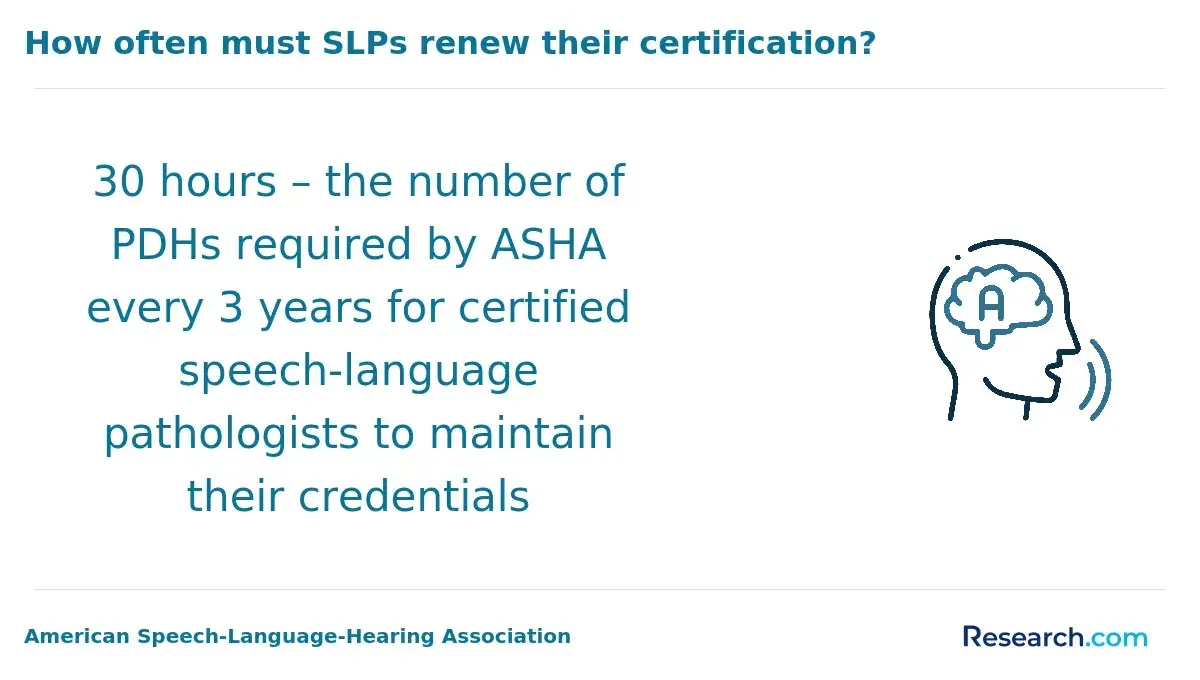
Admission to accredited online speech pathology master's programs typically requires a bachelor's degree from an accredited institution, often in fields like communication sciences, linguistics, or psychology.
Most programs expect a minimum cumulative GPA of about 3.0 on a 4.0 scale. Prerequisite courses such as anatomy, phonetics, statistics, and language development prepare students for graduate-level work.
Applicants generally need to submit GRE scores, although some programs have become test-optional. Additional materials usually include two or three letters of recommendation from professors or supervisors and a personal statement outlining professional goals and motivations for pursuing speech pathology.
Clinical experience-through volunteer or paid roles in healthcare or education-can strengthen applications but is not always mandatory.
International students must demonstrate English proficiency with TOEFL or IELTS scores when required. Accredited programs follow Clinical Fellowship Year (CFY) standards, making prior client interaction experience valuable.
It's important to note that non-CAA-accredited programs often have higher tuition costs, approximately 25% more per credit, due to limited federal aid eligibility, which can impact financial accessibility and licensure pathways.
Choosing an accredited program helps ensure both academic quality and financial support options, key factors to consider for a successful career in speech pathology.
Completing an accredited online speech pathology master's program typically takes 2 to 3 years, with full-time students finishing in 24 to 36 months.
Part-time options extend this timeline, accommodating working professionals or those with other responsibilities. Accelerated programs can shorten completion to about 18 months but require an intensive course load and strong time management skills.
Programs accredited by the Council on Academic Accreditation (CAA) include mandatory supervised clinical hours, usually between 375 and 400, which add to the program's duration and cannot be waived. Clinical practicum is essential for licensure and certification regardless of whether courses are delivered online or in person.
Students entering these programs from unrelated bachelor's degrees must complete prerequisite coursework, often adding 1 or 2 semesters. These prerequisites may be available online but lengthen the overall time to degree.
The return on investment is significant. According to the Georgetown University Center on Education and the Workforce, graduates of CAA-accredited online speech pathology master's programs can expect a lifetime earnings premium of $1.8 million compared to those holding only bachelor's degrees.
Careful evaluation helps align educational choices with personal and professional goals while ensuring licensure and certification standards are met.
The average cost for an accredited online speech pathology master's program typically ranges from $20,000 to $50,000 for the entire degree. Public universities with in-state tuition often offer rates closer to $15,000, while private institutions or out-of-state tuition can exceed $60,000.
Accreditation by the Council on Academic Accreditation (CAA) is critical; 47 states now require CAA-accredited programs for licensure, up from 42 states recently. Without proper accreditation, about 15% of licensure applications are rejected, according to the ASHA State Licensure Requirements Summary.
Costs vary based on residency status, credit hours, and additional fees such as technology and clinical practicum expenses. Some programs charge $500 to $1,200 per credit hour. Clinical practicums, essential for certification, may involve extra supervision or travel costs.
Financial aid, scholarships, and employer tuition reimbursement can help reduce expenses. Because licensure depends on attending a CAA-accredited program, prioritizing accreditation over cost is vital.
Enrolling in a less expensive, non-accredited program risks invalidating your investment if state licensure boards do not accept the degree. Always verify your chosen program meets updated state requirements to ensure eligibility and avoid costly setbacks.
Speech pathology graduates from accredited programs can anticipate strong job growth and competitive salaries. Employment for speech-language pathologists is projected to increase by 17% through 2035, driven by an aging population and rising awareness of communication disorders across all age groups.
Salaries typically range from $65,000 to over $90,000 annually, depending on work setting and location.
For example, entry-level speech-language pathologists in schools may start around $65,000, while those in healthcare or private practices often earn $85,000 or more. Specialized roles such as telepractice clinicians may command higher pay due to growing demand and advanced technology skills.
Graduates from accredited programs benefit from improved job placement and retention. The ASHA Telepractice Outcomes Study reported a 30% higher client retention rate for telepractice clinicians from accredited schools, highlighting the value of standardized clinical training for remote service delivery.
Employers favor candidates with ARC-accredited credentials, which demonstrate clinical competence and adherence to national standards. This accreditation can be a deciding factor when applying to schools, hospitals, outpatient clinics, and telepractice roles.
How should prospective students evaluate the credibility of an online speech pathology program?
Confirming accreditation status is crucial when evaluating an online speech pathology program.
Accreditation by the Council on Academic Accreditation in Audiology and Speech-Language Pathology (CAA) ensures the program adheres to high educational standards, encompassing curriculum quality and clinical training. This accreditation is recognized by licensing boards, allowing graduates to sit for national certification exams and obtain state licensure.
Clinical simulation opportunities are increasingly important. By 2025, 35% of new speech-language pathology positions will require proven competency in online-delivered clinical simulations, a criterion met primarily by CAA-accredited programs according to the Bureau of Labor Statistics Occupational Projections Update.
Without such experiences, graduates may lack essential practical skills sought by employers. Other important factors include:
- Faculty qualifications, ensuring instructors have relevant credentials and online teaching expertise
- Strong technology infrastructure that supports virtual clinical software and resources
- Student support services designed for remote learners
Prospective students should also check specific state licensure requirements, as some states only recognize graduates from accredited programs. Ensuring that an online program aligns with regional licensure regulations helps avoid future professional setbacks.
Prioritize programs that combine CAA accreditation, clinical simulation access, qualified faculty, reliable technology, and compliance with state licensing to enhance career readiness in this competitive field.
Other Things You Should Know About Speech Pathology
Clinical practicum is a critical component of speech pathology education, involving supervised hands-on work with clients across various communication disorders. Accredited programs require students to complete a minimum number of clinical hours, typically including direct assessment and treatment under professional supervision to develop practical skills essential for certification and licensure.
In 2027, accreditation remains crucial for online speech pathology programs as it ensures educational quality, program credibility, and eligibility for certification and licensure. Accredited programs are aligned with industry standards, preparing graduates effectively for professional roles and meeting employers' expectations in a regulated field.
The program should hold accreditation from the Council on Academic Accreditation in Audiology and Speech-Language Pathology, or CAA, which is part of ASHA. CAA accreditation confirms the curriculum, faculty, and required supervised clinical education meet standards used for state licensure and the ASHA Certificate of Clinical Competence.
Yes, ongoing professional development is mandatory for maintaining certification and licensure in speech pathology. Practitioners must complete continuing education units (CEUs) regularly to stay current with advances in assessment techniques, treatment approaches, and regulatory requirements.
- U.S. Bureau of Labor Statistics - Speech-Language Pathologists https://www.bls.gov/ooh/healthcare/speech-language-pathologists.htm
- ASHA EdFind - Accredited Speech-Language Pathology Programs https://find.asha.org/ed/
- O*NET OnLine - Speech-Language Pathologists https://www.onetonline.org/link/summary/29-1127.00
- New York University - Online MS, Communicative Sciences and Disorders (Speech@NYU) https://steinhardt.nyu.edu/degree/online-ms-communicative-sciences-and-disorders
- University of Nebraska at Kearney - Speech-Language Pathology, Master of Science in Education (Online Track) https://www.unk.edu/online/degrees-programs/speech-language-pathology-online.php
- Ithaca College - Online Master of Science in Speech-Language Pathology https://slponline.ithaca.edu/programs/masters-speech-language-pathology-online
- Maryville University - Master of Science in Speech-Language Pathology https://www.maryville.edu/masters/speech-language-pathology/
- Idaho State University - Master of Science in Speech-Language Pathology (Online/Distance Education) https://www.isu.edu/slp/programs-offered/slp-graduate-program/