2027 Accent Modification and Speech Coaching Careers for SLP Graduates

Co-Founder and Chief Data Scientist

Reviewed by Rhea Paul, PhD
SLP Education & Research Expert
Many graduates with unrelated degrees struggle to find clear pathways into specialized speech modification careers. Accent modification and speech coaching often remain overlooked fields despite growing demand in diverse professional settings. Without proper guidance, prospective students may face confusion about certification, program selection, and career prospects.
This uncertainty hinders timely entry into the speech pathology industry and limits opportunities for career growth. This article explores accredited, flexible educational options tailored for those transitioning into this field. It provides insights on credentialing, job roles, and practical steps to help readers confidently pursue careers in accent modification and speech coaching.
Key Things You Should Know
- Accent modification and speech coaching careers for SLP graduates have grown 12% from 2024, driven by rising demand in multicultural workplaces and media industries.
- Certified SLPs offering accent modification report a median salary of $68,000 in 2026, with advanced certifications increasing earning potential by up to 20%.
- Graduates focusing on accent coaching benefit from hybrid work models and telepractice opportunities, expanding access to diverse client populations nationwide.
What is accent modification and speech coaching in speech-language pathology practice?
Accent modification and speech coaching are specialized services within speech-language pathology aimed at refining speech patterns for clearer communication.
Accent modification techniques for speech-language pathology practice involve assessing a client's unique vowel and consonant use, stress, and rhythm to tailor personalized plans. This helps non-native English speakers or individuals seeking to soften regional accents improve intelligibility and reduce communication barriers.
Speech coaching methods used by speech-language pathologists often go beyond accent work to include voice modulation, intonation, pacing, and public speaking skills.
Professionals like actors, broadcasters, and corporate speakers frequently pursue coaching to enhance voice projection and expressiveness. Techniques from voice therapy and behavioral training can adjust pitch, volume, and breathing for more effective messaging.
Speech-language pathologists in this field typically design goals around improving professional communication, social interactions, or clarity in diverse environments. For those considering this career path, exploring speech pathology online masters programs can provide essential education and credentials needed to enter this growing field.
The ASHA 2025 SLP Health Care Survey reports a median full-time annual salary of $90,000 for speech-language pathologists in health care, with accent modification specialists often earning more through private practice. This highlights both the demand and financial viability of expertise in accent modification and speech coaching.
What education and credentials do SLP graduates need to pursue accent modification careers?
SLP graduates pursuing careers in accent modification must meet specific educational credentials needed for speech pathology accent coaching careers.
A master's degree in speech pathology from an accredited program is essential, providing foundational knowledge in phonetics, phonology, and speech production critical for effective accent coaching. Additionally, obtaining state licensure by passing the Praxis exam and completing a supervised clinical fellowship is required to ensure clinical competence.
Further training through certifications in phonetic transcription, second language acquisition techniques, and specialized workshops on accent reduction or dialect coaching enhance practical skills.
Recognized programs by organizations like the American Speech-Language-Hearing Association (ASHA) help improve employability in this niche. Practical experience through clinical placements or internships-often involving multilingual clients or telepractice-is highly valuable.
Telepractice has expanded significantly, increasing opportunities for accent modification professionals to reach underserved populations. Continuing education is critical for SLP graduates to stay current with evolving speech technology, cultural competence, and evidence-based protocols. Employers increasingly prefer candidates adept in virtual service delivery.
Those interested in the field often research what does a speech pathologist do to understand career prospects and earning potential in this growing specialty.
What are the main career pathways and job roles available for SLPs in accent coaching?
SLP graduates who focus on accent modification career opportunities for SLP graduates often find roles as accent coaches, communication specialists, or speech-language consultants working to improve accent clarity and intelligibility.
Their clients typically include business executives, actors, non-native English speakers, and immigrants aiming for clearer American English pronunciation. Many also collaborate with educational institutions or private language academies to create specialized accent training programs for ESL students.
In clinical or private practice settings, speech pathology job roles in accent coaching may involve providing tailored accent modification therapy to address phonetic or prosodic challenges.
This requires diagnostic expertise, phonetic fluency, and culturally sensitive coaching methods. Some professionals specialize further as voice and speech trainers, supporting broadcasters and public speakers in achieving vocal clarity and presence.
The demand in this field remains stable, with projections from the U.S. Bureau of Labor Statistics indicating approximately 14,600 annual openings for speech-language pathologists through 2034, driven by industry growth and replacement needs among 170,800 current employees.
Entrepreneurial SLPs expand their reach by offering online accent coaching via virtual platforms. Obtaining professional certifications in accent coaching or voice therapy enhances credibility and broadens career options across healthcare, education, corporate training, and private coaching.
Prospective students can explore accelerated speech language pathology programs to enter this evolving niche with strong expertise.
Campus-based speech pathology training for accent coaching careers offers more hands-on clinical experience, including direct supervision, real-time feedback, and exposure to diverse patient populations. This approach supports skill-building in phonetic articulation and allows for immediate technique adjustments during practicum sessions.
In comparison, online SLP programs for accent modification specialization provide flexible asynchronous learning and may incorporate virtual simulations. However, they sometimes lack sufficient live clinical hours and interaction, although some address this gap through telepractice clinics or collaborations with local facilities.
Both online and campus programs cover essential topics such as linguistics, speech motor control, and auditory perception, yet campus programs often facilitate multidisciplinary collaboration that enriches accent modification training.
Online options remain attractive for working professionals or students in remote locations if they include supervised practicum components tailored to accent coaching.
Salary data underlines the value of specializing: speech-language pathologists in nursing and residential care environments earn a median annual wage of $106,500, higher than the overall median of $97,870. Accent specialists often gain access to similarly rewarding roles where precise communication is vital.
Prospective students should carefully evaluate program accreditation, clinical offerings, and specialized accent modification tracks before enrolling. For those researching options, consulting a curated list of the easiest SLP programs to get into may provide helpful guidance.
Speech-language pathologists (SLPs) who specialize in accent modification typically earn between $65,000 and $95,000 annually, influenced by experience, location, and work environment. Entry-level roles, often found in educational or community clinic settings, tend to offer salaries near the lower range.
In contrast, experienced professionals working in private practice or corporate sectors may exceed $90,000. Those providing specialized coaching to executives or professionals can also command higher hourly or contract rates.
Job growth in this field is promising. The U.S. Bureau of Labor Statistics projects a 17% increase in employment for speech-language pathologists from 2025 to 2035, equating to 28,200 new positions. This growth surpasses the average for all occupations, fueled by rising demand for communication skills across diverse workplaces and populations.
Additionally, marketing and networking skills are essential for client acquisition in private practice. Staying updated on phonetic analysis and cross-cultural communication enhances career longevity and success.
Employment settings include:
- Private practices focusing on accent and pronunciation training.
- Healthcare facilities offering post-stroke or neurological rehabilitation emphasizing speech clarity.
- Educational institutions supporting students with speech intelligibility challenges.
- Corporate environments providing communication coaching for non-native English speakers.
To stand out in this competitive market, SLPs should pursue certifications or advanced training in accent modification techniques. Geographic location impacts salary and job availability, with metropolitan areas offering higher pay and more opportunities.
Specialized certifications and professional credentials play a crucial role in advancing an accent coaching career for speech language pathology graduates by establishing recognized expertise and increasing client trust.
The Certificate of Clinical Competence in Speech-Language Pathology (CCC-SLP), awarded by the American Speech-Language-Hearing Association (ASHA), serves as the foundational credential. It confirms essential clinical skills in phonetics, language acquisition, and client-centered therapy, all vital for accent modification.
Beyond the CCC-SLP, specific certifications like the American Board of Accent Modification Certification (ABAMC) provide targeted validation of skills in accent reduction techniques.
The ABAMC covers suprasegmental features, dialectal variation, and cross-linguistic phonetic challenges. Holding this certification enhances credibility and broadens opportunities to work with diverse clients, including actors, business professionals, and non-native speakers.
Additional valuable training includes motor speech disorders and phonological process therapy, which deepen knowledge of articulation and speech motor control. Workshops or certifications in linguistic phonetics, second language acquisition, and cultural competence further improve an SLP's ability to customize coaching to various linguistic backgrounds.
Practical experience is equally important. 40% of speech language pathologists work in educational services, while 26% are employed in offices of speech therapists and audiologists.
These environments offer critical opportunities to hone accent modification skills across age groups. Employers often favor candidates with specialty licenses in adult language or accent training for their advanced clinical expertise.
Prospective students should ensure speech pathology programs are accredited by the Council on Academic Accreditation in Audiology and Speech-Language Pathology (CAA) of the American Speech-Language-Hearing Association (ASHA).
This accreditation guarantees the program meets essential national standards needed for certification and licensure. Without CAA accreditation, graduates might struggle to earn the Certificate of Clinical Competence (CCC) or obtain state licensure, both crucial for professional practice.
Programs must include a comprehensive clinical practicum with supervised hours meeting ASHA's 400-clock-hour clinical experience requirement. Coursework covering accent modification and telepractice prepares students for current industry trends.
With the rise of telepractice and remote coaching since 2020, familiarity with distance service delivery is vital. Students should confirm whether telehealth training is integrated, as this enhances career options beyond traditional clinic settings.
Other important factors include faculty expertise in accent modification and speech coaching, availability of mentorship, and diverse clinical partnerships offering various client populations.
It is also critical to verify the program's curriculum aligns with state licensure requirements where students plan to work, as these criteria vary across states. These steps ensure readiness for licensure, certification, and evolving career paths, including remote positions.
Accent modification specialization in speech pathology programs focuses on phonetics, phonology, and dialectology, highlighting detailed analysis of speech sounds, intonation, and rhythm in both the student's native language and the target language variety.
Students learn to identify and correct non-native speech patterns that can affect clarity and listener understanding.
Key study areas include:
- Articulatory phonetics for understanding how sounds are physically produced.
- Suprasegmental features such as stress, pitch, and timing to achieve natural speech flow.
- Cross-linguistic contrastive analysis to recognize common pronunciation challenges across languages.
- Voice and resonance modification to improve vocal clarity and accent flexibility.
- Cultural competence to customize coaching based on individual client backgrounds and communication objectives.
Practical training often incorporates acoustic analysis software and real-time client feedback to enhance assessment skills. Modules may include business communication and interpersonal skills, equipping graduates for roles in corporate coaching where accent work supports professional advancement.
Speech pathologists (SLPs) are increasingly hired for corporate communication and accent training, reflecting growing demand for expertise beyond traditional clinical therapy.
Students also learn to design personalized training programs addressing phonetic errors and communication confidence. Electives might cover regional dialect coaching or voice coaching for public speaking, expanding career options and adaptability in nonmedical speech coaching.
Admission to graduate programs focusing on accent modification within speech pathology typically requires a bachelor's degree from an accredited university, ideally in communication sciences and disorders or a related discipline.
A minimum GPA of 3.0 is standard, with more competitive programs often demanding higher academic performance. Applicants must complete prerequisite courses in anatomy, physiology, phonetics, linguistics, and speech science to build a strong foundational knowledge.
Programs frequently request letters of recommendation emphasizing academic strengths and relevant clinical or volunteer experience. Personal statements should clearly convey motivation for specializing in accent modification and speech coaching.
Experience with diverse, multilingual, or international populations is highly valued as it aligns directly with the skills needed for accent coaching roles.
Clinical practicum or observation hours ranging from 25 to 100 in speech and language therapy are commonly required either before admission or early in the coursework. Coursework or certification in linguistics, phonetics, or second-language acquisition can be advantageous and sometimes mandatory.
Students should also consider regional demand and salary potential. For example, Colorado offers median annual wages up to $114,410 for speech-language pathologists, highlighting the advantage of choosing programs with strong local networks and licensure alignment.
Graduating from accredited programs is essential for state licensure and obtaining the Certificate of Clinical Competence (CCC) from ASHA, which are critical for career advancement.
How do SLP graduates transition from clinical practice into independent accent coaching businesses?
Many speech pathology (SLP) graduates build independent accent coaching businesses by leveraging their clinical skills and licensure while carving out a specialized niche.
Often, they start by offering accent modification services part-time or within their current clinical roles. Over time, they shift focus toward coaching clients-typically professionals-who seek to improve communication and reduce accents for career advancement.
Key strategies include obtaining additional certifications in accent modification or phonetics from specialized organizations to enhance professional credibility. Networking through multinational companies, universities, and speaking clubs helps expand client bases. Tailoring coaching plans to individual goals, such as regional accent reduction or vocal clarity improvement, is essential.
SLP graduates also face challenges like business setup, pricing strategies, and client retention. They benefit from resources for independent practitioners, including managing appointments, payments, and contracts. Shadowing experienced coaches or joining professional communities provides practical insights and support.
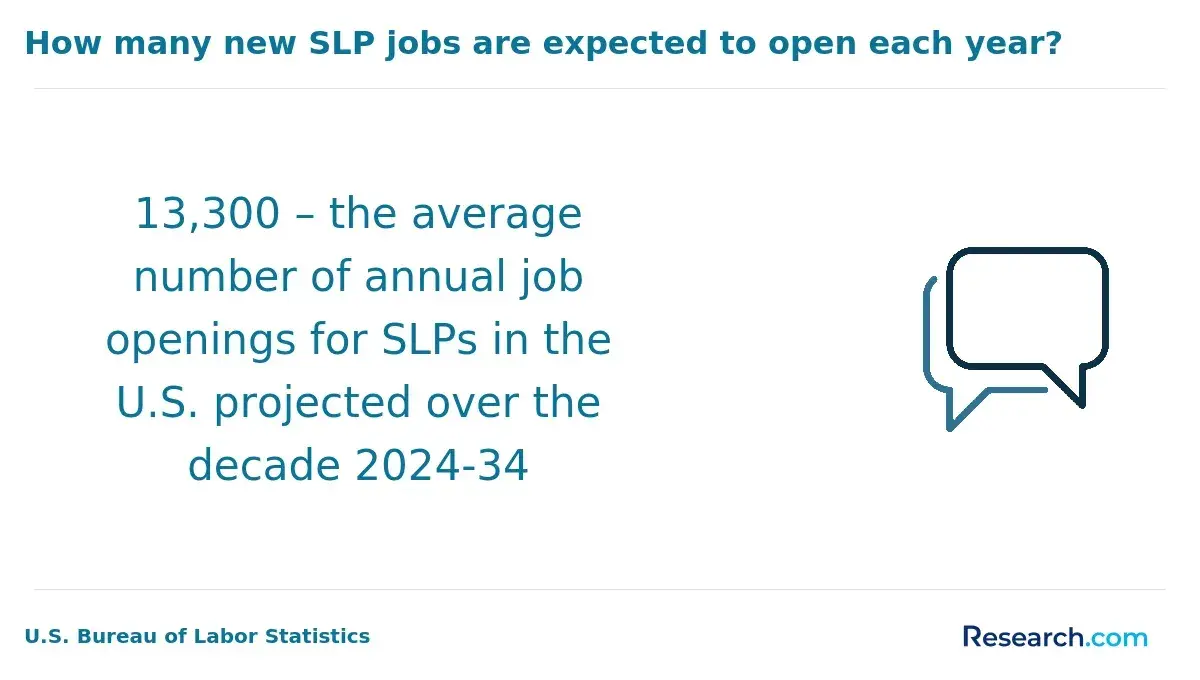
Retaining clinical experience remains valuable. The Bureau of Labor Statistics projects about 13,300 annual SLP job openings through 2034 due to aging populations with stroke and dementia-related speech impairments. Many professionals maintain hybrid roles, balancing clinical work with private coaching to increase income and expertise.
Other Things You Should Know About Speech Pathology
Cultural competence is essential in accent modification and speech coaching because it ensures sensitivity and respect toward clients' linguistic and cultural backgrounds. Effective SLPs adapt techniques to accommodate diverse accents and communication styles while avoiding cultural bias. This competence fosters trust and improves treatment outcomes in multicultural client populations.
SLP graduates should keep signed informed-consent forms, a written scope-of-service agreement, session notes, treatment goals, progress measures, and any release-of-information forms. Many employers and private clients also expect HIPAA-compliant record storage and retention policies that follow state licensure rules and organizational procedures.
Speech pathologists can work independently as private practitioners or consultants, especially in accent coaching and speech modification services. However, many also choose to be affiliated with clinics, schools, or corporations to gain access to a broader client base and professional resources. Independent practice requires strong business skills and marketing efforts to build a client portfolio.
- U.S. Bureau of Labor Statistics - Speech-Language Pathologists https://www.bls.gov/ooh/healthcare/speech-language-pathologists.htm
- ASHA EdFind - Accredited Speech-Language Pathology Programs https://find.asha.org/ed/
- ETS Praxis - Speech-Language Pathology (5331) https://praxis.ets.org/test/speech-language-pathology-5331.html
- California State University-East Bay - Online Master of Science in Speech-Language Pathology https://ce.csueastbay.edu/programs/speech-language-pathology/
- Auburn University, Montgomery - Master of Science in Speech-Language Pathology https://www.aum.edu/degree/ms-speech-language-pathology/
- Idaho State University - Master of Science in Speech-Language Pathology (Online/Distance Education) https://www.isu.edu/slp/programs-offered/slp-graduate-program/
- West Virginia University - Speech-Language Pathology, M.S. - Online https://medicine.hsc.wvu.edu/communications-sciences-and-disorders/speech-language-pathology-ms/future-students/curriculum/online-slp-program/
- University of North Carolina at Greensboro - Speech-Language Pathology, M.A. (Online) https://csd.uncg.edu/graduate/masters-of-arts-online/