2027 How to Choose Between Online SLP Programs With Similar Tuition

Co-Founder and Chief Data Scientist

Reviewed by Rhea Paul, PhD
SLP Education & Research Expert
Choosing between online speech pathology programs with similar tuition can overwhelm prospective students. When costs are comparable, subtle differences in curriculum focus, clinical opportunities, accreditation, and faculty expertise become crucial. Additionally, factors like program flexibility and support services significantly impact the overall experience and career readiness.
Without clear guidance, applicants risk selecting programs that do not align with their learning style or professional goals. This article examines key considerations beyond tuition, offering actionable insights to help students differentiate between programs and make informed decisions that optimize their education and future career in speech pathology.
Key Things You Should Know
- Tuition similarity requires focusing on program accreditation and clinical practicum quality to meet ASHA certification standards, which over 90% of employers prioritize in 2024-2025.
- Consider program delivery flexibility and technology integration; 75% of online SLP students in recent surveys favored platforms with robust telepractice training opportunities.
- Graduation and licensure exam pass rates vary and impact job readiness; top programs report >85% pass rates for the Praxis exam in 2025.
What distinguishes top online SLP programs with similar tuition?
Top accredited online speech pathology programs with similar tuition distinguish themselves mainly through accreditation, clinical practicum opportunities, faculty expertise, and student support. Accreditation by the Council on Academic Accreditation (CAA) is critical. The ASHA 2025 EdFind Outcomes Report shows that 95% of graduates from CAA-accredited online speech pathology programs pass the Praxis exam, compared to 92% from non-accredited ones. This underscores the higher quality and rigor found in accredited programs.
Clinical practicum experiences vary widely. The best online speech pathology programs offer diverse placements in settings like schools, hospitals, and private clinics, which provide broader hands-on training. Important factors to consider include how practicum hours are structured and the flexibility offered, especially for working professionals.
Faculty qualifications also affect program quality. Programs staffed by instructors with active research or extensive clinical practice tend to offer more current, evidence-based mentorship. Reviewing faculty bios can help students find programs aligned with their interests.
Comprehensive student support-including academic advising, career counseling, and technical help-further boosts success and retention. Balancing online education with other commitments is easier when strong support services are available. For those exploring online options, consider checking rankings like the online speech pathology master's programs to find affordable and reputable choices that meet professional goals.
How do you compare accreditation for online SLP programs?
Accreditation is a crucial factor when comparing online speech pathology (SLP) programs. Verify if the program is accredited by the Council on Academic Accreditation in Audiology and Speech-Language Pathology (CAA), the national accrediting body recognized by the American Speech-Language-Hearing Association (ASHA). CAA accreditation confirms the program meets essential standards for curriculum, faculty qualifications, and clinical training, supporting certification and licensure eligibility.
Regional accreditation of the institution is equally important. This affects credit transferability, access to federal financial aid, and ensures academic quality. When assessing programs with similar tuition, consider their clinical partnerships, placement flexibility, and support available for remote students.
Online SLP programs often require 400 clinical practicum hours, meeting federal and ASHA standards, but also typically offer access to over 85% more diverse clinical sites than traditional programs, including schools, hospitals, and clinics. This enriched variety enhances hands-on experience and professional readiness.
Reliable programs also report public data on graduate outcomes and certification exam pass rates, providing transparency about their accreditation effectiveness in practice. Given the investment in education, it's worthwhile to explore career prospects such as speech therapy salary to understand the financial return on accredited education.
What curriculum differences exist in online SLP programs?
Curriculum variations in online speech pathology programs often focus on specialized tracks such as augmentative and alternative communication (AAC), swallowing disorders, or bilingual speech therapy. Core topics like phonetics, neurogenic disorders, and pediatric speech development are typically covered, but these specialization differences influence how well students are prepared for particular career paths.
Differences in course content for online speech pathology degrees also appear in clinical practicum arrangements. Many online programs collaborate with local clinics or healthcare providers to facilitate in-person practicum hours. Some allow flexible site selection based on geography, while others have more rigid partnerships that may restrict student options, impacting hands-on experience diversity.
Faculty expertise is a notable distinguishing factor. According to the ASHA 2024 Faculty Survey, online SLP programs have faculty with 20% higher rates of recent clinical practice experience, averaging 15 years post-certification. This enrichment ensures course content reflects current clinical knowledge and applied practice, which can be vital for career readiness.
Assessment methods vary widely from live video interactions and synchronous discussions to asynchronous assignments and pre-recorded lectures, influencing student engagement and feedback quality. Additionally, some programs emphasize interdisciplinary collaboration with audiology, occupational therapy, or special education students, simulating team-based care settings. Prospective students interested in accelerated pathways might explore 5-year accelerated speech pathology programs for a quicker route to entering the field.
Online speech pathology programs adhere to the same clinical practicum requirements for online SLP programs as traditional campus-based ones, ensuring compliance with accreditation and certification standards for online speech pathology programs. Students must complete at least 400 clock hours of supervised clinical experience, including observation and direct client contact, covering diverse populations and disorders such as speech, language, cognitive-communication, and swallowing difficulties.
Clinical training often occurs through placements at healthcare facilities, schools, or private practices arranged by the university, sometimes supplemented with virtual clinical simulations. These hybrid models follow rigorous standards set by the Council on Academic Accreditation in Audiology and Speech-Language Pathology (CAA) and the American Speech-Language-Hearing Association (ASHA). Additionally, a Clinical Fellowship Year (CFY) post-graduation is required, providing equivalent professional supervision regardless of program delivery.
Graduates from online programs achieve a 98% employment rate within six months, mirroring on-campus outcomes but with 12% lower average student debt (BLS 2025 Occupational Outlook). To ensure eligibility for the Certificate of Clinical Competence (CCC-SLP) and state licensure, prospective students should confirm that programs include these essential clinical components. For those exploring options, checking out the easiest speech pathology programs to get into can be a useful starting point.
Admission to online SLP master's programs typically requires a bachelor's degree from an accredited school, often with coursework in communication sciences and disorders or a related field. Most programs ask for a minimum GPA of around 3.0, though more competitive programs might have higher standards. GRE scores are usually requested, but many schools now waive or make them optional, especially if applicants have relevant professional experience or prior graduate work.
Applicants must submit letters of recommendation from academic or professional referees who can speak to their skills and potential. A personal statement outlining motivations and career goals is common to help admissions understand commitment and fit. Official transcripts documenting academic history are necessary, and some programs may require completion of prerequisites like anatomy, physiology, or linguistics if not done during undergraduate studies.
Practical experience, such as volunteering or clinical work in communication disorders, enhances applications. Interviews via video conference may assess communication skills and professionalism. Notably, 92% of online SLP programs use AI-driven simulation tools, contributing to a 25% faster mastery of diagnostic skills, according to the Educause 2025 Health Professions EdTech Report.
International students must prove English proficiency through exams such as TOEFL or IELTS. Background checks and immunization records can also be prerequisites before clinical placements begin, reflecting the technology-enhanced and safety-focused nature of modern speech pathology education.
Online speech pathology programs generally take two to three years to complete, depending on whether students enroll full-time or part-time and the program's format. Full-time students often finish in about two years through a more intensive curriculum that includes clinical placements and coursework. Part-time students, balancing work or family commitments, typically take three years or more to finish.
Programs with asynchronous clinical supervision modules offer added flexibility. These modules allow students to complete clinical training on a schedule that fits their lifestyle, which can reduce delays in meeting practicum hour requirements. According to NSCRC 2025 graduate data, part-time online students with access to asynchronous clinical supervision show an 85% retention rate, compared to 60% for those without it.
When comparing programs with similar tuition rates, consider clinical scheduling flexibility. Programs that incorporate asynchronous clinical placements help minimize conflicts with professional or personal responsibilities and support timely graduation. Conversely, cohort-based clinical models may lengthen program duration due to fixed scheduling.
Accelerated tracks can shorten program length but usually require a full-time commitment. Prospective students should evaluate their capacity for workload, clinical hour requirements, and available support services to realistically estimate completion timelines before enrolling.
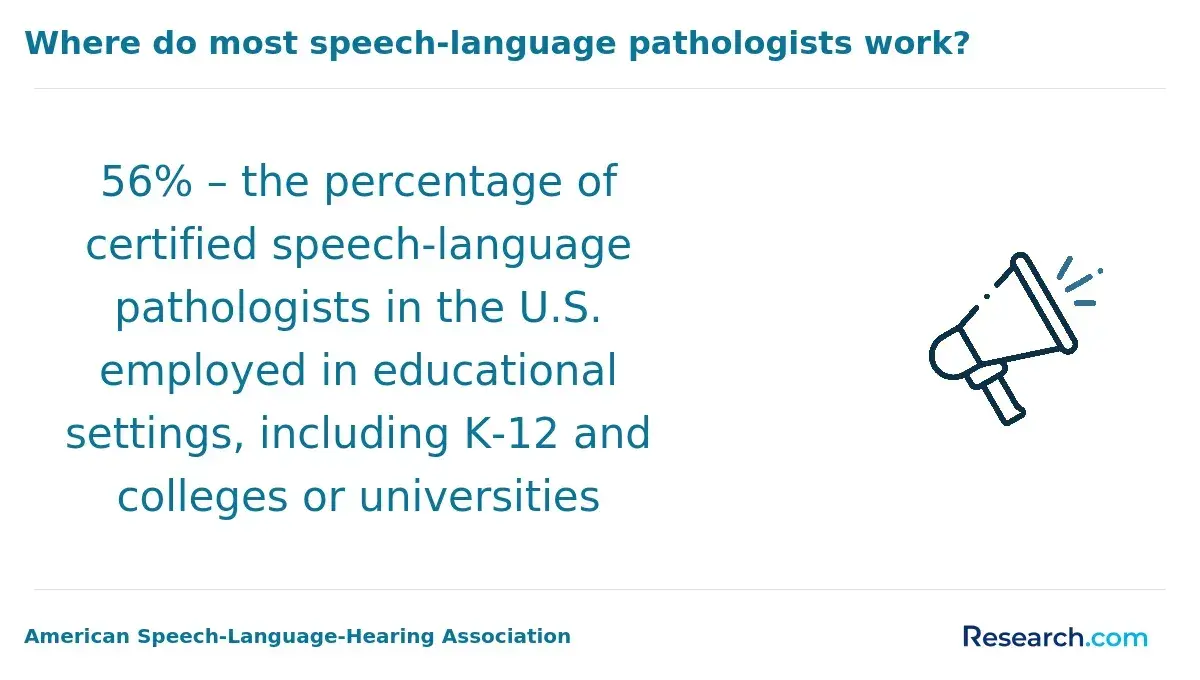
An online speech pathology degree leads to diverse career opportunities across healthcare, education, and research. Graduates qualify to work as licensed speech-language pathologists, offering diagnostic and therapeutic services for speech, language, voice, and swallowing disorders. Common employment settings include schools, hospitals, outpatient clinics, rehabilitation centers, and nursing homes.
Beyond traditional clinical roles, speech pathology professionals may specialize in areas such as:
- Early intervention programs for toddlers with developmental delays
- Voice therapy for singers, broadcasters, and other professional voice users
- Swallowing rehabilitation within medical inpatient or outpatient settings
- Development of speech technologies, including augmentative and alternative communication devices
- Academic or clinical research that advances treatment methods and patient outcomes
- Private practice or teletherapy, expanding access to remote patient care
Online programs offer broader geographic access and often result in 15% more merit-based financial aid, averaging around $12,500 per student nationally (IEA 2025 Graduate Aid Trends). This can ease affordability while expanding professional networks across multiple states. However, graduates should verify state licensure requirements for practice eligibility, especially if planning to serve across state lines.
Pursuing research or academic roles typically involves additional graduate degrees or certifications. Continuing education and certification by the American Speech-Language-Hearing Association (ASHA) remain essential for most clinical positions.
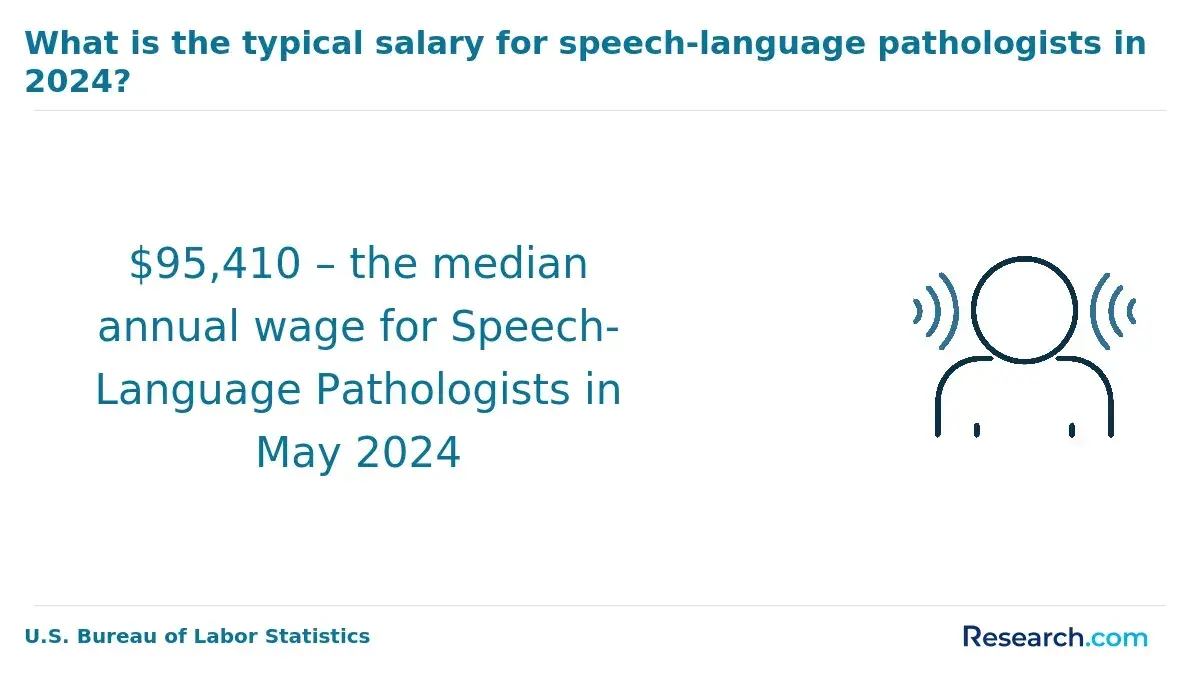
Graduates of online speech pathology programs can expect first-year median salaries of around $97,870, reflecting an 18% increase over peers from programs without strong virtual career platforms. This boost is linked to career services that actively connect alumni with employers in healthcare and educational settings.
Salary outcomes vary by location, employer type, and clinical experience. Metropolitan hospitals and specialized rehabilitation centers often pay above median salaries, while school-based roles may start lower but offer benefits like loan forgiveness. Geographic demand can cause salaries to shift by 10% or more, with some states paying premium wages for qualified speech pathologists.
Choosing programs with robust career support-such as virtual career fairs, alumni networks, and employer partnerships-can lead to better early earnings and job placement. Students should inquire about assistance with resume building, interview preparation, and direct employer engagement.
Additional salary advantages come from certifications beyond state licensure. Board certification in areas like fluency or swallowing disorders can add $3,000 to $7,000 annually to wages. Evaluating these factors helps prospective speech pathologists measure total return on investment beyond tuition costs.
The job outlook for speech-language pathologists is strong, with employment expected to grow 17% between 2025 and 2035-much faster than the average for all occupations. This growth is driven by an aging population needing rehabilitation and increased awareness of communication disorders across all age groups. Opportunities are expanding in healthcare, education, and telepractice environments.
For those considering online SLP programs, employer preferences play a significant role. According to the ASHA 2025 Employer Feedback Study, 87% of hiring managers view graduates from online CAA-accredited programs as equally qualified compared to those from campus-based programs. Programs with a focus on telepractice training are especially valued, reflecting the shift toward remote service delivery.
Adaptability to hybrid service models and technology skills are increasingly important. Salary varies by region and employer, with a median annual wage of about $80,000, higher in specialized medical settings.
How to select the best online SLP program for your goals?
When choosing an online speech pathology program, prioritize accreditation and state licensure eligibility. Ensure the program is accredited by the Council on Academic Accreditation (CAA) of the American Speech-Language-Hearing Association and meets licensure requirements for your intended state. Clinical practicum opportunities are vital; seek programs offering sufficient supervised hours in settings matching your career goals, including pediatric, adult, or specialty areas. Partnerships with local clinics or telepractice options can enhance practical experience.
Faculty expertise aligned with your specialization supports mentorship and career growth. Investigate support services such as career counseling, certification exam preparation, and technology resources, which contribute to educational success.
Financial considerations are crucial. According to the Georgetown CEW 2025 ROI Report, graduates from affordable online programs (under $50,000 tuition) recover their investment in 2.1 years at a median salary of $95,000, compared to 3.8 years for those from costly private programs. This highlights the importance of evaluating return on investment rather than just upfront tuition.
Other Things You Should Know About Speech Pathology
After completing an online speech pathology program, graduates must obtain state licensure to practice professionally. This usually requires passing the Praxis Exam in Speech-Language Pathology, completing a supervised clinical fellowship, and meeting any additional state-specific requirements. Licensure ensures that practitioners meet standardized professional and ethical standards.
Some online SLP programs require one or more on-campus residencies, often lasting 2 to 5 days, while others are fully online. Check whether the program has a residency requirement, how many visits are mandatory, and whether travel costs are included in the published tuition.
Yes, online speech pathology programs often require students to have reliable access to high-speed internet, a computer with specific technical capabilities, and sometimes specialized software for telepractice simulations. Programs may also utilize online platforms for lectures, interactive labs, and clinical documentation. Ensuring you meet these technology requirements is essential for successful participation.
Online speech pathology programs typically coordinate local clinical placements supervised by licensed professionals to meet practicum requirements. They may also offer virtual supervision, mentorship, and regular feedback sessions to support student learning. This blended approach ensures students gain hands-on experience while receiving guidance throughout their clinical training.
- U.S. Bureau of Labor Statistics - Speech-Language Pathologists https://www.bls.gov/ooh/healthcare/speech-language-pathologists.htm
- ASHA EdFind - Accredited Speech-Language Pathology Programs https://find.asha.org/ed/
- O*NET OnLine - Speech-Language Pathologists https://www.onetonline.org/link/summary/29-1127.00
- University of Scranton - Master of Science (M.S.) in Speech-Language Pathology https://www.scranton.edu/academics/pcps/health-and-human-performance/programs/speech-language-pathology/index.shtml
- New England Institute of Technology - Master of Science in Speech Language Pathology https://www.neit.edu/academics/graduate-degrees/speech-language-pathology-ms
- Idaho State University - Master of Science in Speech-Language Pathology (Online/Distance Education) https://www.isu.edu/slp/programs-offered/slp-graduate-program/
- California State University-Northridge - Master of Science in Communicative Disorders (Online) https://tsengcollege.csun.edu/programs/CDS
- University of Nebraska at Kearney - Speech-Language Pathology, Master of Science in Education (Online Track) https://www.unk.edu/online/degrees-programs/speech-language-pathology-online.php