2027 SLP Graduate Externship Schedules: Full-Time Blocks vs Placements Throughout the Semester

Co-Founder and Chief Data Scientist

Reviewed by Rhea Paul, PhD
SLP Education & Research Expert
SLP graduate externships can look dramatically different: one program may send students to a full-time site for several weeks, while another combines two or three placement days with coursework across an entire semester. That difference can affect income, commuting, course load, clinical confidence, and graduation planning. This guide helps prospective and current SLP students compare both models, understand how schedules connect to ASHA and state requirements, and ask the questions that prevent unpleasant placement surprises.
Key Things You Should Know
- Full-time block externships provide concentrated immersion, often resembling an entry-level work schedule, while semester-long placements spread clinical work alongside classes and may be more manageable for students with ongoing academic obligations.
- Schedule format does not by itself determine whether clinical hours count: students still need appropriately supervised experiences, and ASHA certification standards require at least 400 total clinical practicum hours, including 375 direct client/patient contact hours.
- The strongest program choice depends on placement coordination, commute and travel expectations, course conflicts, financial capacity during intensive terms, and whether the program can support the school, medical, pediatric, or adult setting a student needs.
How do full-time block SLP graduate externships differ from placements spread across a semester?
A full-time block externship is a concentrated clinical experience in which students generally follow the host site's normal workweek for a defined period. A semester-long placement, sometimes called a distributed or part-time placement, assigns fewer days or hours each week while the student continues academic courses. Programs may use both models at different points in the curriculum.
The central trade-off is intensity versus integration. Blocks can create rapid exposure to a site's workflow and caseload, while distributed placements give students more time to connect clinical learning with class content and maintain other responsibilities. Neither model is universally better; the quality of supervision, caseload, feedback, and student support matters as much as the calendar.
This comparison shows the practical differences students should expect to investigate before committing to a program.
| Schedule feature | Full-time block externship | Semester-long placement |
| Typical pattern | Near full-time site attendance for a concentrated period | One to several placement days per week over an academic term |
| Coursework overlap | Often reduced, paused, or limited during the block | Usually substantial; classes and placement run concurrently |
| Clinical immersion | High; students follow daily routines, meetings, and documentation cycles | Gradual; students repeatedly return to the same clients or classrooms over time |
| Financial pressure | Can be higher if outside work is not feasible during the block | May allow limited work, but scheduling can still be demanding |
| Best fit | Students able to clear their calendars and seeking an intensive workplace transition | Students who need a steadier workload or benefit from prolonged client follow-up |
Students should not assume "full-time" means a fixed number of hours. A school district, hospital, rehabilitation facility, and early-intervention program can each operate on different calendars, holiday schedules, and productivity expectations.
What do current SLP externship schedules look like across accredited graduate programs?
There is no single national externship calendar for CAA-accredited speech-language pathology programs. Programs commonly begin with campus clinic or simulation-based learning, then move students into community placements with progressively greater independence. Final placements are often the most intensive, but their duration and weekly schedule vary by curriculum and host-site availability.
The following patterns are common planning models, not universal requirements or promises from every accredited program.
| Program phase | Common scheduling approach | Primary learning purpose |
| Early clinical education | Campus clinic or limited part-time community experience | Build foundational interviewing, assessment, treatment, and documentation skills |
| Intermediate placement | Part-time experience alongside advanced coursework | Apply specialty coursework while receiving close supervisory support |
| Final school placement | Often follows the district day and school-year calendar | Experience educational eligibility, IEP processes, classroom collaboration, and caseload management |
| Final medical placement | May be full-time or near full-time and can continue beyond a university term | Develop familiarity with medical documentation, interprofessional care, and adult or acute populations |
Ask for the most recent clinical education handbook rather than relying on a sample course sequence. A published curriculum can describe required credits without revealing whether a final placement requires five days per week, evening documentation, a distant commute, or a term without regular classes.
How do externship models affect ASHA CCC-SLP and state licensure requirements?
Hours alone are not enough. The activities must be appropriately supervised, documented, and accepted by the graduate program under its clinical education policies. A compressed block can help students accumulate hours efficiently, but a site cancellation, low census, school closure, or limited caseload can reduce actual direct-contact opportunities. A longer placement can offer continuity but does not automatically produce enough hours either.
State licenses and school-based credentials are separate from the CCC-SLP. States may set additional requirements involving a graduate degree, examination, supervised post-graduate experience, background checks, and specific coursework. School employment can also involve education-agency credentials that differ from a state health-professions license. Before enrolling, confirm requirements with the intended state licensing board and, for school practice, the state education agency.
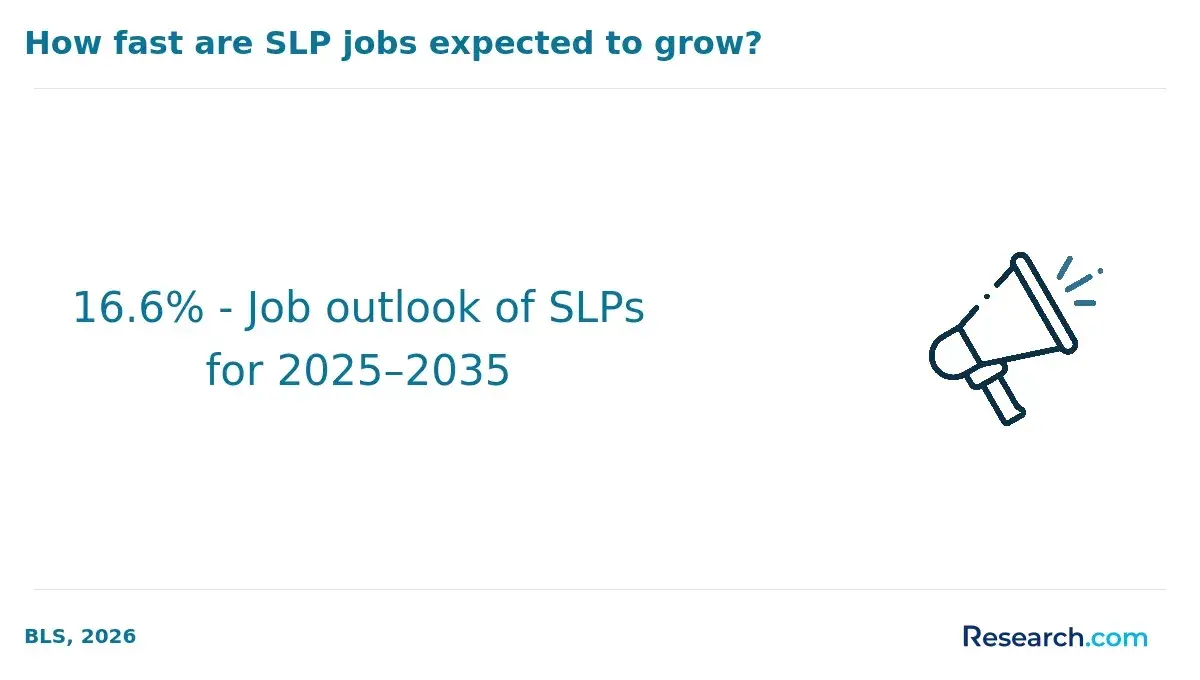
Clinical planning has long-term career value because demand remains strong: the U.S. Bureau of Labor Statistics projects 17% employment growth for speech-language pathologists from 2025 to 2035. That outlook does not make every placement equally useful, but it supports choosing a schedule that builds credible, supervised experience rather than simply accumulating calendar time.
What are the advantages and drawbacks of full-time block SLP externships for students?
The model is especially attractive for students seeking experience in a fast-moving medical, rehabilitation, or high-volume outpatient environment. It may also make it easier to participate in staff meetings, caregiver education, interdisciplinary rounds, and site-specific training that occur during normal business hours.
Students should weigh the benefits against practical constraints before viewing an intensive block as automatically preferable.
- Potential advantages: stronger routine-building, faster familiarity with a caseload, more consistent contact with supervisors and staff, and a clearer preview of full-time employment.
- Potential drawbacks: limited ability to maintain paid work, greater transportation or temporary-housing costs, less time for studying, and higher risk of overload if coursework continues.
- Best fit: students with flexible finances and caregiving arrangements who want concentrated workplace immersion and can reliably meet daytime site expectations.
A common mistake is treating a "block" as a break from academic responsibility. Many sites expect preparation, data review, notes, reports, and follow-up outside client-contact time. Ask whether the program protects the block from major exams and whether site documentation must be completed after hours.
Students considering an accelerated timeline should be particularly cautious. Accelerated speech pathology programs online may shorten the academic sequence, but clinical placements still depend on supervisor availability, site calendars, and the student's ability to complete required experiences safely and successfully.
How do semester-long, part-time SLP placements influence clinical skill development and supervision?
Semester-long placements can support deliberate skill development because students see clients repeatedly over time while discussing clinical decisions in class. This format is particularly useful for learning how goals evolve, how caregivers respond to recommendations, and how attendance, progress monitoring, and changing needs affect treatment plans.
Distributed schedules may also allow supervisors to scaffold responsibility. A student can begin with observation and selected treatment tasks, then gradually assume more planning, documentation, or evaluation responsibilities. The pace can create room for reflection, revision, and direct application of feedback at the next weekly visit.
However, fewer weekly site days can slow immersion. Students may need longer to learn electronic records, team routines, and caseload patterns, and missed days can have a larger effect on continuity. A placement that offers only a narrow client population may also leave gaps that must be addressed through another experience.
For students balancing classes, a part-time placement is not necessarily "easy." It requires disciplined scheduling because class assignments, treatment preparation, travel, documentation, and supervisor meetings compete for the same evenings and weekends. Choose this model when sustained client follow-up and manageable weekly pacing matter more than rapid full-time immersion.
In what ways do externship schedules shape workload, burnout risk, and student well-being?
Externship stress usually comes from the combined workload, not from the label "block" or "part-time." A five-day placement can be exhausting because it limits recovery time and paid-work capacity. A two-day placement can also be stressful if it is layered onto a full course load, a long commute, and extensive clinical preparation.
Students should build a realistic weekly calendar before accepting a schedule. Include travel, parking or transit time, meal planning, required readings, treatment planning, documentation, meetings, family responsibilities, and a buffer for client cancellations or urgent assignments. If the schedule works only when every week goes perfectly, it is too fragile.
Several warning signs deserve early attention:
- Multiple consecutive weeks with inadequate sleep, missed meals, or inability to complete documentation on time.
- A placement commute that regularly makes attendance or timely preparation uncertain.
- Unclear expectations about unpaid hours, weekend assignments, or make-up days.
- Pressure to keep a work schedule that conflicts with client care, supervision, or academic performance.
Address problems early with the clinical educator and program coordinator. Programs cannot always change a site assignment, but they may clarify expectations, adjust academic sequencing, help resolve supervision concerns, or identify available student-support resources. Waiting until required hours are at risk makes solutions harder.
How do graduate programs coordinate externship calendars with academic courses and accreditation standards?
Strong programs build clinical education into the curriculum rather than treating placement as an add-on. They sequence assessment, intervention, counseling, professional issues, and disorder-specific coursework around clinical responsibilities, while allowing enough flexibility for the site calendars that are outside the university's control.
CAA accreditation focuses on whether graduate programs provide students with the knowledge, skills, supervision, assessment, and clinical experiences needed for entry-level practice. It does not impose one national day-by-day externship calendar. As a result, students should evaluate each program's actual coordination systems: placement staff, contingency policies, supervisor communication, hour tracking, remediation procedures, and support when a site becomes unavailable.
When reviewing a program, request evidence of how it handles the operational issues that often determine whether a schedule is workable.
- Ask when students learn their site, expected start date, weekly hours, and commute requirements.
- Confirm whether students arrange placements themselves, rank approved sites, or receive an assignment from the program.
- Find out how the program manages site cancellations, supervisor changes, weather closures, and missed clinical days.
- Check whether final externships overlap with capstone projects, comprehensive exams, or synchronous classes.
Accreditation status should be verified directly through ASHA's Council on Academic Accreditation directory. Also ask whether a program is authorized to enroll students in your state and whether its published licensure disclosures identify any state-specific limitations.
What scheduling options do school-based and medical SLP externships typically offer students?
School and medical placements expose students to different rhythms, populations, paperwork, and calendar constraints. A student interested in both should seek a program that can provide meaningful experience in each setting when possible, without assuming that a preferred site or specialty will be guaranteed.
This table highlights the scheduling features that most often affect a student's decision.
| Placement setting | Typical schedule characteristics | Planning considerations |
| Public or private school | Usually aligns with the school day and district academic calendar | Expect early starts, school breaks, IEP meetings, and possible travel among campuses |
| Hospital or acute care | Often weekday daytime, with schedules shaped by patient volume and hospital operations | May require early arrival, medical clearances, vaccinations, and comfort with changing caseloads |
| Outpatient clinic | May include later afternoon or early evening appointments | Can offer family interaction and recurring sessions but may involve cancellations or variable attendance |
| Skilled nursing or rehabilitation facility | Often follows facility business hours and interdisciplinary treatment routines | Consider adult-focused caseloads, productivity expectations, and documentation demands |
| Early intervention | May involve home, childcare, or community visits during family-available hours | Plan for driving, safety procedures, family-centered practice, and variable daily locations |
Students aiming for school work should not assume a school externship automatically satisfies every future education credential requirement. Likewise, a medical placement is not a guarantee of hospital employment. Use placements to test fit, develop transferable clinical habits, and identify the population or setting where you need more training.
Career economics can inform the decision without replacing fit. The national median annual wage for speech-language pathologists was $97,870 in May 2025, according to the U.S. Bureau of Labor Statistics, but pay varies by setting, geography, experience, employer, and schedule. Review speech-language pathologist salary information alongside placement quality and your intended state's licensing rules.
How should SLP students evaluate externship schedules when comparing graduate programs and offers?
Compare schedules as a total feasibility question, not just by counting placement hours. An apparently convenient program can become costly or unmanageable if students must travel long distances, reduce employment, take unpaid time off, arrange childcare, or complete a placement after the advertised academic timeline.
Start by identifying your nonnegotiables: state of residence, caregiving needs, ability to travel or relocate, need for income, preferred clinical populations, and whether you can handle a full-time final term. Then compare programs using the same questions and request answers in writing when an issue affects enrollment or licensure planning.
The following decision factors separate a well-supported clinical education model from one that leaves too much uncertainty with the student.
| Evaluation factor | Stronger sign | Red flag to investigate |
| Placement coordination | Clear staff-led process, documented timelines, and established site agreements | Vague assurances that students "usually" find a site independently |
| Schedule transparency | Published examples of final-term workload, site days, and course overlap | No details until shortly before placement begins |
| Travel and costs | Direct explanation of likely travel, background checks, health requirements, and other student-paid expenses | Tuition is discussed but placement-related expenses are not |
| Clinical variety | Reasonable opportunities for varied ages, disorders, and settings within program capacity | Implied guarantees of specialty placements without written policies |
| Contingency support | Established process for cancellations, delayed hours, and supervision problems | No clear plan if a site withdraws or a supervisor leaves |
Do not choose solely on the shortest advertised completion time. Students considering a speech language pathologist masters online option should calculate the full cost of clinical participation, including possible travel, housing, lost work hours, required screenings, and technology, rather than comparing tuition alone.
What questions should SLP externs ask sites and programs to clarify schedule expectations?
Ask schedule questions before accepting an offer, ranking placements, or committing to a work arrangement. Specific questions produce more useful answers than asking whether a placement is "flexible," because flexibility can mean different things to a university, a supervisor, and a clinical site.
Use these questions to clarify the details most likely to affect your ability to complete the placement successfully.
- What are the expected start and end dates, weekly days, daily arrival times, and minimum attendance expectations?
- Will coursework, synchronous classes, examinations, or capstone requirements overlap with the placement?
- How many hours outside client contact are typically needed for preparation, documentation, meetings, and reports?
- Who assigns the placement, and what happens if the site, supervisor, or schedule changes after assignment?
- Could I be required to travel outside my local area, and which travel, parking, housing, health-clearance, or background-check costs are mine to pay?
- What client populations, service settings, and clinical tasks are likely, and what experience is not guaranteed?
- How are hours tracked, reviewed, and made up if the site closes or the caseload is unexpectedly low?
- What is the process for addressing concerns about supervision quality, workload, safety, or professional fit?
Keep written answers with your program comparison notes. If a response is unclear, ask for the relevant handbook policy or connect with the clinical education office rather than relying on informal assumptions.
Other Things You Should Know About Speech Language Pathology
Some students work limited hours during a distributed placement, but a full-time block may make regular employment unrealistic. Review the complete weekly expectation, including travel, preparation, documentation, and coursework, before committing to a job schedule.
Not necessarily. Programs may try to place students within a service area, but site availability, supervisor capacity, and program agreements can affect location. Ask whether travel, relocation, or multi-site assignments may be required.
ASHA certification standards require at least 400 clinical practicum hours, including 25 guided observation hours and 375 direct client/patient contact hours. Your program must verify that the experiences meet its policies and applicable certification standards.
Neither is inherently better. A school externship is useful for students exploring educational practice, while a medical placement may fit students interested in healthcare settings and adult populations. Consider your career goals, desired client population, supervision quality, and opportunities to develop skills you still need.
References
- Timeline to Becoming an SLP: What to Expect at Regis https://www.regiscollege.edu/blog/speech-language-pathology/masters-speech-language-pathology-program-timeline
- Online SLP Clinical Education Requirements https://www.unk.edu/academics/cdis/online-slp-clinical-education-requirements.php
- How many externship placements do/did you do? https://www.reddit.com/r/slpGradSchool/comments/qm30ac/how_many_externship_placements_dodid_you_do/