2027 Applying to SLP Master's Programs Before Completing Your Prerequisites

Co-Founder and Chief Data Scientist

Reviewed by Rhea Paul, PhD
SLP Education & Research Expert
Applying to a speech-language pathology master's program while you are still completing prerequisite courses is often possible, but it can change where you apply, when you receive a decision, and what you must finish before enrollment.
This guide is for prospective SLP students—especially career changers and students without a communication sciences and disorders major—who need to plan their application timeline carefully. You will learn how programs treat in-progress coursework, what commonly delays admission, and how to verify each school's policy before paying application fees.
Key Things You Should Know
- Many SLP master's programs accept applications with prerequisites in progress, but they usually require all coursework to be completed before the graduate term begins or before a stated summer deadline.
- Foundational communication sciences and disorders courses—especially phonetics, speech science, language development, anatomy and physiology, and audiology—are more likely to affect eligibility than general education courses.
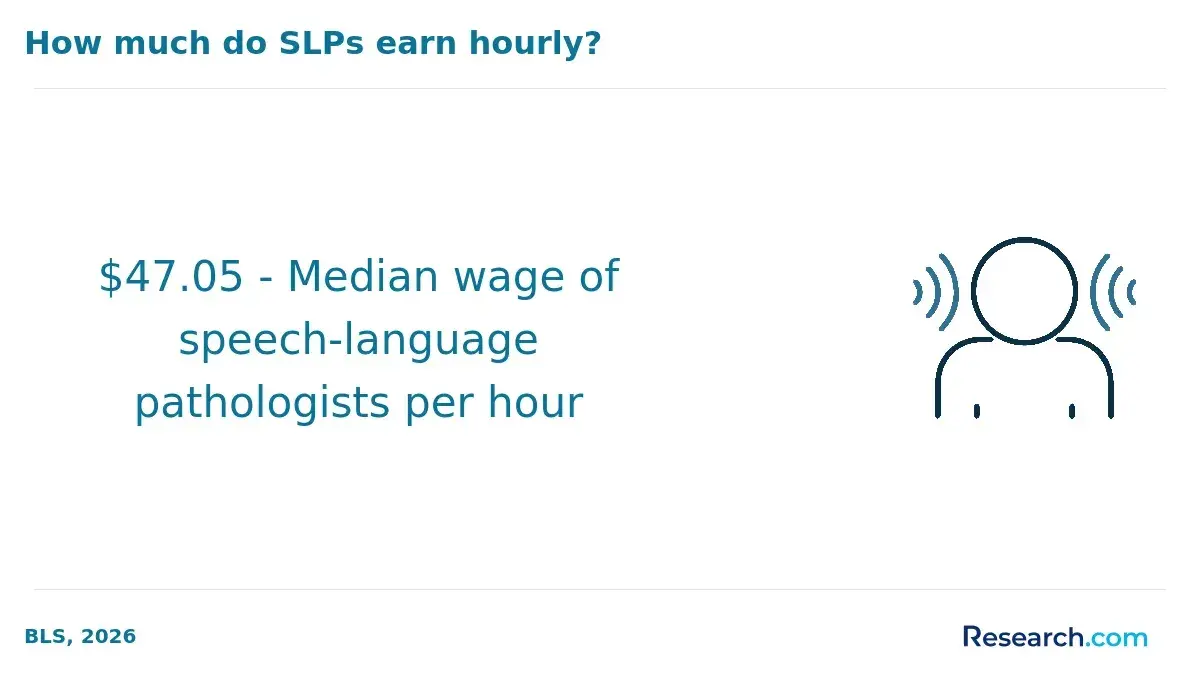
- Speech-language pathologists had a median annual wage of $97,870 in May 2025, and employment is projected to grow 17% from 2025 to 2035; that strong outlook makes careful prerequisite planning worthwhile, but it does not make admission automatic.
Can you apply to SLP master's programs before finishing prerequisites?
Yes—often. Many master's programs in speech-language pathology allow applicants to submit an application while prerequisite courses are underway. Schools may describe this as applying with "in-progress coursework," "planned coursework," "pending prerequisites," or "conditional admission." The crucial distinction is that permission to apply is not necessarily permission to enroll without completing the courses.
Applicants commonly fall into two groups. Students with a bachelor's degree in communication sciences and disorders may only need to finish one or two missing requirements. Career changers and students from unrelated majors may need a larger post-baccalaureate or leveling sequence before they are academically ready for graduate clinical training.
Applying early can be sensible when your remaining classes will be completed before a program's stated cutoff date and your academic record is otherwise competitive. It is less sensible when you still need several sequential CSD courses, because a school may not be able to assess whether you can enter the clinical curriculum on schedule. Students comparing speech pathologist masters online should be especially careful: online delivery does not mean prerequisite rules, clinical requirements, or state authorization rules are identical across programs.
The practical question is not simply whether a program accepts in-progress work. Ask whether it will review your file, make a final decision, reserve a seat, and permit enrollment while that work remains unfinished. Those are separate policies.
Which prerequisites do most SLP master's programs require?
Requirements vary by university, but most programs expect applicants to demonstrate core knowledge in communication sciences and disorders before beginning graduate-level clinical education. A CSD bachelor's degree may meet many requirements automatically; applicants from other majors often need formal leveling coursework.
The following table distinguishes common subject areas from the broader academic requirements that may also apply. Treat it as a planning guide, not a substitute for a school's catalog or admissions office.
| Requirement area | Common examples | Why it matters |
| Speech and hearing foundations | Phonetics, speech science, hearing science, audiology | Builds the technical vocabulary used in assessment and intervention coursework. |
| Language and development | Language development, child language, language disorders | Supports later work with pediatric and adult communication disorders. |
| Biological and behavioral sciences | Anatomy and physiology of speech and hearing, psychology, biology | May satisfy departmental expectations and professional certification standards. |
| Physical science and statistics | Physics or chemistry, statistics | Often needed for professional certification standards or university prerequisites. |
| Clinical observation | Guided observation hours | Some programs require documented observation before enrollment; others integrate it into the curriculum. |
Do not assume a course with a similar title will transfer. Programs may require a particular number of credits, a minimum grade, a lab component, or content that matches a specific departmental course. A general anatomy course, for example, may not replace anatomy and physiology of speech and hearing.
Applicants should also separate admission prerequisites from requirements tied to eventual professional certification. Graduate programs accredited by the Council on Academic Accreditation generally structure their curricula around preparation for clinical practice, but students remain responsible for understanding applicable certification and state licensure requirements.
How do programs evaluate applicants who are still completing coursework?
Programs generally evaluate an applicant with unfinished prerequisites using the transcript already available, the rigor and grades of courses in progress, the number of remaining requirements, and the likelihood that the applicant can finish on time. A strong application can still be competitive, but a pending course is not treated the same as a completed course with a final grade.
Admissions committees typically look for evidence that the unfinished courses are manageable rather than a major uncertainty. One or two courses scheduled for a current term may be easier to accommodate than a full leveling curriculum spread over multiple future terms.
The evaluation often includes the following factors:
- The grade earned in related completed courses, particularly CSD, science, and statistics classes.
- Whether the remaining prerequisite is offered in time and can be completed before the program's deadline.
- Whether courses are being taken at an accredited institution and appear on an official transcript.
- Whether the applicant's academic preparation supports success in a clinically intensive cohort.
- Whether the program uses a holistic review process that weighs essays, recommendations, relevant experience, and academic trends alongside GPA.
An applicant should not interpret "holistic review" as a waiver of academic requirements. It may help a committee understand a career transition or an uneven early transcript, but it rarely overrides a required prerequisite that remains incomplete at enrollment.
Which missing courses most often delay admission decisions?
Courses that sit at the center of the graduate curriculum or that satisfy professional standards are most likely to trigger a hold, request for clarification, or conditional decision. The issue is usually not that an applicant lacks a particular course title; it is whether the program can verify equivalent content before the cohort starts.
The table below identifies common pressure points and the risk they create for applicants with incomplete coursework:
| Missing or pending item | Why admissions may pause | Best applicant response |
| Anatomy and physiology of speech and hearing | Programs may view it as essential preparation for voice, swallowing, motor speech, and hearing-related coursework. | Provide a catalog description and a firm completion date. |
| Phonetics or speech science | These subjects support transcription and speech-sound analysis. | Confirm that the course covers the requested content, not merely general linguistics. |
| Audiology or hearing science | Programs may need proof of hearing-related foundational knowledge. | Ask whether either course can satisfy the requirement. |
| Language development or language disorders | These courses are closely connected to pediatric clinical preparation. | Submit the syllabus if the title is not self-explanatory. |
| Statistics, biology, behavioral science, or physical science | These may be required for later certification or institutional policy rather than admission alone. | Verify acceptable course types directly with the program. |
One common mistake is enrolling in a fast, inexpensive course before confirming that it will count. Another is assuming a course must be accepted because a different school accepted it. Course equivalency is institution-specific, and the written confirmation from the admissions office or program director matters more than informal advice.
If you have a larger gap in foundational coursework, compare structured leveling options rather than trying to assemble unrelated classes one at a time. Some accelerated speech pathology programs may fit students who already have substantial prerequisite preparation, but an accelerated pace can be a poor fit when foundational classes are still missing.
Do conditional acceptances depend on final grades or completion dates?
Usually, both. A conditional acceptance commonly states that the applicant must complete named courses by a specified date and earn at least a stated minimum grade. The admission offer may be rescinded, deferred, or converted to a later start term if either condition is not met.
Conditions should be read literally. A letter that says "complete prerequisites before matriculation" may have a different deadline than one requiring completion before orientation, registration, or the first day of classes. Summer coursework can be especially risky if final grades post after a graduate program's verification deadline.
Before accepting a conditional offer, request clarification in writing on these points:
- Which exact courses remain outstanding and whether the school has approved each planned equivalent.
- The required minimum grade for each pending course and whether pass/fail grading is acceptable.
- The final date by which an official transcript must be received, not merely the course end date.
- What happens if a course is delayed, withdrawn, repeated, or completed with a lower-than-required grade.
- Whether the offer affects financial aid, registration, orientation, clinical placement, or the ability to defer.
Do not rely on a verbal assurance that "it should be fine." Conditional enrollment is a formal academic status, and the written offer letter plus the program's current policy should control your decision.
How should you document in progress prerequisites on your application?
Accurate documentation helps an admissions committee evaluate your readiness without having to guess what you plan to complete. Most centralized application systems and university portals have separate fields for completed, in-progress, and planned coursework. Use the status that matches reality when you submit the application.
For every unfinished requirement, list the institution, official course title and number, credit value, academic term, and expected completion date. Upload current transcripts when required, then send a final official transcript as soon as grades post. If a course title is vague or differs from the program's terminology, include a catalog description or syllabus only when the school permits supporting materials.
A concise prerequisite statement can prevent confusion. It should identify what is done, what is in progress, and what remains - not argue that a requirement should be waived. For example: "I completed phonetics and language development with final grades on my transcript. I am enrolled in anatomy and physiology of speech and hearing for the spring term and expect the final grade to post in May."
Keep copies of course descriptions, emails approving equivalencies, registration confirmations, and updated transcripts. These records are useful if an application portal, centralized service, or admissions reviewer cannot immediately see how an outside course meets a requirement.
Which application materials matter most when prerequisites are unfinished?
When prerequisites are incomplete, the transcript and course plan carry unusual weight because they establish whether you can start on schedule. The rest of the application still matters: programs want evidence that you understand the profession, can manage graduate study, and have selected SLP deliberately rather than casually.
Applicants should prioritize materials that reduce uncertainty and show readiness:
- Official transcripts: Submit every required college transcript and ensure completed CSD, science, and statistics courses are easy to identify.
- A precise academic plan: Show the term and completion date for each remaining prerequisite, with no unexplained gaps.
- Purpose statement: Explain your path into SLP, relevant exposure to communication disorders, and why graduate clinical training is the right next step.
- Recommendation letters: Seek recommenders who can address academic ability, communication skills, professionalism, and capacity for demanding graduate work.
- Observation or relevant experience records: Follow the school's documentation rules and do not overstate informal shadowing or volunteer work.
Career changers should connect prior experience to transferable skills without presenting unrelated work as a substitute for prerequisites. Teaching, health care, linguistics, counseling, research, and disability services may strengthen an application, but they do not replace required CSD content.
It is also useful to consider the career outcome behind the application. The U.S. Bureau of Labor Statistics projects about 12,500 average annual openings for speech-language pathologists from 2025 to 2035. That demand can support long-term career planning, yet licensure and graduation requirements remain state- and program-specific.
Review the broader speech and language pathologist salary context as one factor—not a guarantee—when weighing the time and cost of completing prerequisites.
How do rolling admissions and deadline based admissions affect timing?
Application timing matters more when coursework is unfinished because programs need enough time to review your record and enough calendar room for you to finish conditions. Rolling admissions programs review applications as they become complete and may fill seats before the final deadline. Deadline-based programs generally collect applications until a published date and review them together or in rounds.
For rolling admissions, applying earlier can be advantageous if your planned coursework is already documented and your remaining requirements will finish on time. Waiting for final grades may improve certainty but can reduce the number of available seats. For deadline-based admissions, submitting before the deadline may be reasonable with in-progress courses, provided the school explicitly permits that status.
Use this timing comparison to decide whether to apply now or delay a cycle:
| Situation | Applying in the current cycle may make sense when | Waiting may be safer when |
| One prerequisite remains | The course ends well before the transcript deadline, and the program confirms in-progress work is allowed. | The class is not guaranteed to run, the grade will post late, or the program needs the final grade to review you. |
| Several prerequisites remain | The school offers conditional review, and all courses can realistically be completed before enrollment. | Courses are sequential, scheduling is uncertain, or several requirements extend into the graduate start term. |
| Rolling admissions program | Your application is otherwise ready, and you can submit a complete academic plan early. | Missing documentation would make the file incomplete or weaken a time-sensitive review. |
| Deadline-based program | The policy specifically allows pending courses, and you will meet its post-admission conditions. | The school requires all prerequisites by the application deadline or does not evaluate planned coursework. |
A frequent error is confusing an application deadline with a prerequisite completion deadline. Put both dates on your calendar, along with transcript-ordering lead time. If the school uses a centralized application service, allow additional time for transcript matching and verification.
What happens if you do not finish prerequisites before enrollment?
If you miss a prerequisite condition, the outcome depends on the written policy and the nature of the delay. A program may rescind admission, defer your offer to a later cohort, require you to reapply, or occasionally approve an exception. Exceptions should never be assumed, especially when a missing course affects readiness for graduate clinical coursework.
Late completion can also create practical consequences beyond admission status. You may lose access to registration, financial aid processing, orientation, clinical placement preparation, housing plans, or a deposit. In cohort-based programs, a deferral may mean waiting until the next available entering class rather than simply taking one course later.
If a problem arises, notify the admissions office promptly and provide accurate facts: the course, reason for the delay, revised completion date, and documentation available. Do not wait until orientation or submit a misleading status update. Early communication cannot guarantee an accommodation, but it gives the program the best opportunity to explain your options.
For applicants still completing a broad leveling sequence, delaying the graduate application may be the financially safer choice. It can prevent nonrefundable application, deposit, relocation, or enrollment costs tied to an offer that cannot be activated.
How can you verify each program's prerequisite policy accurately?
The most reliable approach is to verify the current policy directly with each university, using its graduate admissions page, departmental handbook, graduate catalog, and written confirmation from the program. Policies can differ even among schools that appear to require the same courses.
Use the following process before applying:
- Find the program's current prerequisite list and note course names, credit requirements, minimum grades, observation expectations, and deadlines.
- Compare every item with your transcript and identify courses that are completed, in progress, planned, unclear, or missing.
- Read whether the school accepts in-progress or planned coursework at application, admission, and enrollment stages.
- Ask admissions to confirm questionable equivalencies in writing, particularly for anatomy, phonetics, audiology, speech science, and language courses.
- Confirm the exact date by which final official transcripts must arrive and whether summer completion is permitted.
- Verify accreditation status and review state licensure disclosures if you plan to study online or practice in a state different from the school's location.
Do not choose a program only because its admissions language seems flexible. Compare prerequisite expectations with clinical format, total educational cost, campus or residency requirements, state eligibility, and the support available for clinical placements. Resources comparing speech language pathology programs can help you identify options to research, but the university's current written policy should be your final authority.
The strongest application strategy is simple: apply only where your remaining coursework, grades, transcript timing, and eventual enrollment plans clearly fit the published rules.
Other Things You Should Know About Speech Language Pathology
Yes. Many SLP programs consider applicants from non-CSD majors, but you will usually need specified leveling or prerequisite courses. The number of required courses depends on your prior transcript and the individual program.
No. Some programs require documented observation hours before enrollment or application, while others incorporate observation into their curriculum. Check the program's current admissions instructions and follow its documentation method.
Sometimes, particularly for general science, statistics, psychology, or other broad requirements. Specialized CSD prerequisites may need to come from a college that offers equivalent upper-level coursework. Obtain written confirmation before enrolling.
First, check the program's minimum grade policy. If the expected grade falls below that threshold, ask whether the course must be repeated and whether a pending repeat can be considered. Applying may still be possible, but disclose your plan accurately and avoid assuming an exception will be granted.
References
- SLP Master's Pre-Requisite Courses https://www.nymc.edu/shsp/programs/speech-language-pathology/admissions/pre-requisites/
- Speech-Language Pathology (M.A.) Admission... https://www.kean.edu/academics/programs/speech-language-pathology-ma/additional-resources
- Common Prerequisites for Speech Pathology Graduate... https://bouve.northeastern.edu/news/6-common-prerequisites-for-speech-pathology-graduate-programs/