2027 Does a Public Health BS Prepare You for Public Health Resource Referral Coordination?

Co-Founder and Chief Data Scientist
A public health BS can teach you why people need access to food, housing, transportation, and health services. Referral coordination adds a different challenge: finding appropriate resources, helping someone connect with them, and following up without losing track of privacy or changing eligibility rules.
If you are choosing a degree or preparing for your first community-facing role, this article shows where undergraduate coursework helps, where supervised experience matters more, and how to judge whether a public health BS is worth the time and cost for your goal.
Key Things You Should Know
- A public health BS provides relevant population-health and communication skills, but employers may also expect demonstrated experience with referrals, documentation, and community resources.
- Some coordinator and community health worker positions accept other degrees or relevant experience; clinical tasks can carry separate license requirements.
- A bachelor's degree commonly requires about 120 semester credits, so compare the remaining coursework and cost with direct entry, supervised work, or targeted training.
Does a public health BS prepare you for public health resource referral coordination?
A public health BS can be strong preparation, but it is not a referral-coordinator credential. Coursework can explain how social and structural conditions affect health, how service systems operate, and how to communicate across communities. Readiness for a particular job depends on whether you can also carry out referrals accurately, document contacts, and work within the employer's procedures.
The best evidence is a supervised internship, community project, or relevant job in which you maintained a resource directory, helped people navigate services, or tracked whether referrals were completed. If a program offers little applied work, ask how you will obtain that experience before paying for the degree.
A master's degree is generally not the first step needed for entry-level referral work. Comparing graduate public health degree types is more useful if your longer-term goal is program evaluation or leadership rather than direct coordination.
What does a public health resource referral coordinator do?
A resource referral coordinator connects people with services that address practical barriers to health. Depending on the organization, the role may sit in a health department, community nonprofit, health system, or social-service agency. A coordinator might assess a person's stated needs, explain available options, check basic eligibility information, make a referral, and follow up to learn whether the connection worked.
The work is not simply handing someone a list of phone numbers. A useful referral accounts for language access, transportation, service hours, application requirements, and the person's preferences. Coordinators also update resource information, record contacts in approved systems, and communicate with partner agencies under applicable privacy rules. They should know when a need calls for a licensed clinician or another specialist rather than offering advice outside their role.
This is a service-delivery position, not the same job as leading a public health agency. Readers considering that later distinction can explore comparing online public health doctoral formats, but a doctorate is not preparation normally required to make and track referrals.
What education and skills do referral coordinators need?
Requirements vary by job title and employer. Some positions ask for a bachelor's degree in public health, social services, or a related field; others emphasize community-based experience and train staff in their referral systems. Read the duties as closely as the degree requirement: a healthcare referral scheduler, a community resource navigator, and a clinical case manager may have substantially different qualifications.
For community-facing coordination, the most useful skills are respectful interviewing, accurate recordkeeping, local resource knowledge, clear follow-up, and the ability to recognize a referral that has stalled. Language skills and experience with the community served can be especially valuable. A career changer may already bring customer-service, outreach, or administrative experience and need targeted training rather than another bachelor's degree.
If you already hold an undergraduate degree and are considering graduate study despite an uneven academic record, guidance on public health master's admissions with a low GPA addresses a separate decision. Graduate admission should not be confused with the qualifications for an entry-level referral role.
Look beyond course titles to assignments and practice opportunities. The most relevant courses teach students to identify community needs, understand service barriers, communicate respectfully, and assess whether a program reaches its intended population.
This comparison shows what each subject can contribute - and what you may still need to learn on the job.
| Course area | Contribution to referral work | Likely practical gap |
| Community and behavioral health | Understanding needs, trust, and barriers to using services | Knowledge of local agencies and eligibility rules |
| Health communication | Explaining options clearly and adapting messages | Practice with live conversations and difficult follow-up |
| Health systems and policy | Understanding how programs and coverage affect access | Employer-specific referral workflows |
| Program evaluation and basic data skills | Tracking patterns such as incomplete referrals | Approved data systems and confidentiality procedures |
Basic data literacy is helpful; advanced statistical training is rarely the deciding qualification for direct referral coordination. Career-compatible online biostatistics study is a better fit if you later want to analyze programs rather than primarily connect people with services.
Referral coordination itself does not have a universal professional license. Licensing depends on the tasks and the state, not on the phrase "referral coordinator" in a job title. A position involving licensed social work, nursing, counseling, or clinical assessment may require the appropriate professional license. A public health BS does not confer one.
Before applying, separate service navigation from clinical duties in the posting. Ask the employer which tasks are performed independently, which require supervision, and whether a named license is mandatory. Do not assume that experience making community referrals qualifies you to perform a regulated assessment.
Likewise, public health research doctorate tuition options concern a different educational pathway. A research doctorate does not substitute for a clinical license or resolve a referral job's state-specific requirements.
There is no single certification required for every resource referral coordinator position. An employer or state-funded program may prefer or require particular community health worker training or certification, so check the jurisdiction and the exact posting. Training in motivational interviewing, language access, privacy, or the employer's referral platform may be more immediately useful than a broad credential.
CHES is a separate health education credential, with eligibility rules set by its certifying organization; holding a public health BS does not automatically award it. Its value depends on whether the job substantially involves health education rather than navigation. Ask employers which credentials they recognize before paying for an exam or training program.
An MPH is also a degree, not a community health certification. Even less selective online MPH programs should be evaluated against a specific career goal, not treated as a required next step for referral coordination.
They can be, provided the program offers a credible way to build community-facing experience. Online coursework can cover health systems, communication, and program planning, but a simulated assignment alone may not show an employer that you can guide someone through a real referral and follow up appropriately.
Ask whether internships can be completed near home, who approves and supervises sites, and whether required meetings occur at set times. Also check for group projects, campus visits, and the actual weekly schedule; "online" does not necessarily mean asynchronous. Compare institutional accreditation and, if public health-specific accreditation matters to you, confirm whether the particular degree falls within the stated CEPH accreditation scope.
Use budget-friendly online public health degrees as a starting point for comparison, then request each school's current total-cost estimate and fieldwork requirements.
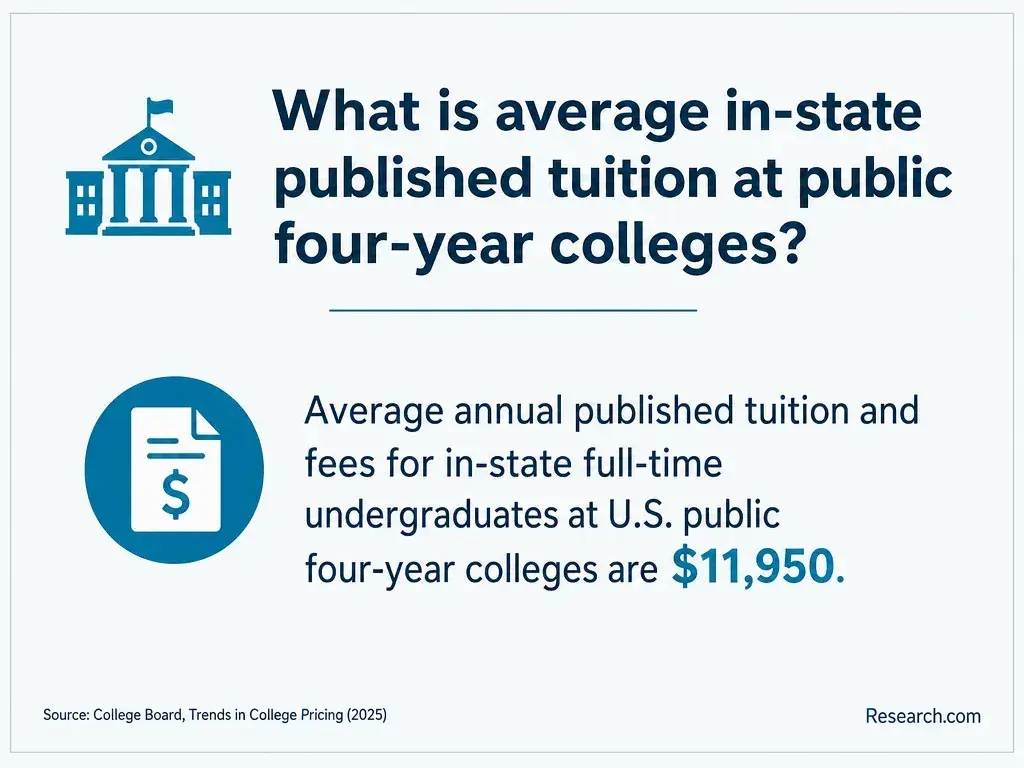
A bachelor's degree commonly totals about 120 semester credits and takes roughly four years of full-time study from the beginning, but admission to a university does not always mean admission to its public health major. Schools may set separate prerequisites, grade standards, or application steps. Transfer students should obtain a degree audit showing which accepted credits actually satisfy major, general-education, and graduation requirements.
For cost, compare tuition and mandatory fees across the credits you still need - not just the advertised price per credit. Include books, travel or lost work time for fieldwork, and any terms required because a course is offered infrequently. An associate degree or prior coursework may shorten the route, but only the receiving institution can confirm the applicable credits and graduation timeline.
If you already have a bachelor's degree, first decide whether you need another undergraduate credential at all. Affordable online graduate MPH pathways offer a different level of study, while a targeted course or supervised community role may be more direct for referral coordination.
Relevant searches include community resource navigator, community health worker, referral coordinator, outreach coordinator, and care-navigation assistant. The titles overlap, but their duties do not always: a clinic referral coordinator may chiefly manage appointments and authorizations, while a community health worker may spend more time building relationships and helping people access nonclinical services.
A BS can make you a candidate for these roles, not guarantee eligibility. Compare postings for degree requirements, preferred languages, documentation systems, travel, and whether the position requires prior outreach or clinical experience. If experience is the gap, seek a supervised internship or entry-level outreach role that lets you demonstrate completed referrals and responsible follow-up.
Graduate application details, including public health master's reference requirement comparisons, become relevant only if a later position calls for graduate preparation. They are not a substitute for the work evidence an entry-level employer requests.
How much do public health referral coordinators earn and where is demand growing?
There is no single reliable national salary series for "public health resource referral coordinator." Titles, settings, and duties vary too much. As a nearby benchmark, the US Bureau of Labor Statistics reported a $51,030 median annual wage for community health workers in May 2024. That occupation-wide figure is not a starting salary, a referral-coordinator pay rate, or an outcome for public health BS graduates.
Community health worker employment is projected to grow, but national projections cannot tell you how many referral openings are available locally. Search current postings at health systems, health departments, managed-care organizations, and community agencies in your area. Compare pay with required travel, caseload, benefits, supervision, and whether the role is funded for a limited period.
For most applicants, the useful financial comparison is the pay and advancement available with their current qualifications versus the full cost of finishing a BS. Inexpensive online public health master's options address a later education decision; their advertised earnings context should not be read as a promise of higher referral-coordinator pay.
Other Things You Should Know About Public Health
It may help if you can describe supervised tasks, the communities served, and how you handled follow-up and confidentiality. Whether it meets a job requirement is the employer's decision.
Some documentation and phone-based navigation can be remote, but positions may require in-person outreach, site visits, or local resource knowledge. Check the actual schedule and service area.
Ask how referrals are recorded, who maintains resource information, when staff follow up, and how unresolved needs are escalated. The answers reveal the training and support you can expect.
Yes, if your school and placement permit it. Describe your process or use an approved, deidentified sample; never publish client information or restricted agency records.
- Frequently Asked Questions | Protecting Student Privacy https://studentprivacy.ed.gov/frequently-asked-questions
- Social Determinants of Health | Public Health Infrastructure Center | CDC https://www.cdc.gov/infrastructure/public-health-systems-emerging-practices/social-determinants-of-health.html
- Electronic Health Records and Their Benefits | ONC https://healthit.gov/health-it-basics/benefits-ehrs/
- Social Determinants of Health - Healthy People 2030 - odphp https://odphp.health.gov/healthypeople/priority-areas/social-determinants-health
- Care Coordination | Agency for Healthcare Research and Quality https://www.ahrq.gov/ncepcr/care/coordination.html
- Electronic Health Records as Source of Research Data - NCBI https://www.ncbi.nlm.nih.gov/books/NBK597466/
- Information Sharing in the School Setting During a Public Health Emergency - PMC https://pmc.ncbi.nlm.nih.gov/articles/PMC7240309/
- General Community Outreach & Services - Field Study https://fieldstudy.soceco.uci.edu/pages/traditional-field-study-catalog-general-community-outreach-services
- Community Health Worker Workforce Development Specialist | wisc.edu https://jobs.wisc.edu/jobs/community-health-worker-workforce-development-specialist-madison-wisconsin-united-states
- Career Guide: Community Health Worker | American College of Education https://ace.edu/student-success/career-guides/community-health-worker/