2027 Does a Public Health BS Prepare You for Public Health Event Logistics?

Co-Founder and Chief Data Scientist
A community vaccination clinic or health fair depends on more than a good outreach plan. Someone must coordinate the site, staff, supplies, accessibility, communications, and changes on the day. If you are considering a public health BS, the important question is whether it will help you do that work - not simply whether it covers public health.
This guide separates classroom preparation from operational experience, identifies realistic entry-level roles, and shows what to check before enrolling so you can choose a degree or a more direct training route.
Key Things You Should Know
- A public health BS can prepare you to plan and support community health events, but classroom work alone rarely demonstrates that you can run one.
- Look for supervised event work and leave with practical evidence: a planning document, a day-of coordination tool, and a brief evaluation.
- Entry-level coordination roles may accept a bachelor's degree; event leadership usually depends on demonstrated operations experience, not a higher degree alone.
Does a public health BS prepare you for public health event logistics?
Public health event logistics means turning a population-health goal into a workable activity: arranging a location, people, materials, schedules, communications, access, safety procedures, and follow-up. The event might be a screening day, preparedness exercise, health education workshop, or mobile outreach visit.
A BS helps you understand whom an event should serve, what barriers might limit participation, and how to assess whether it met its purpose. It may not teach vendor contracting, site setup, volunteer scheduling, or what to do when supplies arrive late. Those are skills you need to practice under supervision. When comparing public health degree choices for undergraduate students, judge the available field projects as carefully as the course titles.
If you already coordinate events for a nonprofit or health organization, a full BS may be unnecessary for your next step unless target employers require a bachelor's degree or you want broader public health preparation. Ask what responsibility your existing experience already proves before paying to learn overlapping skills.
What public health event logistics skills does a BS program teach?
The strongest connection between a public health curriculum and event work is planning for a specific community. Coursework can help you identify an intended audience, work with community partners, write clear health messages, estimate resource needs, and choose basic measures such as attendance or referral completion. These choices shape staffing, language access, timing, and site layout.
Other skills require practice: building a run-of-show, confirming roles, tracking supplies, communicating changes, and documenting what happened without exposing private information. A student who can explain an event's health purpose but cannot show a workable staffing plan has only part of the preparation.
Basic data literacy is useful for estimating demand and interpreting event results. It is not the same as the advanced modeling taught in some online biostatistics master's programs for working professionals; that route fits an analytical career goal better than an event-coordination goal.
Which public health careers involve event planning and coordination?
Job titles vary, so compare advertised duties rather than searching only for "event planner." The distinctions below show where a new graduate might contribute and where experience becomes more important.
| Role | Event-related work | Typical readiness distinction |
| Program or outreach assistant | Schedules participants, prepares materials, tracks supplies, supports event-day setup | Potential bachelor's-entry role with supervision |
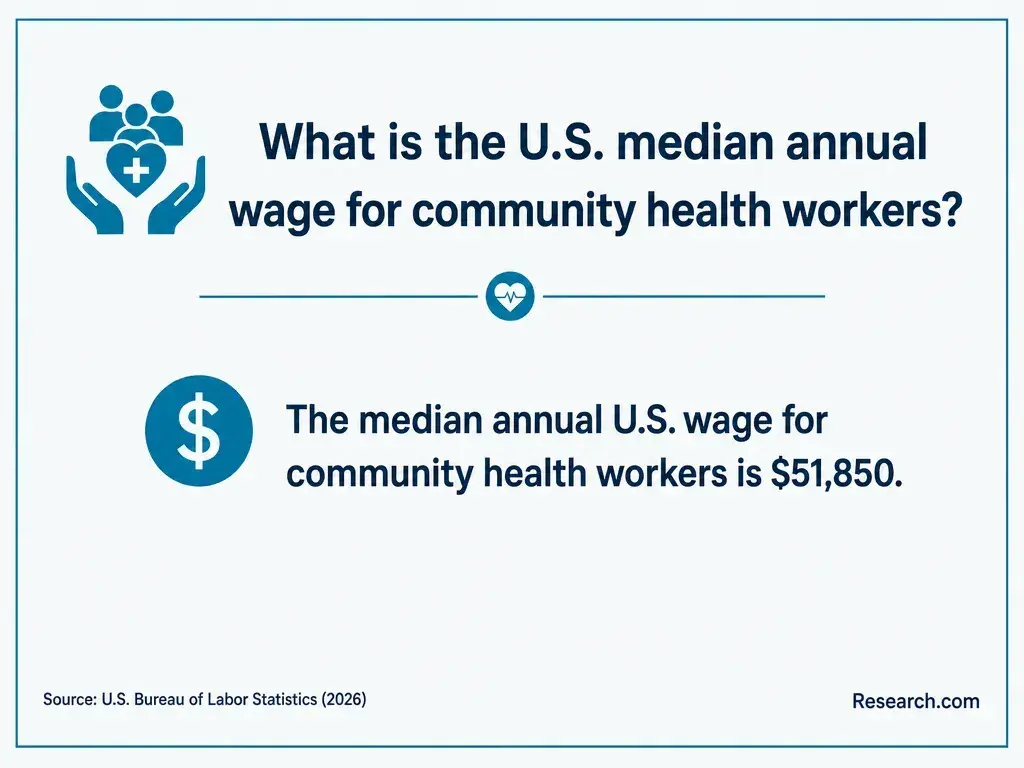
| Community health worker | Connects residents with services and supports trusted local outreach | Requirements vary by employer and state; community relationships matter |
| Health education specialist | Plans educational activities, develops materials, and assesses participation | Often associated with bachelor's-level preparation; check each posting |
| Preparedness or program coordinator | Coordinates partners, exercises, staffing, and operational plans | Often expects relevant practice or emergency-management experience |
An event-focused graduate should usually target assistant or supervised coordinator work before claiming responsibility for a large multiagency operation. Doctoral study is not a normal prerequisite for these jobs; comparing public health doctorate tuition and length is relevant only if your longer-term goal calls for advanced leadership or research training.
Prioritize a sequence that connects a community need to an implementable activity. Community health and social and behavioral sciences help with audience and partner engagement; health communication supports usable messages; program planning and evaluation help define objectives and assess results. Introductory epidemiology and statistics help you interpret the population information behind the plan.
Electives in emergency preparedness, nonprofit management, budgeting, or project management can close operational gaps if offered. Check whether a proposed elective is actually available during your enrollment and whether it counts toward the major. An elective does not create a formal concentration or certify you as an emergency manager.
If graduate study might follow, check prerequisites separately rather than assuming the BS covers every MPH admissions requirement. Guidance on public health master's admissions beyond GPA addresses a different decision from choosing the undergraduate courses most useful for event work.
A useful placement gives you responsibility for a defined part of a real event, with a supervisor who can review your decisions. Observation has value, but it does not show that you can coordinate partners, prepare a contingency plan, or resolve a scheduling conflict.
Before accepting a placement, ask the program and host site whether you can help plan, support, and assess an event - not merely attend it. Agree on a manageable deliverable, such as a staffing schedule, accessible participant-information checklist, or post-event process review. Confirm supervision, school approval, hours, travel, and any permission needed to use event records. Keep only materials you are authorized to share in a portfolio; remove participant details and confidential partner information.
Preserve your supervisor's contact information and a concise record of your work. If you later consider graduate study, that record may also help you evaluate MPH application options without academic references; admissions rules differ by program.
CEPH accreditation is a useful signal that a public health school or program has undergone review against public health education standards. It is not an event-planning credential, and it does not establish that a particular BS offers event fieldwork or that an employer requires CEPH preparation.
Check the accreditor's listing for the exact school or program and ask whether the BS you would enter falls within its accredited scope. Also verify the institution's accreditation, then compare the actual curriculum and placements. The same scope question matters if you later use online MPH program accreditation comparisons; an accredited graduate offering does not by itself describe an undergraduate degree.
Yes, if the program permits meaningful local fieldwork and you can secure an appropriate site. Online classes can teach planning and evaluation, while a local health department, nonprofit, or health system may provide supervised event experience. Do not assume the school will arrange a placement near you.
Ask whether required classes have live meetings, whether fieldwork can occur on evenings or weekends, who approves the site, and how remote supervision works. These details matter if you work or have caregiving responsibilities: an asynchronous lecture does not make a weekday outreach event flexible. Check any required campus visits and the cost of travel or unpaid hours before enrolling.
If you later look at less selective online MPH programs, treat admission and scheduling as separate questions. Neither an accessible application process nor online delivery proves that hands-on event work will fit your week.
Choose training around the events you want to support. Employer-accepted incident command or emergency preparedness training can be relevant to exercises and response operations. First aid or CPR training may be useful when a role or site calls for it, but it does not authorize clinical services. Health education credentials have separate eligibility rules; a public health BS does not award them automatically.
Before paying for any credential, review several target job postings and ask whether the employer requires it, prefers it, or offers the training after hire. A short course plus supervised event work may be a better investment than another degree when your gap is operational. If you are weighing graduate education instead, examine university awards for online public health graduate education only after confirming that the degree serves your intended role; an advertised award is not guaranteed funding.
Expect to search across public health departments, community organizations, health systems, and preparedness teams for outreach assistant, program assistant, health education, and coordinator postings. Entry-level duties may center on scheduling and participant support; responsibility for budgets, procurement, or multi-partner operations commonly calls for demonstrated experience.
There is no reliable single salary for "public health event logistics graduates." The US Bureau of Labor Statistics reports wages for defined occupations, such as health education specialists and community health workers, not for everyone with a public health BS or everyone whose job includes events. Use the occupation that matches a posting's main duties, then compare local postings, hours, benefits, and required experience. A broad occupational median is not a new graduate's pay offer.
For the same reason, public health graduate program costs versus salaries should not be used to justify a master's degree for an entry-level event role without evidence that your target employers want one.
How should you choose a public health BS for event logistics?
Start with recent job postings for the setting you want: community outreach, health education, or preparedness. Note the recurring duties and required qualifications, then compare programs against those tasks rather than against a general promise of career preparation.
Use the following checks to make a shortlist and test it with program staff:
- Request a degree plan showing relevant courses, elective availability, and any prerequisites that affect when you can take them.
- Ask for examples of approved undergraduate placements involving actual event planning or coordination, without assuming a site or role is guaranteed.
- Confirm who finds and approves the site, who supervises you, and how event work is assessed.
- Compare total tuition and fees, travel, unpaid fieldwork, and the time you can realistically devote to the degree.
- Ask career services which local employers recruit for the roles you identified and what evidence of event experience those employers expect.
If you already have a bachelor's degree and mainly lack event operations experience, supervised work and targeted training may be more direct than another BS. Research-intensive doctoral routes, including lower-cost public health PhD degree pathways, address a substantially different goal. Choose the least costly credible route that closes your actual skills gap and meets the qualifications in your target postings.
Other Things You Should Know About Public Health
Yes, when you can describe your responsibilities and what you produced. Staffing a table and coordinating volunteers demonstrate different levels of experience; describe each accurately.
The relevant venue and local authorities determine applicable requirements. Ask the host organization to confirm permissions, accessibility, food rules, and any requirements tied to the services offered.
Not without appropriate permission from the people shown and the host organization. Plans, redacted tools, and summaries of your own responsibilities are usually safer evidence.
Define success before it starts. Compare results with the event's purpose using appropriate measures, such as participation, completed referrals, or partner feedback, and document limits rather than claiming the event improved health on its own.
- The Evolution of Public Health Emergency Management as a Field of Practice - PMC https://pmc.ncbi.nlm.nih.gov/articles/PMC5594387/
- After Action Review | who.int https://extranet.who.int/sph/aar
- Priority Area: Community Preparedness | ny.gov https://www.health.ny.gov/prevention/prevention_agenda/community_preparedness/
- Emergency Operations Centers and Incident Management Structure | Field Epi Manual | CDC https://www.cdc.gov/field-epi-manual/php/chapters/eoc-incident-management.html
- Practicums, Internships and Projects What's the Difference? | Oregon State University https://health.oregonstate.edu/internships/types-of-experiential-learning
- 18 Public Health Skills Needed for Upskilling | 5 Public Administration Careers for MPA Graduates https://www.augusta.edu/online/blog/upskilling-public-health-skills
- Best Practice Guidelines for Planning an Accessible Event | Accessible KU https://accessibility.ku.edu/best-practice-guidelines-planning-accessible-event
- Event planning tips: Logistics & operations | MIT Institute Events https://institute-events.mit.edu/plan/tips/logistics/
- What is Public Health Preparedness and Resilience? | usetinc.org https://www.usetinc.org/departments/otph/tribal-public-health-preparedness-and-resilience/what-is-public-health-preparedness-and-resilience/