2027 Choosing MPH Coursework for Substance Use Prevention Research

Co-Founder and Chief Data Scientist
An MPH can prepare you to study substance use prevention, but a course labeled "addiction" is not enough on its own. The useful combination is population-level prevention knowledge, sound research methods, and a supervised opportunity to apply both.
This guide is for prospective MPH students and early-career practitioners comparing curricula - not simply degree names. It explains which courses to prioritize, how to assess a program's research opportunities, and when a different degree or targeted training may better serve your goal.
Key Things You Should Know
- Prioritize epidemiology, biostatistics, study design, and program evaluation; a substance use elective adds context but cannot replace methods training.
- Check whether you can take advanced methods courses in sequence and complete a supervised prevention project with appropriate data access and oversight.
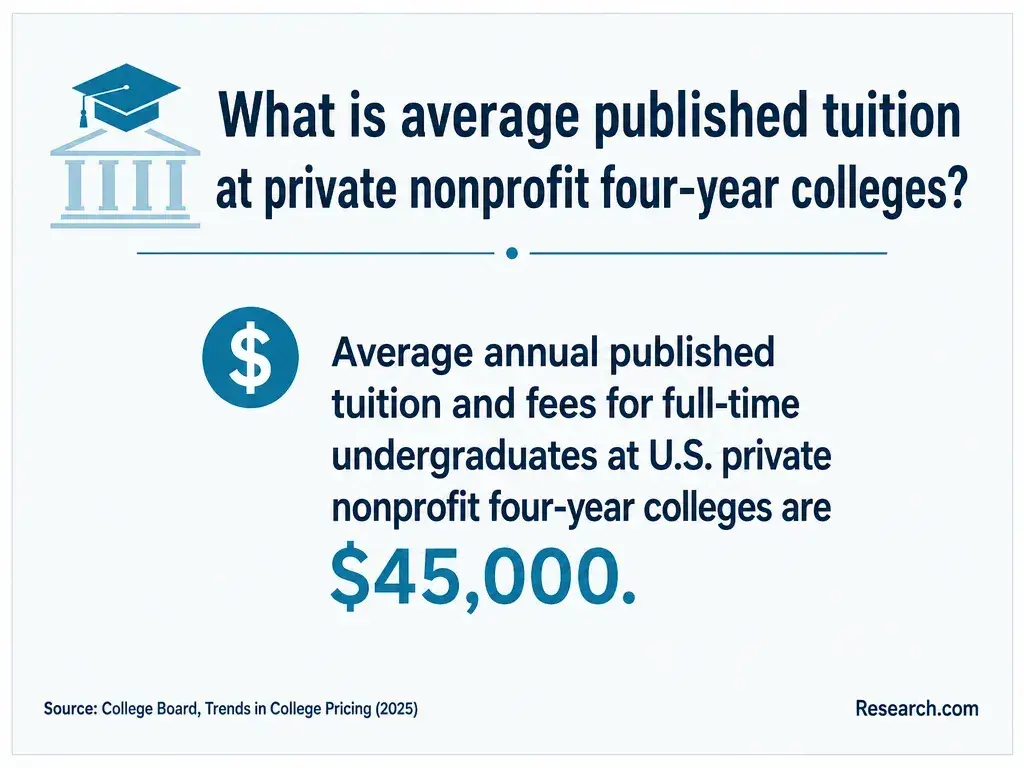
- Compare the complete cost and schedule, not just tuition or delivery format; CEPH-accredited MPH programs generally require at least 42 semester credits.
What is an MPH in substance use prevention research?
It is an MPH pathway that prepares students to investigate and evaluate population-level efforts to prevent substance-related harms. Schools may offer a named concentration, relevant electives within another concentration, or a faculty-supervised project. Those are different arrangements: taking an elective does not confer a formal specialization.
Prevention research may examine school or community programs, policy changes, access to services, or factors that shape risk and protective conditions. An MPH emphasizes applying evidence in public health settings. If your primary goal is to develop statistical methods or lead an independent academic research program, compare the MPH with a research-oriented MS or PhD. That longer path also raises funding questions; affordability of online public health PhD study is a separate consideration from choosing effective MPH electives.
What coursework prepares MPH students for substance use prevention research?
Build the schedule around the work you want to perform: define a prevention question, measure an outcome, analyze evidence, and explain the limitations. Course titles vary, so inspect syllabi, prerequisites, assignment types, and how often electives run.
The following sequence separates foundational skills from specialization:
- Start with introductory epidemiology and biostatistics, including measures of frequency, uncertainty, and interpretation of observational data.
- Add study design and applied analysis, ideally with regression, confounding, missing data, and reproducible workflows.
- Study behavioral and social determinants, substance use prevention, health policy, and culturally responsive community engagement.
- Take program evaluation or implementation research to connect study questions with feasible interventions and meaningful outcomes.
- Use an approved applied experience or integrative project to demonstrate the skills under qualified supervision.
If you already have strong community-program experience but limited quantitative preparation, take statistics early enough to qualify for advanced electives. If your intended work is primarily statistical modeling, comparing online biostatistics graduate programs may reveal a more method-intensive route than an MPH can provide.
Which accreditation should an MPH program in substance use research have?
Check both institution-level accreditation and public health-specific accreditation from the Council on Education for Public Health (CEPH). Confirm in CEPH's current directory that the accredited school, unit, or standalone program covers the MPH you plan to enter. Accreditation of a university, or even another public health degree at that university, does not by itself establish the status of your particular MPH.
CEPH accreditation is a useful quality screen, not proof that a program has strong substance use research mentorship or available electives. After checking status and scope, request the degree plan and ask who supervises prevention projects. A comparison of CEPH accreditation for online MPH study can help you identify questions to verify directly with each school.
The right methods depend on the decision a study must inform. Surveillance can describe patterns; an evaluation can assess whether a program was delivered as intended; a comparison study may estimate an intervention's effect. None is interchangeable with the others, and an observed association alone does not demonstrate that prevention worked.
For quantitative work, look for training in defining populations and outcomes, selecting comparison groups, handling confounding and missing data, and reporting uncertainty. Qualitative interviewing can explain how participants or staff experience a program; mixed methods can connect those findings to measured implementation or outcomes. Coursework should also address sampling, respectful interpretation, privacy, and when institutional review, partner permission, or a data-use agreement is needed.
A strong MPH project might produce an evaluation protocol or analyze an authorized dataset without claiming a causal effect it cannot establish. Students aiming to pursue independent epidemiologic research later should assess doctoral mentorship and funding separately; epidemiology doctorate aid and affordability comparisons matter only if that next step fits their goals.
Choose the format that gives you access to the courses, supervision, and project setting you need. Online delivery can make coursework possible alongside employment, but live classes, group analysis, required visits, and fieldwork may still have fixed schedules. Campus study may offer easier access to research teams and local partners, though proximity does not guarantee a project placement.
Ask each program whether advanced electives run online, who helps secure a prevention-related applied experience, and whether you may work with a suitable partner near home. Confirm the weekly schedule and any travel before assuming a program is flexible. For students balancing work or caregiving, budget and pacing choices for public health students provide a useful starting point, but the school's actual course calendar should decide feasibility.
Requirements belong to the individual program, not to the subject of substance use prevention. MPH applicants typically need an eligible bachelor's degree and the school's required application materials; statistics preparation, experience, tests, and prerequisite policies vary. A non-public-health major does not automatically rule out admission.
Use your application to connect prior community, clinical, policy, or research work to a specific prevention question. If your quantitative background is thin, ask whether statistics must be completed before admission, before enrollment, or before an advanced methods course. Some schools offer alternatives or conditional entry, but conditional entry into public health master's programs should never be assumed to apply to a particular MPH.
CEPH-accredited MPH programs generally require at least 42 semester credits, but the time to finish depends on course load, elective availability, and applied-experience scheduling. A working student may need a slower sequence to complete statistics before advanced analysis. Ask for a term-by-term plan that shows when the prevention and methods courses actually run.
No single price describes this specialization. Compare tuition and mandatory fees for the full degree, then account for travel, software, possible unpaid fieldwork, and earnings you may give up. Check aid eligibility and any employer assistance before relying on either. Cost-conscious online MPH program choices can narrow a search, but request a program-specific cost estimate and verify what it includes.
Relevant work includes prevention program evaluation, research coordination, public health data analysis, and epidemiology in government, universities, health systems, and community organizations. Titles overlap, so compare actual duties: recruiting participants and managing study records differ from designing analyses or leading a research agenda.
An MPH plus a supervised project can support applications for analyst or coordinator roles, but employers may also expect coding ability, evaluation experience, or subject-matter knowledge. Independent research leadership usually requires more experience or further graduate training. If you have not yet completed a bachelor's degree and want to enter community prevention work first, online public health undergraduate education options may be a more appropriate initial step than planning immediately for an MPH.
There is no reliable single salary for "substance use prevention researcher": it is a field of work, not one standardized occupation. As one benchmark, the U.S. Bureau of Labor Statistics reported a median annual wage of $83,980 for epidemiologists in May 2024. That occupation-wide median includes workers in many specialties and at different career stages; it is not an expected starting salary or an outcome for MPH graduates.
A research coordinator, community evaluator, and epidemiologist may have substantially different pay and qualifications. Compare vacancies in your target location by duties and experience level, then weigh compensation against the degree's total cost. For broader occupational context, see public health graduate salaries by career.
What certifications or licenses support substance use prevention careers?
Research and evaluation jobs generally do not require a clinical license. The Certified in Public Health (CPH) credential or a health education credential such as CHES may be relevant to particular roles, but each has its own eligibility rules and neither replaces demonstrated research skills. Counseling or direct treatment is a different pathway: state-specific licenses and supervised clinical preparation may be required.
Read several postings for the job you want before paying for another credential. If employers ask chiefly for data analysis, evaluation, or community-engagement experience, a focused course or supervised project may offer better value than another degree; affordable distance learning public health degrees are worth comparing only when the roles genuinely require that level of education.
Other Things You Should Know About Public Health
Yes, when the research question concerns preventing specific harms. Define the outcome clearly rather than treating prevention of substance use and prevention of substance-related injury as the same goal.
No. Treatment research focuses on care for people with an existing condition; prevention research addresses outcomes before they occur or seeks to prevent further harms. Some projects span both areas, so clarify the study population and purpose.
Possibly, but publication is not automatic. Confirm the project's approvals, data-use terms, partner expectations, and authorship arrangements with faculty and collaborators before submitting work.
Use precise, nonstigmatizing language, such as "people who use drugs" when appropriate. Follow community preferences and distinguish a measured behavior from a clinical diagnosis.
- NIOSH Implementation Science Program | cdc.gov https://www.cdc.gov/niosh/implementation-science/about/index.html
- Effective Practices for Teaching the Biostatistics Core Course for the MPH Using a Competency-Based Approach - PMC https://pmc.ncbi.nlm.nih.gov/articles/PMC4037466/
- Adaptation & Fidelity of Interventions in Implementation Science | cancer.gov https://cancercontrol.cancer.gov/is/training-education/training-in-cancer/TIDIRC-open-access/module-7
- Primary, Secondary, and Tertiary Prevention of Substance Use Disorders through Socioecological Strategies - NAM https://nam.edu/perspectives/primary-secondary-and-tertiary-prevention-of-substance-use-disorders-through-socioecological-strategies/
- MPH in Social & Behavioral Sciences | Yale School of Public Health https://ysph.yale.edu/school-of-public-health/graduate-programs/master-of-public-health-mph-degree/social-behavioral-sciences/
- MPH in Epidemiology and Biostatistics | CUNY Graduate School of Public Health & Health Policy https://sph.cuny.edu/academics/degrees-and-programs/masters-programs/mph-in-epidemiology-and-biostatistics/
- Public Health | ucsd.edu https://catalog.ucsd.edu/courses/PH.html
- PH.300 (Health Policy and Management) - JHU catalogue https://e-catalogue.jhu.edu/course-descriptions/health_policy_and_management/
- Course Descriptions | Master of Public Health | SUNY Downstate https://www.downstate.edu/education-training/school-of-public-health/programs/master-of-public-health/course-descriptions.html