2027 A Nonprofit Prevention Program Cost Worksheet: A Graduate Public Health Portfolio Project

Co-Founder and Chief Data Scientist
A prevention program can look affordable until staff time, outreach, evaluation, and donated resources are counted. For a graduate public health student, a cost worksheet turns those assumptions into a tool a nonprofit could use to plan a grant request or decide whether a program is feasible.
This guide shows how to scope the worksheet, choose defensible cost categories and denominators, document uncertainty, and present a portfolio version safely. It also helps you judge whether a graduate program offers the coursework and supervision needed to build the tool well.
Key Things You Should Know
- A useful worksheet separates cash expenses from donated resources and calculates each line as quantity × unit cost; otherwise, a program can appear cheaper than it is to operate.
- Show at least a base case and a changed-assumption case, such as lower attendance, so a nonprofit can see how its cost per participant depends on the denominator.
- A student template is not an approved organizational budget: obtain faculty and partner permission before using actual rates, restricted records, or a nonprofit's name in a public portfolio.
What Is a Nonprofit Prevention Program Cost Worksheet?
A nonprofit prevention program cost worksheet is a documented estimate of the resources needed to deliver a defined activity to a defined population over a defined period. Its intended decision-maker might be a program director deciding whether to seek funding, adjust the delivery model, or negotiate partner contributions. Unlike a grant budget alone, a well-designed worksheet also exposes assumptions, calculation methods, and costs the organization does not pay directly.
Scope the project narrowly: for example, estimate the cost of a proposed series of community-based prevention workshops, not the organization's entire prevention strategy. State the delivery period, planned sessions, expected reach, whose costs are included, and whether the worksheet estimates a proposal or records actual spending.
An undergraduate student can practice the basic structure through online bachelor's study in public health; a graduate portfolio should go further by testing assumptions and explaining the decision the estimate supports.
How Does This Portfolio Project Apply Public Health Budgeting Skills?
The project connects a prevention program's activities to the resources needed to deliver them. A logic model can identify what staff, materials, outreach, and measurement each activity requires. The worksheet then translates those inputs into costs, while a short accompanying memo explains choices that arithmetic cannot settle: whose perspective the estimate represents, which costs are excluded, and what changes if participation differs from the plan.
Build the deliverable in a sequence a reviewer can reproduce:
- Define the program activity, population, delivery period, and budget decision.
- Ask a faculty supervisor and, if applicable, the nonprofit partner which cost categories and records may be used.
- Record each input's source, unit, quantity, rate, and assumption before calculating totals.
- Calculate total cost and a clearly labeled unit cost, then change one consequential assumption to test sensitivity.
- Write a brief interpretation identifying the largest cost drivers, missing information, and decisions the estimate cannot support.
This demonstrates budgeting, program planning, and evidence communication - not proof that the intervention works or that its benefits exceed its costs. When comparing the educational investment with the skill you need, public health degree cost and duration comparisons can help frame the trade-off. If you already manage nonprofit budgets, a supervised project or targeted course may be more useful than another full degree.
What Should a Nonprofit Prevention Program Budget Include?
Start with categories that match how the proposed program would operate. The table distinguishes expenses paid by the nonprofit from resources it may need to secure elsewhere; it is a worksheet structure, not a set of estimated prices.
| Worksheet field | What to record | Why it matters |
| Personnel | Role, hours, pay rate, benefits or applicable labor-cost assumption | Preparation, delivery, supervision, and reporting all consume staff time. |
| Participant access | Transportation, interpretation, accessibility, childcare, or other planned support | Excluding access needs can understate the cost of reaching the intended population. |
| Delivery | Space, supplies, materials, technology, and outreach quantities | These costs may change with sessions or participants. |
| Monitoring and evaluation | Data collection, secure storage, analysis, and reporting time | Grant reporting and learning require resources beyond service delivery. |
| Shared and donated resources | Allocation method, estimated value, provider, and whether cash changes hands | Keeping these separate prevents double counting and reveals dependence on partners. |
| Assumptions and outputs | Sources, planned reach, total cost, and chosen unit-cost denominator | Reviewers need to understand and revise the estimate. |
Calculate each expense from its units rather than entering an unexplained lump sum. Label cost per enrolled person differently from cost per attendee or completer: each answers a different question, and a lower-than-planned attendance figure can raise the latter even when spending stays fixed. If specialized forecasting is required, flexible routes to a biostatistics master's degree offer a different depth of quantitative preparation; they are not necessary for a transparent basic budget.
Look for coursework that lets you practice the whole decision, not merely use a spreadsheet. Program planning connects activities to resources; public health management or finance covers budgets and allocation; evaluation clarifies outputs and appropriate denominators; and introductory statistics helps you examine variation without presenting an estimate as a proven result. Community-engaged practice helps identify costs that an organization might otherwise overlook, including accessibility and partner time.
Ask whether students can revise an applied budget after faculty or site feedback and explain its assumptions in an integrative project. Course titles and depth vary, so inspect assignments and project policies rather than assuming a concentration teaches nonprofit finance. Graduate public health degree and concentration options can help distinguish a practice-oriented MPH from a more specialized MS, but the relevant test here is access to budgeting instruction and an appropriate applied project.
Either format can support a strong worksheet if students can obtain timely feedback, use suitable software, and work with a nonprofit on approved terms. An online class may still require live meetings, group deadlines, or site-based work; a campus program may offer easier access to local partners but require travel and scheduled attendance. For a student already employed by a nonprofit, the critical issue is whether the school permits a project connected to that employer and how it manages supervision and conflicts of interest.
Before enrolling, request the current project rubric and ask who approves a partner, who reviews budget assumptions, whether a public portfolio version is allowed, and what happens if access to organizational records is denied. Doctoral study is not required to produce this worksheet; students considering later leadership training can separately assess comparing online public health doctoral formats, including their distinct project and scheduling obligations.
For an MPH or related master's program, start with the specific school's published eligibility rules. Applicants generally need a qualifying prior degree, but requirements for statistics preparation, work experience, recommendations, tests, and application materials vary. Nonprofit experience can strengthen an application when you explain your responsibilities and decisions; it does not automatically replace a stated prerequisite or satisfy a later practicum requirement.
If your goal is this portfolio project, ask admissions and faculty whether applicants from business, social science, clinical, or other backgrounds can enter, and what preparation would help them handle program budgets. A doctoral application is a separate decision with different expectations; information on public health doctorate application accessibility should not be treated as an MPH admissions rule.
There is no responsible single price for earning the skills used in this project. Compare each school's current tuition basis, required credits, fees, expected completion time, and costs associated with applied work. Include travel, software, reduced work hours, or unpaid fieldwork when they apply. An employer's offer of tuition assistance matters only after you confirm its eligibility, reimbursement, and continued-employment terms.
For each program, calculate an estimated education cost from its published charges and your likely enrollment pattern, then compare the net amount only after confirming any award. Guidance on public health graduate tuition after institutional funding can help organize that comparison. If your immediate objective is simply to improve an existing nonprofit budget, compare the degree's cost with a targeted finance course and supervised practice before committing.
Check institutional accreditation and public health-specific accreditation separately. The Council on Education for Public Health (CEPH) accredits schools, programs, and public health programs within other units; verify the named institution's status and whether the degree you are considering falls within its stated scope. Accreditation is not a guarantee that a particular course teaches nonprofit budgeting or that your proposed worksheet will be approved as a portfolio deliverable.
When comparing lower-tuition MPH programs, verify accreditation scope alongside the current curriculum and applied-project requirements. Ask the program which competencies the worksheet could demonstrate and who must approve its use of partner information.
Program coordinators and health education specialists may estimate outreach and delivery resources; grant staff may justify proposed expenses and reconcile them with funder rules; evaluation staff may calculate the cost of collecting useful measures. Managers make broader allocation decisions, but those responsibilities usually require demonstrated experience beyond a student worksheet. A portfolio can show how you reasoned through a budget; it cannot establish that you managed one on behalf of a nonprofit.
Match the artifact to your target role. A coordinator application benefits from clear quantities and implementation assumptions, while an evaluation application benefits from defensible denominators and documented limitations. An epidemiology doctorate serves a different, research-intensive objective; even when reviewing scholarship options for epidemiology doctoral students, do not mistake doctoral funding for a necessary route into program budgeting.
What Salaries and Job Outlook Apply to Public Health Graduates?
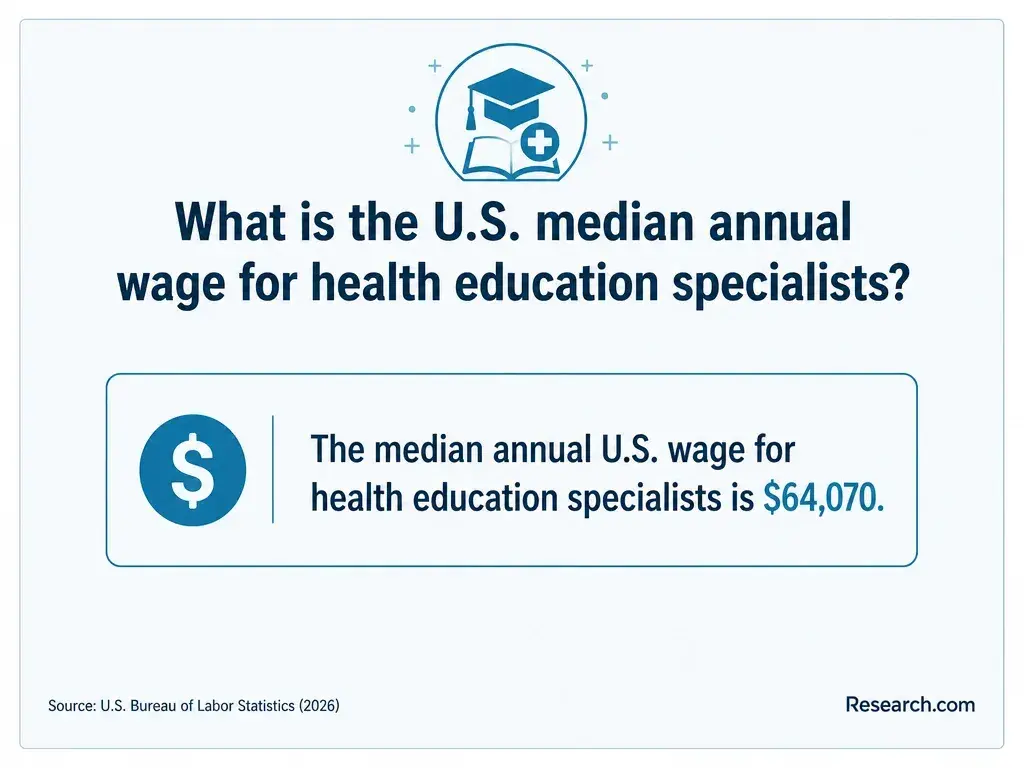
No single salary or growth figure describes graduates who build nonprofit cost worksheets. The closest US Bureau of Labor Statistics occupation depends on the work: health education specialists plan and evaluate health education efforts, while community health workers have a different scope, and nonprofit grant or program-management titles do not map neatly to either category. Consult the latest Occupational Outlook Handbook entry for the actual target occupation, checking its wage reference year, projection period, typical entry education, and duties.
Use occupation-wide figures as context, not a forecast of your pay or a return promised by an MPH. Employer type, location, responsibilities, and prior nonprofit experience can matter substantially. Career salary ranges for MPH degree holders may help you frame questions, but compare specific job postings and compensation with the total cost of the training you would need.
Other Things You Should Know About Public Health
Yes, if your course permits it. Label it as a template, explain its intended use, and do not imply that a nonprofit has adopted it.
Use clearly labeled illustrative inputs if your instructor allows them. Keep them distinct from actual organizational rates and do not present the outputs as a real program estimate.
No. Cost per participant describes resources used for a chosen denominator. Cost-effectiveness also requires a defined outcome and a suitable comparison; a worksheet alone cannot establish it.
Do not assume you can publish or reuse it. Check the school's project terms and the partner's agreement, then obtain permission for any public version and remove confidential details.
- Guidelines on the use of Simplified Cost Options... - EUR-Lex https://eur-lex.europa.eu/legal-content/EN/TXT/PDF/
- Cost Analysis: A Starter Kit - Institute of Education Sciences https://ies.ed.gov/ies/2025/01/cost-analysis-starter-kit
- Programme costs in the economic evaluation of health... - PMC https://pmc.ncbi.nlm.nih.gov/articles/PMC156020/
- categories and approaches to costing | Implementation Science https://link.springer.com/article/10.1186/s13012-021-01172-6
- PRECEDE-PROCEED Model | Rural Health Information Hub https://www.ruralhealthinfo.org/toolkits/health-promotion/2/theories-and-models/precede-proceed
- Direct vs. Indirect Costs or Overhead | Nonprofit Accounting Basics https://www.nonprofitaccountingbasics.org/about-us/direct-vs-indirect-costs-or-overhead
- Program Budget and Allocation Template and Resource | Nonprofit Financial Commons https://nonprofitfinancials.org/resources/true-program-costs-program-budget-and-allocation-template-and-resource/
- Activity Based Costing Explained (Example Included) | ProjectManager https://www.projectmanager.com/blog/activity-based-costing
- Conducting a Program Inventory | National Association of Counties https://www.naco.org/resource/osc-program-inventory